家具

Search documents
7月份我国社会消费品零售总额3.88万亿元 同比增长3.7%
Xin Hua Wang· 2025-08-22 07:46
Group 1 - The overall consumption market in China showed a stable development trend in July 2025, with total retail sales of consumer goods reaching 3.88 trillion yuan, a year-on-year increase of 3.7%, which is 1 percentage point higher than the same period last year [1] - From January to July, the total retail sales of consumer goods amounted to 28.42 trillion yuan, with a year-on-year growth of 4.8%. The retail sales of services increased by 5.2%, and the combined retail sales of goods and services grew by approximately 5% [1] - The retail sales of goods saw steady growth, with a year-on-year increase of 4.0% in July. The retail sales of home appliances, furniture, mobile phones, and cultural office supplies showed significant growth, with increases of 28.7%, 20.6%, 14.9%, and 13.8% respectively [1] Group 2 - The summer consumption season highlighted strong performance in cultural, sports, and tourism sectors, with double-digit growth in retail sales for leisure services, tourism consulting, and transportation services from January to July [2] - The popularity of summer vacation destinations surged, with a significant increase in search interest for "summer cooling destinations." Museum bookings saw a year-on-year growth of over 200%, and the box office for summer films exceeded 10 billion yuan, with many domestic films achieving both critical and commercial success [2] - Online consumption grew rapidly, with online retail sales increasing by 9.2% year-on-year from January to July, outpacing the growth of total retail sales of consumer goods by 1.5 percentage points [2]
商务部:7月社会消费品零售总额3.88万亿元 同比增长3.7%
智通财经网· 2025-08-22 07:13
Core Insights - The overall consumption market in China is stable as of July 2025, with a retail sales total of 3.88 trillion yuan, reflecting a year-on-year growth of 3.7%, which is 1 percentage point higher than the same period last year [2][3] - From January to July, the total retail sales of consumer goods reached 28.42 trillion yuan, with a year-on-year growth of 4.8% [2][3] Group 1: Consumer Goods Performance - There is steady growth in commodity consumption, with retail sales of goods increasing by 4.0% in July, and retail sales for the first seven months growing by 4.9% [2][3] - The "old-for-new" consumption policy has positively impacted sales, with significant year-on-year increases in retail sales for home appliances (28.7%), furniture (20.6%), communication devices (14.9%), and cultural office supplies (13.8%) in July [2][3] - Passenger car retail sales increased by 6.3% in July, with new energy vehicles seeing a growth of 12.0%, achieving a penetration rate of 54% [2][3] Group 2: Service Sector Highlights - The service retail sector has shown robust growth, particularly in cultural, sports, and tourism services, with double-digit growth rates in these categories from January to July [3] - The popularity of summer tourism has surged, with significant increases in searches for summer vacation destinations and a more than twofold increase in museum bookings year-on-year [3] - The film market has also performed well, with box office revenues surpassing 10 billion yuan during the summer season, driven by high-quality domestic films [3] Group 3: Online and Offline Retail Trends - Online retail has experienced rapid growth, with a year-on-year increase of 9.2% in online retail sales from January to July, outpacing the overall retail sales growth by 1.5 percentage points [3] - Physical retail stores are adapting to new consumer trends, with retail sales from physical stores increasing by 4.2% year-on-year, and specific formats like warehouse membership stores growing over 30% [3]
“两新”政策持续显效促进经济良性循环
Jing Ji Wang· 2025-08-22 02:51
Core Insights - The large-scale equipment upgrade and consumer product trade-in policies have shown positive effects over the past year, promoting transformation, boosting consumer demand, and facilitating economic circulation [2][7]. Group 1: Industry Transformation and Upgrading - From April 2024 to July 2025, the amount spent by enterprises on machinery and equipment increased by 7.3% year-on-year, with industrial enterprises seeing a 9.8% increase [3]. - The policies have effectively transformed tax incentives into new momentum for industrial upgrading, enhancing production efficiency and product quality [3][4]. - The data indicates that equipment updates are not merely about replacing machines but signify a systematic upgrade across the entire industrial chain [3]. Group 2: Consumer Demand and Market Dynamics - The trade-in policy has significantly reshaped consumer expectations, with sales of household appliances and audiovisual equipment increasing by 44.5% and 22.8% respectively from April 2024 to July 2025 [5]. - The sales of service robots surged by 51.1%, indicating a strong demand for advanced consumer products [5]. - The policy has lowered the cost of purchasing new products for consumers, thus meeting their demand for high-quality and feature-rich products [5][6]. Group 3: Economic Circulation and Resource Optimization - The "Two New" policies have created a virtuous cycle, with retail demand growth positively impacting supply, leading to a 5.8% year-on-year increase in manufacturing sales revenue [7]. - The interaction between equipment upgrades and consumer demand has optimized resource allocation and improved economic efficiency [7]. - The policies are seen as a strategic lever to address the dual challenges of insufficient effective demand and supply structure imbalance [8].
【光大研究每日速递】20250822
光大证券研究· 2025-08-22 01:03
Group 1 - ZhongAn Online achieved operating revenue of 16.18 billion yuan in H1 2025, a year-on-year increase of 0.9%, with a net profit of 670 million yuan, up 1103.5% [5] - CITIC Special Steel reported operating revenue of 54.715 billion yuan in H1 2025, a year-on-year decrease of 4.02%, while net profit increased by 2.67% to 2.798 billion yuan [6] - Siyuan Electric's H1 2025 revenue grew by 37.80% to 8.497 billion yuan, with net profit increasing by 45.71% to 1.293 billion yuan, driven by significant growth in overseas revenue [8] Group 2 - XPeng Motors reported total revenue of 18.27 billion yuan in Q2 2025, a year-on-year increase of 125.3%, with a gross margin of 17.3% [9] - Joyson Electronics achieved revenue of 4.02 billion yuan in H1 2025, a year-on-year increase of 1.6%, with net profit rising by 14.0% to 270 million yuan [10] - China Resources Beer reported H1 2025 revenue of 23.942 billion yuan, a year-on-year increase of 0.8%, with net profit rising by 23.0% to 5.789 billion yuan, exceeding market expectations [10] Group 3 - King’s Ray BioTech reported revenue of 519 million USD in H1 2025, a year-on-year increase of 81.92%, with adjusted net profit increasing by 509.6% to 178 million USD [11]



广东政观丨广东区县、镇街何以领跑全国?这三大优势得以突围
Nan Fang Du Shi Bao· 2025-08-21 11:02
Core Insights - The recent series of reports from the Saidi Research highlights the impressive performance of Guangdong's grassroots economic units, with top rankings in various categories such as "Top 500 Vibrant Streets" and "Top 100 Districts" [1][3] - The strong economic resilience of Guangdong's districts and towns is attributed to a solid industrial foundation, characterized by a diverse industrial system that includes manufacturing, digital economy, and modern services [3][4] Economic Performance - In the "2025 National Top 500 Vibrant Streets," Shenzhen's Nanshan District's Yuehai Street ranked first, showcasing the region's robust economic structure [3] - Guangdong's districts and towns have excelled in rankings due to their deep integration into the Guangdong-Hong Kong-Macao Greater Bay Area's industrial chain, with Dongguan's 28 towns all making it to the "Top 500 Town Economies" list [3] Market Dynamics - The flexible institutional mechanisms in Guangdong have fostered a competitive market environment, with active private economies and high administrative efficiency allowing for rapid market responses [4] - Historical models like "Three Comes and One Supplement" have evolved into modern strategies such as "industrial upgrading," enhancing the synergy between production and service sectors [4] Innovation and Transformation - Continuous innovation has facilitated the smooth transition of new and old economic drivers, with notable examples like Nanshan District's "Unicorn Corridor" that connects various innovation entities [4] - The presence of "invisible champions" and "small giants" in towns is indicative of the region's commitment to innovation-driven technological advancement [4] Challenges Ahead - Despite the successes, Guangdong faces challenges such as significant disparities between the Pearl River Delta core area and other regions, as well as a need for improved overall economic strength compared to other provinces [5] - The tightening of land resources poses a challenge for the Pearl River Delta, where traditional land expansion models are becoming unsustainable [5] - Many districts and towns still rely heavily on traditional manufacturing, indicating a need for enhanced innovation capabilities and brand value [5] Future Outlook - The long-term success of Guangdong's grassroots economic units is contingent upon strengthening county-level economic support, promoting digital and green transformations, and fostering coordinated development within the province [5]

我在小红书上卖家具:家私企业如何布局“种草经济”?
2 1 Shi Ji Jing Ji Bao Dao· 2025-08-21 09:39
Core Insights - The furniture industry is undergoing significant transformation due to changes in consumer demand and the impact of the real estate market, leading companies to innovate their sales strategies and branding efforts [1][4][5] Group 1: Industry Challenges and Changes - The furniture industry has faced severe challenges in the past two years, with many companies going bankrupt, largely due to the downturn in the real estate sector [1][2] - Traditional sales models are being disrupted as companies shift towards multi-channel strategies, emphasizing service and emotional value over mere functionality [1][2][5] - The shift from a focus on B2B to B2C and now to interest-based and live-streaming e-commerce reflects changing consumer preferences [5][7] Group 2: New Sales Models and Strategies - Companies are increasingly adopting new sales models, such as live streaming and online platforms, to enhance customer engagement and service delivery [3][6][10] - Collaboration with service platforms has enabled businesses to overcome logistical challenges, allowing them to serve previously neglected markets [3][4] - The emphasis on building personal and brand IP is becoming crucial for attracting new customers and enhancing market presence [6][10][11] Group 3: Future Directions and Innovations - The industry is exploring innovative approaches to channel transformation, including the establishment of brand collective stores that integrate various values [11] - Companies are focusing on digital economy measures, design innovation, and brand building to navigate the complexities of international trade and domestic demand [10][11] - The creation of new brands, such as "悦莱" by 长实, signifies a strategic pivot towards domestic market engagement and brand differentiation [10][11]
加快释放内需潜力 政策效果将继续显现
Jing Ji Ri Bao· 2025-08-21 03:19
Group 1: Economic Policy and Internal Demand - The central government emphasizes the need to effectively release internal demand potential to support economic growth [1] - The contribution rate of internal demand to GDP growth reached 68.8% in the first half of the year, with final consumption expenditure contributing 52% [2] - Policies such as the consumption upgrade program have been implemented to stimulate consumer spending, with significant retail growth in various categories [2] Group 2: Service Consumption Growth - Service consumption has been growing rapidly, with the proportion of per capita service consumption expenditure reaching 46.1% in 2024, contributing 63% to overall consumption growth [3] - Households are increasingly spending on services like home care, fitness, and tourism, surpassing spending on goods [3] - Strategies to activate consumption demand include creating immersive consumption scenarios and issuing targeted consumption vouchers [3] Group 3: Investment Expansion - The government has allocated 800 billion yuan for key construction projects and 735 billion yuan for central budget investments this year [4] - Infrastructure investment in key sectors has seen rapid growth, with water management and information transmission investments increasing by 12.6% and 8.3%, respectively [4] - Manufacturing investment grew by 6.2% in the first seven months, driven by traditional industry upgrades and new equipment purchases [4] Group 4: Structural Optimization of Investment - There is a need to optimize investment structure to meet changing demands, focusing on areas like education, healthcare, and quality housing [5] - Major projects should lead and stimulate upstream and downstream industry development, while also adapting to consumer demand changes [5] - Recommendations include improving investment efficiency by aligning social welfare improvements with effective investment strategies [5] Group 5: Reform and Market Integration - The economy is recovering, but internal demand remains a significant constraint, necessitating continued policy focus on stabilizing employment and market expectations [6] - Effective release of internal demand requires precise policies and resource allocation, focusing on high-quality and efficient investment projects [6] - The government aims to deepen reforms to enhance market integration and address supply-demand mismatches [6][7]
1—7月江苏省社会消费品零售总额27441.2亿元 同比增长4.4%
Zheng Quan Shi Bao Wang· 2025-08-21 02:52
Core Insights - Jiangsu Province's total retail sales of consumer goods reached 27,441.2 billion yuan from January to July, reflecting a year-on-year growth of 4.4% [1] Retail Performance - In July, retail sales of household appliances and audio-visual equipment increased by 9.9% year-on-year, while communication equipment sales rose by 13.1% [1] - Retail sales of energy-efficient products rated 1 and 2, as well as smart home appliances, saw significant growth, with increases of 34.7% and 44.0% respectively [1] Sector-Specific Trends - The retail sales of furniture and hardware materials experienced year-on-year growth of 17.2% and 11.5% respectively, driven by policies related to old home renovations and partial kitchen and bathroom upgrades [1]
中国出口市场韧性十足
Qi Huo Ri Bao Wang· 2025-08-21 01:28
Core Viewpoint - The article highlights China's resilience in export trade despite the pressure from the U.S. tariffs, showcasing a diversified export structure and strong adaptability in various markets [1][7]. Export Market Structure - China's export market has become increasingly diversified, reducing reliance on the U.S. market, which previously accounted for over 20% of total exports [1]. - In the first seven months of 2025, China's total exports reached $2.13 trillion, with imports totaling $1.45 trillion, resulting in a trade surplus [1]. - The top ten export destinations for China in 2025 included ASEAN, EU, U.S., Hong Kong, Latin America, Africa, Japan, South Korea, India, and Russia, collectively accounting for over 80% of total exports [2]. Changes in Export Destination - Compared to 2000, Asia's share of China's exports increased by approximately 3 percentage points, while North America's share decreased by about 9 percentage points [2]. - In the first seven months of 2025, exports to the U.S. decreased by $35.5 billion, but exports to ASEAN surged by $45.2 billion, indicating a shift in trade dynamics [2][3]. Export Growth Rates - Africa led the growth in export amounts with a 24.5% increase, followed by ASEAN at 13.5% and India at 13.4% [3]. - The U.S. experienced a decline in exports of -12.6%, highlighting the contrasting performance of different regions [3]. Product Structure of Exports - The export product structure is characterized by a balance between traditional manufacturing and high-tech products, with mechanical and electrical products making up 60% of total exports [4]. - Traditional manufacturing goods, including clothing and household items, still hold significant export value, contributing to 9% and 8% of total exports, respectively [6]. Supply Chain Advantages - China's manufacturing sector benefits from a robust supply chain, characterized by extensive raw material supply, efficient logistics, and a stable social environment, making it a dominant player in global manufacturing [5]. - The transition towards "smart manufacturing" is expected to enhance the competitiveness of traditional manufacturing sectors, keeping a significant portion of production within China [6]. Conclusion - Despite the challenges posed by U.S. tariffs, China's well-established manufacturing infrastructure and diversified export strategies position it to maintain strong export performance, which remains a crucial driver of economic growth [7].
参考消息特稿|在“世界工厂”看中国外贸的“不一样”
Xin Hua She· 2025-08-21 01:23
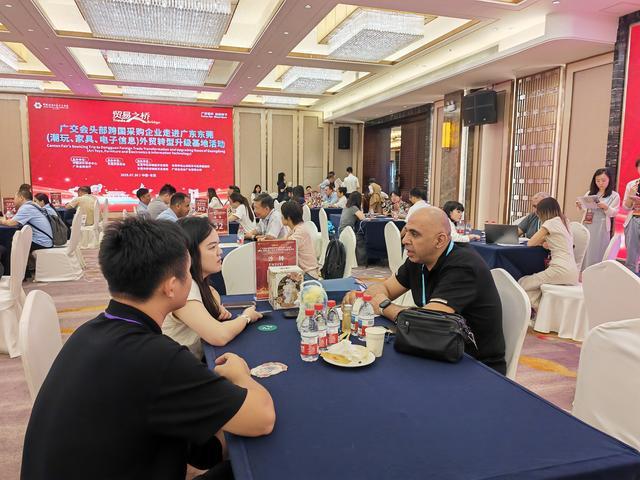
【原标题】在"世界工厂"看中国外贸的"不一样" 文/本报记者 丁乐 霍思颖 黄浩苑 当身边人都在海边度假时,一名印度采购商却拉着行李箱扎进东莞,探寻财富密码;当西方文创产业还 在延续其传统路径时,中国潮玩却以东方美学俘获了全球粉丝的心,更用原创设计圈粉世界;当全球经 济正经历坐过山车式的跌宕起伏时,一名美国企业代表却依然坚定地选择中国供应商……这些发生在 有"世界工厂"之称的广东东莞的诸多"想不到",让外界看到中国外贸的"不一样"。 不一样的体验:开启一场"商务度假游" 每年七八月是业内心照不宣的度假季,但印度采购商贾尼却拉着行李箱,出现在广东东莞。"我今年的 度假目的地就是中国了。"他说。 和贾尼组团开启这场"商务度假游"的,还有来自丹麦、德国、美国、日本、澳大利亚等20多个国家的头 部采购企业代表。这群"国际买手"参与的是中国对外贸易中心近期组织的广交会头部跨国采购企业走进 东莞(潮玩、家具、电子信息)外贸转型升级基地活动。 7月30日, 广交会头部跨国采购企业走进东莞活动现场。(丁乐 摄) 贾尼所在的公司主要从中国采购家具和家居装饰品,客户遍布加拿大、中东等地。此次他的"度假"目标 很明确:寻找长期合作 ...