
奢侈品

Search documents
欧盟委员会对古驰、蔻依、罗意威处以罚款 总额超1.57亿欧元
Zhong Guo Ji Jin Bao· 2025-10-14 17:54
Core Points - The European Commission imposed fines totaling over €157 million on luxury brands Gucci, Chloé, and Loewe for anti-competitive pricing practices [1][2] - The investigation revealed that these companies engaged in resale price maintenance (RPM), restricting independent retailers' ability to set their own retail prices across the European Economic Area (EEA) [1][2] Summary by Category Fines and Penalties - Gucci was fined €119.7 million, Chloé €19.69 million, and Loewe €18.009 million, with Gucci and Loewe receiving a 50% reduction in their fines due to cooperation during the investigation [2] - The fines reflect the seriousness of the violations of EU antitrust rules and the importance of maintaining fair competition [2] Company Practices - The luxury brands were found to have interfered with their retailers' pricing strategies, requiring them to align with the companies' direct sales prices and conditions [1][2] - Specific restrictions included prohibiting retailers from deviating from recommended retail prices, maximum discount rates, and certain sales periods, and in some cases, outright bans on discounts [1]
古驰、蔻依、罗意威,被罚超1.57亿欧元!
Zhong Guo Ji Jin Bao· 2025-10-14 16:34
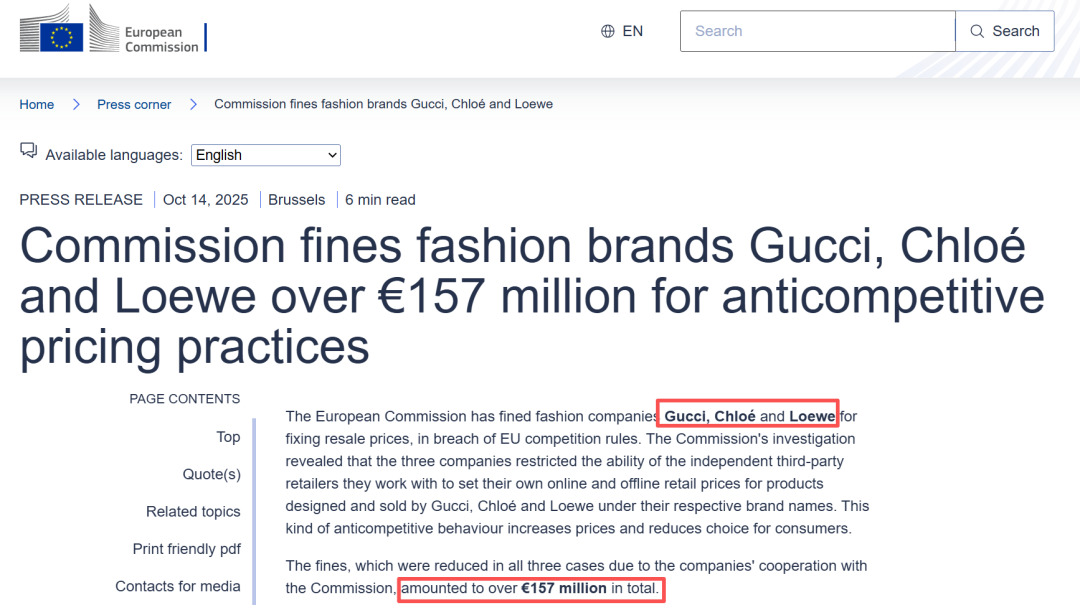
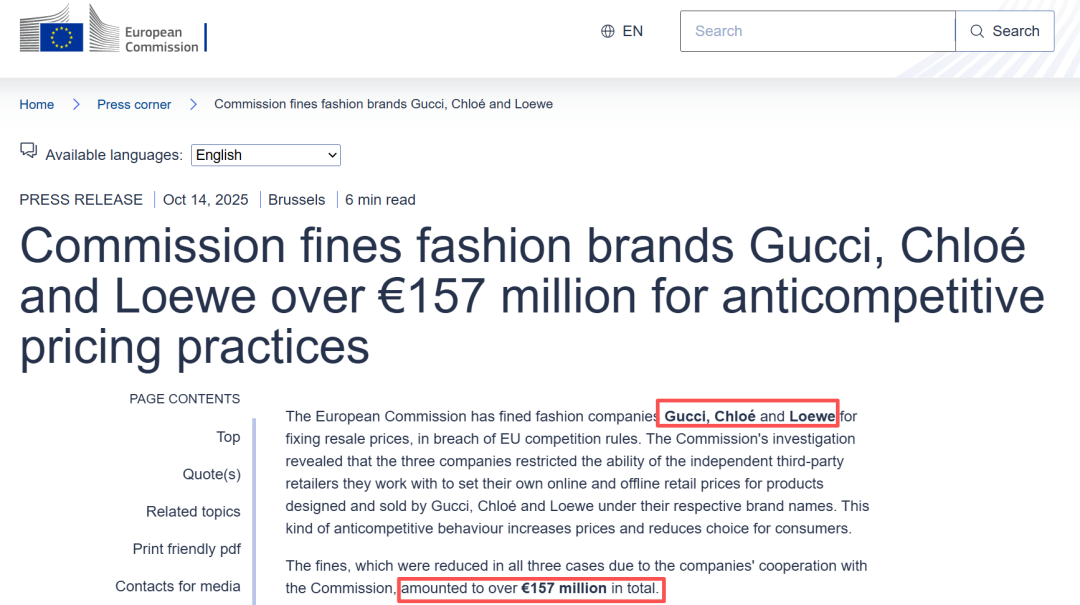
Core Points - The European Commission imposed fines totaling over €157 million on luxury brands Gucci, Chloé, and Loewe for anti-competitive pricing practices [1][3]. Group 1: Companies Involved - Gucci, Chloé, and Loewe are prominent luxury fashion companies based in Italy, France, and Spain, respectively, and are engaged in the design, production, and distribution of high-end fashion products [3]. - The companies were found to have engaged in resale price maintenance (RPM), restricting the ability of their independent retailers to set their own retail prices [3][6]. Group 2: Nature of Violations - The companies intervened in the commercial strategies of their retailers by imposing restrictions, such as requiring retailers to adhere to suggested retail prices and prohibiting discounts in certain cases [6]. - The infringement behavior was found to cover the entire European Economic Area (EEA) and ended in April 2023 when the European Commission conducted surprise inspections [6]. Group 3: Penalties and Reductions - The fines were distributed as follows: Gucci was fined €119.7 million, Chloé €19.69 million, and Loewe €18.01 million, with Gucci and Loewe receiving a 50% reduction in their fines due to cooperation with the investigation [6][7]. - The European Commission emphasized that this decision sends a strong signal to the fashion industry and other sectors that such practices will not be tolerated, ensuring fair competition and consumer protection [7].

古驰、蔻依、罗意威 被罚超1.57亿欧元!
Zhong Guo Ji Jin Bao· 2025-10-14 16:18
Core Points - The European Commission has imposed fines totaling over €157 million on luxury brands Gucci, Chloé, and Loewe for anti-competitive pricing practices [1][3][6] Summary by Sections Company Overview - Gucci, Chloé, and Loewe are prominent luxury fashion companies based in Italy, France, and Spain, respectively, engaged in the design, production, and distribution of high-end fashion products, including clothing, leather goods, and various accessories [3] Anti-Competitive Practices - The investigation revealed that these companies engaged in "resale price maintenance (RPM)," restricting the ability of their online and physical retailers to set their own retail prices. This infringement affected the entire European Economic Area (EEA) [3][6] - The companies intervened in their retailers' business strategies by imposing restrictions, such as requiring retailers to adhere to suggested retail prices, maximum discount rates, and specific sales periods. In some cases, retailers were prohibited from offering any discounts [6] Penalties and Reductions - The fines were as follows: Gucci was fined €119.7 million, Chloé €19.69 million, and Loewe €18.01 million. Gucci and Loewe received a 50% reduction in their fines due to cooperation during the investigation, while Chloé received a 15% reduction [6][7] - The European Commission's Executive Vice President, Teresa Ribera, emphasized that this decision sends a strong signal to the fashion industry and other sectors that such practices will not be tolerated, ensuring fair competition and consumer protection across Europe [7]
LVMH集团三季度有机营收增长1%,预期下降0.72%。三季度时装和皮草有机销售下降2%,预期减少3.48%
Hua Er Jie Jian Wen· 2025-10-14 15:48
Group 1 - LVMH reported a 1% organic revenue growth in Q3, which is below the expected decline of 0.72% [1] - The organic sales in the fashion and leather goods segment decreased by 2%, while the forecast anticipated a reduction of 3.48% [1]

【环时深度】新税法为何在多国引发政商激辩
Huan Qiu Shi Bao· 2025-10-13 22:49
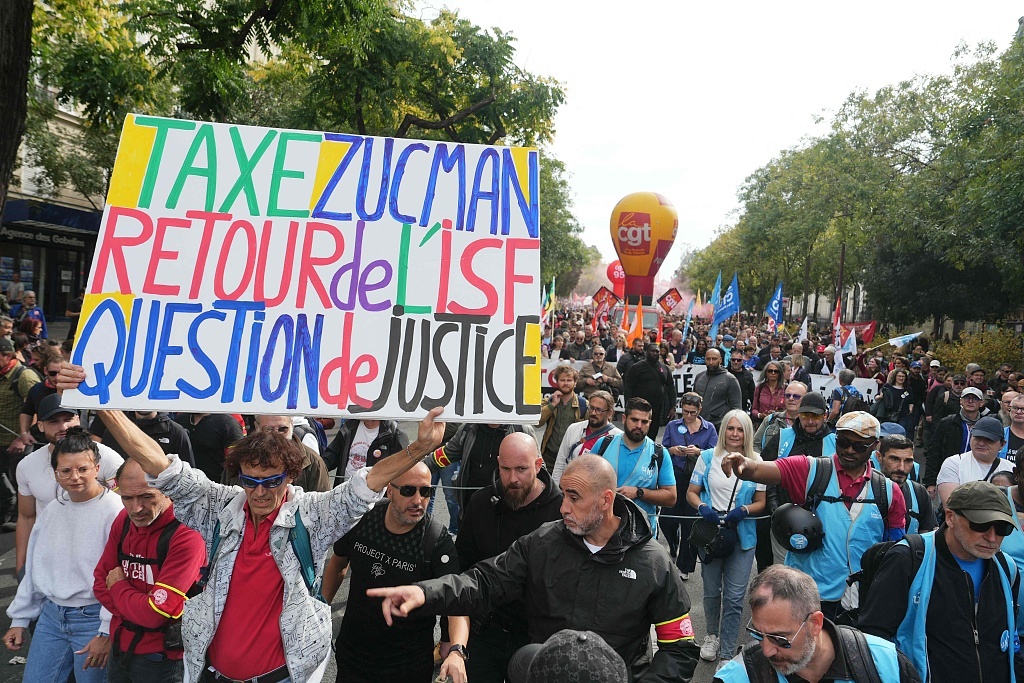
Group 1: France's Wealth Tax Debate - The "Zucman Tax," proposed by economist Gabriel Zucman, aims to impose a 2% global wealth tax on individuals with net wealth exceeding €100 million, potentially generating €15 billion to €20 billion annually for the French government [3][4] - The proposal has sparked intense debate in France, with concerns about balancing high public debt and social equity, as well as historical fears of wealthy individuals relocating due to taxation [3][5] - Prominent figures, including French billionaire Bernard Arnault, have criticized the tax, labeling it as a threat to economic freedom and warning of potential negative impacts on local businesses [4][5] Group 2: U.S. Tax Reform Controversy - The "Big and Beautiful" tax and spending bill signed by President Trump is seen as a fulfillment of campaign promises but has raised concerns about increasing national debt and cuts to essential welfare programs [6][7] - Public opinion is largely skeptical, with approximately two-thirds of Americans believing the tax reform primarily benefits the wealthy, while low-income groups may face adverse effects [6][7] - Republican officials are promoting the bill as a victory for the working class, despite contrasting views from Democrats who argue it disproportionately favors the rich [6][7] Group 3: India's GST Reform - India's government has introduced a new Goods and Services Tax (GST 2.0), which simplifies the tax structure and is expected to reduce household expenses by 13%, particularly benefiting essential goods [8][10] - The reform has faced mixed reactions, with some consumers not experiencing significant price changes, while businesses in wholesale markets have adjusted prices effectively [9][10] - The tax reform aims to lower costs for agricultural inputs, which could significantly impact rural economies, although there are concerns about potential long-term consequences such as increased urban traffic and pollution [10][11]
奢侈品品牌蔻依创始人之子获得诺贝尔经济学奖
Zheng Quan Shi Bao Wang· 2025-10-13 13:45
Core Insights - The 2025 Nobel Prize in Economic Sciences was awarded to Joel Mokyr, Philippe Aghion, and Peter Howitt for their contributions to the understanding of innovation-driven economic growth [1] Group 1: Contributions to Economic Theory - Aghion and Howitt emphasized that technology is the most crucial intermediate product in economic production, and without it, production cannot occur [2] - Entrepreneurs provide the necessary technology, and once an entrepreneur possesses leading technology, they gain market power and can achieve excess profits [2] - The concept of "creative destruction," introduced by Joseph Schumpeter, is central to their work, illustrating how new technologies replace old ones, leading to economic transformation [2] Group 2: Aghion's Academic Background - Aghion has a notable academic career, having taught at Harvard University before returning to France to teach at the Paris School of Economics after his mother's passing [2] - His research is closely linked to societal realities, addressing why economies grow and societies progress [2] Group 3: Gaby Aghion's Influence - Gaby Aghion, founder of the luxury brand Chloé, aimed to liberate women's fashion from rigid designs, promoting clothing that fits women's natural body shapes [3] - Her innovative approach in fashion has inspired many designers, including Karl Lagerfeld, showcasing the impact of creative destruction in the fashion industry [3]
老钱风赢家!Ralph Lauren增速为何跑赢LV、Gucci
Sou Hu Cai Jing· 2025-10-13 10:42
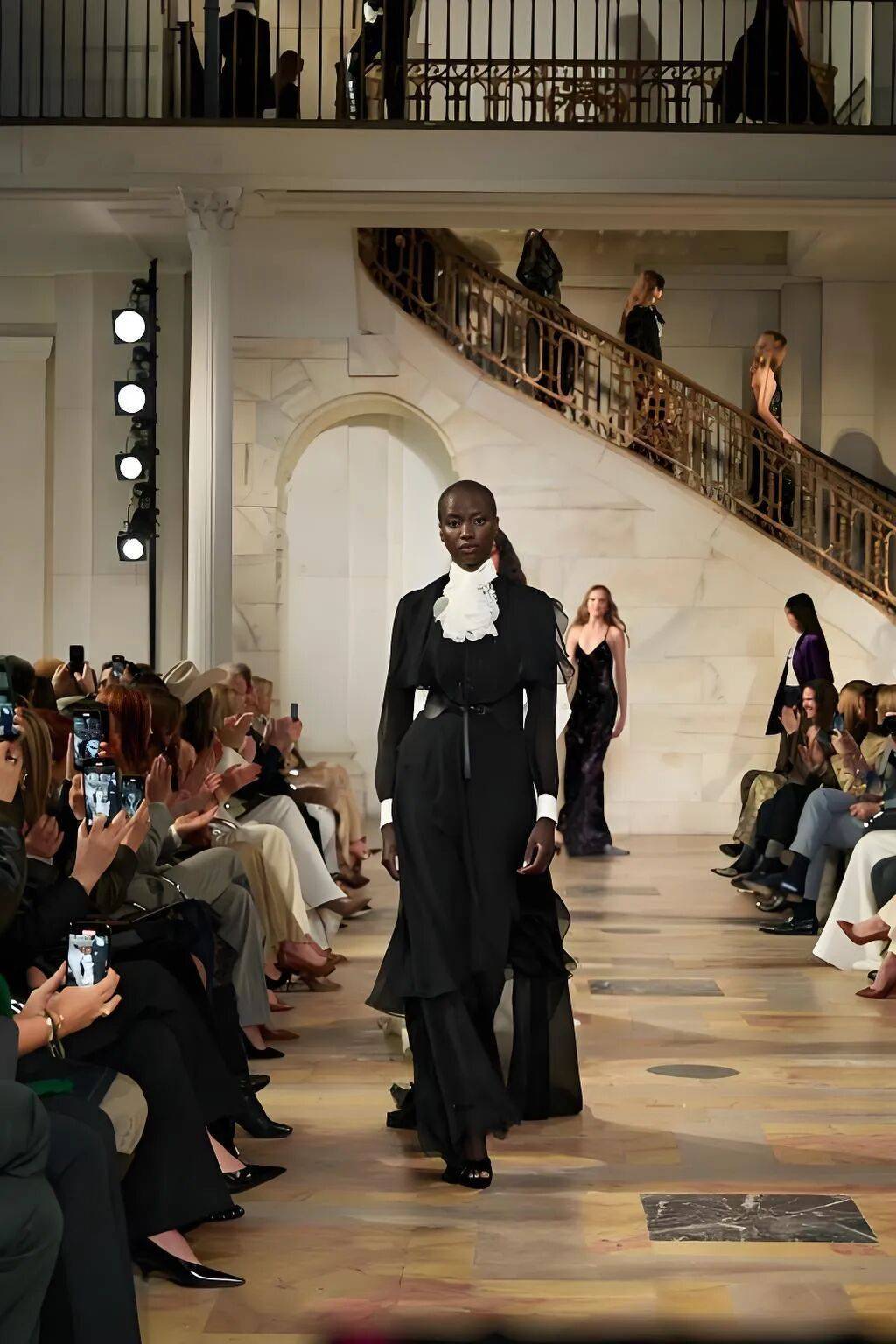
Core Insights - Ralph Lauren has demonstrated impressive performance in the luxury goods market, standing out as a leader amidst a cyclical downturn affecting other traditional giants [1] Group 1: Performance in the Chinese Market - In Q1 of FY2026, Ralph Lauren's revenue in China surged over 30%, contributing significantly to global growth [2] - For FY2025, the company achieved a total revenue of $7.079 billion, reflecting a year-on-year growth of approximately 7% [2] - The revenue growth accelerated to 14% in Q1 of FY2026, reaching $1.7 billion, contrasting with slower growth rates from competitors like LVMH and Kering [2] Group 2: Brand Strategy and Market Trends - Ralph Lauren's success is attributed to its alignment with consumer trends favoring understated luxury and quality over ostentation, termed "quiet luxury" or "old money style" [5] - The brand has implemented a "de-discounting" strategy, focusing on reducing reliance on discount channels, which has improved profit margins and maintained brand value [5] - Marketing efforts, including a fashion show in Shanghai and partnerships with prestigious events like Wimbledon, have enhanced brand recognition among high-end consumers [6] Group 3: Challenges and Future Directions - Despite strong performance, Ralph Lauren faces the challenge of appealing to younger consumers, particularly Generation Z, while maintaining its classic image [7] - The brand's heavy reliance on its iconic Polo shirt poses a risk, necessitating innovation in product lines such as women's wear and accessories to diversify its offerings [9] - Future growth will depend on expanding into categories with higher profit margins and creating additional brand pillars beyond the Polo shirt [9]

投资中最被高估的三种能力︱重阳荐文
重阳投资· 2025-10-13 07:32
Core Viewpoint - The article discusses the paradox of investment strategies, emphasizing that successful investors must balance contradictory logics, adapting their strategies based on market changes rather than adhering rigidly to a single approach [5][32]. Group 1: Insights on Investment Behavior - Many individuals with strong analytical skills struggle in the stock market, while some less intellectually gifted individuals achieve significant success, highlighting the limitations of conventional thinking in investment [11]. - The article outlines a typical failure trajectory for investors who become overly confident in their methods, leading to significant losses when market conditions change unexpectedly [12][20]. - The concept of "survivorship bias" is introduced, indicating that successful investors are often not representative of the broader population, as many others have failed using similar strategies [12][19]. Group 2: Key Qualities and Their Implications - Insightfulness is praised in corporate environments but can be detrimental in investment contexts, where market dynamics are unpredictable [14][17]. - The article critiques the reliance on "explanatory power," where investors create justifications for their decisions, potentially leading to a disconnect from reality [22][25]. - Persistence is highlighted as a double-edged sword; while it can lead to success, it can also result in catastrophic losses if not paired with a realistic assessment of market conditions [28][30]. Group 3: Investment Strategy and Market Dynamics - The article emphasizes that investment success is not guaranteed by following established patterns, as market conditions are influenced by numerous unpredictable factors [19][20]. - It argues that the investment landscape is inherently risky, and strategies that work in theory may not hold up in practice, especially under high leverage [30][31]. - The need for continuous adaptation and reassessment of investment strategies is underscored, as sticking rigidly to a plan can lead to significant financial setbacks [32][33].

黄金收入承压,老凤祥2400万美元买下一张奢侈品“入场券”
Sou Hu Cai Jing· 2025-10-12 15:14
Core Viewpoint - The company, Lao Feng Xiang, is strategically investing in the high-end luxury market by acquiring a 20% stake in Maybach Luxury Goods Asia Pacific Ltd. for $24 million, aiming to leverage international brand resources to develop the high-end luxury market in the Asia-Pacific region [2][3]. Investment Details - Lao Feng Xiang plans to invest through its subsidiary, Lao Feng Xiang Hong Kong Ltd. (LFXHK), acquiring 2,000 voting shares in Maybach Luxury Goods, which will enhance its business development in the luxury sector [2][3]. - The investment is not related to Maybach's automotive business, focusing instead on luxury lifestyle products such as optical goods, fashion apparel, perfumes, home goods, silverware, and pet products [3]. Previous Initiatives - This is not the first move by Lao Feng Xiang in the luxury sector; in September, it established Lao Feng Xiang Luxury Sales Co., Ltd. with an investment of 50 million yuan to focus on high-end products like jewelry and watches [4]. Financial Performance - The company is facing financial pressure, with a 20.5% year-on-year decline in revenue to 56.793 billion yuan and a nearly 12% drop in net profit to 1.95 billion yuan for 2024 [5]. - The wholesale business, which accounts for over 70% of revenue, has a low gross margin of 9.39%, while retail operations have a higher margin of 23.61% [5]. Market Challenges - The traditional franchise model is seen as inadequate for the high-end transformation, with concerns about brand control and market positioning [6]. - The transition from jewelry to comprehensive luxury goods requires significant adjustments in supply chain, talent, and management, posing a challenge for the company [6].

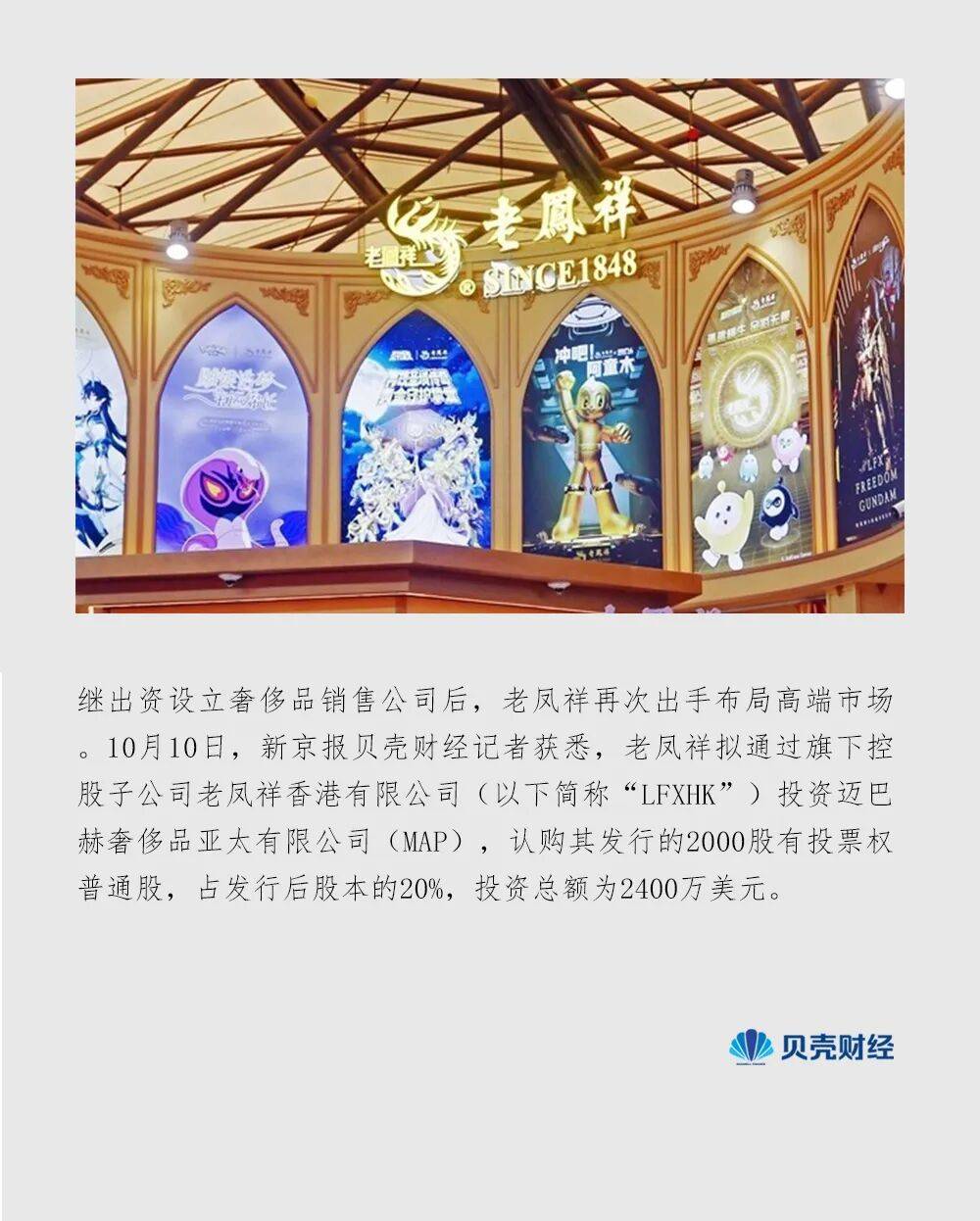
国货黄金品牌老凤祥“冲顶”奢侈品还差什么?
Mei Ri Jing Ji Xin Wen· 2025-10-12 14:00
Core Viewpoint - The recent investment by Lao Feng Xiang in Maybach Luxury Goods Asia Pacific is seen as a significant step towards high-end transformation in the gold and luxury goods sector, sparking discussions about the dilution of gold attributes and the potential for mutual benefits in market expansion [1][2][6]. Company Summary - Lao Feng Xiang plans to invest $24 million (approximately 170 million RMB) to acquire a 20% stake in Maybach Luxury Goods Asia Pacific, along with securing distribution rights in the Asia Pacific region [1][3]. - The partnership aims to enhance Lao Feng Xiang's brand image and product offerings while expanding into international markets [3][5]. - The investment is structured as a dual approach, combining equity investment with brand agency agreements to facilitate a stable relationship and operational learning from the luxury sector [4][5]. Industry Summary - The gold jewelry industry is currently facing profitability challenges due to high gold prices and increasing product homogeneity, leading to declining consumer demand [6][7]. - Lao Feng Xiang's revenue fell by 16.52% to 33.356 billion RMB, with net profit down 13.07% to 1.22 billion RMB in the first half of 2025, reflecting broader industry trends [7]. - In contrast, competitors like Lao Pu Gold have seen significant growth, with a 251% increase in revenue, indicating a potential shift towards high-end strategies within the industry [7][8]. - The luxury goods market is expected to see over 50% of luxury brands introducing pure gold jewelry, indicating a growing intersection between gold and luxury sectors [10].