软件

Search documents
投顾周刊:资源主题基金开年一马当先
Wind万得· 2026-02-07 22:30
Group 1 - The annual duty-free allowance for residents of Hainan Free Trade Port is set at 10,000 RMB per person, applicable to specified imported goods purchased at designated locations [2] - The China Photovoltaic Industry Association predicts a decline in new installations for 2026, estimating a range of 180GW to 240GW, with an average annual installation of 238GW to 287GW during the 14th Five-Year Plan [2] - A global shortage of High Bandwidth Memory (HBM) is spreading from data centers to consumer electronics, particularly impacting the smartphone industry, with manufacturers planning production cuts and lowered shipment targets [2] Group 2 - There is an increasing trend in bank insurance agency sales, particularly among rural commercial banks in regions like Shandong, Hebei, and Anhui, as they launch new insurance products and conduct staff training to meet diverse customer needs during the upcoming Spring Festival [3] - Fund participation in private placements is becoming more active, with over 70% of financing directed towards new productive forces in manufacturing, new energy, and information technology sectors [3] - Resource-themed funds have shown strong performance at the beginning of 2026, with public funds adapting to market trends and achieving significant returns [4] Group 3 - The software sector in the U.S. has seen a market capitalization decline of $1 trillion, driven by aggressive short-selling from hedge funds, which have gained $24 billion from these positions [7] - Following the merger of SpaceX and xAI, Elon Musk's net worth has surged by $84 billion, reaching a record $852 billion [7] Group 4 - Recent global stock market performance has been mixed, with the Hang Seng Index down 3.02% and the Shanghai Composite Index down 1.27%, while the Korean Composite Index increased by 0.60% [8] - In the bond market, the 1-year Chinese government bond yield rose by 1.31 basis points, while the 5-year and 10-year yields fell by 2.16 and 0.98 basis points, respectively [10] - The recent week saw a decline in most fund indices, with the Wind All Fund Index down 1.19% [11] Group 5 - In the commodity market, gold prices increased by 5.13%, while oil prices fell by 1.76% [13] - Fixed-income plus funds dominate the market, accounting for 54.97% of new fund products and 67.26% of total scale, indicating their importance in bank wealth management [14][15] - Bank wealth management subsidiaries have become the core vehicle for fund allocation, with 577 subsidiaries participating in product issuance, managing 801.86 billion RMB [17]


美科技股“崩盘式”回调的信号:风险资产普涨时代终结,AI输家将被无情抛弃!
Sou Hu Cai Jing· 2026-02-07 22:18
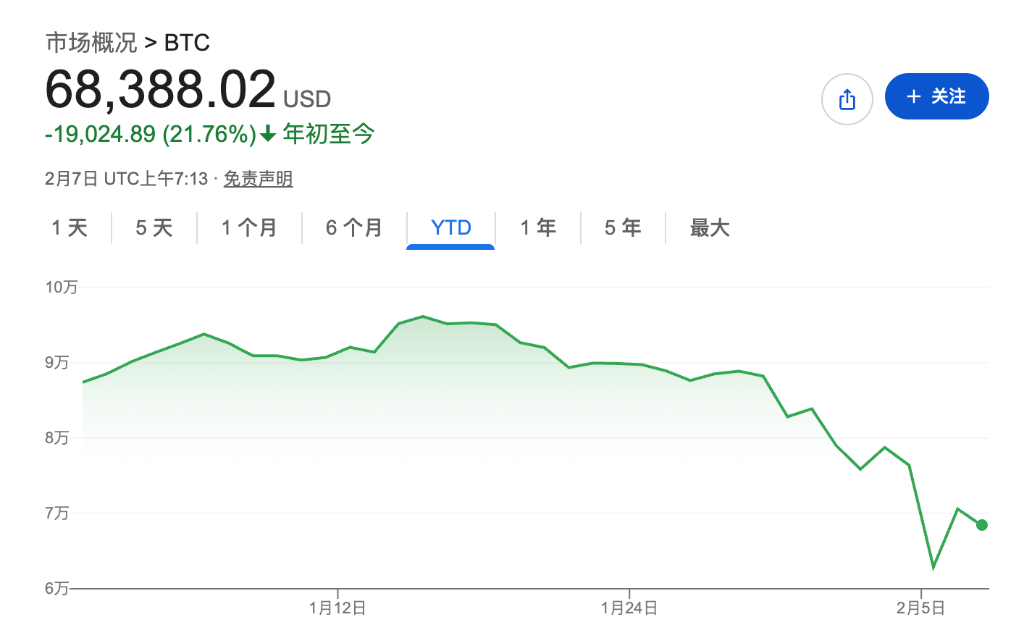
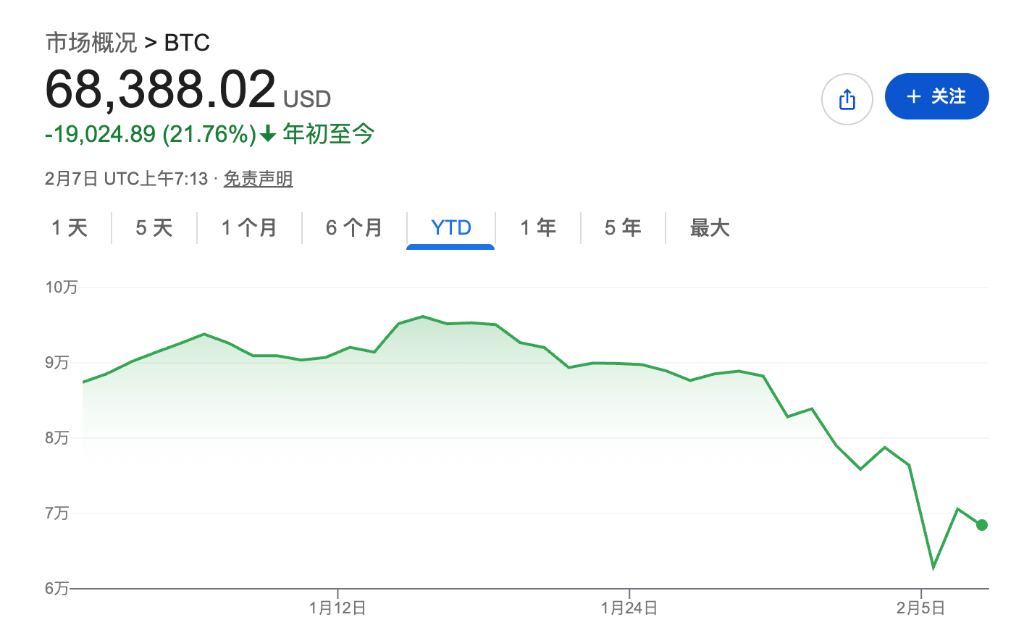
Group 1 - The current market adjustment is characterized as a "tech stock disaster" by Goldman analysts, driven by the disruptive impact of AI technology on traditional software and data service companies rather than an AI bubble burst [1][3] - Bitcoin has experienced a significant decline, halving from its historical peak and dropping over 20% this year, while the S&P 500 index has retreated nearly 3% and the Nasdaq Composite index has fallen by 6% [1][4] - The adjustment marks the end of a prolonged bull market for risk assets, with a harsh selection process underway based on the actual benefits derived from AI technology [3][4] Group 2 - The core reason for market volatility is the unexpectedly disruptive effectiveness of AI technology, prompting investors to reassess its impact on existing industry structures [4][6] - The introduction of productivity tools by AI company Anthropic has intensified market concerns, indicating potential survival threats to traditional companies reliant on analytical capabilities and software [4][6] - The software sector in the U.S. has plummeted by 16% this year, while the European Stoxx 600 index, dominated by traditional industries, has risen by 4% [4][6] Group 3 - Analysts suggest that the market has shifted from a "celebration phase" of tech stock rallies to a brutal "structural differentiation," with a self-consuming process of selection occurring within the tech industry [6] - The current structural adjustment poses a substantial challenge to the long-standing "American exceptionalism" investment paradigm, as geopolitical and economic policy inconsistencies have diminished international investors' confidence in U.S. assets [6][7] - The driving force behind this adjustment is the industry disruption caused by AI technology, which exceeds the scope of administrative interventions [6][7] Group 4 - The recent Bitcoin crash highlights the fundamental drivers of its price volatility, particularly the overall market risk appetite and the performance of tech stocks [7][10] - The narrative surrounding Bitcoin's anti-inflation and safe-haven attributes has proven inadequate in the face of reality [7] - A notable example includes Strategy, a Bitcoin-holding company, reporting a quarterly operating loss of $17 billion, with its stock price down approximately 80% from its peak after Trump's re-election [7][10]
巨幅震荡重创美股市场,多个板块显露颓势
Xin Lang Cai Jing· 2026-02-07 15:41
Core Viewpoint - The precious metals sector is experiencing a decline, Bitcoin prices are plummeting, and the U.S. labor market shows signs of weakness, which, combined with the revaluation of software companies, threatens the foundation of the AI-driven bull market [1][20] Group 1: Market Overview - The recent market turmoil has led to a loss of over $1.5 trillion in U.S. stock market value, raising doubts about the strength of the U.S. economy to support further stock market gains [20] - The rebound in the S&P 500 index on Friday does not indicate a stable market, as it often occurs during prolonged market pressure [1][20] - Various sectors are showing cracks, prompting investors to hedge against potential downturns [1][20] Group 2: Software Sector - The sell-off in software stocks is significant, with concerns that AI tools may disrupt the business of companies like DocuSign and Salesforce [29] - A report indicated that 72% of S&P 500 companies have updated disclosures regarding the significant risks posed by AI to their businesses [29] - The market is currently bearish on software stocks, raising concerns about risk spillover to other sectors [30][31] Group 3: Small Cap Stocks - Small-cap stocks were initially favored as investors moved away from overvalued tech stocks, but this strategy has faltered due to broad market adjustments and weak labor market data [4][22] - The Russell 2000 index has seen a decline of over 5% from recent highs, reflecting the impact of domestic economic conditions on small-cap companies [24][22] Group 4: Precious Metals - The precious metals sector, particularly gold and silver, has experienced extreme volatility, with the VanEck Gold Miners ETF suffering a 13% drop, the largest in over five years [25][27] - The sector has shifted from being a niche investment to a speculative tool for retail investors, raising concerns about its fundamental support [25][27] - Analysts note that the trading frenzy in precious metals has become "crazy," with significant price fluctuations that contradict their traditional role as safe-haven assets [27][9] Group 5: Digital Assets - Bitcoin, once referred to as "digital gold," is underperforming compared to physical gold, with its price dropping below $65,000, marking a 15-month low [28] - Companies involved in Bitcoin mining and digital asset management have seen significant stock price declines, with some dropping over 20% [28][10] - The largest Bitcoin exchange-traded fund also experienced a 16% drop, reflecting the broader downturn in the digital asset market [28] Group 6: Capital Markets - Concerns about AI disrupting various sectors may lead to a slowdown in capital market activities, including mergers and acquisitions, IPOs, and stock and bond issuances [29] - The technology sector was expected to contribute significantly to capital market revenues, but this outlook may be changing due to the potential disruptive effects of AI [29]
美股资产大幅缩水后的反思:本轮大崩盘的真凶不是 AI?
Sou Hu Cai Jing· 2026-02-07 12:53
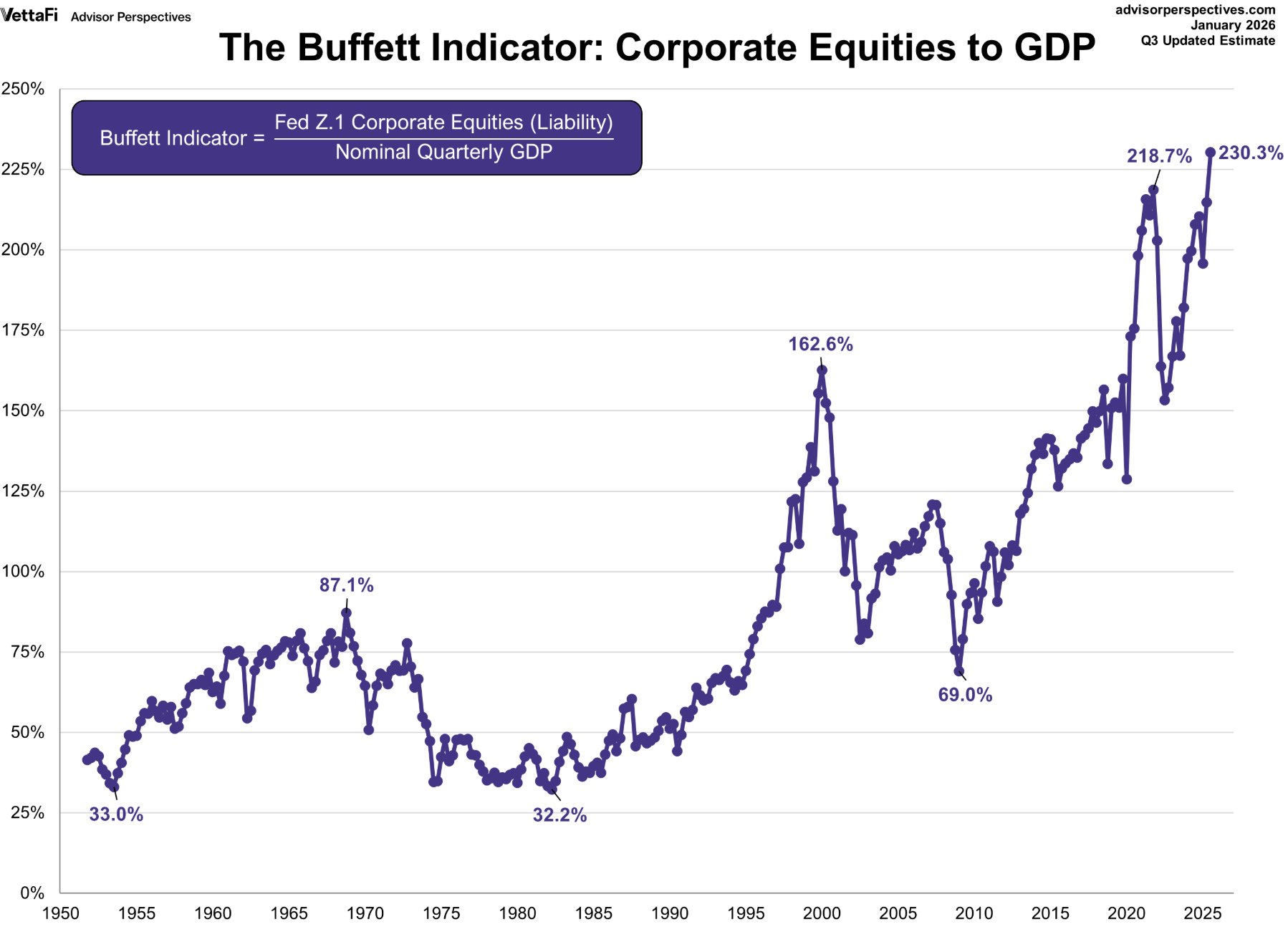
Market Overview - The recent market downturn has seen significant declines in various asset classes, including gold, silver, cryptocurrencies, and major stock indices like the US and Hong Kong markets, with some stocks like Figma and Xpeng dropping over 70% [1][2][3] Market Analysis - Analysts are attributing the market decline to several factors, including the perceived strength of Anthropic's legal AI, Google's higher-than-expected capital expenditure guidance, and the hawkish stance of incoming Federal Reserve Chair Warsh [2][4] - However, these explanations are deemed superficial, as the real drivers of the market volatility are liquidity tightening and high valuations [4][5] Valuation Metrics - The current market valuation, as indicated by the Buffett Indicator (total market capitalization to GDP ratio), stands at 230%, significantly above the 120% threshold that suggests severe overvaluation [5][6] - The S&P 500 Forward P/E ratio is at 22.0x, compared to a 30-year average of 17.1x, indicating a significant premium and suggesting that the market is in a "significantly overvalued" zone [7] Liquidity Concerns - Liquidity tightening is primarily driven by rising Japanese government bond yields, which are reducing global market liquidity due to the unwinding of yen carry trades [10][13] - The U.S. Treasury General Account (TGA) is also a critical factor, with a high balance of approximately $893.2 billion as of early February, and plans for significant debt issuance, further constraining market liquidity [14][15] Market Dynamics - The Chicago Mercantile Exchange (CME) has raised margin requirements for precious metals, which has historically led to forced deleveraging in the market, contributing to the recent volatility [17][19] - Key liquidity indicators to monitor include net liquidity, short-term funding prices (SOFR), interest rate volatility (MOVE), and credit spreads (HY OAS), as these factors will influence market stability and risk asset performance [20][21]
突发,大抛售!空头,暴赚1660亿元
券商中国· 2026-02-07 12:35
软件股抛售潮,余波未了! 据最新消息,随着科技股与软件股遭遇猛烈抛售,做空者近期斩获的浮盈已高达240亿美元(约1660亿元人民 币)。 数据分析公司S3 Partners表示,对冲基金仍在加大对大型科技股的空头布局,即便其中不少龙头企业的股价已 大幅回调。 空头获利1660亿元 2026年以来,科技板块遭遇广泛的市场轮动打压,而软件股最近的抛售潮更是加剧了这一困境。然而,在多头 痛苦的另一端,做空者却斩获巨额收益。 数据分析公司S3 Partners发布的一份报告显示,做空者通过押注科技股将从极度高位回落而获得了可观的账面 回报。该公司指出,尽管空头们全年一直都在对一些软件行业的巨头进行做空操作,但随着形势的变化和市场 波动加剧,他们近期增加了空头仓位。 S3 Partners指出:"今年迄今,美国软件类股票已为做空者带来了240亿美元(约1660亿元人民币)的市值计价 收益,而该行业的市值则蒸发了1万亿美元。" S3 Partners着重提到了几只被空头持续做空的软件类股票,包括微软、亚马逊、甲骨文、博通等。该机构表 示,在上述科技股中,微软尤为引人注目,因为在其股价持续走低之际,空头对其的操作策略发生了 ...

砸崩软件股!Anthropic新工具为什么威力这么大?
凤凰网财经· 2026-02-07 10:57
Core Viewpoint - The introduction of a legal plugin by Anthropic for its Claude Cowork AI has significantly impacted the legal software sector, leading to a sharp decline in stock prices for several companies in this space, indicating increased competition and investor concern about the implications of AI on traditional legal services [4][5][6]. Group 1: Impact on Legal Software Stocks - The release of Anthropic's legal plugin triggered a sell-off in stocks related to legal and data services, with many stocks experiencing declines of over 15% [4][6]. - On the day of the sell-off, the total market value lost in the software, financial services, and asset management sectors was approximately $285 billion [6]. - Companies such as LegalZoom.com saw a nearly 20% drop, while Thomson Reuters and other legal information giants also faced significant declines [6][11]. Group 2: Market Position of Claude AI - Claude has emerged as a preferred tool for legal and financial professionals in conducting analysis, highlighting its competitive position in the AI market [8]. - The legal tools provided by Anthropic claim to automate tasks such as contract review and legal briefs, which are core functions of many legal software products [10]. Group 3: Traditional Legal Information Giants Under Pressure - Companies like LegalZoom, RELX, and Thomson Reuters, which operate in the legal information sector, are facing challenges due to the advancements in AI technology [11][12]. - The introduction of AI tools by startups like Legora and Harvey AI has already begun to disrupt the legal industry, with significant investments flowing into AI products for legal applications [12]. Group 4: Broader Software Industry Concerns - The software sector has been under scrutiny for several months as investors remain cautious about the potential risks posed by AI advancements [13]. - Recent data indicates that only 71% of software companies in the S&P 500 have exceeded revenue expectations this earnings season, compared to 85% for the broader tech industry, suggesting underperformance in the software sector [15].


万兴科技旗下万兴喵影桌面端重磅升级:视频免费剪,AI更出片!
Zhi Tong Cai Jing· 2026-02-07 08:20
Core Viewpoint - AIGC software company Wondershare Technology (300624.SZ) is enhancing its video creative platform, Wondershare Filmora, focusing on a new model of "free basic editing + AI value-added services" to promote the era of "everyone is a creator" [1][3] Group 1: Product Upgrades - The latest version of Wondershare Filmora desktop has introduced significant upgrades, emphasizing "free video editing, AI-enhanced output" [1] - Basic editing features and professional editing tools are now widely available to users, while some AI functionalities will be offered as paid services [3] - The platform has launched a self-developed resource library with various effects, templates, and filters to meet diverse user creation needs [3] Group 2: AI Value-Added Services - Wondershare Filmora adopts a "limited free trial + pay-per-use" model for core AI features, allowing users to experience functionalities like AI-generated videos and voice-to-text services [3] - Users can choose value-added services based on their usage frequency and creative needs after experiencing the free trial [3] Group 3: Market Position and Strategy - Wondershare Filmora has gained popularity globally, being recognized as a leading video editing software in over 200 countries [4] - The company has successfully integrated into the domestic ecosystem by partnering with brands like Huawei and Intel, enhancing its market presence [4] - With over 20 years in the digital creative software industry, Wondershare Technology is considered a major player in the sector, with a user base exceeding 2 billion [5][6]


万兴科技(300624.SZ)旗下万兴喵影桌面端重磅升级:视频免费剪,AI更出片!
智通财经网· 2026-02-07 08:20
Core Viewpoint - AIGC software company Wondershare Technology (300624.SZ) is enhancing its video creative platform, Miao Ying, focusing on a new model of "free basic editing + AI value-added services" to promote the video creative industry towards an AI-driven professional editing phase, aiming to accelerate the era of "everyone is a creator" [1] Group 1: Product Upgrades - The latest version of Miao Ying desktop has undergone a significant upgrade, emphasizing "free basic editing, AI-enhanced output" [1] - Basic editing features and professional editing functions are now widely available to users, while some AI features will be charged as value-added services [3] - Users can experience the upgraded version by logging into the new platform (miao.wondershare.cn) [1] Group 2: Features and Accessibility - The desktop version now offers over ten professional editing features, including watermark-free export, smart background removal, and audio noise reduction, available for free to users [3] - A self-developed resource library is temporarily open, including effects, templates, and filters, catering to diverse creative needs [3] - AI value-added services are available on a "limited free trial + pay-per-use" basis, allowing users to experience core AI functions before deciding on paid services [3] Group 3: Market Position and Strategy - Wondershare Technology has established itself as a leading player in the digital creative software sector, with a global user base exceeding 2 billion [5] - The company has successfully integrated its products into the domestic ecosystem, partnering with brands like Huawei and Intel [4] - In the global AIGC video creative software market, Wondershare ranks first among independent providers in China based on projected 2024 revenue [6]
科技股“崩盘式”回调的信号:风险资产普涨时代终结,输家将被无情抛弃!
Hua Er Jie Jian Wen· 2026-02-07 07:54
Group 1 - The current market adjustment is characterized as a "tech stock disaster" by Goldman analysts, driven by the disruptive impact of AI technology on traditional software and data service companies rather than an AI bubble burst [1][3] - Bitcoin has experienced a significant decline, halving from its historical peak and dropping over 20% this year, while the S&P 500 index has retreated nearly 3% and the Nasdaq Composite index has fallen by 6% [1][5] - The adjustment marks the end of a prolonged bull market for risk assets, with a harsh selection process underway based on the actual benefits of AI technology [3][7] Group 2 - The core reason for market turbulence is the unexpectedly disruptive effectiveness of AI technology, prompting investors to reassess its impact on existing industry structures [5][8] - The software, data services, financial information, and gaming sectors have faced significant sell-offs, with the US software sector plunging 16% this year, while traditional sectors like commodities and utilities in Europe have seen a 4% increase [5][8] - The market is transitioning from a phase of broad tech stock rallies to a phase of brutal structural differentiation, with a focus on identifying winners and losers based on AI's disruptive capabilities [7][8] Group 3 - The structural adjustment in the tech stock market poses a substantial challenge to the long-standing "American exceptionalism" investment paradigm, as geopolitical and economic policy inconsistencies have diminished international investors' confidence in US assets [8] - The driving force behind this adjustment is the industry disruption caused by AI technology, which exceeds the scope of administrative interventions, despite potential support from the Federal Reserve and fiscal stimulus measures [8][9] - Major asset management firms have warned that market leadership will gradually shift from AI technology producers to companies that can effectively leverage AI for productivity gains [8] Group 4 - Bitcoin's recent crash highlights the fundamental drivers of its price volatility, particularly the overall risk appetite in the market, especially in relation to tech stocks [9][12] - The narrative surrounding Bitcoin's anti-inflation and safe-haven attributes has proven inadequate in the face of reality, as evidenced by significant losses reported by companies heavily invested in Bitcoin [9][12] - The current "tech stock disaster" may prompt a reallocation of funds that have long been trapped in non-productive areas [12]
“软件股末日论”点燃大变革! 恐慌抛售之后,市场将捧起AI时代的“软件基石”
美股IPO· 2026-02-07 00:35
Core Viewpoint - A portion of institutional funds is beginning to enter the market for "bottom-fishing" in software stocks that have recently experienced significant declines, agreeing with Jensen Huang's positive outlook on software stocks, suggesting that the market has misjudged strong software giants focused on "AI + core operational processes" [1][4] Group 1: Market Dynamics - The narrative of a "Software-mageddon" is gaining traction, with significant sell-offs in the software sector following the launch of new AI tools by Anthropic, leading to a notable drop in the S&P 500 Software & Services Index, which has fallen approximately 30% since its recent peak at the end of October [3][9] - The software sector faced its most severe sell-off since 2022, with the S&P 500 Software & Services Index experiencing a decline of over 5% in a single day, extending its losing streak to eight consecutive trading days [3][9] - Concerns about AI's impact on traditional SaaS business models have intensified, particularly following the introduction of Anthropic's AI tools, which are designed to handle complex workflows traditionally managed by SaaS providers [7][8] Group 2: Institutional Perspectives - Some institutional investors are starting to view the recent sell-off as an opportunity, believing that high-quality software companies embracing AI may soon experience a technical rebound [4][10] - Analysts from major financial institutions, including Goldman Sachs and Wedbush Securities, suggest that the selling pressure may have peaked, indicating potential for a market bottom and a return of institutional capital to the software sector [16][18] - Rick Sherlund, a prominent analyst, emphasizes that the software industry undergoes significant transformations every 10 to 15 years, and the current AI-driven changes may lead to a new bull market rather than a decline [20] Group 3: Long-term Outlook - Despite fears that AI could completely replace enterprise software, many analysts believe that AI will instead reshape the profitability trajectories of software companies, with a focus on enhancing existing platforms rather than replacing them [12][14] - The market's panic over AI's potential to disrupt software is viewed as exaggerated, with many analysts asserting that established companies with robust platforms, like SAP, will likely benefit from AI advancements [5][19] - The ongoing transition from consumer-facing AI applications to enterprise applications is expected to drive explosive growth in demand for reasoning and computational capabilities [20]