
农林牧渔业

Search documents
徐州加快推进乡村全面振兴 建设“强富美高”新农村
Zhong Guo Xin Wen Wang· 2025-12-25 06:49
徐州加快推进乡村全面振兴 建设"强富美高"新农村 12月24日,徐州市举办"辉煌'十四五''徐'写新篇章"主题新闻发布会,重点聚焦"推进乡村全面振兴"这 一重大主题。市农业农村局、市住建局、市水务局、新沂市、铜山区相关负责人系统回顾"十四五"时期 徐州在农业强市建设、农村人居改善等方面取得的丰硕成果,全面展望"十五五"时期乡村振兴高质量发 展的美好蓝图。 农村展现"强富美高"现实模样 "十四五"以来,徐州市统筹推进农业增效益、农民增收入、农村增活力,广大农村逐步展现出"强富美 高"的现实模样。2024年,全市实现农林牧渔业总产值1400.7亿元、增加值850.1亿元,铜山、新沂获批 创建国家乡村振兴示范县,睢宁获批创建国家农业现代化示范区,沛县获批创建省级农业现代化先行 区。 "十四五"时期,徐州全力抓好粮食生产和重要农产品稳定安全供给。2024年粮食总产达101.05亿斤,蔬 菜常年播种面积610万亩、产量2120万吨,水果种植面积110万亩、产量130万吨。生猪年出栏量保持在 400万头左右,家禽年出栏量保持在1.5亿羽左右。"十四五"期间,徐州加快推进高标准农田建设,持续 提升农业机械化水平,深入推进种 ...

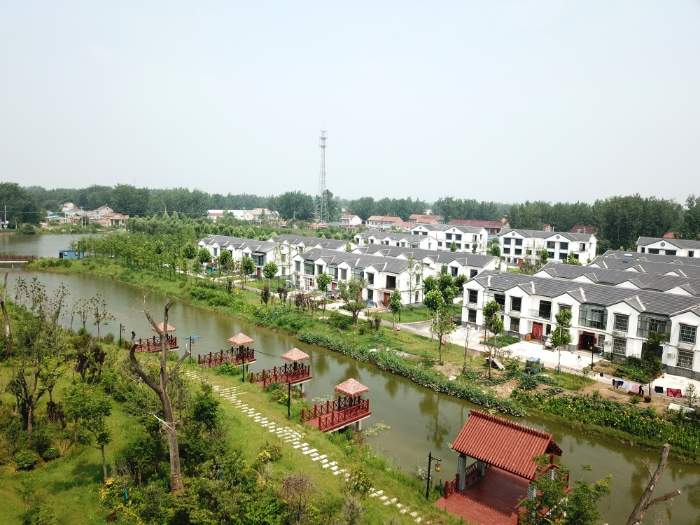
7县经济跑出“加速度”!梅州“十四五”答卷亮眼
Nan Fang Nong Cun Bao· 2025-12-24 10:02
Core Viewpoint - Meizhou City has demonstrated significant economic growth and development during the "14th Five-Year Plan" period, focusing on agricultural enhancement and rural revitalization, with seven out of eight counties achieving economic growth rates above the provincial average [6][7]. Group 1: Economic Performance - The total output value of agriculture, forestry, animal husbandry, and fishery in Meizhou reached 446.55 billion yuan, representing a 14.72% increase compared to the end of the "13th Five-Year Plan" [9][13]. - The per capita disposable income of rural residents in Meizhou was 23,127 yuan, which is a 32.69% increase from the end of the "13th Five-Year Plan" [13]. Group 2: Agricultural Development - Meizhou has focused on strengthening key agricultural industries such as pomelo, tea, and rice, while also developing niche industries like meat pigeons and navel oranges [11][15]. - The city has established 298 leading agricultural enterprises and 15 agricultural industry associations, enhancing the agricultural production chain [19][20]. Group 3: Infrastructure and Rural Revitalization - The "Hundred-Thousand-Ten Thousand Project" has been a central strategy for promoting rural revitalization, with significant improvements in rural construction and aesthetics [37][38]. - Meizhou has completed micro-renovations of 74,000 rural houses and has developed several tourism and cultural integration projects [40][41]. Group 4: Industrial and Economic Integration - The city has implemented tailored industrial strategies for each county, with 25 industries included in the provincial characteristic industry catalog [46]. - Meizhou has seen a significant increase in advanced manufacturing and high-tech manufacturing value added, with respective increases of 10 and 6.9 percentage points compared to 2020 [47]. Group 5: Environmental and Social Initiatives - Meizhou has completed ecological restoration over 3.13 million mu and achieved a forest coverage rate of 74.68%, ranking first in the province [59]. - The city has allocated over 80% of its financial resources to social welfare, with 95% of villages achieving "no petition" status [60]. Group 6: Future Outlook - Meizhou plans to continue enhancing its development strategies, focusing on the "Hundred-Thousand-Ten Thousand Project" and expanding its integration with the Guangdong-Hong Kong-Macao Greater Bay Area [66][68].

新华指数|11月普惠金融-景气指数:融资环境改善 企业经营韧性凸显
Xin Hua Wang· 2025-12-23 09:40
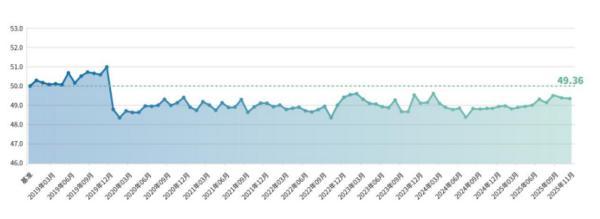
Core Insights - The Inclusive Finance Prosperity Index reached 49.36 points in November 2025, a slight decrease of 0.03 points from October, but up 0.51 points year-on-year [1] Financing Dimension - The financing prosperity index rose to 54.83 points in November, an increase of 0.14 points from October [2] - The average interest rate for newly issued loans (in both domestic and foreign currencies) was approximately 3.1%, down about 30 basis points year-on-year [2] - The balance of inclusive micro and small loans and medium to long-term loans in the manufacturing sector grew by 11.4% and 7.7% year-on-year, respectively, both exceeding the growth rate of other loans [2] Operating Dimension - The operating prosperity index slightly decreased to 48.28 points in November, down 0.07 points from October, with the decline rate narrowing compared to the previous month [3] - The performance and investment indices showed slight month-on-month increases, driven by the "Double Eleven" shopping festival, which stimulated consumer demand [3] - The business vitality index decreased by 0.13 points, indicating that market confidence among enterprises still needs to be strengthened [3] Industry Prosperity - Among nine major industries, four showed an increase in operating prosperity while five experienced a decline [6] - The construction and real estate sectors saw slight increases in their operating indices due to accelerated project construction and policy support [6] - The agriculture, industry, transportation, accommodation, and social services sectors experienced declines in their operating indices [6] Regional Prosperity - Among seven regions, four experienced an increase in operating prosperity while three saw a decline [7] - The Northeast, North China, East China, and Northwest regions reported increases in their indices, while South China, Central China, and Southwest regions saw declines [7]
“十四五”以来,烟台全市农林牧渔业总产值达1319.5亿元
Qi Lu Wan Bao· 2025-12-16 13:20
Core Viewpoint - Yantai City has made significant progress in agricultural and rural development during the "14th Five-Year Plan" period, achieving a total agricultural output value of 131.95 billion yuan, a 23% increase compared to the end of the "13th Five-Year Plan" [1] Group 1: Agricultural Production and Supply - The city has invested 5.74 billion yuan to improve 4.562 million mu of high-standard farmland, maintaining a crop variety coverage rate of over 98% [2] - The total grain planting area is 4.587 million mu, with a total output of 1.9126 million tons and an average yield of 416.97 kg per mu, representing increases of 5%, 10%, and 5% respectively compared to the end of the "13th Five-Year Plan" [2] - The production of vegetables, fruits, meat, eggs, and milk has seen steady growth, with outputs of 2.7 million tons, 8.7 million tons, and 1.15 million tons respectively, reflecting increases of 16%, 18%, and 8% [2] Group 2: Industry Upgrading and Innovation - The city is focusing on developing nine key advantageous industries, including fruits and vegetables, white feather chickens, and modern seed industry, with three industries recognized as national-level advantageous characteristic industry clusters [3] - The area dedicated to apple cultivation has reached 31%, with an increase of 100,000 mu in new varieties [3] - The mechanization rate for crop farming has reached 92.97%, and significant investments have been made in agricultural technology innovation [4] Group 3: Brand Development and Market Expansion - Yantai has cultivated nine provincial-level well-known agricultural product brands and 63 enterprise product brands, with the brand value of Yantai apples reaching 16.437 billion yuan [4] - The online sales of agricultural products have surpassed 10 billion yuan, with over 60,000 e-commerce entities involved [4] - Agricultural product exports reached 25.6 billion yuan, accounting for one-sixth of the province's total exports [4] Group 4: Rural Revitalization and Community Development - The city has implemented a comprehensive rural revitalization strategy, establishing 126 rural revitalization areas covering 1,185 villages [5] - Environmental improvements have led to a 60% reduction in rural environmental issues, enhancing sanitation conditions [5] - Cultural and sports activities have flourished, showcasing the positive image of rural communities [6] Group 5: Income Growth and Support for Farmers - The city has nurtured 455 agricultural industrialization leading enterprises and 18,000 farmer cooperatives, achieving a revenue of 127.38 billion yuan [7] - The per capita disposable income of rural residents is projected to reach 30,227 yuan in 2024, an increase of 7,922 yuan since 2020 [7] - Continuous investment in poverty alleviation projects has led to sustained income growth for impoverished populations [7]
总产值740亿,收入增势稳,泰安农业农村发展“十四五”成效斐然
Qi Lu Wan Bao· 2025-12-02 08:45
Core Insights - The "14th Five-Year Plan" for agricultural and rural modernization in Tai'an is progressing well, with a focus on implementing the rural revitalization strategy and achieving stable development in the agricultural sector [1][2] Agricultural Production and Income - In 2024, the total output value of agriculture, forestry, animal husbandry, and fishery in Tai'an is projected to be 74.47 billion yuan, with a per capita disposable income for rural residents of 26,489 yuan [1] - In the first three quarters of this year, the total output value reached 64.71 billion yuan, reflecting a growth of 4.4%, while the per capita disposable income increased by 5.4% to 22,590 yuan [1] Grain Production and Agricultural Mechanization - The grain planting area in 2024 is expected to be 5.6199 million acres, with a yield of 472.93 kg per acre, totaling 2.6578 million tons [1] - The total vegetable output is projected at 6.367 million tons, and meat, eggs, and milk production is expected to reach 700,000 tons [1] - The mechanization rate for major crops is at 92.25%, with total agricultural machinery power reaching 5.819 million kilowatts [1] Rural Industry Development - The focus is on enhancing rural industries, with the establishment of two national modern agricultural industrial parks and eight strong agricultural towns [2] - The revenue from large-scale agricultural processing enterprises is expected to reach 50.22 billion yuan in 2024 [2] - A total of 75 enterprises have been authorized under the "Tai Good Food" brand, contributing to a comprehensive brand system [2] Rural Infrastructure and Services - A total of 255 provincial-level beautiful rural areas have been created, with rural road mileage reaching 15,500 kilometers [3] - The coverage rate for rural water supply and household tap water access is at 95% and 99%, respectively [3] - The investment in poverty alleviation projects during the "14th Five-Year Plan" period amounts to 1.24 billion yuan, with 1,146 projects implemented [3] Innovation and Digital Agriculture - The development of a "Digital Agriculture Brain" is underway, with five major digital platforms being established [4] - The quality inspection pass rate for agricultural products remains stable at over 98%, with high rates of waste recycling [4] - Tai'an has been recognized as a significant center for the meat duck industry, with innovative agricultural social services covering 3.49 million acres [4]
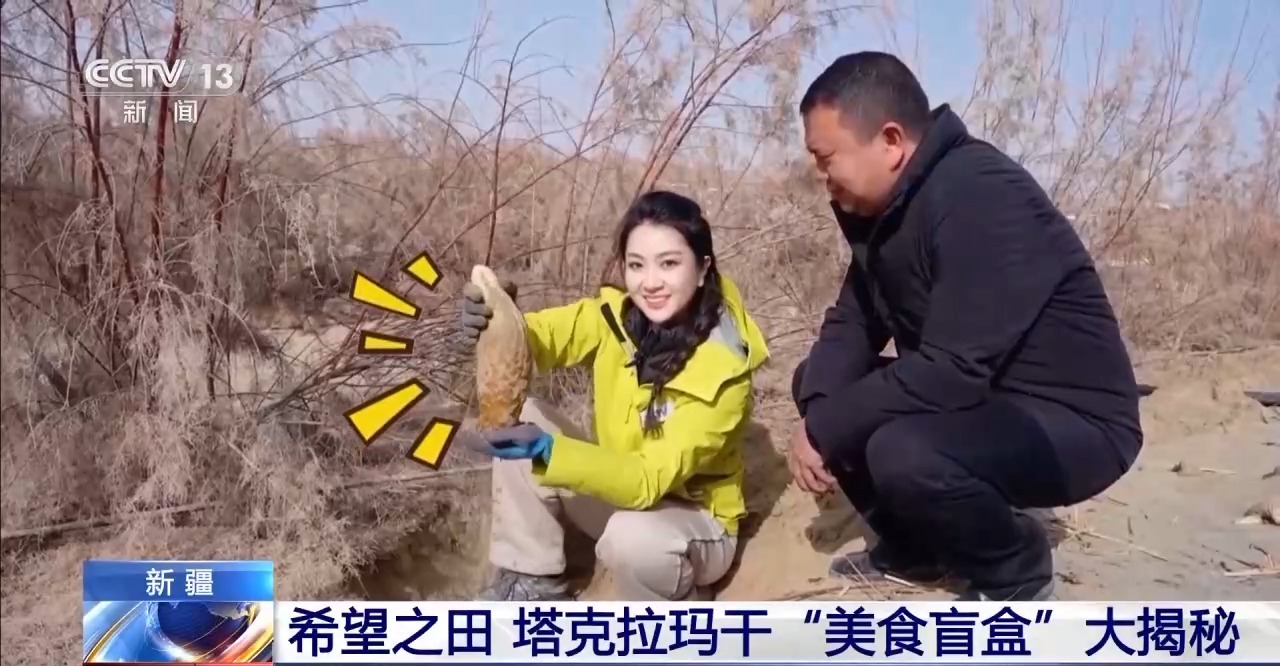
从“死亡之海”到“水产绿洲” 解锁新疆“点沙成金”的密码→
Yang Shi Xin Wen Ke Hu Duan· 2025-11-29 12:27
Group 1 - The transformation of the Taklamakan Desert from a "Sea of Death" to an "Aquaculture Oasis" showcases innovative ecological farming practices in Xinjiang, emphasizing local resource utilization and development strategies [1] - The introduction of various desert delicacies, including the unique flavors derived from local products, highlights the successful adaptation of agriculture in arid environments [1][15] - The cultivation of desert plants such as meat corydalis, which thrives on the roots of red willow, has become a significant source of income for local farmers, with an area of 22,900 acres planted, generating an annual income increase of 30,000 to 50,000 yuan per household [6][4] Group 2 - The local aquaculture industry has adapted to the desert environment, producing local crab and Australian blue lobster, with the unique saline-alkaline water contributing to the distinct taste and texture of the seafood [8][10] - Advanced agricultural techniques, including the use of smart greenhouses, have led to a significant increase in vegetable and rice production, with annual yields reaching 70,000 tons and a reduction in rice growth cycles by nearly half [12][13] - The integration of tourism and traditional lifestyles in the ancient village of Daliyabuyi has revitalized the local economy, attracting over 70,000 visitors this year and promoting local culinary traditions [31][29] Group 3 - The ecological restoration efforts in Kashgar's Shache County, including the planting of 12,000 acres of protective forests, aim to combat desertification and protect local communities from sand encroachment [40][41] - The village of Wenaletai Kushi has implemented a combination of biological and engineering methods for sand control, successfully creating over 2,800 acres of artificial protective forests and 500 acres of grass grids [50][55] - The introduction of economic crops such as meat corydalis and other fruits aims to convert ecological benefits into economic gains, with projections indicating stable employment for 29 individuals and temporary jobs for 640, generating an income of 544,000 yuan [60][58]
财政部:1至10月国有企业营业总收入同比增长0.9%
Yang Shi Wang· 2025-11-28 08:34
Core Insights - The Ministry of Finance reported that from January to October, the total operating revenue of state-owned enterprises (SOEs) increased by 0.9% year-on-year, while total profits decreased by 3.0% [1] Revenue Summary - From January to October, the total operating revenue of SOEs reached 6,835.293 billion yuan, reflecting a year-on-year growth of 0.9% [1] Profit Summary - The total profit of SOEs for the same period was 342.144 billion yuan, showing a year-on-year decline of 3.0% [1] Tax Obligations Summary - SOEs' tax obligations amounted to 487.292 billion yuan from January to October, which is a year-on-year increase of 0.5% [1] Debt Summary - As of the end of October, the asset-liability ratio of SOEs stood at 65.2%, which is an increase of 0.4 percentage points year-on-year [1]
财政部:1—10月国有企业营业总收入683529.3亿元,同比增长0.9%
Jing Ji Guan Cha Wang· 2025-11-28 08:32
Group 1 - The core viewpoint of the article is that the economic performance of state-owned and state-controlled enterprises in China showed a slight increase in revenue but a decline in profits for the first ten months of 2025 [1] Group 2 - Total operating revenue for state-owned enterprises reached 6,835.293 billion yuan, reflecting a year-on-year growth of 0.9% [1] - Total profit for state-owned enterprises amounted to 342.144 billion yuan, indicating a year-on-year decrease of 3.0% [1] - Taxes payable by state-owned enterprises were 487.292 billion yuan, which represents a year-on-year increase of 0.5% [1] - The asset-liability ratio for state-owned enterprises was 65.2% at the end of October, showing an increase of 0.4 percentage points year-on-year [1]
中信建投:“三期叠加”下,市场静待转机
Zheng Quan Shi Bao Wang· 2025-11-23 12:20
Core Viewpoint - The current market is in a "three-phase overlap" characterized by a mid-bull market consolidation period, a critical phase for verifying economic conditions, and a performance policy gap, leading to increased market volatility and year-end profit-taking by investors [1] Market Environment - Recent overseas disturbances have impacted the market, with fluctuating expectations for a Federal Reserve rate cut in December affecting global liquidity [1] - Nvidia's earnings report exceeded expectations, but its stock experienced significant volatility due to investor concerns about the sustainability of AI spending, which has also affected sentiment in the A-share market [1] Long-term and Short-term Strategies - Long-term factors supporting a slow bull market remain unchanged; however, short-term strategies should focus on opportunistic positioning [1] - Investors are advised to wait for the Federal Reserve's monetary policy meeting and the Central Economic Work Conference in mid-December before making significant moves [1] - If market adjustments are sufficient, there may be opportunities to increase positions, with attention to the support levels of the 60-day and half-year moving averages and market volume conditions [1] Industry Focus - Key industries to watch include banking, oil and petrochemicals, steel, agriculture, forestry, animal husbandry, lithium batteries, and new materials [1]

《“十五五”规划建议》解读:政策红利下农林牧渔企业的三大增长路径
Lian He Zi Xin· 2025-11-20 11:31
Investment Rating - The report emphasizes a positive outlook for the agriculture, forestry, animal husbandry, and fishery industry, driven by policy support and market demand [1][3]. Core Insights - The "14th Five-Year Plan" elevates agricultural modernization to a strategic level, creating a policy framework for high-quality development in the industry [3]. - The report identifies three main growth paths for companies in the agriculture sector: policy subsidies and diversified financing, technological empowerment, and industrial integration innovation [1][10]. Summary by Sections Path 1: Policy Subsidies and Financing Support - The "14th Five-Year Plan" aims to enhance the effectiveness of agricultural policies, establishing a multi-faceted investment structure that includes fiscal guarantees and financial support [4]. - Insurance policies for major grain crops provide significant subsidies, with central government support reaching up to 50% for certain regions, effectively mitigating risks from natural disasters and market fluctuations [4][6]. - R&D incentives in key areas like biotechnology and smart agricultural machinery are substantial, with a deduction rate of 175% for eligible expenses, significantly lowering innovation costs for companies [5][6]. Path 2: Technological Empowerment - The report highlights the integration of advanced technologies such as AI and smart agricultural equipment, which are transforming traditional farming practices and enhancing productivity [7][9]. - The contribution of agricultural technology to production has reached 63.2%, with mechanization rates exceeding 75%, leading to improved quality and efficiency in crop production [8][9]. - The use of smart equipment has drastically reduced labor costs and increased operational efficiency, exemplified by a 20-fold increase in efficiency in certain agricultural parks [7][9]. Path 3: Industrial Integration Innovation - The "14th Five-Year Plan" encourages a diversified food supply system, promoting the integration of agriculture, forestry, and fishery sectors [10]. - Companies are shifting from low-margin raw product sales to higher-value processing sectors, such as deep processing of grains and pre-prepared foods, enhancing profit margins [11]. - Innovative business models, including ecological farming and agri-tourism, are being developed to create new revenue streams and improve resilience against market fluctuations [11][12]. Outlook - The report anticipates that the implementation of supportive policies will align with market needs, enhancing the core competitiveness of companies in the agriculture sector and optimizing their profit structures [12][13].