建筑材料

Search documents
云南建投混凝土股价上涨8.33%,技术面突破与资金流入推动
Jing Ji Guan Cha Wang· 2026-02-19 02:44
Group 1 - The stock price of Yunnan Construction Investment Concrete (01847.HK) increased on February 16, 2026, primarily driven by technical factors and capital flow [1] - On February 16, the stock opened at HKD 0.46 and closed at HKD 0.52, marking a daily increase of 8.33%. The highest price reached was HKD 0.57, with a lowest price of HKD 0.46, resulting in a volatility of 22.92% and a trading volume of HKD 31,310 [2] - The closing price of HKD 0.52 broke through the upper Bollinger Band (HKD 0.529), indicating strong short-term upward momentum. The MACD histogram turned positive at 0.006, and the KDJ indicator's J-line rose to 38.884, suggesting increased buying power. The volume ratio (VR) was 160.7, significantly above 100, reflecting heightened capital activity [3] Group 2 - On February 16, the stock experienced a net capital inflow of HKD 24,870, primarily driven by retail investors, despite no net inflow from institutional investors. The volume ratio reached 3.00, indicating that trading volume far exceeded the average of the past five days, highlighting market interest [3] - The construction materials sector saw a slight increase of 0.21% on the same day, while the Hang Seng Index rose by 0.52%. The stock significantly outperformed both its sector and the broader market, likely due to its low valuation (price-to-book ratio of only 0.19) or expectations of a rebound from previous declines [3] - The company's current trailing twelve months (TTM) price-to-earnings ratio is negative (-2.03), indicating that profitability has not yet improved. Investors should monitor whether the underlying fundamentals can support a sustained increase in stock price, such as progress in business orders or signals of a profitability turnaround [4]
科技周期领涨 高股息策略能否逆转引关注
Huan Qiu Wang· 2026-02-18 01:51
Group 1 - The technology and cyclical sectors have shown strong performance since January, with indices such as media, building materials, non-ferrous metals, and oil and petrochemicals rising over 10% as of February 13 [1] - In contrast, the dividend strategy has underperformed significantly in 2025, with the banking index down over 6% year-to-date, indicating a weak performance among low-valuation, high-dividend sectors [1] Group 2 - A report from Guojin Securities suggests that in the context of low macro risks from AI investments and a global manufacturing recovery during a rate-cutting cycle, corporate profit recovery in China could drive the stock market in 2026 [3] - The report indicates that investors may focus more on marginal changes in fundamentals rather than dividend yields, suggesting that dividend strategies may struggle to achieve excess returns this year [3] - Despite this, dividend assets are still considered a "ballast" for portfolios due to their low valuation, low volatility, and competitive yield compared to government bond rates [3] - Over 50 companies have committed to a dividend payout ratio of no less than 30% for 2025, with notable commitments from Huaihe Energy, Guangdong Expressway A, and Desso Fashion for substantial cash dividends [3] - Huaihe Energy has pledged a total cash dividend of no less than 75% of its net profit for 2025-2027, with a per-share dividend of at least 0.19 yuan (tax included) [3] - Guangdong Expressway A plans to distribute cash dividends of no less than 70% of its net profit for 2024-2026, while Desso Fashion commits to a minimum of 60% for the same period [3] - Based on the latest closing prices, Huaihe Energy has a dividend yield exceeding 5.4%, and Guangdong Expressway A is projected to have a yield over 5% based on a 70% payout ratio [3] - Eighteen stocks, including Hongcheng Environment, Sichuan Chengyu, Wantong Expressway, and China National Materials, are forecasted to have dividend yields exceeding 4% based on institutional consensus for 2025 earnings and committed payout ratios [3]


瑞图生态股价单日暴跌超32%,创历史新低
Xin Lang Cai Jing· 2026-02-17 22:25
业绩持续亏损:公司市盈率(TTM)为负值,反映长期盈利能力缺失。截至2026年2月17日,总市值仅 约200万美元,凸显市场对其经营前景信心不足。 流动性压力:当日换手率高达16.65%,成交金额仅31.29万美元,表明少量抛售即可引发剧烈波动。低 流通股本(约186万股)进一步放大了股价脆弱性。 行业板块情况 来源:经济观察网 经济观察网 瑞图生态(RETO.OQ)在2026年2月17日股价出现大幅下跌,收盘价0.67美元,单日跌幅达 32.32%,创历史新低。主要原因可归纳为以下几点: 公司基本面 板块整体走弱:所属的美股建筑材料板块当日下跌2.15%,行业情绪低迷加剧个股压力。 无突发利空事件:当日公司未发布公告或遭遇监管风险,下跌主要受内部基本面与市场情绪驱动。 综上,瑞图生态股价新低是基本面疲软、流动性不足、板块拖累及技术面破位共振的结果。 以上内容基于公开资料整理,不构成投资建议。 破位下行:股价跌破前期低点,触发程序化止损盘。当日振幅达8.86%,最低探至0.61美元,显示抛压 集中释放。 机构持仓分散:前十大股东合计持股占比不足12%,且无主导性机构支撑,缺乏稳定股价的基石力量。 近期事件 无 ...
Vulcan(VMC) - 2025 Q4 - Earnings Call Transcript
2026-02-17 16:02
Financial Data and Key Metrics Changes - In 2025, the company delivered $2.3 billion of adjusted EBITDA, a 13% increase over the prior year, with an adjusted EBITDA margin expanding by 160 basis points to 29.3% [4] - Aggregates cash gross profit per ton grew to $11.33, achieving the previously established target of $11-$12, driving operating cash flow of over $1.8 billion, a 29% increase over the prior year [5][6] - Free cash flow increased by over 40% after reinvesting $678 million in capital expenditures [10] Business Line Data and Key Metrics Changes - Aggregate shipments of approximately 227 million tons increased by 3% for the full year, driven by prior year acquisitions, although same-store aggregate shipments were slightly lower than the prior year [7] - Aggregates mix adjusted price improved by 6% for the full year and 5% in the fourth quarter [8] - SAG expenses for the full year were $564 million, 10 basis points lower than the prior year as a percentage of revenue at 7.1% [11] Market Data and Key Metrics Changes - Public non-highway infrastructure investments grew, with starts in Vulcan markets for water, sewer, and other infrastructure projects increasing double digits in 2025 [15] - Highway starts in Vulcan markets continued to grow at three times the rate compared to the U.S. overall [13] - In California, highway starts were up 47% in 2025 versus 2024, indicating strong demand in key markets [56] Company Strategy and Development Direction - The company aims to expand its industry-leading aggregates franchise in both current and new geographies, focusing on improving underlying business operations [4] - The company anticipates continued growth in public demand complemented by improving private demand, expecting aggregate shipments to grow between 1% and 3% in 2026 [16] - The company plans to reinvest in its franchise through operating and maintenance and internal growth capital expenditures of $750 million to $800 million in 2026 [18] Management's Comments on Operating Environment and Future Outlook - Management expressed confidence in leveraging demand growth and a healthy pricing environment for 2026, with expectations of modest overall growth [21] - The company expects to deliver between $2.4 billion and $2.6 billion of adjusted EBITDA in 2026, driven by high single-digit expansion of aggregates cash gross profit per ton [16] - Management noted that while residential activity is expected to be limited in 2026, there are potential opportunities for improvement in the second half of the year [15] Other Important Information - The company returned $260 million to shareholders through dividends and $438 million through share repurchases [11] - The company has improved its adjusted EBITDA margin by over 700 basis points and return on invested capital by over 200 basis points over the last three years [12] Q&A Session Summary Question: Can you discuss your confidence levels regarding end market demand and expectations around pricing and profitability for 2026? - Management indicated that public starts remain solid, and there is a good story for public infrastructure outside of highways, expecting steady public growth [21][22] Question: Can you clarify the pricing dynamics and the impact of geographic and product mix on pricing? - Management confirmed a "triple whammy" impact on pricing due to geographic mix, acquisitions, and product mix, with expectations for pricing to be lower in the first half of 2026 and improve later [36][38] Question: What gives you confidence in keeping costs down in 2026? - Management attributed confidence in cost control to the Vulcan Way of Operating, which focuses on efficiency and productivity in plants [46][49] Question: How is the IIJA reauthorization impacting your guidance? - Management expects a new bill to be passed, with historical trends indicating that it will be higher than the previous bill, and noted that 50% of IIJA funding has yet to be spent [54][56] Question: What is the outlook for M&A activity in 2026? - Management anticipates a very active year for M&A, focusing on aggregates-led opportunities and expanding geographic footprint [72][75]

多个重要指数涨幅超50%!农历蛇年A股完美收官,马年如何走?
天天基金网· 2026-02-15 07:30
Core Viewpoint - The A-share market in the lunar year of the Snake has shown a strong performance, with major indices experiencing significant increases, indicating a bullish trend in the market [3][5]. Market Performance - The A-share market recorded a cumulative increase of 25.58% for the Shanghai Composite Index, 38.84% for the Shenzhen Component Index, and a remarkable 58.73% for the ChiNext Index during the trading period from February 5, 2025, to February 13, 2026 [3]. - The CSI 2000 Index, which includes 2000 smaller-cap stocks, saw a cumulative increase of 50.39%, while the CSI 500 and CSI 1000 indices rose by 48.49% and 40.35%, respectively [3]. Sector Performance - The performance across various sectors was generally positive, with the non-ferrous metals sector leading with a cumulative increase of over 100%. The defense and military industry followed with an increase of nearly 80% [5]. - Other sectors such as telecommunications, electrical equipment, electronics, machinery, construction materials, basic chemicals, light industry manufacturing, and construction decoration also performed well, each with cumulative increases exceeding 50% [5]. - The banking sector lagged behind, with a cumulative increase of less than 10%, while sectors like food and beverage, non-bank financials, transportation, social services, and retail showed relatively weak performance [5]. Individual Stock Performance - Over 4600 A-shares increased in value during the trading period, accounting for nearly 90% of all A-shares, with more than 700 stocks doubling in value [7]. - Notable stocks that saw increases exceeding 500% include Upwind New Materials, Tianpu Co., and others, while stocks like *ST Aowei and *ST Yanshi experienced declines exceeding 50%, highlighting structural risks even in a bullish market [8]. Future Outlook - The market is expected to maintain a positive long-term trend due to reasonable valuations, ongoing supportive policies, and a solidifying macroeconomic recovery [8]. - Looking ahead to the Year of the Horse, it is anticipated that the A-share market will gradually stabilize and recover, with recommendations for investors to adopt a balanced and rational investment strategy focusing on fundamentally strong assets and growth sectors [9][10].

垒知集团股价震荡下跌,资金面呈净流出态势
Jing Ji Guan Cha Wang· 2026-02-15 04:38
Group 1 - The core viewpoint of the article highlights the recent stock price fluctuations and capital outflow of the company, Lezhi Group, with a cumulative decline of 2.40% from February 9 to 13, 2026 [1] - The construction materials sector has shown overall weakness, with a decline of 3.10%, which has exerted pressure on individual stocks [1] - As of February 13, the closing price of Lezhi Group was 5.70 yuan, reflecting a single-day drop of 2.90% and a cumulative decline of 2.40% over the past five days, with a price fluctuation range of 7.02% [1] Group 2 - The technical analysis indicates that the stock price is currently constrained by the 20-day moving average around 5.96 yuan, with a support level at approximately 5.65 yuan [1] - The capital flow has been predominantly outflowing, with a net outflow of 11.22 million yuan on February 13, while retail investors experienced a slight net inflow; the total net outflow of main funds over the past week was 4.1553 million yuan, reflecting cautious market participation [1] - On February 13, the turnover rate was 4.39%, with a trading volume of 1.44 billion yuan and a volume ratio of 1.15, indicating active short-term trading but insufficient momentum [1]

海南瑞泽股价震荡下行,自贸港政策或成潜在利好
Jing Ji Guan Cha Wang· 2026-02-13 07:54
近7天(2026年2月9日至13日),海南瑞泽股价呈现震荡下行态势。区间累计跌幅2.68%,振幅6.70%,最 高价4.62元(2月9日),最低价4.32元(2月12日)。2月12日单日大跌4.20%,成交额2.58亿元;2月13日小幅 反弹0.69%,收盘价4.36元,主力资金净流入809万元,但整体换手率较低(3.13%)。技术面显示股价弱 于大盘和行业。 机构观点 经济观察网近期,海南瑞泽(002596)因"00后"董事长接班及海南自贸港政策升级而受到市场关注。公 司2025年预计全年扣非净利润亏损1.48亿至2.56亿元,基本面承压。同时,海南自贸港政策于2026年2月 7日升级,允许产业链合并计算加工增值,可能提振本地基建需求,对公司形成潜在利好。此外,证券 之星估值分析显示,公司相对估值偏高,基本面较弱。 股票近期走势 以上内容基于公开资料整理,不构成投资建议。 机构对海南瑞泽关注度一般,最新舆情偏中性。截至2026年2月13日,机构调研频率较低,评级无显著 变化,盈利预测显示2024年每股收益-0.21元,净利润同比下滑52.35%。市场普遍认为公司受益于海南 自贸港长期政策,但短期需警惕高负债 ...

淮北绿金股份股价逆市上涨,资金关注度提升
Jing Ji Guan Cha Wang· 2026-02-13 07:51
股价从2月9日收盘价3.56港元震荡上行,2月13日最新价3.95港元,5日累计涨幅10.03%,区间振幅 19.50%。2月10日单日涨幅达7.30%,但2月13日小幅回调1.00%。区间成交额594.75万港元,换手率提升 至0.50%(2月13日)。2月13日资金净流入122.46万港元,主力资金净流入127.20万港元,显示短期资金关 注度上升。KDJ指标J值从2月9日的10.868升至2月13日的99.496,进入超买区间;股价突破5日均线(3.86 港元),但受制于布林带上轨(4.115港元)。同期恒生指数下跌1.73%,建筑材料板块跌2.33%,股票表现 显著强于大盘和行业。 股票近期走势 以上内容基于公开资料整理,不构成投资建议。 经济观察网近7天(2026年2月9日至13日),淮北绿金股份(02450.HK)股价表现活跃,逆市上涨。 ...
全体注意!节前跳水,军工逆势飘红,后市锚定这两条主线
Sou Hu Cai Jing· 2026-02-13 07:50
Core Viewpoint - The A-share and Hong Kong stock markets experienced significant declines ahead of the Chinese New Year, with a prevailing risk-averse sentiment overshadowing expectations for a "red envelope market" [1]. Market Performance - A-shares saw all three major indices drop, with declines exceeding 1.2%, while the STAR 50 Index showed resilience with a smaller drop of 0.72, indicating underlying support in the tech growth sector [2]. - The total trading volume in both markets was 19,827 billion yuan, reflecting a decrease of 1,591 billion yuan, driven by a cautious "holding cash for the New Year" mentality [3]. - The Hong Kong market faced more severe adjustments, with the Hang Seng Index closing at 26,535.93 points, down 1.84%, influenced by a significant drop in U.S. stocks, particularly the Nasdaq [4]. Sector Performance - The market exhibited a stark divide, with the defense and military sector rising while cyclical and new energy sectors faced heavy losses [5]. - In A-shares, the comprehensive sector rose by 2.06%, and the defense and military sector increased by 0.65%, making it one of the few sectors in the green. Conversely, cyclical and new energy sectors saw significant declines, with non-ferrous metals down 3.36%, construction materials down 3.10%, and oil and petrochemicals down 3.09% [6]. Drivers of Sector Movements - The military sector's rise was supported by two main factors: improved U.S.-China relations and ongoing domestic policy support for low-altitude economy and aerospace, which bolstered investor sentiment [7]. - The downturn in cyclical and new energy sectors was attributed to a sharp decline in international commodity prices, with silver dropping over 11% and gold also experiencing significant losses, leading to a sell-off in risk assets [8]. Market Outlook - The market is expected to continue a pattern of consolidation, with A-shares showing resilience due to policy support and liquidity. Key opportunities remain in the tech sector, particularly in AI computing, semiconductors, and robotics, as well as in military and low-altitude economy sectors driven by clear policy direction [11]. - However, cyclical sectors are likely to remain under pressure until there are signs of improvement in PPI and real estate policies, while the performance of Hong Kong tech stocks will depend on the stabilization of U.S. tech stocks [12][13].
机构资金抢筹布局!标的指数展现高Beta弹性,建材ETF(159745)布局行业核心标的
Xin Lang Cai Jing· 2026-02-13 07:07
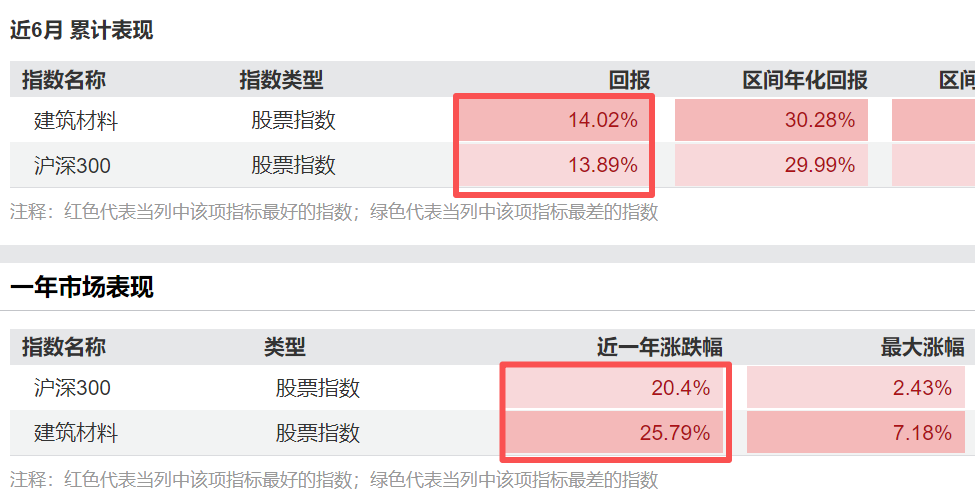
Core Viewpoint - The building materials sector is experiencing a strategic configuration window for upward resonance in both prosperity and valuation, driven by the deepening "anti-involution" policies, alleviation of cost pressures, and recovery expectations in the real estate chain [1] Policy and Industry Dynamics - The "Building Materials Industry Stabilization Growth Work Plan (2025-2026)" aims to regulate low-price disorderly competition and promote the orderly exit of backward production capacity [1] - The cement industry is transitioning from "capacity replacement" to "actual capacity and registered capacity unification," with actual clinker capacity expected to decrease from 2.1 billion tons to 1.6 billion tons, leading to a 10-15 percentage point increase in capacity utilization [1] - By April 2025, approximately 31.65 million tons of capacity had exited the national cement industry, with a net exit of 12.2 million tons, and capacity clearance is expected to accelerate by 2026 [1] Demand Recovery - A January 2026 article in "Qiushi" magazine emphasized the need to "improve and stabilize real estate market expectations," with multiple cities relaxing purchase restrictions, resulting in a 16% month-on-month and 33% year-on-year increase in second-hand housing transaction area [1] - Although new housing development is slowing, the demand for renovation, secondary decoration, and old housing transformation is increasing, prompting building material companies to shift from B-end real estate procurement to C-end retail, which offers stable cash flow and high gross margins [1] Performance of Building Materials Index - The CSI All Share Building Materials Index (931009) has shown significant advantages over mainstream broad-based indices like the CSI 300 in terms of industry exposure, cyclical elasticity, valuation cost-effectiveness, and policy sensitivity, especially as the market approaches a cyclical turning point [2] - The building materials index has outperformed the CSI 300 in both the last six months and the past year, benefiting from high beta elasticity during the economic recovery cycle [2] - The building materials index is highly sensitive to industrial policies, with actual clinker capacity reduced from 2.1 billion tons to 1.6 billion tons, while the CSI 300 lacks sufficient cyclical stock representation to reflect this supply-side change [2] Valuation and Dividend Yield - The current price-to-book ratio of the CSI All Share Building Materials Index is only 1.15%, below the 25th percentile of the past decade, with some leading cement companies' price-to-book ratios falling below 0.8, indicating that market valuations may have overly reflected pessimistic expectations [4] - The building materials index has a dividend yield exceeding 4%, significantly higher than the CSI 300's approximately 3%, with leading companies expected to continue increasing their dividend payout ratios as the "stable price and profit" framework takes shape [6] Fund Flows and Market Sentiment - Institutional consensus on left-side allocation to the building materials sector is evidenced by a gradual increase in the proportion of active equity funds held in the building materials industry since Q2 2025 [6] - Following late January 2026, there has been a noticeable increase in net inflows into the CSI All Share Building Materials Index, with the fund size tracking this index rising from 1.426 billion at the end of 2025 to 3.151 billion within two months [6] - This transition from active institutional allocation to passive market fund resonance indicates a systemic improvement in the liquidity environment for the sector [6] ETF and Investment Opportunities - The Building Materials ETF (159745) tracks the CSI All Share Building Materials Index, covering leading companies across the entire building materials industry chain, providing an efficient tool for investors to gain exposure to the sector [8] - The top ten holdings in the ETF include leading companies in various segments, reflecting a high concentration in the industry [10] - The building materials sector is positioned as a core cyclical investment, supported by demand recovery, supply optimization, and profit restoration, making it attractive for investors looking to capitalize on low valuations and high dividends [10]