
快消品

Search documents
快消品数字平台,开启行业变革新引擎
Sou Hu Cai Jing· 2025-10-28 08:52
Core Insights - The fast-moving consumer goods (FMCG) industry is facing unprecedented challenges due to consumption upgrades and intense market competition, necessitating a shift from traditional offline channels and management practices to digital platforms for effective transformation [1][4] - Digital platforms are becoming essential for FMCG companies to address issues such as inventory backlog, single-channel limitations, and chaotic management, thus enabling a more efficient development phase [4][10] Digital Platform Advantages - **Intelligent Inventory Management**: Digital platforms utilize advanced data analysis and algorithms to resolve inventory management issues, leading to a 40% increase in inventory turnover and a 35% reduction in losses from unsold products for a snack company [6][7] - **Expansion of Multi-Channel Sales**: The platforms break geographical and channel limitations, allowing companies to integrate online and offline sales networks, resulting in a 50% increase in market coverage and over 30% growth in annual sales for a beverage brand [7][9] - **Refined Management Systems**: By integrating core business modules, digital platforms enhance operational efficiency, reducing order error rates to below 0.1% and improving order processing efficiency by 60% [8][9] - **Powerful Data Analytics**: The platforms provide real-time data aggregation and analysis, enabling companies to make informed decisions based on consumer preferences and market trends, leading to a 15% market share for a new product launched by a personal care company [8][9] Success Stories - A well-known dairy company reduced its fresh milk stockout rate from 18% to 3% and halved its expired product losses after integrating with a digital platform, while also doubling its product coverage and increasing online sales from 10% to 35% [9][10] Future Outlook - As digital technologies continue to evolve, the advantages of FMCG digital platforms will expand, incorporating AI and IoT for more precise demand forecasting and personalized marketing services, positioning companies to seize future market opportunities [10][11]


换帅、裁员、拆分业务消费品巨头联合利华“刮骨疗毒”谋破局:三季度全球销售额下滑,中国市场回暖
Mei Ri Jing Ji Xin Wen· 2025-10-23 13:31
Core Insights - Unilever is undergoing significant changes in its business and organizational structure, including plans to spin off its ice cream business and leadership changes [1][6] Financial Performance - In Q3 2025, Unilever reported sales of €14.7 billion, a year-on-year decline of 3.5%, while the underlying sales grew by 3.9% [2] - For the first three quarters, the company achieved sales of €44.8 billion, down 3.3% year-on-year [2] - All five business segments experienced a decline in sales, with the largest drop in home care at 5.3% and ice cream at 4.2% [2] - The Asia-Pacific and Africa regions saw a 6.8% increase in underlying sales, with China and Indonesia markets returning to growth [2][3] Market Adjustments - The ice cream business is expected to be spun off by 2025, with the initial plan to complete the listing by mid-November being delayed [1][5] - The ice cream business, now operating as a separate entity, Dream Ice Cream Company, had a projected revenue of €7.9 billion for 2024 and holds a 21% market share in the global retail market [3][4] Leadership Changes - Fernando Fernandez became the CEO on March 1, 2023, and Srinivasan Patak was appointed CFO in September 2023 [6] - The company plans to rotate 25% of its leadership positions as part of its restructuring efforts [6][7] - Unilever has initiated a global workforce reduction, aiming to cut approximately 7,500 positions over three years, with 6,000 already eliminated by Q1 2023 [6]
换帅、裁员、拆分业务⋯⋯消费品巨头联合利华“刮骨疗毒”谋破局:三季度全球销售额下滑,中国市场回暖
Mei Ri Jing Ji Xin Wen· 2025-10-23 13:29
Core Insights - Unilever is undergoing significant changes in its business and organizational structure, including plans to spin off its ice cream business and leadership changes [1][6] - The company reported a sales decline of 3.5% year-on-year for Q3 2025, with a total sales of €14.7 billion, but a 3.9% growth in underlying sales [2][5] - The ice cream business spin-off is expected to be completed by 2025, despite recent delays in the timeline [1][5] Financial Performance - Q3 sales amounted to €14.7 billion, down 3.5% year-on-year, while total sales for the first three quarters reached €44.8 billion, also down 3.3% [2] - The household care segment experienced the largest decline at 5.3%, followed by the ice cream segment at 4.2%, while beauty and health, and food segments saw declines around 3% [2] - Underlying sales growth was reported at 3.9%, with all five business segments showing growth, particularly beauty and health, which grew by 5.1% [2] Regional Performance - The Asia-Pacific and Africa regions saw a 6.8% increase in underlying sales, the fastest growth among regions, while Europe and the Americas had growth rates of 1.1% and 2.3%, respectively [2] - China and Indonesia markets returned to growth, with China showing single-digit growth and Indonesia achieving a 12.7% increase [2][3] Ice Cream Business Spin-off - The ice cream business, now operating as an independent entity called "Dream Ice Cream Company," was initially set to be spun off by mid-November but has faced delays [3][5] - The projected revenue for the ice cream business in 2024 is €7.9 billion, holding a 21% market share in the global retail market [3][4] Leadership Changes - Unilever has undergone leadership changes, with Fernando Fernandez appointed as CEO and Srinivasan Patak as CFO [6] - The company plans to rotate 25% of its leadership positions as part of its restructuring efforts [6][7] - A significant workforce reduction has been initiated, with approximately 7,500 positions to be cut globally, and around 6,000 already eliminated [6]

北美市场消费需求强劲 联合利华(UL.US)Q3核心销售额超预期
智通财经网· 2025-10-23 08:29
Group 1 - The core sales of Unilever increased by 3.9% year-on-year, slightly above analysts' expectations of 3.7% [1] - The company's operating income decreased by 3.5% to €14.7 billion, impacted by currency factors and asset disposals [1] - Volume growth was 1.5% and price growth was 2.4%, exceeding analysts' expectations of 2.2% [1] Group 2 - Unilever is undergoing a transformation led by CEO Fernando Fernandez, focusing on high-potential products and departments [2] - The company plans to spin off its ice cream business due to declining market share and high production costs, with the proposal delayed by a month due to U.S. government shutdown [2] - Unilever reiterated its full-year core sales growth expectation of 3% to 5% and announced a quarterly dividend of €0.4528 per share, a 3% increase from the previous year [2]
巨头雀巢要裁员一万六千人?如此大裁员究竟想干啥?
3 6 Ke· 2025-10-22 04:04
Group 1 - Nestlé plans to lay off approximately 16,000 employees globally over the next two years, with around 12,000 of these being white-collar professionals [3][6] - The company's sales for the first nine months of 2025 amounted to 65.87 billion Swiss francs, reflecting a 1.9% decline, while organic growth was reported at 3.3% [3] - The restructuring aims to save 1 billion Swiss francs annually by 2027, doubling the initial target of 500 million Swiss francs, with one-time restructuring costs expected to be twice the annual savings [3][9] Group 2 - The layoffs are a response to ongoing global economic pressures, including weak consumer demand and intensified competition in the consumer goods sector [6][8] - The focus of the layoffs on white-collar positions indicates a shift towards automation and digital transformation, as these roles are more susceptible to being replaced by technology [8] - By reducing workforce costs, Nestlé aims to free up cash flow for core business investments, such as new product development and market expansion [9] Group 3 - The situation highlights the increasing importance of building "risk resilience" among employees, as job security in even major corporations like Nestlé is not guaranteed [11] - The demand for versatile talent is expected to rise, emphasizing the need for continuous learning and skill enhancement among workers to remain competitive [11]

传统中医药企跨界卖饮料!娃哈哈前操盘手加盟
Shen Zhen Shang Bao· 2025-10-20 07:50
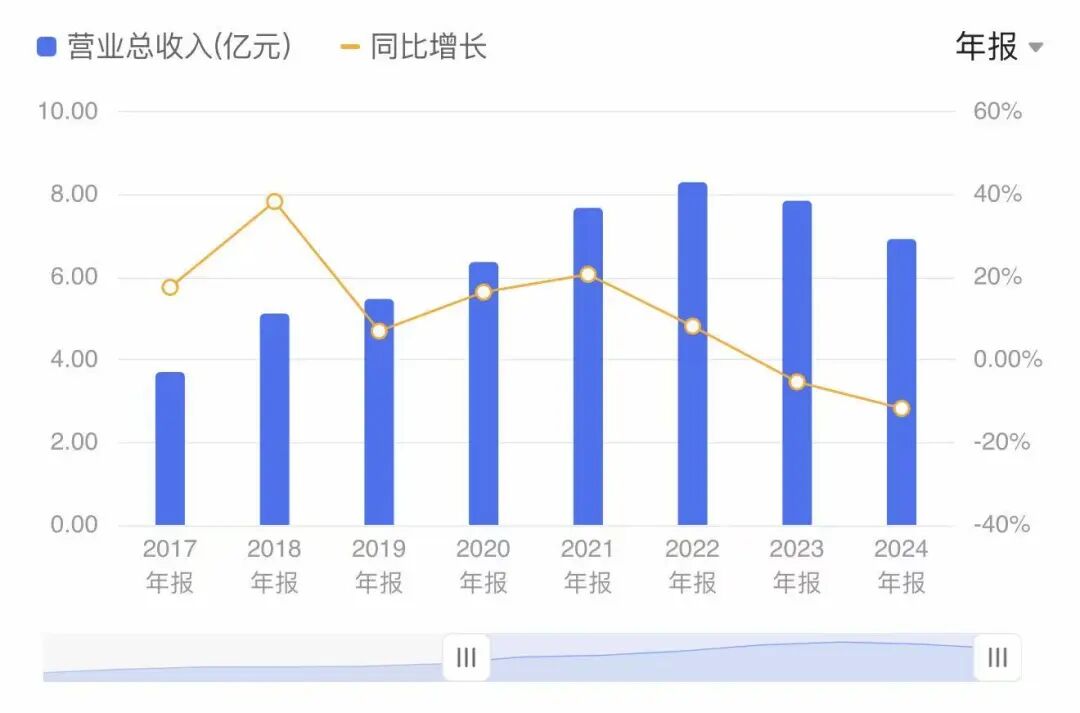
Core Insights - Traditional Chinese medicine company Shouxiangu (603896) is diversifying into fast-moving consumer goods (FMCG) due to performance challenges, hiring former Wahaha sales manager Shen Jiangang to oversee operations [1][2] - The company has established a multi-category matrix for food and medicine integration, launching products like Dendrobium juice and Shouxiangu porridge, with all FMCG operations managed by its subsidiary [1][2] Financial Performance - Since its listing in May 2017, Shouxiangu's revenue grew continuously for six years, peaking at 829 million yuan in 2022, but saw a 5.39% decline in 2023 to 784 million yuan, with a further 11.81% drop projected for 2024 [2] - The company's net profit followed a similar trend, experiencing an 8.39% decline in 2023 and a projected 31.34% drop in 2024 [2] Recent Quarterly Results - In the first half of 2023, Shouxiangu reported total revenue of 300 million yuan, down 16.51% year-on-year, and a net profit of approximately 65.56 million yuan, down 33.99% [5] - The second quarter showed improvement with revenue of 129 million yuan, a decline of 6.64%, compared to a 22.68% drop in the first quarter, with July showing positive growth [5] Product Performance - In the first half of 2023, revenue from Ganoderma lucidum spore products was 216 million yuan, accounting for 73.11% of total revenue, down 17.79% year-on-year [5] - Revenue from Dendrobium products was 46.66 million yuan, representing 15.83% of total revenue, down 24.25% [6] Strategic Direction - Shouxiangu aims to maintain its focus on high-end products like third-generation broken-wall Ganoderma lucidum spore powder while considering a mix of high, medium, and low-tier products for different channels [7] - The company acknowledges the current market challenges and emphasizes the importance of effectively reaching consumers to capitalize on untapped market potential [8]

安得智联携手销售与市场杂志社成功举办第六届快消品全渠道新增长大会
Cai Fu Zai Xian· 2025-10-16 09:13
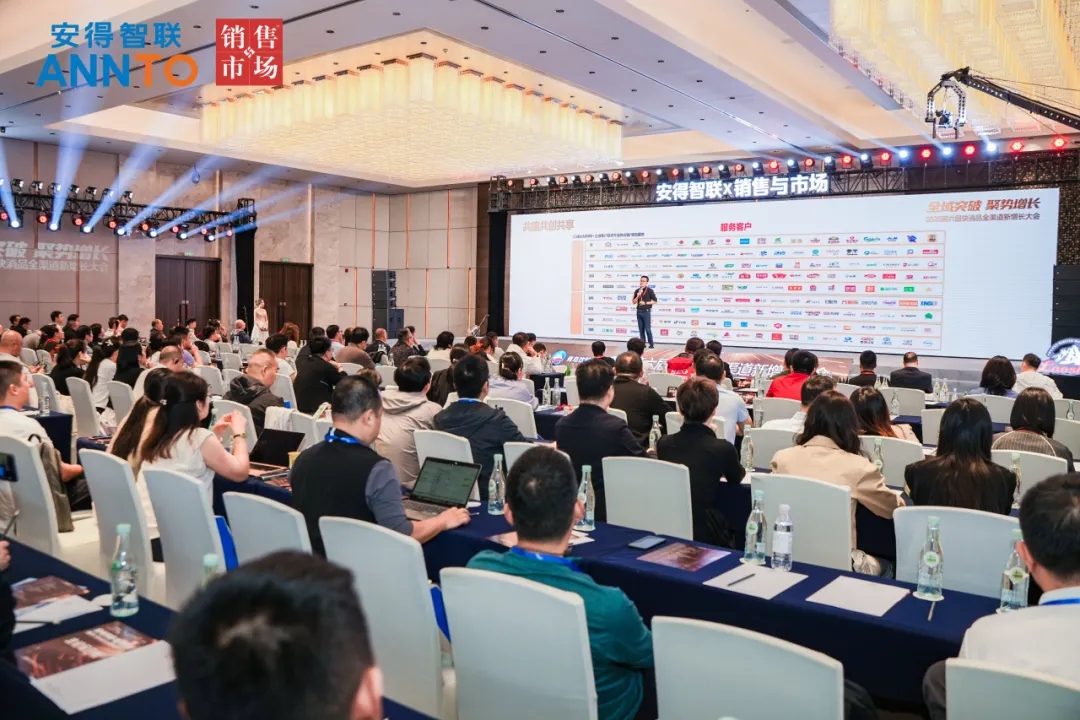
Core Insights - The "2025 Sixth FMCG Omnichannel New Growth Conference" was held in Nanjing, focusing on macro cycles, marketing trends, innovation practices, and transformation paths in the context of current market competition [1] - The conference aimed to gather industry wisdom and resources to guide companies through challenges and identify actionable strategies for growth [1] Group 1: Key Themes and Discussions - Liu Chunxiong emphasized the need to reconstruct the channel value chain in the FMCG industry, shifting from traditional delivery roles to operational roles for distributors, focusing on brand promotion and sales realization through effective channel management [4] - Shi Kunliang presented on supply chain innovations by Ande Intelligent Link, highlighting their inventory sharing and efficient fulfillment model that reduces logistics costs and enhances turnover efficiency [6] - The forum featured discussions on scene marketing and new retail channel transformations, with experts providing methodologies for capturing consumer needs within various scenarios [9][11][13] Group 2: Practical Applications and Case Studies - Qingdao Beverage Group shared successful case studies on scene penetration, demonstrating how brands can deeply bind with consumers' lives through targeted marketing strategies [11] - Various speakers discussed the importance of adapting to new retail formats and optimizing supply chains to enhance competitiveness and market share [22][24][26] - The roundtable dialogue highlighted the essence of competition in the current market, emphasizing the need for collaborative ecosystems to achieve mutual growth [34] Group 3: Future Outlook and Strategic Directions - The conference underscored the importance of precise connections between brands and distributors, facilitating resource matching and cooperation through dedicated networking sessions [38] - The overarching theme of "Omnichannel Breakthrough and Collaborative Growth" was reiterated, suggesting that focusing on ecosystem collaboration is essential for sustainable development in the FMCG sector [38]
【环时深度】新税法为何在多国引发政商激辩
Huan Qiu Shi Bao· 2025-10-13 22:49
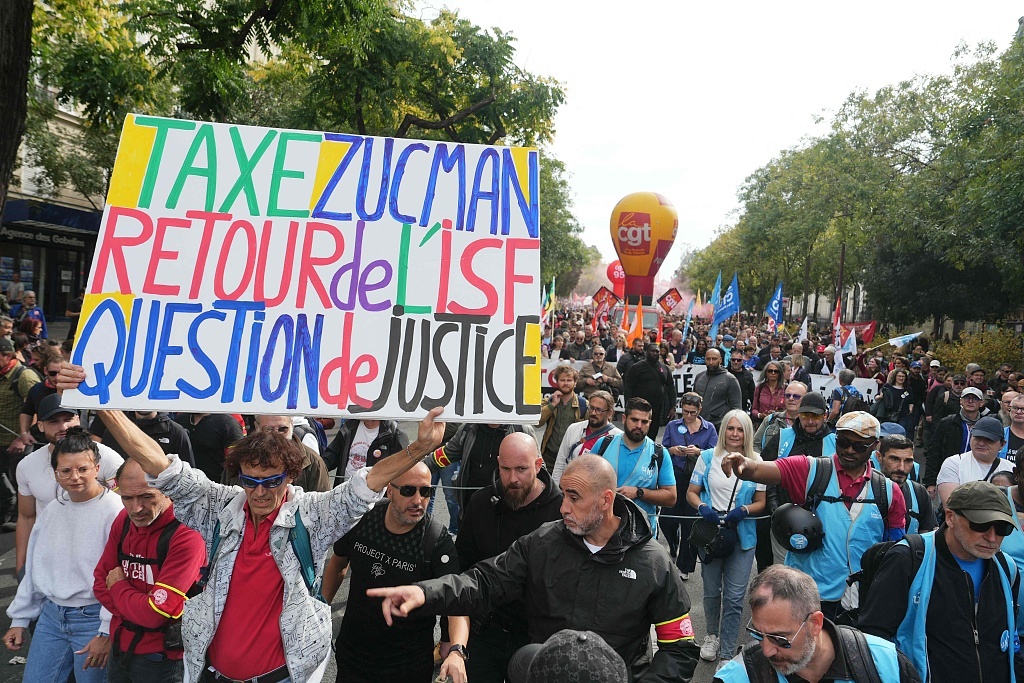
Group 1: France's Wealth Tax Debate - The "Zucman Tax," proposed by economist Gabriel Zucman, aims to impose a 2% global wealth tax on individuals with net wealth exceeding €100 million, potentially generating €15 billion to €20 billion annually for the French government [3][4] - The proposal has sparked intense debate in France, with concerns about balancing high public debt and social equity, as well as historical fears of wealthy individuals relocating due to taxation [3][5] - Prominent figures, including French billionaire Bernard Arnault, have criticized the tax, labeling it as a threat to economic freedom and warning of potential negative impacts on local businesses [4][5] Group 2: U.S. Tax Reform Controversy - The "Big and Beautiful" tax and spending bill signed by President Trump is seen as a fulfillment of campaign promises but has raised concerns about increasing national debt and cuts to essential welfare programs [6][7] - Public opinion is largely skeptical, with approximately two-thirds of Americans believing the tax reform primarily benefits the wealthy, while low-income groups may face adverse effects [6][7] - Republican officials are promoting the bill as a victory for the working class, despite contrasting views from Democrats who argue it disproportionately favors the rich [6][7] Group 3: India's GST Reform - India's government has introduced a new Goods and Services Tax (GST 2.0), which simplifies the tax structure and is expected to reduce household expenses by 13%, particularly benefiting essential goods [8][10] - The reform has faced mixed reactions, with some consumers not experiencing significant price changes, while businesses in wholesale markets have adjusted prices effectively [9][10] - The tax reform aims to lower costs for agricultural inputs, which could significantly impact rural economies, although there are concerns about potential long-term consequences such as increased urban traffic and pollution [10][11]
裕丰昌控股(08631)与智慧油客签署长期供货协议 共筑加油站快消供应链新生态
Zhi Tong Cai Jing· 2025-10-13 02:47
Core Insights - Yufengchang Holdings and Smart Oil have signed a long-term supply agreement, marking a new phase of strategic cooperation [1] - The partnership aims to integrate Yufengchang's fast-moving consumer goods with Smart Oil's extensive network of gas stations across the country [1] - This collaboration is expected to generate over 100 million RMB in annual revenue for Yufengchang's product lines [1] Group 1 - The signing of the long-term supply agreement signifies a substantial advancement following the strategic cooperation framework agreement signed two months prior [1] - The partnership will enable Yufengchang's products, including packaged drinking water and daily consumer goods, to access Smart Oil's nationwide gas station network [1] - Yufengchang's Vice President expressed gratitude for the trust and support from Smart Oil and acknowledged the efforts of partners involved in the cooperation [1] Group 2 - The collaboration is anticipated to drive the transformation and upgrade of non-fuel businesses at gas stations, creating a new ecosystem for efficient and win-win supply chains in the fast-moving consumer goods sector [1] - Both companies plan to continue working together to integrate resource advantages and establish a new benchmark for convenience supply chains at gas stations [2] - The partnership aims to provide consumers with a richer, more convenient, and higher quality range of products and services [2]
裕丰昌控股与智慧油客签署长期供货协议 共筑加油站快消供应链新生态
Zhi Tong Cai Jing· 2025-10-13 02:38
Core Insights - Yufengchang Holdings (08631) and Smart Oil Client have signed a long-term supply agreement, marking a new phase of strategic cooperation [1] - This agreement follows a strategic cooperation framework signed two months prior at the Tianzhushan Spring Water Plant in Shaanxi [1] - The partnership will integrate Yufengchang's fast-moving consumer goods (FMCG) product lines with Smart Oil Client's extensive network of gas stations across the country [1] Summary by Sections Partnership Development - The long-term supply agreement signifies a substantial advancement in the collaboration between Yufengchang Holdings and Smart Oil Client [1] - Key representatives from both companies attended the signing ceremony, highlighting the importance of this partnership [1] Business Impact - The collaboration is expected to generate over 100 million RMB in annual revenue for Yufengchang's product lines [1] - It aims to transform and upgrade the non-fuel business of gas stations, creating a new ecosystem for an efficient and mutually beneficial FMCG supply chain [1] Future Outlook - Both companies plan to continue leveraging their resource advantages to establish a new benchmark for the convenience supply chain at gas stations [2] - The goal is to provide consumers with a richer, more convenient, and higher-quality range of products and services [2]