
电子电器

Search documents
五部门联合印发《关于开展零碳工厂建设工作的指导意见》
Zheng Quan Shi Bao Wang· 2026-01-19 03:04
Core Viewpoint - The joint guidance issued by multiple Chinese government agencies aims to promote the construction of zero-carbon factories, emphasizing a phased and systematic approach to decarbonization across various industries [1] Group 1: Principles of Zero-Carbon Factory Construction - The construction of zero-carbon factories will follow four main principles: tailored strategies based on industry needs, systematic advancement, innovation-driven and technology-enabled approaches, and a commitment to transparency and standardization [1] Group 2: Implementation Phases - The initiative will implement a phased approach, prioritizing industries with urgent decarbonization needs, primarily those relying on electricity, and where decarbonization is relatively easier [1] - Starting in 2026, a selection of zero-carbon factories will be identified to serve as benchmarks [1] Group 3: Target Industries and Timeline - By 2027, the focus will be on cultivating zero-carbon factories in sectors such as automotive, lithium batteries, photovoltaics, electronics, light industry, machinery, and computing facilities [1] - By 2030, the initiative aims to expand to traditional high-energy-consuming industries like steel, non-ferrous metals, petrochemicals, building materials, and textiles, exploring new pathways for decarbonization [1]
2025年进出口总值创历史新高 中国外贸展现韧性与活力
Ren Min Ri Bao Hai Wai Ban· 2026-01-17 07:10
Core Viewpoint - China's foreign trade demonstrates resilience and vitality, achieving a record high in total import and export value in 2025, maintaining its position as the world's largest goods trading nation [1][2]. Group 1: Trade Performance - In 2025, China's total import and export value reached 45.47 trillion yuan, a year-on-year increase of 3.8%, marking nine consecutive years of growth [1]. - Exports amounted to 26.99 trillion yuan, growing by 6.1%, while imports were 18.48 trillion yuan, with a modest increase of 0.5% [1]. - The growth in high-tech product exports was notable, with a year-on-year increase of 13.2%, contributing 2.4 percentage points to overall export growth [2]. Group 2: Import Trends - China maintained its status as the world's second-largest import market for 17 consecutive years, with imports reaching a historical high in 2025 [4]. - Import growth was driven by a recovering economy, with a continuous increase in imports for three consecutive quarters starting from Q2 [4]. - The 8th China International Import Expo saw record participation, with intended transaction amounts exceeding 80 billion USD [4]. Group 3: Trade Partnerships - China's trade partnerships expanded significantly, becoming a major trading partner for over 160 countries and regions, an increase of more than 20 since 2020 [6]. - Trade with ASEAN countries and Central Asian nations saw substantial growth, with imports from these regions increasing by 3.9% and over 1 billion USD in trade volume, respectively [6][7]. - In 2025, trade with countries involved in the Belt and Road Initiative reached 23.6 trillion yuan, growing by 6.3%, which is 2.5 percentage points higher than the overall trade growth rate [7].
破碎黄铜、火烧线价格跟涨,长三角一体化下的废铜流动新机遇
Sou Hu Cai Jing· 2026-01-15 14:45
Group 1 - The recent surge in scrap copper prices is driven by multiple factors, including strong international copper prices and increased domestic demand from industries such as electric vehicles and electronics [1][3] - Scrap copper prices in various regions of China, such as Anhui, Jiangsu, Zhejiang, and Shanghai, have all risen significantly, indicating a collective upward trend rather than isolated incidents [1][3] - The price increases range from 1,500 to 2,400, reflecting a robust demand across the Yangtze River Delta region [1] Group 2 - Different regions exhibit unique market dynamics; for instance, Anhui has a strong manufacturing base but faces intense competition among recyclers, while Jiangsu benefits from stable demand but has strict environmental regulations affecting supply [3][5] - Zhejiang's flexible and responsive market allows for quick adjustments to international price fluctuations, while Shanghai's prices reflect overall market sentiment but have seen slower increases due to rising inventory pressures [5][7] - Companies should focus on gathering comprehensive market information across regions to identify price differences and trends, which can lead to profitable opportunities [7] Group 3 - Businesses need to assess their operational strategies based on their financial capabilities; those with strong capital can focus on stable markets like Anhui and Jiangsu, while those adept at quick turnover may find more opportunities in Zhejiang and Shanghai [7] - The current high price environment necessitates caution, as market conditions can change rapidly due to various external factors, emphasizing the importance of profit locking and maintaining healthy cash flow [7]

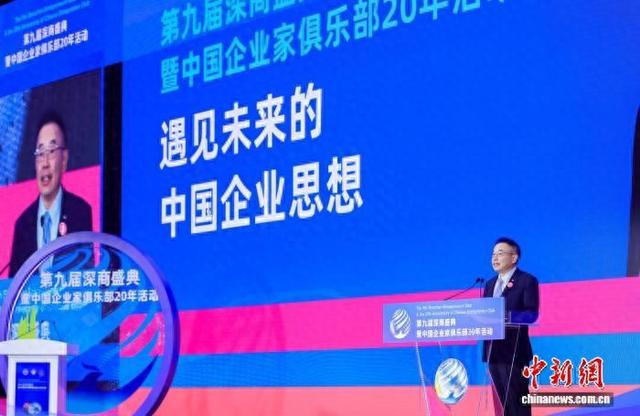
多位知名企业家齐聚第九届深商盛典发声
Zhong Guo Xin Wen Wang· 2026-01-12 13:39
Group 1 - The core theme of the event is "Encountering the Future of Chinese Enterprise Thought," focusing on industrial innovation, technological breakthroughs, ecological construction, and social responsibility [1] - TCL's founder and chairman, Li Dongsheng, emphasized that global technological competition is intensifying, with artificial intelligence transitioning from concept to deep industrialization, becoming a key driver of future economic growth [1] - iFlytek's founder and chairman, Liu Qingfeng, stated that the autonomy of core technologies is fundamental for long-term business sustainability, and the company will focus on independent research and development of foundational models [3] Group 2 - Xiaopeng Motors' chairman and CEO, He Xiaopeng, noted that the Chinese automotive industry has moved from "electrification" to the "intelligent" competition phase, where breakthroughs in autonomous driving and smart cockpit technologies are crucial for seizing global leadership [3] - Ping An Group's deputy secretary of the party committee and general manager, Xie Yonglin, highlighted that the essence of finance is to serve the real economy, advocating for financial technology to upgrade industrial chain finance while ensuring risk control [5] - BGI Group's CEO, Yin Ye, discussed the concept of empowering people's livelihoods through technology, stressing that life and health are the foundation of public welfare, and companies should focus on tackling core technological challenges in gene technology and biomanufacturing [5]



松下集团携全系列创新成果亮相CES 2026 聚焦AI与绿色转型
Zhong Guo Jing Ji Wang· 2026-01-09 04:43
Group 1: Core Themes - Panasonic showcased its innovative solutions at CES 2026, focusing on AI infrastructure, AI-driven B2B solutions, and green transformation [1][3] - The exhibition area covered 1412 square meters, highlighting the company's commitment to sustainable and efficient technologies [1] Group 2: AI Infrastructure Solutions - Panasonic introduced a distributed power system designed for installation within server racks, addressing the energy demands of high-power data centers [1] - The company presented high-performance cooling water circulation pumps, achieving a 75% increase in flow rate while enhancing cooling performance and energy efficiency [2] Group 3: B2B Solutions - The new warehouse automation solution from Blue Yonder integrates camera vision, robotics, RFID, and sensors for comprehensive logistics optimization [2] - Hussmann unveiled two new embedded display cabinets using natural refrigerant R-290, featuring AI IoT capabilities for real-time management and predictive maintenance [2] Group 4: Health Solutions - Panasonic launched a brain health assessment solution based on facial expression analysis, providing a quick evaluation of the BHQ index without MRI [3] - The smart aging care solution utilizes AI to analyze individual risk data and generate intervention plans [3] Group 5: Green Transformation Solutions - The perovskite solar cells introduced by Panasonic feature a glass-integrated structure, offering flexibility and durability for urban renewable energy applications [3] - An automated home appliance disassembly system aims for commercialization by 2028, focusing on efficient reuse of components and high-purity material separation [3]
山东3大专项举措支持鲁企走出去、立得住
Da Zhong Ri Bao· 2026-01-07 01:00
Group 1 - The core viewpoint of the article is that Shandong Province is implementing three major initiatives to support local enterprises in expanding into international markets, focusing on exhibition subsidies, product quality enhancement, and brand development [2][3]. - In 2022, Shandong organized 372 overseas exhibition activities and 62 targeted procurement meetings, with 10,500 foreign trade companies participating, leading to a total import and export volume of 3.19 trillion yuan, a year-on-year increase of 4.6% [2]. - The "Go Global" initiative will continue, with plans to organize over 500 overseas exhibitions in 2026 and involve more than 10,000 enterprises in domestic and international exhibitions [2][3]. Group 2 - The article highlights the importance of "flagship products" in opening international markets, with Shandong focusing on its advantageous industries and developing platforms like the "Shandong Foreign Trade Quality Product Library" [3]. - High-value-added electromechanical product exports are projected to increase from 42.7% in 2020 to 46.9% by 2024, while agricultural product exports have maintained the top position in the country for 26 consecutive years, accounting for 21.3% of the national total [3]. - The policy aims to support foreign trade brand enterprises by subsidizing costs related to overseas patent applications, trademark registrations, and certifications, with a goal of cultivating over 800 "Shandong Export Brands" by 2028 [3]. Group 3 - The rapid development of cross-border e-commerce in Shandong is noted, with 16 cities covered by the national cross-border e-commerce pilot zone and the establishment of 20 provincial platforms and 30 industrial parks [4]. - The policy encourages the integration of "cross-border e-commerce + industrial belts," focusing on traditional industries and high-value sectors, with plans to cultivate around 10 specialized product selection centers and incubate approximately 1,000 enterprises [4]. - Support will be provided for digital transformation and advanced technology services for cross-border e-commerce companies, as well as for activities aimed at expanding international markets [4].
国家绿色产品认证新规出台 河南获认证证书数量跻身全国前十
He Nan Ri Bao· 2026-01-06 23:30
Group 1 - The core viewpoint of the news is the revision and release of the new "Green Product Certification and Labeling Management Measures" by the State Administration for Market Regulation, marking a shift from single-label management to comprehensive regulatory oversight of the entire certification chain for green products [1] - The new management measures are based on the principles of "unified product catalog, unified evaluation standards, unified certification rules, and unified product labeling," which standardize green product certification activities and the use of green product labels [1] - The previous market faced issues of inconsistent certification standards and chaotic labeling, which hindered consumer decision-making and reduced companies' enthusiasm for obtaining green product certifications. The new regulations are expected to alleviate consumer concerns and invigorate the green consumption market [1] Group 2 - As of now, the green product certification catalog in China covers 122 types of products closely related to consumers, including electronics, furniture, building materials, express packaging, and textiles [2] - The province has obtained 352 green product certification certificates, ranking among the top ten in the country. Local market regulation departments have actively promoted green product certification, providing tailored services to pilot enterprises [2] - Promoting green product certification can increase the supply of green products, enhance product quality, and drive high-quality development of enterprises and industries. For instance, the green building materials industry in the province faces challenges such as a high proportion of traditional materials and high resource consumption, necessitating the development of energy-saving and environmentally friendly green building materials [2]
我国绿色产品认证新规出台 涉及电子电器、家具、快递包装等
Jing Ji Ri Bao· 2026-01-04 22:35
Core Viewpoint - The article discusses the recent revision and release of the "Management Measures for Green Product Certification and Labeling" by the State Administration for Market Regulation, marking a significant shift towards comprehensive regulation of green product certification in China [1] Group 1: Regulatory Changes - The new measures represent the first systematic and unified standard for green product certification activities in China [1] - The approach focuses on "unified product catalog, unified evaluation standards, unified certification rules, and unified product labeling" to ensure comprehensive oversight of the entire green product certification process [1] Group 2: Implementation Details - The management measures clarify the classification and grading management of the certification system, defining the applicable scenarios for both full and partial certifications [1] - Specific regulations regarding certification implementation, certificate management, labeling usage, and supervisory responsibilities have been detailed, providing clear guidance for all parties involved [1] Group 3: Current Statistics - As of now, the green product certification catalog includes 122 types of products closely related to consumers, such as electronics, furniture, building materials, express packaging, and textiles [1] - Nearly 40,000 effective certification certificates have been issued, involving over 8,000 certified enterprises [1]
从单一标识管理向认证全链条监管转变!我国绿色产品认证新规出台
Xin Hua Wang· 2026-01-04 03:25
Core Viewpoint - The revision of the "Green Product Certification and Labeling Management Measures" signifies a shift in China's green product certification system from a single-label management approach to a comprehensive regulatory framework covering the entire certification process [1] Group 1: Regulatory Changes - The new measures are based on principles of "unified product catalog, unified evaluation standards, unified certification rules, and unified product labeling" [1] - The framework focuses on the entire process of green product certification, establishing a clear classification and management approach [1] - Specific regulations regarding certification implementation, certificate management, labeling usage, and supervisory responsibilities have been detailed [1] Group 2: Certification Statistics - The green product certification catalog currently includes 122 types of products closely related to consumers, such as electronics, furniture, building materials, express packaging, and textiles [1] - Nearly 40,000 effective certification certificates have been issued, involving over 8,000 certified enterprises [1]
涉及电子电器、快递包装……我国绿色产品认证新规出台
Xin Lang Cai Jing· 2026-01-04 02:26
Core Viewpoint - The recent revision of the "Management Measures for Green Product Certification and Labeling" marks a significant shift in China's approach to green product certification, moving from a single-label management system to comprehensive regulation of the entire certification chain [1] Group 1: Regulatory Framework - The revised measures establish a unified framework for product cataloging, evaluation standards, certification rules, and product labeling [1] - The management approach focuses on the entire process of green product certification, with a clear classification and grading system [1] - The measures specify the applicable scenarios for both full and partial certifications of green products [1] Group 2: Implementation and Oversight - Detailed regulations on certification implementation, certificate management, labeling usage, and supervisory responsibilities have been outlined [1] - The responsibilities of all relevant parties have been clearly defined, providing explicit guidance for related activities [1] Group 3: Current Status and Future Directions - The green product certification directory currently includes 122 types of products closely related to consumers, such as electronics, furniture, building materials, express packaging, and textiles [1] - Nearly 40,000 effective certification certificates have been issued, involving over 8,000 certified enterprises [1] - The market regulatory authority plans to further implement ecological civilization principles, promote green and low-carbon economic development, and enhance market mechanisms to support high-quality development in green products [1]