
家具等

Search documents
市场快讯:中国前两个月出口增长超预期
Ge Lin Qi Huo· 2026-03-10 07:51
1. Report Industry Investment Rating - Not provided 2. Core Viewpoints - China's exports and imports in the first two months of 2026 exceeded expectations, with exports growing by 21.8% year - on - year and imports by 19.8% year - on - year, achieving a trade surplus of $213.62 billion [2] - China's export growth is due to the diversification of export destinations and the continuous improvement of export product competitiveness [2] - The global trade environment in the first two months of 2026 is good, but the war between the US, Israel and Iran on February 28, 2026, which blocked shipping in the Strait of Hormuz, will have a negative impact on global trade in March [4] 3. Summary by Related Content China's Overall Trade in the First Two Months of 2026 - Exports in US dollars increased by 21.8% year - on - year from January to February, with an estimated growth of 7.3%, and imports increased by 19.8% year - on - year, with an estimated growth of 6.9%, achieving a trade surplus of $213.62 billion [2] China's Exports to Different Regions - Exports to ASEAN increased by 29.4% from January to February, compared with 13.4% in 2025 [2] - Exports to the EU increased by 27.8% from January to February, compared with 8.4% in 2025 [2] - Exports to the US decreased by 11.0% from January to February, compared with a 20.0% decrease in 2025 [2] - Exports to countries along the Belt and Road increased by 28.5% year - on - year from January to February, compared with 10.6% in 2025 [2] - Exports to Africa increased by 49.9% from January to February, compared with 25.8% in 2025 [2] - Exports to Latin America increased by 16.4% from January to February, compared with 7.4% in 2025 [2] China's Exports of Different Products - Exports of mechanical and electrical products increased by 27.1% year - on - year from January to February, compared with 8.4% in 2025 [3] - Exports of high - tech products increased by 26.9% year - on - year from January to February, compared with 7.5% in 2025 [3] - Exports of integrated circuits increased by 72.6% year - on - year from January to February, compared with 26.8% in 2025, due to the strong demand from global AI investment and price increases [3] - Exports of automobiles (including chassis) increased by 67.1% from January to February, compared with 21.4% in 2025 [3] - Exports of household appliances increased by 11.4% from January to February, compared with a 3.9% decrease in 2025 [3] - Exports of mobile phones decreased by 8.3% from January to February, compared with a 9.4% decrease in 2025 [3] - Exports of clothing and clothing accessories increased by 14.8% from January to February, compared with a 5.0% decrease in 2025, possibly related to US tariffs and trade uncertainties in the previous year [3] - Exports of furniture and parts increased by 24.7% from January to February, compared with a 6.1% decrease in 2025, possibly related to US tariffs and trade uncertainties in the previous year [3] Exports of Other Countries - South Korea's exports increased by 29.0% year - on - year in February 2026, 33.9% in January, and 13.4% in December last year [4] - Vietnam's cumulative exports from January to February 2026 increased by 18.3% year - on - year, compared with 17.02% in 2025 [4]
消费首破50万亿元背后
Xin Hua Wang· 2026-01-26 09:27
Group 1 - The core viewpoint of the articles indicates that by 2025, China's total retail sales of consumer goods are expected to reach 50.1 trillion yuan, with a growth rate of 3.7%, contributing 52% to economic growth, an increase of 5 percentage points [1] - In terms of product consumption, the trade-in policy is projected to drive sales of automobiles, home appliances, and mobile phones to 2.61 trillion yuan, benefiting 366 million people [3] - The retail sales of durable goods are expected to grow rapidly, with retail sales of home appliances, communication equipment, and furniture increasing by 11%, 20.9%, and 14.6% respectively, while passenger car retail volume is expected to rise by 3.8% [5] Group 2 - New consumption patterns are emerging, with digital, green, and health consumption gaining traction, and online retail sales of physical goods expected to grow by 5.2%, while the market penetration rate of new energy passenger vehicles is projected to reach 53.9% [7] - Rural consumption is showing active performance, with retail sales of consumer goods in rural areas reaching 6.8 trillion yuan, growing by 4.1%, outpacing urban growth by 0.5 percentage points [7] - The inbound consumption trend is rising, with the sales of tax refund goods nearly doubling due to the expansion of visa-free countries and the optimization of tax refund policies, alongside a nearly 30% increase in foreign visitors under the 240-hour visa-free transit policy [9] Group 3 - In 2026, measures to boost consumption will focus on policy implementation, event organization, and improving consumption environments, including optimizing the trade-in policy and promoting durable goods consumption [11] - The Ministry of Commerce plans to organize over 20 "Buy in China" themed events and support local activities to create a strong consumption atmosphere [11] - Efforts will be made to accelerate the cultivation of international consumption center cities and promote new consumption scenarios to enhance the overall consumer experience [11]


国家绿色产品认证新规出台 河南获认证证书数量跻身全国前十
He Nan Ri Bao· 2026-01-06 23:30
Group 1 - The core viewpoint of the news is the revision and release of the new "Green Product Certification and Labeling Management Measures" by the State Administration for Market Regulation, marking a shift from single-label management to comprehensive regulatory oversight of the entire certification chain for green products [1] - The new management measures are based on the principles of "unified product catalog, unified evaluation standards, unified certification rules, and unified product labeling," which standardize green product certification activities and the use of green product labels [1] - The previous market faced issues of inconsistent certification standards and chaotic labeling, which hindered consumer decision-making and reduced companies' enthusiasm for obtaining green product certifications. The new regulations are expected to alleviate consumer concerns and invigorate the green consumption market [1] Group 2 - As of now, the green product certification catalog in China covers 122 types of products closely related to consumers, including electronics, furniture, building materials, express packaging, and textiles [2] - The province has obtained 352 green product certification certificates, ranking among the top ten in the country. Local market regulation departments have actively promoted green product certification, providing tailored services to pilot enterprises [2] - Promoting green product certification can increase the supply of green products, enhance product quality, and drive high-quality development of enterprises and industries. For instance, the green building materials industry in the province faces challenges such as a high proportion of traditional materials and high resource consumption, necessitating the development of energy-saving and environmentally friendly green building materials [2]
内需主导 激发超大规模市场潜能
Jing Ji Ri Bao· 2026-01-05 22:39
Group 1 - The core viewpoint emphasizes the importance of expanding domestic demand as a strategic priority for China's economic growth in 2026, highlighting the need for a strong domestic market [1][2] - The article discusses the significant potential of China's consumer market, driven by a population of over 1.4 billion and a growing middle-income group, which lays a solid foundation for domestic demand growth [2][3] - It notes the shift in consumer behavior from goods consumption to a balanced focus on both goods and services, indicating a substantial opportunity in service consumption [2][5] Group 2 - The article outlines the government's plan to enhance supply-demand matching by increasing the supply of quality goods and services, aiming for a high-quality development pattern by 2030 [4][6] - It highlights the role of technology, particularly AI and big data, in driving consumer demand and improving product offerings, which is essential for adapting to changing consumer preferences [5][6] - The focus on effective investment is crucial for stimulating domestic demand, with initiatives like the "old-for-new" policy expected to boost sales and promote green consumption [6][7] Group 3 - The article identifies new consumption growth points in areas such as product quality enhancement, service expansion, digital upgrades, and green health, which are expected to drive the future of China's consumer market [8][9] - It mentions the government's target to establish three trillion-level consumption sectors and ten hundred-billion-level consumption hotspots by 2027, indicating a proactive approach to expanding domestic demand [9][10] - The transition from a "large market" to a "strong market" is anticipated as supply-demand dynamics achieve a higher level of balance, unlocking further potential for economic growth [10]
广东1-10月实际外资846.2亿元 增长7.5%
Sou Hu Cai Jing· 2025-11-28 09:09
Core Insights - Guangdong Province is actively enhancing its foreign investment policies to attract and utilize foreign capital, which is crucial for high-level opening-up [1][2] - The province has seen significant growth in foreign investment projects and actual foreign capital inflow in 2023, with 27,000 new foreign investment projects established and actual foreign capital reaching 84.62 billion yuan, marking a 32.2% and 7.5% increase respectively [1] - Guangdong has implemented a series of incentives for foreign investment, including financial rewards for high-tech manufacturing and service industries, as well as support for multinational company headquarters [1][2] Investment Incentives - Guangdong offers rewards for eligible foreign investment projects: 3% for high-tech manufacturing, 2% for high-tech services and general manufacturing, and 1% for other industries [1] - For multinational company headquarters, Guangdong provides a one-time reward of 5 million yuan for regional headquarters and up to 8 million yuan for China and Asia-Pacific headquarters, totaling a maximum of 13 million yuan for qualifying companies [1] R&D Support - The province encourages the establishment of foreign R&D centers by providing up to 1 million yuan in one-time funding for qualifying centers, with an additional 500,000 yuan for global R&D centers, allowing for a total of 600,000 yuan in support [2] - This strategy aims to shift export dynamics from cost advantages to technology, brand, and service advantages, contributing to an average annual growth of 6.5% in foreign trade during the first four years of the 14th Five-Year Plan [2] Global Engagement - The recent 2025 Guangdong-Hong Kong-Macao Greater Bay Area Global Investment Conference attracted executives from 74 Fortune 500 companies, indicating strong global interest and trust in Guangdong's investment environment [3] - The provincial government aims to provide high-quality services and implement substantial foreign investment policies to facilitate the development of foreign enterprises in Guangdong [3]
邳州瀚景建材有限公司成立 注册资本10万人民币
Sou Hu Cai Jing· 2025-10-29 02:03
Core Insights - A new company, Pizhou Hanjing Building Materials Co., Ltd., has been established with a registered capital of 100,000 RMB [1] Company Overview - The legal representative of the company is Ma Haiyang [1] - The company operates in various sectors including the manufacturing and sales of new building materials, construction materials, and insulation materials [1] - The business scope also includes sales of furniture, agricultural products, coatings, home goods, labor protection products, doors and windows, hardware products, and electronic components [1] Industry Implications - The establishment of Pizhou Hanjing Building Materials Co., Ltd. indicates a growing interest in the building materials sector, particularly in new and innovative materials [1] - The diverse range of products and services offered by the company suggests a strategic approach to capture multiple market segments within the construction and building materials industry [1]
美国8月零售销售额环比增长0.6% 好于市场预期
Zhong Guo Xin Wen Wang· 2025-09-17 00:04
Group 1 - The core point of the article is that U.S. retail sales in August increased by 0.6% month-on-month, surpassing market expectations, indicating strong consumer demand [1] - Year-on-year, retail sales rose by 5%, while the month-on-month growth remained consistent with July's figure of 0.6% [1] - Excluding automotive and parts sales, retail sales increased by 0.7% month-on-month in August [1] Group 2 - Specific categories showed varied performance: automotive and parts sales grew by 0.5%, clothing sales increased by 1%, and online sales rose by 2% [1] - However, furniture and home goods sales experienced a decline of 0.3% month-on-month [1] - Analysts suggest that the growth in retail sales may be influenced by rising prices, as indicated by the Consumer Price Index (CPI) which rose by 2.9% year-on-year and 0.4% month-on-month in August [1]
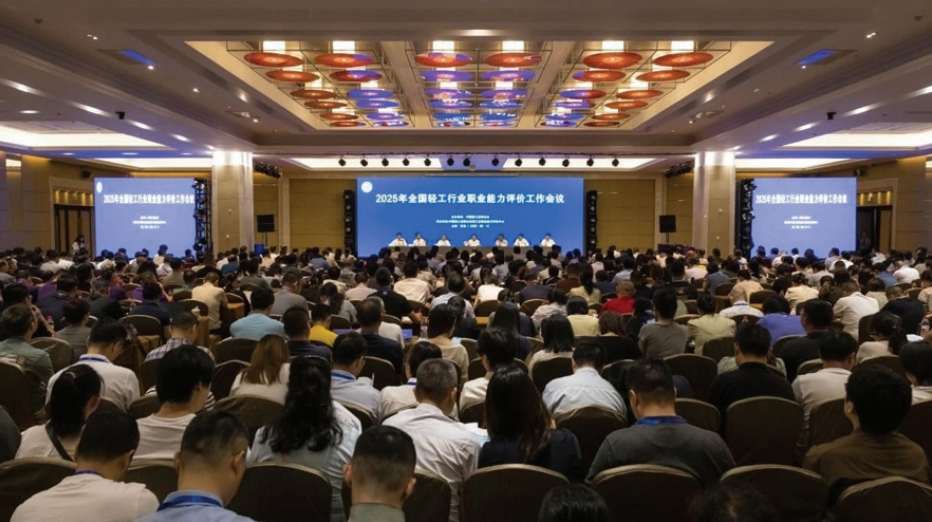
中国轻工业联合会会长张崇和:特色规范评价 让轻工证书真正成为就业促进证
Xiao Fei Ri Bao Wang· 2025-08-14 03:13
Core Viewpoint - The meeting held on August 12-13, 2025, in Qingdao focused on enhancing the evaluation of vocational skills in the light industry, aligning with the directives of Xi Jinping regarding talent cultivation in this sector [1]. Group 1: Achievements and Developments - Over the past five years, nearly 180,000 evaluations have been conducted, establishing a unique "light industry characteristic" in vocational ability assessment [2]. - The integration of vocational education has shown significant results, with over 60% of participants coming from higher education institutions, ensuring a closer alignment between skill training and industry needs [2]. - The combination of competitions and evaluations has led to nearly 4,000 certifications issued directly through skill competitions, creating a positive cycle of "competition promoting evaluation and evaluation strengthening competition" [2]. Group 2: System Optimization - The China Light Industry Federation has strengthened its branch organization, establishing 40 standardized evaluation stations and 110 direct bases, while eliminating 25 non-compliant evaluation units [3]. - A total of 1,040 supervisors and 4,468 evaluators have been trained, ensuring that evaluation results are fair and just through a certified and randomized selection process [3]. - The number of evaluated professions has expanded from 151 to 264, incorporating emerging fields such as intelligent manufacturing and green technology [3]. Group 3: Standardization and Authority - The federation has successfully revised 76 national occupational standards and developed 30 evaluation norms, ensuring a scientific and authoritative evaluation process [4]. - A total of over 1,000 test questions have been developed, and 21,000 evaluation records have been archived, ensuring traceability and accountability in the evaluation process [4]. Group 4: Focus Areas for Future Development - The evaluation of unique light industry professions will continue to be prioritized, with a focus on traditional crafts such as ceramics and baking, aiming to cultivate skilled artisans [5]. - The federation aims to enhance employment opportunities for students by conducting vocational ability evaluations for in-school students, with 30,000 evaluations planned for 2024 [6]. - Advanced vocational ability evaluations will be conducted to meet the urgent demand for high-skilled talent in key light industry sectors, with over 5,000 high-skilled evaluations expected in 2024 [7]. Group 5: Digital Transformation - The federation is actively developing digital occupational evaluations to adapt to the digital transformation in the light industry, having already trained over 2,000 new digital talents [8]. - Continuous monitoring of industry trends will guide the development of new digital evaluation standards and training programs [8]. Group 6: Infrastructure and Quality Assurance - The federation plans to create 20 new occupations and submit 50 national occupational standards during the "14th Five-Year Plan" period to meet industry needs [9]. - A robust framework for evaluation processes and standards will be established to ensure high-quality evaluations and effective management of evaluation records [9]. Group 7: Recognition and Training - The meeting recognized several organizations and individuals for their contributions to vocational ability evaluation, highlighting the importance of collaboration and excellence in the field [10]. - New training bases and evaluation centers were established, with ongoing training programs for evaluators and supervisors to maintain high standards in the evaluation process [11].
【零售】金银珠宝销售加速增长,国补品类持续高增——2025年4月社消零售数据点评(姜浩/梁丹辉)
光大证券研究· 2025-05-20 14:08
Summary of Key Points Core Viewpoint - The overall performance of social consumer retail sales in April 2025 shows a steady growth, with specific categories demonstrating significant variations in growth rates, indicating a mixed recovery in consumer spending [2][6]. Group 1: Social Consumer Retail Sales - In April 2025, the total retail sales of social consumer goods reached 3.72 trillion yuan, with a year-on-year growth of 5.1%, which is 0.8 percentage points lower than the previous month [2]. - For the first four months of 2025, the total retail sales amounted to 16.18 trillion yuan, reflecting a year-on-year growth of 4.7%, an increase of 0.6 percentage points compared to the same period last year [2]. Group 2: Consumer Price Index (CPI) - The CPI in April 2025 remained unchanged from March, with a year-on-year growth rate of -0.1% [2]. - In the supermarket sector, the retail sales of grain and oil products grew by 14.0% year-on-year, while beverage sales increased by 2.9%, and daily necessities saw a growth of 7.6% [2]. Group 3: Retail Performance by Category - In the department store sector, textile and clothing retail sales grew by 2.2%, while cosmetics retail sales increased by 7.2% [3]. - The gold and jewelry sector experienced a significant growth of 25.3%, with an increase of 14.7 percentage points compared to March [4]. - Home appliance retail sales surged by 38.8%, marking a 3.7 percentage point increase from the previous month [5]. Group 4: Selected Categories with High Growth - The retail sales of sports and entertainment products grew by 23.3%, while cultural and office supplies saw a growth of 33.5% [5]. - Categories such as household appliances, audio-visual equipment, and cultural office supplies maintained double-digit growth rates, with some exceeding 30% [6].

印度对成衣、加工食品等孟加拉国部分商品实施进口限制
news flash· 2025-05-18 07:33
Core Viewpoint - India has implemented import restrictions on certain goods from Bangladesh, including ready-made garments and processed foods, effective from May 17, 2023 [1] Group 1: Import Restrictions - The Directorate General of Foreign Trade (DGFT) of India has announced that imports of various types of ready-made garments from Bangladesh will not be allowed through any land border ports [1] - Only imports through the Navasheva Port and Kolkata Port are permitted for Bangladeshi goods [1] - The restrictions do not apply to goods transiting through India to Nepal and Bhutan [1] Group 2: Specific Goods Affected - The DGFT has prohibited the import of fruit drinks, carbonated beverages, processed foods, cotton and cotton waste, plastic and PVC products, and wooden furniture from Bangladesh through multiple land customs stations in Assam and Meghalaya [1]