
电子通信

Search documents
创业板指,突破2800点!
中国基金报· 2025-08-27 03:21
Core Viewpoint - The A-share market has shown a strong upward trend, with the ChiNext Index surpassing the 2800-point mark, indicating a shift in market risk appetite and an overall improvement in the market's profitability since September 24, 2024 [2][6]. Group 1: Market Performance - The ChiNext Index has reached a recent high, driven by significant gains in stocks such as Zhongke Chuangda, Changchuan Technology, and Xinyi Sheng, all of which rose over 10% [4][5]. - Notable stock performances include Zhongke Chuangda (up 15.37% to 79.18), Changchuan Technology (up 13.62% to 57.88), and Xinyi Sheng (up 11.90% to 315.60) [5]. Group 2: Sector Analysis - Recent strong performances in sectors such as new energy, innovative pharmaceuticals, optical modules, and electronic communications have contributed to the sustained strength of the ChiNext Index [4][6]. - The market is entering a valuation expansion cycle, with certain sectors like biomedicine, power equipment, and new energy experiencing a turning point in their economic outlook [6]. Group 3: Investment Outlook - Despite a recent surge in July, the ChiNext remains undervalued, suggesting continued investment opportunities with favorable risk-reward ratios [6].





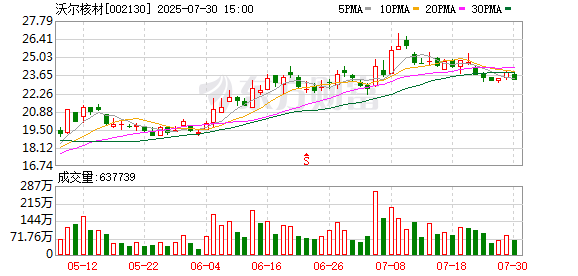
新股速递| 沃尔核材:英伟达影子股,高速铜缆贡献未来看点
贝塔投资智库· 2025-07-31 04:05
Core Viewpoint - The company,沃尔核材, is a comprehensive solution provider for high-speed data communication and alternative energy power transmission, focusing on polymer radiation-modified new materials and has established a complete industrial chain from copper core wire to finished copper cables [1] Industry Outlook - The communication cable industry is expected to grow from $18.2 billion in 2025 to $22.8 billion in 2029, with a CAGR of 5.7% [2] - Traditional communication devices will continue to dominate the market, accounting for 58.5% in 2024, while high-speed communication devices will account for 14.8% [2] - The global high-speed copper cable market is projected to grow at a CAGR of 26.9%, increasing from $1.9 billion to $4.9 billion between 2025 and 2029 [5] Market Position - In the heat shrink materials sector, the company ranks first globally with a market share of 20.6% and 58.5% in China [6] - The company is the largest manufacturer of DC charging guns for new energy vehicles in China, holding a market share of 41.7% [6] - The company is the second-largest high-speed copper cable manufacturer globally, with a market share of 24.9% [7] Financial Performance - The company's revenues for 2022, 2023, and Q1 2024 were $5.337 billion, $5.719 billion, and $1.759 billion, respectively, with net profit margins of approximately 12.37%, 13.25%, and 15.36% [9] - The electronic materials segment, primarily heat shrink materials, saw a revenue growth of 27.9% in 2024, contributing 37.6% to total revenue [10] - The new energy vehicle segment achieved a revenue of $1.38 billion in 2024, growing by 27.6% [11] Competitive Advantages - The company is the only domestic producer capable of mass-producing 224G PAM4 copper cables, with a stable yield rate of over 90% [15] - The company has sufficient core production equipment, with five machines for producing high-speed copper cables, and plans to acquire more [16][17] - The company maintains a healthy cash flow, with net cash flows from operating activities of $1.035 billion, $860.1 million, and $942.9 million from 2022 to 2024 [13] Customer and Supplier Dynamics - The company has a low concentration of customers, with the top five customers contributing 12.6%, 11.5%, and 12.7% of revenue from 2022 to 2024 [14] - The company’s largest customer, Amphenol, accounted for 4.0% of total revenue in 2024, indicating a diversified customer base [14] Growth Drivers - The demand for high-speed copper cables is expected to surge due to the introduction of NVIDIA's GB200 AI computing server, which utilizes copper interconnect technology [8] - The company is positioned to benefit from the increasing capital expenditures of major cloud service providers, projected to grow by 50% [24] Valuation Insights - The company's A-share PE ratio for 2025 is 22.6x, which is lower than the average of 37x for NVIDIA-related stocks [29]



沃尔核材:公司开发的224G高速通信线已经过全球领先客户严格的认证审核,并且已经大批量交货
Mei Ri Jing Ji Xin Wen· 2025-07-31 01:16
Group 1 - The core technology solutions for the current 224G high-speed communication cables are physical foaming technology and solid material technology [1] - The company has developed 224G high-speed communication cables based on these two technology solutions, which have passed strict certification from leading global customers and are now being delivered in large quantities [1] - The current lotus core structure products are mainly used for PCIe series products, and there is uncertainty regarding their application in higher-speed 224G high-speed communication cables and next-generation products [1] Group 2 - An investor raised a question regarding the potential confusion between the company's products and those of New Asia Electronics, specifically about the supply of high-frequency high-speed cables to Amphenol [3] - The company supplies high-speed communication cables (single-channel 224G) for data center servers, which are distinct from the products offered by New Asia Electronics [3]
★深市电子通信企业 锻造核心竞争力逐浪产业蓝海
Zheng Quan Shi Bao· 2025-07-03 01:56
Group 1: Industry Overview - The evolution of communication technology is driving innovation and transforming industries, significantly impacting the digital economy and society as a whole [1] - Shenzhen's electronic communication companies are focusing on innovation-driven development strategies, resulting in the emergence of high-quality tech enterprises that contribute to industrial change and economic transformation [1] Group 2: Company Performance - Kema Technology reported a revenue of 857 million yuan for 2024, representing a year-on-year growth of 78.45%, and a net profit of 311 million yuan, up 279.88% [1] - Kema Technology's R&D investment for 2024 is 66.32 million yuan, an increase of 42.52%, with over 20 million yuan spent in Q1 2024, reflecting a 15.53% year-on-year growth [2] - Feirongda is involved in multiple key industries, including consumer electronics and new energy vehicles, and is optimizing its product structure to align with market trends [2] Group 3: R&D and Innovation - Kema Technology's continuous investment in technology innovation is key to its leadership in the semiconductor equipment sector [2] - Guanghetong, a leading provider of IoT wireless communication modules, has invested 591 million yuan, 716 million yuan, and 719 million yuan in R&D from 2022 to 2024, respectively, and holds numerous patents to support its expansion in IoT applications [3]
耐心遇见匠心 资本与电子通信产业的“长坡厚雪”之约
Shang Hai Zheng Quan Bao· 2025-06-30 19:10
Core Viewpoint - The electronic communication industry is experiencing significant activity and investment, driven by a combination of strategic state support, technological innovation, and market dynamics, leading to high growth and interest from various capital sources [3][4][5]. Group 1: Industry Overview - The electronic communication sector is characterized as a technology and capital-intensive industry with long investment cycles and high risks, yet it is crucial for national security and economic development [4]. - The industry encompasses various segments including chips, communication equipment, terminal manufacturing, and software applications, indicating a long industrial chain and numerous enterprises [3][4]. - The sector has seen a resurgence in 2024, with revenue growth rates leading among major industries, as reported by Wind data [4]. Group 2: Investment Dynamics - Private equity and venture capital are playing a vital role as "innovation engines," focusing on early to mid-stage projects to support technological advancements and industry upgrades [3][4]. - Public funds are increasingly engaging with electronic communication companies, with a notable rise in the number of public fund institutions conducting research on A-share companies in the sector [5]. - The investment logic has shifted from "single-point technology" to "industrial ecology," with a trend towards early and smaller investments [7][9]. Group 3: Future Trends - The future of the electronic communication industry is expected to revolve around innovation and self-sufficiency, driven by emerging technologies such as cloud computing, big data, and artificial intelligence [10]. - The capital market's role is evolving from mere financial investment to value discovery, with a focus on supporting companies with core technologies and enhancing their operational capabilities [11][12]. - The industry is moving towards a model of "ecological co-construction," emphasizing collaboration between capital and technology to strengthen the foundation for future advancements [12].

从种子轮到产业LP 资本深度循环 兆易创新、盈富泰克二十年“老友记”
Shang Hai Zheng Quan Bao· 2025-06-30 19:04
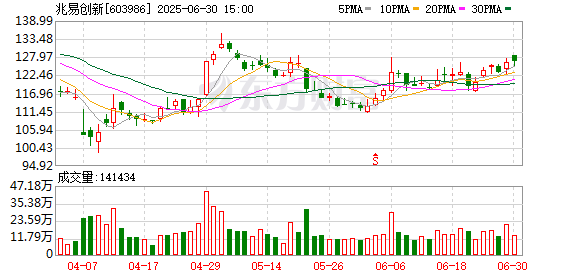
Core Viewpoint - The news highlights the upcoming IPO of Zhaoyi Innovation, a leading storage chip manufacturer in China, aiming to expand its overseas business footprint while celebrating its 20th anniversary [2]. Group 1: Company Background and Growth - Zhaoyi Innovation, known as a prominent non-foundry Flash supplier globally, has achieved significant milestones with the support of long-term capital partners like Yingfu Tech [2]. - The company was founded in 2005 by Zhu Yiming and initially received its first round of financing from Yingfu Tech and Tsinghua Science Park, with Yingfu Tech investing 1.03 million yuan for a 24.03% stake [2]. Group 2: Investment and Partnerships - Yingfu Tech is recognized as a seasoned investment institution in the technology sector, holding a 7.77% stake in Zhaoyi Innovation before its public listing [3]. - In August 2023, Zhaoyi Innovation announced a significant investment of 50 million yuan as a limited partner in a fund managed by Yingfu Tech, aiming to leverage the expertise and resources of the investment firm to enhance its industry positioning and profitability [3]. Group 3: Fund and Industry Relationships - Yingfu Tech has invested in nearly 150 projects over its 25-year history, nurturing 23 companies to go public, with several of these companies now contributing as limited partners in the Beijing Science and Technology Innovation Fund [4]. - The collaboration between Yingfu Tech and its portfolio companies exemplifies a mutual growth dynamic, fostering a robust network of resources and channels for future investment opportunities and value-added services [4].

年中调研热情足!半导体公司被青睐,公募关注下半年科技机会
Bei Jing Shang Bao· 2025-06-29 12:16
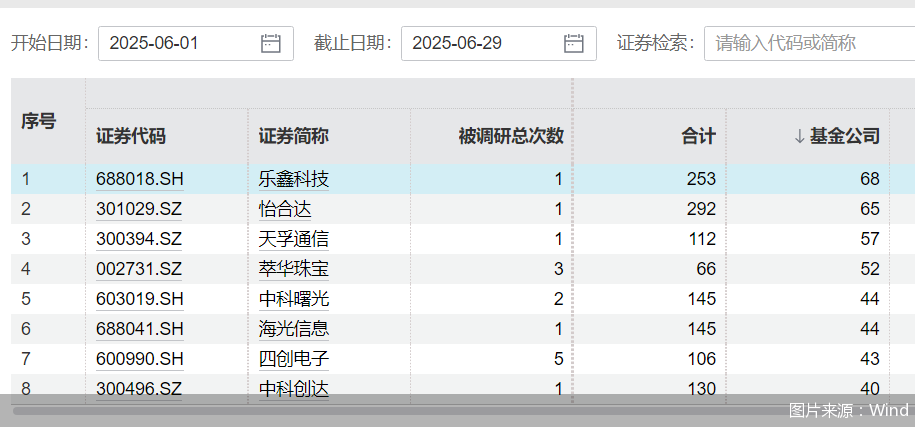
Group 1: Market Trends and Focus Areas - The semiconductor sector has become the focal point of public fund research, with Lexin Technology being the most investigated company, receiving attention from 67 funds [1][3] - Other notable companies in the electronics and communication sectors include Yihua Da and Tianfu Communication, which were investigated by 65 and 57 funds respectively [1][3] - The overall trend indicates a strong interest in technology-related investments, particularly in AI computing and semiconductor industries, driven by policy support and industry upgrades [1][4][6] Group 2: Investment Strategies and Outlook - Multiple public funds have expressed optimism for the second half of the year, highlighting technology as a long-term investment theme [5][6] - Funds are focusing on cyclical sectors due to strong price and profit elasticity amid economic recovery and supply constraints [5] - The emphasis on technology investments is seen as a response to external uncertainties, with a push for high-level technological self-reliance in China [7]
本周有两场高校毕业生专场招聘会
Zheng Zhou Ri Bao· 2025-06-04 00:28
Group 1 - The Zhengdong New District is hosting a job fair on June 7, 2023, aimed at attracting college graduates for employment and entrepreneurship to support high-level development in the area [1] - The job fair will cover various industries including electronic communication, business services, education and training, manufacturing, biomedicine, cultural media, food, agriculture, real estate, insurance finance, and logistics, offering nearly 3,500 job positions [1] - Over 40 companies have registered to participate in the job fair, including Guangzhou Yuehao Food, Shanghai Zihe Information, and Jiangsu Kepu Textile [1] Group 2 - A separate job fair organized by the Erqi District Human Resources and Social Security Bureau will take place on June 5, 2023, targeting recent graduates and unemployed youth [2] - The event will feature over 6,800 job openings in key areas such as new media operations, management trainees, e-commerce, technical engineering, administration, design, accounting, law, computer science, and human resources management [2] - The job fair will include a recruitment area, an exhibition area for companies, and mobile options for resume submission to enhance job matching and face-to-face recommendations for job seekers [2]
普涨,科技主线全面爆发,原因找到了!
Sou Hu Cai Jing· 2025-05-29 13:20
Group 1 - The A-share market experienced a significant rally, with all major indices rising, particularly the ChiNext Index, which surged 1.37% to reclaim the 2000-point mark [1] - The rally was driven by three main factors: the global AI boom fueled by Nvidia's strong earnings report, improved policy environment attracting foreign investment, and a U.S. court decision easing trade tensions [1][2] - The Shanghai Composite Index rose by 0.7% to 3363.45 points, while the Shenzhen Component and ChiNext Index increased by 1.24% and 1.37%, respectively, indicating a clear shift in market sentiment [1] Group 2 - The technology sector led the market, with significant gains in computer, pharmaceutical, and electronic communication industries, while defensive sectors like gold and consumer goods faced declines [2][3] - The healthcare sector outperformed with a 4.09% increase, driven by innovative drug companies and positive developments from the ASCO annual meeting [3] - The stablecoin concept saw a surge due to the implementation of Hong Kong's stablecoin regulations, significantly boosting the fintech sector by over 30% [3]
从“跟跑”“并跑”到“领跑”,三个关键词诠释中国企业“科技叙事”
2 1 Shi Ji Jing Ji Bao Dao· 2025-05-27 04:21
Group 1: Industry Overview - The launch of Xiaomi's first 3nm flagship SoC chip, Xuanjie O1, marks a significant milestone for China's semiconductor industry, positioning it among the global leaders in chip technology [1][2] - The semiconductor sector is expected to see a revenue growth of 21% and a net profit increase of 13% in 2024, indicating a notable improvement in industry conditions [1] - The international trade landscape has accelerated the domestic semiconductor industry's progress, with local manufacturers transitioning from "catching up" to "keeping pace" with global standards [1][3] Group 2: Aerospace Industry Development - China's aerospace industry has become the second-largest globally, with a projected market size exceeding 20 trillion yuan by the end of 2024, driven by advancements in various sectors including large aircraft and commercial space [5] - The successful development of the Tiangong space station and the commercialization of the C919 large passenger aircraft signify China's transition from "catching up" to "keeping pace" and even "leading" in aerospace technology [5][6] - The aerospace sector's high-quality growth is creating long-term value opportunities in the capital market, with significant potential for investment returns [6][8] Group 3: Investment Opportunities - The aerospace industry presents a combination of high barriers to entry and high growth potential, with state-owned enterprises likely to see performance growth and valuation recovery due to reforms and stable order flows [7] - Private companies are focusing on differentiated breakthroughs in flexible manufacturing and commercial aerospace, rapidly capturing market share in niche areas [7] - The dual-use technology from military applications is creating new growth points, expanding into sectors like new energy vehicles and high-end equipment [7] Group 4: Technology Sector Dynamics - The A-share technology sector has shown strong performance since 2025, supported by policy initiatives and a clearer narrative around technology investments [9][10] - The "AI+" trend is driving the technology sector's strength, with domestic tech leaders facing a potential valuation reassessment as the market recognizes China's advantages in talent and patent accumulation [9] - Recent policy measures aim to support technology development, including streamlined asset restructuring processes and the establishment of a "green channel" for tech enterprises in the capital market [10][11]