
自动驾驶

Search documents
滴滴自动驾驶新一代Robotaxi车型亮相,中国首个“路空一体”国家质检中心启用
Guang Zhou Ri Bao· 2026-03-20 05:43
Core Insights - The event on March 20 showcased the first approved large-scale comprehensive testing ground in China for "road-air collaboration" [1] - Didi Autonomous Driving and GAC Aion presented a new generation of Robotaxi models, which have undergone successful durability tests in autonomous driving mode [2] - The Robotaxi integrates Didi's L4 full-stack software and hardware technology with GAC Aion's intelligent manufacturing capabilities, designed specifically for driverless scenarios [2] Group 1 - The new Robotaxi model has been tested in complex conditions, demonstrating stable performance and autonomous driving capabilities [2] - The vehicle features a new hardware platform with 33 sensors, including LiDAR and cameras, enabling comprehensive environmental perception [2] - The central computing unit of the vehicle boasts over 2000 TOPS of GPU computing power, with improved performance and reduced costs by 74% compared to the previous generation [2][3] Group 2 - The vehicle meets the stringent safety standards of both China and Europe, incorporating a multi-layered safety redundancy system [3] - The development process adheres to functional safety standards, ensuring rigorous testing across various conditions to guarantee reliable operation in urban environments [3] - Didi Autonomous Driving emphasizes responsible technological innovation and aims to contribute to the high-quality development of the autonomous driving industry [3]


小马智行交付超百辆第七代无人车,已接入如祺出行平台并运营
第一财经网· 2026-03-19 08:21
Core Insights - Pony.ai officially delivered over 100 units of the seventh-generation autonomous driving system-equipped GAC Aion Robotaxi to Qiji Mobility, marking the commencement of operations on the Qiji platform and a deepened strategic partnership for a larger Robotaxi fleet [2] Group 1: Company Developments - Pony.ai has achieved dual listing on the Hong Kong and US stock markets, with its seventh-generation Robotaxi becoming a core support for commercialization due to technological breakthroughs [2] - The new Robotaxi model utilizes automotive-grade components with a design lifespan of 600,000 kilometers, and the cost of the autonomous driving kit has decreased by 70% compared to the previous generation [2] - The company has achieved positive operating profitability for single vehicles in Guangzhou and Shenzhen [2] Group 2: Industry Context - Qiji Mobility is focused on the mobility technology sector, showing strong growth in performance and a reduction in losses [2] - Following the addition of new vehicles, Qiji's Robotaxi fleet in the Guangdong-Hong Kong-Macao Greater Bay Area has increased to approximately 600 units, maintaining its leading position in regional autonomous driving mobility services [2] - The collaboration continues the "technology + operation" synergy model, with Pony.ai concentrating on core technology development and iteration, while Qiji Mobility manages fleet asset ownership, dispatch operations, and safety assurance [2]

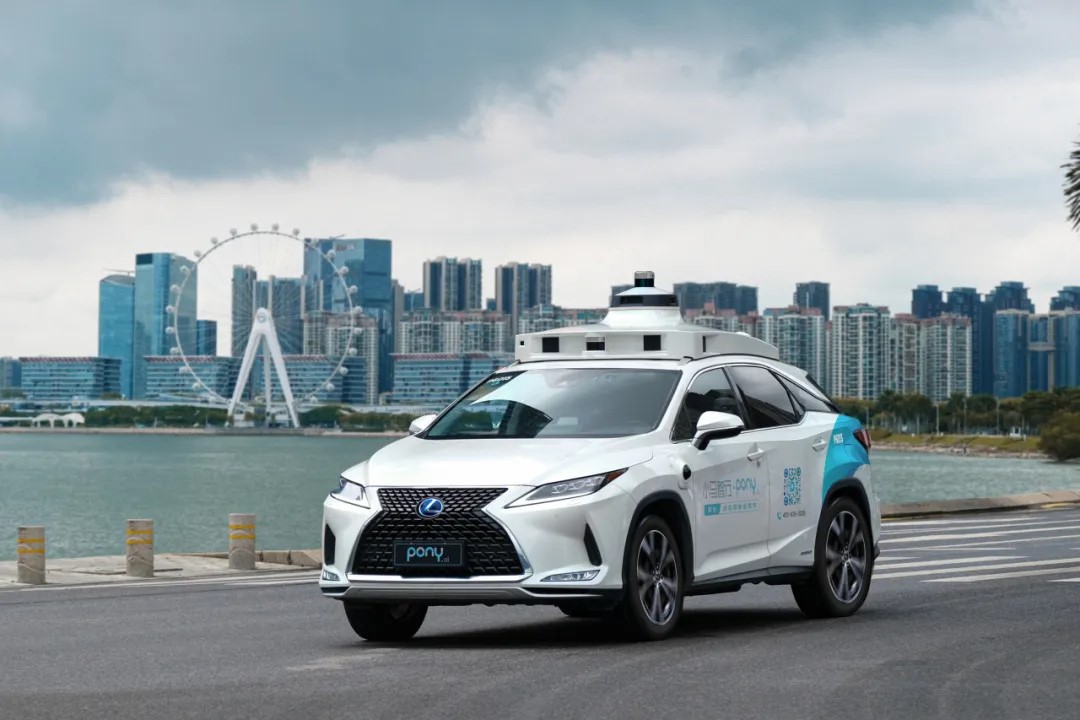
小马智行与如祺出行共建Robotaxi车队 首批交付超百辆第七代无人车
Zheng Quan Ri Bao· 2026-03-19 05:42
Core Insights - The delivery of over 100 units of the new GAC Aion Robotaxi equipped with Pony.ai's seventh-generation autonomous driving system marks a significant step towards the marketization of Robotaxi services, providing a replicable model for "technology + operation" collaboration in the industry [1][2] - Pony.ai and Ruqi Mobility are deepening their strategic partnership to build a larger Robotaxi fleet and enhance operational efficiency across a broader range [1][2] Group 1 - The seventh-generation Robotaxi features enhanced safety, cost control, and user experience, with a total cost reduction of 70% compared to the previous generation [2] - The vehicle is designed for a lifespan of 600,000 kilometers and includes features such as Bluetooth unlocking, voice interaction, online music, and pre-conditioning of the cabin, improving passenger comfort [2] - The seventh-generation Robotaxi has achieved operational profitability in Guangzhou and Shenzhen, indicating strong commercial potential [2] Group 2 - The collaboration between Pony.ai and Ruqi Mobility has been ongoing since 2022, with successful joint operations in Guangzhou, leading to valuable experience in collaboration [2] - The upgrade of this partnership signifies a transition for the autonomous driving industry from technology validation to large-scale market operations, reflecting both companies' confidence and long-term commitment to the future of autonomous driving [2]
英伟达 GTC 重磅发布:携手比亚迪、吉利等全球车企布局 L4 级自动驾驶,黄仁勋称行业迎 “ChatGPT 时刻
Zhong Guo Qi Che Bao Wang· 2026-03-18 10:18
Core Insights - NVIDIA announces a significant collaboration with leading automotive companies including BYD, Geely, Nissan, and Isuzu to develop L4 autonomous vehicles based on the NVIDIA DRIVE Hyperion platform, marking a pivotal moment in the autonomous driving sector [1] Group 1: Expansion of Ecosystem - The partnership signifies the expansion of NVIDIA's autonomous driving ecosystem, incorporating major players like BYD, Geely, Nissan, and Hyundai, alongside previously joined companies such as GM, Toyota, and Mercedes, as well as new energy brands like Xpeng, NIO, and Xiaomi [2] - The collaboration between BYD and Geely is particularly noteworthy, focusing on developing next-generation passenger vehicle autonomous driving systems that address complex urban road scenarios, enhancing the competitiveness of Chinese automakers in the global high-level autonomous driving market [2] Group 2: DRIVE Hyperion Platform Capabilities - The NVIDIA DRIVE Hyperion platform serves as a production-ready L4 autonomous driving development platform, providing standardized sensors and computing architecture, which significantly shortens the validation cycle for L4 systems and reduces R&D integration risks [3] - The latest Hyperion 10 version features two NVIDIA DRIVE AGX Thor chips with a computing power of 2000 FP4 TFLOPS, equipped with 14 external cameras, 3 LiDARs, and 20 ultrasonic sensors, ensuring compliance with ASIL-D functional safety and ISO 21434 cybersecurity standards for safe deployment of L4 autonomous driving [3] Group 3: Commercialization Efforts - NVIDIA is actively transitioning autonomous driving from vehicle development to commercial operations, having partnered with Uber to launch L4 autonomous taxi services in Los Angeles and San Francisco by early 2027, with plans to expand to 28 cities by 2028 [4] - Other global mobility platforms such as Bolt, Grab, and Lyft are also integrating NVIDIA's technology through the DRIVE Hyperion platform to accelerate the commercialization of autonomous driving services across various scenarios including ride-hailing and shared mobility [4] Group 4: Industry Collaboration and Future Outlook - The current phase of autonomous driving technology is shifting from R&D to large-scale deployment, with industry collaboration being crucial for establishing a reliable and safe ecosystem [5] - NVIDIA's deep partnerships with major automotive companies and mobility platforms are accelerating the standardization and industrialization of L4 autonomous driving technology, bringing the commercialization of autonomous driving closer [5] - As technology continues to evolve and the ecosystem matures, NVIDIA aims to further innovate and apply autonomous driving technology, enhancing safety and efficiency in human mobility [5]


【快讯】每日快讯(2026年3月18日)
乘联分会· 2026-03-18 08:36
Domestic News - In the first two months of this year, Shanghai's electric vehicle export value increased by 112.6% year-on-year, contributing 5.9 percentage points to the overall export growth of the city [3] - The Ministry of Finance reported that in 2025, the sales of products related to the consumption upgrade program exceeded 2.6 trillion yuan, benefiting over 360 million people [4] - The total electricity consumption in China for January and February reached 16,546 billion kilowatt-hours, a year-on-year increase of 6.1% [5] - Li Auto launched the MindVLA-o1 autonomous driving foundational model, which enhances spatial understanding and decision-making capabilities [6][7] - Volkswagen and Xpeng announced that their jointly developed electric vehicle will be launched in the first half of this year [8] - Huawei and GAC Group announced a collaboration to create the Qijing brand, focusing on integrated smart mobility solutions [9] - Dongfeng's Tai Chi model has received national approval, marking a significant step in AI technology application [10] - Cao Cao Mobility has launched 3,600 virtual pick-up and drop-off points for its Robotaxi service in Hangzhou [11] International News - Tesla signed a $4.3 billion battery supply agreement with LG Energy to build a lithium iron phosphate battery manufacturing plant in Michigan [12] - In Canada, the market share of zero-emission vehicles dropped to 7.7% in January, with sales declining nearly 40% year-on-year [12] - Applied Intuition partnered with NVIDIA to accelerate the development of L2+ level driving assistance systems for global automakers [13] - Nissan announced plans to import the Murano SUV produced in the U.S. back to Japan starting in early 2027 [14] Commercial Vehicles - The focus on fuel cell vehicles aims to promote large-scale applications in medium and heavy-duty transportation and cold chain logistics [15] - Beijing is working to reduce logistics costs by making energy logistics delivery vehicle permits universally applicable within the city [16] - Beiqi Foton has achieved a breakthrough in semi-solid-state battery production, with a capacity of 60,000 units per year [17] - Dongfeng has completed the integration of its VAN series brand, aiming to establish a new brand identity [18]



黄仁勋的下一个万亿生意
汽车商业评论· 2026-03-17 23:07
Core Insights - NVIDIA and Uber are expanding their partnership in autonomous driving, with plans to launch self-driving taxis equipped with NVIDIA's technology in Los Angeles and the San Francisco Bay Area by mid-2027, aiming for deployment in 28 markets across four continents by the end of 2028 [3][10] - The collaboration signifies NVIDIA's shift from being a chip supplier to a full-stack autonomous driving software provider, while Uber is transitioning from a technology owner to a platform integrator [26][10] Group 1: Partnership Expansion - The new plan involves NVIDIA providing a complete Level 4 (L4) autonomous driving software stack, utilizing the DRIVE Hyperion platform and the Alpamayo inference model [8] - Uber's deployment strategy includes three phases: starting with data collection vehicles, moving to operations with human drivers, and finally transitioning to fully autonomous L4 operations [9] - The partnership aims to integrate NVIDIA's end-to-end autonomous driving stack with Uber's global ride-hailing network, enhancing the scalability of robotaxi services [9][26] Group 2: Industry Context - In the past week, Uber has announced new robotaxi developments with Zoox, Nissan, Wayve, and Motional, indicating a competitive landscape in the autonomous taxi sector [4][12] - NVIDIA's GTC conference showcased its automotive business, with several companies, including BYD and Nissan, adopting the DRIVE Hyperion platform for L4 autonomous vehicles [16][17] - The DRIVE Hyperion platform is designed to integrate computing, sensors, networks, and safety systems, aiming to simplify global deployment and reduce validation cycles [17] Group 3: Future Projections - Jensen Huang, NVIDIA's CEO, predicts that by 2027, the total procurement orders for the Blackwell and Vera Rubin chip series will reach $1 trillion, reflecting the growing demand for computing power in the autonomous driving sector [4][28] - The collaboration with Uber is part of a broader strategy to position NVIDIA as a leader in the AI infrastructure for autonomous driving, with a focus on enhancing the efficiency of AI factories and the overall ecosystem [28][27]

任泽平带你看前沿科技:2026研学计划
泽平宏观· 2026-03-17 16:06
Core Viewpoint - The article emphasizes the importance of practical learning experiences in cutting-edge technology sectors, highlighting the value of direct engagement with leading companies and industry experts to foster innovation and investment opportunities [12][24]. Schedule Overview - The schedule for 2025 includes visits to major technology companies such as Huawei, BYD, Tencent, and others, focusing on sectors like artificial intelligence, new energy, and biotechnology [23][24]. - Specific events are planned, including closed-door investment research meetings and thematic explorations of emerging industries [8][9]. Learning Experience - Participants will engage in deep explorations of technology companies, gaining insights into the full chain of development from laboratory to industrialization [12]. - The program aims to provide practical empowerment through discussions on technology trends, emerging industry ecosystems, and innovative business strategies [12]. Participant Feedback - Feedback from participants highlights the transformative impact of the program on their understanding of macroeconomic trends and investment strategies, emphasizing the importance of learning from industry leaders [46][47]. - Participants express appreciation for the opportunity to connect with top entrepreneurs and gain insights into successful business practices [46][47].

优步与英伟达扩大自动驾驶汽车合作,目标2027年推出
Xin Lang Cai Jing· 2026-03-17 14:52
Core Viewpoint - Nvidia and Uber are expanding their collaboration to launch a global fleet of autonomous taxis using Nvidia's Drive Hyperion platform, with initial deployment planned for Los Angeles and San Francisco in the first half of next year, and expansion to 28 cities worldwide by 2028 [1][2]. Group 1 - Nvidia and Uber will utilize the Nvidia Drive Hyperion platform for their autonomous taxi fleet [1]. - The initial rollout will begin in Los Angeles and San Francisco, with plans to expand to Europe, Australia, Asia, and North America by 2028 [1]. - Uber's stock price increased by 5.1% following the announcement of this collaboration [2]. Group 2 - The vehicles will incorporate Nvidia's Alpamayo AI model, designed to handle complex driving scenarios [2]. - The deployment will start with data collection vehicles for training Alpamayo, transitioning to human-driven vehicles, and eventually to fully autonomous cars [2].
美股异动 | 优步(UBER.US)涨逾5% 与英伟达合作计划2027年上线L4级自动驾驶车队
智通财经网· 2026-03-17 14:28
Core Viewpoint - Uber's stock rose over 5% to $78.75 following the announcement of a partnership with NVIDIA to deploy autonomous taxi fleets in the U.S. by mid-2027, with plans for global expansion by 2028 [1] Group 1: Partnership and Deployment Plans - Uber and NVIDIA plan to deploy autonomous taxi fleets in Los Angeles and the San Francisco Bay Area by the first half of 2027 [1] - The network is expected to expand rapidly to 28 key cities across four continents by 2028 [1] - The ultimate goal is to deploy over 100,000 Level 4 autonomous vehicles equipped with NVIDIA's advanced AI technology on the Uber platform [1] Group 2: Technological Advancements - NVIDIA's CEO Jensen Huang stated that the autonomous vehicle revolution has begun, marking the first robot industry to exceed a trillion-dollar scale [1] - The technology foundation for scalable Level 4 autonomous driving is established through NVIDIA's Hyperion platform and the Alpamayo open inference model, which provide vehicles with three core capabilities: precise perception of the environment, intelligent reasoning in complex scenarios, and safe execution of driving decisions [1]
美股异动|优步盘前涨超2%,与英伟达扩大至在自动驾驶领域的合作
Ge Long Hui· 2026-03-17 08:25
Core Viewpoint - Uber and Nvidia announced plans to deploy autonomous taxi fleets in Los Angeles and the San Francisco Bay Area by the first half of 2027, with a goal to expand to 28 major cities across four continents by 2028, ultimately aiming to deploy over 100,000 L4 autonomous vehicles equipped with Nvidia's advanced AI technology on the Uber platform [1] Group 1 - Uber's stock rose over 2% in pre-market trading, reaching $76.19 [1] - The autonomous vehicle network is expected to rapidly expand as the technology matures, indicating significant growth potential for Uber in the autonomous driving sector [1] - Nvidia's CEO highlighted that the autonomous vehicle revolution is underway, marking it as the first robot industry to exceed a trillion-dollar scale [1] Group 2 - Nvidia's Hyperion platform and Alpamayo open inference model provide vehicles with three core capabilities: precise perception of the surrounding environment, intelligent reasoning in complex scenarios, and safe execution of driving decisions, laying the technological foundation for scalable L4 autonomous driving [1]