
铜业

Search documents
“以铝节铜”应用提速
Xin Lang Cai Jing· 2026-02-06 12:41
Group 1 - The core viewpoint of the article highlights the significant rise in domestic copper prices in early 2026, following a historical high in 2025, driven by supply disruptions, increased demand, and favorable policy expectations [1][2]. - The global copper ore grade has decreased from 1.3% in 2005 to 0.65% in 2025, with mining costs rising over 40% compared to 2015, indicating long-term supply constraints [2]. - Demand for copper is being significantly boosted by the growth of "green energy" and "artificial intelligence," with electric vehicles using 3 to 5 times more copper than traditional vehicles, leading to substantial demand increases [2]. Group 2 - The rise in copper prices is exerting cost pressure on downstream enterprises, affecting various sectors including electrical production and home appliances [3]. - Companies are focusing on technological upgrades and innovations to mitigate cost pressures, such as optimizing structural designs and employing AI for energy savings [4]. - The exploration of "using aluminum to save copper" is becoming a key strategy in various industries, with applications in power, home appliances, and automotive sectors [5]. Group 3 - The application of copper-aluminum composite materials is gaining traction, with significant reductions in copper usage in air conditioning units and electric vehicles, indicating a shift towards resource-saving technologies [6]. - The use of high-quality copper-aluminum composite materials not only reduces costs but also enhances green value, as aluminum recycling consumes significantly less energy than copper recovery [6]. - The adoption of these materials is expected to alter the trend of dependence on imported copper, particularly copper concentrate, thereby enhancing industrial safety and international competitiveness [6].
春节铜市蓝皮书:累库的西边&去库的东边
对冲研投· 2026-02-06 12:00
Core Viewpoint - The article discusses the potential impact of logistics and inventory changes on copper prices as the 2026 Spring Festival approaches, emphasizing the importance of understanding market dynamics and consumer behavior in the copper industry [2][31]. Group 1: Logistics Situation Before and After Spring Festival - Logistics operations are expected to be tighter this year compared to previous years, with early holidays for logistics companies leading to delayed recovery post-festival [8][10]. - The transportation of copper primarily relies on large trucks, with significant cost variations depending on the mode of transport, which can affect overall logistics efficiency [3][4]. - The rising fuel prices have been a major cost factor for logistics companies, impacting their profitability and operational decisions [4][7]. Group 2: Industry Holiday Schedule - Most smelting companies plan to maintain production during the Spring Festival, but logistics disruptions may affect their shipping schedules [10]. - In South China, copper rod manufacturers are largely halting production for the festival, with a significant number of companies planning to resume operations only after February 24 [11][12]. - The overall holiday schedule for various copper-related industries indicates a longer downtime compared to previous years, which may delay inventory depletion [16]. Group 3: Acceptance of High Prices by End Users - Following a surge in copper prices above 100,000, downstream processing and end-user companies exhibited reluctance to purchase at high prices, leading to a drop in transaction volumes [17][20]. - Despite initial hesitance, transaction volumes began to stabilize as prices fluctuated, indicating a potential acceptance of prices around the 100,000 mark [21]. Group 4: Expected Inventory Changes Post-Festival - Historical data suggests that copper inventories typically peak around 33 days after the Spring Festival, with this year’s peak expected to extend to 37-42 days due to delayed logistics and production recovery [26][28]. - The anticipated inventory accumulation post-festival is projected to be between 100,000 to 120,000 tons, with total inventory levels reaching approximately 420,000 to 470,000 tons [26][28]. - The price feedback loop is expected to show a decline in copper prices around t+3 to t+4, with a potential low point occurring in late March to early April [28][31].


隔夜美股走弱较为明显,流动性冲击或再度来袭
Hua Tai Qi Huo· 2026-02-06 05:27
Report Industry Investment Rating - Copper: Neutral [6] - Arbitrage: Suspended [6] - Options: Suspended [6] Core View of the Report - Due to large fluctuations in precious metals (especially silver) and continuous increase in margin by the exchange, there is a need to prevent the risk of liquidity stampede in the near future. It is recommended to take a wait - and - see attitude towards copper, while enterprises with hedging needs are advised to conduct short - term (two - week cycle) buy - hedging operations [6] Summary by Relevant Catalog Market News and Important Data - **Futures Quotes**: On February 5, 2026, the main contract of Shanghai copper opened at 104,000 yuan/ton and closed at 100,980 yuan/ton, a decrease of 3.97% from the previous trading day's close. The night - session main contract of Shanghai copper opened at 100,430 yuan/ton and closed at 101,430 yuan/ton, a 1.43% decrease from the afternoon close [1] - **Spot Situation**: According to SMM, the average spot price of SMM 1 electrolytic copper was at a discount of 70 yuan/ton yesterday, 30 yuan/ton higher than the previous day, with the copper price ranging from 100,260 to 102,020 yuan/ton. The spot supply is still tight, and it is expected that the spot discount will continue to converge slightly tomorrow [2] Important Information Summary - **Macro and Geopolitical**: Starting from the close of trading on February 9, 2026, the daily limit range and trading margin ratio of international copper futures will be adjusted. Overnight U.S. stocks weakened collectively, which may impact market liquidity and affect copper prices [3] - **Mining End**: On February 5, Cornish Metals Plc received a non - binding letter of intent from the U.S. Export - Import Bank, offering a maximum financing of $225 million for its mine project, with the condition of supplying tin raw materials to the U.S. The company aims to restart the South Crofty tin and copper mine, which closed in 1998 and was acquired in 2016 [3] - **Smelting and Import**: In 2026, the non - ferrous metal market will show a pattern of "structural differentiation and intensified fluctuations" with a rising price center. The supply - demand pattern will be in a tight balance, and the demand side will maintain a structural growth trend [4] - **Consumption**: The holiday schedule of copper strip enterprises in 2026 is basically the same as in 2025. Most copper plants choose to stop production and overhaul during the Spring Festival, and downstream pre - holiday stocking orders are weak [5] - **Inventory and Warehouse Receipts**: LME warehouse receipts changed by 2,525 tons to 180,575 tons compared with the previous trading day. SHFE warehouse receipts changed by 907 tons to 160,679 tons. On February 5, the domestic electrolytic copper spot inventory was 335,800 tons, a change of 5,400 tons from the previous week [5] Copper Price and Basis Data - **Spot (Premium and Discount)**: The premium and discount of SMM 1 copper (premium copper, flat - water copper, wet - process copper), Yangshan premium, and LME (0 - 3) have different values on different dates [25] - **Inventory**: LME, SHFE, and COMEX have different inventory levels on different dates [26] - **Warehouse Receipts**: SHFE warehouse receipts and LME cancelled warehouse receipt ratios vary on different dates [26] - **Arbitrage**: The spreads of CU05 - CU02, CU03 - CU02, and other arbitrage indicators have different values on different dates [26] - **Import Profit**: The import profit has different values on different dates [27] - **Shanghai - London Ratio (Main Contract)**: The Shanghai - London ratio of the main contract has different values on different dates [27]
铜:情绪悲观,价格承压
Guo Tai Jun An Qi Huo· 2026-02-06 02:10
Report Summary 1. Report Industry Investment Rating - Not provided in the report 2. Core View of the Report - The sentiment towards copper is pessimistic, and prices are facing pressure [1] 3. Summary by Relevant Catalogs 3.1 Fundamental Tracking - **Futures Prices**: The closing price of the Shanghai Copper main contract was 100,980, with a daily decline of 3.97%, and the night - session closing price was 101,130, with a night - session increase of 0.15%. The closing price of the LME Copper 3M electronic disk was 12,855, down 1.42% [1] - **Trading Volume and Open Interest**: The trading volume of the Shanghai Copper Index was 587,802, an increase of 115,881 from the previous day, and the open interest was 599,957, a decrease of 17,292. The trading volume of the LME Copper 3M electronic disk was 30,234, an increase of 3,912, and the open interest was 324,000, a decrease of 8,112 [1] - **Futures Inventory**: The Shanghai Copper inventory was 160,679, an increase of 907, and the LME Copper inventory was 180,575, an increase of 1,925. The LME Copper注销仓单 ratio was 11.05%, a decrease of 1.78% [1] - **Price Spreads**: The LME Copper cash - to - 3M spread was - 81.84, a decrease of 17.59 from the previous day. The Shanghai 1 bright copper price was 89,100, a decrease of 800 [1] 3.2 Macro and Industry News - **Macro News**: Weak US employment data and AI panic led to a decline in US stocks, a sharp drop in cryptocurrencies and silver, and investors flocked to US Treasuries for safety. The ECB kept interest rates unchanged for the fifth consecutive time [1][3] - **Industry News**: Chile's copper production in December 2025 decreased by 4.7% year - on - year to 540,221 tons. Capstone Copper resumed operations at its Mantoverde copper - gold mine in Chile. The China Non - Ferrous Metals Industry Association is considering including copper concentrates in the national reserve. Glencore Canada suspended a major investment in the Horne smelter, and Anglo American's copper production in Q4 2025 decreased by 14% year - on - year [1][3] 3.3 Trend Intensity - The copper trend intensity is - 1, indicating a bearish outlook [3]
所长早读-20260206
Guo Tai Jun An Qi Huo· 2026-02-06 01:43
1. Report Industry Investment Ratings - Not provided in the document 2. Core Views of the Report - On February 5th, European and American stock markets closed down collectively. The German DAX index and the UK FTSE 100 index fell nearly 1%, and the three major US stock indexes all fell more than 1%. Technology stocks generally declined. The market was under pressure from multiple factors such as weak US employment data, high corporate lay - offs, fluctuations in the Fed's interest - rate cut expectations, chip supply shortages, trade policy adjustments, and the divergence of AI capital expenditure and profit realization expectations of technology giants. Amazon's share price tumbled after hours as it announced a capital expenditure of $200 billion this year, far exceeding market expectations [8]. - The price of lithium carbonate dropped significantly on February 5th. The 2605 contract closed at 132,780 yuan/ton, a decrease of 10.68%. The price decline was mainly due to macro - level price corrections, an unexpected increase in Chile's exports, and lower - than - expected energy storage bid data, weak new energy vehicle sales and penetration, and reduced downstream rigid - demand stocking before the Spring Festival. The current spot price of battery - grade lithium carbonate is 144,000 yuan/ton, and the basis between the futures and spot prices has widened significantly [9][10]. 3. Summary by Related Catalogs 3.1 Metals 3.1.1 Precious Metals - **Gold and Silver**: Gold is releasing risks, and silver is falling from a high level. The prices of gold and silver futures and spot markets showed certain fluctuations. The Comex gold 2602 contract rose 0.32%, and the Comex silver 2602 contract rose 3.36%. The trading volume and positions of gold and silver futures also changed. The trend intensity of both gold and silver is 0 [16]. - **Platinum and Palladium**: Platinum is following silver and weakening further, and palladium is relatively weak and back to a low level. The prices of platinum and palladium futures and spot markets declined. The trend intensity of both platinum and palladium is - 1 [39][41]. 3.1.2 Base Metals - **Copper**: The market sentiment is pessimistic, and the price is under pressure. The Shanghai copper main contract fell 3.97%, and the London copper 3M electronic disk fell 1.42%. The trading volume and positions of copper futures changed, and the inventory also increased. The trend intensity of copper is - 1 [21]. - **Zinc**: It is running weakly. The Shanghai zinc main contract fell 1.97%, and the London zinc 3M electronic disk fell 0.53%. The trading volume and positions of zinc futures decreased, and the inventory situation also changed. The trend intensity of zinc is 0 [24]. - **Lead**: The domestic inventory has increased, and the price is under pressure. The Shanghai lead main contract fell 0.21%, and the London lead 3M electronic disk rose 0.28%. The trading volume and positions of lead futures changed, and the inventory increased. The trend intensity of lead is 0 [27]. - **Tin**: It is in a state of shock consolidation. The Shanghai tin main contract fell 3.72%, and the London tin 3M electronic disk fell 2.83%. The trading volume and positions of tin futures changed, and the inventory decreased. The trend intensity of tin is 0 [30]. - **Aluminum, Alumina, and Cast Aluminum Alloy**: Aluminum is under pressure at a high level, alumina is rebounding slightly, and cast aluminum alloy is following electrolytic aluminum. The prices and trading volumes of aluminum, alumina, and cast aluminum alloy futures and spot markets showed certain changes. The trend intensity of aluminum is 1, alumina is 0, and cast aluminum alloy is 1 [34]. - **Nickel and Stainless Steel**: For nickel, the macro - sentiment dominates the margin, and the fundamentals and speculative positions are in a game. For stainless steel, there are frequent maintenance and production cuts in February, and the nickel - iron is expected to support the lower price. The prices and trading volumes of nickel and stainless steel futures and spot markets changed. The trend intensity of both nickel and stainless steel is 0 [44][45]. 3.2 Energy and Chemicals - **Lithium Carbonate**: Attention should be paid to the changes in the macro - sentiment of the commodity. The price of the 2605 contract of lithium carbonate fell significantly. The production and inventory of lithium carbonate also changed. The trend intensity of lithium carbonate is 0 [51]. - **Industrial Silicon and Polysilicon**: Industrial silicon should pay attention to inventory changes, and polysilicon is in a range - bound pattern. The prices and trading volumes of industrial silicon and polysilicon futures and spot markets changed. The trend intensity of both industrial silicon and polysilicon is 0 [55]. - **Iron Ore**: The steel mills' inventory replenishment is nearing completion, and the ore price is fluctuating and falling. The price of the I2605 contract of iron ore fell 1.66%. The spot prices of iron ore also decreased. The trend intensity of iron ore is - 1 [58]. - **Rebar and Hot - Rolled Coil**: The apparent demand of rebar and hot - rolled coil decreased month - on - month, and they are in a wide - range shock. The prices of rebar and hot - rolled coil futures and spot markets changed. The trend intensity of both rebar and hot - rolled coil is 0 [63][64]. - **Silicon Iron and Manganese Silicon**: The fundamentals and sentiment are in a game, and they are in a wide - range shock. The prices and trading volumes of silicon iron and manganese silicon futures and spot markets changed. The trend intensity of both silicon iron and manganese silicon is 0 [68]. - **Coke and Coking Coal**: They are in a high - level shock. The prices of coke and coking coal futures and spot markets changed. The trend intensity of both coke and coking coal is 0 [72]. - **Steam Coal**: The news of production cuts in Indonesia has stimulated the import market, and the domestic coal price remains stable before the Spring Festival. The prices of steam coal in different regions and the inventory situation changed. [76] - **Log**: It is in a shock - consolidation state. The prices and trading volumes of log futures and spot markets changed. The trend intensity of log is 0 [79]. - **Para - Xylene, PTA, and MEG**: Para - xylene's cost has collapsed, the price has followed the correction, and the monthly spread is weak. PTA is in a range - bound market, and MEG is for range - bound operation. The prices and trading volumes of para - xylene, PTA, and MEG futures and spot markets changed. The trend intensity of para - xylene, PTA, and MEG is - 1 [83]. - **Rubber**: It is in a wide - range shock. The price and trading volume of rubber futures and spot markets changed. The trend intensity of rubber is 0 [90]. - **Synthetic Rubber**: It is under shock pressure. The price and trading volume of synthetic rubber futures and spot markets changed. The trend intensity of synthetic rubber is - 1 [94]. - **LLDPE**: The import is narrowing, the bid is limited, and the strong naphtha compresses the cracking profit. The price and trading volume of LLDPE futures and spot markets changed. The trend intensity of LLDPE is - 1 [97]. - **PP**: The valuation repair is limited, and the L - PP spread is under pressure. The price and trading volume of PP futures and spot markets changed. The trend intensity of PP is 0 [100]. - **Caustic Soda**: The near - month delivery pressure is large. The price and trading volume of caustic soda futures and spot markets changed. The trend intensity of caustic soda is - 1 [103]. - **Pulp**: It is in a shock - running state. The price and trading volume of pulp futures and spot markets changed. The trend intensity of pulp is 0 [107]. - **Glass**: The price of the original sheet is stable. The price and trading volume of glass futures and spot markets changed. The trend intensity of glass is 0 [114]. - **Methanol**: It is in a shock - supported state. The price and trading volume of methanol futures and spot markets changed. The trend intensity of methanol is 0 [117]. - **Urea**: It is in a short - term shock - running state. The price and trading volume of urea futures and spot markets changed. The trend intensity of urea is 0 [122]. - **Styrene**: It is in a relatively strong shock. The price and trading volume of styrene futures and spot markets changed. The trend intensity of styrene is 0 [125]. - **Soda Ash**: The spot market has little change. The price and trading volume of soda ash futures and spot markets changed. The trend intensity of soda ash is 0 [128]. - **LPG and Propylene**: For LPG, short - term geopolitical disturbances are relatively strong, and the fundamental driving force is downward. For propylene, the upward driving force is limited, and attention should be paid to cost - side disturbances. The prices and trading volumes of LPG and propylene futures and spot markets changed. The trend intensity of both LPG and propylene is 0 [132]. - **PVC**: It is in a weak shock. The price and trading volume of PVC futures and spot markets changed. The trend intensity of PVC is - 1 [142]. - **Fuel Oil and Low - Sulfur Fuel Oil**: Fuel oil is continuously rebounding, and the short - term weakness is暂缓. Low - sulfur fuel oil is in a narrow - range adjustment, and the spot price spread between high - sulfur and low - sulfur fuel oil in the overseas market is still at a historical low. The prices and trading volumes of fuel oil and low - sulfur fuel oil futures and spot markets changed. The trend intensity of both fuel oil and low - sulfur fuel oil is 0 [145]. 3.3 Agricultural Products - **Palm Oil and Soybean Oil**: Palm oil's macro - sentiment is fluctuating, and the high - level volatility is intensifying. Soybean oil is in a range - bound adjustment. The prices and trading volumes of palm oil and soybean oil futures and spot markets changed. The trend intensity of both palm oil and soybean oil is 0 [175]. - **Soybean Meal and Soybean**: Overnight, US soybeans continued to rise, and Dalian soybean meal may follow. The spot price of soybeans is stable, and the futures price is in a shock. The prices and trading volumes of soybean meal and soybean futures and spot markets changed. The trend intensity of soybean meal is + 1, and that of soybean is 0 [180][181]. - **Corn**: The callback range is limited. The price and trading volume of corn futures and spot markets changed. The trend intensity of corn is 0 [184]. - **Sugar**: It is in a range - bound arrangement. The price and trading volume of sugar futures and spot markets changed. The trend intensity of sugar is 0 [187]. - **Cotton**: It is expected to maintain a shock trend. The price and trading volume of cotton futures and spot markets changed. The trend intensity of cotton is 1 [191]. - **Eggs**: They maintain a weak state. The price and trading volume of egg futures and spot markets changed. The trend intensity of eggs is - 1 [197]. - **Hogs**: The peak season is not prosperous, and the post - festival price center is expected to continue to decline. The price and trading volume of hog futures and spot markets changed. The trend intensity of hogs is - 1 [200]. - **Peanuts**: They are in a shock - running state. The price and trading volume of peanut futures and spot markets changed. The trend intensity of peanuts is 0 [205]. 3.4 Shipping - **Container Freight Index (European Line)**: The expectation of price increase is rising again. The price and trading volume of the container freight index (European line) futures changed. The trend intensity of the container freight index (European line) is 0 [147]. 3.5 Fibers - **Staple Fiber and Bottle Chip**: They are in a short - term shock market. The prices and trading volumes of staple fiber and bottle chip futures and spot markets changed. The trend intensity of both staple fiber and bottle chip is 0 [163]. 3.6 Paper - **Offset Printing Paper**: Hold short positions and reverse spreads. The price and trading volume of offset printing paper futures and spot markets changed. The trend intensity of offset printing paper is - 1 [166]. 3.7 Aromatics - **Pure Benzene**: It is in a relatively strong shock. The price and trading volume of pure benzene futures and spot markets changed. The trend intensity of pure benzene is 0 [171].
LME可交割铜库存升至11个月高位,因美国和亚洲仓库激增
Wen Hua Cai Jing· 2026-02-06 00:42
Group 1 - The core viewpoint of the articles indicates that the London Metal Exchange (LME) has become a preferred storage location for copper, with its deliverable copper inventory reaching an 11-month high of 160,625 tons, the highest level since late February of the previous year [2][3] - Over the past three weeks, more than 20,000 tons of copper have been delivered to New Orleans and Baltimore, with similar inflows observed in South Korea and Taiwan [2] - The shift in the arbitrage window has made LME more attractive for copper inflows, as the Comex copper price is currently about $60 per ton lower than LME prices, leading to increased deliveries to LME warehouses [2][3] Group 2 - As of now, the LME warehouses in the U.S. hold a total of 21,600 tons of copper, accounting for 13.4% of the global deliverable copper inventory on LME [4] - Approximately 15,000 tons of copper have entered LME warehouses located in Taiwan, Gwangyang, and Busan in Asia this week [4] - The copper being stored in LME warehouses may originate from Africa, as China's downstream purchasing activities are expected to pause due to the upcoming Lunar New Year [5]
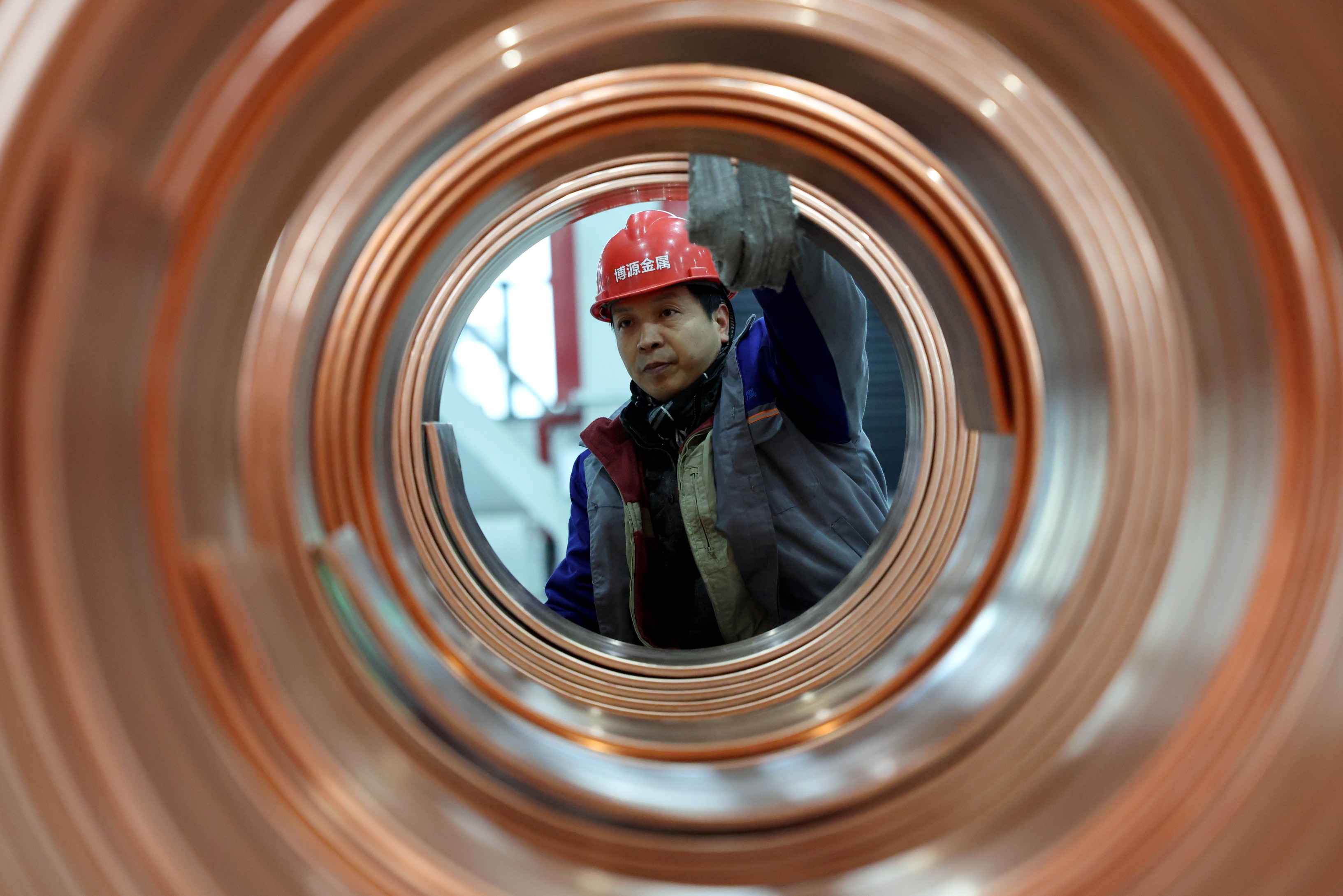
铜价高位震荡 “以铝节铜”应用提速
Xin Hua She· 2026-02-05 13:00
Group 1 - In January 2026, domestic copper prices surged significantly compared to both year-on-year and month-on-month figures, following a historical high in 2025, with high volatility observed in early February [1] - The recent increase in copper prices is attributed to a combination of supply disruptions, rising demand, and favorable policy expectations [1] - Global copper mines are facing long-term constraints due to declining resource quality, rising extraction costs, and increased supply vulnerabilities, with copper grades dropping from 1.3% in 2005 to 0.65% in 2025, and extraction costs rising over 40% since 2015 [1] Group 2 - The demand for copper is significantly driven by "green energy" and "artificial intelligence," with electric vehicles using 3 to 5 times more copper than traditional fuel vehicles, leading to a demand increase of hundreds of thousands of tons [1] - AI data centers have a higher copper density compared to traditional data centers, with the explosion of computing power and the construction of supporting power systems driving demand for high-purity copper foil and precision copper cables [1] - The global liquidity and geopolitical environment have also created favorable conditions for rising copper prices, with abundant liquidity and a strong equity market since the beginning of 2026 [1] Group 3 - The rise in copper prices has resulted in increased cost pressures for downstream companies, affecting various sectors from household items to industrial applications [4] - Companies like Anhui Meibo Intelligent Electric Group and Jiangjun Air Conditioning have issued price adjustment notices, citing rising copper prices as a significant reason [4] Group 4 - Some companies are focusing on technological upgrades to mitigate cost pressures, employing advanced technologies such as AI dynamic energy-saving techniques to enhance efficiency without increasing raw material usage [5] - Industry players are accelerating innovation, with companies like Nord Technology producing ultra-thin lithium battery copper foil and Jintian Copper upgrading recycling processes to achieve 99.99% purity for high-tech applications [5] - Long-term strategies include intelligent mining, low-grade utilization, and high-end material research to address cost pressures and achieve excess profits through technological innovation [5] Group 5 - The strategy of "using aluminum to save copper" is emerging as a significant exploration path, involving the development of aluminum alloy cables and copper-aluminum composite materials to conserve copper resources while ensuring performance [6] - The Ministry of Industry and Information Technology has identified key areas for aluminum development, including aluminum conductors for photovoltaic and wind power stations [6] - The application of copper-aluminum composite materials has shown promising results, with copper usage in air conditioning units decreasing from 12 kg per unit in 2000 to 4 kg currently, and in electric vehicles from 80 kg to 60 kg [6] Group 6 - The value of high-quality copper-aluminum composite materials extends beyond cost savings, offering green value with aluminum recycling energy consumption being only 5% of that for primary aluminum, which is lower than copper recycling energy consumption [8] - The adoption of "using aluminum to save copper" technologies enhances resource conservation and may reduce dependence on imported copper materials, particularly copper concentrates [8]
财经聚焦丨铜价高位震荡 “以铝节铜”应用提速
Xin Hua Wang· 2026-02-05 12:46
Core Viewpoint - Copper prices have been experiencing high volatility, driven by supply disruptions, increasing demand, and policy expectations, leading to significant price increases in early 2026 compared to previous years [1]. Supply Factors - Global copper mines are facing long-term constraints due to declining resource quality, rising extraction costs, and increased supply vulnerabilities. The copper grade has decreased from 1.3% in 2005 to 0.65% in 2025, with extraction costs rising over 40% since 2015 [1]. Demand Factors - The demand for copper is being significantly driven by the "green energy" and "artificial intelligence" sectors. For instance, a typical electric vehicle uses 3 to 5 times more copper than a traditional gasoline vehicle, leading to a demand increase of hundreds of thousands of tons. Additionally, AI data centers require much higher copper density compared to traditional data centers [1]. Market Environment - The global liquidity and geopolitical environment have also contributed to the rise in copper prices. Since the beginning of 2026, global liquidity has been ample, and the equity market has strengthened, further pushing copper prices upward [1]. Cost Pressure on Downstream Enterprises - The rise in copper prices has resulted in increased cost pressures for downstream companies, affecting various sectors such as electrical cable production and energy storage battery manufacturing. Companies like Anhui Meibo Intelligent Electric Group and Wuxi Jiangjun Air Conditioning have issued price adjustment notices citing rising copper prices as a key reason [3]. Innovation and Technological Upgrades - Companies are focusing on technological upgrades to mitigate cost pressures. For example, Gree Electric's use of AI dynamic energy-saving technology has improved efficiency without increasing raw material usage. Additionally, companies like Nord and Jintian Copper are innovating in copper foil production and recycling processes to meet high purity requirements for high-tech industries [4]. "Aluminum for Copper" Strategy - The "aluminum for copper" strategy is gaining traction, which involves using aluminum alloy cables and copper-aluminum composite materials in various sectors to save copper resources while ensuring performance. This approach is supported by government initiatives aimed at promoting aluminum applications in renewable energy and household appliances [6]. Performance Improvements - The application of copper-aluminum composite materials has shown significant results, with the amount of copper used in air conditioning units decreasing from 12 kg per unit in 2000 to 4 kg currently, and in electric vehicles from 80 kg to 60 kg [6]. Future Projections - Experts predict that in the next three years, the average copper usage in distribution network equipment will decrease by 65%, with complete switchgear equipment reducing copper usage from 200 kg to 70 kg per unit [7]. Environmental and Competitive Advantages - The use of high-quality copper-aluminum composite materials not only reduces costs but also has environmental benefits, as aluminum recycling consumes only 5% of the energy required for primary aluminum production, which is lower than that for copper recycling. This shift is expected to reduce dependence on imported copper raw materials, particularly copper concentrate [8].

铜价惊魂暴跌:是顶峰已现,还是虚晃一枪?
Xin Lang Cai Jing· 2026-02-05 09:57
2026年2月5日,全球铜市场再度遭遇剧烈震荡,沪期铜主力合约单日暴跌3.76%,亚盘时段,伦敦期货 三个月期铜高台跳水,盘中跌势略有收窄,截至北京时间16:39分最新价报12969美元/吨,下跌 0.28%。现货市场方面,长江有色金属网数据显示,长江现货1#铜价单日大跌3760元/吨至101260元/ 吨。这场突如其来的暴跌,让市场陷入"铜价是否见顶"的激烈争论。是基本面恶化引发的趋势反转,还 是短期情绪释放后的技术性回调?本文将从宏观、产业、资金三重维度深度解析。 一、美元"紧箍咒":暴跌的直接导火索 今日铜价崩塌的核心推手,指向美联储政策转向的明确信号。美联储理事库克公开表示"通胀未显著回 落前不支持降息",叠加下一任主席热门候选人凯文·沃什的鹰派立场预期,推动美元指数持续走强。对 于持有非美货币的投资者而言,美元升值直接推高以美元计价的铜采购成本,抑制投机需求。 数据印证: 1、沪铜主力合约持仓量单日减少10,532手至182336手,显示多头资金加速离场; 2、伦铜隔夜持仓量下降3.2%,表明国际资金同样趋于谨慎。 二、供需博弈:长期支撑与短期压力并存 尽管宏观利空压顶,但铜的产业基本面仍呈现"结构 ...

长江有色:5日铜价暴跌 整体现货交投缺乏亮点
Xin Lang Cai Jing· 2026-02-05 07:52
Group 1 - The core viewpoint of the articles indicates a significant decline in copper prices, driven by a strong US dollar and weakening demand due to seasonal factors and economic data [1][2][3] - The main copper futures contract on the Shanghai Futures Exchange opened at 104,000 yuan/ton and closed at 100,980 yuan/ton, down 3.76% from the previous day [1] - The domestic spot copper prices also fell sharply, with the price for 1 copper reported at 101,260 yuan/ton, a decrease of 3,760 yuan [1] Group 2 - Macro factors include a hawkish stance from the Federal Reserve, which is expected to support the US dollar and increase the cost of copper for non-US currency holders, thereby suppressing speculative demand [2] - Economic data showed that the US ADP added only 22,000 jobs in January, significantly below the expected 48,000, indicating a slowdown in the labor market [2] - Despite the bearish short-term outlook, there are long-term supportive factors for copper prices, such as ongoing supply tightness from mine closures and increased demand from global energy transitions and AI [2] Group 3 - The current trading environment for copper is characterized by low activity, with sellers reluctant to lower prices and buyers showing little interest in high-priced copper [3] - The expectation of a strong dollar and the upcoming Chinese New Year are contributing to a lack of trading momentum, with copper inventories continuing to accumulate [3] - Short-term price fluctuations are anticipated to remain within a high range, with a focus on the support level around 99,000 yuan [3]