
零食零售

Search documents
好特卖临期瓜子比超市还贵
Xin Lang Cai Jing· 2025-12-28 01:41
来源:@21世纪经济报道微博 #低价零食套路曝光#【#好特卖临期瓜子比超市还贵#】12月24日,@21世纪经济报道 记者走访发现, 近期卷入闭店风波的好特卖满眼都是"骨折价"商品,但细究之下,多款产品价格优势并不明显。同样是 临期的洽洽瓜子,好特卖78克装售价3.5元,超市里108克装仅需3.9元,算下来反而更实惠。记者同时留 意到,#折扣零食店密度比奶茶店高#,在广州部分高校周边,200米内扎堆3家门店。折扣零食赛道的竞 争有多激烈? 低价的背后有何套路? ...
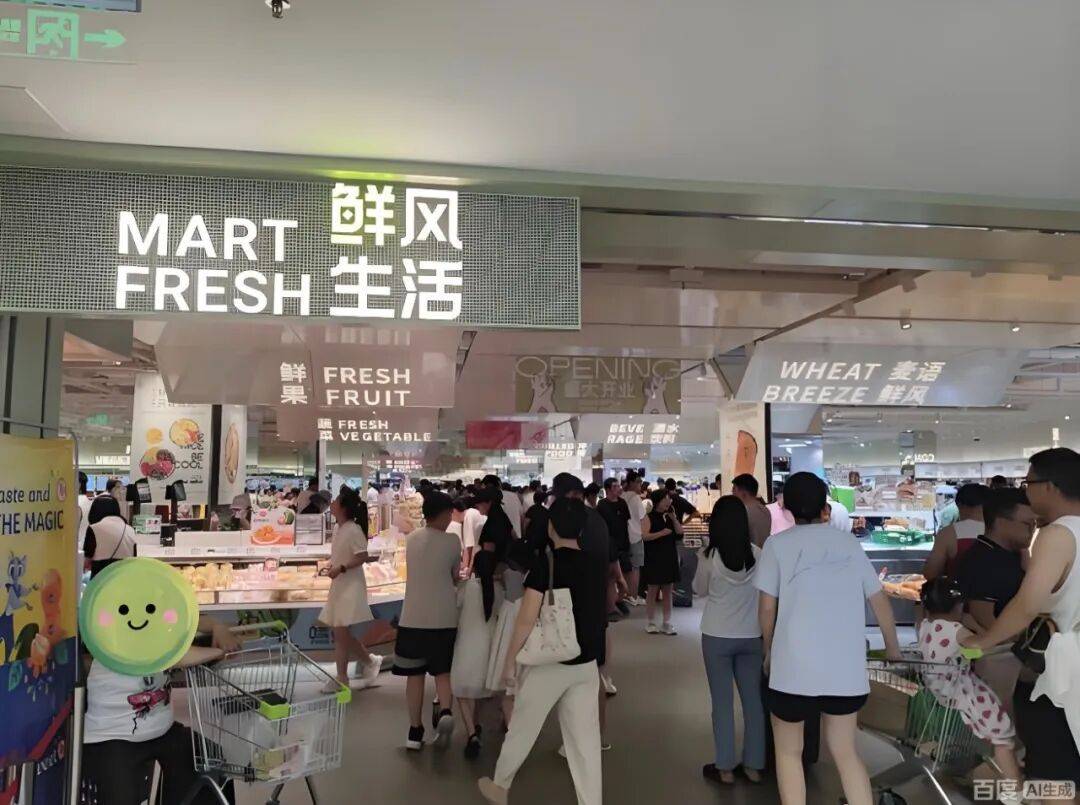
三只松鼠生活馆7店同开 加速布局社区零售新赛道
Zheng Quan Shi Bao Wang· 2025-12-26 13:16
Core Insights - The company is transitioning from a snack-focused private brand retailer to a comprehensive private brand retailer, marking a significant strategic shift towards a full-category retail model [1][3] Group 1: Store Expansion and Strategy - The company opened its first batch of seven standard lifestyle stores from December 26 to 28, covering regions such as Wuhu, Wuwei, Ningguo, Langxi, and Guangde, indicating a rapid scale-up of its new retail strategy [1] - The new stores range in size from 330 to 560 square meters and focus on a combination of "freshly made + fresh produce + standard products," offering over 1,500 essential items to meet daily family needs [1][2] - The company plans to accelerate store openings, with 20 new lifestyle stores set to launch in January and February 2026, further penetrating the regional market [4] Group 2: Product Offering and Quality Focus - The lifestyle stores emphasize a "freshness guarantee" with products like freshly processed fruits and vegetables, and pork processed on the same day, ensuring delivery within 24 hours [2] - The product lines are categorized into three series: "True Fresh," "True Good," and "True Value," focusing on quality, health, and competitive pricing, with over 250 products labeled for health standards [2] - The company aims to enhance product quality and consumer trust through a clear branding strategy that highlights the health and freshness of its offerings [2] Group 3: Market Trends and Competitive Landscape - The community instant retail sector is experiencing rapid growth, with projections indicating a market size exceeding 5.2 trillion yuan by 2025, driven by consumer demand for quality and experience [3] - The company has achieved significant sales milestones, with its first lifestyle store generating over 1 million yuan in sales within three days of opening, and the flagship store achieving 1.26 million yuan in the same timeframe [3] - The company differentiates itself from traditional retailers by adopting a brand manufacturer perspective in its full-category retail approach, leveraging its core strengths to adapt to changing consumer trends [3]
量贩零食行业受资本青睐 活水润泽高质量发展
Nan Fang Du Shi Bao· 2025-12-25 23:20
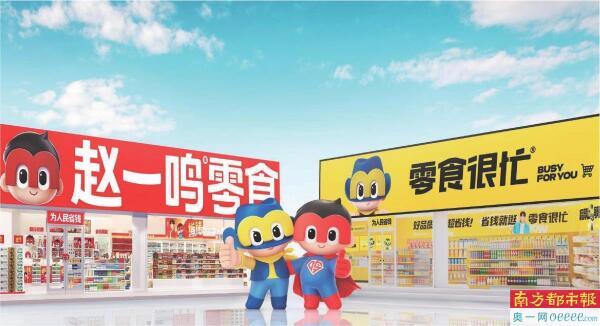
Core Viewpoint - The rise of bulk snack stores in China is revolutionizing the retail landscape of the snack food industry, driven by a model that emphasizes "affordable quality" [4][6]. Group 1: Company Developments - The China Securities Regulatory Commission has approved Hunan Mingming Henbang Commercial Chain Co., Ltd.'s overseas IPO, marking a significant milestone for the largest snack and beverage retail chain in China [5]. - The company plans to issue up to 76,666,400 ordinary shares for overseas listing and convert 198,079,551 shares held by 25 shareholders from unlisted to listed status [5]. Group 2: Industry Trends - The bulk snack sector has shown explosive growth, with the number of stores increasing from approximately 2,500 at the end of 2021 to about 25,000 by the end of 2023, a tenfold increase in just two years [6]. - This growth is attributed to the expanding Chinese snack food market, where snacks have evolved from mere indulgences to integral parts of lifestyle and leisure [6]. Group 3: Impact on the Supply Chain - The emergence of bulk snack stores has significantly influenced the entire snack supply chain, becoming a crucial sales channel for snack manufacturers [7]. - Companies like Qiaqia Foods have reported that their growth in southern regions is primarily driven by sales through bulk snack stores, indicating the channel's importance for growth [7]. Group 4: Consumer Trends - There is a growing consumer preference for healthier snack options, with over 80% of consumers willing to pay a premium for high-quality snacks [8]. - Brands are focusing on reducing unhealthy ingredients and incorporating health-promoting components like probiotics and dietary fibers into their products [8]. Group 5: Future Outlook - The bulk snack industry is projected to continue expanding, with the market size expected to reach 1,237.8 billion yuan by 2027 [10]. - As the industry matures, competition will shift from price wars to a focus on supply chain efficiency, product quality, and service [11].

2025零售业十大事件
Sou Hu Cai Jing· 2025-12-24 16:41
Group 1 - The hard discount supermarket format has gained significant attention in the second half of this year, with major internet companies launching new stores and expanding their presence [3][5] - Companies like Hema, JD, and Meituan have opened multiple hard discount stores, indicating a shift towards more price-sensitive consumer behavior [3][5] - The core competitiveness of hard discount formats lies in efficiency rather than just low prices, utilizing standardized models to reduce costs and improve turnover [5][7] Group 2 - Hema's X membership store has exited the market due to unclear positioning and high operational costs, highlighting the challenges faced by membership-based retail formats [9][10] - Despite Hema's exit, other local players are still attempting to establish membership stores, but they face strong competition and challenges in attracting price-sensitive customers [12][13] Group 3 - The retail sector has seen a wave of leadership changes among major players like Aldi, Sam's Club, and Yonghui, indicating a need for new strategies to adapt to market conditions [14][15] - These leadership changes are aimed at enhancing local procurement and supply chain management to support expansion while maintaining cost efficiency [15][17] Group 4 - The "prepaid card redemption" issue at Meitohai in Shanxi has raised concerns about cash flow and operational stability, as customers rush to redeem their prepaid cards amid fears of financial instability [18][21] - The situation has been exacerbated by recent store adjustments and closures, leading to a loss of consumer confidence and further financial strain [21][22] Group 5 - The trend of online players moving into offline retail is gaining momentum, with companies like Xiaoxiang Supermarket and Pupu planning to open physical stores to complement their online operations [23][24] - This shift is driven by rising costs associated with pure online fulfillment and the need to enhance consumer trust through physical retail experiences [25][28] Group 6 - The supermarket sector is undergoing a transformation as companies adopt the "learn from Pao Donglai" strategy, focusing on improving store layouts and customer experience [30][32] - However, many traditional supermarkets are still struggling with profitability despite initial positive performance post-renovation, indicating deeper systemic issues [32][33] Group 7 - Major online retailers like JD and Hema are retracting from partnerships with traditional supermarkets to refocus on self-operated models, aiming to streamline operations and improve efficiency [34][35] - This strategic shift reflects a broader trend of integrating online and offline capabilities to enhance customer experience and operational effectiveness [37][38] Group 8 - Regional retailers are emerging as new players in the market, focusing on local consumer needs and adapting their offerings accordingly, which may provide a competitive edge [39][41] - These regional players face challenges related to cost management and operational execution, particularly as they expand into new markets [41][42] Group 9 - The snack industry is experiencing a shift towards low-cost, high-density store formats, with companies like Mingming and Wancheng rapidly expanding their presence [42][44] - Traditional brands are facing pressure as they struggle to maintain market share amid aggressive pricing strategies from new entrants [44][45] Group 10 - The recent subsidy wars in instant retail have led to significant increases in order volumes, but also heightened financial pressures due to intensified price competition [47][51] - The long-term implications of these subsidy strategies remain uncertain, as companies navigate the balance between growth and profitability [51][52]
爆品买1赠1、千款“69减10”,京东七鲜零食超级品类日福利享不停
Jin Rong Jie Zi Xun· 2025-12-23 04:56
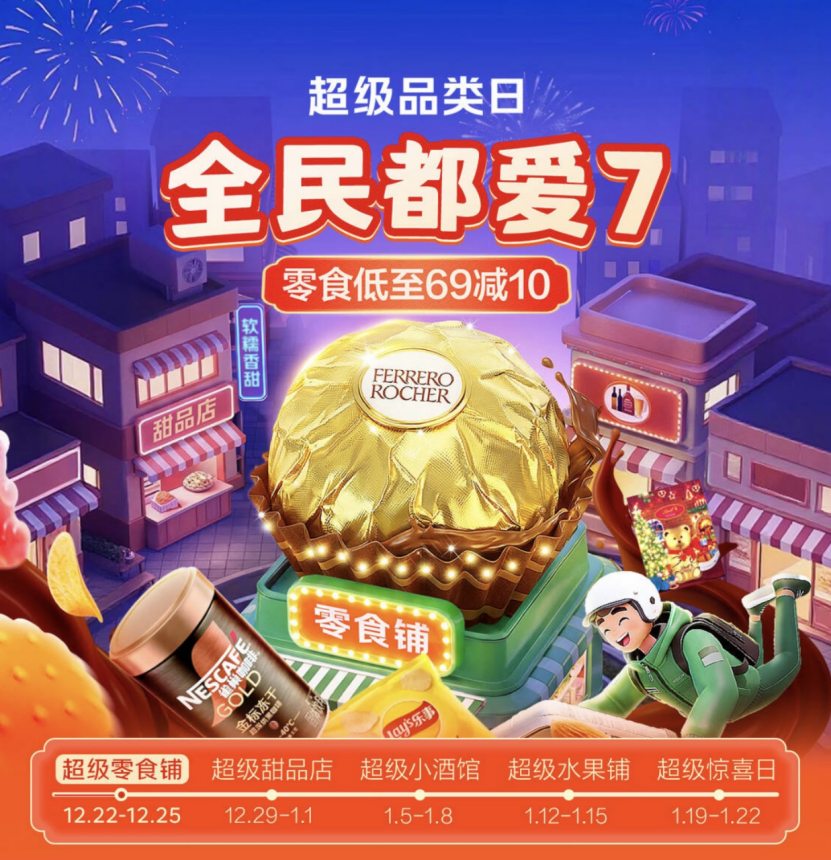
Core Insights - The article highlights the increasing consumer demand for snacks as a source of emotional satisfaction, particularly during the winter season and holiday gatherings [1] - JD Seven Fresh is launching a "Super Snack Day" event from December 22 to December 25, featuring over 300 brands and nearly 1,000 products with significant discounts [1][7] Group 1: Promotions and Discounts - The "Super Snack Day" offers promotions such as "69 off 10" and buy-one-get-one-free deals, catering to the emotional consumption needs of consumers during winter [1][7] - Popular chocolate brands are seeing price reductions, with items like the Swiss Lotus soft heart chocolate reduced to 119 yuan and various gift boxes priced under 100 yuan, making them attractive for gifting [3] Group 2: Consumer Trends - There is a notable increase in sales of snacks like chocolate and nuts during the year-end, reflecting a dual growth in "self-reward" and "gift-giving" consumption [7] - The instant delivery service, promising delivery within 30 minutes, enhances the consumer experience by allowing immediate gratification for snack purchases [7] Group 3: Product Offerings - During the promotional period, over 20 popular snacks are available with buy-one-get-one-free offers, such as pumpkin seeds priced as low as 6.25 yuan per bag and walnut-flavored seeds at 4.95 yuan [5] - The "Super Snack Day" is part of a broader strategy to offer various categories like baking, beverages, and fruits, with weekly specific discounts [7]
一边拼命开小店,一边砸钱做旗舰店,品牌到底在谋划什么?
Sou Hu Cai Jing· 2025-12-18 12:16
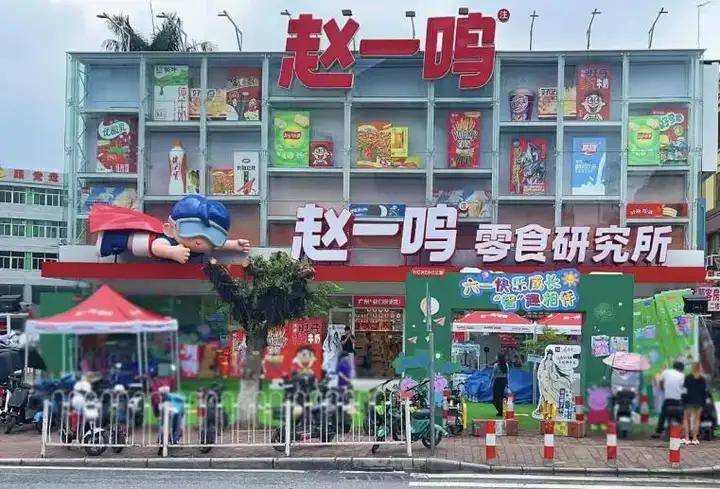
Core Insights - The commercial real estate sector is witnessing a dual strategy where brands are simultaneously opening small community stores and investing heavily in flagship stores in prime locations, indicating a shift in consumer habits and market trends [1][5] Group 1: Coexistence of Small and Large Stores - Small stores and flagship stores are growing together, with brands like Zhao Yiming Snacks utilizing a high-density layout strategy to cater to the convenience needs of urban consumers [2][4] - Flagship stores serve as immersive brand experiences, functioning as advertising platforms while also driving sales [2][5] Group 2: Transformation of Offline Store Functions - The evolution of brand perception has led to a redefined role for physical stores, which are now seen as specialized entities rather than mere sales channels [4][5] - Small stores benefit from lower rent and operational costs, allowing for efficient market penetration and immediate consumer engagement [4][5] Group 3: Consumer Behavior and Market Segmentation - The increasing stratification of consumer demand necessitates different operational models for small and flagship stores, with each fulfilling distinct roles within the brand ecosystem [5][6] - Small stores cater to high-frequency, immediate purchasing needs, while flagship stores provide unique social experiences and quality upgrades [5][6] Group 4: Challenges in the Dual-Store Model - The rise of online shopping has intensified competition for both small and flagship stores, as consumers increasingly prefer the convenience of e-commerce [9][11] - The high costs associated with creating and maintaining flagship stores pose significant challenges for brands, requiring careful management to ensure that enhanced experiences translate into sales [12][13] Group 5: Future Trends in Retail - The focus for small stores will shift towards improving operational quality and integrating into local communities, while flagship stores may evolve into multi-experience platforms that enhance brand identity [13][15] - Strong supply chains and digital capabilities will be essential for both small and flagship stores to meet consumer demands effectively and maintain competitive advantages [15][16]
政治局会议点评:没有提及楼市,意味着什么?
GOLDEN SUN SECURITIES· 2025-12-10 00:34
Group 1: Fixed Income Strategy - The report predicts that the 10-year government bond yield may drop to 1.6-1.7% in 2026, based on various economic indicators and trends [3][4] - Factors influencing this prediction include economic growth, inflation, and the trend of interest rates, with a potential decline in financing costs by 10 basis points [3] - The report suggests a strategic allocation towards long-term bonds, particularly in the first quarter of 2026, while noting potential uncertainties in policy and market conditions thereafter [4] Group 2: Light Industry Manufacturing - Hars (002615.SZ) - Hars is identified as a leading manufacturer of thermal cups, focusing on both OEM and its own brand development, with a strong competitive position in the market [5] - The company is expected to see a gradual recovery in profitability, with projected net profits of 142 million, 292 million, and 371 million yuan for 2025-2027, reflecting a year-on-year change of -50.6%, +106.0%, and +27.3% respectively [5] - The report assigns a "buy" rating with a target P/E of 16x for 2025, indicating confidence in the company's ability to navigate cost pressures and enhance profitability as its overseas operations ramp up [5] Group 3: Food and Beverage - Three Squirrels - The report discusses the opening of the first flagship store of Three Squirrels, which aims to create a community retail space with a focus on a diverse product range including fresh and prepared foods [6][9] - The store features a selection of 1,500 SKUs, with a pricing strategy that offers better value compared to competitors, indicating a strong market demand as evidenced by initial sales exceeding 1.26 million yuan within three days of opening [9] - This new store format is a strategic move towards a "full category + hard discount" approach, aiming to expand the company's market presence and optimize its supply chain [9] Group 4: Real Estate Sector Insights - The political bureau meeting emphasized a stable economic approach for 2026, with a focus on expanding domestic demand and implementing proactive fiscal and monetary policies [10][11] - The report suggests that the real estate sector remains a key economic indicator, with potential for policy-driven recovery, particularly in first and second-tier cities [11] - Investment recommendations include focusing on leading real estate companies and local state-owned enterprises, as well as property management firms that are likely to benefit from the anticipated policy shifts [11]

量贩零食店的“算盘”打向了何方?高速扩张后行业迎来转型路口
Qi Lu Wan Bao· 2025-12-02 22:59
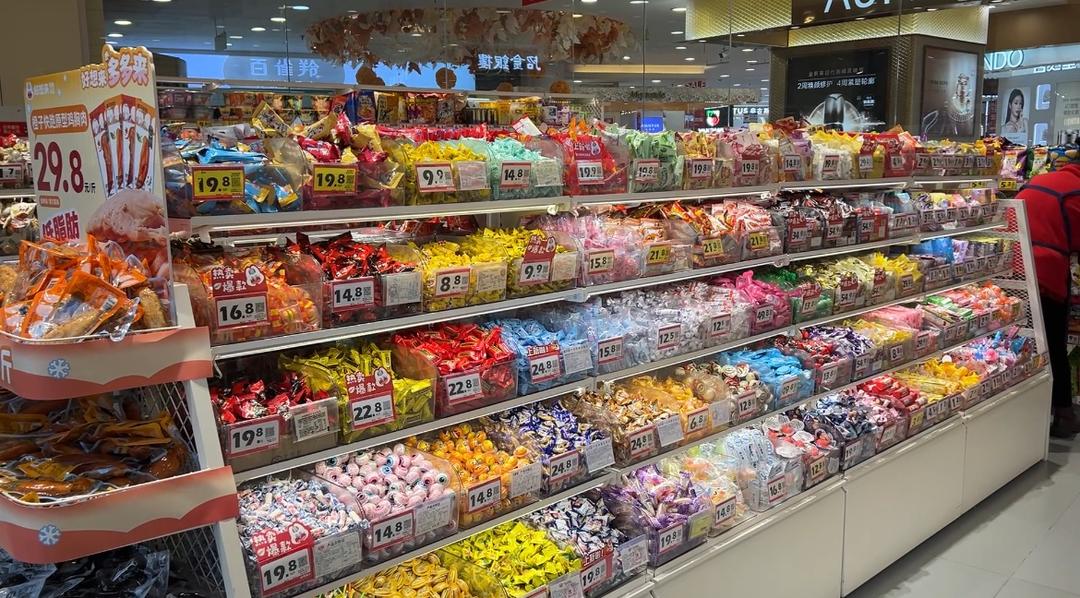
Core Insights - The article highlights the emerging trend of "weight shrinkage" in snack retail, where products sold in snack chains have lower weights compared to the same products in supermarkets, despite similar appearances [1][3][6] Group 1: Pricing Strategy - The phenomenon of "weight shrinkage" is becoming a common pricing strategy among thousands of snack stores across the country, leading to a situation where consumers may not notice the differences in product weight [1][3] - Specific examples include products like the "Yang Zhang Gui" brand snack, which weighs 162 grams in snack stores compared to 183 grams in supermarkets, indicating a clear discrepancy in product specifications [3][4] Group 2: Market Dynamics - Snack chains have rapidly expanded and now account for over 40% of the snack sales market in China, with the market size growing from 4.08 billion yuan in 2019 to 104.59 billion yuan in 2024 [8] - The rapid growth of snack chains is attributed to their ability to create a low-price image through a combination of brand products and private label goods, which drives customer traffic [10][11] Group 3: Supply Chain and Profitability - Snack stores utilize a direct procurement model, bypassing intermediaries, which allows them to negotiate better prices and maintain a low-cost structure [11] - The profit margins for private label products are significantly higher, often exceeding 30%, compared to well-known brands which have lower margins [10] Group 4: Quality and Safety Concerns - As the snack retail industry grows, concerns regarding product quality and safety have emerged, with many complaints about the lack of a comprehensive quality traceability system for private label products [11] - The article notes that around 60% of snack stores in the Weifang area are operating at a loss, indicating potential challenges in sustaining profitability amidst increasing competition [12]
三只松鼠全国首家生活馆旗舰店开业前三天零售额破126万元
Zhong Guo Ji Jin Bao· 2025-12-01 10:50
Core Insights - The flagship store of Three Squirrels' lifestyle pavilion opened in Wuhu City on November 28, achieving retail sales (excluding stored value) of over 1.26 million yuan within the first three days of operation [1] - The lifestyle pavilion focuses on a 15-minute community convenience living circle, positioning itself as "the second kitchen at your doorstep" with a product mix leaning towards fresh, ready-made, and standardized products [1] - The founder of Three Squirrels, Zhang Liaoyuan, stated that the essence of this strategic transformation is shifting from a snack-focused private brand retailer to a comprehensive private brand retailer [1] - The company plans to open dozens of standard Three Squirrels lifestyle pavilions in the near future [1]
万辰集团(300972) - 福建万辰生物科技集团股份有限公司投资者关系活动记录表
2025-11-26 12:24
Group 1: Business Performance and Strategy - The company maintains a balance between store quality and quantity, focusing on steady development and improving single-store performance gradually [2] - The consumer demand-driven model effectively addresses profit loss from traditional distribution channels, enhancing product quality and store experience [2] - The company aims for sustainable growth by continuously improving its operational system and integrating supply chains [3] Group 2: Store Improvement and Customer Engagement - The company emphasizes food safety and product innovation, enhancing core competitive advantages through product iteration and the introduction of popular self-owned products [3] - Efforts to refine the membership system have successfully increased customer loyalty and repurchase rates [3] - The company is committed to building a strong trust relationship with consumers to convert it into stable foot traffic [4] Group 3: Product Development and Market Adaptation - The company focuses on consumer needs in its self-owned brand strategy, introducing products like natural water and sugar-free beverages that meet market demands [5] - Future product development will be guided by a flexible mechanism rather than rigid quantitative targets, ensuring responsiveness to consumer insights [5] Group 4: Inventory Management and Profitability - The core business model relies on efficient turnover, with a focus on precise product selection and rapid response to consumer needs [6][7] - The company prioritizes dynamic balance in product categories, avoiding the introduction of high-margin but slow-turnover items that could jeopardize sustainable growth [7] Group 5: Organizational Structure - The core management team for the snack business remains stable, with ongoing enhancements to the overall structure and active recruitment of talent across all levels [7]