
自动驾驶

Search documents
自动驾驶迎来头号玩家:英伟达亲自下场,行业盈利拐点已至
2 1 Shi Ji Jing Ji Bao Dao· 2026-01-08 05:53
Group 1 - Nvidia's CEO Jensen Huang announced the Alpamayo platform at CES, enabling cars to perform "inference" in the real world, and open-sourced the first inference VLA model, Alpamayo 1, to accelerate the development of safe autonomous driving technology [2] - Huang emphasized that a significant shift from non-autonomous to autonomous vehicles could occur soon, predicting that a large portion of cars will be autonomous or highly autonomous within the next decade [2] - The first cars equipped with Nvidia technology are set to hit the roads in the US in Q1 2025, Europe in Q2, and Asia later in the year [2] Group 2 - Under the dual push of policy support and technological breakthroughs, the commercialization of autonomous driving is expected to accelerate, with Goldman Sachs forecasting the Chinese Robotaxi market to grow from $54 million in 2025 to $12 billion by 2030, with a fleet of 500,000 Robotaxis by 2030 [3] - Recent domestic policies have been introduced to facilitate the deployment of autonomous driving technology, including the issuance of product access permits for L3 autonomous vehicles, marking a significant step towards commercialization [4] - As of December 2025, the first batch of L3 autonomous vehicles, including models from Chang'an and BAIC's Arcfox, received access permits for trial operations in designated areas [4] Group 3 - XPeng Motors received an L3 autonomous driving road testing permit in Guangzhou, initiating regular L3 road tests [5] - BYD announced the start of comprehensive internal testing for mass-produced L3 autonomous driving in Shenzhen, having completed over 150,000 kilometers of real-world validation [6] - The capital market for autonomous driving is accelerating, with nearly 10 companies entering the secondary market since 2025, including the dual listings of WeRide and Pony.ai on the Hong Kong Stock Exchange [6] Group 4 - Pony.ai achieved a significant milestone by realizing single-vehicle profitability for its seventh-generation Robotaxi in Guangzhou, indicating the commercial viability of the unit economic model for autonomous driving in major cities [7] - The company plans to expand its Robotaxi fleet from 961 vehicles to over 3,000 by the end of 2026, while also reducing the cost of the autonomous driving kit by 20% [7] - WeRide has successfully launched its Robotaxi service in over 10 cities globally, with operations in Beijing, Guangzhou, and Abu Dhabi achieving pure unmanned commercial operation [8] Group 5 - Hesai Technology, a leader in the lidar sector, reported a significant turnaround to profitability, with Q3 2025 revenue reaching 800 million yuan, a 47.5% increase, and net profit climbing to 260 million yuan [8] - The overall performance of the autonomous driving sector has been strong, with the autonomous driving index showing a 45.35% increase for the year [8]


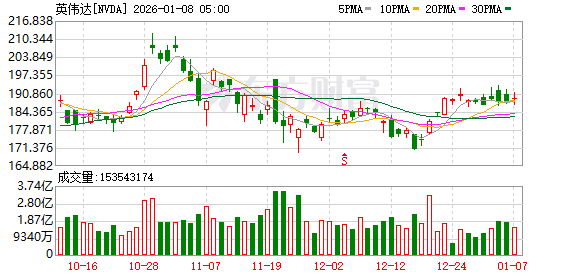
运达科技:参股公司扬斯科技涉及L4级自动驾驶物流机器人的研发量产和自动驾驶卡车干线物流解决方案等业务
Mei Ri Jing Ji Xin Wen· 2026-01-08 04:34
Group 1 - The core focus of the news is on the involvement of Yangsi Technology, a subsidiary of Yunda Technology, in the development and production of L4 level autonomous driving logistics robots and solutions for autonomous truck trunk logistics [2] - Yunda Technology confirmed its participation in the autonomous driving sector through its investment in Yangsi Technology, highlighting the company's commitment to advancing logistics technology [2] - The inquiry from investors reflects growing interest in the autonomous driving business and its potential applications in logistics [2]


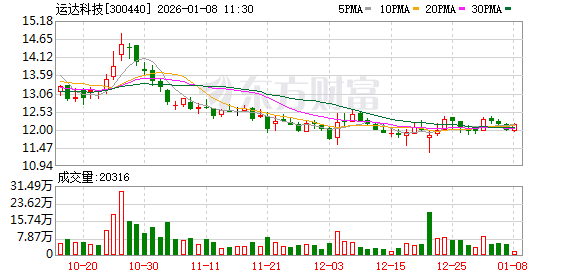
黄仁勋CES回应全场!内存卡了GPU脖子,游戏玩家可能只能用旧显卡了
猿大侠· 2026-01-08 04:11
Core Viewpoint - Huang Renxun emphasizes that robots are the "AI immigrants" capable of taking on jobs that humans are unwilling to do, highlighting the need for AI to support economic growth and job creation [10][11]. Group 1: AI and Robotics - Huang predicts that a significant number of jobs will not be replaced by AI in the near future, but blue-collar jobs in manufacturing may disappear [12]. - He expects to see robots with human-level mobility and dexterity by the end of this year [12]. - The development of robots requires not only visual perception but also tactile capabilities, which poses significant technical challenges [13]. Group 2: Autonomous Driving - Huang introduced the world's first open-source, large-scale autonomous driving visual-language-action (VLA) reasoning model, Alpamayo 1, and highlighted its differences from Tesla's Full Self-Driving (FSD) technology [15][16]. - NVIDIA positions itself as a technology platform provider for companies developing autonomous vehicles, rather than a manufacturer of autonomous cars [16][20]. - The company has a high industry penetration rate, with over 1 billion vehicles on the road, and anticipates that millions will have strong autonomous driving capabilities in the next decade [20]. Group 3: AI Infrastructure and Memory Supply - Huang describes AI infrastructure as "AI factories," emphasizing the need for unprecedented infrastructure to convert power, chips, and data into intelligent outputs [35]. - He addresses the tight supply of high-bandwidth memory (HBM) and proposes a new storage memory platform concept, asserting that NVIDIA is a key demand engine across various memory types [36]. - NVIDIA is the first and nearly the only major user of HBM4, collaborating closely with memory suppliers to ensure synchronized production and platform release [36]. Group 4: Gaming and Graphics Technology - NVIDIA upgraded its super-resolution model with the new DLSS 4.5 version, enhancing multi-frame generation capabilities [31]. - Huang speculates that future rendering methods will likely involve executing more AI computations on fewer but higher-quality pixels, leading to significant advancements in gaming realism [32]. - He believes that future video games will be filled with AI-driven characters, greatly enhancing the immersive experience [32][33]. Group 5: Market Dynamics and Product Strategy - NVIDIA is considering restarting the production of older graphics cards due to rising memory costs and supply constraints, indicating that this option is not off the table [25][26]. - The company is exploring the possibility of integrating the latest AI technologies into previous generations of GPU products, although this would require substantial R&D resources [26][27].

自动驾驶发展的正道,离不开最重要的两个字
Xin Lang Cai Jing· 2026-01-08 03:31
Core Insights - The commercialization of autonomous driving has taken a significant step forward with the recent approval of two L3 conditional autonomous driving models in China, marking a transition from technology validation to mass production application [1][2] - L3 level autonomous driving allows the automated system to take over driving tasks under specific conditions, representing a critical milestone in the evolution from assisted driving to fully autonomous driving [1][2] - The approval of L3 models indicates that their safety operation capabilities have been preliminarily validated, necessitating updates in traffic accident liability, insurance product design, and human-machine interaction ethics [1][2] Industry Development - The development of autonomous driving technology is guided by the principle of "safety first, gradual progress," with initial applications in logistics and delivery before moving to more complex environments [2][3] - As autonomous driving technology matures, the industry is approaching large-scale application, highlighting the need to validate safety redundancy mechanisms in extreme scenarios and clarify responsibility boundaries between humans and machines [2][3] - The industry faces challenges such as cost control and technology upgrades, but the focus remains on ensuring safety as the core value of autonomous driving [2][3] Public Trust and Safety - The tolerance for errors in the autonomous driving sector is extremely low, making public trust crucial yet fragile; any incidents can significantly undermine confidence and halt commercialization efforts [3] - Companies emphasize that obtaining technical approval is just the beginning, with the ultimate goal being the safety of passengers, which is essential for gaining public trust [3] - The industry is encouraged to maintain patience and focus on building a solid safety foundation to ensure that every journey is trustworthy, thereby expanding the potential for autonomous driving to enhance societal welfare [3]
联想车计算与SWM达成战略合作
Zhong Guo Qi Che Bao Wang· 2026-01-08 02:07
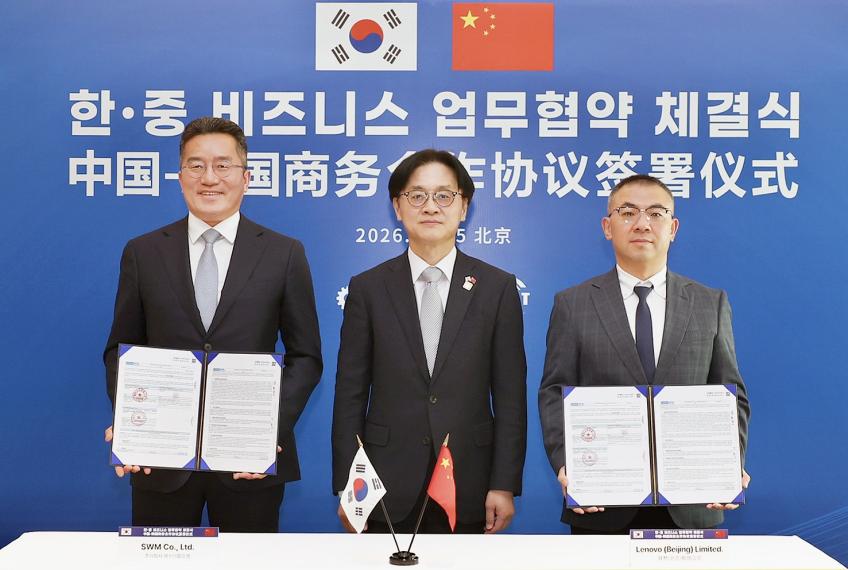
Core Insights - Lenovo and SWM have announced a strategic partnership to advance the development and deployment of next-generation L4 autonomous taxis (Robotaxi) during CES 2026 [1][10] - The collaboration aims to enhance safety and efficiency in smart mobility solutions, marking a significant step towards large-scale deployment of autonomous driving technology [1][10] Group 1: Partnership Details - The strategic cooperation was formalized through a Memorandum of Understanding (MOU) signed in the presence of key officials during a visit by the South Korean president to China [1] - SWM's "AP-700" autonomous driving platform is built on Lenovo's "L4 Autonomous Driving Domain Controller AD1," powered by NVIDIA DRIVE AGX Thor, providing over 2,000 TFLOPS of AI computing power [2][3] Group 2: Technology and Safety Standards - The AP-700 platform meets the highest safety and reliability standards in the automotive industry, including ISO 26262 ASIL-D and AEC-Q100 certifications [6] - The platform is optimized for advanced algorithms, enabling millisecond-level responses in complex urban traffic scenarios while ensuring system safety and stability [6] Group 3: SWM's Achievements and Future Plans - Since its establishment in 2017, SWM has focused on autonomous driving technology and achieved significant commercial success, including the first fully autonomous taxi service in Seoul's Gangnam area [7] - SWM aims to expand its autonomous driving services globally, starting with regions like Japan, Southeast Asia, and the Middle East, leveraging the partnership with Lenovo and NVIDIA [7][8] Group 4: Industry Implications - The collaboration exemplifies how NVIDIA DRIVE Hyperion platform empowers scalable and safety-validated autonomous taxi systems, indicating a shift from technology validation to large-scale deployment [8][10] - The global L4 autonomous driving technology is entering a new phase, with various applications like Robotaxi and Robobus moving towards mass production and deployment [10]

本周六!一场关于自动驾驶L4的圆桌探讨:通向L4之路已经清晰?
自动驾驶之心· 2026-01-08 01:53
Core Insights - The article discusses the advancements in autonomous driving technology, particularly the transition from Level 2 (L2) to Level 4 (L4), indicating that high-level assisted driving has reached a "quasi-L4" stage, with the same model being applicable for both L2 and L4 [4] - The autonomous driving industry in China has seen over 30 billion yuan in financing in 2025, primarily focused on the L4 sector, suggesting a significant shift in industry attention towards L4 technology [4] - A roundtable discussion on L4 autonomous driving is scheduled, featuring leading companies in the field, to explore the technological and commercial realities of L4, including its evolution and future market landscape [4] Group 1 - The article highlights the comparison between Tesla's FSD V14.2 and Robotaxi, emphasizing the advancements in high-level assisted driving technology [4] - It notes that the L4 sector is gaining new attention due to recent changes, prompting discussions on whether it has reached a critical juncture [4] - The upcoming roundtable aims to provide diverse perspectives from top L4 companies, focusing on the interplay between technological ideals and commercial realities [4] Group 2 - Key speakers at the roundtable include industry leaders with extensive backgrounds in autonomous driving technology and research, such as He Bei, founder of Sinian Intelligent Driving, and Miao Qian Kun, CTO of New Stone Age Autonomous Vehicles [5][6] - The article mentions the impressive achievements of Miao Qian Kun's L4 urban logistics delivery vehicles, which have been widely deployed across over 300 cities in China and more than 10 countries, with a total of 15,000 vehicles delivered and over 60 million kilometers driven [6] - The discussion will also feature experts with significant experience in AI and autonomous vehicle development, ensuring a comprehensive exploration of the topic [7][8]

四大证券报精华摘要:1月8日
Zhong Guo Jin Rong Xin Xi Wang· 2026-01-08 00:21
Group 1: Fund Market Dynamics - The fund issuance market in early 2026 shows a significant increase in activity, with FOF (Fund of Funds) products becoming a focal point for competition among banks and fund companies [1] - Several FOF products sold out quickly, indicating strong customer demand and a competitive landscape driven by product transformation and channel support [1] Group 2: A-Share Market Performance - On January 7, 2026, the A-share market experienced a volume increase with all three major indices rising slightly, driven by sectors related to the semiconductor industry [1] - The market saw over 2,100 stocks increase in value, with nearly 100 stocks hitting the daily limit, reflecting a significant rise in market risk appetite [1] Group 3: Foreign Exchange Reserves - As of December 2025, China's foreign exchange reserves reached $33,579 billion, an increase of $115 billion from the previous month, marking a 0.34% rise [2] - The increase in reserves was influenced by factors such as major economies' monetary policies and macroeconomic data, alongside fluctuations in asset prices [2] Group 4: AI and Manufacturing Integration - The Chinese government has set ambitious goals for the integration of AI and manufacturing, aiming for significant advancements by 2027, including the application of 3-5 general large models in the manufacturing sector [3] - The initiative includes the creation of 100 high-quality industrial data sets and the promotion of 500 typical application scenarios [3] Group 5: Hong Kong IPO Market - In 2025, Hong Kong's IPO market raised a total of HKD 285.8 billion, reclaiming its position as the top global market for IPOs [6] - The momentum continued into 2026 with new listings from domestic GPU and AI companies, establishing a strong technology focus for the year [6][7] Group 6: Commodity Market Trends - In 2025, major non-ferrous metals saw significant price increases, with London gold rising by 64.56% and silver by 147.79% [8] - Analysts predict that demand from emerging sectors like AI will drive a new commodity cycle in 2026, with industrial metal prices expected to rise due to ongoing supply constraints [8] Group 7: A-Share Dividend Trends - A-share listed companies set a new record for dividends in 2025, totaling CNY 2.61 trillion, a year-on-year increase of 8.75% [10] - The trend reflects a shift towards more structured and frequent cash dividends, driven by policy guidance and improved corporate governance [10]
L3级自动驾驶行业:从测试阶段迈向商业化应用
Zheng Quan Ri Bao· 2026-01-07 17:06
Core Viewpoint - The first batch of L3-level conditional autonomous driving vehicles has begun real-world testing in designated areas of cities like Chongqing and Beijing, indicating a significant step towards commercialization in the autonomous driving sector in China [1][2]. Group 1: L3-Level Autonomous Driving Development - The Ministry of Industry and Information Technology has officially granted approval for the first batch of L3-level conditional autonomous driving vehicles, including models from Changan Automobile and Arcfox, marking a critical transition from testing to commercial application [2]. - Changan Automobile's L3-level autonomous driving system allows for hands-free driving in specific conditions, such as traffic congestion and single-lane highways, with a maximum speed of 50 km/h [3]. - The L3-level autonomous driving system is expected to begin B-end pilot operations in the first quarter of 2026, with plans to gradually open more features to users based on national policies [3]. Group 2: Industry Impact and Market Potential - The approval of L3-level autonomous driving vehicles is seen as a pivotal moment that will reshape driving modes and significantly impact the entire intelligent driving industry chain, prompting companies to upgrade technologies in anticipation of commercialization [3][4]. - According to Southwest Securities, the domestic L3-level autonomous driving market is projected to exceed 1.2 trillion yuan by 2030, indicating a potential new trillion-yuan market segment [4]. - The industry is expected to transition from "testing demonstration" to "scale production" driven by policy, technology, and cost factors, although challenges such as responsibility recognition during human-machine switching and high costs remain [4].

Lucid、Nuro和优步联合发布一款自动驾驶出租车
Xin Lang Cai Jing· 2026-01-07 15:40
Core Insights - Lucid Group, Nuro, and Uber have jointly announced a production-intent autonomous taxi and have commenced supervised road testing, aiming to launch the service in the San Francisco Bay Area in late 2026 [1] Group 1 - The autonomous taxi is a collaborative effort between Lucid Group, Nuro, and Uber [1] - The service is expected to be operational in the San Francisco Bay Area by late 2026 [1] - The current phase involves supervised road testing of the autonomous taxi [1]


美股三大指数小幅高开,存储概念股回调,西部数据跌超5%
Ge Long Hui· 2026-01-07 14:39
美国12月ADP就业人数增加4.1万人,低于市场预期,市场静待周五非农定调。美股三大指数小幅高 开,纳指涨0.02%,标普500指数涨0.06%,道指涨0.23%。 存储概念股集体回调,西部数据跌超5%,闪迪跌超3%,美光科技跌近1%。 联电涨9.7%,创逾一年新高,2025年营收增长2.26%再度刷新历史次高位。 自动驾驶技术公司Mobileye涨16.4%,官宣9亿美元收购机器人公司Mentee。 游戏驿站涨4.2 %,公司宣布授予CEO科恩长期绩效奖励,旨在推动公司市值达1000亿美元。 (格隆汇) ...