保健品

Search documents
Webber Naturals 亚太区负责人到访凯克集团,共探健康产业新未来
Zhong Guo Chan Ye Jing Ji Xin Xi Wang· 2025-07-07 04:19
Core Insights - The meeting between Webber Naturals and Kake Group signifies a deepening partnership aimed at leveraging opportunities in the Chinese health supplement market [1][4][10] - Webber Naturals, with a 77-year history, is recognized for its high-quality products and has a strong presence in over 30 countries, making it a reputable brand in the global health sector [4][6] - The Chinese health supplement market is expanding due to increasing health awareness among consumers, creating a favorable environment for collaboration between Webber Naturals and Kake Group [4][6] Company Overview - Webber Naturals is a leading brand in the health industry, known for its rigorous quality standards and certifications from the Canadian Natural Health Products Directorate (NHP) [6] - The company’s star product, fish oil, boasts multiple international certifications and a high absorption rate of over 90%, making it a staple for North American consumers [6] Strategic Collaboration - The partnership between Webber Naturals and Kake Group focuses on optimizing product offerings and innovative marketing strategies to meet the growing health demands of Chinese consumers [10] - Both companies aim to integrate their resources in product development, market expansion, and brand building to promote a healthier lifestyle for consumers in China [10]


国泰海通 · 晨报0707|策略、宏观、海外策略、可选消费品
国泰海通证券研究· 2025-07-06 22:03
Market Strategy - The core viewpoint is that the market is currently in a consolidation phase, which is necessary for building momentum for new highs. The Shanghai Composite Index has risen nearly 500 points, approaching 3500 points, indicating a positive market sentiment [3] - The market is expected to experience a period of horizontal consolidation, with short-term upward adjustments slowing down. Key factors influencing this include geopolitical tensions, economic data, and upcoming mid-year reports [3] Economic Governance - Recent economic policies are shifting towards addressing issues like "anti-involution" and preventing disorderly expansion, which opens new investment opportunities. The focus on improving corporate cash flow and settling debts is highlighted as a potential fiscal highlight for the second half of the year [4] - The central government's emphasis on "anti-involution" indicates a significant shift in economic governance, aiming for sustainable development rather than mere scale expansion [4] Industry Comparison - The market is expected to show characteristics of high-low switching in the short term, with a focus on sectors like electronics, non-ferrous metals, and agriculture. The financial sector remains strong, with continued interest in high-dividend stocks [5] - The report recommends sectors benefiting from recent policy changes, including steel, construction materials, and machinery, while also highlighting themes like production limits to stabilize prices and the low-altitude economy [5] Global Economic Overview - In the U.S., the job market remains stable, with a 1.7% increase in the S&P 500 index and a 1.1% rise in the Shanghai Composite Index. Commodity prices have also seen significant increases, indicating a positive economic outlook [7] - In Europe, the Eurozone's HICP inflation rate has slightly increased, while the unemployment rate remains low, suggesting a stable economic environment [8] Southbound Capital Flow - The first quarter of 2025 saw a record net inflow of southbound capital, primarily driven by institutional investors. The total net inflow from various investment entities is estimated to be around 100 billion yuan [14][16] - Different institutions show varying preferences for sectors, with significant inflows into technology and banking sectors. The report anticipates that the total net inflow for the year could exceed 100 billion yuan, driven by public and insurance funds [16] Consumer Goods Sector - The health supplement market is projected to grow significantly, with a market size of 232.3 billion yuan in 2024, reflecting a 4% year-on-year increase. The market is expected to expand due to changing consumer demographics and increasing health awareness [20] - Key segments within the health supplement market, such as fish oil and coenzyme Q10, are experiencing rapid growth, driven by consumer demand for specific health benefits [21]

国泰海通|食饮:看好保健品功效化大时代——新消费视角保健品深度研究
国泰海通证券研究· 2025-07-04 08:10
Core Viewpoint - The health supplement industry is poised for transformation driven by new channels and customer segments, leading to increased demand for functional products and innovation opportunities [1][2]. Market Overview - The health supplement market in China is projected to reach 232.3 billion in 2024, with a year-on-year growth of 4%. Compared to the U.S., there is significant room for growth in penetration rates across all age groups, particularly as younger consumers develop habits and the population ages [2][3]. - The market is characterized by a fragmented landscape, with the top three companies (Tongrentang, Amway, and H&H) holding a combined market share of 22% [2]. Channel and Demand Dynamics - New channels, particularly e-commerce platforms like Douyin, are expected to drive functionalization in the health supplement industry, with Douyin's GMV for health supplements increasing by 44% year-on-year [3]. - The rise of new customer segments, including younger consumers and those seeking specific health benefits, is creating opportunities for new brands and product categories [3]. Product Category Insights - Fish Oil: Market size between 5-10 billion, with high growth potential due to its anti-inflammatory and beauty benefits [4]. - Coenzyme Q10: Market size of 4.1 billion, with a year-on-year growth of 17%, driven by demand from women and stress-related health concerns [4]. - Probiotics: Market size exceeds 10 billion, focusing on gut health and extending to weight management, with top brands achieving over 1 billion in retail sales [4]. - Oral Beauty Supplements: Market size exceeds 10 billion, with high average prices and rapid growth in innovative ingredients [4]. - Basic Nutrients: Vitamins, minerals, and proteins have market sizes of 32.9 billion, 27.1 billion, and 11.6 billion respectively, with year-on-year growth rates of 3%, 5%, and 1% [4]. Competitive Landscape - The industry is experiencing a shift towards product innovation, with traditional brands facing competition from new entrants that leverage unique ingredients and formulations [3][4].

食品饮料周报:飞天茅台批价小幅波动,关注IFHM港股上市-20250703
Tianfeng Securities· 2025-07-03 09:12
Investment Rating - Industry rating: Outperform the market (maintained rating) [6] Core Views - The liquor sector is experiencing a decline in sentiment due to fluctuations in the price of Feitian Moutai, with leading companies actively exploring new consumption scenarios and demographics [2][13] - The health products, soft drinks, and snacks sectors are viewed positively due to high growth potential, low base effects, and upcoming peak seasons [4][15] Summary by Sections Market Performance Review - The food and beverage sector saw a decline of 0.88% from June 23 to June 27, while the Shanghai Composite Index rose by 1.95% [1][22] - Specific sector performances included health products (+3.65%), baked goods (+2.72%), and soft drinks (-0.58%) [1][22] Liquor Sector Insights - The white liquor sector declined by 1.66%, attributed to seasonal demand weakness and price fluctuations of high-end products like Feitian Moutai [2][13] - Current prices for 25-year Moutai (original/scattered) are 1870 RMB/1800 RMB, down by 80 RMB/100 RMB from the previous week [2][13] - The Shunwan white liquor index PE-TTM is at 18X, which is considered low compared to the historical average [2][13] Health Products and Snacks - The health products sector is experiencing a growth trend, with a 3.65% increase this week, driven by new consumption trends [20] - The snack sector is expected to benefit from low base effects and new product launches, with companies like Three Squirrels and Salted Fish being highlighted [17][21] Soft Drinks and Beer - The soft drink sector saw a slight decline of 0.6%, with notable performances from brands like Master Kong (+5.4%) and Nongfu Spring (+5.3%) [4][15] - The beer sector declined by 1.9%, but there is optimism for recovery with upcoming consumption policies [4][15] Investment Recommendations - Focus on strong alpha companies in the liquor sector such as Shanxi Fenjiu and Guizhou Moutai, which are expected to benefit from market consolidation [4][21] - In the consumer goods sector, companies that align with cost reduction and market share growth strategies are recommended, including Li Gao Foods and Nongfu Spring [4][21]





交大昂立上市24周年:利润下滑四成,市值较峰值腰斩
Jin Rong Jie· 2025-07-02 04:08
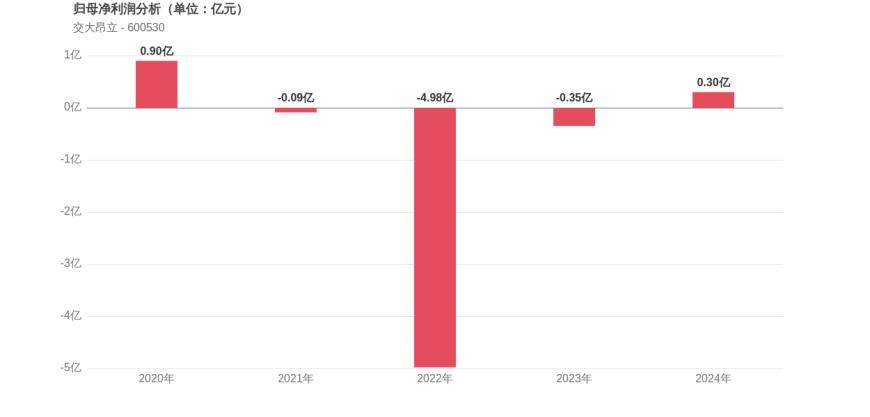
Core Viewpoint - The company, Jiao Da Ang Li, has experienced significant fluctuations in its financial performance since its listing 24 years ago, with a notable decline in profitability in recent years [1][3]. Business Overview - Jiao Da Ang Li's main business includes the research, production, and sales of biological products, health foods, and related products, with the highest revenue contribution coming from "other" products at 51.36%, followed closely by health foods at 48.45% [3]. Financial Performance - The company reported a net profit attributable to shareholders of 0.55 billion yuan in its first year of listing in 2001, which decreased to 0.30 billion yuan by the latest complete fiscal year of 2024, marking a cumulative profit decline of 44.22% [3]. - Over the past 24 years, the company has recorded losses in 6 years, with years of profit growth occurring in 15 years, representing 62.5% of the time [3]. - Revenue remained relatively stable, with 3.43 billion yuan in 2020 and 3.25 billion yuan in 2024, although significant fluctuations were noted during this period [3]. - The net profit attributable to shareholders dropped from 0.90 billion yuan in 2020 to 0.30 billion yuan in 2024, indicating a substantial decline in profit levels and stability [3]. Market Capitalization - The peak market capitalization of Jiao Da Ang Li reached 138.31 billion yuan on June 15, 2015, with a corresponding stock price of 44.33 yuan. As of July 1, the market capitalization was 70.75 billion yuan, reflecting a decrease of 67.56 billion yuan, or 48.85% from its peak [5].
研判2025!中国葡萄籽保健品行业产业链图谱、市场现状及发展趋势分析:消费者需求升级,葡萄籽保健品行业规模不断上涨[图]
Chan Ye Xin Xi Wang· 2025-07-01 01:03
Core Insights - The demand for grape seed health products is increasing due to rising living standards and health awareness among consumers [1][16] - The market size of grape seed health products in China is projected to grow from 5 billion yuan in 2019 to 9 billion yuan by 2024, with a compound annual growth rate of 12% [1][16] - Technological advancements in extraction efficiency and purity are supporting the growth of the grape seed health product market [1][16] Industry Overview - Grape seed health products are derived from grape seeds and contain beneficial components such as vitamins, minerals, amino acids, and antioxidants, offering various health benefits [3][10] - The industry can be categorized by product form (tablets, capsules, liquid), efficacy (antioxidant, anti-aging), and usage scenarios (daily health, beauty, sports nutrition) [5][10] Market Dynamics - The grape seed health product market is experiencing rapid expansion due to the growth of e-commerce and diversified marketing channels [1][16] - The increase in grape production in China, from 13.16 million tons in 2015 to 16.17 million tons in 2023, is expected to provide ample raw materials for grape seed health products [12][14] Regulatory Environment - Recent policies in China aim to promote the integration of the food industry with health and wellness sectors, enhancing the market for functional foods and health products [6][9] Competitive Landscape - Major players in the grape seed health product market include well-known domestic brands such as汤臣倍健 (Tongrentang), 康恩贝 (Kang En Bei), and 九芝堂 (Jiu Zhi Tang), as well as international brands like Nature's Way and NOW Foods [18][19] - Companies are enhancing their competitiveness through improved production technologies and brand marketing strategies [18][19] Consumer Trends - There is a notable increase in consumer demand for high-quality grape seed health products, particularly among women and young adults aged 18 to 35, who represent 83.7% of the health supplement market [24][25] - Consumers are increasingly focused on product quality, efficacy, and safety, necessitating continuous improvement in product formulations [24][25] Future Outlook - The industry is expected to benefit from technological advancements that enhance product absorption and bioavailability [25][26] - The trend of online and offline integration in sales channels is becoming crucial for market growth, providing consumers with a more convenient shopping experience [26][27] - International expansion is a growing trend, with Chinese companies leveraging their resources and technology to compete in global markets [27]



政策红利加速释放 健康消费站上风口
Zhong Guo Zheng Quan Bao· 2025-06-30 20:55
Group 1 - The core viewpoint of the articles highlights the acceleration of health consumption policies and the resulting opportunities for the health industry, as evidenced by the construction of pocket parks, greenways, and fitness facilities across the country [1] - The promotion of health consumption is expected to attract more enterprises into the health market, driving market growth, innovation in business models, and optimization of consumption structure [1] - The rising trend of health-conscious eating is reflected in the significant increase in searches for "light meal restaurants" and "fitness membership cards" on platforms like Meituan, indicating a shift in consumer preferences towards healthier food options [1][2] Group 2 - The demand for functional beverages and health products is increasing, with categories like infant nutrition and fish oil seeing high sales during shopping events, suggesting a growing market for effective nutritional products [2] - The integration of sports and tourism is being promoted, with various events and activities attracting tourists, indicating a trend towards health-oriented tourism experiences [2][3] - The sports tourism market in China is projected to grow at a compound annual growth rate of 13.3% from 2025 to 2030, reflecting the increasing importance of health awareness in tourism [3] Group 3 - The health consumption market is characterized by rapid growth, innovative business models, and an optimized consumption structure, driven by heightened health awareness among consumers [4] - The market is attracting more enterprises, with a notable increase in the registration of health-related companies and outdoor sports enterprises in recent years [4] - Financial support systems are evolving to enhance health consumption, with initiatives aimed at promoting digital, green, and health-related consumption [4]
从卖「保健品」到卖「潮玩」,量子之歌生态边界何在?
Ge Long Hui· 2025-06-30 11:07
Core Viewpoint - Quantum Song's acquisition of Letsvan for 235 million yuan marks a strategic shift towards the trendy toy market, but the company faces challenges as the market shows signs of a bubble burst [1][2][3] Group 1: Acquisition and Market Position - Quantum Song completed the acquisition of 61% of Letsvan for 235 million yuan, focusing on IP incubation and trendy toy promotion [1][2] - Following the announcement of the acquisition, Quantum Song's stock price surged to a peak of 15.64 USD per share, surpassing its initial offering price of 12.5 USD [2][8] - The trendy toy market in China is projected to grow from 22.9 billion yuan in 2020 to 76.3 billion yuan by 2024, with a compound annual growth rate of 35.1% [2] Group 2: Market Challenges and Stock Performance - The trendy toy market is experiencing excessive financial speculation, leading to concerns about sustainability [3][5] - Following a peak, Quantum Song's stock price fell to around 10 USD per share within a week due to market fluctuations [8] - The recent sell-off by major stakeholders in the trendy toy sector raises questions about the long-term viability of these investments [10][11] Group 3: Financial Performance and Strategic Shift - Quantum Song reported a net profit of 386 million yuan for the fiscal year 2024, marking a turnaround from previous losses [16] - The company's revenue for Q1 2025 was 571 million yuan, a 39.6% decline from the previous year, indicating challenges in its core online learning services [18] - The company is exploring new growth avenues beyond financial education, including health products and trendy toys, to diversify its revenue streams [17][31] Group 4: Future Outlook and Strategic Considerations - Quantum Song aims to build a comprehensive service ecosystem that spans different age demographics, potentially enhancing its market position [32] - The company needs to increase investment in R&D and marketing to effectively develop and promote trendy toy IPs, as current expenditures have significantly decreased [29][30] - The integration of various product lines targeting different age groups could create a unique brand identity and customer loyalty [31][32]

【民生调查局】养生直播尽头是高价保健品!记者卧底:私域课堂如何“围猎”老人钱包?
Zhong Guo Xin Wen Wang· 2025-06-29 14:02
Core Viewpoint - The rise of health-related live streaming sessions targeting elderly consumers has led to significant financial expenditures on questionable health products, often marketed under the guise of free educational content [1][17]. Group 1: Health Live Streaming Trends - Many health seminars have transitioned from offline to platforms like Douyin and Kuaishou, attracting elderly audiences with vague promises of health benefits [1][2]. - Live streamers often use general phrases like "boost immunity" to market ordinary food items as expensive health products [1][5]. - The content across various live streams is largely similar, focusing on traditional Chinese medicine and dietary advice [3][9]. Group 2: Consumer Behavior and Spending - Elderly individuals, such as Zhang Daqiang and Chen Li, have reported spending thousands on health products after being drawn into live streaming sessions [2][3]. - Zhang Daqiang spent 2880 yuan on a product claimed to benefit chronic health issues after participating in a free health course [2]. - Chen Li initially paid 1 yuan for a health experience program, later spending 6980 yuan on a nutrition training camp [3]. Group 3: Marketing Tactics - Live streamers often claim to provide free resources, but ultimately direct viewers to private groups where they can purchase expensive courses and products [4][16]. - The marketing strategy includes sharing "success stories" to persuade viewers to invest in high-priced health programs [8][17]. - Products promoted in these sessions are often misrepresented, with many not being classified as health supplements despite claims of health benefits [6][10]. Group 4: Regulatory Concerns - Experts have raised concerns about the lack of regulation in live streaming health product promotions, particularly regarding the advertising of medical products [17][18]. - There is a call for clearer guidelines and responsibilities for live streamers to prevent misleading health claims and protect vulnerable consumers [17][18].

银发“她经济”崛起,得“姐姐”者得天下?
Hu Xiu· 2025-06-27 10:38
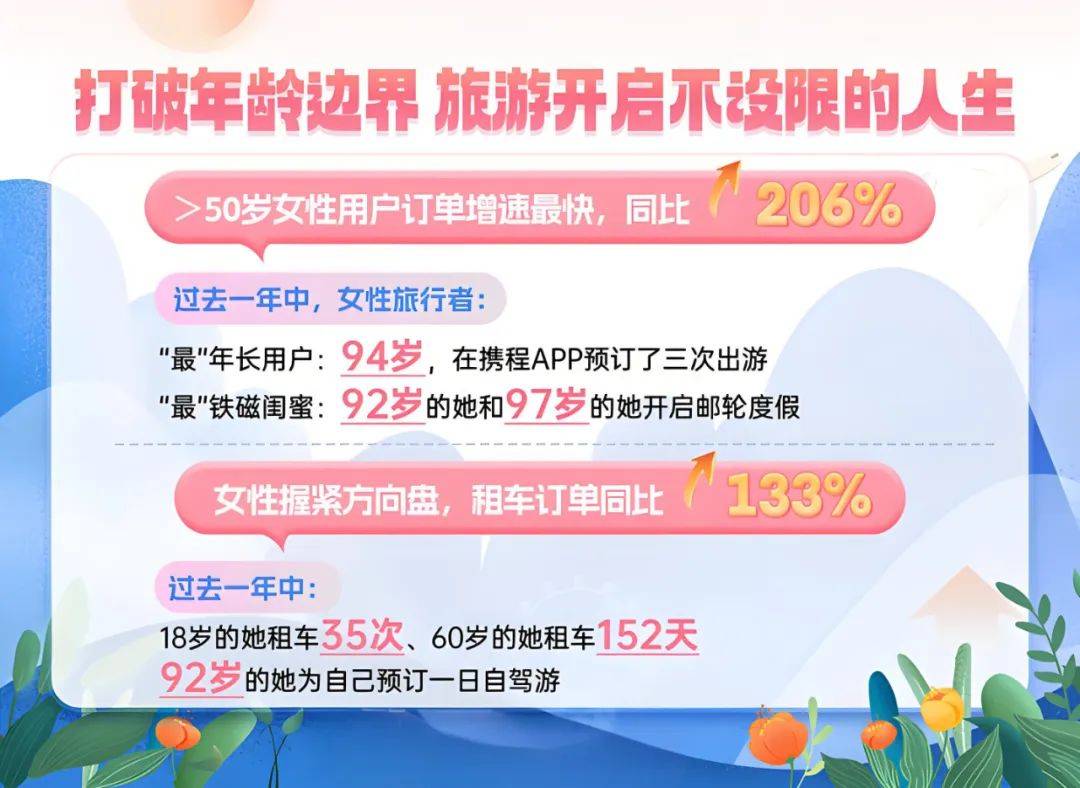
Core Insights - The article highlights the emergence of the "silver-haired economy" in China, particularly focusing on women aged 50-69, who are redefining consumption patterns and driving significant market changes [1][2] Group 1: Market Potential - By the end of 2024, the average disposable income for women aged 50-69 in China is projected to exceed 32,000 yuan, with a savings rate of 45%, creating a consumption market exceeding 4 trillion yuan [1] - As of 2023, the population of women aged 50-69 in China has reached 190 million, marking a significant demographic shift that is influencing consumption trends [2] Group 2: Consumption Trends - The "silver-haired economy" is particularly strong in three key areas: beauty, health, and experiential consumption [3][5] - In the beauty sector, 60% of consumers in Zhao Yazhi's live stream were women, indicating a strong demand for products that defy age-related stereotypes [4] - The fashion consumption among retired female teachers in first-tier cities averages 12,000 yuan annually, with a notable preference for stylish and personalized clothing [5] Group 3: Health and Wellness - There is a shift from reactive healthcare to proactive health management among silver-haired women, with 57.7% expressing concerns about their health [6][7] - The health supplement market is thriving, with significant engagement from women, who also play a crucial role in purchasing health monitoring devices [7][10] Group 4: Experiential Consumption - Silver-haired women are increasingly prioritizing travel and experiences, with a 205.6% increase in travel orders from women aged 50 and above [10] - Educational pursuits are also on the rise, with over 60% of new enrollees in senior universities being women aged 60-70 [11] Group 5: Driving Forces - Wealth accumulation among the 60s generation is reshaping their consumer behavior, with online transaction volumes increasing by 238% from 2019 [13] - Social role transformations are allowing silver-haired women to prioritize personal desires over familial obligations [15][16] - Technological advancements are empowering older women, enabling them to engage with digital platforms and products designed for their needs [19][20]