半导体制造

Search documents
HBM,太难了
半导体行业观察· 2025-11-12 01:20
Core Insights - High Bandwidth Memory (HBM) is a critical driver for artificial intelligence and is at the forefront of multiple technological developments, but it is also one of the most challenging modules to manufacture [2] - The shrinking dimensions and spacing of Through-Silicon Vias (TSV) and microbumps present significant challenges, impacting yield rates and defect detection [2][10] - The transition to HBM4 is expected to increase the number of stacked layers from 16 to potentially 20, while maintaining a total height limit of 775 micrometers [8] Manufacturing Challenges - The need to stack 16 chips on a single wafer requires significant thinning, down to 20 micrometers, and the use of backside inspection technology to ensure wafer flatness [4] - Major HBM manufacturers are considering a shift to hybrid bonding technology to achieve shorter interconnects and lower signal latency [4][10] - Inconsistencies in bump height can negatively affect yield, reliability, and performance, leading to issues such as contact failures and reduced signal integrity [4][10] Detection and Inspection Techniques - Manufacturers focus on identifying issues after the electroplating step and before reflow soldering, with confocal laser detection being preferred over white light detection for rough metal surfaces [5] - Advanced packaging requires strict control of coplanarity and flatness, with flexibility being crucial for adapting to different development stages and achieving mass production [7] - Various detection methods, including automated optical inspection (AOI) and X-ray tools, are being optimized to identify critical defects in microbumps [9] Transition to HBM4 - The transition to HBM4 involves challenges such as reducing copper microbump sizes to 10 micrometers and determining the optimal timing and method for migrating from microbumps to hybrid bonding [13] - Defects in microbumps include pad misalignment, solder necking, and localized cracking, necessitating rapid analysis of thousands of images to ensure high yield [13][14] - A robust framework for analysis and detection of defects is essential as HBM suppliers transition to HBM4, focusing on optimizing solder paste usage and ensuring proper alignment during assembly [14]



商务部:希望德方敦促荷政府尽快采取实际行动 纠正错误做法
智通财经网· 2025-11-11 13:53
Core Viewpoint - The video conference between China's Minister of Commerce Wang Wentao and Germany's Federal Minister for Economic Affairs and Energy Robert Habeck focused on Sino-German and Sino-European economic and trade issues, emphasizing the importance of constructive dialogue to resolve the semiconductor supply chain disruptions caused by Dutch government interventions [1][3]. Group 1: Sino-German Economic Relations - Wang Wentao highlighted that China and Germany are important economic partners, with ongoing practical cooperation deepening across various fields [3]. - The recent 20th Central Committee of the Communist Party of China approved the "14th Five-Year Plan" proposal, outlining a grand blueprint for China's future development and commitment to high-level opening-up [3]. Group 2: Semiconductor Supply Chain Issues - Wang Wentao attributed the root cause of the ASML semiconductor issue to inappropriate interventions by the Dutch government, which has led to global semiconductor supply chain turmoil [3]. - China has made significant efforts to alleviate short-term supply chain pressures by exempting eligible exports, but long-term stability requires constructive actions from the Dutch government [3]. - Wang expressed hope that Germany would play a proactive role in urging the Dutch government to correct its mistakes and withdraw related measures to resolve the issue promptly [3]. Group 3: Germany's Position - Robert Habeck acknowledged the importance of developing economic relations with China and expressed admiration for China's economic achievements and vitality [4]. - Germany is willing to strengthen dialogue and deepen mutually beneficial cooperation with China, aiming for a more balanced and sustainable bilateral trade [4]. - The German side is also highly concerned about the ASML semiconductor issue and is committed to enhancing communication with the Dutch government [4].
已收到中国安世芯片!
国芯网· 2025-11-11 11:57
Core Viewpoint - The recent easing of tensions between China and the Netherlands regarding ASML's semiconductor supply has led to the resumption of critical chip shipments, providing hope for the stability of the global automotive industry [2][4][5]. Group 1: Semiconductor Supply Resumption - ASML Semiconductor has resumed partial shipments of key chips, with reports confirming that automotive suppliers, including Continental's subsidiary, have received the first batch of chips from China [2][4]. - The Chinese Ministry of Commerce has taken measures to exempt compliant exports for civilian use, facilitating the return of chip supplies to the automotive sector [4]. Group 2: Geopolitical Impact - The situation reflects the significant impact of geopolitical dynamics on the semiconductor industry, with the previous control by the Dutch government over ASML due to economic and national security concerns causing disruptions in the global automotive supply chain [4][5]. - The easing of tensions has been marked by positive statements from Dutch officials, indicating a willingness to allow ASML's Chinese factory to resume operations [4]. Group 3: Market Reactions - Following the news of resumed shipments, shares of Wintech Technology surged, with an increase of 9.7% noted shortly before market close [4]. - Honda's executive confirmed the receipt of shipment notifications from China, indicating plans to resume production at affected factories soon [5].


赛微电子:公司将持续构建积累在MEMS芯片制造方面的竞争壁垒
Zheng Quan Ri Bao Zhi Sheng· 2025-11-11 10:13
Core Viewpoint - The semiconductor manufacturing industry is characterized by heavy assets and long cycles, and the company aims to build competitive barriers in MEMS chip manufacturing while expanding its product categories to drive order growth and achieve stable long-term development [1] Group 1 - The company emphasizes a grounded approach to its operations, focusing on deepening and refining its capabilities in the semiconductor sector [1] - The company plans to continue enriching and expanding its product categories to enhance order growth [1] - The company is committed to achieving stable long-term development through these strategies [1]

港股收评:探底回升!新消费股涨势继续,半导体股低迷
Ge Long Hui· 2025-11-11 08:45
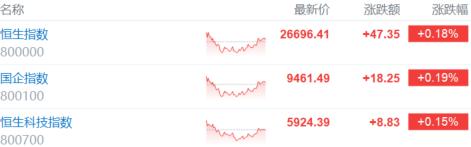
Market Overview - The Hong Kong stock market showed a rebound after hitting a low, with the Hang Seng Index closing up 0.18% at 26,696 points, the Hang Seng China Enterprises Index up 0.19%, and the Hang Seng Tech Index up 0.15% [1][2] - Overall market sentiment remained stable, with various sectors experiencing mixed performances [1] Sector Performance - Large tech stocks had mixed results, with Baidu rising over 2%, while Alibaba, Bilibili, and Meituan fell over 1% [4] - Consumer stocks, including retail, pork, and dining sectors, continued to rise, while semiconductor stocks generally performed weakly [2][4] - The film industry saw significant gains, with Huayi Brothers rising over 16% and Cat's Eye Entertainment up over 5%, driven by upcoming film releases [6][7] Investment Insights - The AI technology investment landscape is growing, with expectations for significant capital expenditure increases among major tech firms [4] - New consumption trends are emerging, focusing on brand expansion, emotional value, functional value, and channel transformation [5] - The aviation sector is expected to enter a super cycle, with high passenger load factors and low ticket prices driving profitability [9] Notable Stock Movements - Xpeng Motors surged over 17%, while other new consumption stocks like Nayuki Tea and Xiaomi also saw gains [6][5] - Property management and real estate stocks strengthened, with Kaisa Group rising over 5% [8] - Semiconductor stocks faced declines, with Huahong Semiconductor down over 3% and SMIC down over 2% [10] Capital Flows - Southbound funds recorded a net inflow of HKD 4.467 billion, indicating strong interest in Hong Kong stocks [12] Future Outlook - Analysts suggest that the Hong Kong market may reach new highs in the medium term, driven by increased capital inflows and the concentration of quality assets [13]
港股收盘 | 三大指数集体收涨 半导体和黄金股走弱
Xin Lang Cai Jing· 2025-11-11 08:33
Market Performance - The Hong Kong stock market saw all three major indices close higher, with the Hang Seng Index up 0.18% at 26,696.41 points, the Tech Index up 0.15% at 5,924.39 points, and the National Enterprises Index up 0.19% at 9,461.49 points [1][3]. Real Estate Sector - Real estate stocks performed strongly, with Longfor Group rising 3.95%, Longfor Properties up 2.15%, and China Resources Land increasing by 1.93% [3]. - According to the China Index Academy, the top 100 real estate companies acquired land worth 783.8 billion yuan from January to October 2025, marking a 26.4% year-on-year increase, although the growth rate has slowed compared to previous months [4]. Property Management Sector - The property management sector also saw gains, with Kaisa Group Holdings up 4.41% and China Resources Mixc Lifestyle rising 3.88% [4]. Aviation Sector - Airline stocks experienced slight increases, with Cathay Pacific up 2.20%, China Eastern Airlines up 1.78%, and China Southern Airlines up 1.54% [6]. - Cathay Pacific's research report maintains an "overweight" rating for the aviation and oil transportation sectors, predicting a potential super cycle for the airline industry due to high passenger load factors and low ticket prices [7]. Semiconductor Sector - Semiconductor stocks faced adjustments, with Hua Hong Semiconductor down 3.65%, SMIC down 2.74%, and Hongguang Semiconductor down 1.08% [8]. - SMIC is set to hold a board meeting on November 13 to review its Q3 performance, while Hua Hong Semiconductor reported a record Q3 revenue of $635.2 million, a 20.7% year-on-year increase [9]. Gold Sector - Gold stocks showed weakness, with Zhenfeng Gold down 8.37%, Zijin Mining down 1.08%, and Chifeng Jilong Gold down 0.98% [10]. - Despite the decline in gold stocks, the People's Bank of China reported an increase in gold reserves to 74.09 million ounces as of the end of October, marking the 12th consecutive month of increases [11]. AI Sector - Huiliang Technology rose 5.02% following positive Q3 results from AppLovin, which reported a revenue of $1.41 billion, a 68.9% year-on-year increase [12]. Entertainment Sector - Lehua Entertainment fell 6.80% amid concerns regarding Wang Yibo's contract renewal, with the company stating that his income share is gradually decreasing and his contract will expire next year [13].


国际产业新闻早知道:中美暂停互征“港口费”一年,欧盟考虑放宽人工智能法规
Chan Ye Xin Xi Wang· 2025-11-11 06:04
Group 1 - The US government has suspended its investigation into China's shipbuilding industry for one year, leading China to reciprocate by suspending port fees on US vessels, indicating a de-escalation of tensions between the two countries [1][2] - The US Trade Representative's office announced that starting from November 10, it will halt the 301 investigation into China's dominance in maritime, logistics, and shipbuilding sectors for one year, which aligns with China's announcement to suspend special port fees on US ships [1][2] - Analysts noted that the suspension of port fees could prevent losses amounting to billions of dollars, as the fees were set to be imposed on Chinese-owned or operated vessels [2] Group 2 - The Philippines is set to adjust its rice import tariffs based on international price fluctuations, with a new guideline effective from January 1, 2026 [4][5] - The current 15% rice import tariff has been extended until the end of this year, and the new tariff structure will allow for adjustments of 5 percentage points based on a 5% change in international rice prices [5][6] - The Philippines has recently banned rice imports until the end of the year to protect local farmers, especially during the peak rice season [8] Group 3 - Spain's King Felipe VI is on a state visit to China, marking the first visit by a Spanish monarch in 18 years, aimed at strengthening bilateral relations amid increasing tensions between Spain and the US [11][12] - The visit coincides with the 20th anniversary of the establishment of a comprehensive strategic partnership between China and Spain, with expectations of further consolidating political and economic ties [12] - Spain's trade deficit with China is significant, with imports reaching €45 billion and exports only €7.5 billion, prompting Spain to seek a more balanced trade relationship [13] Group 4 - Germany is reportedly planning to reassess its trade policy with China, focusing on energy, raw materials imports, and Chinese investments in critical infrastructure [14][16] - This initiative comes amid rising trade tensions between the two largest economies, with a committee expected to evaluate trade relations and provide recommendations [15][16] - The committee will examine whether adjustments to foreign trade rules are necessary, reflecting a shift in Germany's long-standing view of China as a partner in promoting open global trade [19] Group 5 - The Chinese government has introduced measures to promote private investment, particularly in low-altitude economy infrastructure and government procurement for small and medium-sized enterprises [20][21] - The measures include ensuring that at least 40% of the budget for engineering procurement projects is reserved for small and medium-sized enterprises [22][24] - The government aims to enhance support for private investment projects through various financial mechanisms, including real estate investment trusts (REITs) [24] Group 6 - The European semiconductor market showed strong growth in Q3 2025, with sales reaching $14.07 billion, a 7.2% increase from the previous quarter and a 6% year-on-year growth [51][52] - The growth was primarily driven by memory chips, which saw a quarterly increase of 17.3%, and analog semiconductors, which grew by 7.1% [51] - Despite strong growth in dollar terms, the sales figures in euros showed a more modest increase due to currency fluctuations [52] Group 7 - Texas Instruments has opened its second packaging and testing factory in Malaysia, expected to package and test billions of chips annually, enhancing its global supply chain [54][55] - The new facility, TIEM2, will utilize advanced automation technology and is part of TI's strategy to meet 90% of its packaging and testing needs internally by 2030 [55] - The factory's establishment reflects TI's long-term commitment to Malaysia, where it has operated for over 50 years [55] Group 8 - Micron Technology has announced significant delays in its wafer fabrication plant project in New York, now expected to begin production in 2033, five years later than initially planned [56][58] - Despite the delays in New York, Micron is accelerating the construction of its Idaho wafer fabrication plant, reallocating funds from the CHIPS Act to support this facility [57][58] - The revised timeline indicates a strategic shift in Micron's project priorities, focusing on the Idaho facilities while postponing the New York project [58] Group 9 - GlobalFoundries has signed a technology licensing agreement with TSMC to acquire GaN process technology, aiming to enhance its capabilities in power components for data centers, industrial, and automotive markets [59][60] - The move is part of GlobalFoundries' strategy to address the growing demand for high-efficiency, high-power-density solutions as silicon technology approaches its limits [60][61] - The integration of GaN technology is expected to accelerate the development of new power chips, supporting various applications including electric vehicles and renewable energy [61][62]


每日投资策略-20251111
Zhao Yin Guo Ji· 2025-11-11 03:50
Core Insights - The report highlights a structural upturn in the global PCB and CCL industries driven by AI infrastructure investment, with a projected 12.8% rebound in the PCB market by 2025 and an 18% growth in the CCL sector in 2024, indicating strong pricing power [4] - Pfizer is positioned as a leader in the pharmaceutical industry, with a forecasted 12% growth in non-COVID revenue in 2024, despite facing a patent cliff from 2025 to 2028 [6][7] - The semiconductor industry is experiencing a demand surge due to AI, with significant growth expected in high-performance products, benefiting leading manufacturers [4] Market Performance - The Hang Seng Index closed at 26,649, up 1.55% for the day and 32.85% year-to-date, while the Hang Seng Tech Index rose 1.34% [1] - Southbound capital saw a net inflow of HKD 6.65 billion, with notable purchases in China National Offshore Oil Corporation and Pop Mart, while Alibaba and SMIC saw the most significant net sell-offs [3] Company Analysis - Pfizer's aggressive cost-cutting plan aims to save USD 7.2 billion from 2024 to 2027, with an expected operating profit margin increase to 26.2% in 2024 from 9.6% in 2023 [5] - The report anticipates that Pfizer's revenue will begin to recover in 2029, driven by new product contributions, with a target price set at USD 36.16 [7] - Beike's revenue for Q3 2025 grew by 2.1% year-on-year, with a focus on improving profitability in its core real estate transaction business [8] Industry Trends - The report notes a shift in investment focus towards energy, chemicals, and consumer stocks in the Chinese market, with chemical sector valuations at historical lows, suggesting a potential buying opportunity [3] - Japan's new government is expected to implement expansive fiscal policies, focusing on key sectors such as semiconductors and defense, which may lead to a decline in government bond prices [3]


DARPA斥巨资建晶圆厂,发力先进封装
半导体行业观察· 2025-11-11 01:06
Core Insights - The article discusses the transformation of a semiconductor manufacturing plant in Austin, Texas, into the Texas Instruments Research Institute (TIE), focusing on advanced packaging for 3D heterogeneous integration (3DHI) [2][3] - The facility aims to be the world's only advanced packaging plant dedicated to 3DHI, which involves stacking chips made from various materials, enhancing performance significantly compared to traditional silicon-on-silicon stacking [2][3] Funding and Development - The Texas state government is investing $552 million in the construction of the plant, while DARPA is contributing $840 million, with the facility expected to become self-sustaining after a five-year mission [3][4] - TIE is described as a startup with significant growth potential, and the construction is progressing rapidly, with all equipment expected to be installed by Q1 2026 [3][4] Technical Challenges and Solutions - A major challenge for TIE is ensuring that different materials can be used predictably in manufacturing processes due to their varying mechanical properties [4] - The development of process design kits and packaging design kits is crucial for achieving the necessary precision in connecting chips [4][5] Project Applications - TIE will refine its technology through three 3DHI projects: phased array radar, focal plane array infrared imager, and compact power converters, which represent the operational model of the facility [5] - The facility will operate as a "multi-variety, small-batch" plant, contrasting with traditional high-volume silicon wafer foundries [5] Research Opportunities - The NGMM initiative provides research opportunities in areas such as new thermal films, microfluidic cooling technologies, and complex packaging failure mechanisms [5][6] - The collaboration between NGMM and TIE is seen as a unique opportunity for innovation in the semiconductor industry [6]
美光DRAM厂,延期五年
半导体行业观察· 2025-11-11 01:06
Core Viewpoint - Micron Technology has announced significant delays in the construction of its wafer fabrication plant in Clay, New York, now expected to begin production by the end of 2033, impacting the semiconductor production cluster in the region that was initially set to start in 2025 [2][6][7] Summary by Sections Project Delays - The construction timeline for the first wafer fab (Fab 1) has been extended, with the start of construction now pushed to late 2026, leading to a projected start of DRAM production around 2030, five years later than originally planned [2][3][6] - The construction start dates for subsequent fabs (Fab 2, Fab 3, and Fab 4) have also been delayed, with full completion of the Micron campus now expected by 2045, five years later than the initial schedule [3][6] Strategic Adjustments - Micron is accelerating the construction of its Idaho wafer fabrication plant and reallocating funds from the CHIPS Act to this facility, indicating a strategic shift in project priorities [2][7] - The revised timeline for the New York project has been attributed to the early initiation of the Idaho facility, which is set to be completed before the Clay site [7] Environmental Impact Reports - The environmental impact report indicates that the construction period for Fab 1 will extend from three years to approximately four years, affecting the overall project timeline, including hiring and operational plans [6][7]