
科技

Search documents
十项战略签约!迈富时(02556)与百度、阿里云、沐曦股份等科技企业达成深度战略合作
智通财经网· 2025-12-29 02:38
Group 1 - The core viewpoint of the news is the successful convening of the MaiFushi Ecological Conference, where strategic partnerships were established with leading technology companies to enhance AI capabilities and digital economy support [1][2] Group 2 - MaiFushi has formed deep strategic collaborations with companies such as Baidu, Alibaba Cloud, and OceanBase, focusing on integrating cloud infrastructure, AI models, and domestic intelligent computing chips to create a secure AI computing foundation [1] - The collaboration aims to enhance the scale of AI applications across various sectors, including finance, government, and commercial aerospace, by addressing application bottlenecks and promoting the transition from technology validation to large-scale industrial empowerment [1][2] - The signing of agreements is expected to drive deep integration and complementary advantages within the AI industry chain, fostering a collaborative innovation model that combines foundational computing support, data flow, and intelligent applications [2]

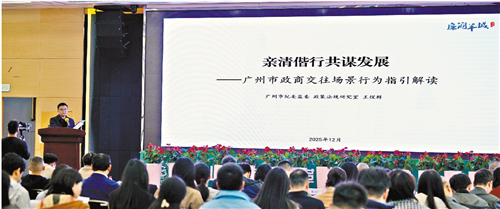
第12期“廉洁合规大讲堂”开讲 起草组成员解读广州市政商交往行为指引
Guang Zhou Ri Bao· 2025-12-29 01:55
Core Viewpoint - The establishment of a "clean and clear" government-business relationship is essential for enhancing the political ecology and business environment, serving as a catalyst for market vitality and high-quality corporate development [2][3]. Group 1: Event Overview - The "Integrity and Compliance Lecture Hall" (12th session) was held on December 26, focusing on building a clean government-business relationship and creating a clean corporate ecosystem [2]. - The event was organized by the Guangdong-Hong Kong-Macao Greater Bay Area Enterprise Integrity and Compliance Management Association, with participation from over a hundred representatives from various sectors including government, industry associations, and academia [2]. Group 2: Guidelines and Their Impact - The Guangzhou Municipal Commission for Discipline Inspection has issued two batches of guidelines to clarify the boundaries of government-business interactions, emphasizing compliance and cooperation [3][5]. - The first batch of guidelines addressed common issues in government-business interactions, while the second batch expanded on the forms of these relationships, focusing on the entire lifecycle of enterprise development from investment attraction to implementation [5][6]. Group 3: Corporate Feedback - Participating companies expressed that the training provided valuable insights into the guidelines, helping them understand the boundaries of permissible and impermissible actions in government-business interactions [7]. - The guidelines are seen as a "stabilizing pill" and "navigation tool" for enterprises, clarifying interaction boundaries and encouraging proactive service from government officials [8][10]. Group 4: Future Directions - Companies plan to actively engage in integrity and compliance learning, ensuring lawful operations and focusing on long-term development in alignment with the guidelines [9][11]. - The guidelines are expected to foster a more efficient collaboration between government and enterprises, enhancing resource integration and stabilizing enterprise development [12][13]. Group 5: Association's Role - The Guangdong-Hong Kong-Macao Greater Bay Area Enterprise Integrity and Compliance Management Association aims to build a clean and compliant ecosystem for enterprises, focusing on creating a market-oriented, law-based, and international business environment [17][19]. - The association has established various committees to support enterprises in building core competencies in compliance and integrity, thereby enhancing their competitive edge [17][20].

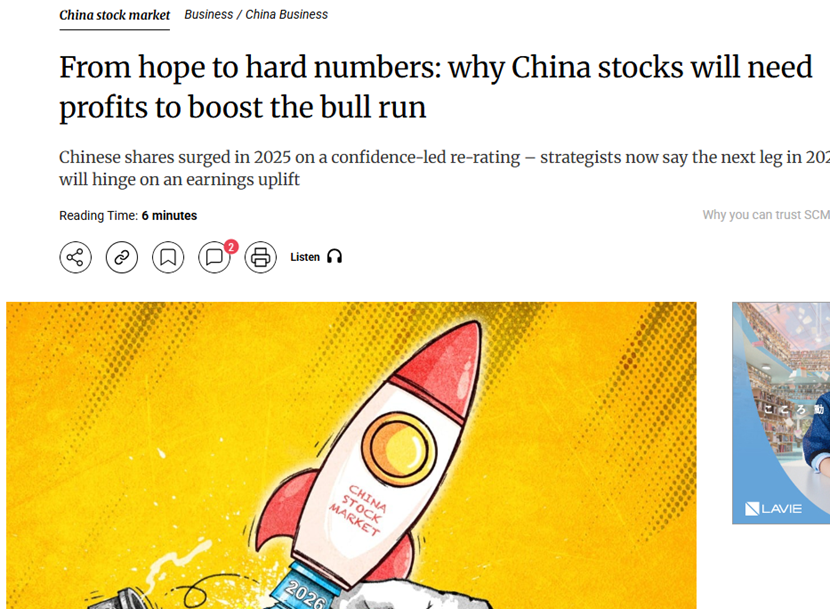
展望2026年A股,外媒称“盈利将成为未来股市的关键驱动力”
Huan Qiu Wang· 2025-12-29 01:11
Group 1 - The highest annual return of public active equity funds in the A-share market reached 236.88%, setting a record as the highest annual return in public fund history, with 72 funds achieving over 100% return this year [1] - Nearly 80% of active funds outperformed their benchmark, but the median return was 29.03%, lower than the average return of 32.71% [1] - UBS and JP Morgan Chase predict profit growth rates for 2025 and 2026 will be between 6% and 15%, indicating that earnings will become a key driver for the stock market, replacing valuation expansion [1] Group 2 - Gary Dugan, CEO of Global Economic Office, stated that the Chinese stock market will be strongly supported in 2026, with encouraging and sustainable fundamentals [4] - Market expectations for economic growth, policy support, and structural industry reforms are anticipated to drive stock market increases, particularly in technology and new energy vehicle sectors [4] - Industry experts suggest that the market will remain in a structural opportunity-driven fluctuation phase until unexpected changes in domestic demand occur, with trading volume being a key signal for market trends [4]

巴菲特谢幕!手握万亿资金的继任者,是否会加速拥抱AI?
Sou Hu Cai Jing· 2025-12-29 00:54
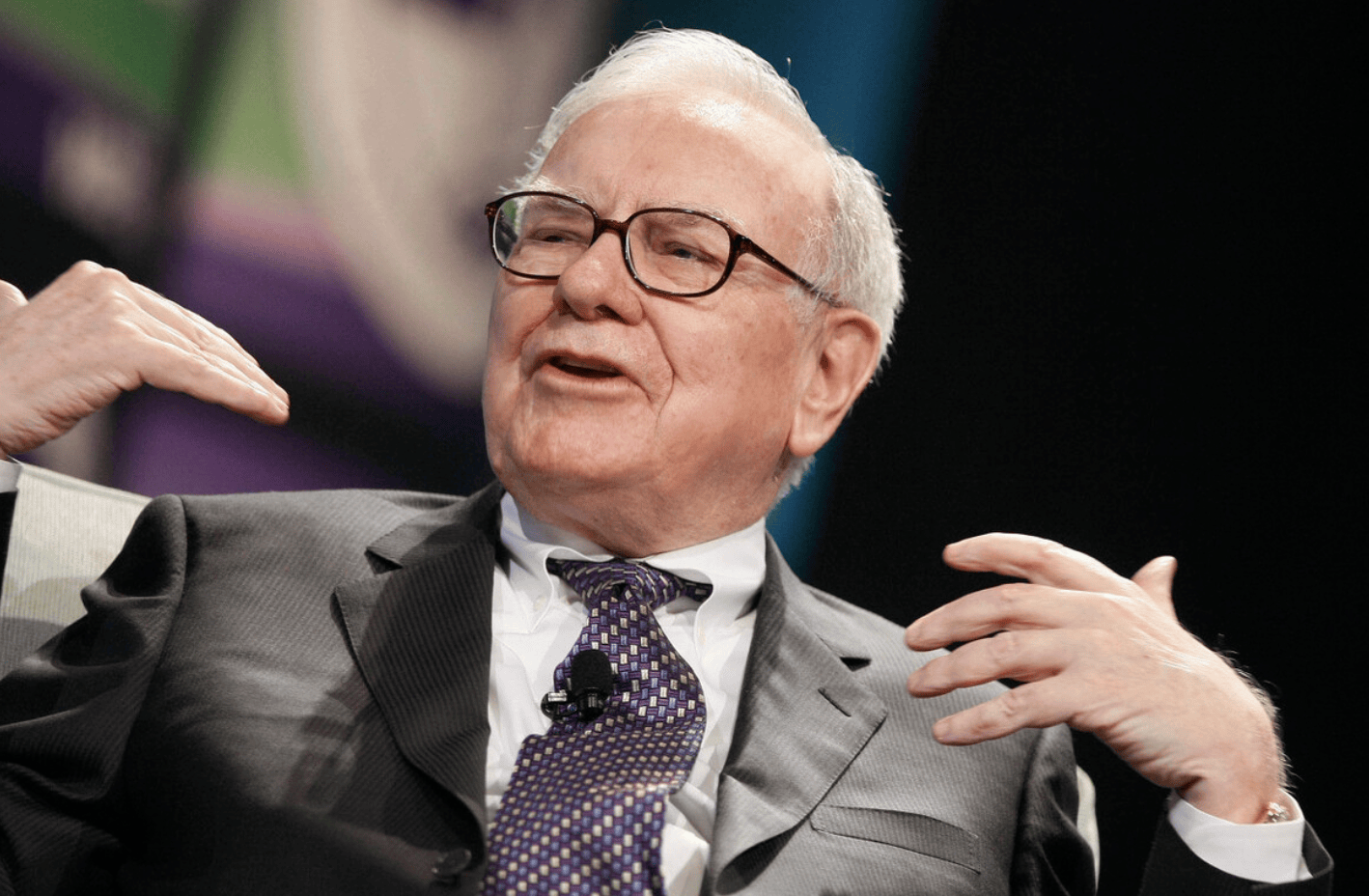
在最高光的时刻谢幕,是巴菲特给资本市场的最终答案。 面对资本市场的复杂,巴菲特用一生实践了"价值投资"的理念,并验证了它存在的价值。 自1965年接手伯克希尔·哈撒韦以来,六十多年的时光,巴菲特将这家濒临破产的纺织企业带到了前所未有的高度,让世界见证了市场的力量,如今这家企 业已成为一家市值超万亿美元的综合性金融集团。 根据相关媒体报道,退休之际,巴菲特本人的净资产已达1510亿美元,位居彭博亿万富豪榜单第十位。 据巴菲特的"谢幕信",从今年开始他就不再撰写伯克希尔·哈撒韦的年度报告,也就是说,往后再要想从年度报告"窥探"他本人对市场短期或者长期的看 法,已无机会。 从巴菲特的投资生涯来看,拥抱现金流比较好的企业,深耕消费、能源以及综合性金融贯穿了他的整个投资生涯,在"价值投资"的加持下,巴菲特享受到了 这些行业发展的红利,也在时代的发展中完成了蜕变。 近十年以来,巴菲特重要的一笔投资,就是2018年选择了苹果。这笔投资延续了伯克希尔的投资神话,成了巴菲特继续笑傲资本市场的砝码。最近两年,巴 菲特开始大幅减持苹果,为继任者格雷格·阿贝尔留下足够腾挪的空间。 当用后视镜视角去审视巴菲特的交易,可以清晰地认识到, ...
又一家新势力破产!观致汽车超350亿元股权被冻结;华杉回应蜜雪冰城红色设计被指为“LOW”;马斯克评论宇树机器人测试视频丨邦早报
创业邦· 2025-12-28 01:08
Core Viewpoint - The article discusses various significant events in the financial and automotive sectors, highlighting investment opportunities and challenges faced by companies in these industries. Group 1: Investment and Financial News - Renowned private equity manager Li Bei announced a new investment course priced at 12,888 yuan, clarifying that the initiative is not aimed at generating significant income as she is financially secure [2] - The global M&A market reached a record high of $4.5 trillion in 2025, marking a nearly 50% increase from 2024, with significant contributions from U.S. companies [23] - The wealth of the top ten tech billionaires in the U.S. increased by over $550 billion in 2025, driven by advancements in artificial intelligence [23] Group 2: Automotive Industry Developments - Geely's subsidiary, Xiwanda, is involved in a lawsuit claiming quality issues with battery cells, seeking over 2.3 billion yuan in damages [3] - Qoros Auto has entered bankruptcy review due to long-term debt issues, with total frozen equity exceeding 35 billion yuan [3] - Lantu Motors announced the launch of its flagship SUV, priced between 379,900 and 509,900 yuan, with the first deliveries set for December 29 [14] Group 3: Company Financing and Growth - Weinan completed nearly 1 billion yuan in Series C financing, with funds allocated for battery asset investments and technology development [12] - Huaihe Medical secured several hundred million yuan in Series D financing, aimed at expanding its cardiovascular medical device offerings [12] - Blood Crystal Biotechnology raised over 100 million yuan in Series B1 financing to advance research in stem cell therapies [12]


2025年亿万富翁“大赢家”:身家飙升2.3万亿元,手握全球第一大独角兽
Sou Hu Cai Jing· 2025-12-27 13:13
Group 1 - The global billionaire count is projected to increase by over 340 individuals by 2025, representing a 50% growth compared to the average of the past five years [1] - The total wealth of over 3100 billionaires is expected to reach $18.7 trillion, with a record increase of $3.6 trillion since the beginning of the year [1] - The top ten wealth gainers in the past year saw their fortunes rise by a total of $729.2 billion, with American billionaires contributing over 85% of this growth [1] Group 2 - Copper is anticipated to be the standout commodity in 2025, with prices having surged over 35% this year, potentially marking the largest annual increase since 2009 [3] - Grupo México, the fourth-largest copper producer globally, reported a copper output of 789,400 metric tons from January to September 2025 [3] - Germán Larrea Mota Velasco and family own approximately 60% of Grupo México, which has expanded into infrastructure and rail transport under his leadership since 1994 [3] Group 3 - The wealth of top American tech billionaires has surged due to investor enthusiasm for leading AI companies, with six individuals collectively gaining $625.2 billion this year [5] - Alphabet, Google's parent company, reported third-quarter revenues of $102.346 billion, a 16% year-over-year increase, marking the first time quarterly revenues surpassed $100 billion [5] - Alphabet plans to invest over $10 billion in building a 1 GW data center in southern India and announced a $4.75 billion cash acquisition of Intersect, a data center and energy infrastructure company [5] Group 4 - Elon Musk emerged as the biggest winner in 2025, with a wealth increase of $333.2 billion, surpassing the wealth growth of the second-richest individual, Larry Page, by $78.5 billion [7] - Musk's wealth surge is attributed to the rising valuations of Tesla, SpaceX, and xAI Holdings, with SpaceX's valuation doubling to $800 billion [7] - Over the past five years, Musk has achieved several wealth milestones, including becoming the first person to surpass $400 billion and reaching $754.4 billion in 2025 [7] Group 5 - The top ten billionaires with the highest wealth growth in 2025 include Elon Musk, Larry Page, Sergey Brin, Jensen Huang, Larry Ellison, Amancio Ortega, Germán Larrea Mota Velasco, Masayoshi Son, Mark Zuckerberg, and Carlos Slim Helú [8] - Elon Musk leads the list with a net worth of $754.4 billion, followed by Larry Page at $254.7 billion and Sergey Brin at $235.1 billion [8]



黄金、白银上演疯狂假日行情
Di Yi Cai Jing Zi Xun· 2025-12-27 02:12
Group 1: Market Overview - The upcoming Christmas holiday has led to low volatility in traditional markets, but this year is different due to heightened risk aversion and supply-demand imbalances in the precious metals market [2] - The U.S. stock market remains stable despite strong GDP data, with the 10-year Treasury yield hovering around 4.17%, indicating that monetary policy is not expected to tighten further [3] - Concerns over the AI bubble and unclear monetary policy have dampened the momentum of star tech stocks, with the VIX index near yearly lows [3] Group 2: Oracle's Financial Performance - Oracle's stock has plummeted 30% this quarter, heading towards its largest quarterly decline since the 2001 internet bubble burst, following disappointing revenue and free cash flow results [4] - The company plans to invest $50 billion in capital expenditures by FY2026, a 43% increase from previous plans, which raises concerns about its ability to manage such debt [4][5] Group 3: AI Bubble Concerns - A recent survey shows that 45% of fund managers view the "AI bubble" as the biggest market risk, a significant increase from 11% in September [7] - The construction of AI data centers is considered one of the largest infrastructure projects in modern history, but a slowdown in AI growth could pose significant risks to the market [7] Group 4: Precious Metals Market - Precious metals like gold and silver have reached historical highs due to investor demand driven by expectations of Fed rate cuts and geopolitical tensions [8] - Gold prices have surged, with predictions that they could reach $5,000 by the end of 2026, supported by central bank purchases and a trend towards "de-dollarization" [8] - Silver prices have also increased significantly, driven by both safe-haven demand and structural growth in industrial applications, particularly in electric vehicles and solar panels [9] Group 5: Platinum and Palladium Prices - Platinum and palladium prices have seen remarkable increases, with platinum futures surpassing $2,500 and palladium futures rising above $2,000, driven by supply constraints and shifting investment demand [10] - The market for platinum and palladium is much smaller than that for gold, making it susceptible to significant price fluctuations with minimal investment activity [10]

实干开新局 合力谱新篇
Liao Ning Ri Bao· 2025-12-27 01:26
Group 1: Economic Development and Policy Implementation - The provincial government is focusing on revitalizing economic development and has outlined key tasks for the "14th Five-Year Plan" period, emphasizing the importance of improving the business environment and enhancing investment mechanisms [1][5] - The provincial development and reform commission aims to significantly improve the business environment in the short term and fundamentally over the long term, with a focus on project service mechanisms and strengthening project planning and reserve [1] - The provincial government is promoting the development of emerging industries such as artificial intelligence, low-altitude economy, marine economy, silver economy, and ice and snow economy, while also enhancing traditional pillar industries [1] Group 2: Technological Innovation and Industry Integration - The provincial science and technology department is working towards creating a nationally influential regional technology innovation center, focusing on the deep integration of technological and industrial innovation [2] - Emphasis is placed on reforming research paradigms, organizational models, and support mechanisms to enhance innovation resource coordination and organization [2] - The province plans to implement key technological breakthroughs in priority areas and support enterprises in forming systematic innovation consortia [2] Group 3: Cultural and Tourism Sector Development - The provincial culture and tourism department is focusing on expanding domestic demand and promoting consumption through four key strategies to enhance the vitality of the cultural and tourism industry [3] - Efforts will be made to cultivate core competitive and innovative cultural tourism enterprises, enrich product offerings, and optimize the business environment [3] - The department aims to boost cultural tourism consumption by innovating consumption scenarios and leveraging holiday opportunities [3] Group 4: Audit and Supervision for Economic Growth - The provincial audit office is committed to aligning its actions with the central and provincial government's economic work requirements, focusing on high-quality development and risk prevention [4] - The office emphasizes the importance of strict auditing and supervision to ensure accountability and transparency in economic activities [4] Group 5: Market Regulation and Quality Improvement - The provincial market regulation bureau is focused on enhancing the vitality of various business entities and supporting high-quality development in specific industries [5] - The bureau aims to improve market access and governance efficiency while promoting the "2211" industrial system [5] - There is a strong emphasis on quality assurance and regulatory oversight to support high-quality development [5] Group 6: Healthcare System Reform - The provincial medical insurance bureau is working to align healthcare reforms with economic development, focusing on sustainable and high-quality healthcare systems [6] - Initiatives include provincial-level coordination of basic medical insurance and the promotion of cost-reducing measures for medical supplies [6] - The bureau is also advancing payment reform and supporting the development of innovative healthcare solutions [6] Group 7: Energy Sector Development - The State Grid Shenyang Power Supply Company is focusing on high-quality development in the energy sector to support overall economic growth [7] - Key initiatives include accelerating the construction of critical power grid projects and enhancing the business environment for electricity services [7] - The company aims to align energy supply with the needs of high-end manufacturing and new materials industries while promoting modern smart distribution networks [7]
AI应用引起劳动争议入选
Xin Lang Cai Jing· 2025-12-26 23:07
Group 1 - The article discusses the impact of AI on labor relations, highlighting a case where a technology company terminated an employee's contract due to the introduction of AI automation, which was deemed an unlawful dismissal by the arbitration committee [1] - The arbitration committee clarified that changes in labor contracts must be unforeseen and beyond the company's regular operational decisions, indicating that the introduction of AI does not meet these criteria [1] - The article emphasizes the need for companies to bear the risks associated with technological advancements rather than transferring them to employees [1] Group 2 - Another case focuses on the implementation of gradual retirement policies, where a hotel unilaterally terminated an employee's contract without proper consultation, violating the new retirement age regulations [2] - The arbitration committee ruled that the employee's retirement age should be adjusted according to the new policy, thus invalidating the hotel's basis for contract termination [2] - The publication of these cases aims to enhance legal guidance, protect workers' rights, and promote healthy development of market entities while reducing labor disputes [2]
包头市创新方式开辟促消费新路径
Xin Lang Cai Jing· 2025-12-26 17:58
Core Insights - The "Cross-Year Consumption · Discount in Deer City" campaign was officially launched in Baotou City on December 26, aiming to stimulate the consumption market at the end of the year and beginning of the next [1][2] - The campaign features an innovative "1+10+N" comprehensive system that integrates resources from various sectors including industry, agriculture, technology, culture, tourism, sports, and elderly care, breaking down industry boundaries [1] Group 1: Campaign Highlights - The campaign's standout feature is "boundaryless integration," moving beyond traditional commercial consumption promotion to weave elements from multiple sectors into a consumption network [1] - In the industrial sector, Baotou's Ministry of Industry and Information Technology opened "transparent factories," allowing citizens to visit production lines of companies like Yili and Yanjing Snow Deer, creating a closed loop of industrial tourism and direct product purchase [1] - In agriculture, local agricultural and pastoral departments organized "field direct purchases" and "New Year goods fairs," promoting high-quality agricultural products from rural areas to urban markets [1] Group 2: Policy and Experience Integration - Baotou City allocated 21 million yuan in fiscal funds to distribute consumption vouchers and introduced an innovative "voucher reuse" mechanism, allowing consumers to enjoy secondary discounts with tickets from concerts or sports events at designated merchants [2] - Financial institutions launched multi-scenario payment discounts and consumer credit benefits, enhancing payment convenience, particularly at Donghe International Airport, which is developing a payment service demonstration area for overseas guests [2] - The campaign targets all age groups, featuring events like esports competitions and family-friendly activities, with special services for the elderly, including "warm short-term care" and free trial stays in collaboration with elderly care institutions [2] Group 3: Overall Objectives - The consumption season will span New Year's Day, the Spring Festival, and winter vacation, aiming to create a consumption promotion ecosystem through multi-industry collaboration, policy integration, and broad demographic coverage [2] - Baotou City is exploring a new path for consumption promotion that stimulates domestic demand potential through deep integration and enhances residents' happiness through precise services [2]