
水泥

Search documents
国泰海通|建材:水泥出海国别研究之埃塞俄比亚
国泰海通证券研究· 2025-11-23 13:47
Economic Overview - Ethiopia, with a population exceeding 130 million, is the second most populous country in Africa and has a rapidly growing economy despite its low development level [1] - The country faces significant investment challenges due to high inflation and severe foreign exchange shortages, with the Ethiopian birr depreciating from 58:1 to 149:1 against the US dollar between July 2024 and October 2025 [1] Cement Supply and Demand - The cement production and sales in Ethiopia are experiencing rapid growth, driven by economic development and population increase [1] - Major cement production facilities include a 1.3 million ton line by West Cement launched in October 2020 and a 5 million ton line by Lemi set to launch in August 2024, which will help alleviate cement shortages [1] Competitive Landscape - The Ethiopian cement market is characterized by five major companies, with West Cement leading at 6.3 million tons of capacity, holding a 43% market share [1] - Other significant players include Dangote and Derba, each with 2.5 million tons of capacity, followed by Messebo and Habesha with 2.1 million and 1.4 million tons, respectively [1] Profitability and Trends - The profitability of the cement sector is under short-term pressure due to multiple factors, including the large-scale production capacity coming online, rapid currency depreciation, and delays in infrastructure projects affecting local demand [2] - Cement prices have dropped sharply from approximately $120 per ton in the first half of 2024 to $50 per ton, impacting profitability [2]


扩张与分红,各有其美
SINOLINK SECURITIES· 2025-11-23 08:28
Investment Rating - The report maintains a positive outlook on overseas growth and technology sectors, emphasizing the importance of identifying companies capable of navigating overseas cycles and accelerating domestic technology development [2][12]. Core Insights - The report highlights the impact of changes in the US interest rate stance on market sentiment, particularly affecting high-valuation sectors linked to overseas economies. It underscores the significance of finding resilient companies in overseas markets and the opportunity for domestic technology supply chain development [2][12]. - The report expresses optimism for the overseas and AI new materials sectors, citing the recent listing of "Le Shushi," a leading fast-moving consumer goods company in East and West Africa, as a notable addition to the overseas sector [2][12]. - In the traditional building materials and construction sectors, the focus has shifted to low-valuation or less-followed segments, with dividend policies becoming a key consideration. Companies are adapting to industry challenges by reducing capital expenditures and increasing dividends [3][13]. Summary by Sections Weekly Market Performance - The building materials index decreased by 6.46% during the week, with specific declines in glass manufacturing (-9.93%), fiberglass (-11.18%), and cement manufacturing (-6.06%) [17]. Price Changes in Building Materials - National cement prices slightly decreased by 0.4% week-on-week, with regional variations in price movements. Southern regions showed a slight increase in demand, while northern regions faced a decline due to weather conditions [26]. - The average price of float glass was reported at 1168.37 RMB/ton, reflecting a decrease of 2.26% week-on-week, with inventory levels increasing [38][52]. Sector Analysis - In the cement sector, the average price was 351 RMB/ton, down 78 RMB/ton year-on-year, with an average shipment rate of 45.7% [14]. - The fiberglass market showed stability in pricing, with the average price for 2400tex direct yarn at 3531.75 RMB/ton, a slight increase of 0.2% week-on-week [57]. - The report notes that the demand for construction materials remains weak, particularly in the completion phase, while retail segments show stable growth [16].




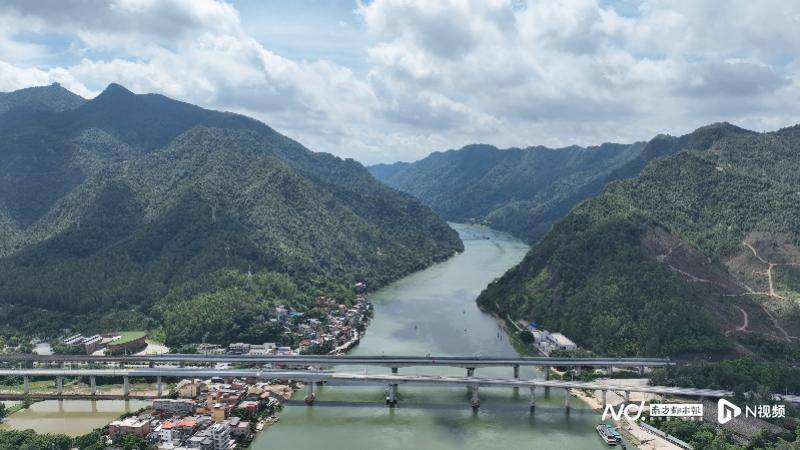
从建市到融湾,清远如何成为台商投资发展的“优选地”?
Sou Hu Cai Jing· 2025-11-22 15:05
Core Insights - The article highlights the growing investment opportunities in Qingyuan, particularly from Taiwanese businesses, emphasizing the favorable natural environment and supportive policies that have fostered a thriving investment climate [1][2]. Investment Environment - The "Qingyuan Special Session" event attracted nearly 600 representatives from Guangdong and Taiwan, culminating in a signing amount of nearly 900 million yuan [1]. - Qingyuan has established a strong relationship with Taiwanese investors since its establishment, with 131 Taiwanese enterprises investing a total of 1.283 billion USD, of which 1.078 billion USD has been utilized [3]. - Taiwanese enterprises span various sectors, including manufacturing, real estate, and modern services, contributing significantly to the local economy [3]. Geographic and Economic Advantages - Qingyuan benefits from its strategic location in the Greater Bay Area, with access to a consumer market of 86 million people and efficient transportation links, including a 24-minute high-speed train to Guangzhou [4]. - The North River provides a cost-effective and environmentally friendly transportation option for businesses, particularly in the cement industry, which has seen significant investment due to the region's abundant mineral resources [6][7]. Environmental and Lifestyle Factors - Qingyuan is referred to as the "back garden" of the Greater Bay Area, with a high forest coverage rate and excellent air quality, making it an attractive location for health-oriented businesses [9][10]. - The region's ecological advantages support agricultural development, with initiatives like the establishment of cross-strait agricultural cooperatives focusing on high-potential crops [11]. Government Support and Services - The local government has implemented efficient service measures, such as "one-stop" services for business registration and project initiation, enhancing the investment experience for Taiwanese enterprises [12]. - Continuous communication between the government and Taiwanese businesses has established a supportive environment, allowing for quick resolution of issues and fostering long-term investment [12][13]. Conclusion - Taiwanese investors have evolved from initial business establishment to becoming ambassadors for Qingyuan, promoting the city as a prime location for future investments and cultural exchanges [13].
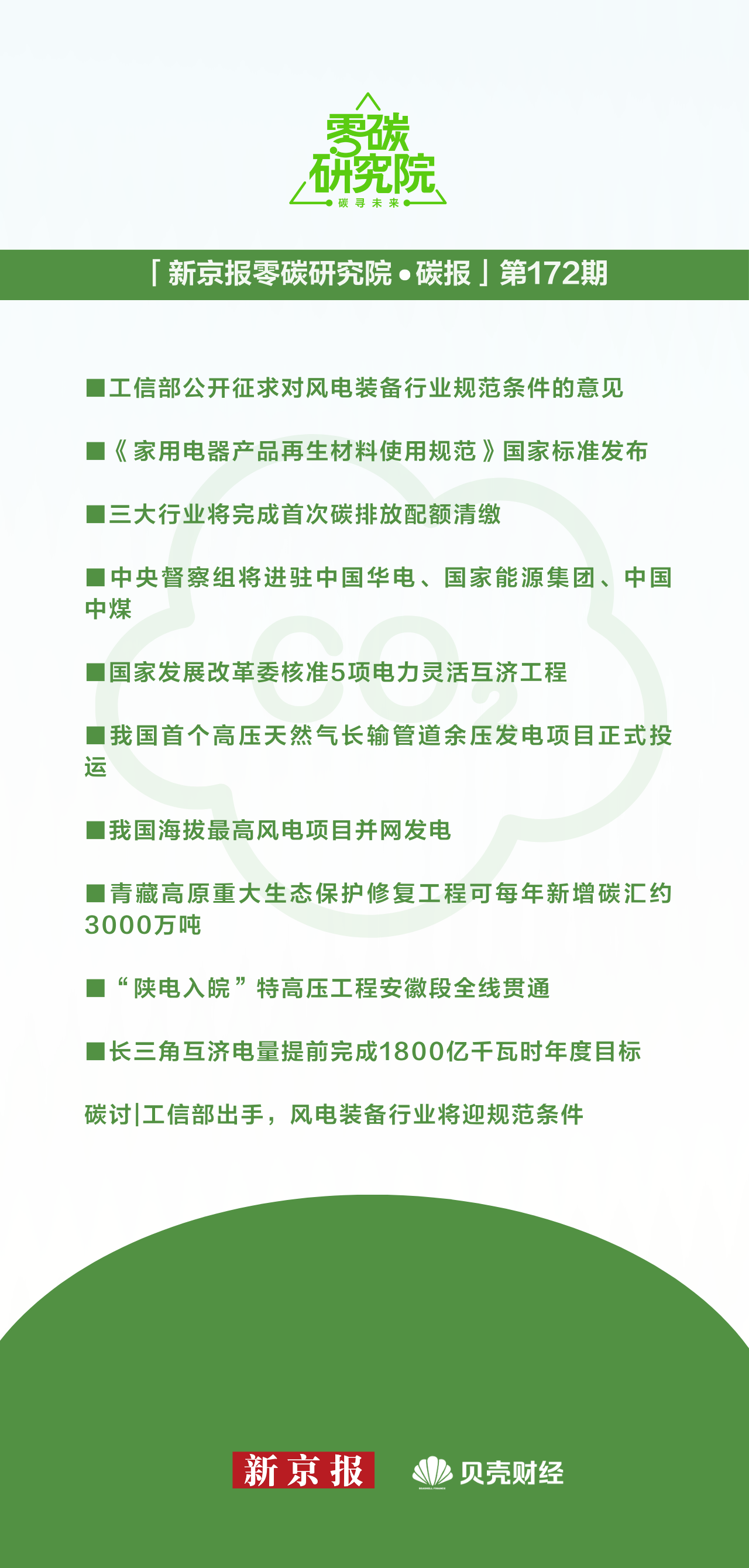
一周碳要闻:工信部出手 风电装备迎规范条件(碳报第172期)
Xin Jing Bao· 2025-11-21 11:32
Policy Developments - The Ministry of Industry and Information Technology (MIIT) is soliciting opinions on the "Wind Power Equipment Industry Norms" to promote sustainable development in the wind power equipment manufacturing sector [3][18] - The newly released national standard for "Recycled Materials in Household Appliances" will take effect on May 1, 2026, aiming to regulate the use of recycled materials and promote green development in the industry [4][18] Carbon Emission Management - The Ministry of Ecology and Environment has announced that the steel, cement, and aluminum industries will complete their first carbon emission quota compliance by the end of this year, marking their entry into a carbon trading compliance mechanism [5][6] - The central government has initiated ecological and environmental protection inspections in major energy companies, signaling a commitment to high-level ecological protection and the green transformation of the energy sector [7][18] Energy Projects - The National Development and Reform Commission has approved five flexible power interconnection projects, with a total investment of 24.4 billion yuan, aimed at enhancing inter-provincial power support capabilities [8][18] - China's first high-pressure natural gas long-distance pipeline pressure recovery power generation project has commenced operation, utilizing excess pressure during gas transmission to generate clean electricity [9][10] - The highest-altitude wind power project in China has been connected to the grid, with a total installed capacity of 60 MW, expected to supply clean energy to approximately 120,000 households annually [11][18] Ecological Initiatives - Major ecological protection and restoration projects in the Tibetan Plateau are projected to add approximately 30 million tons of carbon sinks annually, contributing significantly to the country's carbon neutrality goals [12][13] Market Trends - The "Shan Electric into Anhui" ultra-high voltage project has been completed, expected to deliver over 36 billion kWh of electricity annually, with more than half from renewable sources [15][18] - The Yangtze River Delta region has exceeded its annual electricity interconnection target of 180 billion kWh, reflecting a growing trend in electricity market integration [16][18] Industry Insights - The MIIT's new norms for the wind power equipment industry aim to enhance quality control and innovation, encouraging manufacturers to adopt green and intelligent technologies [3][19] - The wind power sector is showing signs of recovery, with increased prices and improved profit margins expected in the coming years, driven by a reduction in costs and enhanced operational efficiency [22][18]
碳市场周报-20251121
Jian Xin Qi Huo· 2025-11-21 11:03
Report Overview - Report Title: Carbon Market Weekly Report - Date: November 21, 2025 Industry Investment Rating - Not provided in the report Core Viewpoints - The Chinese government is actively promoting the construction of the carbon market, with policies aiming to expand coverage, control quota总量, and increase market vitality [9][10] - The expansion of the national carbon emissions trading market will gradually cover major industrial emission - intensive industries by 2027, marking a new stage in using market - based mechanisms for deep - emission reduction [10] Summary by Directory 1. Carbon Market Weekly Overview - In October, the national carbon market's comprehensive price had a high of 59.30 yuan/ton, a low of 50.34 yuan/ton, and a closing price of 51.96 yuan/ton, down 10.37% from the previous month. The trading volume and turnover of different trading methods were also reported [7] - In the 3rd week of November, the national carbon market quota had a high of 70.14 yuan/ton, a low of 60.02 yuan/ton, and a closing price of 65.27 yuan/ton, with a weekly increase of 8.48%. The total trading volume was 1169.44 million tons, and the total turnover was 701.0284 million yuan. Price expectations for November and December 2025 were also given [8] 2. Market News - The central government issued an opinion to expand the carbon market's coverage, implement quota总量 control and paid distribution, and improve market vitality [9] - China's carbon market construction aligns with the "dual - carbon" goal, and will gradually implement quota总量 control and paid distribution as the carbon - peak process advances [10] - The expansion schedule of the national carbon emissions trading market was announced, with major industrial sectors to be included by 2027, covering about 75% of CO2 emissions [10] - The "Chengdu Declaration" at the 2025 8th China International Photovoltaic and Energy Storage Industry Conference called for anti - "involution" in the industry and promoted high - quality development [10]
建筑材料行业月报:中高端玻纤产品价格上涨,行业盈利能力有望持续提升-20251121
CHINA DRAGON SECURITIES· 2025-11-21 10:43
Investment Rating - The report maintains a "Recommended" investment rating for the construction materials industry [2][4][35] Core Insights - The construction materials industry is experiencing a mixed performance, with traditional sectors like cement and glass facing weak short-term demand, while the fiberglass sector shows promising growth due to rising prices of mid-to-high-end products [4][35] - The report emphasizes the importance of monitoring supply-side changes in traditional industries and capitalizing on opportunities arising from the price increases in mid-to-high-end fiberglass products [4][35] Cement Industry Summary - In October, cement demand weakened due to adverse weather conditions in northern regions and tight funding in southern regions, leading to a 2% month-on-month decline in national cement shipment rates and a 9% year-on-year decline [4][11] - The average price of cement in October was 348.96 RMB/ton, a slight increase of 2.19 RMB/ton from September, indicating ongoing weak demand [4][11] - Key companies to watch include Shengfeng Cement (000672.SZ), Huaxin Cement (600801.SH), and Conch Cement (600585.SH) [4][11] Glass Industry Summary - The glass market is expected to maintain a low-level fluctuation after experiencing a brief price increase in October, with no strong reduction in supply anticipated [26][36] - The cumulative production of flat glass from January to October 2025 was 805 million weight cases, a year-on-year decline of 4.4% [18] - Industry leader Qibin Group (601636.SH) is highlighted as a key player to monitor [26][36] Fiberglass Industry Summary - The fiberglass sector is witnessing a price increase, particularly in high-end electronic yarns and fabrics, with G75 yarn prices rising to 9100 RMB/ton in October, up 500 RMB/ton from September [28][35] - The demand for fiberglass in wind power and new energy vehicles remains strong, with a year-on-year increase in industrial wind power generation of 7.6% from January to October 2025 [27][28] - Key companies in the mid-to-high-end fiberglass market include China Jushi (600176.SH), China National Materials (002080.SZ), and Honghe Technology (603256.SH) [28][35] Consumer Building Materials Summary - The retail sales of building and decoration materials showed a slight year-on-year increase of 0.5% from January to October 2025, indicating modest demand growth [31] - Recent policy directions from the 20th Central Committee emphasize promoting high-quality development in real estate, which is expected to provide a foundation for long-term industry transformation [31][37] - Recommended companies in this sector include Weixing New Materials (002372.SZ), Beixin Building Materials (000786.SZ), and Sankeshu (603737.SH) [31][37]
经导财评丨碳市场扩围加速推进,为绿色低碳转型提供支撑
Da Zhong Ri Bao· 2025-11-21 09:45
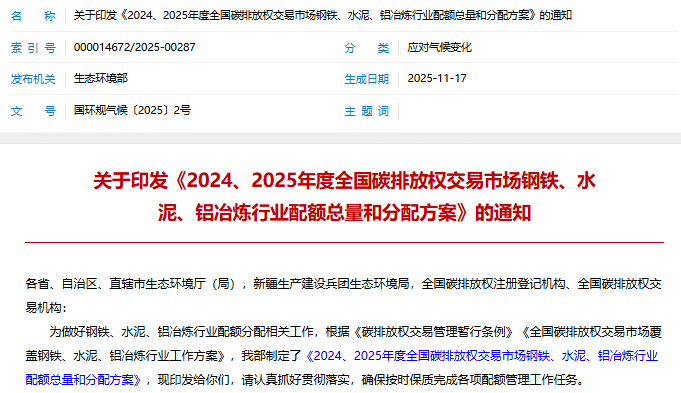
Core Viewpoint - The Ministry of Ecology and Environment has issued the "Quota Allocation Plan for National Carbon Emission Trading Market for Steel, Cement, and Aluminum Smelting Industries for 2024 and 2025," indicating a significant step towards expanding the carbon market to cover major industrial sectors [1][2]. Summary by Sections Carbon Market Expansion - The national carbon market, which started in 2021, has expanded from covering only the power generation sector to now include steel, cement, and aluminum smelting industries, marking its first major expansion [1][2]. - The types of greenhouse gases covered have also increased from solely carbon dioxide to include carbon dioxide, tetrafluoromethane, and hexafluoroethane [1]. Quota Allocation Framework - The "Quota Allocation Plan" continues the practice of free allocation of quotas based on carbon emission intensity, linking the quota amount to actual production levels without setting an absolute cap on total emissions [2]. - The focus is on direct emissions during production, excluding indirect emissions from purchased electricity and heat, emphasizing a "big fish, small fish" approach to target major emitters [2]. - The plan highlights the importance of data quality, stating that reliable carbon emission data is essential for an effective market, and introduces advanced monitoring technologies like blockchain and AI to combat data fraud [2]. Future Expansion Plans - Preparations for expanding the carbon market to include the chemical, petrochemical, civil aviation, and paper industries have already begun, with a goal to cover major industrial sectors by 2027 [3]. - The policy direction is clear, adhering to the principle of "mature one, include one," and will expand based on industry development, pollution reduction contributions, data quality, and emission characteristics [3]. - The ongoing improvements in the carbon emission management system and the implementation of reduction measures will enhance the role of the national carbon market in promoting green and low-carbon transformation in the economy and society [3].
水泥板块11月21日跌2.3%,四川金顶领跌,主力资金净流出3.12亿元
Zheng Xing Xing Ye Ri Bao· 2025-11-21 09:33
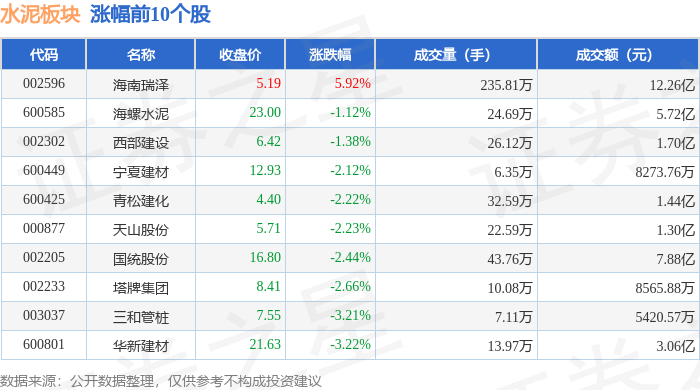
Market Overview - The cement sector experienced a decline of 2.3% on November 21, with Sichuan Jinding leading the drop [1] - The Shanghai Composite Index closed at 3834.89, down 2.45%, while the Shenzhen Component Index closed at 12538.07, down 3.41% [1] Individual Stock Performance - Notable stock performances include: - Hainan Ruize (002596) increased by 5.92% to a closing price of 5.19 [1] - Sichuan Jinding (600678) decreased by 6.90% to a closing price of 9.58, with a trading volume of 427,700 shares and a turnover of 420 million yuan [2] - Fujian Cement (600802) fell by 6.80% to 6.44, with a trading volume of 400,400 shares and a turnover of 268 million yuan [2] Capital Flow Analysis - The cement sector saw a net outflow of 312 million yuan from main funds, while retail investors contributed a net inflow of 319 million yuan [2] - Specific stock capital flows indicate: - Western Construction (002302) had a net inflow of 24.90 million yuan from main funds, while retail investors contributed 8.14 million yuan [3] - Sichuan Jinding (600678) experienced a significant net outflow of 54.21 million yuan from main funds [3]




碳市场大扩容,2027年八大行业全覆盖
Huan Qiu Wang· 2025-11-21 05:36
Core Insights - The expansion roadmap for China's national carbon emissions trading market has been officially unveiled, with a clear timeline for including additional industries by 2027, aiming to cover approximately 75% of national CO2 emissions [1][4]. Summary by Sections Carbon Market Expansion - The Ministry of Ecology and Environment has released a quota distribution plan for the steel, cement, and aluminum smelting industries for 2024 and 2025, marking a significant step in the carbon market's expansion [1][4]. - By including these three industries, the total number of key emission units will reach around 3,700, covering emissions of approximately 8 billion tons, which accounts for over 60% of national carbon emissions [4]. Future Industry Inclusion - The final goal is to achieve full coverage of major emission industries in the industrial sector by 2027, with preliminary preparations already underway for the chemical, petrochemical, civil aviation, and paper industries [4][5]. - Predictions suggest that once eight major industries are fully included, over 8,000 enterprises will enter the market, covering more than 70% of greenhouse gas emissions nationwide [4]. Technical Preparations - The Ministry has collected and verified carbon emission data from relevant industries since 2013, laying the groundwork for scientifically determining total quotas [5]. - A comprehensive set of technical documents related to quota distribution, accounting, reporting, and verification is being expedited, alongside upgrades to the national carbon market management platform and trading systems [5]. Market Dynamics and Pricing - The diversity of market participants is expected to enhance the pricing function of the carbon market, with the current closing price around 66 yuan per ton [5]. - Industry experts predict that carbon prices could rise significantly, potentially reaching between 130 to 180 yuan per ton by 2027, driven by quota control and paid distribution mechanisms [5]. Industry-Specific Impacts - Different industries will experience varying impacts from the carbon market expansion, with sectors like electricity and steel being better prepared compared to more complex industries like petrochemicals and paper [6]. - The aviation sector faces additional challenges, including external pressures such as the EU carbon border tax [6]. Future Market Development - By 2030, the goal is to establish a carbon market based on total quota control, combining free and paid distribution, to create a reasonable carbon pricing mechanism [7]. - The Ministry has indicated that total quota control will be prioritized in stable emission sectors, gradually tightening quotas to enhance market efficiency and optimize carbon reduction resource allocation [7].
2025年1-9月中国水泥产量为12.6亿吨 累计下降5.2%
Chan Ye Xin Xi Wang· 2025-11-21 03:35
Core Viewpoint - The Chinese cement industry is experiencing a decline in production, with significant year-on-year decreases reported for September 2025 and the cumulative production for the first nine months of 2025 [1]. Industry Summary - In September 2025, China's cement production was 150 million tons, representing a year-on-year decrease of 8.6% [1]. - From January to September 2025, the cumulative cement production in China reached 1.26 billion tons, showing a cumulative decline of 5.2% [1]. - The data indicates a downward trend in the cement industry, which may impact related companies and investment opportunities [1]. Company Summary - Listed companies in the cement sector include Qingsong Jianhua (600425), Jinyu Group (601992), Sichuan Jinding (600678), Fujian Cement (600802), Shangfeng Cement (000672), Qilian Mountain (600720), Jidong Cement (000401), Huaxin Cement (600801), Tianshan Co. (000877), and Conch Cement (600585) [1]. - These companies may face challenges due to the overall decline in cement production, which could affect their financial performance and market positioning [1]. Report Reference - The insights are derived from the "2026-2032 China Cement Industry Market Operation Pattern and Development Strategy Analysis Report" published by Zhiyan Consulting, a leading industry consulting firm in China [1].
