
种业

Search documents
荃银高科:副总经理张从合拟减持不超过0.31%
Xin Lang Cai Jing· 2025-11-27 12:13
Core Points - The company announced that its Vice President, Zhang Conghe, holds 11.8387 million shares, accounting for 1.25% of the total shares [1] - Zhang plans to reduce his holdings by up to 2.95 million shares, which represents 0.31% of the total shares, within three months after the announcement date [1] - The shares to be sold are sourced from shares issued prior to the company's initial public offering, shares obtained through the stock incentive plan, and shares from rights distribution [1]

发力智慧育种 种业上市公司持续创新
Zheng Quan Ri Bao Wang· 2025-11-27 11:42
Core Insights - Both Zhongnongfa Seed Industry and Wanxiang Denong are focusing on research and development (R&D) innovations and smart breeding strategies to enhance their market competitiveness [1][2] Group 1: R&D Innovations - Zhongnongfa Seed Industry is advancing seed innovation by concentrating on key core technology breakthroughs and integrating internal and external scientific resources [1] - The company has established the Zhongnongfa Grain Safety (Beijing) Biotechnology Research Institute to promote smart breeding and accelerate the digital transformation of research [1] - Wanxiang Denong has developed a unified database encompassing various data dimensions such as germplasm resources, genomics, phenomics, and environmental factors, applying whole-genome selection models to optimize breeding plans [1][2] Group 2: Market Alignment - Both companies emphasize the importance of aligning R&D efforts with market demands to ensure that research outcomes are effectively applied [1] - Wanxiang Denong is actively building long-term partnerships with agricultural research institutions and universities to enhance its R&D capabilities and understand variety approval rules [2] Group 3: Quality Control and Intellectual Property - Wanxiang Denong has established a comprehensive safety control system throughout the entire process of variety R&D, seed production, and market promotion [3] - The company implements tiered management of core information to prevent data leakage during the breeding material and experimental data phases [3] - Quality control measures include strict monitoring of seed purity and germination rates, ensuring compliance with standards [3]


数量创七年新高!要约收购密集出现,这四大特征透露关键信号
Zheng Quan Shi Bao· 2025-11-27 11:33
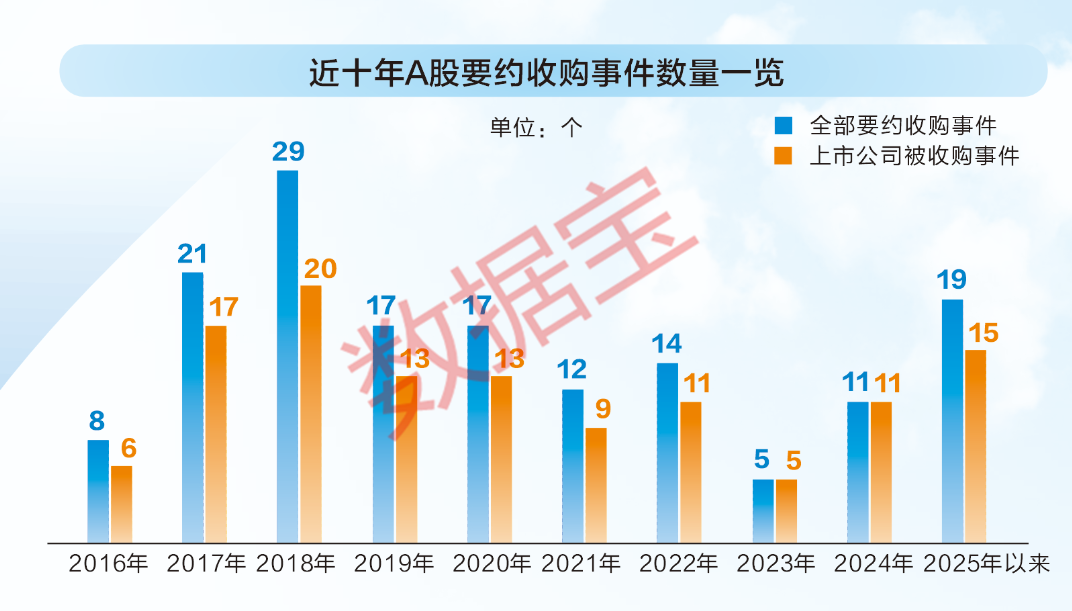
Core Viewpoint - The announcement of Zhongzhong Group's proposed acquisition of 189 million shares of Quanyin High-Tech, representing 20% of the company's shares, marks the first takeover bid in the A-share agricultural, forestry, animal husbandry, and fishery sector since 2019. This reflects a significant revival in the A-share takeover market following the introduction of the "Six Merger Rules" in September 2024, which has led to increased activity in mergers and acquisitions [1][2][3]. Summary by Relevant Sections Takeover Bid Characteristics - The A-share market has seen a total of 19 disclosed takeover bids this year, with 15 cases involving listed companies as target parties, both figures representing the highest since 2019 [3]. - Takeover bids are characterized by their public, equitable, and broad nature, requiring substantial financial backing from the acquirer [6]. Factors Driving the Revival of Takeover Bids - Four main factors are driving the resurgence of takeover bids: 1. The capital market's shift towards high-quality development and stricter regulatory policies, leading unlisted companies to seek control of listed firms [5]. 2. The encouragement of private equity funds to acquire control of listed companies for industrial integration [5]. 3. Local state-owned assets acquiring control of listed companies to facilitate industrial organization and capital operations [5]. 4. High shareholding ratios of original controlling shareholders triggering takeover bids during the transfer of control [5]. New Features of Takeover Bids - The industry distribution of takeover bids has broadened, with companies from 14 different industries participating, marking a new high since 2019 [6]. - The first reverse acquisition of an A-share by a B-share company occurred this year, showcasing innovative transaction structures [6]. - There is a notable increase in takeover bids focused on industrial integration, aligning with the "Six Merger Rules" [7]. - Enhanced protection for minority shareholders is evident, with nearly 70% of takeover bids this year offering premiums over the weighted average price of the stock prior to the announcement [8]. Market Performance and Impact - Takeover bids have shown a significant positive impact on the stock prices of target companies, with average price increases exceeding 3.5% on the announcement day and nearly 25% by the 20th trading day [10][12]. - The average market capitalization of target companies has increased by over 30% following the announcement of takeover bids [13]. - Financial metrics such as net profit and cash flow have improved significantly post-acquisition, with net profit increasing by nearly 40% in the year following the takeover [13]. Challenges and Risks - The success of takeover bids is influenced by various factors, including the attractiveness of the offer price, compliance with disclosure regulations, and the financial health of the target company [15][16]. - Failed takeover bids often correlate with declining financial indicators for the target companies, highlighting the risks involved [18][19].




农林牧渔行业2026年年度策略:行至水穷处,坐看云起时
Zhongyuan Securities· 2025-11-27 09:23
Market Review - The agricultural, forestry, animal husbandry, and fishery sector has outperformed the benchmark index since the beginning of 2025, with an absolute return of +24.66%, surpassing the CSI 300 index by 10.47 percentage points [10][17][18] - The sector's index has increased by 18.4% over the past year, outperforming the CSI 300 index by 0.96 percentage points [14] Swine Breeding - The breeding capacity of sows is gradually declining, with a total of 39.9 million sows recorded by the end of October 2025, a year-on-year decrease of 2.04% [27][24] - The average price of live pigs in October 2025 was 11.52 yuan/kg, reflecting a month-on-month decline of 11.46% and a year-on-year drop of 34.77% [29] - The swine breeding industry is currently facing losses, with theoretical profits for self-bred pigs averaging -209.67 yuan/head in October 2025, marking a significant decline from previous months [36][41] - The market share of the top eight listed pig companies has increased from 4.6% in 2017 to 21.2% by the third quarter of 2025, indicating a trend towards industry consolidation [37][41] Animal Health - The animal health market in China has shown steady growth, with sales increasing from 47.23 billion yuan in 2016 to 69.65 billion yuan in 2023, reflecting a compound annual growth rate of 5.71% [45][46] - The introduction of new products and the expansion of demand are driving the growth of the animal health industry, particularly with the anticipated market expansion following the launch of African swine fever vaccines [51][52] - The market for companion animal health products is also growing, with the pet medical market expected to reach approximately 84 billion yuan in 2024, driven by increased spending on veterinary services [56] Seed Industry - The seed industry is experiencing a transformation due to new regulations and policies, with significant investment opportunities arising from the commercialization of biotechnology [4][19] - The market for genetically modified corn is projected to expand, with companies in the sector expected to benefit from increased industry concentration and profitability [18][19] Pet Food - China's pet food market is projected to continue growing, benefiting from demographic changes and rising living standards, with significant potential for domestic brands to capture market share [5][59] - The market for pet food exports is expected to maintain year-on-year growth in 2025, reflecting the increasing demand for high-quality pet products [5][59] - The pet food industry remains fragmented, with ongoing trends towards domestic substitution and increased online sales [5][59]



“十四五”期间北京快速推进“种业之都”建设
Xin Hua She· 2025-11-27 08:22
Core Insights - The article highlights Beijing's rapid advancement in becoming a "seed industry capital" during the 14th Five-Year Plan, with 29 seed companies recognized as national seed industry enterprises, the highest in the country [1] - Beijing has implemented the "Beijing Seed Regulations" and has made significant progress in agricultural technology innovation, achieving a 75% contribution rate from agricultural science and technology [1] - The city has developed a collaborative innovation framework centered around the Pinggu District, with breakthroughs in key agricultural technologies, including new gene editing tools and hybrid wheat breeding [1] Group 1 - During the 14th Five-Year Plan, Beijing has preserved 2.144 million seed resources, leading the nation in the number of new crop varieties approved annually [1] - The city has established a comprehensive seed resource protection system and has achieved international leadership in breeding for 9 species and domestic leadership for 18 species [1] - Agricultural technology policies have been implemented to enhance top-level design, cultivate leading enterprises, and facilitate the transformation of research outcomes [1] Group 2 - Looking ahead to the 15th Five-Year Plan, Beijing aims to enhance rural development and governance through a dual focus on technology and reform, promoting high-quality agriculture and improving living conditions for farmers [2]
《人民日报》关注海南:看,这些“新工厂”拔地而起
Ren Min Ri Bao· 2025-11-27 07:35
Core Insights - Hainan is transforming its economy from a real estate dependency to a modern industrial system, with significant growth in key sectors such as tourism, modern services, high-tech industries, and tropical agriculture, which now account for 68.6% of the province's GDP [1] Group 1: Economic Transformation - Hainan's industrial added value increased by 11.4% year-on-year in the first half of the year, indicating a successful economic transition [1] - The province is leveraging its free trade port policies to build a modern industrial system and reduce reliance on real estate [1] Group 2: Digital Culture Industry - A former villa area in Lingshui has been transformed into a renowned digital culture industry park, focusing on sectors like film, gaming, and creative design [2] - The establishment of a data industry task force and various funds has facilitated the growth of the digital culture sector, with revenues from park enterprises expected to exceed 1 billion yuan by the end of the year [2] Group 3: Mining Industry - Hainan Mining Co. is undergoing internationalization by developing lithium resources, with a new factory for battery-grade lithium hydroxide established in Yangpu [4] - The factory benefits from zero tariff policies on imported raw materials, enhancing its competitiveness in the high-end electric vehicle battery market [4] Group 4: Seed Industry - Hainan is advancing its seed industry through technological innovation and policy support, with significant participation from top domestic seed companies [5] - The province has successfully exported seeds to Brazil, and companies like Longping High-Tech have captured substantial market shares in international markets [5][6] - Over 800 batches of plant genetic resources have been efficiently introduced, promoting innovation and value release in breeding [6]

活力中国调研行|看,这些“新工厂”拔地而起
Ren Min Ri Bao· 2025-11-27 07:12
Core Insights - Hainan is transitioning from a real estate-dependent economy to a modern industrial system, focusing on high-quality development and innovation [1] - The province's industrial output value increased by 11.4% year-on-year in the first half of the year, with four key industries contributing 68.6% to the GDP [1] Group 1: Digital Culture Industry - A former villa area in Lingshui has been transformed into a national digital culture industry park, addressing historical issues of unfinished properties [2] - The establishment of a data industry task force in 2023 aims to promote sectors like film, gaming, and creative design, supported by various funds [2] - By July 2023, the revenue of companies in the park doubled compared to the previous year, with expectations to exceed 1 billion yuan by year-end [2] Group 2: Mining Industry - Hainan Mining Co. is undergoing internationalization, shifting focus to lithium resources due to the depletion of iron ore [3][4] - A 1 billion yuan investment has been made in a lithium hydroxide plant, benefiting from zero tariffs on imported raw materials under the free trade port policy [3] Group 3: Seed Industry - Hainan is enhancing its seed industry through technological innovation and policy support, becoming a key player in global food security [5] - The "South Breeding Silicon Valley" initiative has attracted major domestic seed companies, with significant exports of seeds to countries like Brazil [5][6] - Over 800 batches of plant genetic resources have been efficiently introduced, promoting innovation and commercialization in breeding [6]
海南这五年:以新质生产力提升国企竞争力
Zhong Guo Xin Wen Wang· 2025-11-27 04:10
Core Insights - The article discusses the advancements and strategies of state-owned enterprises (SOEs) in Hainan during the "14th Five-Year Plan" period, focusing on enhancing competitiveness through new quality productivity and technological innovation [1][2][3]. Group 1: Technological Innovation and R&D - Hainan's SOEs have significantly increased R&D investments, with 2024's funding expected to exceed ten times that of the end of the "13th Five-Year Plan" [1]. - The number of innovation platforms has grown, including the establishment of one national laboratory and one research center, alongside 21 provincial-level laboratories and centers [1]. - The number of high-tech enterprises has risen to 43, with specialized and innovative enterprises increasing to 18 [1]. Group 2: Strategic Development and Industry Focus - Hainan's SOEs are focusing on five strategic directions: strengthening agriculture, marine industries, aerospace, green development, and digital technology [2][3]. - The establishment of the Hainan South Breeding Seed Industry Group aims to enhance seed technology innovation and support the development of a breeding zone [2]. - A new transportation investment group is being developed to foster smart transportation and low-altitude economy sectors [2]. Group 3: Major Projects and Investment Plans - The Hainan provincial government has outlined a three-year action plan (2025-2027) with 26 key projects, totaling over 700 billion yuan in investment [3]. - Projects include the construction of high-standard smart seed test fields, marine ranching demonstrations, and a commercial space launch site [3]. - The plan aims to enhance the modern industrial system with Hainan's unique advantages, focusing on sustainable and innovative growth [3][4].
农业科技创新持续突破 北京建设“种业之都”
Zhong Guo Xin Wen Wang· 2025-11-27 03:46
Core Insights - During the "14th Five-Year Plan" period, Beijing has leveraged its capital's technological talent advantage, achieving an agricultural technology progress contribution rate of 75%, with comprehensive technological strength leading the nation [1][4]. Agricultural Development - The construction of Beijing as a "seed industry capital" is rapidly advancing, with 29 seed enterprises selected as national seed industry backbone enterprises, the highest in the country [1][4]. - The number of newly approved crop varieties annually ranks among the top in the nation, with 9 species leading internationally in breeding levels and 18 species being domestically advanced [1][4]. Quality Improvement Initiatives - The city has implemented a three-year action plan for high-quality vegetable industry development, enhancing agricultural supply-side structural reforms, and significantly improving agricultural quality and efficiency [3]. - Agricultural production capacity is steadily increasing, with self-sufficiency rates for key agricultural products like vegetables, eggs, and milk improving [3]. Technological and Policy Support - Over the past five years, a series of policies have been introduced to support agricultural technology enterprises, focusing on top-level design, innovation mechanisms, and the transformation of research results [4]. - The establishment of a seed resource protection system has led to the preservation of 2.144 million seed resources in Beijing, ranking first in the nation [4]. Rural Development and Tourism - The integration of agriculture, culture, and tourism is being promoted, with over a hundred premium leisure tourism routes launched in the suburbs, fostering new business models such as rural markets and specialty cuisine [5]. - The city aims to enhance rural development, governance, and living standards, positioning itself as a "window" for a strong agricultural nation [5].
全国政协委员建言献策——为农业农村现代化贡献智慧力量
Ren Min Ri Bao· 2025-11-27 01:53
Core Viewpoint - The modernization of agriculture and rural areas is crucial for the overall progress of China's modernization, with a focus on addressing the "three rural issues" as a priority for the Communist Party [1][2]. Group 1: Agricultural Development Strategies - The 2025 Central Document No. 1 emphasizes the need for localized development of new agricultural productivity and the implementation of seed industry revitalization actions [2]. - There is a call for a unified national seed industry data sharing platform to enhance collaboration among research, enterprises, and policies [2]. - Recommendations include establishing a mechanism for the protection of research results and ensuring a positive environment for innovation [2]. Group 2: Macro Control and Stability - Suggestions include strengthening macroeconomic control to maintain stability in the production and market of essential agricultural products [3]. - The establishment of a comprehensive coordination body for straw utilization is proposed to enhance collaboration across various governmental departments [3]. - Legislative efforts are recommended to ensure rural water supply is included in urban water supply regulations [3]. Group 3: Technological Innovation in Agriculture - The need for accelerated agricultural technological innovation is highlighted, with a focus on integrating artificial intelligence into agricultural practices [4]. - Recommendations include building a comprehensive innovation system for agricultural AI and enhancing talent development in this field [4]. - There is a call for strategic adjustments and collaborations among national laboratories, research institutions, and leading enterprises in agriculture [4][5]. Group 4: Rural Revitalization and Employment - The transformation of labor mobility patterns indicates a shift towards local employment, which is seen as an opportunity for rural revitalization and common prosperity [6]. - A high-quality employment support system for rural labor is proposed, focusing on local job creation and industry development [6]. - The development of rural industries and innovative business models is encouraged to enhance farmers' income and ensure food supply [6]. Group 5: Brand Development and Environmental Quality - The establishment of a top-tier brand cultivation system for regional agricultural products is suggested to enhance market recognition [7]. - Recommendations include promoting the use of biological fertilizers and pesticides to improve agricultural practices and environmental quality [7].