咖啡

Search documents
喫咖啡去 筹备两年 “咖啡文化特展”昨在上海历史博物馆开幕
Jie Fang Ri Bao· 2025-10-31 01:45
Core Insights - The exhibition "Let's Go! Coffee Culture Exhibition" showcases the evolution of coffee culture in Shanghai over the past century, highlighting its transformation from an imported product to a city emblem [1] - The exhibition features 182 items, with 79 being displayed for the first time, and is divided into three main sections focusing on the global history of coffee, its impact on urban socialization, and its connection to local life in Shanghai [1] - According to the "2025 China Urban Coffee Development Report," Shanghai leads the nation with 9,115 coffee shops projected for 2024 [1] Group 1 - The exhibition is held at the Shanghai History Museum and has been in preparation for two years [1] - The fifth Square Coffee Carnival will take place from October 30 to November 2, featuring over 90 booths and various emerging brands [1] - 777cafe, a boutique coffee shop, emphasizes the social aspect of coffee, serving around 50-60 customers daily in a small space [1] Group 2 - The exhibition also highlights the "Coffee + Public Welfare" and "Coffee + Environmental Protection" models, showcasing items made from recycled coffee grounds, including public benches featuring artwork by children with autism [2]
买下星巴克中国,是笔好生意吗?丨消费快评
2 1 Shi Ji Jing Ji Bao Dao· 2025-10-31 01:17
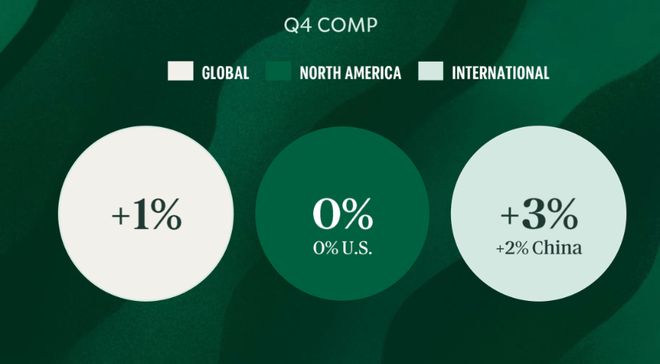
Core Viewpoint - Starbucks China is increasingly seen as an attractive investment target, with significant growth potential and ongoing operational improvements [1][6]. Financial Performance - In Q4 of FY2025, Starbucks China reported a revenue increase of 6% year-on-year to $831.6 million (approximately RMB 5.913 billion) [1]. - For the entire FY2025, revenue grew by 5% to $3.105 billion (approximately RMB 22.077 billion) [1]. - The operating profit margin for Starbucks China has remained in double digits, with profits and margins improving for four consecutive quarters [1]. Growth Drivers - The primary driver of growth in Starbucks China is attributed to price adjustments, with significant price reductions on key products starting June 10 [3]. - The company has seen a doubling in sales of iced tea and continuous growth in its tea latte offerings [3]. - Starbucks has also benefited from promotional activities and innovations, such as the launch of seasonal products that achieved record daily sales [3][4]. Store Expansion and Performance - As of the end of FY2025, Starbucks China operated 8,011 stores across 1,091 county-level cities, maintaining high profitability levels for new stores [4]. - Same-store sales increased by 2% year-on-year, with transaction volume up by 9%, although the average transaction value decreased by 7% [4]. Strategic Changes - Starbucks is decentralizing decision-making to empower local teams, allowing for more localized operations [5]. - The company is exploring partnerships for its Chinese operations, with potential valuations exceeding $4 billion, and possibly over $10 billion when including franchise fees [7][8]. Competitive Landscape - The competitive environment is intensifying, with local brands like Luckin Coffee showing significant growth, reporting a 47.1% year-on-year revenue increase [9]. - Luckin Coffee has expanded its store count to 26,206, significantly outpacing Starbucks in terms of growth and market presence [9][11]. Cultural Considerations - Starbucks' operational culture, which emphasizes customer care and employee engagement, is a critical aspect of its brand identity [12]. - The challenge lies in maintaining this culture while adapting to the local market dynamics and potential changes in ownership structure [13].


彪马将再裁员900人;“绝味鸭脖们”越来越难卖了|消费早参
Mei Ri Jing Ji Xin Wen· 2025-10-30 23:54
Group 1 - Puma reported a 10.4% decline in sales to €1.9557 billion for Q3 2025, with a net loss of €62.3 million and earnings per share of -€0.42 [1] - The company plans to cut approximately 900 white-collar jobs globally by the end of 2026 due to anticipated significant sales declines and high operational costs [1] - Puma is facing challenges such as weak brand momentum, high inventory levels, and low distribution quality, but still has potential to rank among the top three global sports brands if reforms are executed effectively [1] Group 2 - Douyin announced ongoing efforts to combat the improper use of minors' images for profit, having removed 37,000 videos and penalized 3,651 accounts in the past month [2] - The platform's actions highlight the ongoing challenges in protecting minors online, emphasizing the need for continuous legal and technological improvements [2] Group 3 - The snack industry, particularly the braised food sector, is experiencing a slowdown, with major players like ST Juewei and Huang Shanghuang reporting revenue declines [3] - Experts indicate that high prices and insufficient value for money are significant challenges for the braised food industry amid changing consumer willingness and confidence [3] Group 4 - Starbucks reported a revenue of $3.105 billion in China for the 2025 fiscal year, marking a 5% year-over-year increase, with consistent growth in operating income and same-store sales [4] - The company's performance indicates a successful strategy in product differentiation, creating a competitive advantage in the highly competitive Chinese coffee market [4]
彪马将再裁员900人;“绝味鸭脖们”越来越难卖了 | 消费早参
Mei Ri Jing Ji Xin Wen· 2025-10-30 23:21
Group 1: Puma - Puma announced a plan to cut approximately 900 white-collar jobs globally by the end of 2026 due to expected significant sales decline and high operational costs [1] - In Q3 2025, Puma reported a 10.4% decrease in sales to €1.9557 billion, with a net loss of €62.3 million and earnings per share of -€0.42 [1] - The company is facing challenges such as weak brand momentum, high inventory levels, and low distribution quality, but still has potential to rank among the top three global sports brands if reforms are implemented effectively [1] Group 2: Douyin - Douyin has announced ongoing efforts to combat the improper use of minors' images for profit, highlighting the need for continuous improvement in online protection for minors [2] - The platform has removed 37,000 videos and penalized 3,651 accounts for violations related to the exploitation of minors in the past month [2] - Douyin emphasizes that protecting minors online is an ongoing battle that requires legal, technological, and familial support [2] Group 3: Snack Industry - The snack industry, particularly the braised food segment, is experiencing a slowdown in growth and significant adjustments, as evidenced by revenue declines reported by major players like ST Juewei and Huangshanghuang [3] - Experts indicate that high prices and insufficient value-for-money in the braised food sector are facing substantial challenges amid changing consumer willingness and confidence [3] Group 4: Starbucks - Starbucks reported a revenue of $3.105 billion in the Chinese market for the fiscal year 2025, reflecting a 5% year-on-year growth [4] - The company has achieved continuous revenue growth for the fourth consecutive quarter, with same-store sales showing positive growth for the second consecutive quarter [4] - Starbucks' performance indicates that it has successfully built a competitive advantage through product differentiation in a highly competitive coffee market [4]


孩子王拟赴港上市;亚马逊将裁减近1.4万个岗位
Sou Hu Cai Jing· 2025-10-30 13:54
Capital Dynamics - Keurig Dr Pepper has secured $7 billion in financing from a private equity firm to facilitate its $18 billion acquisition of JDE Peet's, aiming to reduce net leverage post-acquisition. The deal is expected to close in the first half of 2026, significantly enhancing KDP's acquisition leverage and reshaping the global coffee and beverage competitive landscape [3]. Sale Dynamics - Private equity firms HSG Sequoia China and CPE Yuanfeng are reportedly bidding for a major stake in Burger King's China operations, with the final buyer expected to be announced alongside the company's financial report later this month. If successful, the acquisition could leverage PE capital and supply chain expertise to revitalize Burger King's performance in lower-tier markets [5]. Listing Dynamics - Kidswant announced plans to issue H-shares and list on the Hong Kong Stock Exchange by October 27, 2025. The company is in discussions with intermediaries regarding the issuance and listing, which requires approval from various regulatory bodies. This move aims to advance the company's international strategy and enhance its brand influence in the family service sector [7]. Business Expansion - Meituan's international delivery brand Keeta has launched operations in Abu Dhabi, UAE, providing reliable delivery services and a diverse product selection. This expansion solidifies Meituan's international business presence in the Gulf Cooperation Council (GCC) region [10]. Financial Performance - Procter & Gamble reported a 20% increase in net profit for the first quarter of fiscal year 2026, with net sales reaching $22.39 billion, a 3% year-over-year growth. The beauty segment saw a 6% increase in net sales, while the grooming segment grew by 5%. The company anticipates total sales growth of 1% to 5% for the fiscal year [14][16]. - Beiersdorf's sales for the first three quarters of 2025 reached €7.5 billion, with an organic growth of 2.0%. The consumer business segment also grew by 2.0%, driven primarily by the Derma and skin science divisions [18]. Organizational Changes - Amazon announced plans to cut nearly 14,000 jobs as part of an internal restructuring aimed at focusing investments on critical business areas. The company expects to continue hiring in key strategic areas in 2026 [19][21]. - Puma appointed Maria Valdes as Chief Brand Officer, responsible for brand marketing and innovation, as part of a restructuring to enhance overall brand impact [22][24]. - Reebok has established a new European headquarters and appointed Marc Le Roux as the new CEO for Europe, aiming to accelerate retail expansion and strengthen brand culture in the region [26].

欧莱雅集团考虑独立或联合投资阿玛尼;海底捞将开汉堡店
Sou Hu Cai Jing· 2025-10-30 13:51
Group 1: L'Oréal and Armani Group - L'Oréal's CEO Nicolas Hieronimus expressed willingness to negotiate with Armani Group as per the late Mr. Armani's will [3] - The will stipulates that heirs must sell 15% of Armani Group's shares within 18 months and transfer an additional 30%-54.9% within 3-5 years to the same buyer [3] - L'Oréal recently acquired Kering Beauty for €4 billion and has sufficient cash reserves, indicating capability for independent or partnered investment in Armani [3] Group 2: Brownes Dairy - Brownes Dairy plans to seek buyers or investors next year, with the sale process already underway [5] - The company has garnered significant interest from potential investors and aims for an IPO in 2026 [5] - Brownes Dairy was previously put up for sale after a loan recovery by Mengniu, amounting to AUD 200 million (approximately RMB 92 million) [5] Group 3: Qingdao Beer - Qingdao Beer terminated its plan to acquire 100% of Jimo Yellow Wine due to unmet conditions in the share transfer agreement [7] - The acquisition was expected to enhance Qingdao Beer's market position and open new growth avenues [7] Group 4: KKR and Costa Coffee - KKR is among a few companies negotiating to acquire Costa Coffee from Coca-Cola [10] - Costa Coffee, the largest coffee chain in the UK, has seen a reduction in store numbers in China since its acquisition by Coca-Cola for £3.9 billion in 2018 [10] - KKR's expertise in the food supply chain and digital integration could enhance Costa's business model and cash flow if the acquisition proceeds [10] Group 5: Haidilao - Haidilao is set to open its first hamburger store, "Xiao Hai Ai Zha hiburger," in Hunan, indicating a shift towards expanding its product line [13] - The new store is an upgrade from an existing brand and aims to attract younger consumers with its hamburger offerings priced between RMB 28-39.9 [13] Group 6: 7-Eleven Japan - 7-Eleven Japan will launch hydrogen-roasted coffee in collaboration with UCC, using hydrogen as a heat source for roasting [17] - The new coffee product is priced at 149 yen (approximately RMB 7), slightly higher than regular hot coffee [17] - This initiative aims to enhance 7-Eleven's brand image and attract a more niche consumer base through an environmentally friendly narrative [17] Group 7: IKEA - IKEA's global retail sales fell by 1% in the 2025 fiscal year, marking the second consecutive year of decline [19] - Despite the sales drop, product sales and customer numbers increased by 3%, with 66 new sales points opened globally [19] - IKEA continues to implement a pricing strategy aimed at attracting more consumers amid intense market competition [19] Group 8: Moutai Group - Moutai Group announced a significant leadership change, appointing Chen Hua, the former head of Guizhou Energy Bureau, as the new chairman [22] - This marks the fourth leadership change in five years for the liquor giant, with expectations for Chen to drive expansion into new consumer segments [22] Group 9: Wahaha - Reports indicate that Zhu Lidan, a core executive at Wahaha, has left the company, with her office vacated [25] - This departure follows a leadership transition at Wahaha, where Zong Fuli took over, leading to the exit of several long-standing executives [25] - The loss of Zhu, known for her cost control expertise, may impact the company's operational efficiency and negotiation capabilities [25] Group 10: Alexander McQueen - Alexander McQueen announced a three-year strategic review, initiating a restructuring plan that includes cutting approximately 55 jobs, or 20% of its London headquarters staff [27] - The brand aims to simplify its international market structure to restore growth confidence [27] - The restructuring reflects a shift towards a more pragmatic approach for the luxury brand, known for its unique niche [27]






手冲咖啡,可一点都不小众了!很多人爱
Mei Ri Jing Ji Xin Wen· 2025-10-30 08:53
Core Viewpoint - The event featuring champion barista Peng Jinyang at Starbucks highlighted the growing recognition and potential of Yunnan coffee in the international market, despite existing challenges in cultivation [1]. Group 1: Event Highlights - Peng Jinyang, the champion of the WBrC World Hand Brew Coffee Championship, made an appearance at the Starbucks Reserve store in Chengdu, attracting a large crowd [1]. - The event showcased the newly launched Yunnan Yellow Bourbon coffee beans, with Peng demonstrating the brewing process [1]. Group 2: Industry Insights - Peng noted that Yunnan's infrastructure for coffee production is significantly better than that of some traditional coffee-producing countries, leading to advancements in fermentation techniques [1]. - However, he pointed out that there are still challenges in coffee cultivation, particularly regarding the choice of coffee tree varieties [1]. - Overall, Yunnan coffee beans have seen a substantial rise in quality and recognition, suggesting a promising future in the international market [1].
星巴克中国2025财年收入31.05亿美元,门店达8011家
Bei Ke Cai Jing· 2025-10-30 08:43
Core Insights - Starbucks reported Q4 FY2025 net revenue of $9.6 billion, exceeding market expectations of $9.34 billion [1] - In the Chinese market, Starbucks achieved a Q4 revenue of $831.6 million, a year-on-year increase of 6%, contributing to an annual revenue of $3.105 billion, up 5% [1] Group 1: Financial Performance - Q4 FY2025 net revenue reached $9.6 billion, surpassing market estimates [1] - Starbucks China experienced continuous growth for four consecutive quarters, with Q4 revenue at $831.6 million, a 6% increase year-on-year [1] - Total revenue for Starbucks China in FY2025 was $3.105 billion, reflecting a 5% year-on-year growth [1] Group 2: Store Expansion and Operations - In Q4 FY2025, Starbucks China opened 183 new stores and entered 47 new county-level markets [1] - A total of 415 new stores were added throughout FY2025, including unique concept stores [1] - By the end of FY2025, Starbucks operated 8,011 stores in China, with new stores maintaining above-average same-store sales contributions [1] Group 3: Strategic Initiatives - The CFO indicated that Starbucks is focused on finding suitable partners to unlock future growth potential in China [2] - Starbucks China launched a digital innovation center and expanded sustainable strategic cooperation with Envision Technology Group [2] - The CEO highlighted strong economic benefits from new stores, driving continued market expansion and development opportunities [2]
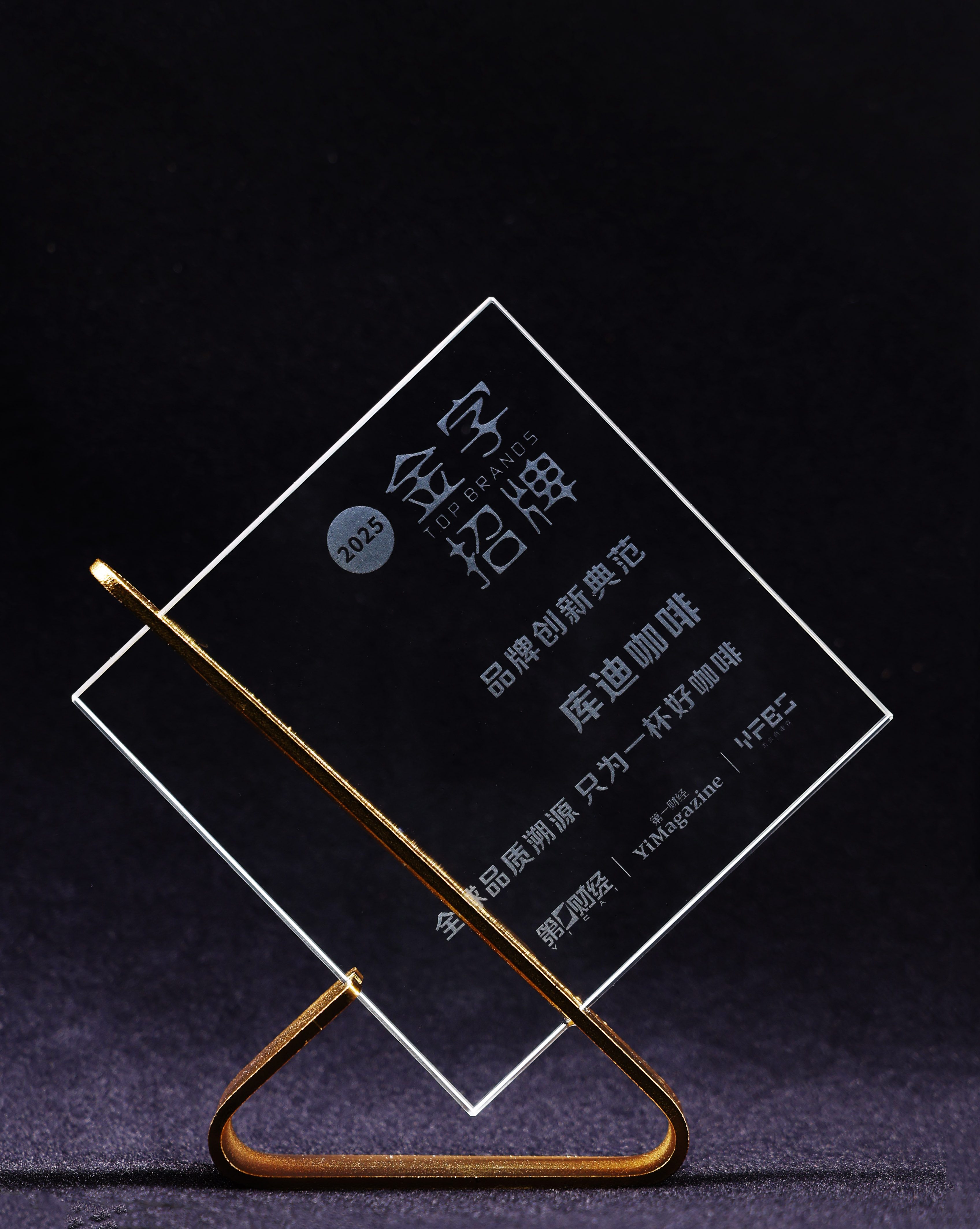
库迪咖啡获评《第一财经》杂志2025年金字招牌品牌创新典范
Di Yi Cai Jing· 2025-10-30 06:31
Core Insights - Kudi Coffee has been recognized as a "Gold Signboard" brand innovation model by "First Financial" magazine for its exceptional product quality, innovative market strategies, and broad market recognition [1][5] Brand Recognition - The "Gold Signboard" list is one of the most credible consumer market opinion surveys in China, selected by consumer votes, and has been held for 17 consecutive years [5] - Kudi Coffee's inclusion in the list demonstrates its brand strength and influence in the coffee market, with over 18,000 global stores across 33 countries and regions, ranking third among global coffee brands [5] Product Strategy - Kudi Coffee aims to make coffee enjoyment easy for users, supported by a large store network and an innovative product system that covers diverse consumption scenarios [5] - The company has introduced various flavored beverages, such as milk coffee, tea coffee, and fruit coffee, appealing to mainstream young consumers and redefining coffee consumption choices [5][6] Supply Chain and Quality - Kudi Coffee emphasizes quality through a comprehensive supply chain, establishing a global supply chain base in Anhui with over 400,000 square meters, including a super factory with a processing capacity of 75,000 tons of green beans annually [6] - The company collaborates with raw material production areas in Yunnan, Shanxi, and Rwanda to ensure high-quality supply, sourcing coffee beans from Ethiopia, Colombia, Brazil, and Yunnan, China [6] Cultural Engagement - Kudi Coffee enhances its brand image by integrating cultural elements and popular IPs, connecting with younger audiences and establishing deeper emotional links with consumers [7] - The brand's influence extends beyond coffee, collaborating with major events like the 2025 WTT China Grand Slam and the 2025 League of Legends World Championship, showcasing its recognition across various sectors [7] Future Outlook - Kudi Coffee plans to deepen its brand influence by leveraging its global supply chain and expanding its store network, aiming to create a "coffee + trendy play" ecosystem that resonates with Generation Z [8]
2025金字招牌最佳实践典范
第一财经· 2025-10-30 03:36
Core Viewpoint - The article emphasizes the importance of brand innovation in breaking traditional consumer expectations and enhancing experiences through emotional engagement and diverse offerings [6][10]. Brand Innovation - The "Zhou Tongxue" IP by Juxing Legend has generated over 1 billion yuan in sales through collaborations with over 200 brands across five core sectors, showcasing the commercial value of strong IP [6][7]. - Kudi Coffee has established a global supply chain base exceeding 400,000 square meters, focusing on high-quality Arabica beans and achieving multiple awards at the IIAC International Coffee Tasting Competition [8]. - UR has successfully transformed the fashion experience by integrating live performances with shopping, achieving a transaction volume of 168 million yuan, a 49% year-on-year increase [9]. Technological Advancements - Kohler has introduced the "Bionic Water Control" technology, enhancing shower experiences by addressing common issues like water pressure fluctuations and ensuring efficient water usage [10][11]. - Nintendo's "Drag x Drive" game redefines sports gaming by focusing on inclusivity and innovative control methods, despite some content limitations [11]. - Apple's iPhone Air, with its ultra-thin design and eSIM technology, is set to revolutionize the mobile industry and accelerate the adoption of eSIM in China [12]. Breakthrough Innovations - Deep Seek has emerged in the AI sector, significantly reducing development costs and promoting accessibility in AI technology [13]. - LG's new lithium battery technology addresses dendrite formation, allowing electric vehicles to charge in 12 minutes and achieve a range of 804 kilometers [14]. - Haier's Lead three-tub washing machine caters to diverse laundry needs, reducing wash time by over 50% and responding to consumer demands for efficiency [15][16].