天然气

Search documents
美国彻底拦不住了!委内瑞拉的能源战车,今天正式挂上了“出口挡”
Sou Hu Cai Jing· 2026-01-18 06:45
Group 1 - The core viewpoint of the article highlights Venezuela's significant move to enter the global liquefied petroleum gas market, marking a strong counteraction against U.S. sanctions [1][4] - Venezuela's energy sector has shown resilience, successfully restoring its production capabilities despite years of U.S. efforts to stifle its oil and gas industry [2][3] - The initiation of liquefied petroleum gas exports indicates that Venezuela's natural gas processing capacity has exceeded domestic demand, necessitating expansion into international markets [4] Group 2 - The opening of export opportunities is expected to lead to a substantial influx of U.S. dollars back into Venezuela, creating a challenging situation for the U.S. as sanctions have inadvertently spurred Venezuela's economic independence [6] - The article emphasizes that Venezuela's upgraded energy products are now positioned as effective tools against U.S. sanctions, demonstrating the failure of the U.S. strategy [6]


电力天然气周报:国网计划“十五五”投资固定资产4万亿元,多省明确天然气关键战略能源定位-20260118
Xinda Securities· 2026-01-18 05:16
Investment Rating - The investment rating for the utility sector is "Positive" [2] Core Insights - The State Grid plans to invest 4 trillion yuan in fixed assets during the 14th Five-Year Plan, a 40% increase compared to the previous plan, focusing on green transformation and enhancing grid functionality [5] - Natural gas is recognized as a key strategic energy source in the 14th Five-Year Plan across multiple provinces, emphasizing its role in connecting traditional and new energy systems without setting consumption caps [5] - The power sector is expected to see profit improvement and value reassessment due to previous supply-demand tensions, with a gradual increase in electricity prices anticipated [5] Market Performance - As of January 16, the utility sector rose by 0.1%, outperforming the broader market, while the electricity sector increased by 0.20% and the gas sector decreased by 1.17% [4][12] - Key companies in the electricity sector showed varied performance, with Jidian Co. rising by 11.17% and Guodian Power falling by 3.24% [18] Electricity Industry Data Tracking - The price of thermal coal at Qinhuangdao Port (Q5500) was 697 yuan/ton, a weekly increase of 1 yuan/ton [4][23] - The inventory of thermal coal at Qinhuangdao Port was 5.5 million tons, an increase of 150,000 tons week-on-week [30] - The daily coal consumption of inland power plants was 4.147 million tons, an increase of 96,000 tons/day week-on-week [34] Natural Gas Industry Data Tracking - The LNG ex-factory price index in China was 3,854 yuan/ton as of January 15, a 1.29% increase week-on-week [60] - The domestic apparent consumption of natural gas in November was 36.280 billion cubic meters, a year-on-year increase of 4.1% [5] - The EU natural gas supply in the 52nd week of 2025 was 5.86 billion cubic meters, a year-on-year increase of 2.8% [67] Investment Recommendations - For the electricity sector, companies like Guodian Power, Huaneng International, and Huadian International are recommended due to expected profit improvements [5] - In the natural gas sector, companies such as Xin'ao Co. and Guanghui Energy are highlighted as potential beneficiaries of market conditions [5]
唐山LNG全天候送暖京津冀
Xin Lang Cai Jing· 2026-01-17 21:49
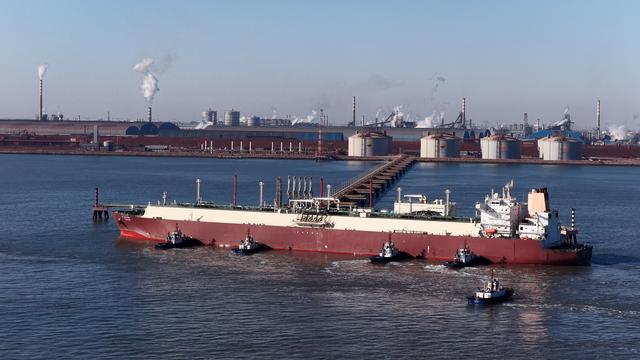
Core Viewpoint - The successful docking of the "Al Mariah" LNG carrier at the Tangshan LNG receiving station marks a significant milestone, being the 600th LNG vessel to arrive, highlighting the station's operational capacity and its role in ensuring energy supply for the Beijing-Tianjin-Hebei region during winter [1][2]. Group 1: Operational Capacity - The "Al Mariah" is one of the largest Q-Max vessels, measuring 345 meters in length and 55 meters in width, and has visited the Tangshan LNG station eight times, demonstrating the station's ability to handle large LNG carriers [1]. - Since its inception in 2013, the Tangshan LNG receiving station has received LNG from 25 countries and regions, with a maximum daily gas supply accounting for 35% to 40% of Beijing's winter gas consumption [1][2]. Group 2: Energy Supply and Environmental Impact - In 2025, the Tangshan LNG station plans to deliver 5.969 billion cubic meters of natural gas, with 5.175 billion cubic meters through gasification and 794 million cubic meters via truck, while receiving 55 LNG vessels and handling a total of 4.2181 million tons [2]. - During the 14th Five-Year Plan period, the station has received over 23.56 million tons of LNG and exported more than 32.5 billion cubic meters of natural gas, contributing to a reduction in carbon dioxide emissions by replacing other fuels with cleaner natural gas [2]. Group 3: Enhanced Operational Efficiency - The recent implementation of night-time docking capabilities allows LNG vessels to leave the port at night, reducing the time spent in port by up to 12 hours and significantly improving the utilization rate of the terminal [3]. - The ability to operate 24 hours a day during winter has become standard practice, enhancing the LNG receiving capacity of the station [3].
累计接卸600船,唐山LNG接收站全天候“送暖”京津冀
Bei Jing Ri Bao Ke Hu Duan· 2026-01-17 10:04
Core Insights - The "Al Mariah" vessel, carrying 261,000 cubic meters of LNG, successfully docked at the Tangshan LNG receiving station, marking the 600th LNG transport ship to arrive since the station's establishment [1] - The Tangshan LNG receiving station is one of the first LNG receiving stations in China designed, procured, constructed, and operated independently by China National Petroleum Corporation (CNPC), and it plays a crucial role in ensuring gas supply for the Beijing-Tianjin-Hebei region, especially during winter [1][2] - Since its inception in 2013, the Tangshan LNG receiving station has received LNG from 25 countries and regions, with a maximum daily gas supply accounting for 35% to 40% of Beijing's winter gas consumption [1] Group 1 - The arrival of the "Al Mariah" vessel provides reliable energy support for regional heating and industrial production during winter [2] - In 2025, the Tangshan LNG company plans to achieve an annual gasification and external supply of 5.969 billion cubic meters, including 5.175 billion cubic meters through gasification and 794 million cubic meters via truck [2] - The station has received over 23.56 million tons of LNG and supplied over 32.5 billion cubic meters of natural gas during the 14th Five-Year Plan period, contributing to reduced carbon dioxide emissions by replacing other fuels with clean natural gas [2] Group 2 - The Tangshan LNG receiving station has achieved a total external supply of over 66 billion cubic meters and received more than 47.8 million tons of LNG since its first shipment in 2013 [2] - The station's recent implementation of night-time docking capabilities allows for a reduction of up to 12 hours in vessel port time, significantly enhancing the terminal's utilization and winter LNG receiving capacity [3] - Maintenance work during the summer window has improved the safety and operational stability of the unloading equipment, ensuring a robust supply of natural gas for the upcoming winter [3]
中俄数据摆在眼前,普京乐了,欧洲如梦初醒:难怪特朗普焦虑了
Sou Hu Cai Jing· 2026-01-17 05:10
Group 1 - The core point of the article highlights the significant increase in trade between China and Russia, with projections indicating a trade volume of $228.1 billion by 2025, contradicting Western predictions of under $200 billion [1][5] - Russian gas exports to China surpassed those to Europe for the first time, reaching 38.8 billion cubic meters in the previous year, marking a 24.8% year-on-year increase [3][10] - The data suggests a historical shift in the global energy landscape, indicating that Russia's energy exports are no longer reliant on Europe [3][5] Group 2 - European imports of natural gas have decreased by 12.1%, while the costs have increased by 19%, highlighting the economic impact of sanctions against Russia [7][8] - The cooperation between China and Russia has evolved into a deep economic integration, with China supplying high-tech products to Russia, while Russia provides energy to support China's industrial upgrades [19][21] - By 2025, nearly all trade between China and Russia is expected to be conducted in their local currencies, reducing reliance on the US dollar and undermining US financial influence [21][22] Group 3 - The article discusses the strategic implications of the US's inability to disrupt the China-Russia partnership, as their cooperation is based on mutual economic interests rather than political agreements [15][24] - The US is focusing on consolidating its influence in the Western Hemisphere, attempting to counteract the growing ties between China and Russia [26][29] - The article notes that the US is facing internal challenges, particularly with the accelerating sell-off of US Treasury bonds by China, which has reached a historic low in holdings [37][41]

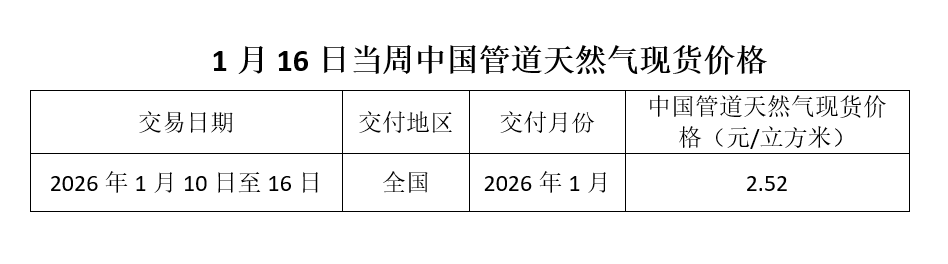
2.52元/立方米!1月16日当周中国管道天然气现货价格发布
Xin Hua Cai Jing· 2026-01-17 01:28
Core Insights - The Shanghai Petroleum and Natural Gas Exchange reported that the spot price for pipeline natural gas for delivery in January 2026 is 2.52 yuan per cubic meter [1][3]. Group 1: Pricing Information - The spot price of pipeline natural gas reflects the trading prices at the Shanghai Petroleum and Natural Gas Exchange, indicating the price level for natural gas delivered nationwide for the current or next month [3]. - The price of 2.52 yuan per cubic meter was recorded for the week of January 10 to January 16, 2026 [3]. Group 2: Reporting and Market Context - The Shanghai Petroleum and Natural Gas Exchange publishes the "China Pipeline Natural Gas Spot Price" and provincial prices every Friday, with adjustments made for holidays [3]. - The exchange will also release a monthly average price for pipeline natural gas at the end of each month [3]. - The exchange operates under the guidance of the National Development and Reform Commission and the National Energy Administration, and is approved by the Shanghai Municipal Government, serving as a key platform for the market-oriented reform of domestic oil and gas pricing [3].
浙北今年首艘 入境LNG船靠泊
Xin Lang Cai Jing· 2026-01-17 00:13
Core Viewpoint - The successful docking of the LNG carrier "Dapeng Princess" at the Dushan A7 terminal marks a significant development in the energy supply chain for the northern Zhejiang region, enhancing energy stability and security [1] Group 1: LNG Transportation and Infrastructure - The "Dapeng Princess" vessel, carrying 35,000 tons of liquefied natural gas (LNG), is the first LNG transport ship to dock in the northern Zhejiang region in 2026 [1] - The LNG will be delivered to the Jiaxing LNG emergency peak-shaving storage and transportation station, which is the third LNG receiving station in Zhejiang Province, following Ningbo and Zhoushan [1] Group 2: Operational Efficiency and Safety Measures - The docking of LNG vessels is subject to strict safety protocols, including limited docking time and the need for escort during docking [1] - The Jiaxing Customs has implemented a service contact system to monitor vessel navigation plans and arrival times, optimizing existing mechanisms to ensure efficient customs clearance for incoming LNG vessels [1] - The customs authority has adopted a pre-declaration and appointment customs clearance model, allowing for immediate inspection upon arrival, while also enforcing strict quarantine measures to mitigate health risks at the port [1]
美国明尼苏达州发生天然气管道爆炸事故
Yang Shi Xin Wen· 2026-01-16 23:44
Core Viewpoint - A natural gas pipeline explosion occurred in Willow River, Minnesota, on January 16, with no reported injuries, leading to the evacuation of nearby residents [1] Group 1 - The explosion was confirmed by local authorities, indicating a significant incident in the area [1] - Emergency measures were taken, including the evacuation of residents from multiple nearby locations [1]
西南首个500亿立方米级大气区建成
Xin Lang Cai Jing· 2026-01-16 18:01
Core Insights - The Southwest Oil and Gas Field Company is set to achieve an annual natural gas production of 50 billion cubic meters by 2025, marking a significant milestone for the Southwest region of China [1] - This achievement is expected to contribute to the national goal of establishing a 100 billion cubic meter natural gas production base in the Sichuan-Chongqing area [1] Group 1 - The company's natural gas production in 2025 will increase by 5.3 billion cubic meters compared to the previous year, accounting for approximately 40% of the national total increase, which will reduce China's dependence on foreign natural gas by about 1.2 percentage points [1] - The production increase is equivalent to a reduction in the need for 49 large LNG carriers, significantly enhancing domestic energy security [1] - The company has rapidly developed its production capacity, moving from the establishment of its first 10 billion cubic meter gas field in 2004 to surpassing 40 billion cubic meters in 2023, and now aiming for an additional 10 billion cubic meters in just two years [1] Group 2 - By 2025, the company plans to add nearly 400 billion cubic meters of new natural gas geological reserves in the Sichuan Basin, with a high exploration success rate of 81% [2] - The company has achieved the drilling of 11 high-yield gas wells, each producing over 1 million cubic meters per day [1] - The proportion of unconventional natural gas has increased to 42%, indicating a strategic shift towards a collaborative development of both conventional and unconventional gas resources [1]

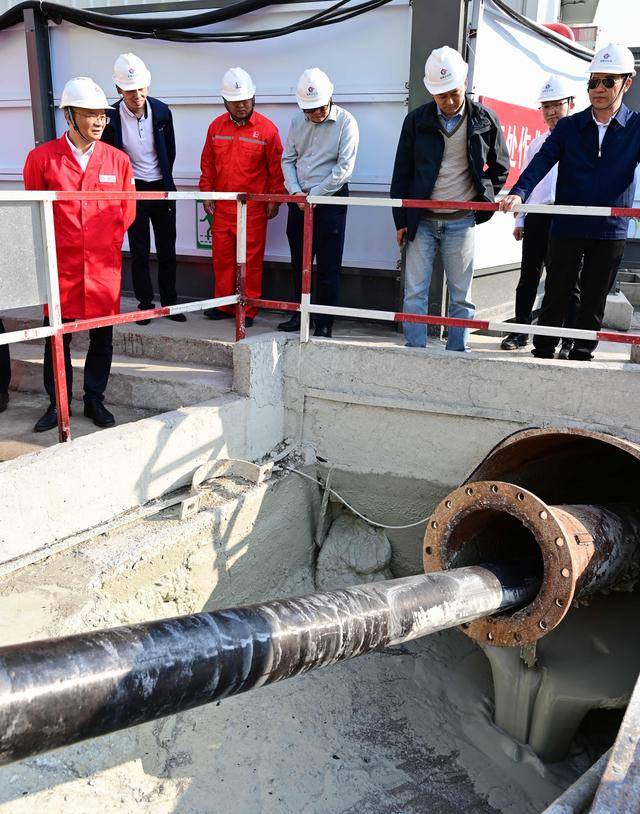
起钻!世界最长海陆双向定向钻穿越工程,深圳将首次接入国产海气资源
Sou Hu Cai Jing· 2026-01-16 16:54
深圳商报·读创客户端首席记者 王海荣 1月16日,南海天然气登陆深圳项目定向钻工程顺利起钻,进入全面施工阶段。项目建成后将为深圳及 粤港澳大湾区能源保障注入强劲动能,加快推动深圳建设天然气枢纽城市。 据介绍,该项目输气能力20-30亿立方米/年,设计寿命不低于30年,作为深圳首次接入的国产海气资 源,项目不仅能为深圳西部片区新增稳定可靠的气源,为区域燃气发电机组提供关键支撑,更将丰富深 圳"多气源"供应格局,形成国产海气与LNG互补互济的供应体系,有效增强城市能源自主保障能力和供 应韧性。 公开资料显示,南海天然气登陆深圳项目总长约7.28千米,其中定向钻施工段长度约7千米,穿越深度 达102.9米,是目前世界最长的海陆双向定向钻穿越工程。 据了解,面对施工区域地质复杂、经济活动频繁和作业实施包含在产海管带压开孔、超长距离水平定向 钻等高风险环节的挑战,该项目集成了超远距离地磁控向、无线磁靶精确定位、陀螺仪精确制导等多项 先进技术,组建了行业最优施工团队,通过国内技术专家现场勘察和方案审查,完善高风险环节控制措 施,创建了中国管道工程新范式,为项目建设保驾护航。 (备注:文章配图由受访单位提供) ...