
银行理财

Search documents
市场上行提振,基金新发加速
Huachuang Securities· 2025-07-04 05:02
Investment Rating - The report does not explicitly state an investment rating for the industry Core Insights - The report highlights a significant increase in the issuance of wealth management products, with 3,574 new products launched during the period from June 14 to June 27, 2025, compared to 2,530 in the previous period, indicating a strong market recovery [6][9] - Fixed income products dominate the new issuance landscape, accounting for 95.41% of new wealth management products, reflecting a conservative risk appetite among investors [19] - The report notes a shift towards diversified investment products, with some institutions beginning to explore equity and derivative assets to enhance returns while maintaining stability [19] Summary by Sections 1. Wealth Management Products - During the period from June 14 to June 27, 2025, the market saw a total of 3,574 new wealth management products, a significant increase from the previous period [9] - The majority of new products (84.28%) were issued by wealth management companies, with an average performance benchmark of 2.64%, the highest among all types of institutions [9] - The structure of new products remains stable, with fixed income products leading at 3,410 new issues, representing 95.41% of the total [19] - Short to medium-term products (3-6 months and 6 months-1 year) are favored by investors, indicating a preference for liquidity alongside returns [20] 2. Fund Products - A total of 91 new public funds were established during the reporting period, with a total issuance scale of 786 million units, a 96.75% increase from the previous period [25] - Bond funds led the new issuance with 344.50 million units, although their market share slightly decreased to 43.83% [26] - The report notes a resurgence in various fund types, including QDII, REITs, and FOF funds, indicating a recovery in the market [30] 3. Insurance Products - The market saw the issuance of 38 new insurance products during the reporting period, continuing a trend of moderate growth [39] - Life insurance products saw a decline in new issuances, while annuity products surged, becoming the dominant category with a market share of 57.9% [39] - Regulatory changes are influencing the structure of insurance products, particularly in the area of dividend insurance, which is expected to remain a key focus for companies [38]
近一周8次发布巨额赎回公告,建信理财旗下15只固收类产品暂停赎回
Hua Xia Shi Bao· 2025-07-04 03:32
Core Viewpoint - Recently, Jianxin Wealth Management announced a suspension of redemption applications for eight fixed-income daily open-end products due to significant redemptions triggered on June 27, indicating a trend of large-scale redemptions in the wealth management sector [1][2]. Group 1: Redemption Events - Jianxin Wealth Management issued eight announcements regarding large-scale redemptions involving 15 products from June 26 to July 1, with multiple products triggering redemptions twice [2][4]. - The eight products that triggered large-scale redemptions are all fixed-income daily open-end products, including the Jiaxin series, Jianxinbao series, and Longbao series [2][3]. - Specific products such as Jianxinbao No. 11 and No. 20, Longbao No. 4 and No. 5, and Jiaxin (Stable Profit) No. 8 triggered large-scale redemptions on June 30 and July 1 [2]. Group 2: Market Context - Large-scale redemptions in wealth management products, while not common, have been observed in other institutions such as Huibin Wealth Management and Zhaoyin Wealth Management, indicating a broader trend in the industry [5][6]. - The occurrence of large-scale redemptions is often linked to underperformance of the products, low customer satisfaction, and the impact of new asset management regulations on old and new products [1][8]. Group 3: Redemption Mechanisms - The regulatory framework defines large-scale redemptions as those exceeding 10% of the total product shares on a single open day [2]. - Many wealth management products have "large-scale redemption clauses" that allow for the suspension of redemption applications or delays in the payment of redemption amounts to protect the stability of the product [6][7]. - The rationale behind these clauses is to prevent significant asset value fluctuations and ensure the stable operation of the products, thereby safeguarding investors' long-term interests [7].
银行理财规模站稳31万亿,下半年如何接住“存款搬家”
第一财经· 2025-07-02 15:51
Core Viewpoint - The bank wealth management market has maintained a scale of 31 trillion yuan, growing by 5.22% since the beginning of the year, despite challenges such as declining yields and regulatory pressures on valuations [1][2]. Group 1: Market Scale and Growth Factors - As of the end of June, the bank wealth management market's scale reached 31.22 trillion yuan, slightly down from 31.5 trillion yuan at the end of May, which was a record high [1]. - The growth in the first half of the year was driven by multiple factors, including a bullish bond market that boosted fixed-income product yields and the seasonal influx of funds at quarter-end [1][2]. - The decline in deposit rates, with one-year fixed deposit rates falling below 1%, has made wealth management products more attractive, leading to a noticeable "deposit migration" phenomenon [2]. Group 2: Performance and Yield Trends - Fixed-income products, which account for 97% of the market, had an annualized yield of 2.84%, while cash management products yielded 1.43%, both exceeding the deposit rates during the same period [2]. - Equity wealth management products faced significant pressure, with an average annualized yield of 4.1%, influenced by stock market volatility [3]. - There has been a widespread downward adjustment in performance benchmarks for wealth management products, with many products' benchmarks falling below deposit rates [3]. Group 3: Regulatory and Market Challenges - Regulatory changes have imposed stricter requirements on valuation methods previously used by wealth management companies, challenging the "high yield, low volatility" business model [4]. - The pressure to maintain scale and net value is increasing, with expectations that the growth in wealth management scale may not match last year's performance [4][5]. Group 4: Future Outlook and Strategies - The bank wealth management market is expected to face dual pressures from interest rate cuts and valuation adjustments in the second half of the year [6]. - Wealth management companies are innovating products to balance yield and volatility, with strategies including increasing equity and derivative investments to enhance returns [6]. - The industry consensus is to expand equity-linked wealth management products, although challenges remain due to traditional clients' low risk tolerance [7].

银行理财规模站稳31万亿,下半年如何接住“存款搬家”
Di Yi Cai Jing· 2025-07-02 12:16
Core Viewpoint - The banking wealth management market has maintained a scale of 31.22 trillion yuan, showing a growth of 5.22% compared to the beginning of the year, despite challenges such as declining yields and regulatory pressures on valuations [1][2]. Group 1: Market Performance - As of the end of June, the banking wealth management market's scale reached 31.22 trillion yuan, slightly down from 31.5 trillion yuan at the end of May, which was a record high [1]. - The growth in the first half of the year was driven by multiple factors, including a bullish bond market that boosted fixed-income product yields and seasonal capital flows [1][2]. - The average annualized yield for fixed-income products was 2.84%, while cash management products had a near 7-day annualized yield of 1.43%, both exceeding the prevailing deposit rates [2]. Group 2: Yield Trends - Equity wealth management products faced significant pressure, with an average annualized yield of 4.1%, influenced by stock market volatility [3]. - In June, numerous wealth management products announced downward adjustments to their performance benchmarks, with some benchmarks falling below the deposit rates [3]. - The average performance benchmark for newly issued fixed-income products has shown a downward trend since early 2022, indicating a persistent decline [3]. Group 3: Regulatory Environment - Regulatory changes have imposed stricter requirements on valuation methods previously used by wealth management companies, particularly regarding smoothing mechanisms [4]. - The traditional business model of "high yield, low volatility" in banking wealth management is under significant pressure, leading to challenges in maintaining scale and net value [4][5]. Group 4: Future Outlook - The banking wealth management market is expected to face dual pressures from interest rate cuts and valuation adjustments in the second half of the year [6]. - Wealth management companies are likely to innovate products focusing on low volatility and diversified themes to adapt to the changing environment [6]. - There is a growing consensus in the industry to expand equity-linked wealth management products, although challenges remain due to traditional clients' low risk tolerance [7].
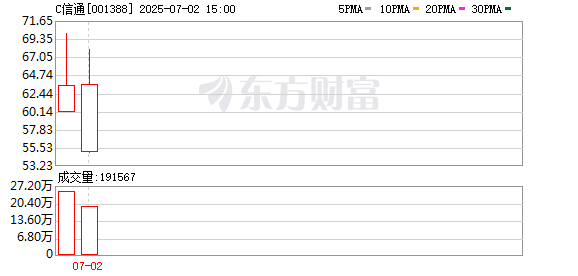
跻身A类投资者 光大理财落地首单网下打新
2 1 Shi Ji Jing Ji Bao Dao· 2025-07-02 10:43
Core Insights - The article highlights the significant milestone achieved by Everbright Wealth Management, which has successfully entered the A-class investor category, allowing it to participate directly in offline IPO subscriptions, marking a shift from a supporting role to a leading role in the capital market [1][3]. Group 1: Industry Developments - Everbright Wealth Management participated in the offline IPO of Shandong Xintong Electronics Co., Ltd. at a subscription price of 17 yuan per share, becoming the first bank wealth management subsidiary to do so as an A-class investor [1][2]. - The participation of bank wealth management in the capital market is accelerating, with several subsidiaries actively engaging in IPO allocations, indicating a new trend of deepening capital market investments [1][2][6]. - The shift to A-class investor status allows bank wealth management products to enjoy the same preferential treatment as public funds, enhancing the allocation of new shares and potentially increasing product returns [2][3]. Group 2: Policy and Regulatory Changes - Recent policy changes have facilitated the entry of bank wealth management into the A-class investor category, driven by the need to boost capital market participation from long-term funds [3][4]. - The China Securities Regulatory Commission (CSRC) has amended regulations to include bank wealth management products as priority allocation objects for IPOs, aligning them with public funds in terms of policy treatment [4][5]. Group 3: Future Outlook - Bank wealth management is expected to continue increasing its participation in offline IPOs while enhancing its research and analysis capabilities in equity investments [2][5]. - The industry is exploring diversified investment strategies, with a focus on equity assets, as traditional fixed-income returns are under pressure due to low interest rates [5][6]. - Reports indicate that as of the end of 2024, the total investment assets of wealth management products will reach 32.13 trillion yuan, with equity assets only accounting for 2.58%, suggesting significant room for growth in this area [5].
ESG产品月报(2025.7):ESG主动基金业绩优异-20250702
Guoxin Securities· 2025-07-02 08:52
1. Core Views - ESG public fund products: The number of new issuances fluctuates significantly, peaking in November 2024, January, and March 2025, and dropping sharply in February and April 2025. The overall scale has grown in the past two years but with obvious differentiation, ESG strategy funds and environmental protection theme funds leading in growth, while pure ESG theme, social responsibility, and corporate governance theme funds developing steadily [7]. - ESG bond products: The issuance amount fluctuates greatly, reaching a peak of 172.155 billion yuan in April 2025 and the second - highest of 146.994 billion yuan in June. There are 7 high - rated (Grade 4 and above) ESG bonds, mainly including green bonds and sustainable development - linked bonds [7]. - ESG bank wealth management products: The issuance volume shows an "S - shaped" trend, reaching a peak of 104 in December 2024 and then recovering in March 2025. The number of existing products has increased from 368 in June 2023 to 948 in June 2025, with the pure ESG theme growing steadily, the social responsibility theme rising significantly, and the environmental protection theme performing weakly [7]. - Public ESG product classification tracking: In equity funds and partial - equity hybrid funds, the scale of pure ESG theme is stable with high concentration at the top; the scale of environmental protection theme is declining; the scale of social responsibility theme is slowly decreasing with a stable pattern; the scale of corporate governance theme is stable with high concentration at the top. In bond funds, the environmental protection theme and ESG strategy theme have grown in the first quarter of 2025, while the social responsibility theme has shrunk. The scale of FOF funds is generally declining, and REITS funds are mainly in the environmental protection and social responsibility themes [8]. - Representative products: Huabao Core Advantage had a 17.43% return in June, with an average equity position of about 90% and heavy positions in information technology and industry. Boshi Return Strict Selection had a 15.49% return in June, with a stable equity position of 95% and heavy positions in information technology and optional consumption. Huatai - Peregrine Quality Selection had a 15.48% return in June, with the equity position dropping to 60% and heavy positions in information technology [8]. 2. Summary by Directory 2.1 ESG Product Overview 2.1.1 ESG Public Fund Products - New issuance: From June 2024 to June 2025, the number of new monthly issuances fluctuates, peaking in November 2024, January, and March 2025, and dropping sharply in February and April 2025 [21]. - Scale: From June 2023 to June 2025, the number and scale have increased, with ESG strategy funds and environmental protection theme funds growing significantly, while pure ESG theme, social responsibility, and corporate governance theme funds developing steadily, and the number of corporate governance theme products remaining at 20 [21]. 2.1.2 ESG Bond Products - Issuance amount: From June 2024 to June 2025, it fluctuates greatly, reaching a peak of 172.155 billion yuan in April 2025 and the second - highest of 146.994 billion yuan in June 2025, with a low of 37.844 billion yuan in January 2025 [26]. - High - rated bonds: There are 7 ESG bonds with an issuer ESG rating of A or above, covering medium - term notes, corporate bonds, and asset - backed securities, mainly green bonds and sustainable development - linked bonds [26]. 2.1.3 ESG Bank Wealth Management Products - Issuance volume: From June 2024 to June 2025, it shows an "S - shaped" trend, peaking at 104 in December 2024, dropping in January and February 2025, and rising again in March 2025 [35]. - Existing products: The number has increased from 368 in June 2023 to 948 in June 2025, with the pure ESG theme growing steadily, the social responsibility theme rising significantly, and the environmental protection theme performing weakly [35]. 2.2 Public ESG Product Classification Tracking 2.2.1 Public Equity Funds + Partial - Equity Hybrid Funds - Pure ESG theme: The scale is stable from June 2023 to March 2025, with high concentration at the top. In June, 82 products had positive returns, and "Caixin Sustainable Development Theme" had a 12.69% return [48]. - Environmental protection theme: The scale is declining from June 2023 to March 2025, with high product dispersion. In June, 390 products had positive returns, and 62 products had a return of over 6% [55]. - Social responsibility theme: The scale is slowly declining from June 2023 to March 2025, with a stable market pattern. In June, 196 products had positive returns, and 2 products had a return of over 15% [62]. - Corporate governance theme: The scale is stable from June 2023 to March 2025, with high concentration at the top. In June, 24 products had positive returns, and "Huabao Core Advantage A" had a 17.43% return [69]. 2.2.2 Public Bond Funds - Scale change: In the first quarter of 2025, the environmental protection theme grew by 12.994 billion yuan (+88.06%), the ESG strategy theme grew by 8.963 billion yuan (+51.13%), and the social responsibility theme shrank by 12.445 billion yuan (-12.22%) [77]. - Performance: Among bond funds with a scale of over 2 billion, "Huatai - Peregrine Double - Xin Income A" had a 1.06% return in June [77]. 2.2.3 Public FOF Funds - Scale change: From June 2023 to March 2025, the scale fluctuates and generally declines. The establishment of "Dongfanghong Xinyue Steady Allocation C" in the third quarter of 2024 pushed up the scale, which then declined [85]. - Performance: Among FOF funds with a scale of over 0.5 billion, "Huatai - Peregrine Core Selection Six - Month Holding A" had a 4.58% return in June [85]. 2.2.4 Public REITS Funds - Theme scale: The environmental protection theme has a scale of 21.883 billion yuan (70% share), and the social responsibility theme has a scale of 9.359 billion yuan (30% share). In June, 8 products had positive returns, and "Guotai Junan Jinan Energy Heating REIT" had a 12.1% return [93]. 2.3 Representative Product Situation - Huabao Core Advantage: Had a 17.43% return in June, with an average equity position of about 90%, heavy positions in information technology and industry, and a stable ESG rating of BB [111]. - Boshi Return Strict Selection: Had a 15.49% return in June, with a stable equity position of 95%, heavy positions in information technology and optional consumption, and an ESG rating fluctuating between BB and A [129]. - Huatai - Peregrine Quality Selection: Had a 15.48% return in June, with the equity position dropping to 60% since May, heavy positions in information technology, and an ESG rating dropping from AA to BB [147].
银行理财周度跟踪(2025.6.23-2025.6.29):股债跷跷板效应凸显,银行理财产品收益承压-20250701
HWABAO SECURITIES· 2025-07-01 11:29
Investment Rating - The report does not explicitly provide an investment rating for the banking wealth management industry Core Insights - The report highlights the pressure on bank wealth management product yields due to the stock-bond seesaw effect and seasonal liquidity constraints, indicating a potential long-term decline in yields [4][17] - Regulatory changes are pushing for innovation in financial products to meet household wealth management needs, which is crucial for the banking wealth management sector [10][11] - The report notes that the valuation rectification of bank wealth management products is ongoing, with many institutions completing their mid-year plans by the end of June [11][12] Summary by Sections Regulatory and Industry Dynamics - On June 24, the People's Bank of China and five other departments issued guidelines to support consumption and promote financial products that meet household wealth management needs [3][10] - The valuation rectification of bank wealth management products is a significant focus, with many banks reporting progress in their mid-year plans [11] - As of the end of May, the total net asset value of public funds in China reached 33.74 trillion yuan, reflecting a growth of 6.26 billion yuan from April [12] Yield Performance - For the week of June 23-29, cash management products recorded a 7-day annualized yield of 1.42%, up by 1 basis point, while money market funds reported a yield of 1.32%, up by 2 basis points [4][14] - Most pure fixed income and fixed income+ products saw a decline in annualized yields, influenced by various factors including the stock-bond seesaw effect and geopolitical risks [16][17] Net Asset Value Tracking - The report indicates that the net asset value of bank wealth management products was 0.83%, up by 0.1 percentage points, remaining at a low level [25][26] - Credit spreads have narrowed, indicating limited value, and future trends in credit spreads will be closely monitored as they may impact the net asset value [25][27]
【银行理财】股债跷跷板效应凸显,银行理财产品收益承压(2025.6.23-2025.6.29)
华宝财富魔方· 2025-07-01 11:15
Regulatory and Industry Dynamics - On June 24, the People's Bank of China and six other departments issued guidelines to support consumption, emphasizing the need for innovative financial products that meet household wealth management needs and enhance residents' property income [2][5] - As of May 2025, there are 164 public fund management institutions in China, managing a total net asset value of 33.74 trillion yuan, an increase of 6.26 billion yuan from April [6] Yield Performance - For the week of June 23-29, 2025, cash management products recorded an annualized yield of 1.42%, up 1 basis point, while money market funds reported a yield of 1.32%, up 2 basis points [3][8] - The yield of pure fixed income and fixed income + products generally declined, influenced by factors such as the stock-bond seesaw effect and seasonal liquidity [9][10] Product Innovation and Market Trends - ICBC Wealth Management and China Post Wealth Management participated as cornerstone investors in the IPO of Sanhua Intelligent Control, each acquiring a stake of 20 million USD [7] - The ongoing valuation rectification in bank wealth management is expected to limit product yield potential, as companies shift focus towards low-volatility, high-liquidity assets [10][14]

中邮理财试水权益类理财,另有理财子产品募集失败
2 1 Shi Ji Jing Ji Bao Dao· 2025-07-01 10:12
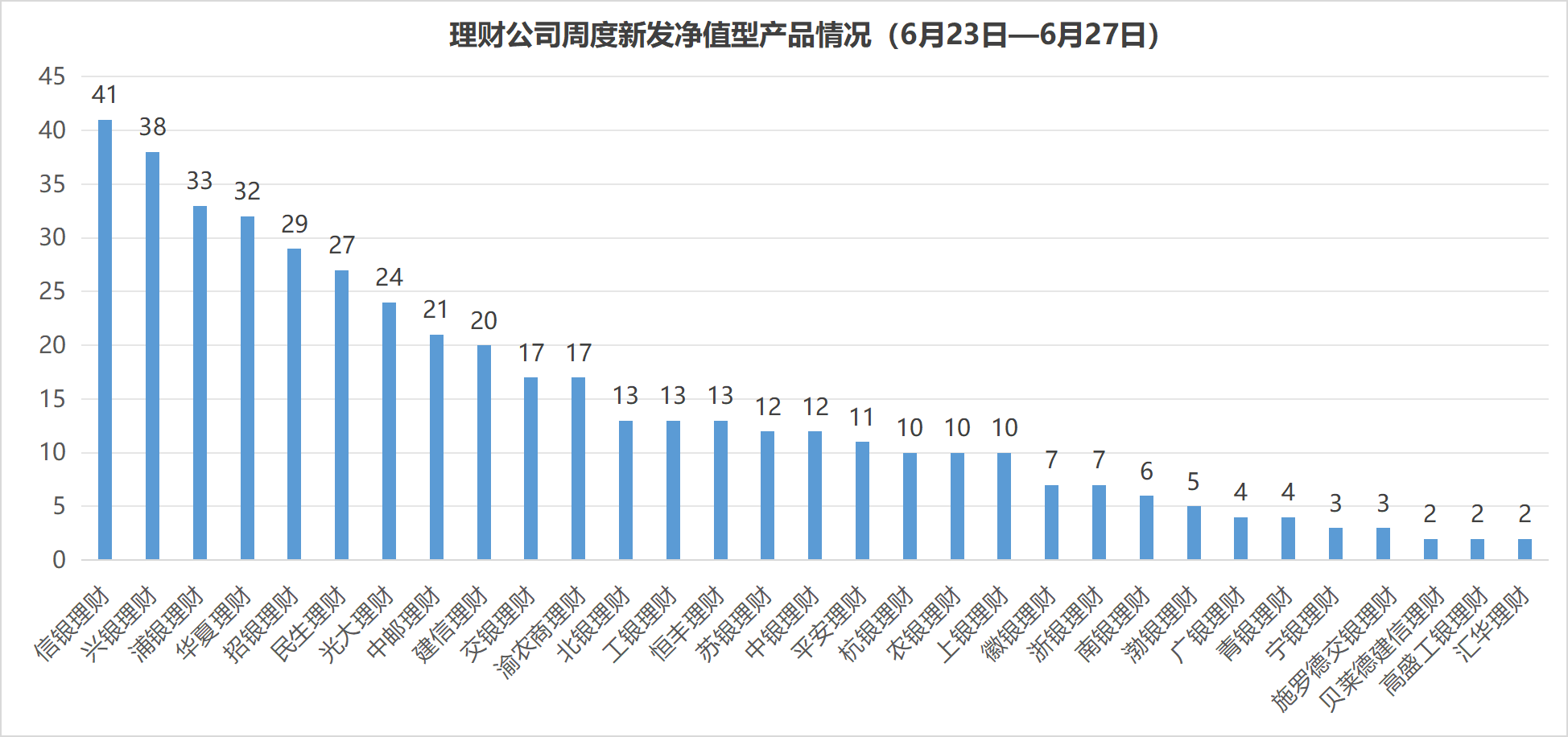
Market Overview - The bond market is experiencing fluctuations with an overall balanced and loose funding environment. As of June 27, the weighted average of DR007 is 1.7%, and the yield on 10-year government bonds is at 1.65% [2] - In the stock market, easing geopolitical tensions in the Middle East led to gains in major A-share indices, with the weekly increases for the ChiNext Index, CSI 1000 Index, and CSI 500 Index being 5.69%, 4.62%, and 3.98% respectively. The computer, defense, and non-bank financial sectors saw the highest weekly gains [2] Product Performance - As of June 27, 2025, there are 23,906 active public wealth management products, with 137 products having a cumulative net value below 1, resulting in a comprehensive broken net rate of 0.57%. The broken net rates for equity and mixed wealth management products are 48.78% and 6.55% respectively, while fixed income products have a broken net rate of 0.16% [3] - The broken net rates for fixed income products across various maturities remain low, all below 1%. The broken net rates for 1-2 year and 2-3 year products are slightly higher at 0.43% and 0.3% respectively [3] New Product Issuance - A total of 448 wealth management products were issued by 31 wealth management companies from June 23 to June 27, with the highest issuance from joint-stock banks. Notable issuers include Xinyin Wealth Management, Xingyin Wealth Management, Puyin Wealth Management, and Huaxia Wealth Management, which issued 41, 38, 33, and 32 products respectively [4] - The newly issued products are primarily R2 (medium-low risk), closed-end net value type, and fixed income public products, with only 5 mixed products (1.1% of total) and 2 equity products from Zhongyou Wealth Management [6] Product Observations - Zhongyou Wealth Management launched its first equity public products, indicating a strategic move into equity investment. The two products focus on technology and intelligent manufacturing, and FOF investment strategies, with a minimum holding period of 14 days and a starting investment of 10,000 yuan. The fundraising scale for these products was relatively small, with 4.7 million yuan and 5.7 million yuan respectively [8] - Huaxia Wealth Management's closed-end product failed to raise the required minimum amount, leading to its non-establishment [9] Yield Performance - All categories of RMB public wealth management products recorded positive returns last week. Fixed income products had an average net value growth rate of 0.0625%, while mixed, equity, and commodity financial derivative products had growth rates of 0.142%, 1.5611%, and 0.0601% respectively [10] - The average weekly yield for fixed income products across all maturities was positive, with the 2-3 year products showing the highest average net value growth rate of 0.0725% [10] Negative Yield Situation - The proportion of negative yield products slightly increased, with 3.8% of RMB public wealth management products experiencing negative returns last week. The proportions for fixed income, mixed, equity, and commodity financial derivative products were 2.99%, 17.45%, 13.51%, and 0% respectively [13] - Among fixed income products, the highest proportion of negative yield products was for those with maturities over 3 years at 12.27%, while the lowest was for products with maturities of less than 1 month at 1.12% [13] Industry Trends - Regulatory scrutiny on bank wealth management subsidiaries has intensified, with significant penalties being imposed. Recently, Zhongyin Wealth Management was fined 12.9 million yuan for various violations, marking the second instance of a bank wealth management subsidiary receiving a fine exceeding 10 million yuan this year. The total penalties for these two companies approached 30 million yuan, nearing last year's total [16]
中银理财领千万罚单:监管利剑直指三大合规漏洞
Guan Cha Zhe Wang· 2025-06-30 13:13
Group 1 - The National Financial Regulatory Administration imposed a fine of 12.9 million yuan on China Bank Wealth Management for three violations, including inadequate management of non-standard debt investments, non-compliance with investment concentration and liquidity requirements, and poor information registration management [1][3] - This marks the third time in three years that China Bank Wealth Management has received a fine exceeding ten million yuan, totaling 20 million yuan in penalties [4] - The company acknowledged the regulatory feedback and stated that all issues had been rectified by June 2024, emphasizing a commitment to enhancing compliance management and risk control capabilities [4] Group 2 - As of the end of 2024, China Bank Wealth Management managed assets totaling 1.9 trillion yuan, with a net profit of 1.963 billion yuan, indicating strong performance relative to the industry [4] - The increasing scale of operations has led to rising compliance costs and pressure on risk management [4] - In May 2025, the National Financial Regulatory Administration sought public opinion on a draft regulation aimed at standardizing information disclosure for asset management products, which is seen as a significant step towards reinforcing the principle of "seller responsibility, buyer risk" [4]
