
互联网服务

Search documents
【机构策略】A股市场处于震荡蓄势阶段
Zheng Quan Shi Bao Wang· 2025-11-20 01:09
Market Overview - The A-share market experienced fluctuations with sectors such as non-ferrous metals, oil and petrochemicals, national defense, beauty care, and banking showing strong gains, while sectors like comprehensive services, real estate, media, construction materials, and retail faced declines [1][1][1] - The market is currently in a consolidation phase around the 4000-point mark, with a long-term upward trend expected to continue [1][1][1] Sector Performance - Strong performance was noted in shipbuilding, precious metals, energy metals, and banking, while internet services, software development, cultural media, and electronic components lagged behind [1][1] - The market is in a critical phase for positioning for the upcoming year, with a likelihood of continued consolidation around the 4000-point level [1][1] Investor Sentiment - The stabilization of A-share indices is seen as a positive factor for short-term market confidence [1] - Despite geopolitical tensions leading to cautious funding behavior, the potential for increased market volatility remains [1] - Mid-term outlook remains optimistic due to sustained global tech investment enthusiasm, ongoing "anti-involution" policies, and increased retail investment [1][1]
【涨知识】一文看懂互联网平台从业人员劳务报酬累计预扣法
蓝色柳林财税室· 2025-11-20 00:57
Core Viewpoint - The article discusses recent adjustments made by the State Taxation Administration regarding the withholding and prepayment of individual income tax for platform workers in the internet sector, allowing for cumulative withholding methods to ease the tax burden on these workers [1][6]. Group 1: Tax Withholding Methods - The new announcement allows internet platform companies to use cumulative withholding methods for tax prepayment, which is a change aimed at reducing the burden on platform workers [1]. - There are two categories for labor remuneration reporting: one that applies cumulative withholding and one that does not [1]. Group 2: Non-Cumulative Withholding - Non-cumulative withholding applies to general labor remuneration, categorized as one-time income or continuous income within a month [3]. - For non-cumulative withholding, if the income does not exceed 4,000 yuan, a deduction of 800 yuan is allowed; if it exceeds 4,000 yuan, a deduction of 20% of the income is applied [3]. Group 3: Cumulative Withholding - Cumulative withholding is applicable to specific groups, including full-time students earning income from internships and certain commission-based roles such as insurance agents and securities brokers [4]. - For cumulative withholding, a monthly deduction of 5,000 yuan is allowed, and tax rates range from 3% to 45% based on a seven-tier progressive rate system, replacing the previous three-tier system [5][6]. Group 4: Types of Income - Platform workers typically earn labor remuneration through various services provided via internet platforms, including live streaming, education, medical services, delivery, and more [5]. - The adjustments in tax withholding methods are expected to significantly lower the prepayment tax amounts for platform workers [6].


小米汽车,真撑得起门面?
虎嗅APP· 2025-11-20 00:24
Core Viewpoint - The article emphasizes that Xiaomi's growth is under pressure due to the tightening of subsidies and increased competition in its traditional business, particularly in smartphones and IoT, while the automotive business shows potential but faces challenges ahead [11][12][24]. Overall Performance - Xiaomi Group reported total revenue of 113.1 billion RMB for Q3 2025, a year-on-year increase of 22.3%, primarily driven by the automotive business [6][27]. - Traditional business (smartphones and AIoT) revenue grew only 1.6% year-on-year, indicating weak performance in hardware sales [27][30]. - Gross margin improved to 22.9%, supported by the automotive business, while smartphone margins declined due to intensified competition [30][31]. Automotive Business - The automotive segment generated 29 billion RMB in revenue, with a shipment of 109,000 units and an average selling price of 260,000 RMB [6][35]. - The automotive business achieved a gross margin of 25.5%, although it slightly decreased from the previous quarter due to a reduction in the share of high-margin models [38][39]. - The core operating profit for the automotive business was 680 million RMB, marking its first profitable quarter [7][67]. Smartphone Business - Xiaomi's smartphone revenue was 46 billion RMB, down 3.1% year-on-year, reflecting the impact of subsidy reductions and increased competition [42][44]. - Smartphone shipments increased by 0.5% year-on-year, but the average selling price fell by 3.6% due to a higher proportion of low-cost models sold [44][46]. - The smartphone gross margin dropped to approximately 11.1%, influenced by rising component costs and market competition [48][23]. IoT Business - The IoT segment reported revenue of 27.6 billion RMB, a year-on-year increase of 5.6%, significantly lower than previous quarters due to subsidy reductions affecting large appliances [51][18]. - The gross margin for IoT products was 22.9%, benefiting from a higher proportion of sales in more profitable categories [52][53]. Internet Services - Internet services revenue reached 9.4 billion RMB, growing 10.8% year-on-year, primarily driven by advertising services [56][60]. - Advertising revenue was 7.2 billion RMB, up 16.1%, while value-added services saw a slight decline [56][66]. Overseas Market - Overseas revenue was 40.1 billion RMB, a slight decrease of 0.2%, with internet services growing by 19.1% to 3.3 billion RMB [60][62]. - Hardware sales in overseas markets continued to show weakness, reflecting a challenging demand environment [60]. Profitability - The core operating profit for the quarter was 6.7 billion RMB, with a core operating profit margin of 5.9%, impacted by declining smartphone margins and increased expenses [67][66]. - Traditional business core operating profit was approximately 6.03 billion RMB, while the automotive segment contributed 680 million RMB [67][66].

推动科技创新和产业创新深度融合!殷勇围绕贯彻党的二十届四中全会精神到企业走访调研
Bei Jing Ri Bao Ke Hu Duan· 2025-11-19 23:41
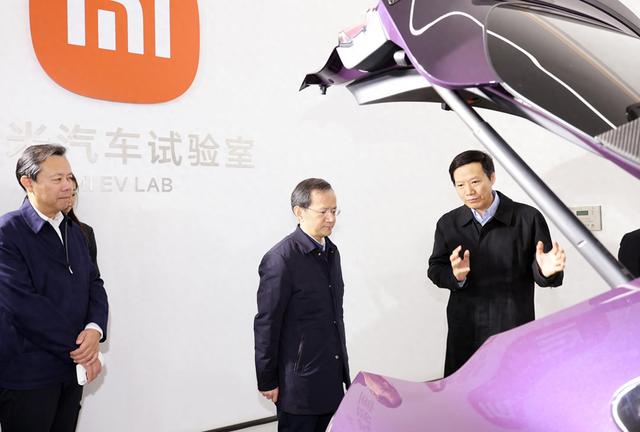
Group 1 - The Beijing government emphasizes the importance of high-quality development and the integration of technology and industry innovation to foster a modern industrial system [1][4] - Meituan is recognized as a key platform enterprise in Beijing's service sector, with a focus on expanding new consumption scenarios and enhancing AI applications to improve consumer offerings [1][3] - Xiaomi is highlighted as a leading technology innovation company in Beijing, with a commitment to user-driven innovation and significant contributions to the high-quality development of the new energy vehicle industry [3][4] Group 2 - The government aims to stimulate the vitality of various business entities and support the growth of the private economy to enhance development momentum [4] - There is a focus on creating a world-class business environment and providing efficient services to enterprises, encouraging increased R&D investment and innovation [4] - The government plans to address the practical difficulties faced by private enterprises through targeted support and service mechanisms [4]
外资机构三季度加仓中国资产
Shen Zhen Shang Bao· 2025-11-19 23:08
Core Insights - Foreign institutions significantly increased their holdings in Chinese assets during the third quarter, with major players like Goldman Sachs, Morgan Stanley, and Merrill Lynch raising their A-share positions by over 20% [1][3] - The China Overseas Internet ETF (KWEB) saw substantial investment from foreign institutions, with its size growing from $6.373 billion at the end of the first half to $9.793 billion by the end of the third quarter [2] Group 1: Foreign Investment Trends - Major foreign institutions such as Bank of America, UBS, Morgan Stanley, and Millennium Management have increased their holdings in the China Overseas Internet ETF, with share counts rising by 215.89%, 35.29%, 24.76%, and 307.44% respectively [2] - As of the end of the third quarter, 3,554 A-share companies had foreign institutional holdings, totaling approximately ¥2.73 trillion, reflecting a 12.4% increase from the previous quarter [3] Group 2: Specific Stock Increases - Citigroup held 3.83 million shares of Alibaba, with a market value of $684 million, showing a quarter-on-quarter increase of 5.63% in shares and 66.45% in market value [3] - JPMorgan held 5.58 million shares of Pinduoduo, with a quarter-on-quarter increase of 17.5% in shares and 48.38% in market value [3] - Citigroup held 350,000 shares of Baidu, with a quarter-on-quarter increase of 6.75% in shares and 64% in market value [3] Group 3: Institutional Insights - Notable foreign institutions such as Morgan Stanley, Goldman Sachs Asia, and Merrill Lynch significantly increased their A-share holdings, with Morgan Stanley's increase exceeding 30% at 33.1% [3] - As of the third quarter of 2025, foreign institutional investors further increased their holdings in Chinese stocks, with the top 40 global investment institutions' holdings rising to 1.1%, the highest level since the first quarter of 2023 [3]


大力发展新质生产力 推动科技创新和产业创新深度融合
Bei Jing Ri Bao Ke Hu Duan· 2025-11-19 21:39
Group 1 - The Mayor emphasized the importance of implementing the spirit of the 20th National Congress, focusing on high-quality development, leveraging Beijing's educational and technological advantages, and fostering new productive forces through deep integration of technological and industrial innovation [1] - At Meituan's headquarters, the Mayor highlighted the company's role as a key platform in Beijing's service sector, encouraging it to adapt to new consumer trends and invest in research and development to enhance competitiveness and contribute to the construction of an international consumption center [1] - During the visit to Xiaomi's automotive factory, the Mayor recognized Xiaomi as a technology innovator from Beijing, urging the company to continue driving innovation and product upgrades in the high-quality development of the electric vehicle industry [2] Group 2 - The Mayor stressed the need to support the private economy and enhance the vitality of various business entities, advocating for a first-class business environment and efficient services to address challenges faced by private enterprises [3] - There is a focus on providing tailored support to enterprises, including policy assistance and resource optimization, to ensure stable development and achieve economic and social development goals for the year [3]
腾讯控股11月19日斥资6.36亿港元回购101.8万股
Zhi Tong Cai Jing· 2025-11-19 10:00
腾讯控股(00700)发布公告,于2025年11月19日,该公司斥资6.36亿港元回购101.8万股股份,每股回购 价格为619.5-630.5港元。 于2025年11月19日,根据于2023年5月17日采纳的2023年购股权计划行使购股权1.3万股。 ...

小米的周期对冲法:新引擎盈利,旧引擎转型
2 1 Shi Ji Jing Ji Bao Dao· 2025-11-19 07:33
Core Insights - Xiaomi Group's Q3 2025 financial results show a total revenue of 113.1 billion yuan, a year-on-year increase of 22.3%, and an adjusted net profit of 11.3 billion yuan, up 81%, marking a historical high [2][3] - The company successfully transitioned from traditional smartphone business to new growth engines, particularly in smart electric vehicles and AI, which achieved quarterly profitability for the first time [2][3] - The smartphone segment is under pressure due to rising memory costs, impacting gross margins, while the company is focusing on high-end strategies to enhance product structure and resilience [2][4] Financial Performance - Xiaomi's revenue from innovative businesses, including smart electric vehicles and AI, reached 29 billion yuan, accounting for 25.6% of total revenue, with a gross margin of 25.5% and a profit of 700 million yuan in the quarter [3][4] - The smartphone business saw a shipment of 43.3 million units, generating revenue of 45.969 billion yuan, with a gross margin dropping to 11.1% due to supply chain cost pressures [3][4] Strategic Initiatives - Xiaomi is implementing three core strategies to build long-term competitiveness: increasing R&D investment, advancing high-end strategies, and exploring new growth opportunities in global markets [2][3] - The company plans to enhance its R&D capabilities, with Q3 spending reaching 9.1 billion yuan, a 52.1% increase year-on-year, and total R&D investment expected to exceed 30 billion yuan for the year [8][9] Market Trends - The current memory price increase is driven by strong demand for HBM (High Bandwidth Memory) from AI applications, differing from previous cycles driven by mobile and laptop demand [4] - Xiaomi's IoT business generated 27.6 billion yuan in revenue, maintaining growth for seven consecutive quarters, with a gross margin of 23.9% [5][6] Operational Developments - Xiaomi has expanded its automotive sales network, with 402 stores in 119 cities in mainland China, and aims to deliver 350,000 vehicles by the end of the year [3][6] - The company has launched a new smart appliance factory in Wuhan, enhancing its production capabilities and supporting its high-end strategy [6][9] Challenges and Outlook - Despite achieving profitability in the automotive sector, challenges remain, including reduced purchase tax subsidies and increased competition expected in 2026 [9] - The smartphone segment faces ongoing pressure from rising memory costs, while the IoT business must navigate a competitive landscape and potential price wars [9]

小米集团发布2025年第三季度财报:净利大增超80%,汽车业务首次实现单季盈利
Xin Hua Wang· 2025-11-19 07:11
Core Viewpoint - Xiaomi Group continues to demonstrate strong growth in Q3 2025, with significant increases in revenue and net profit, marking a historic high for the company [1][2]. Financial Performance - Q3 revenue reached 113.1 billion yuan, a year-on-year increase of 22.3%, marking the fourth consecutive quarter exceeding 100 billion yuan [1]. - Adjusted net profit for the quarter was 11.3 billion yuan, a substantial year-on-year increase of 80.9%, achieving a historic high [1]. Automotive and New Business Growth - Xiaomi's automotive division achieved profitability for the first time in a single quarter, delivering over 100,000 new vehicles and generating an operating profit of 700 million yuan [2]. - The smartphone and AIoT segment generated revenue of 84.1 billion yuan, with smartphone revenue at 46 billion yuan and IoT and lifestyle products revenue at 27.6 billion yuan, reflecting a year-on-year growth of 5.6% [2]. Smartphone Market Performance - Xiaomi's global smartphone shipment reached 43.3 million units in Q3, marking nine consecutive quarters of year-on-year growth [3]. - The company aims for a total smartphone shipment target of 170 million units in 2025 [3]. R&D Investment and Innovation - R&D investment in the first three quarters reached 23.5 billion yuan, with Q3 investment alone at 9.1 billion yuan, a year-on-year increase of 52.1%, setting a new record [4]. - Xiaomi launched the Xiaomi-MiMo-Audio voice open-source model and upgraded its operating system to enhance user experience across its ecosystem [4]. Manufacturing and Production Capacity - The completion of the smart home appliance factory in Wuhan enhances Xiaomi's manufacturing capabilities, supporting high-end product production with a planned annual capacity of 7 million air conditioners [5]. - Xiaomi has established a comprehensive smart manufacturing system covering smartphones, automobiles, and smart home appliances, solidifying its leading position in the smart manufacturing sector [5].
数字时代如何破解“伪适老”困局
Bei Jing Qing Nian Bao· 2025-11-19 06:59
Core Insights - The article highlights the inadequacies of "senior modes" in apps, which are intended to assist elderly users but often end up complicating their experience instead [1][2] - It emphasizes the need for a fundamental shift in design philosophy, advocating for a user-centric approach that genuinely addresses the needs of older adults [2][3] Group 1: Design Issues - Current "senior modes" often retain intrusive advertising and marketing content, undermining their intended purpose of providing a user-friendly experience for the elderly [1] - Many apps still feature large text and simplified interfaces, but fail to eliminate distracting elements like pop-up ads and low-quality content [1][2] - The design process for these modes is often superficial, treating them as mere modifications rather than comprehensive solutions tailored to the elderly [2] Group 2: Business and Regulatory Recommendations - Internet companies are criticized for prioritizing short-term commercial interests over genuine social responsibility in their approach to senior-friendly designs [1] - There is a call for regulatory bodies to establish clear standards and enforcement mechanisms to ensure that "senior modes" do not include intrusive advertisements or misleading download prompts [2] - Companies are urged to simplify user interactions, minimize advertising presence, and enhance the overall safety and usability of digital environments for older users [2] Group 3: Community and Family Support - Families are encouraged to invest time in educating elderly relatives about digital safety and assist them in managing their devices [3] - Community initiatives, such as digital literacy classes for seniors, are suggested to help bridge the technology gap and empower older adults [3] - The article advocates for a balanced approach that respects the needs of slower adopters of technology, ensuring they have access to digital services without unnecessary complications [3]