
金融

Search documents
音频 | 格隆汇1.21盘前要点—港A美股你需要关注的大事都在这
Ge Long Hui A P P· 2026-01-21 00:42
Group 1 - Shanghai is expanding the high-level institutional opening of its non-ferrous metal futures market, gradually including eligible non-ferrous metal commodity futures options in the scope of foreign opening [1] - Tonghuashun expects a net profit growth of 50%-80% year-on-year by 2025 [1] - ST Saiwei's stock may face delisting risk warnings due to potential trading issues [1] Group 2 - The Nasdaq and S&P 500 indices fell over 2%, while the Dow Jones dropped by 870 points, with Nvidia and Tesla both declining by over 4% [2] - Gold and silver prices reached new highs, with spot gold rising to $4,766 [2] - Japan plans to invest over $330 billion in artificial intelligence and semiconductor sectors [2] - The Portuguese government is set to sign agreements related to lithium projects with companies like Zhongxin Innovation, with a total investment expected to reach €3 billion [2] - The Polish central bank has approved a plan to purchase 150 tons of gold [2] - The Ministry of Finance announced that in 2026, fiscal spending will increase to support employment, businesses, markets, and expectations [2] - The Shanghai International Energy Exchange has adjusted the margin ratios and price limits for international copper futures contracts [2] - There is a significant demand for mid-to-high-end lithium iron phosphate products, with over ¥240 billion in orders secured in the past year [2]
张一婷:有序扩大服务领域自主开放
Jing Ji Ri Bao· 2026-01-21 00:01
Core Viewpoint - The article emphasizes the importance of expanding the service sector's openness in China as a key characteristic of modernization, highlighting its role in economic growth and global competitiveness [1][2]. Group 1: Economic Impact - By 2025, the service sector's value added is expected to account for over 50% of China's GDP for 11 consecutive years, with foreign investment in this sector making up about 70% of the actual foreign capital utilized in the country [1]. - Expanding openness in the service sector can introduce advanced global technologies and high-quality services, enhancing the high-end development of productive services and the quality of life services [1][2]. Group 2: Policy and Strategy - The manufacturing sector has seen the removal of foreign investment restrictions, making the service sector the primary focus for expanding foreign openness [2]. - The article outlines a phased approach to opening the service sector, emphasizing the need for precise regulation and a balance between openness and security [2][3]. Group 3: Implementation and Challenges - Recent efforts have included easing foreign investment restrictions in the service sector and establishing a negative list management model for cross-border service trade, which has been promoted from Hainan Free Trade Port to other regions [3]. - Despite progress, challenges remain, such as the need for greater autonomy in certain regions and industries, and the necessity for improved coordination of entry and operational regulations [3]. Group 4: Future Directions - The article advocates for a proactive approach to institutional openness in the service sector, including reducing restrictions in telecommunications, healthcare, education, and culture, and exploring the removal of foreign ownership limits [4]. - It calls for enhancing pilot programs for service sector openness, focusing on high-end, digital, and green services, and leveraging the advantages of free trade zones [4][5]. Group 5: Risk Management - The establishment of a risk assessment and prevention mechanism for service sector openness is crucial, utilizing technologies like big data and AI to identify potential risks in finance, data, and network security [6].
刚刚,股债汇“三杀”,有机构“清仓美国”!特朗普最新表态!国际金价再创新高
Xin Lang Cai Jing· 2026-01-20 23:40
Group 1: Natural Gas Market - Overseas natural gas prices surged, with US natural gas futures rising over 28% [3][18] - Weather factors are the core driver of the recent price increase, with expectations of colder temperatures in Europe leading to higher prices [5][18] - The US is expected to see strong export demand as nearly 10 million tons of LNG export facilities will come online in the first quarter [5][18] Group 2: Precious Metals Market - London gold prices reached a new historical high, while New York silver prices surged by 8.18% [5][19] - The Polish central bank approved a plan to purchase up to 150 tons of gold, increasing its reserves to 700 tons, positioning Poland among the top 10 countries in gold reserves [19] Group 3: US Market Sentiment - The Danish pension fund plans to liquidate its US Treasury holdings due to concerns over credit risk associated with US government policies [20] - Major US stock indices experienced significant declines, with the Dow Jones falling by 1.76% and the S&P 500 dropping by 2.06%, marking the largest single-day drop since October [21] Group 4: A-Share Market Dynamics - A-shares have seen significant increases in early 2026, with potential incremental capital inflows estimated to reach several trillion yuan [24] - The inflow of long-term funds is expected to continue, with projections of around 2 trillion yuan in new capital for 2026 [24][25] - The market is anticipated to enter a consolidation phase, with a shift from valuation expansion to a dual drive of earnings and valuation [27]


财政政策有力支持经济增长(锐财经)
Ren Min Ri Bao Hai Wai Ban· 2026-01-20 22:50
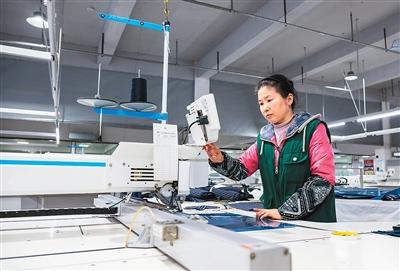
Group 1 - Anhui Province's Wuhu City is actively developing the garment industry by implementing tax reductions and subsidies to attract companies to settle in industrial parks, thereby promoting local employment [2] - The Ministry of Finance plans to adopt a more proactive fiscal policy in 2025, focusing on supporting economic growth and improving people's livelihoods while facilitating structural transformation of the economy [3][4] Group 2 - In 2025, the fiscal policy will emphasize four main areas: increasing counter-cyclical adjustments, boosting consumption, enhancing social welfare, and balancing risk prevention with development [3][4] - The fiscal deficit rate is set at around 4%, an increase of 1 percentage point from the previous year, with new government debt expected to reach 11.86 trillion yuan, a rise of 2.9 trillion yuan [3] - Special government bonds worth 500 billion yuan will be issued to supplement the core tier one capital of large state-owned commercial banks [3] Group 3 - The central government will allocate 667.4 billion yuan in employment support funds to enhance employment stability and expand social insurance subsidies [4] - The standard for fiscal subsidies for residents' medical insurance and basic public health services will be raised to 700 yuan and 99 yuan per person per year, respectively [4] - A gradual implementation of free preschool education is planned [4] Group 4 - The fiscal revenue in China showed a "front low, middle high, back stable" trend, with a 1.1% decline in the first quarter of the previous year, followed by a 0.6% increase in the second quarter and a 2.5% increase in the third quarter [5] - Total public budget revenue is expected to achieve a balance in 2025, supported by stable fiscal income and strong expenditure in key areas [6] Group 5 - A package of fiscal and financial policies aimed at promoting domestic demand will be introduced, including interest subsidies for loans to small and micro enterprises in key industries [7][8] - The loan guarantee plan for private enterprises will set a single credit limit of 20 million yuan, with higher compensation limits and risk-sharing ratios [7] - The optimization of personal consumption loan interest subsidy policies will include credit card installment payments, expanding the range of financial institutions involved [8]
百年企业,如何在时代大潮中奋楫前行,请看—— 招商局“四艘船”的故事(强国建设故事汇·百业千企焕新记)
Ren Min Ri Bao· 2026-01-20 22:43
Core Viewpoint - The article emphasizes the responsibilities and missions of central enterprises in China, particularly focusing on the role of China Merchants Group in contributing to national development and modernization efforts [1]. Group 1: Company History and Development - China Merchants Group, established over 150 years ago, is recognized as China's first modern company and a pioneer in national industry [1]. - The group has total assets exceeding 15 trillion yuan, with operations spanning transportation logistics, comprehensive finance, real estate, and technology innovation [1]. - The historical significance of the "Yidun" ship is highlighted as it marked the beginning of modern Chinese shipping and opened the first coastal commercial route [3]. Group 2: Corporate Responsibility and National Service - The "Hailiao" ship symbolizes the company's commitment to national interests, having raised the national flag during a pivotal moment in Chinese history [5]. - The company has actively engaged in modernizing its operations, such as the transformation of the Ma Wan Smart Port, which has significantly improved operational efficiency [7]. - China Merchants Group's focus on aligning its business strategies with national goals has led to substantial growth, with total assets increasing 40 times from 2012 to 2025 [7]. Group 3: Innovation and Technological Advancement - The introduction of the "New Yidun" ship, which utilizes advanced materials and technology, reflects the company's commitment to innovation and sustainability in the shipping industry [13]. - The establishment of the advanced technology research institute and the Lion Mountain AI laboratory demonstrates the group's investment in cutting-edge technology and talent acquisition [2]. - The company aims to enhance its capabilities in strategic emerging industries, with significant investments in technology and innovation during the 14th Five-Year Plan period [15]. Group 4: Global Expansion and International Strategy - China Merchants Group has expanded its global footprint, investing in 51 ports across 26 countries, with overseas revenue accounting for over 30% of its total [12]. - The company has successfully implemented its international strategy, significantly increasing container throughput at its overseas ports [12]. - The focus on mutual benefit and cooperation in international operations has positioned the company as a key player in global trade [12]. Group 5: Future Outlook and Strategic Goals - The company plans to accelerate its "third entrepreneurship" phase, aiming to build world-class enterprises and achieve significant profit and revenue milestones [16]. - The emphasis on technological innovation and international operations is expected to drive the company's growth and enhance its role in national development [16].
周三(1月21日)重点关注财经事件和经济数据
Jin Rong Jie· 2026-01-20 21:51
① 15:00 英国12月CPI ② 17:00 IEA公布月度原油市场报告 ③ 23:00 美国10月营建支出月率;美国12月 成屋签约销售指数月率 ④ 次日05:30 美国至1月16日当周API原油库存 ...
财政金融支持民间投资“一揽子”政策落地
Xin Lang Cai Jing· 2026-01-20 20:57
Group 1 - The central government has introduced a bond risk-sharing mechanism to support private enterprises in issuing bonds, providing credit enhancement and compensating investors for partial losses to broaden financing channels [1] - A new loan interest subsidy policy for small and micro enterprises has been implemented, offering a 1.5% interest subsidy on loan amounts up to 50 million yuan for a maximum of two years, targeting key industries such as new energy vehicles and industrial robots [2][3] - The policy aims to guide small and micro enterprises to invest in state-prioritized sectors, enhancing their technological capabilities and market competitiveness [2] Group 2 - The central government will subsidize 1.5% of the principal on fixed asset loans for equipment updates, with a focus on advanced manufacturing, green low-carbon initiatives, and digital transformation [3] - The active fiscal policy aims to leverage fiscal funds to stimulate private investment, technological innovation, and consumption expansion, promoting sustainable domestic demand [4] - The fiscal policy emphasizes precision, collaboration, sustainability, and risk prevention, ensuring that financial resources are effectively utilized [5]
格陵兰风起云涌、日本债惨遭抛售 华尔街的宁静开局不堪一击
Xin Lang Cai Jing· 2026-01-20 20:14
Market Overview - The recent weeks have seen an unusual downturn in Wall Street, primarily due to President Trump's aggressive stance on international relations, particularly regarding Greenland, which has created chaos among US and European allies [2][9] - Following the market opening on Tuesday, there was a strong return of "sell America" trades, leading to declines in US Treasury bonds and the dollar, with the S&P 500 and Nasdaq 100 indices dropping by 2%, erasing all gains made this year [2][9] - The VIX index, a measure of market volatility, reached its highest level since November of the previous year, while gold prices surged to over $4,700 per ounce, setting a new record [2][9] Investor Sentiment - Investors had previously shown indifference to Trump's actions, but recent market fluctuations indicate a shift in sentiment, with growing anxiety over potential worst-case scenarios such as NATO disintegration and a full-blown trade war [2][9] - The baseline scenario suggests that severity will ultimately be controlled, as investors are betting on some form of compromise, although if the situation escalates, the impact could be severe and long-lasting, particularly for the dollar [3][10] Bond Market Dynamics - Over the past month, volatility in US bonds, stocks, and the dollar had dropped to the lowest levels since at least 1990, as traders learned to disregard Trump's rhetoric, betting that his most severe threats would not materialize [5][12] - The sell-off in the market was initially triggered by domestic issues in Japan, where concerns over the Prime Minister's tax cuts and increased spending led to a rise of over 25 basis points in Japan's 30-year bond yield, affecting global bond yields [5][12] - The US Treasury market experienced significant pressure, with the yield on 30-year bonds rising by 7 basis points to 4.9%, impacting Trump's goal of lowering interest rates [5][13] Institutional Responses - The Danish pension fund AkademikerPension announced plans to exit its US Treasury positions by the end of the month, citing significant credit risks created by the Trump administration [6][14] - Despite expectations of a diplomatic resolution to the Greenland issue, the chaotic negotiation style of the White House has dampened market confidence [6][14] Sector Implications - The escalating geopolitical tensions are expected to benefit sectors such as defense, finance, and gold, with investment portfolios increasingly focused on these areas [7][15] - Market participants are wary of how far Trump might escalate new threats, although historically, he has often resorted to negotiations rather than imposing extreme tariffs [7][16]

财政部:“硬核”支持稳就业、稳企业、稳市场、稳预期
Zheng Quan Ri Bao· 2026-01-20 16:25
Core Viewpoint - The Chinese government is committed to implementing a more proactive fiscal policy in 2026, focusing on increasing total expenditure, optimizing structure, improving efficiency, and enhancing economic momentum to ensure a strong start for the 14th Five-Year Plan [1] Fiscal Revenue and Expenditure - Fiscal revenue in 2025 is expected to show a "front low, middle high, and back stable" trend, with a 1.1% decline in Q1, followed by a 0.6% increase in Q2, and a 2.5% increase in Q3, with October showing a 3.2% growth [2] - The overall balance of revenue and expenditure is projected to be achievable, with stable growth in public budget revenue and strong expenditure supporting economic development [2] - Key expenditures in social security, employment, technology, education, and health have been well-supported, with over 10 trillion yuan allocated to these areas, accounting for over 40% of total public budget expenditure [3] Support for Technological Innovation - The fiscal policy is a crucial tool for supporting technological innovation, with measures including increased funding, tax incentives, and government procurement to promote high-level self-reliance in technology [4] - In 2025, 3.44 million enterprises received over 140 billion yuan in bank loans, with comprehensive financing costs reduced to below 5% [4] - Key areas of focus include enhancing government investment funds, supporting quality upgrades in key industries, and accelerating the application of major technological achievements [5] Policy Implementation - A comprehensive package of policies aimed at promoting domestic demand has been deployed, with a focus on early implementation to maximize impact [6] - Key policies include loan interest subsidies for small and micro enterprises, special guarantees for private investment, and support for consumer loans [7] - The budget for 2026 has made sufficient arrangements for the fiscal expenditures required for these policies, encouraging local institutions to actively engage in business [8]
最新报价出炉LPR连续八个月维持不变
Qi Huo Ri Bao· 2026-01-20 16:12
Core Viewpoint - The Loan Prime Rate (LPR) in China remains unchanged for the eighth consecutive month, with the one-year LPR at 3.0% and the five-year LPR at 3.5% [1] Group 1: Reasons for LPR Stability - The stability of the LPR is attributed to three main factors: the central bank's 7-day reverse repurchase rate has remained stable, indicating no adjustment in the LPR this month [1] - Current net interest margins for commercial banks are at historical lows, leading to cautious pricing by banks to maintain stable operations [1] - The central bank is shifting its policy tools towards structural interest rate cuts, favoring targeted and precise adjustments rather than broad-based measures [1] Group 2: Future Outlook - The Deputy Governor of the People's Bank of China indicated that there is still room for further reserve requirement ratio (RRR) cuts and interest rate reductions this year [1] - If interest rate cuts are implemented, the LPR is expected to adjust accordingly [1]