智能驾驶

Search documents
行业组织放风,“车路云一体化”细节政策有望年底出台
Xuan Gu Bao· 2025-11-26 23:24
Group 1 - The Chinese government is emphasizing the construction of a vehicle-road-cloud collaborative system, with a complete top-level design framework established through systematic and phased policy deployments [1][2] - The integration of vehicle-road-cloud is expected to play a more significant role in infrastructure development, supported by policies aimed at building a strong transportation nation [1][2] - The current stage of vehicle-road-cloud construction is still in a phased approach, indicating substantial market potential for future development [1][2] Group 2 - Short-term, roadside construction is expected to accelerate, leading to an increase in vehicle-mounted terminals, while long-term, operational services will have broad market potential [2] - Companies like Four-dimensional Map and Zhonghaidah are actively involved in the vehicle-road-cloud projects, with Four-dimensional Map being one of the earliest players in this industry [3][4] - Four-dimensional Map has secured contracts in multiple cities, including Beijing, Shenzhen, and Wuxi, and is currently working on pilot city deployments [3]


11月27日热门路演速递 | 低空经济、慢牛新阶段、Robotaxi盈利前景,一次把握
Wind万得· 2025-11-26 22:36
Group 1 - The article discusses the emerging trends in the military and aerospace sectors, particularly focusing on low-altitude flight opportunities and the potential of eVTOL (electric Vertical Take-Off and Landing) aircraft [2] - It highlights the participation of various experts and commentators in the aviation field, indicating a collaborative effort to explore these trends [2] - The event aims to showcase nearly 30 eVTOL aircraft, emphasizing the competition and innovation in defining the future of low-altitude travel [2] Group 2 - The article outlines the upcoming 2026 investment strategy conference by Zhejiang Merchants Asset Management, focusing on the second phase of a "systematic slow bull" market and the role of technology growth [5] - It raises questions about asset allocation in low-volatility dividend assets and the investment opportunities in the new cycle starting from the 14th Five-Year Plan [5] - The conference will feature insights from a prominent fund manager, indicating a focus on strategic investment planning [5] Group 3 - The UBS presentation on the Chinese smart driving industry for 2026 aims to identify key breakthroughs and the timeline for the large-scale deployment of Robotaxi [7] - It discusses the growth logic of the lidar market and identifies core players within this sector, highlighting investment opportunities [7] - The event will feature a range of experts from UBS, showcasing a comprehensive analysis of the smart driving landscape [7] Group 4 - The CITIC Construction Investment report focuses on the collaboration between the electric, mechanical, and automotive industries in 2026, exploring how they can initiate a new cycle [9] - It addresses the impact of high proportions of renewable energy integration on energy storage demand and the potential of humanoid robots and solid-state battery technology to lead a new wave in high-end manufacturing [9] - The report also examines how the globalization of automotive intelligence may reshape industry chain dynamics and valuation logic [9]



希迪智驾科技股份有限公司 (前称為希迪智驾(湖南)股份有限公司)(H0010) - 聆讯后资料集(第一次呈交)
2025-11-26 16:00
香港聯合交易所有限公司與證券及期貨事務監察委員會對本聆訊後資料集的內容概不負責,對其準確性或完整 性亦不發表任何聲明,並明確表示概不就因本聆訊後資料集全部或任何部分內容而產生或因倚賴該等內容而引 致的任何損失承擔任何責任。 CiDi Inc. 希迪智駕科技股份有限公司 (「本公司」) (於中華人民共和國註冊成立之股份有限公司) 的聆訊後資料集 警告 本聆訊後資料集乃根據香港聯合交易所有限公司(「聯交所」)及證券及期貨事務監察委員會(「證 監會」)的要求而刊發,僅用作提供資訊予香港公眾人士。 本聆訊後資料集為草擬本,其內所載資訊並不完整,亦可能會作出重大變動。 閣下閱覽本文件, 即代表 閣下知悉、接納並向本公司、其相關保薦人、整體協調人、顧問或包銷團成員表示同意: 倘於適當時候向香港公眾人士提出要約或邀請,準投資者務請僅依據與香港公司註冊處處長註 冊的本公司招股章程作出投資決定;招股章程的文本將於發售期內向公眾提供。 (a) 本文件僅為向香港公眾人士提供有關本公司的資料,概無任何其他目的;投資者不應根據 本文件中的資料作出任何投資決定; (b) 在聯交所網站登載本文件或其任何補充、修訂或更換附頁,並不引起本公司 ...
高估值泡沫破裂 自动驾驶“中间玩家”退场
2 1 Shi Ji Jing Ji Bao Dao· 2025-11-26 10:22
Core Insights - The company, Haomo Technology, has announced a complete shutdown of operations starting November 24, 2025, due to financial difficulties, marking a significant decline from its previous status as a leading player in the autonomous driving sector [1][2] - The rise and fall of Haomo Technology reflect a broader trend in the Chinese autonomous driving industry, where many startups face challenges in transitioning from technological innovation to commercial viability [2][6] Company Overview - Haomo Technology was once valued at over $1 billion and completed seven rounds of financing, attracting investments from notable firms such as Shougang Fund and Hillhouse Capital [1][6] - The company achieved significant milestones, including the launch of its MANA data system in 2021 and the mass production of passenger vehicle assistance systems in 2022 [1][3] Operational Challenges - Despite initial success, Haomo Technology struggled with product implementation and cost control, leading to a series of layoffs and management instability starting in 2024 [1][5] - The company attempted to compete on pricing with hardware solutions priced between 3,000 to 8,000 yuan, but faced challenges as competitors reduced costs to below 4,000 yuan [4][5] Industry Context - The autonomous driving sector has seen a shift in investor sentiment from enthusiasm to caution, with total annual financing dropping from 932 billion yuan in 2021 to approximately 200 billion yuan in 2023 [7][8] - The market is increasingly favoring companies with established commercial models, while those lacking unique positioning and scale, like Haomo Technology, face existential risks [8][9] Regulatory Environment - The industry is approaching a regulatory turning point in 2025, with new compliance standards being introduced that will further challenge smaller players lacking the necessary resources [9]
高估值泡沫破裂,自动驾驶“中间玩家”退场
21世纪经济报道· 2025-11-26 09:56
Core Viewpoint - The article discusses the decline of Haomo Technology, a once-promising autonomous driving company, highlighting its rapid rise and subsequent fall due to operational challenges and market dynamics [2][10]. Company Overview - Haomo Technology announced a company-wide suspension starting November 24, 2025, indicating severe operational difficulties [1]. - The company experienced a meteoric rise from 2021 to 2022, leveraging its MANA data system to become a leader in autonomous driving [2][3]. - Despite achieving a valuation exceeding $1 billion and completing seven rounds of financing, the company struggled with fundamental issues, leading to layoffs and management instability [2][11]. Technological and Operational Challenges - Haomo's technological advancements, including the MANA system, initially positioned it well in the market, but the gap between technological aspirations and commercial realities became evident [5][6]. - The company faced significant cost challenges, with hardware pricing being much higher than competitors, which hindered its ability to achieve economies of scale [6][8]. - The dual strategy of pursuing both L2 and L4 autonomous driving solutions strained resources and complicated cost management [8][9]. Market Dynamics - The investment landscape for autonomous driving shifted from enthusiasm to caution starting in 2022, with a significant drop in annual financing amounts [11][12]. - Haomo's failure to secure deep partnerships with major automotive manufacturers in 2023 further exacerbated its challenges, limiting its market opportunities [8][12]. - The industry is witnessing a consolidation trend, with larger players gaining market share, while smaller companies like Haomo face existential threats due to a lack of unique positioning and financial sustainability [12][13]. Regulatory Environment - The introduction of a regulatory framework in 2025 is expected to raise entry barriers for smaller firms, further accelerating the market exit of companies lacking sufficient resources [13].
78亿北京智驾新贵,突然停工停产
2 1 Shi Ji Jing Ji Bao Dao· 2025-11-26 07:17
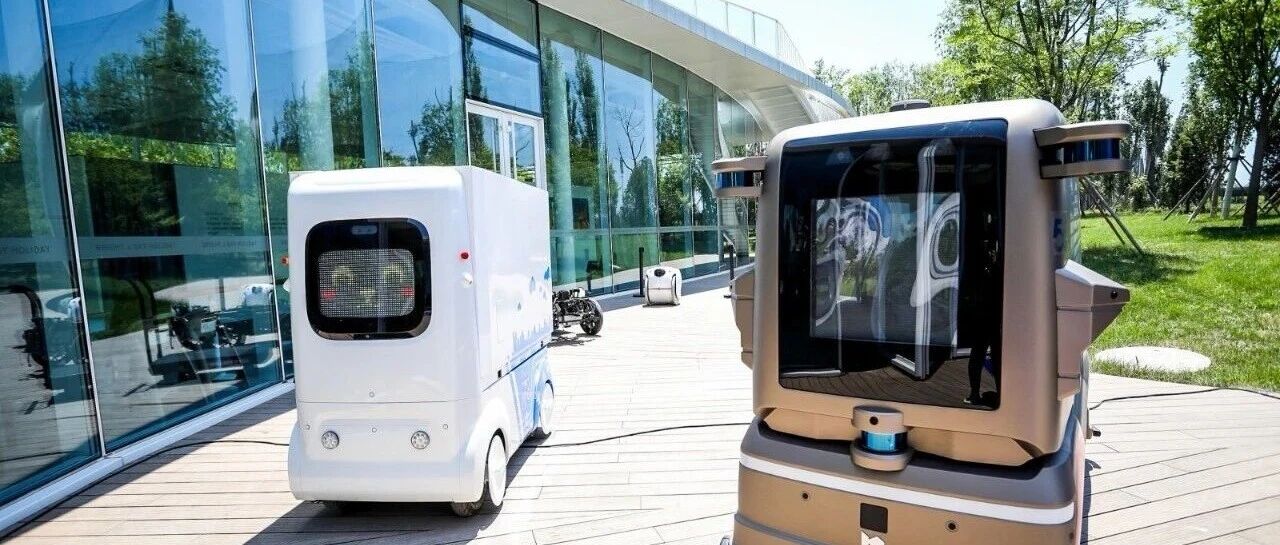
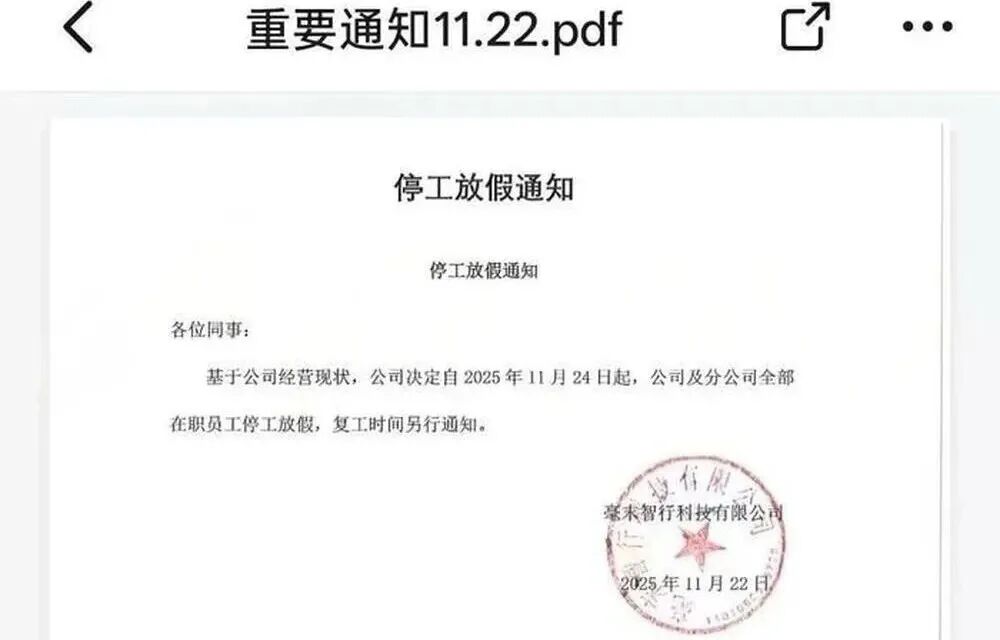
Core Viewpoint - The sudden suspension of operations at Haomo Zhixing has left its employees in uncertainty, with the company failing to pay salaries and provide a clear plan for resuming work, raising concerns about its financial stability and future prospects [3][4][6]. Company Overview - Haomo Zhixing, founded in November 2019, is a smart driving startup backed by prominent investors including Great Wall Motors and Hillhouse Capital, having raised over 1.6 billion RMB across seven funding rounds [4][6]. - At its peak, the company was valued at 7.8 billion RMB and was listed as a unicorn in the 2024 Hurun Global Unicorn List [4]. Operational Challenges - The company announced a complete work stoppage starting November 24, with no prior warning to employees, leading to confusion about the status of the company [3][4]. - Employees have not received their October salaries, and there is no severance plan in place, contributing to a sense of anxiety among the workforce [3][4]. Financial Situation - Haomo Zhixing has been facing financial difficulties, with reports indicating it has been in a cash-strapped situation for some time [6]. - The company has incurred significant investment losses, with a reported 396 million RMB in cumulative investment losses as of June 2025 [6]. - It has also delayed payments to suppliers, including a 113,500 RMB debt to Great Wall Motors [6]. Employee Dynamics - The workforce has shrunk from over 1,000 employees at its peak to only 243 currently enrolled in social insurance [6]. - The company has shown little recruitment activity in 2025, with only five job postings since June [5][6]. Strategic Shifts - Haomo Zhixing's primary focus has been on urban navigation assistance driving products, which are technically challenging and face stiff competition in the smart driving sector [9][11]. - The company has lost significant business from its main partner, Great Wall Motors, which has shifted to other suppliers for smart driving solutions [12][14]. Market Position - Despite early efforts in the unmanned logistics vehicle sector, Haomo Zhixing has struggled to establish a strong market presence and has not capitalized on opportunities in the rapidly growing sector [23][26]. - The company has not effectively differentiated itself in the competitive landscape of smart driving technology, leading to concerns about its long-term viability [23][26].

奇瑞智驾自研:大卓智能的沉浮往事
雷峰网· 2025-11-26 06:29
Group 1 - The core narrative of the article revolves around the evolution of Chery's autonomous driving strategy, highlighting the rise and fall of Dazhuo Intelligent, which was initially seen as a key player in Chery's self-research ambitions [4][6] - Chery's approach to autonomous driving has shifted from "fully controllable" to "fully self-researched," with Dazhuo Intelligent representing a significant milestone in this transition [5][10] - The partnership with Bosch and WeRide has positioned Chery as a leading player in the domestic autonomous driving sector, despite the absence of Dazhuo Intelligent [5][6] Group 2 - Dazhuo Intelligent was founded with the aim of developing autonomous driving technologies, but faced challenges in establishing a viable business model and securing necessary resources [8][14] - The initial strategy of Dazhuo Intelligent included targeting both low-level integrated machine markets and L4 commercial vehicle markets, but the vast scope led to difficulties in execution [11][12] - Internal conflicts arose regarding the financial responsibilities and operational independence of Dazhuo Intelligent, leading to tensions with Chery's commercial vehicle division [16][28] Group 3 - The leadership of Dazhuo Intelligent underwent changes, with the appointment of CTO Cao Guangzhi, who brought significant technical expertise from Tesla, signaling a renewed focus on self-research [19][21] - Despite initial successes, Dazhuo Intelligent struggled with internal processes and budget constraints imposed by Chery, which hindered its ability to recruit talent and accelerate development [25][27] - The integration of Dazhuo Intelligent into Chery's broader strategy culminated in its eventual dissolution, as Chery sought to streamline its autonomous driving efforts and collaborate more closely with external suppliers [41][43] Group 4 - Chery's decision to merge Dazhuo Intelligent with its other technology divisions reflects a strategic pivot towards leveraging external partnerships while maintaining a focus on core competencies [41][44] - The launch of the "Falcon" autonomous driving system marks a new chapter for Chery, emphasizing collaboration with established suppliers like Horizon and Momenta, thereby enhancing its competitive positioning in the market [35][44] - The article concludes with a recognition of Chery's ability to adapt and evolve its autonomous driving narrative, moving from a self-research focus to a more integrated approach with external partners [44]

“倒”在6周年纪念日前!毫末智行停工放假 员工合同到期不续约 二线智驾供应商将迎“生死局”?
Mei Ri Jing Ji Xin Wen· 2025-11-26 05:00
Core Insights - The company, Haomo Zhixing, has announced a sudden suspension of operations, effective from November 24, 2025, leaving employees uncertain about their salaries and social security contributions [1][2] - The workforce has significantly decreased from over 500 employees in September 2021 to fewer than 300 currently, indicating a substantial reduction in staff [1][2] - The company has faced financial difficulties, including reports of account freezes and unpaid salaries, raising concerns about its operational viability [2][3] Company Developments - Haomo Zhixing was founded in 2019 and has undergone seven rounds of financing, achieving a valuation exceeding $1 billion, with significant investments from major firms like Great Wall Motors and Meituan [3] - The company has been struggling to maintain its market position, especially after losing orders and investment confidence, particularly following a $100 million investment by Great Wall Motors in a competitor [3][4] - The company has attempted to recruit for new positions, indicating a desire to innovate and catch up with competitors, but has faced challenges in executing its plans [4] Industry Context - The autonomous driving industry is experiencing a significant shift from rule-driven to intelligence-driven models, creating a competitive landscape where only the most innovative companies may survive [5][6] - Secondary suppliers in the autonomous driving sector are facing unprecedented challenges, with several companies like Hedo Technology and Light Boat Intelligent facing bankruptcy or layoffs [5][6] - The market is expected to consolidate, with predictions that by 2026, only a few key players will dominate the urban autonomous driving landscape, emphasizing the need for companies to innovate and reduce costs [6]
【财经分析】从“大而全”到“新而强” 央企专业化整合或将开启“第二幕”
Zhong Guo Jin Rong Xin Xi Wang· 2025-11-26 03:52
Core Viewpoint - The recent signing of 8 key projects by 17 state-owned enterprises (SOEs) at the Central Enterprises Professional Integration Promotion Conference indicates a shift towards specialized integration in critical sectors such as new materials, artificial intelligence, and aviation logistics, aiming for a "specialized and strong" approach in state-owned enterprise restructuring [1][4]. Group 1: Specialized Integration Trends - Specialized restructuring has become an important method for improving the efficiency of state-owned capital allocation and operation [2][5]. - During the 14th Five-Year Plan period, SOEs have restructured 6 groups of 10 enterprises, establishing new entities like China Star Network and China Electrical Equipment Group [2][5]. - The focus of integration is shifting from large-scale mergers to more efficient and targeted asset restructuring, including asset swaps and strategic alliances [2][4]. Group 2: Focus on Emerging Industries - The integration projects are increasingly directed towards high-tech and high-potential sectors, reflecting a strategic shift in resource allocation [4][6]. - The establishment of China Salt Lake, formed by three companies, aims to ensure resource energy security with a registered capital of 10 billion yuan [2]. - The integration efforts are now targeting emerging industries rather than merely addressing traditional sectors or overcapacity issues [7][8]. Group 3: Future Directions - The upcoming 15th Five-Year Plan will emphasize enhancing the resilience and competitiveness of industrial chains through vertical resource integration [6][8]. - The focus on new industries is seen as a necessary response to structural challenges and aims to streamline operations while addressing issues like redundant construction [8]. - The integration strategy is expected to foster innovation and improve the overall functionality of state-owned enterprises [5][8].

智能驾驶独角兽毫末智行宣布停工
Cai Jing Wang· 2025-11-26 01:56
Core Viewpoint - The smart driving unicorn company, Haomo Zhixing, has announced a complete work stoppage for all employees starting November 24, 2025, due to its current operational status [1] Company Overview - Haomo Zhixing was founded in 2019 and was incubated by Great Wall Motors, initially becoming a market star [1] - The company raised nearly 1 billion yuan (approximately 0.14 billion USD) from investors such as Meituan and Hillhouse Capital in 2021, achieving unicorn status within three years [1] - As of now, Haomo Zhixing has completed five rounds of financing, with a total funding amount exceeding 2 billion yuan (approximately 0.28 billion USD) [1] - The actual controller of Haomo Zhixing is Wei Jianjun, the chairman of Great Wall Motors, who holds about 37% of the shares [1] - Great Wall Motors has nearly 20 vehicle models equipped with Haomo Zhixing's intelligent driving system [1] Market Position and Challenges - In July 2023, there were rumors about Haomo Zhixing's impending IPO in Hong Kong, but there has been no progress on this front since then [1] - A source close to Haomo Zhixing indicated that the core reason for the company's downfall is its choice of technology route, opting for a "high-precision map" solution, while competitors like Tesla have favored a "map-free" approach [1]