猪肉

Search documents
“反内卷”再发力,哪些行业ETF将受益
Sou Hu Cai Jing· 2025-10-15 00:33
Core Insights - The recent "anti-involution" policies in China aim to combat unhealthy competition and promote high-quality economic development through a series of measures targeting ten key industries [1][3][4] Group 1: Policy Initiatives - The Ministry of Industry and Information Technology has released new growth plans for ten major industries, which collectively account for approximately 70% of the industrial economy [1] - These plans set clear quantitative growth targets, such as an annual average growth of 5% in the petrochemical and non-ferrous metal industries from 2025 to 2026 [1] - The National Development and Reform Commission and the State Administration for Market Regulation have issued guidelines to address chaotic pricing competition while maintaining fair market conditions [1][3] Group 2: Economic Indicators - In August, profits of industrial enterprises showed a significant turnaround, increasing by 20.4% year-on-year, marking the highest growth rate since December 2023 [3] - The Producer Price Index (PPI) remained stable month-on-month in August, ending an eight-month decline, with a narrowing year-on-year decrease of 0.7 percentage points [3] - Profit growth was particularly noted in upstream industries such as coal, steel, and non-ferrous metallurgy, indicating a positive initial response to the "anti-involution" policies [3] Group 3: Investment Opportunities - Investors are encouraged to consider ETFs that align with the "anti-involution" policies, which span both traditional and emerging industries [4][5] - Specific sectors highlighted for investment include non-ferrous metals, petrochemicals, steel, cement, lithium batteries, and photovoltaic industries, each with supportive policy measures and improving fundamentals [5] - The ongoing "anti-involution" policies are expected to enhance gross margins and capacity utilization, thereby improving the long-term investment value of related sectors [5]


加拿大地方政府要求:取消对中国电车100%关税
Sou Hu Cai Jing· 2025-10-13 06:43
Core Points - The Premier of Manitoba, Kelvin Goertzen, has requested the Canadian federal government to eliminate the 100% tariff on electric vehicles imported from China, citing significant negative impacts on bilateral trade and the western regions of Canada [1][3]. - The trade tensions have led to a substantial decline in Canadian canola prices and have severely affected the pork production industry, with Saskatchewan's canola exports to China dropping by 76% year-on-year in August [3][5]. - The Chinese Ambassador to Canada, Wang Di, indicated that China would reciprocate by removing tariffs on Canadian products if Canada cancels the tariffs on Chinese electric vehicles, suggesting a potential path to ease trade relations [5][7]. Industry Impact - The imposition of a 100% additional tax on all electric vehicles imported from China since October 1 of the previous year has strained bilateral trade relations, affecting multiple provinces and severely damaging agricultural exports [5]. - There is a growing internal demand within Canada to lift the tariffs in order to alleviate the challenges faced by various industries, particularly in agriculture [7].

事关中国,加拿大地方政府要求取消
中国能源报· 2025-10-13 06:43
Core Viewpoint - The Manitoba Premier is urging the Canadian federal government to eliminate the 100% tariff on Chinese electric vehicles, citing significant negative impacts on bilateral trade and local industries [1]. Group 1: Tariff Impact - The imposition of tariffs on Chinese electric vehicles has led to a trade war, particularly affecting the western regions of Canada [1]. - China's retaliatory measures have caused a substantial drop in canola prices in Canada, severely impacting the pork production industry [1]. Group 2: Political Stance - The Manitoba Premier emphasizes that Canada-China relations are at a critical juncture and urges the government to seize the opportunity for better trade relations [1]. - The Saskatchewan Premier has also expressed a desire to remove tariffs on Chinese electric vehicles, highlighting a broader regional concern [1]. Group 3: Export Data - In August, canola exports from Saskatchewan to China decreased by 76% year-on-year, indicating the severe impact of the tariffs on trade [1].

牧原股份下周拟分红50亿元 9月份猪肉售均价同比下滑三成
2 1 Shi Ji Jing Ji Bao Dao· 2025-10-10 15:13
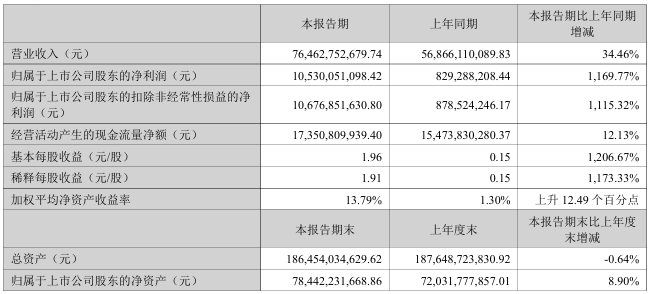
Core Viewpoint - Muyuansheng Co., Ltd. announced a cash dividend plan and reported significant changes in sales and financial performance for 2025, reflecting both challenges in the market and strong growth in certain areas [1][2]. Financial Performance - For the first half of 2025, Muyuansheng achieved operating revenue of 764.63 billion yuan, a year-on-year increase of 34.46% [2][3]. - The net profit attributable to shareholders reached 105.30 billion yuan, a staggering increase of 1169.77% compared to the same period last year [2][3]. - The basic earnings per share rose to 1.96 yuan, up 1206.67% year-on-year [3]. - The weighted average return on equity increased to 13.79%, up 12.49 percentage points from the previous year [3]. Sales and Market Dynamics - In September 2025, Muyuansheng sold 5.573 million pigs, a year-on-year increase of 11.05%, but a month-on-month decrease of 20.4% [1]. - The average selling price of pigs was 12.88 yuan per kilogram, down 30.94% year-on-year and 4.7% month-on-month [1]. - The total sales revenue from pigs was 9.066 billion yuan, a decrease of 22.46% year-on-year [1]. Industry Comparison - In the first nine months of 2025, competitors such as Wens Foodstuffs Group and New Hope reported average selling prices of 13.18 yuan and 12.89 yuan per kilogram, respectively, both showing significant year-on-year declines [1]. - The price declines across the industry are attributed to changes in the domestic pig market [1]. Dividend Announcement - Muyuansheng announced a cash dividend of 9.275214 yuan per 10 shares, totaling 5.002 billion yuan, with the record date set for October 15, 2025 [1]. Market Position - As of October 10, 2025, Muyuansheng's stock price was 53.22 yuan per share, with a total market capitalization of 290.7 billion yuan and a price-to-earnings ratio of 10.47, the lowest in the pork industry [5][6].

市场全天震荡调整,关注A500ETF易方达(159361)、沪深300ETF易方达(510310)等产品配置机会
Mei Ri Jing Ji Xin Wen· 2025-10-10 13:50
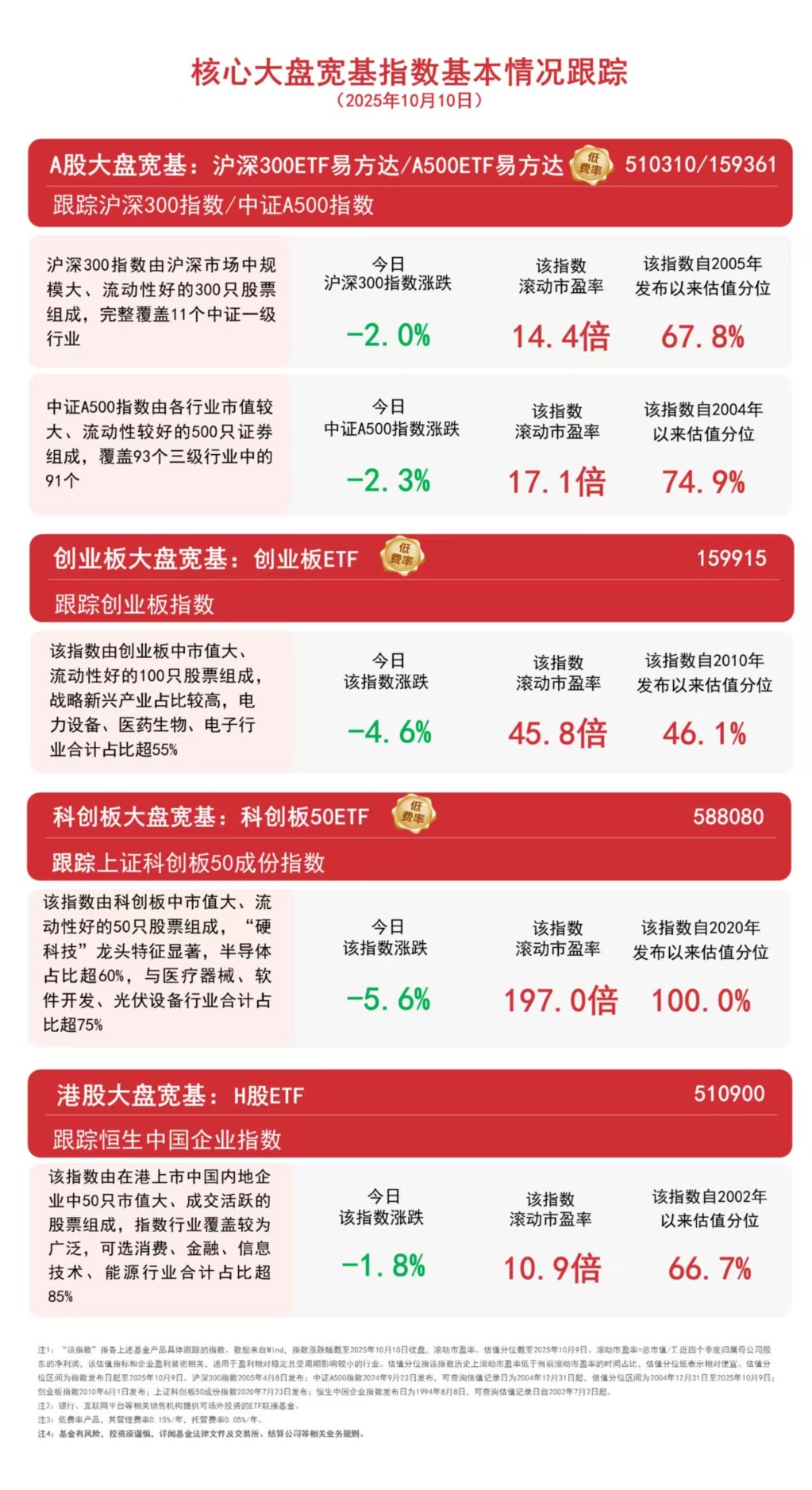
Market Overview - The market experienced fluctuations throughout the day, with high-position stocks collectively weakening. The semiconductor, battery, precious metals, computing hardware, and photovoltaic equipment sectors saw the largest declines, while gas, textile manufacturing, coal, port shipping, pork, cement and building materials, and electric grid equipment sectors recorded gains [1]. Index Performance - The CSI 300 Index fell by 2.0%, closing at a rolling price-to-earnings (P/E) ratio of 14.4 times, with a valuation percentile of 67.8% since its inception in 2005 [2]. - The CSI A500 Index decreased by 2.3%, with a rolling P/E ratio of 17.1 times and a valuation percentile of 74.9% since its inception in 2004 [2]. - The ChiNext Index dropped by 4.6%, with a rolling P/E ratio of 45.8 times and a valuation percentile of 46.1% since its inception in 2010 [2]. - The STAR Market 50 Index declined by 5.6%, with a rolling P/E ratio of 197.0 times and a valuation percentile of 100.0% since its inception in 2020 [2]. - The Hang Seng China Enterprises Index fell by 1.8%, with a rolling P/E ratio of 10.9 times and a valuation percentile of 66.7% since its inception in 2002 [4].
被中国打痛了?两大王牌产品“大出血”,西班牙首相计划下周访华
Sou Hu Cai Jing· 2025-10-08 07:24
Core Points - Spain's initial strong support for EU tariffs on China has shifted towards seeking cooperation, particularly in the electric vehicle sector, due to economic repercussions from China's countermeasures [1][10] - The Spanish Prime Minister's upcoming visit to China aims to discuss bilateral trade and strengthen economic ties amidst EU-China trade tensions [3][9] - Spain's proactive approach to attract Chinese electric vehicle manufacturers reflects a broader trend among EU countries to engage with China despite initial opposition [6][8] Group 1: Spain's Changing Stance - Spain's government has softened its hardline stance on tariffs against China, now focusing on collaboration in the electric vehicle industry [1][10] - The visit of the Andalusian regional government leader to China highlights Spain's efforts to promote local investment from Chinese car manufacturers [8] - Spain's shift indicates a recognition of the negative effects of trade protectionism and the growing importance of China in global trade [10] Group 2: Economic Implications - The EU's anti-subsidy investigation into Chinese electric vehicles has led to significant tensions, prompting Spain to reconsider its position due to potential impacts on its own exports [5][9] - Spain's agricultural sectors, particularly pork and brandy, are at risk due to China's retaliatory measures, emphasizing the importance of maintaining access to the Chinese market [9][10] - The potential loss of the Chinese market could severely impact Spain's economy, as other countries are also vying for market share [10] Group 3: Future Cooperation - The evolving relationship between Spain and China may lead to expanded cooperation in various sectors, including electric vehicles, agriculture, and technology [12] - Spain's government aims to resolve trade disputes through dialogue, indicating a desire for a more collaborative approach moving forward [9][12]

三大股指集体上涨,人工智能相关ETF全线走高,5G通信ETF(515050)上涨2.34%
Mei Ri Jing Ji Xin Wen· 2025-09-29 08:33
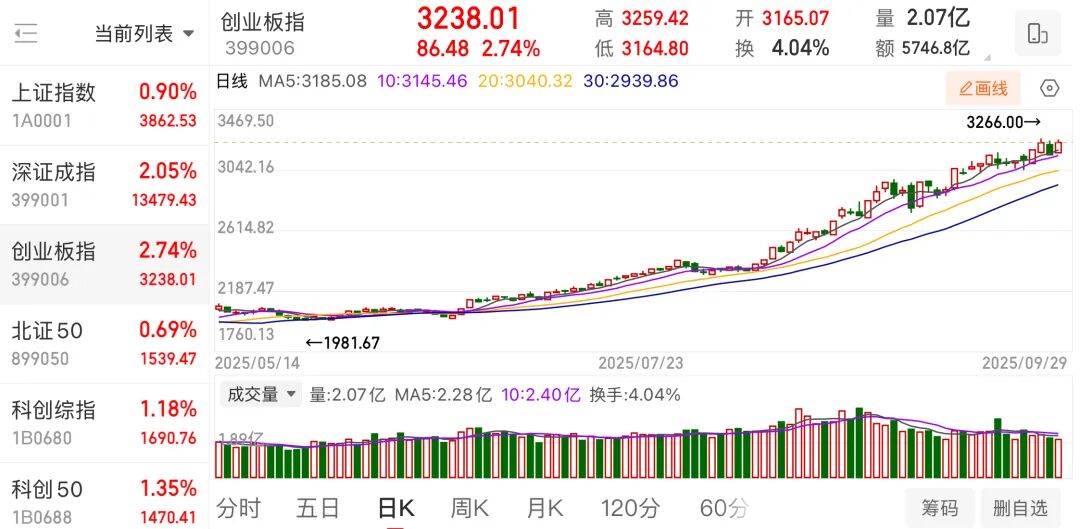
Market Performance - The three major indices collectively rose on September 29, with the Shanghai Composite Index up by 0.9%, the Shenzhen Component Index up by 2.05%, and the ChiNext Index up by 2.74% [1] - The total trading volume in the Shanghai and Shenzhen markets reached 21,781 billion yuan, an increase of 120 billion yuan compared to the previous day [1] - Over 3,500 stocks in the market experienced gains, with sectors such as securities, batteries, non-ferrous metals, and steel leading the gains, while education, pork, coal, and chemical pharmaceuticals saw declines [1] ETF Performance - Major broad-based ETFs saw significant afternoon gains, with the A500 ETF (512050) rising by 1.39% [1] - AI-related ETFs performed well, with the Chip ETF (159995) and AI ETF (515070) both increasing by 1.14% [1] - The 5G Communication ETF (515050) rose by 2.34%, and the ChiNext AI ETF (159381) increased by 1.33%, indicating strong performance in the AI computing hardware supply chain [1] Sector Focus - Recent domestic policies and structural industry trends have garnered attention, with market funds gradually shifting from the computing power sector to other low-valuation growth sectors [1] - The market is expected to maintain a slow bull trend in the medium term, with structural growth sectors becoming key investment opportunities [1] - Key sectors to watch include new energy, humanoid robots, innovative pharmaceuticals, and non-ferrous metals, which are expected to have concentrated catalytic events [1] Earnings Expectations - According to Industrial Securities, industries with upward revisions in profit expectations since September are primarily concentrated in technology, advanced manufacturing, cyclical, consumption, and finance [2] - The third quarter reports will serve as an important window to validate the economic cycle for strong sectors represented by technology and advanced manufacturing [2] - In the technology growth narrative, sectors such as AI, innovative pharmaceuticals, and new energy have seen trading congestion return to reasonable levels, suggesting a potential focus on growth trends [2]
创业板指涨2.74%,超3500股收涨!
Guo Ji Jin Rong Bao· 2025-09-29 08:01
Market Overview - The total trading volume in the Shanghai, Shenzhen, and Beijing markets reached 21,781 billion yuan, an increase of 12 billion yuan compared to the previous day, with over 3,500 stocks rising [1] - On September 29, all three major A-share indices rose, with the Shanghai Composite Index up by 0.9%, the Shenzhen Component Index up by 2.05%, and the ChiNext Index up by 2.74% [2] Sector Performance - The securities, battery, non-ferrous metals, and steel sectors saw significant gains, while the education, pork, coal, and chemical pharmaceuticals sectors experienced declines [1] - Specific stocks such as Huatai Securities, Guosheng Financial Holdings, and GF Securities hit the daily limit, indicating strong performance in the securities sector [7] - The gold and non-ferrous metals sectors also performed well, with stocks like Wolong New Energy and Xingye Silver Tin reaching their daily limit [7] - Solid-state battery and energy storage sectors showed explosive growth, with over ten stocks including Wanrun New Energy and Fengshan Group hitting the daily limit [7] Notable Stock Movements - Stocks in the education sector, such as Kevin Education and China High-Tech, faced significant declines, with some hitting the daily limit down [7] - Pork and food stocks also lagged, with companies like Jingji Zhino and Aonong Biological experiencing notable drops [7]




大金融板块,大爆发
财联社· 2025-09-29 07:14
Market Overview - The A-share market showed strong performance today, with all three major indices rising collectively. The Shanghai Composite Index increased by 0.90%, the Shenzhen Component Index rose by 2.05%, and the ChiNext Index gained 2.74% [3][4]. - The total trading volume in the Shanghai and Shenzhen markets reached 2.16 trillion yuan, an increase of 146 billion yuan compared to the previous trading day [1][7]. Sector Performance - The financial sector experienced significant gains, with major stocks like Guosheng Financial Holdings hitting the daily limit and achieving new highs. Both GF Securities and Huatai Securities also reached their daily limit [1]. - The new energy sector showed strength, particularly in green methanol stocks, with Donghua Technology achieving two consecutive limit-ups and Fuan Energy hitting the daily limit for the first time [1]. - The metals sector saw an overall increase, with Xingye Silver Tin hitting the daily limit [1]. - The semiconductor industry chain rebounded in the afternoon, with Changchuan Technology continuing to set historical highs [1]. - Conversely, the education sector struggled, with stocks like Kevin Education and China High-Tech hitting their daily limit down [1][2]. Market Statistics - A total of 3,576 stocks rose, while 1,658 stocks fell, with 201 stocks remaining unchanged. There were 66 stocks hitting the daily limit up and 15 stocks hitting the daily limit down [6]. - The market's heat index was recorded at 60, with a limit-up rate of 71% and a high opening rate of 57% [7].


终于知道疼了,加拿大外长将访华,望中国“高抬贵手”,取消加税
Sou Hu Cai Jing· 2025-09-26 05:06
Group 1 - The article discusses Canada's recent trade challenges with China, highlighting the consequences of blindly following the policies of larger nations [2][3] - In October 2024, Canada imposed three additional tariffs on Chinese imports, including a 100% punitive tariff on electric vehicles and a 25% additional tax on steel and aluminum products [4][6] - The Canadian government claims these measures are to protect domestic industries, but they are seen as aligning with the U.S. Indo-Pacific strategy aimed at curbing China's development [8] Group 2 - In March 2025, China retaliated with significant tariffs on Canadian products, including a 100% tariff on canola oil and a 25% tariff on seafood and pork [10][11] - Key data shows that from 1999 to 2020, 84% of China's imported canola came from Canada, with exports to China reaching $3.47 billion in 2023, a 170% increase year-on-year [15] - Following China's countermeasures, Canadian canola prices fell by 30%, and exports to China dropped by 70% in Q2 2025, leading to significant financial losses for Canadian farmers [21][23] Group 3 - The article notes that Canada has become a victim in the geopolitical game, with the U.S. maintaining high tariffs on Canadian steel and aluminum while threatening further tariffs on other products [24][26] - Canadian Foreign Minister Anita Anand's visit to China aims to negotiate tariff reductions, but China has made significant advancements in energy and manufacturing sectors, complicating negotiations [26][28] - The article concludes that Canada made three strategic errors: misjudging China's resolve, overestimating U.S. support, and underestimating its own economic dependencies [28][30]