
社交电商

Search documents
95后购买用户占比达70%,小红书线上线下同上新“市集”
Sou Hu Cai Jing· 2025-08-29 00:14
Core Insights - Xiaohongshu is experiencing a rapid increase in user numbers, particularly among younger demographics, with 70% of purchasing users being born after 1995 [1] - The introduction of the "Market" feature aims to enhance user purchasing mindset and provide a more centralized trading space for merchants [1] - The platform's monthly active users exceed 350 million, with 170 million seeking purchases each month, indicating a strong demand for quality products [6] Group 1: Market Feature - The "Market" feature serves as a primary entry point in the app, positioned near the homepage to facilitate transactions [1] - The design of the "Market" page mimics a city street, allowing users to discover products and engage with merchants in a community-like atmosphere [1] - Xiaohongshu is integrating online and offline shopping experiences, as demonstrated by the first offline market event held in Shanghai [2] Group 2: Merchant Insights - Merchants on Xiaohongshu are predominantly young, with over 50% of active sellers being first-time store owners [6] - The platform has seen a significant increase in the number of new merchants, with a year-on-year growth of 8.1 times in 2024 [6] - Successful merchants, such as "Zhan Chun" and "Yang Yang Country Life," report high repurchase rates of 10% and 30% respectively, indicating strong customer loyalty [4] Group 3: User Engagement - Xiaohongshu's community engagement is robust, with over 60 billion views on the "Good Product Sharing" topic and nearly 10 billion views on "My Store Opening Daily" [6] - The platform encourages interaction between consumers and merchants, fostering a vibrant marketplace where quality products are frequently discussed [6] - The "Million Commission Waiver Plan" was introduced to attract new merchants by eliminating commission fees on the first 1 million in transaction volume [7]


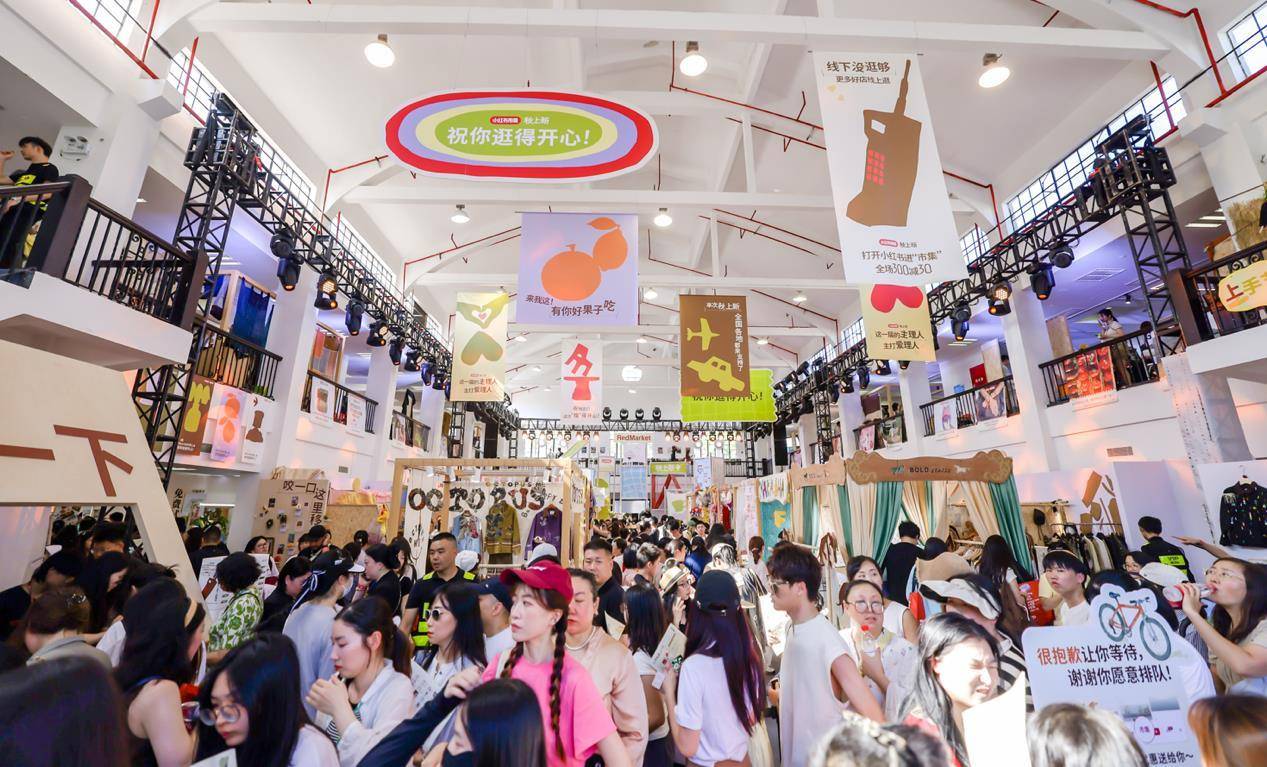
打造沉浸式消费与生活方式体验 小红书首个线下“市集”开张
Shang Hai Zheng Quan Bao· 2025-08-28 14:09
Core Insights - The article highlights the launch of Xiaohongshu's first offline market in Shanghai, which runs from August 28 to August 31, featuring over 100 merchants showcasing selected products, creating a unique market experience that combines online and offline elements [1][3]. Group 1: Market Overview - Xiaohongshu's offline market aims to provide consumers with the opportunity to see and touch products in person, enhancing the shopping experience [3]. - The platform currently boasts over 350 million monthly active users, with 170 million users seeking purchases each month, and 80 million comments related to "seeking links" [3]. - Among the purchasing users, 70% are from the post-95 generation, indicating a strong engagement from younger consumers [3]. Group 2: Product Offerings - The market features diverse experience areas, including outdoor lifestyle products, original clothing, local delicacies, and unique designs, catering to various daily needs [3]. - Specific vendors include a couple from Sichuan selling fresh fruits like Sunshine Rose grapes and Blue Sapphire pomegranates, ensuring freshness by airlifting products daily [4]. - Another vendor from Yunnan specializes in wild mushrooms, offering products like mushroom sashimi and mushroom soup, highlighting the growing trend of mushroom consumption [4]. Group 3: Consumer Experience - The market attracted significant foot traffic even on a weekday afternoon, with consumers drawn by the variety of products and discounts available [6]. - A university student noted the appealing photo opportunities and the wide range of products, emphasizing that the market experience transcends mere transactions to encompass a lifestyle experience [6].

赤子城科技上半年归母净利润同比增长117.8% “社交+创新”两大业务齐发力
Zheng Quan Ri Bao Wang· 2025-08-28 12:45
Core Insights - The company reported a significant increase in revenue and profit for the first half of 2025, driven by the growth of its social and innovative businesses, as well as the deepening application of AI technology [1][2][3] Financial Performance - The company achieved a customer contract revenue of 3.181 billion yuan, a year-on-year increase of 40.0% [1] - Gross profit reached 1.775 billion yuan, up 55.6% year-on-year [1] - Net profit attributable to shareholders was 489 million yuan, a substantial increase of 117.8% year-on-year [1] Business Segments - Social business revenue was 2.834 billion yuan, reflecting a growth of 37.0% year-on-year, with standout performances from the SUGO and TopTop platforms, both exceeding 100% growth [1] - The innovative business generated 347 million yuan in revenue, marking a 70.5% increase year-on-year [2] - The company's core social products in the Middle East and North Africa saw revenue growth exceeding 60% year-on-year, indicating strong local market penetration [2] AI Integration - The company plans to deepen the application of AI in business scenarios to enhance research and development efficiency, operational precision, and user experience [3] - Key operational metrics for SUGO improved with AI support, including increased user engagement and payment rates [3] - The launch of the AI-based zero-code creative content community, Aippy, allows users to create content easily, targeting non-programmers [3] Global Strategy - The company has established a regional headquarters in Riyadh for the Middle East and North Africa and has set up its global headquarters in Hong Kong [3] - The global market strategy is evolving, with flagship products like SUGO beginning to penetrate Latin America and parts of Europe, demonstrating high market adaptability [2]
小红书线上线下同上新“市集”,95后购买用户占比70%
Xin Lang Ke Ji· 2025-08-28 11:41
Group 1 - The core viewpoint of the articles highlights the rapid growth of young users on Xiaohongshu, with 70% of purchasing users being born after 1995 [1] - Xiaohongshu has introduced a new "Market" feature as a primary entry point to enhance user purchasing mindset and provide a more centralized trading space for merchants [1] - The "Market" page is designed to resemble a city street, allowing users to discover quality products and engage with merchants, mimicking the experience of visiting a physical market [1] Group 2 - Over 50% of merchants on Xiaohongshu are first-time store owners, with 50% of new individual sellers also being born after 1995 [2] - The hashtag GoodProductSharing has over 6 billion views, while MyStoreOpeningDaily has nearly 1 billion views, indicating strong engagement in the community [2] - Xiaohongshu's new merchant entry plan, the "Million Commission Waiver Plan," allows merchants to waive commissions on the first 1 million yuan of payment transactions, only retaining a 0.6% payment channel cost [2]
小红书电商连放「三招」
雷峰网· 2025-08-26 13:49
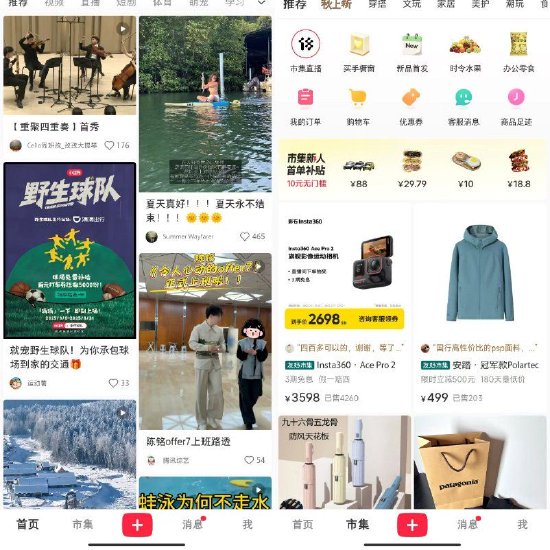
Core Viewpoint - Xiaohongshu is enhancing its e-commerce capabilities by introducing the "Market" feature in its app, aiming to create a more integrated shopping experience for users and reduce purchase loss to other platforms [2][4][18]. Group 1: Introduction of the "Market" Feature - Xiaohongshu has quietly replaced the "Hot" tab with the "Market" tab in its app, indicating a significant shift towards e-commerce [2][3]. - The "Market" page includes various content channels such as live streaming, buyer showcases, and new product launches, designed to provide a community-like shopping experience [3][4]. - The new feature will be fully rolled out to all users by September, marking a strategic update to Xiaohongshu's e-commerce product framework [3][6]. Group 2: Importance of the "Market" as a Primary Entry Point - The "Market" is positioned as a primary entry point in the app, highlighting its importance in Xiaohongshu's strategy to enhance e-commerce [6][8]. - This change addresses previous concerns about users shifting to other platforms for purchases after discovering products on Xiaohongshu [6][8]. - The "Market" aims to create a stable and intuitive shopping environment, allowing users to easily find products they previously purchased [8][9]. Group 3: Integration of Content and Commerce - The "Market" interface maintains a community-like experience by presenting product notes and live streams in a dual-column format, similar to the community feed [9][10]. - This design allows for dual distribution of content, ensuring that product-related content remains visible both in the community and the "Market" [9][10]. - Xiaohongshu is focusing on creating a seamless integration of content and commerce, enhancing user engagement and shopping experience [9][11]. Group 4: Recent Developments in Xiaohongshu's E-commerce Strategy - Xiaohongshu has unified its transaction and commercialization departments into a "Big Commercial Sector," aiming for deeper integration between e-commerce and advertising [12][13]. - The introduction of the "Million Commission Waiver Plan" allows merchants to waive commissions on the first 1 million in transaction volume, significantly reducing operational costs [14][16]. - This plan is designed to attract more merchants to the platform, enhancing the diversity of products and services available [16][18]. Group 5: Conclusion and Future Outlook - Xiaohongshu's recent initiatives, including the launch of the "Market," the establishment of the "Big Commercial Sector," and the "Million Commission Waiver Plan," reflect its ambition to strengthen its position in the e-commerce sector [18]. - The platform aims to leverage its unique content and aesthetic appeal to create a differentiated shopping experience, addressing the needs of both users and merchants [18].

小红书电商业务“市集”将成为一级入口
Bei Jing Shang Bao· 2025-08-26 09:20
Core Viewpoint - Xiaohongshu has initiated a new version test that integrates e-commerce as a primary entry point in the app, indicating an increased investment in its e-commerce business [1] Group 1: New Features - The new version of the Xiaohongshu app will feature a "Market" entry in the bottom navigation bar, positioned near the "Home" main page [1] - The "Market" page will include channels such as live streaming, buyer showcases, and new product launches, enhancing user engagement [1] Group 2: Content and Community Focus - Unlike traditional e-commerce platforms that primarily display product pages, Xiaohongshu's "Market" page will feature a dual-column flow that includes product notes and live sales, fostering a sense of content and community [1] - Product notes will include links to the products, integrating user-generated content with shopping [1]
小红书上线“市集” :电商成为一级入口,已开始测试
Xin Lang Ke Ji· 2025-08-26 03:37
Core Viewpoint - Xiaohongshu App is undergoing an update to integrate e-commerce into its main interface, enhancing the shopping experience for users through a new "Marketplace" page [1] Group 1 - The new version of the app features a "Marketplace" page in the bottom navigation bar, designed to provide a shopping experience that combines browsing and purchasing [1] - The "Marketplace" page is currently in testing and represents a tangible manifestation of Xiaohongshu's lifestyle e-commerce strategy [1] - The update aims to create a concentrated shopping environment for users who have already developed a purchasing mindset, while also offering merchants new operational opportunities [1]
小红书成立“大商业板块”,或蓄力冲刺IPO
3 6 Ke· 2025-08-22 09:35
Core Viewpoint - Xiaohongshu's establishment of the "Big Business Sector" aims to address challenges in monetization and prepare for a potential IPO, indicating a more aggressive approach to commercialization [3][11]. Group 1: Organizational Changes - The "Big Business Sector" will be led by COO Conan and CMO Zhiheng, focusing on deepening collaboration between commercialization and transaction efforts [1][3]. - The restructuring maintains the existing departmental hierarchy, emphasizing resource integration rather than organizational downsizing [4][8]. - Conan, with extensive experience in community operations and e-commerce, will oversee the integration of e-commerce and live streaming, while Zhiheng has a strong background in brand strategy and has led Xiaohongshu to its first annual profit [6][8]. Group 2: Commercialization Strategy - The primary goal of the "Big Business Sector" is to enhance monetization efficiency by integrating the commercial and transaction departments [9][10]. - Xiaohongshu's advertising revenue is projected to reach 21.6 billion yuan in 2024, accounting for 72% of total revenue, while the e-commerce GMV is expected to exceed 400 billion yuan [9][10]. - The integration aims to create a closed loop of "grass planting - advertising - transaction," enhancing the service chain for merchants and promoting in-platform transactions [10]. Group 3: Market Position and Challenges - Xiaohongshu's e-commerce strategy is characterized by a focus on small and medium-sized independent merchants, differentiating it from platforms that primarily serve large brands [10]. - Despite significant growth in e-commerce, Xiaohongshu still faces challenges in effective conversion mechanisms and relies heavily on external platforms for traffic [8][9]. - The company has seen substantial growth in specific categories, with fashion and home goods experiencing year-on-year increases of 380% and 300%, respectively [8]. Group 4: Future Outlook - The valuation of Xiaohongshu is expected to rise to 26 billion USD by 2025, with some investors suggesting it could reach 30 billion USD or even 35 billion USD [11][12]. - While accelerating commercialization may improve financial metrics, there are concerns about maintaining the community-oriented atmosphere that has defined Xiaohongshu [12][14]. - The challenge lies in balancing the push for e-commerce with the platform's community engagement, as aggressive commercialization could disrupt the user experience [12][14].

推客风云录:从商标到千万生态,谁点燃了2025推客这把火
Sou Hu Cai Jing· 2025-08-20 03:20
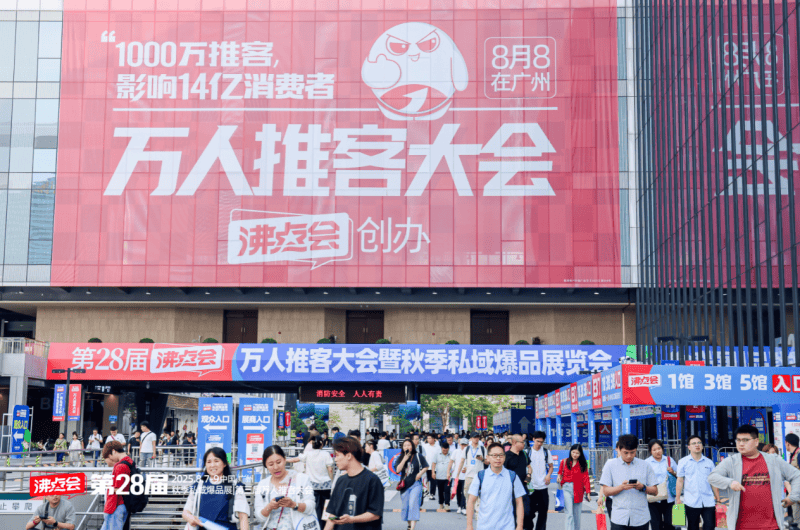
Core Insights - The term "推客" (Tuike) emerged as a phenomenon in the social e-commerce sector in 2025, with its origins traced back to a 16-year innovation timeline [1] Group 1: Historical Development - The concept of "推客" was officially initiated when Sina registered the "推客" trademark on August 27, 2009, becoming the first company in China to hold legal rights to the term [3] - In 2018, Suning launched the "Suning Tuike" platform, marking the practical implementation of the "self-purchase saves money, promotion earns money" model, which validated the feasibility of social distribution in e-commerce [3] Group 2: Catalysts for Growth - The true explosion of the "推客" model occurred in 2025, driven by two main engines: - WeChat's strategic upgrade, which officially mentioned the "推客" concept on January 9, 2025, and integrated it into the WeChat Mini Program ecosystem [4] - The launch of the "First Tuike Conference" by the organization "沸点会" on the same day, which aimed to promote the private domain ecosystem [4] Group 3: Ecosystem Expansion - The "推客" ecosystem experienced rapid growth due to the ongoing efforts of WeChat and 沸点会: - The March conference in Hangzhou established a milestone for the industry, confirming the mainstream status of the "推客" model [6] - The May conference in Changsha focused on the service ecosystem for "推客" Mini Programs, aiming to launch 2,000 platforms by the end of the year [6] - The August conference in Guangzhou introduced content creators, transitioning "推客" into the "short video live distribution era" [6] Group 4: Key Takeaways - The rise of "推客" is attributed to a synergistic effect of three forces: - Technological infrastructure (WeChat's transaction capabilities) - Platform strategy (official support from WeChat) - Industry promotion (ecosystem development by 沸点会) [6][7] - The journey from a trademark registration by Sina to a vast ecosystem of millions of "推客" illustrates that innovation at a single node cannot create a wave; only an open and collaborative ecosystem can ignite a truly viable new business model [9]

小红书组建大商业板块:柯南任总负责人 商业化进程加快
Nan Fang Du Shi Bao· 2025-08-14 16:03
Core Viewpoint - Xiaohongshu is accelerating its commercialization process by establishing a new large commercial sector, aiming to enhance the synergy between advertising and transactions while maintaining a stable organizational structure [1][2]. Group 1: Organizational Changes - Xiaohongshu has appointed Ke Nan as the head of the new large commercial sector, which will include the existing commercial and transaction departments, indicating a strategic focus on integrating e-commerce with community content [1][2]. - The restructuring reflects Xiaohongshu's ongoing efforts to balance user experience, community atmosphere, and e-commerce activities, as seen in previous adjustments like the merger of community and e-commerce departments [2][3]. Group 2: E-commerce Strategy - The company is shifting its e-commerce strategy to focus on a broader range of industries beyond consumer goods, with an emphasis on life services and optimizing advertising effectiveness [4]. - Xiaohongshu has initiated strategic partnerships with major e-commerce platforms like Taobao and JD.com, allowing users to seamlessly transition from content to purchase, thereby enhancing the overall shopping experience [5][6]. Group 3: Challenges and Future Directions - Despite the promising profitability of e-commerce, Xiaohongshu faces challenges in maintaining its unique community ecosystem while pursuing aggressive commercialization [6]. - The company aims to achieve a balance between increasing average revenue per user (ARPU) and preserving user trust and community integrity as it expands its commercial footprint [6].