能源电力

Search documents
国内外产业政策周报:黄金税收政策调整,美国与亚洲多国达成合作-20251103
CMS· 2025-11-03 11:35
Domestic Policy Highlights - The adjustment of gold tax policy involves differentiated tax management based on the purpose of gold transactions, changing the invoicing method for non-investment gold transactions from special invoices to ordinary invoices, leading to tax rate changes [4][8][10] - The new policy on fiscal incremental policies includes the completion of the issuance of 500 billion yuan in new policy financial instruments, supporting over 2,300 projects with a total investment of approximately 7 trillion yuan, resulting in a multiplier effect of about 14 times [12][13][15] - The China Securities Regulatory Commission (CSRC) is seeking opinions on the performance comparison benchmarks for public funds, emphasizing the need for stability in benchmarks and the potential impact on fund managers' performance compensation if long-term performance significantly lags behind benchmarks [19][20] - The Beijing Stock Exchange has outlined key work directions for the 14th Five-Year Plan, including the promotion of the North Exchange 50 ETF and the deepening of reforms in the New Third Board [21][23] Overseas Policy Highlights - The meeting between Chinese President Xi Jinping and U.S. President Trump resulted in agreements on tariffs, export controls, and cooperation in agricultural trade and semiconductors, indicating a potential stabilization in U.S.-China relations [29][30][31] - The U.S. has reached agreements with several Asian countries, including Malaysia, Cambodia, Thailand, Vietnam, Japan, and South Korea, focusing on the removal of trade restrictions and commitments to increase investments, with Japan pledging the largest amount of 550 billion USD primarily in the energy sector [2][36]
潍柴动力2025年前三季度业绩再创新高 多元业务协同驱动高质量发展
Zheng Quan Ri Bao Zhi Sheng· 2025-10-31 16:10
Core Insights - Weichai Power Co., Ltd. reported strong financial performance for the first three quarters of 2025, with revenue of 170.57 billion yuan, a year-on-year increase of 5.3%, and a net profit attributable to shareholders of 8.88 billion yuan, up 5.7% [1] - The third quarter alone saw revenue of 57.42 billion yuan, a 16.1% increase year-on-year, and a net profit of 3.23 billion yuan, reflecting a 29.5% growth, both marking historical highs for the period [1] - The company is focusing on strategic emerging businesses while consolidating its traditional advantages, leading to improved profitability and a diversified business model [1] Industry Overview - The heavy truck market in China showed a robust recovery in the first three quarters of 2025, with total sales of 823,000 units, a year-on-year increase of 20.5% [2] - The natural gas heavy truck segment experienced significant growth, with a 37% year-on-year increase in sales during the third quarter, driven by policies promoting vehicle replacement and the recovery of oil and gas price differentials [2] - Weichai Power's engine sales reached 536,000 units in the first three quarters, with heavy truck engines accounting for 188,000 units, including 117,000 diesel engines and 71,000 natural gas engines [2] Business Segments - The large-bore engine segment has emerged as a key growth driver, with sales exceeding 7,700 units in the first three quarters, representing over 30% growth [4] - The demand for large-bore engines is fueled by the exponential growth in global computing power and the increasing need for high-reliability power sources in data centers [4] - Weichai Power's technology advancements in large-bore engines have positioned it favorably against foreign competitors, who face longer production expansion cycles [6] New Energy and International Expansion - The new energy business has shown rapid growth, with revenue reaching 1.97 billion yuan in the first three quarters, a remarkable 84% increase [7] - The company is actively pursuing new energy technologies, including pure electric power systems and hydrogen fuel cells, to align with the dual carbon goals [7] - Weichai Power's international business remains resilient, with a strong demand for its products in markets such as Asia-Pacific, Europe, and North America, contributing to a significant portion of its revenue [8] Future Outlook - Weichai Power aims to continue its three-dimensional development strategy, focusing on consolidating traditional business while accelerating growth in emerging sectors [9] - The company anticipates sustained growth in its large-bore engine business and further optimization of its profitability structure as the natural gas heavy truck market recovers [9] - The impressive performance in the first three quarters of 2025 underscores the effectiveness of Weichai Power's strategic positioning and its growing competitiveness in the global supply chain [9]
中国能源建设(03996.HK)前三季营业收入3235.44亿元 同比增长9.62%
Ge Long Hui· 2025-10-30 13:27
Core Insights - The company reported new contract value, operating revenue, and total profit for the first three quarters of 2025 at RMB 992.775 billion, RMB 323.544 billion, and RMB 8.507 billion, respectively, with year-on-year growth of 0.40%, 9.62%, and 0.09% [1] - The company maintains a strong position in the energy and water sectors, actively participating in national strategic initiatives and major engineering projects, thereby reinforcing its industry leadership [1] - The company has engaged in significant national projects, including the Yarlung Tsangpo River downstream hydropower project and the Xinjiang Dashi Gorge water conservancy hub, maintaining a high market share in key energy sectors [1] Business Performance - The company's energy and water sectors saw operating revenue and total profit growth of 16.76% and 18.42%, respectively, accounting for over 75% of the overall business [2] - Traditional energy business demonstrated strong momentum with operating revenue and total profit increasing by 22.68% and 26.62% [2] - The renewable energy sector also showed rapid growth, with operating revenue and total profit rising by 10.62% and 3.95%, highlighting the resilience and robust structure of the main business [2]
媒体报道︱能源政策机制创新分论坛 进一步推动新型能源体系和新型电力系统建设
国家能源局· 2025-10-29 09:24
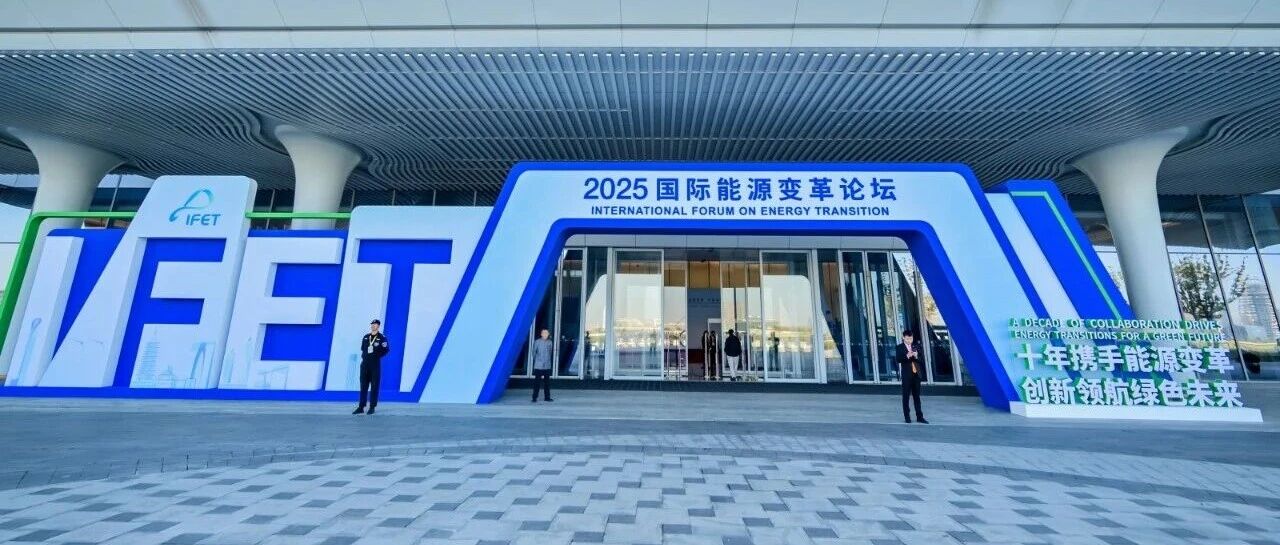
Core Viewpoint - The forum aimed to analyze energy reform innovations and explore key directions for future energy policy mechanisms, promoting the construction of a new energy system and power system [2][4]. Group 1: Forum Overview - The "2025 International Energy Transformation Forum" was held in Suzhou, Jiangsu, with participation from over 70 organizations and nearly 160 experts from various sectors [2]. - Discussions focused on policy mechanism innovations in the context of global energy transition, emphasizing the need for collaboration and international exchange [4]. Group 2: Key Discussions and Insights - Experts shared insights on energy transition topics, including the design and operational effectiveness of the Southern regional electricity market, experiences from European countries in marketization and system flexibility, and technological innovations in zero-carbon park construction [4]. - A roundtable discussion addressed the empowerment of new business models in the energy sector, with experts presenting typical cases and policy innovation suggestions [4]. Group 3: Collaborations and Agreements - The State Grid General Institute signed a memorandum with the Climate Group to focus on technical standards and certification for decarbonization in industrial parks, aiming to replicate successful experiences globally [5]. - Additionally, a memorandum was signed with the German International Cooperation Agency (GIZ) to enhance cooperation on green transformation of power systems, leveraging complementary advantages between China and Germany [5].

AI设施能源需求大 谷歌联手能源公司重启一核电站
Sou Hu Cai Jing· 2025-10-28 12:16
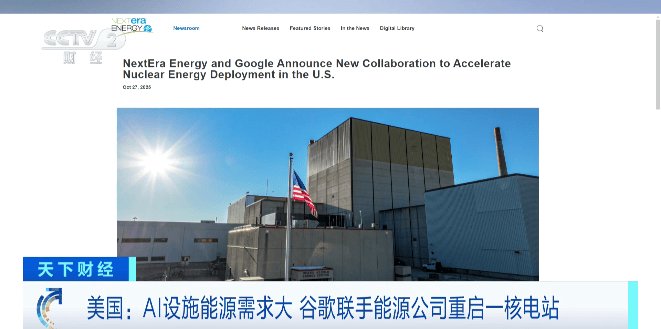
Group 1 - Google and NextEra Energy have announced a partnership to restart a nuclear power plant in Iowa, which has been inactive for several years, to support Google's AI data centers with electricity [1][3] - The Duane Arnold Energy Center, with a capacity of 615 megawatts, is expected to resume operations in the first quarter of 2029 and will be the only nuclear facility in Iowa [3][5] - Google will enter into a 25-year agreement to purchase power from the plant, which is fully owned by NextEra Energy, creating over 1,600 jobs and generating more than $9 billion in economic benefits for Iowa [5][7] Group 2 - Nuclear power is considered more efficient, cleaner, and stable compared to traditional energy sources, making it suitable for powering AI data centers [7] - The demand for electricity from data centers is reshaping the energy industry, with tech companies increasingly seeking partnerships with energy firms to meet their power needs [7] - The International Energy Agency has projected that electricity consumption by AI data centers will more than double by 2030, prompting tech companies like Google to explore collaborations in the energy sector [7]


中国品牌,迈出高质量发展新步伐(中国品牌 中国故事)
Ren Min Ri Bao· 2025-10-27 22:37
Core Insights - The emphasis on developing new productive forces and creating world-class enterprises is highlighted by General Secretary Xi Jinping, indicating a strong push for innovation and brand recognition in Chinese companies [1] Innovation-Driven Brand Strength - Innovation is identified as the primary driving force for many Chinese companies, focusing on technological advancements and establishing brand benchmarks [2] Research and Development - The "Energy Storage No. 1" project has achieved global records in power capacity, storage scale, and conversion efficiency, showcasing China's capability in key technology breakthroughs [3] - Great Wall Motors has developed an independent testing laboratory that combines active and passive safety testing, breaking international monopolies in key equipment [3] Collaborative Efforts in Major Equipment - China National Nuclear Corporation has exported nuclear power units to eight countries, demonstrating its strength in nuclear technology innovation [4] - Various significant projects, including the C919 aircraft and the "Dream" deep-sea drilling vessel, highlight China's growing capabilities in diverse fields [4] Digital Transformation and Intelligent Upgrades - JD Industrial has addressed long-standing issues in the automotive sector by implementing a digital supply chain solution, achieving domestic substitution within 30 days [5] - Companies like Baidu and China Mobile are integrating AI with traditional industries, enhancing productivity across various sectors [5] Brand Value Enhancement - Chinese companies are increasingly focusing on product quality and brand value, with notable examples including Yili and Kangshifu, which have achieved significant technological advancements [6][7] - The rise of domestic brands is evident as companies like Gu Yu Biotechnology and Yangtze River Pharmaceutical Group expand their product offerings and market presence [7] Global Market Expansion - Haier Group has been recognized in the World Brand Lab's top 500 brands for 21 consecutive years, with a 13% increase in global profit [8] - Companies like State Power Investment Corporation and Hisense are actively participating in international markets, enhancing their global brand influence [8] Social Responsibility and Brand Development - Companies are increasingly integrating social responsibility into their brand missions, with initiatives aimed at improving community welfare and sustainable development [9][12] - The construction sector is focusing on quality and traceability in housing projects, ensuring high standards in delivery and service [13]
*ST节能:2025年前三季度计提减值准备约1496万元
Mei Ri Jing Ji Xin Wen· 2025-10-27 11:02
Core Viewpoint - *ST节能 announced a provision for credit impairment of approximately 14.96 million yuan to reflect the asset status and operating results more accurately for the first three quarters of 2025 [1] Financial Summary - The company conducted impairment testing on accounts receivable, other receivables, and notes receivable, identifying signs of impairment [1] - The credit impairment provision includes approximately 14.88 million yuan for accounts receivable, 100,000 yuan for other receivables, and a reversal of 2,190 yuan for notes receivable [1] - This provision will reduce the net profit attributable to shareholders of the listed company by approximately 7.6681 million yuan for the first nine months of 2025 [1] Revenue Composition - For the first half of 2025, the revenue composition of *ST节能 is as follows: 53.71% from the energy and power industry, 42.28% from the metallurgy industry, and 4.01% from the coal and chemical industry [1] Market Capitalization - As of the report date, the market capitalization of *ST节能 is 1.8 billion yuan [1]

三晖电气战略控股AIoT领军企业 深圳左邻永佳科技公司
Zheng Quan Shi Bao Wang· 2025-10-26 12:02
Core Insights - Sanhui Electric has completed a strategic acquisition of Zuo Lin Yong Jia, a leading provider of smart solutions for urban space and industrial efficiency in China, through its wholly-owned subsidiary Shanghai Sanhui New Energy Technology Co., Ltd [1] - Zuo Lin Yong Jia has developed the first smart park product compatible with Huawei Kunpeng and has been recognized for its innovative AI-driven solutions that facilitate zero-carbon transformations for urban spaces and industrial enterprises [1][2] - The partnership aims to enhance the AIoT ecosystem, transitioning from traditional IoT to intelligent interconnectivity, thereby improving energy management across various sectors [2] Group 1 - Sanhui Electric's acquisition of Zuo Lin Yong Jia marks a shift from financial investment to controlling investment, indicating a deeper strategic alignment between the two companies [4] - Zuo Lin Yong Jia has become the largest comprehensive solution provider for parks in China, leveraging AI for data analysis and decision-making, which has led to over 20% reduction in energy consumption for clients [2] - The collaboration will focus on developing platforms for real-time trading and predictive management in the renewable energy sector, emphasizing zero-carbon parks and integrated energy solutions [2] Group 2 - The integration of Zuo Lin Yong Jia's AIoT technology with Sanhui Electric's energy technology is expected to enhance the flexibility of load management and create a comprehensive service chain in the energy sector [2] - Sanhui Electric's robotics division will benefit from Zuo Lin Yong Jia's AIoT expertise, facilitating the development of a cloud-based platform that enhances the intelligence and digital capabilities of its robotic products [3] - The strategic partnership will involve comprehensive integration across technology, products, channels, and teams, aiming to fully embrace AI technology in the fields of new energy and robotics [4]

财信证券晨会纪要-20251024
Caixin Securities· 2025-10-23 23:31
Group 1: Market Overview - The overall market showed a slight recovery with major indices closing up, including the Shanghai Composite Index rising by 0.22% to 3922.41 points and the CSI 300 Index increasing by 0.30% to 4606.34 points [7][10] - The performance varied across different market segments, with large-cap stocks leading while small-cap stocks lagged behind [8][10] - The trading volume in the market was approximately 16607.09 billion, reflecting a decrease of 295.48 billion compared to the previous trading day [7] Group 2: Industry Dynamics - In October 2025, the National Press and Publication Administration approved 159 domestic video game licenses, marking a year-on-year increase of 46 licenses [24][25] - The National Energy Administration reported that the total electricity consumption in September 2025 reached 8886 billion kWh, a year-on-year growth of 4.5% [26][27] - The production of industrial feed in September 2025 was 30.36 million tons, showing a year-on-year increase of 5.0% [28][29] Group 3: Company Updates - Juhua Co., Ltd. reported a total revenue of 20.394 billion with a year-on-year growth of 13.89% for the first three quarters of 2025, and a net profit of 3.248 billion, up 160.22% year-on-year [30][31] - Lihua Technology's revenue for the first three quarters of 2025 was 558 million, with a net profit growth of 2.18% year-on-year [32][33] - Hunan's electric vehicle exports reached 8.62 billion in the first three quarters of 2025, a significant increase of 85.9% year-on-year [34][35]
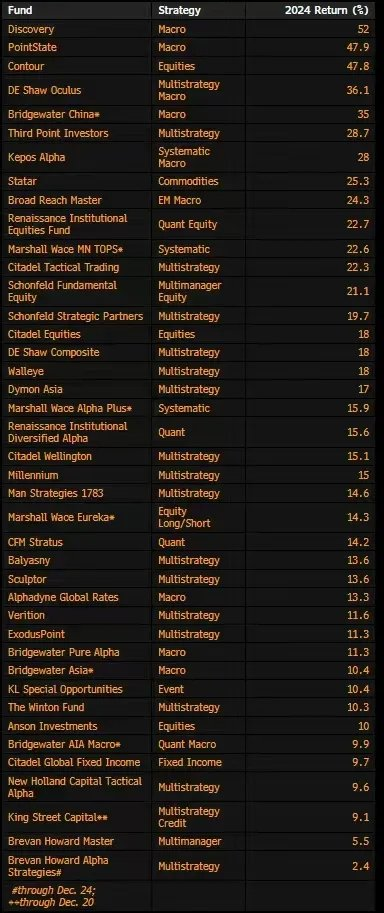
知名“老虎系基金”D1 Capital的“投资艺术”:投资回报主要源于估值扩张而非单纯盈利增长,做空的核心在于识别四类潜在目标
Hua Er Jie Jian Wen· 2025-10-23 10:52
Core Insights - D1 Capital, founded by Dan Sundheim, combines rigorous fundamental analysis with an intuitive approach to investment, managing approximately $25 billion in assets and achieving a remarkable 52% return in 2024, making it a standout in the hedge fund industry [1][2] Investment Philosophy - Sundheim emphasizes a blend of long-term value investing and trading flexibility, adapting strategies based on market conditions and avoiding traditional models that failed to predict market anomalies like the GameStop incident [3][4] - The investment strategy is rooted in fundamental analysis, focusing on a three to five-year investment horizon without reliance on quantitative models [6][9] Risk Management - Sundheim's approach to risk management involves proactive measures, ensuring that positions are sized appropriately to withstand market volatility without necessitating forced liquidations [3][18] - The lessons learned from the GameStop event led to a restructured short-selling strategy, emphasizing diversification and smaller positions to mitigate risks associated with market sentiment [15][19] Market Observations - Sundheim identifies a significant opportunity in the energy sector, particularly in gas turbines, due to the anticipated increase in electricity demand driven by AI advancements, while noting the conservative nature of major manufacturers [20] - He argues that the current market for large tech stocks, including Nvidia, has not yet reached a bubble phase, suggesting that the market is still in a pre-bubble stage similar to 1996 or 1997 [21][22] Fund Operations - D1 Capital plans to close its hedge fund operations by the end of the year, citing a principle of "negative correlation between returns and scale," indicating challenges in trading smaller companies effectively [22] - The firm may transition to a more scalable long-only fund structure, reflecting a strategic shift in response to market dynamics [22]