自动驾驶

Search documents
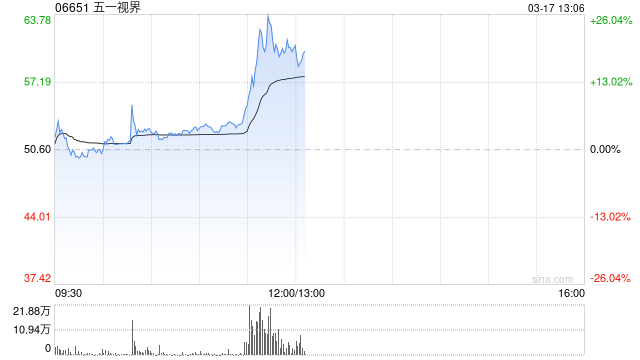
五一视界午后涨超17% 五一视界成为英伟达全球L4智驾仿真合作伙伴
Xin Lang Cai Jing· 2026-03-17 05:07
Core Viewpoint - Five One Vision (06651) experienced a significant stock price increase, reaching a peak of 64.40 HKD, with a current rise of 17.59% to 59.50 HKD and a trading volume of 262 million HKD [1][4] Company Developments - NVIDIA announced on March 16 at GTC that its Omniverse NuRec has achieved deep integration with Five One Vision's SimOne, utilizing neural rendering technology to address the challenges of non-interactive data collection in the autonomous driving industry [1][4] - This collaboration aims to accelerate the development of inference-based autonomous driving represented by VLA and world models, empowering global Level 4 (L4) automotive partners [1][4] - Five One Vision holds a 53.5% market share in the high-end simulation sector in China, and this partnership is expected to further solidify its core position in the global Physical AI arena [1][4]


英伟达在GTC大会推出多项AI相关新产品
Xin Hua She· 2026-03-17 04:16
Group 1 - The core event is the annual GTC conference held by Nvidia, where the company introduced several AI-related products, including the software stack "NemoClaw" to support the development and deployment of OpenClaw agents [1] - Nvidia announced the release of the next-generation AI graphics rendering technology DLSS 5, which aims to enhance image realism while reducing computational resource consumption [1] - The company unveiled a new AI computing platform named "Vera Rubin," expected to achieve 10 times the performance per watt compared to the previous generation [1] Group 2 - Nvidia introduced the next-generation Grok 3 language processing unit (LPU) chip, along with a rack system capable of housing 256 LPUs, which will work in conjunction with the "Vera Rubin" platform to improve token generation efficiency by approximately 35 times per watt [1] - In the autonomous driving sector, Nvidia announced a collaboration with Uber, which plans to deploy a fleet of self-driving taxis powered by Nvidia's software in Los Angeles and San Francisco starting in 2027, with plans to expand to 28 cities globally by 2028 [2] - The demand for AI computing power is rapidly increasing as AI applications evolve from chatbots to autonomous AI agents, with companies needing more computational capacity to generate additional tokens and enhance revenue [2]
港股异动 | 五一视界(06651)盘中涨超8% 五一视界成为英伟达全球L4智驾仿真合作伙伴
智通财经网· 2026-03-17 03:26
Core Viewpoint - Five One Vision (06651) experienced a significant stock price increase, rising over 8% during trading and currently up 5.43% at HKD 53.35, with a trading volume of HKD 61.5 million [1] Group 1: Company Developments - NVIDIA announced on March 16 at GTC that its Omniverse NuRec has achieved deep integration with Five One Vision's SimOne, utilizing neural rendering technology to address the challenges of non-interactive real-world data collection in the autonomous driving sector [1] - This collaboration aims to accelerate the development of inference-based autonomous driving represented by VLA and world models, empowering global Level 4 (L4) automotive partners [1] - Five One Vision has achieved a market share of 53.5% in China's high-end simulation sector, and this partnership is expected to further solidify its core position in the global Physical AI arena [1]
五一视界盘中涨超8% 五一视界成为英伟达全球L4智驾仿真合作伙伴
Zhi Tong Cai Jing· 2026-03-17 03:26
Core Viewpoint - Five One Vision (06651) experienced a significant stock price increase, rising over 8% during trading and currently up 5.43% at HKD 53.35, with a trading volume of HKD 61.5 million [1] Group 1: Company Developments - NVIDIA announced on March 16 at GTC that its Omniverse NuRec has achieved deep integration with Five One Vision's SimOne, utilizing neural rendering technology to address the challenges of non-interactive data collection in the intelligent driving industry [1] - This collaboration aims to accelerate the development of inference-based autonomous driving represented by VLA and world models, empowering global Level 4 (L4) automotive partners [1] - Five One Vision has achieved a market share of 53.5% in the high-end simulation sector in China, and this partnership is expected to further solidify its core position in the global Physical AI arena [1]
五一视界成为英伟达全球L4智驾仿真合作伙伴 加速推理型自动驾驶开发!
Zhi Tong Cai Jing· 2026-03-17 03:23
Group 1 - Nvidia's Omniverse NuRec has integrated with 51WORLD's SimOne, utilizing neural rendering technology to address the challenges of non-interactive real-world data collection in the autonomous driving sector, thereby accelerating the development of inference-based autonomous driving represented by VLA and world models [1] - The collaboration is expected to strengthen 51WORLD's core position in the global Physical AI sector, which has a market potential worth trillions of dollars [1] - 51WORLD has established comprehensive technical capabilities in the three key components of Physical AI: data fuel, spatial models, and training platforms, creating a closed-loop ecosystem of "synthetic data - spatial intelligent models - simulation training platforms" [1] Group 2 - 51WORLD has achieved a market share of 53.5% in China's high-level simulation field, indicating its strong competitive position [1] - The company has made significant investments in 3D graphics, simulation, and artificial intelligence, leading to the development of three core businesses: 51Aes (digital twin platform), 51Sim (autonomous driving simulation platform), and 51Earth (digital earth platform) [2] - The products of 51WORLD are widely used by over a thousand large and medium-sized enterprises across 19 countries and regions [2]
黄仁勋抢吃龙虾:英伟达新核弹10倍算力提升,OpenClaw自由了
3 6 Ke· 2026-03-17 00:16
Core Insights - NVIDIA's GTC conference highlighted a significant transformation in computing, likening it to the personal computer and internet revolutions, with a projected market growth to $1 trillion between 2025 and 2027, primarily driven by large-scale cloud computing [3][5]. Group 1: AI and Computing Transformation - NVIDIA's CEO Jensen Huang emphasized that AI has reached an "inference inflection point," marking a shift from training to reasoning and generation, indicating a surge in demand for computational power [5][6]. - The new Vera Rubin architecture, specifically the NVL72 system, is designed to optimize AI inference tasks, achieving a 50-fold increase in token performance per watt compared to previous architectures [6][13]. - The data center's role is evolving from mere file storage to becoming factories for generating tokens, with inference workloads becoming the new commodity [10][12]. Group 2: Vera Rubin Architecture - The Vera Rubin NVL72 system integrates 72 Rubin GPUs and 36 Vera CPUs, achieving a tenfold increase in inference throughput while reducing the cost per token to one-tenth of previous systems [13][14]. - The architecture is tailored for large-scale AI factories, allowing seamless expansion with Quantum-X800 InfiniBand and Spectrum-X Ethernet, enhancing GPU cluster utilization and reducing overall ownership costs [15][20]. - The upcoming Vera Rubin Ultra NVL576 will connect multiple NVL racks, enabling developers to scale up to 576 GPUs, showcasing NVIDIA's commitment to high-performance computing [16][18]. Group 3: Language Processing Unit (LPU) - The introduction of the LPU, developed in collaboration with Groq, aims to enhance low-latency inference and token decoding efficiency, addressing challenges faced by traditional GPU servers [21][22]. - The Groq LPX architecture, optimized for trillion-parameter models, can potentially increase inference throughput by up to 35 times, unlocking significant revenue potential for AI service providers [21][22]. - The LPX rack features a fully liquid-cooled design and is built on the MGX infrastructure, allowing for seamless integration into the next-generation Vera Rubin AI factory [24]. Group 4: NemoClaw and OpenClaw - NVIDIA introduced NemoClaw, a secure enterprise-level platform built on OpenClaw, designed to facilitate the deployment of AI agents while ensuring data security [29][31]. - NemoClaw allows for the integration of local and cloud-based models, providing a robust framework for AI agents to operate under privacy and security constraints [33][35]. - The platform supports various coding agents and is designed to enhance the capabilities of AI agents in executing complex tasks efficiently [31][35]. Group 5: Physical AI and Robotics - NVIDIA showcased advancements in physical AI, partnering with major automotive manufacturers to implement NVIDIA DRIVE Hyperion technology for L4 autonomous vehicles [38][40]. - The company plans to launch a fully autonomous fleet powered by NVIDIA DRIVE AV software in 28 cities by 2028, indicating a significant step towards widespread adoption of AI in transportation [40]. - NVIDIA's new Isaac simulation framework and Cosmos models aim to enhance the development and deployment of next-generation intelligent robots, further solidifying its position in the physical AI landscape [38][40].
菜鸟联盟,杀入全球自动驾驶修罗场
汽车商业评论· 2026-03-15 23:06
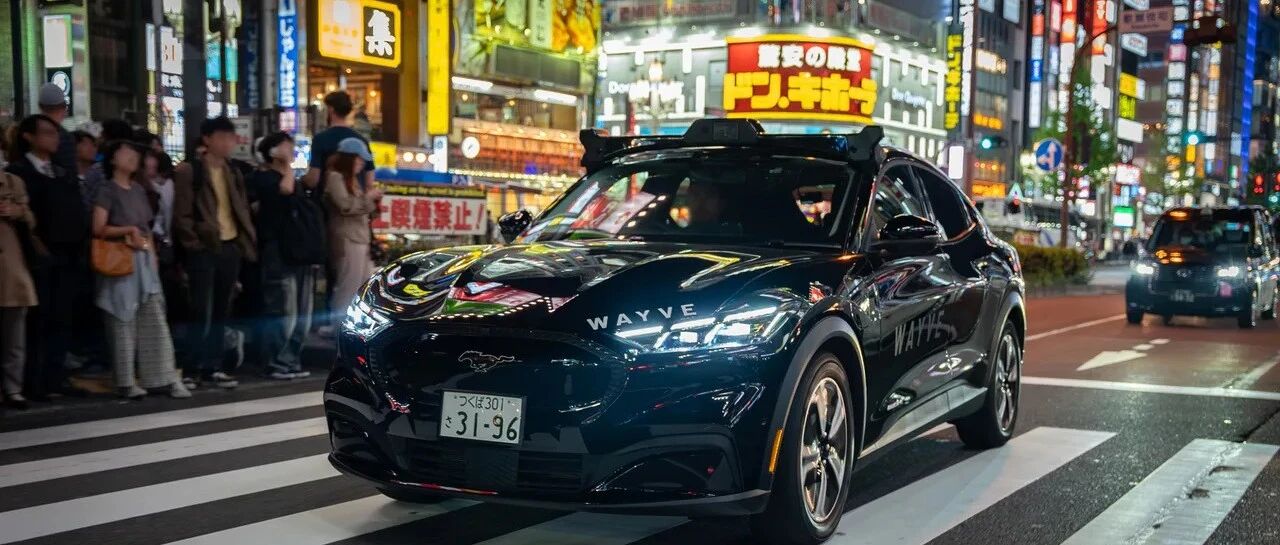
Core Viewpoint - A new strategic partnership has been established between Nissan, Uber, and Wayve to launch a pilot autonomous driving service in Tokyo by the end of 2026, marking Uber's first autonomous vehicle collaboration in Japan [3][5]. Group 1: Strategic Partnerships and Developments - Nissan will provide its Leaf electric vehicles integrated with Wayve's AI autonomous driving system for the pilot service [3]. - Wayve recently completed a $1.2 billion funding round to accelerate the commercialization of its autonomous driving technology, with investors including Uber, Nissan, SoftBank, Microsoft, Nvidia, and Mercedes-Benz [5]. - Other companies, such as Nuro, supported by Nvidia and Toyota, are also entering the Japanese autonomous driving market, indicating a competitive landscape [7][8]. Group 2: Market Dynamics and Growth Potential - The Japanese autonomous vehicle market is projected to grow from $4.02 billion in 2024 to $24.25 billion by 2033, with a compound annual growth rate (CAGR) of 22.1% [24]. - The global autonomous taxi market is expected to reach $189 billion by 2034, with a CAGR of 52.54% [21]. - Japan faces a significant shortage of drivers due to an aging population and labor laws, creating a pressing need for autonomous driving solutions [28][29]. Group 3: Regulatory Environment and Challenges - Japan's regulatory framework is cautious, requiring a driver to be present in autonomous vehicles, which may hinder the rapid commercialization of autonomous taxi services [36][38]. - The government aims to deploy 10,000 Level 4 autonomous vehicles by the fiscal year 2030 to address transportation capacity issues, although initial projections suggest fewer than 1,000 vehicles may be operational by 2027 [30][31]. Group 4: Business Models in Autonomous Driving - Two primary business models are emerging: the "heavy asset model," focusing on building and owning fleets, and the "light asset model," where technology companies provide AI solutions while outsourcing vehicle manufacturing and operations [41][47]. - Companies like Waymo and Uber are adopting hybrid strategies, combining self-operated services in high-demand areas with partnerships in emerging markets to optimize costs and operational efficiency [52]. Group 5: Competitive Landscape and Strategic Moves - Uber aims to become the largest autonomous vehicle service provider globally by 2029, leveraging its extensive user base and partnerships with various technology providers [57][58]. - Companies are increasingly adopting dual-platform strategies to mitigate risks associated with reliance on a single platform, enhancing their bargaining power in the market [61].

【重磅深度/如祺出行】三角协同构筑商业闭环,开放平台加速L4落地
东吴汽车黄细里团队· 2026-03-15 15:49
Investment Highlights - The Chinese ride-hailing market has transitioned from "wild growth" to a new phase of "compliance and intelligence," with the core contradiction shifting towards the efficiency of autonomous driving and the restructuring of human-vehicle relationships [4] - The market is expected to reach a scale of 850.79 billion yuan by 2030, with a significant trend towards the decentralization of ride-hailing traffic [4] - Robotaxi is anticipated to become a core growth point, with advancements in multi-sensor integration and vehicle-road-cloud collaboration technology enhancing safety [4] - The BOM cost of Robotaxi is projected to decrease from one million yuan to around 300,000 yuan, making the unit economic model positive [4] Company Overview - The company is backed by GAC Group, Tencent, Didi, and Pony.ai, forming a strong collaborative ecosystem of "vehicle manufacturing + internet traffic + intelligent driving technology" [5] - The company has achieved a market share exceeding 45% in the Greater Bay Area ride-hailing market as of 2023, surpassing competitors like Cao Cao and T3 [5] - The company launched the world's first mixed operation platform for human and unmanned vehicles in 2022, with plans to invest over 1 billion yuan to build a three-tier operation and maintenance network covering 100 cities [5][19] Robotaxi Commercialization - The company initiated the "Robotaxi+" strategy in July 2025, focusing on an open operating platform that integrates ecological resources rather than self-developing L4 technology [6] - High-quality data is becoming the core fuel for the continuous iteration of autonomous driving technology, with the company launching a data solution to reduce data acquisition costs [6] - The business scope is expanding into various industries such as healthcare, education, finance, and law, accelerating the development of new growth curves [6] Financial Performance - The company is expected to achieve revenues of 5.3 billion yuan, 10.5 billion yuan, and 15.8 billion yuan from 2025 to 2027, with corresponding PS ratios of 0.3, 0.1, and 0.1 [7] - The company has shown a significant trend of "strong growth, narrowing losses, and structural optimization," with revenues increasing from 1.014 billion yuan in 2021 to 2.463 billion yuan in 2024, representing a CAGR of 34% [29] - The gross margin improved from -24.2% in 2021 to -1.4% in 2024, with a positive gross margin of 2.2% expected in the first half of 2025 [34] Market Dynamics - The ride-hailing market is expected to grow to 850.79 billion yuan by 2030, with an annual growth rate of 19.1% from 2025 to 2030 [41] - The market structure is becoming increasingly concentrated, with Didi holding over 70% market share in both first and second-tier cities as of 2024 [43] - The rise of aggregation platforms is becoming a mainstream model in the ride-hailing industry, with these platforms expected to account for 25%-30% of total ride-hailing orders by 2024 [56][60]

如祺出行(09680):三角协同构筑商业闭环,开放平台加速L4落地
Soochow Securities· 2026-03-15 13:44
Investment Rating - The report assigns a "Buy" rating for the company, marking its first coverage [1]. Core Insights - The company is positioned as a leading mobile travel platform in the Guangdong-Hong Kong-Macao Greater Bay Area, accelerating the large-scale commercialization of Robotaxi services [15]. - The company benefits from a strong shareholder structure, including GAC Group and Tencent, which creates a synergistic ecosystem combining vehicle manufacturing, internet traffic, and intelligent driving technology [19]. - The revenue growth is driven by the expansion of ride-hailing services and the commercialization of Robotaxi, with projected revenues of 53 billion, 105 billion, and 158 billion yuan for 2025, 2026, and 2027 respectively [9]. Summary by Sections 1. Business Model and Market Position - The company has established a mixed operation model that integrates human-driven and Robotaxi services, becoming the first in the world to commercialize this hybrid operation [16]. - The company has a robust operational network with over 300 Robotaxi vehicles and more than 10,000 operational stations, aiming to expand its infrastructure to cover 100 cities [16][15]. 2. Financial Performance - The company's revenue is expected to grow from 2.16 billion yuan in 2023 to 15.8 billion yuan in 2027, with a compound annual growth rate (CAGR) of 50.74% [1]. - The net profit is projected to improve from a loss of 692.79 million yuan in 2023 to a profit of 20.42 million yuan in 2027, indicating a significant turnaround [1]. 3. Market Trends and Opportunities - The report highlights the shift in the ride-hailing market from rapid growth to a more regulated and efficient model, with Robotaxi expected to be a core growth driver [9]. - The overall ride-hailing market in China is projected to reach 850.79 billion yuan by 2030, with a compound annual growth rate of 19.1% from 2025 to 2030 [34]. 4. Competitive Landscape - The company is positioned well against competitors due to its unique shareholder structure and operational model, which allows it to leverage resources from GAC Group and Tencent effectively [19]. - The report notes that the ride-hailing market is becoming increasingly competitive, with a significant share held by major players like Didi, but also highlights opportunities for second-tier platforms [34][43].


一个VC的十年成长之路:3年投出独角兽,10年收获千亿市值IPO
创业邦· 2026-03-15 06:06
Core Viewpoint - The article discusses the investment journey of Chen Yu, a partner at Yunqi Capital, highlighting his investment philosophy and the successful ventures he has backed, including MiniMax, PingCAP, and others. It emphasizes the "3, 7, 10" rule for venture capitalists, which outlines the milestones for a successful investor over a decade [6][16][29]. Group 1: Investment Philosophy - Chen Yu believes that a qualified VC investor should achieve specific milestones: invest in a unicorn within three years, ensure that unicorns survive by the seventh year, and facilitate their IPO by the tenth year [6][16]. - He emphasizes the importance of investing in founders who are smart, honest, ambitious, and possess technical taste, rather than solely focusing on their educational background [19][28]. Group 2: Successful Investments - MiniMax, which went public in early 2026 with a market capitalization exceeding HKD 100 billion, was initially valued at only CNY 1.2 billion during its angel round investment [5][25]. - PingCAP, another successful investment, was made during a time when few investors understood the distributed database sector. It has since become a unicorn with a valuation exceeding USD 1 billion [14][24]. - Chen Yu also invested in autonomous driving companies, including Yuanrong Qixing and New Stone, both of which have achieved unicorn status [18][21]. Group 3: Investment Strategy - The article highlights the importance of making investment decisions based on deep technical understanding and independent judgment, rather than following market trends [26][28]. - Chen Yu's approach involves assessing the underlying technology and the potential market size, focusing on the critical point when technology reaches maturity [24][29]. - He stresses that successful investments require continuous attention to commercialization from the outset, not just as an afterthought [28]. Group 4: Future Outlook - Looking ahead, Chen Yu is focusing on two main areas: physical AI and AI agents, particularly in international markets, as he believes China has advantages in AI hardware [29]. - The article concludes by reiterating the "3, 7, 10" rule as a comprehensive framework for VC growth and success in the investment landscape [29].