进出口贸易

Search documents
下周决定特朗普关税命运日?美最高法院20日公布新一批裁决意见
Hua Er Jie Jian Wen· 2026-02-13 23:53
Core Viewpoint - The U.S. Supreme Court is set to announce decisions on key tariff policies from the Trump administration, which could significantly impact the legal standing of these tariffs and the associated costs for importers [1][2]. Group 1: Supreme Court Decisions - The Supreme Court will release opinions on February 20, 24, and 25, with the potential to overturn tariffs that currently cost importers over $16 billion monthly [1]. - The case under review involves the legality of tariffs imposed under the International Emergency Economic Powers Act (IEEPA), with estimates suggesting total tariffs could exceed $170 billion by February 20 [1]. - Justices have expressed skepticism regarding the president's unilateral authority to impose tariffs, indicating a possible challenge to Trump's actions [1][6]. Group 2: Congressional Challenges - The House of Representatives has passed legislation to terminate certain tariffs on Canadian imports, marking a significant political challenge to Trump's tariff policies [2]. - Six Republican representatives joined Democrats in supporting the bill, highlighting a weakening grip of Trump on the party as midterm elections approach [2]. - Senate Republican leaders expect a similar vote in the Senate, although Trump is likely to veto any legislation aimed at repealing his tariffs [2]. Group 3: Political Implications - Trump has warned Republican lawmakers that opposing his tariff policies could lead to severe political consequences in upcoming elections [3]. - The recent House vote represents a setback for House Speaker Mike Johnson, a key ally of Trump, as bipartisan support for the bill indicates growing discontent with Trump's economic agenda [3]. - The Democratic Party has capitalized on the situation, criticizing Republican lawmakers for supporting policies that increase living costs for voters [2][3]. Group 4: Economic Impact - The tariffs in question are estimated to impose over $16 billion in monthly costs on importers, which could have significant repercussions for the overall economy [1][6]. - The Supreme Court's decision on these tariffs will serve as a critical statement on presidential power and could influence future trade policies [6].
1%企业贡献近40%贸易额 AEO"含金量"日益提升
Xin Hua Wang· 2026-02-13 00:33
Core Insights - The AEO (Authorized Economic Operator) qualification is increasingly recognized as a "green pass" for international trade, with 6,876 AEO enterprises in China contributing nearly 40% of the country's trade volume despite representing only 1% of import and export enterprises [1][2] Group 1: AEO System Overview - AEO is a certification system advocated by the World Customs Organization, providing preferential treatment to enterprises with high credit status, legal compliance, and security levels [1] - As of 2025, AEO enterprises will have an average import and export inspection rate of only 18.5% compared to regular enterprises, with over 97% of AEO enterprises benefiting from reduced management checks [2] Group 2: International Cooperation and Recognition - China has signed AEO mutual recognition agreements with 32 economies, covering 58 countries/regions, and has implemented mutual recognition with 52 of them, leading the world in the number of agreements and recognized countries [1] - The customs authority aims to further expand the scope of mutual recognition and deepen cooperation to help more Chinese enterprises enhance their global competitiveness [2] Group 3: Incentives and Regulatory Framework - A series of measures, including priority processing and reduced regulatory frequency, have been implemented to lower trade costs for AEO enterprises, alongside over 40 incentive measures from various departments [2] - A new regulation on credit management for registered enterprises will take effect on April 1, emphasizing the AEO system as a core component [2]
欧亚国家精品推广周活动圆满落幕
Yang Shi Wang· 2026-02-12 12:48
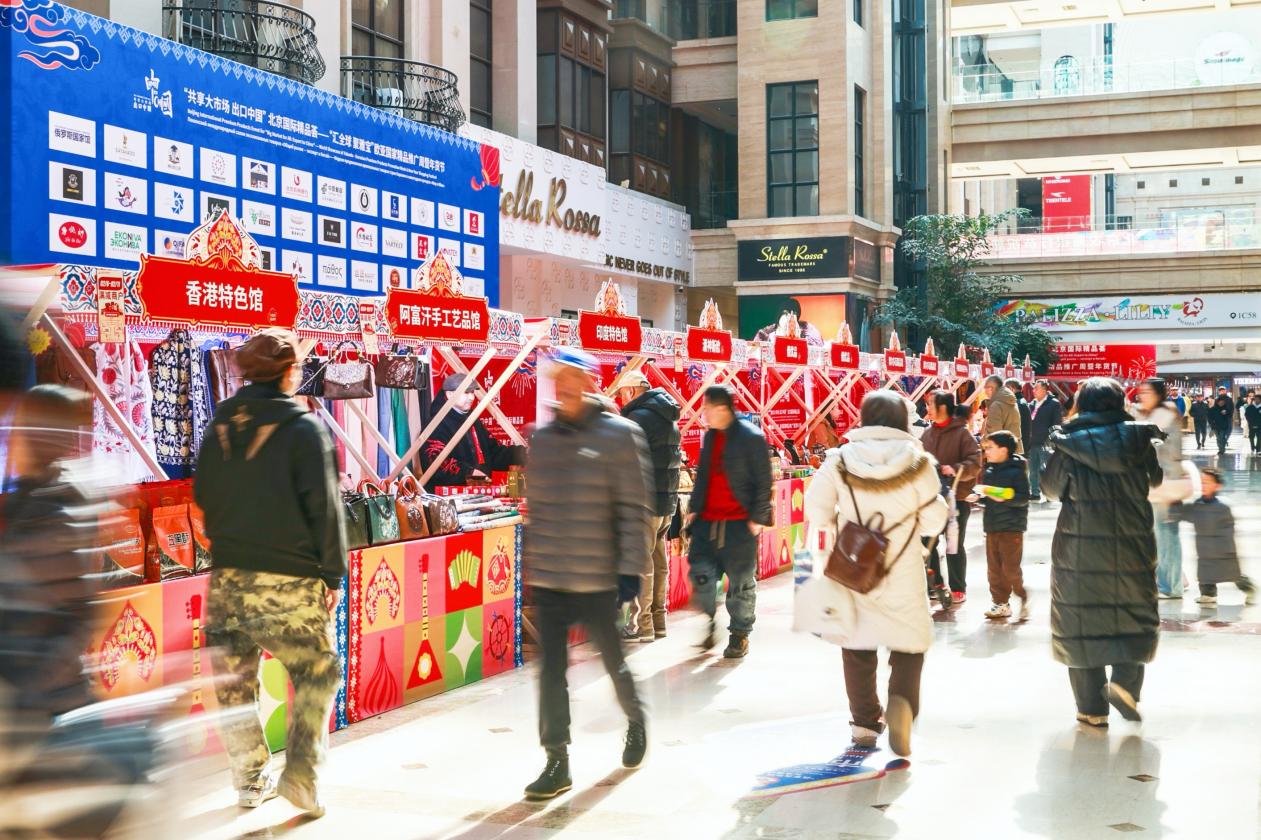
Core Insights - The "Global Sharing Market, Export to China" event series was launched in Beijing, featuring the "Gather Global, Gather Yaba" Eurasian Goods Promotion Week and New Year Goods Festival, aimed at enhancing international trade and consumer engagement [1][2] Group 1: Event Overview - The event took place from February 6 to 11, 2023, in Chaoyang District, Beijing, strategically timed before the Spring Festival to maximize consumer participation [1] - It served as a platform for showcasing high-quality products from various Eurasian countries, promoting the concept of "shared market opportunities" and facilitating balanced import-export trade [1][2] Group 2: Significance and Goals - The event is a practical response to the Ministry of Commerce's initiative, aiming to deepen international economic cooperation and enhance Beijing's position as a preferred market for quality goods [2] - Key objectives include enriching consumer supply, supporting Beijing's development as a consumption center, and upgrading trade ecosystems [2] Group 3: Cultural and Consumer Experience - The event featured over 200 meters of indoor space showcasing products from more than 30 Eurasian countries, creating an immersive shopping experience [3] - Unique products included chocolates, honey, nuts, and traditional crafts, alongside cultural activities like calligraphy and heritage exhibitions, enhancing the festive atmosphere [3][5] Group 4: Innovative Sales Approach - The event utilized a "offline exhibition + cultural experience" model, promoting cross-border consumption through interactive activities and incentives such as discount coupons and prize draws [5] - This approach not only facilitated product exchange but also fostered cultural integration, enriching the consumer experience during the festive season [5] Group 5: Future Prospects - Chaoyang District aims to continue developing distinctive consumption scenarios to stimulate holiday spending and enhance the region's cross-border trade capabilities [6][7] - The focus is on creating a robust cross-border consumption ecosystem and expanding international economic cooperation, ultimately benefiting Chinese consumers with access to global quality products [7]

亨泰(00197.HK)盈警:预计中期较同期将录得约34%的收入减幅及约52%的毛利减幅
Ge Long Hui· 2026-02-12 09:26
Core Viewpoint - The company expects a significant decline in revenue and gross profit for the six months ending December 31, 2025, due to challenging market conditions and increased competition [1] Group 1: Financial Performance - The company anticipates a revenue decrease of approximately 34% and a gross profit decline of about 52% compared to the previous fiscal period [1] - The expected net loss for the six months ending December 31, 2025, is around HKD 33.4 million, which represents a reduction of about 13% from the previous fiscal period [2] - The increase in unrealized investment fair value net gains by approximately HKD 3.8 million contributed to the reduction in net loss [2] Group 2: Market Conditions - The operating environment remains challenging due to several factors, including the ongoing impact of the real estate and debt crisis in China, leading to weak market demand [1] - Unpredictable foreign trade policies from major countries continue to suppress global economic growth and international trade [1] - Increased competition from domestic brands employing aggressive pricing strategies and extensive advertising campaigns is intensifying market rivalry [1] Group 3: Cost Management - The company has strategically reduced certain unprofitable import trading operations to lower operating costs and expenses [1] - Despite rising procurement costs, the company has not been able to raise prices for imported fast-moving consumer goods and agricultural products due to intense market competition [1] - Cost-cutting measures have successfully reduced combined sales, distribution, and administrative expenses by approximately 19% compared to the previous fiscal period [2]
越南工贸部研究实现出口增长16%路径
Shang Wu Bu Wang Zhan· 2026-02-11 17:36
Core Viewpoint - The Vietnamese government aims for an export growth target of 15% to 16% by 2026, necessitating exports to reach between $546 billion and $550 billion, with an average monthly export of $45 billion to $46 billion [1][2] Group 1: Export Performance and Challenges - In 2025, Vietnam's total import and export value exceeded $930 billion, marking an 18.2% year-on-year increase, with exports reaching $475 billion, a nearly $70 billion increase [1] - Despite positive outcomes, Vietnam's exports face internal constraints such as reliance on a few major markets, unbalanced structure, low added value, and a significant trade deficit with key markets [1][2] Group 2: Strategic Initiatives for Growth - The Ministry of Industry and Trade plans to focus on production development, increasing export categories, enhancing added value, and transitioning from processing to self-production [2] - Experts suggest leveraging 17 signed free trade agreements to diversify export markets, promoting service exports, and improving national brand building [2] Group 3: Digital Transformation and E-commerce - E-commerce is identified as a new growth area for exports, with online import and export revenue exceeding $4.5 billion, expected to continue growing in the coming years [2]
2025年经满洲里口岸贸易值超1200亿元
Sou Hu Cai Jing· 2026-02-11 14:36
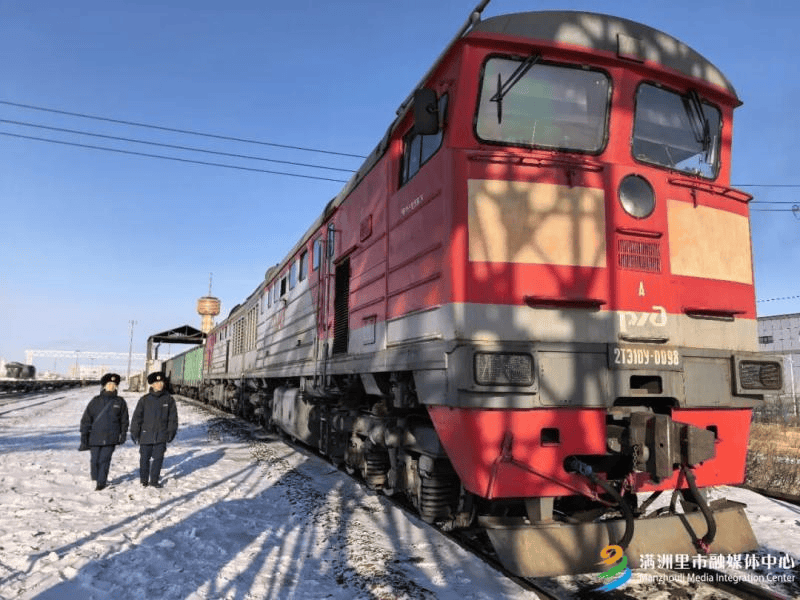
立足新发展阶段,满洲里车站海关将紧扣"推动高质量发展"主题,精准抓机遇、用政策,以通关提速助推企业发 展提效,持续优化口岸营商环境,为进出口贸易注入强劲动能。 据了解,为助推满洲里铁路口岸外贸高质量发展,满洲里车站海关通过"关长送政策上门""通关服务专窗"等方式 为企业提供进出口货物政策咨询、通关业务指导和疑难问题解答等服务,确保中欧班列回程境内段运费扣减等惠 企措施落地见效。同时,大力推广"铁路快通"业务模式,细化通关指南,解答企业关于申报方式、归并分票货物 出现异常情况如何处置等常见问题,有效缩短进出口货物通关时间。此外,运用信息共享、应急处置、综合分析 上报"三项机制",织密"海关+铁路+企业"信息共享数据链,提高货物通关物流信息交互效率,保障进出口货物高 效通关。"为助力更多企业拓展国外市场,我关坚持以企业需求为导向,为企业提供'零距离'政策解读和业务指 导,解答企业关于公式定价商品归类要素、价格审核、规范申报等通关要点,提升企业合规申报意识。同时,积 极协调铁路部门分配线路资源,高效衔接装卸、运输、查验等环节,保障煤炭、木材、家电等进出口货物通关顺 畅,持续以优质高效的服务为企业进出口保驾护航。"满 ...
江西外贸逐季向好稳步回升
Shang Wu Bu Wang Zhan· 2026-02-11 06:42
Core Insights - Jiangxi Province's foreign trade performance in 2025 shows significant growth, with total imports and exports reaching 482.3 billion yuan, a 2.7% increase, and exports at 309.78 billion yuan, up 1.8% [1] - High-tech product exports, closely related to new productivity, have maintained growth, with exports of high-end equipment, new materials, electronic components, and instruments increasing by 39.7%, 3.6%, 43.1%, and 24% respectively [1] Group 1 - Jiangxi Province ranks second nationally in exports of flat panel display modules, tungsten products, and fireworks, third in live pig exports, and fifth in photovoltaic product exports in 2025 [1] - The province's exports to countries involved in the Belt and Road Initiative reached 265.82 billion yuan, a 13.9% increase, accounting for 55.1% of the province's total foreign trade [2] - The province's foreign trade market diversification is evident, with significant growth in exports to ASEAN and the EU, increasing by 34.9% and 5.7% respectively [2] Group 2 - The number of foreign trade enterprises in Jiangxi reached 7,412, an 11.2% increase, with production enterprises accounting for 4,439, growing by 7.6% [3] - The total import and export value of key industries such as electronic information, non-ferrous metals, and equipment manufacturing reached 257.44 billion yuan, contributing 4.7 percentage points to the overall foreign trade growth [2] - The implementation of 33 measures to optimize the port business environment and promote "smart customs" reforms has significantly enhanced the efficiency and quality of Jiangxi's foreign trade [3]
泉州“十四五”进出口规模增长超四成
Xin Lang Cai Jing· 2026-02-11 00:11
Core Insights - During the "14th Five-Year Plan" period, Quanzhou's foreign trade demonstrated strong resilience and vitality, achieving a total import and export scale of 1,298.76 billion yuan, a growth of 43.6% compared to the "13th Five-Year Plan" [1] Group 1: Trade Performance - Exports reached 953.56 billion yuan, increasing by 52.2%, while imports totaled 345.2 billion yuan, growing by 24.3% [1] - Major trading partners included ASEAN, Saudi Arabia, the United States, and the European Union, with respective import and export values of 328.41 billion yuan, 182.8 billion yuan, 137.09 billion yuan, and 134.62 billion yuan, reflecting growth rates of 88.9%, 37.2%, 31.5%, and 34.9% [1] - Trade with Belt and Road Initiative countries amounted to 874.91 billion yuan, a growth of 57.5%, while trade with RCEP member countries reached 428.75 billion yuan, increasing by 86.7% [1] Group 2: Role of Enterprises - Private enterprises played a significant role, with import and export values of 857.42 billion yuan, a growth of 67.1%, while state-owned enterprises and foreign-invested enterprises recorded 61.87 billion yuan and 376.07 billion yuan, growing by 75.1% and 6.3% respectively [1] - By 2025, private enterprises are projected to export 136.41 billion yuan, accounting for 82.6% of total exports, which is 17.2 percentage points higher than the national average [1] Group 3: Product Structure - The export structure continued to optimize, with labor-intensive products valued at 493.25 billion yuan, growing by 25.6%. Notably, textile and apparel exports reached 269.4 billion yuan, increasing by 2.2%, while footwear exports surged to 114.04 billion yuan, a growth of 58.6% [2] - Imports were primarily composed of bulk commodities and agricultural products, with crude oil, agricultural products, and mechanical and electrical products imported at 221.25 billion yuan, 27.26 billion yuan, and 26.85 billion yuan, reflecting growth rates of 69%, 20.8%, and 16% respectively [2]
港股IPO为何如此火爆?
2 1 Shi Ji Jing Ji Bao Dao· 2026-02-10 23:19
Core Viewpoint - The recent developments in Hong Kong's economic and financial landscape have garnered significant attention, with a notable increase in IPO activities and GDP growth projected for 2025, indicating a robust recovery and expansion trend since 2021 [1][2]. Group 1: IPO Market Dynamics - In 2025, Hong Kong is expected to host 119 IPOs, with a substantial increase in financing, leading the global market [1]. - The Hong Kong Stock Exchange (HKEX) has implemented new IPO regulations in August 2025, enhancing the pricing and allocation mechanisms for new stocks and lowering the listing thresholds for "A+H" issuers [1][2]. - Southbound capital from mainland China has reached a record net buy of 1,404.84 billion HKD in 2025, contributing to the influx of funds into the Hong Kong stock market [1]. Group 2: Factors Driving Growth - The supportive policies from the China Securities Regulatory Commission since 2024 have encouraged leading mainland enterprises to list in Hong Kong [1]. - The international capital influx is driven by a weaker US dollar and global liquidity easing, with long-term stable foreign investments becoming predominant in the Hong Kong market [3]. Group 3: Sectoral Contributions - The listing rules for unprofitable biotech companies and specialized technology firms have spurred the entry of high-tech enterprises, optimizing the industrial structure and leading to market valuation premiums [2]. - The majority of new companies established in Hong Kong in 2025 are engaged in import-export trade, wholesale, and retail, reflecting Hong Kong's status as an international trade and financial hub [3]. Group 4: Innovation and Technology Focus - The Hong Kong government has prioritized the development of an international innovation and technology center, aligning with national strategies to enhance technological self-reliance and productivity [4]. - The synergy between technology, finance, and industry is expected to drive economic growth and support the upgrading of Hong Kong's industrial structure [4]. Group 5: Future Development Directions - Future national development priorities include promoting supply-side structural reforms, deepening demand-side reforms, and expanding high-level openness, with Hong Kong playing a crucial role in enhancing national competitiveness [5]. - To achieve these goals, Hong Kong needs to strengthen its hard and soft power, improve the business environment, and explore opportunities in emerging fields such as artificial intelligence and green finance [5].
港股IPO为何如此火爆?丨杨涛专栏
2 1 Shi Ji Jing Ji Bao Dao· 2026-02-10 22:50
Core Viewpoint - The recent developments in Hong Kong's economic and financial landscape have garnered significant attention, with a notable increase in IPO activities and GDP growth projected for 2025, indicating a robust recovery and expansion trend since 2021 [2][3]. Group 1: IPO and Market Dynamics - In 2025, Hong Kong is expected to witness 119 IPOs, with a substantial increase in financing, leading the global market [2]. - The Hong Kong stock market has seen a record net inflow of southbound capital, reaching 1,404.84 billion HKD in 2025, marking a historical high since the launch of the Stock Connect program [2]. - The introduction of new IPO regulations by the Hong Kong Stock Exchange in August 2025 has improved the pricing and allocation mechanisms for new shares, while lowering the listing thresholds for "A+H" issuers [2][3]. Group 2: Capital Inflows and International Participation - Domestic capital is actively participating in the Hong Kong stock market for cross-border asset allocation, contributing to a cumulative net inflow of over 5.1 trillion HKD since the Stock Connect's inception [2]. - International capital is increasingly entering the Hong Kong market, driven by a weaker US dollar and global liquidity conditions, seeking safe returns [2][3]. - The majority of new companies established in Hong Kong in 2025 are engaged in import-export trade, wholesale, and retail, reflecting Hong Kong's status as an international trade and financial hub [4]. Group 3: Technological and Structural Developments - The listing rules for unprofitable biotech companies and specialized technology firms in Hong Kong have encouraged the growth of high-tech enterprises, leading to market valuation premiums [3]. - The Hong Kong government is prioritizing the development of an international innovation and technology center, supported by national policies aimed at enhancing technological self-reliance and productivity [5]. - The synergy between technology and finance is expected to drive structural upgrades in Hong Kong's economy, enhancing its competitiveness as an international financial center [5]. Group 4: Future Development Focus - Future national development priorities include promoting supply-side structural reforms, deepening demand-side reforms, and expanding high-level openness [6]. - Hong Kong is positioned to play a crucial role in enhancing national competitiveness in supply chains and participating in the Greater Bay Area market development [6]. - To achieve these goals, Hong Kong must strengthen its hard and soft power across various dimensions, including economic, industrial, and technological capabilities [6].