
新能源车

Search documents
陆家嘴财经早餐2025年9月28日星期日
Wind万得· 2025-09-27 22:54
Group 1 - The Ministry of Industry and Information Technology emphasizes support for breakthroughs in automotive technology, including high-performance chips and new battery systems, to enhance the industry's internal growth momentum [2] - The China Association for Science and Technology highlights the need for intelligent roads and cloud computing platforms to achieve L3 and L4 levels of autonomous driving [2] - In the first eight months of 2023, profits of large-scale industrial enterprises in China reached 46,929.7 billion yuan, with a year-on-year growth of 0.9% [3] Group 2 - The equipment manufacturing sector showed a profit growth of 7.2% in the same period, significantly contributing to the overall profit recovery of large-scale industrial enterprises [3] - The State Council's notice on abandoned mine cave inspections aims to clarify responsibilities and enhance safety measures across regions [3] - The National Medical Insurance Administration is focusing on illegal activities in the medical insurance sector, targeting issues like the resale of medical drugs and fraudulent claims [4] Group 3 - Insurance capital institutions have made 34 equity investments in listed companies this year, surpassing last year's total of 20, with a significant portion directed towards banks [6] - A-shares have seen a shift in investment strategies, with a decrease of over 15% in the amount of idle funds used for structured deposits and bank wealth management products [7] - The implementation of the new independent director regulations has led to penalties totaling 13.05 million yuan for 23 independent directors due to negligence [7] Group 4 - The Hainan provincial government aims to establish a global trading base for new energy vehicles and related components, enhancing international market access [8] - SAIC Group anticipates that the penetration rate of new energy vehicles in China will reach 70% by 2030, with a diverse market structure emerging [8] - A new polymer electrolyte for lithium batteries has been developed, enhancing safety and energy density, which could support the advancement of solid-state batteries [9] Group 5 - Moody's warns that the rise of stablecoins could undermine monetary sovereignty in emerging markets, affecting central banks' ability to manage economies [10] - Xiaomi's new phone series achieved record sales within five minutes of launch, indicating strong market demand [11] - EA is reportedly in talks for a potential $500 billion privatization deal, which could significantly alter the gaming industry landscape [12]


电车需求跟踪8月:以旧换新调整、购置税提前购车共同博弈Q4需求
Minmetals Securities· 2025-09-26 23:30
Investment Rating - The report rates the automotive industry as "Positive" [4] Core Insights - The adjustment of the vehicle replacement policy will slightly weaken demand, but the reduction in vehicle purchase tax will promote early purchases, leading to a competitive demand scenario in Q4. As of September 10, 2025, the number of applications for vehicle replacement reached 8.3 million, indicating a significant policy-driven effect. Despite the adjustments in the replacement policy, the pressure from the tax reduction is expected to encourage consumers to purchase new energy vehicles earlier. The report forecasts that China's new energy vehicle sales will reach 16.25 million units in 2025, representing a year-on-year growth of approximately 26% [2][18]. Monthly Focus - The adjustment of the vehicle replacement policy has increased application difficulty. Since June, applications for vehicle replacement have been suspended due to the exhaustion of funds, but recent funding has led to adjustments in the policy across various regions. The adjustments mainly include changes in application methods and subsidy standards, with some regions reducing the subsidy amount per vehicle [14][15]. - There is a significant funding gap for Q4, as the distribution of funds does not account for seasonal consumption patterns. The central government will allocate 69 billion yuan for Q4, which is the same as Q3, but the demand for vehicle consumption is typically stronger in the second half of the year, leading to an amplified funding gap for Q4 [16][17]. Key Data Tracking - In August, the sales of new energy vehicles in China reached 1.4 million units, a year-on-year increase of 27%. The penetration rate for new energy vehicles was 49%, remaining stable compared to the previous month. However, the sales of plug-in hybrid vehicles (PHEVs) experienced a decline for two consecutive months, primarily due to pressure on sales from major manufacturers [20][28]. - The report highlights that commercial vehicles and exports continue to maintain high growth rates, with new energy commercial vehicle sales in August reaching 70,000 units, a year-on-year increase of 52% [34][35]. - The report also notes that the export of new energy vehicles has been robust, with August exports reaching 224,000 units, a year-on-year increase of 104% [46][48]. Industry and Company Changes - The report indicates progress in the overseas production capacity of automotive companies, with several manufacturers establishing production bases in regions like Brazil and Austria. Additionally, companies like Chery and HeSai have listed on the Hong Kong stock exchange, while Dongfeng Group plans to privatize and spin off its Lantu brand to maintain its listing status [3][45].



港股新能源车表现分化:小米跌超8% 小鹏涨超5%
Mei Ri Jing Ji Xin Wen· 2025-09-26 09:51
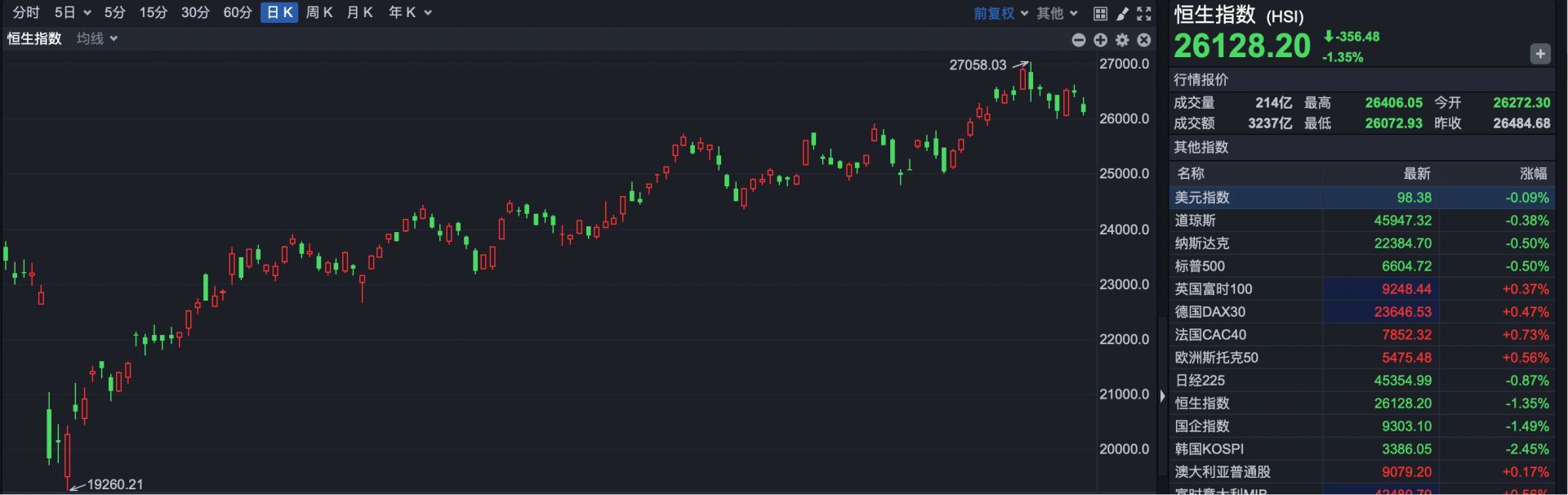
Market Overview - The Hong Kong stock market continued its adjustment trend, with the Hang Seng Index closing at 26,128.20 points, down 356.48 points, a decline of 1.35% [1] - The Hang Seng Tech Index fell by 184.08 points, closing at 6,195.11 points, a decrease of 2.89% [1] Company Performance - Morgan Stanley maintains an "Overweight" rating on Xiaomi Group, with a target price of HKD 62, highlighting that the sales performance of the Xiaomi 17 series may exceed expectations, and customized services will be a key competitive advantage for Xiaomi's electric vehicle business [3] - Ideal Auto launched its new pure electric SUV model i6, priced between RMB 250,000 and RMB 300,000, but its stock closed down over 1% [3] - Xiaomi Group's stock fell by 8.07%, closing at HKD 54.65, following a product launch event where CEO Lei Jun mentioned that Xiaomi is one of the most criticized car manufacturers online [4] Sector Performance - The new energy vehicle sector showed mixed performance, with XPeng Motors rising over 5% to close at HKD 90.80, driven by the announcement of humanoid robot patents and a collaboration with Alibaba Cloud on post-quantum security technology [6] - In contrast, tech stocks generally declined, with Alibaba, JD.com, and Kuaishou dropping over 3%, and Tencent Holdings falling nearly 1% [8] - Wind power stocks performed well, with Ruifeng New Energy rising by 6%, while the biopharmaceutical sector weakened, with Rongchang Biopharmaceuticals dropping over 4% [8] Capital Flow - Despite the significant pullback in the Hong Kong stock market, southbound capital continued to buy aggressively, with a net purchase amount of HKD 10.5 billion, marking the third consecutive day of over HKD 10 billion in net inflows [8] Market Outlook - Several institutions believe the current market adjustment is a technical correction, and the medium to long-term positive trend remains unchanged. The liquidity and profit cycles in the Hong Kong market are still improving [10] - Recent U.S. employment data falling below expectations has raised market expectations for interest rate cuts, which may alleviate macro liquidity pressures on the Hong Kong market [10] - Both domestic and foreign capital, including southbound and foreign investments, are showing increased interest in Hong Kong stocks, suggesting a potential for a slow bull market in the medium to long term supported by liquidity improvement and corporate profit recovery [10]


9月26日财经简报| 有色金属板块爆发上涨 雷军谈造芯投入500亿
Sou Hu Cai Jing· 2025-09-26 09:16
Market Overview - The A-share market shows significant differentiation, with new stocks like Jinhua New Materials hitting the daily limit due to low winning rates and expectations of capital expansion [2] - Technology stocks are active, led by AI, robotics, and liquid cooling server concepts, with Pinming Technology reaching a 20% limit up and companies like Cambridge Technology and Inspur Information hitting new highs [2] - The non-ferrous metals sector surged due to the Freeport McMoRan copper mine accident, which tightened global copper supply, leading to over 7% gains for Tongling Nonferrous Metals and Northern Copper [2] - The new energy industry chain, including photovoltaic, energy storage, and new energy vehicles, saw significant movements with stocks like Yicheng New Energy and Huazi Technology hitting the daily limit [2] Fund Flows and Market Sentiment - The total trading volume in the two markets decreased to approximately 2 trillion yuan, with a net outflow of 100 billion yuan from main funds, while northbound funds continued to flow into Hong Kong stocks, and southbound funds saw a net inflow of nearly 10 billion yuan [3] Global Market and Monetary Policy - The market anticipates a 25 basis point rate cut by the Federal Reserve in September (to 4.00%-4.25%), which could ease the pressure on the China-US interest rate differential and create space for China's monetary policy easing [5] - The US stock market indices have declined for three consecutive days, with the Nasdaq down 0.5%, Oracle falling over 5%, and Intel rising 9% against the trend; the Nasdaq Golden Dragon Index increased by 0.42%, led by NIO and Xpeng Motors [5] Geopolitical and Trade Developments - Trump's new tariff policy imposes 50% and 30% tariffs on imported kitchen cabinets and furniture, respectively, and a 100% tariff on patented drugs, effective from October 1 [6] - TikTok received conditional operational approval from the US, requiring ByteDance to establish a joint venture with no more than 20% ownership, valued at $14 billion [7] - The US Department of Commerce added three American entities to the export control "blacklist" in response to technology barriers [8] AI and Computing Infrastructure - Moore Threads is set to go public on the Sci-Tech Innovation Board, which could boost the AI hardware sector if approved [9] - Alibaba Cloud is expanding globally with new data centers in Brazil, France, and the Netherlands to support AI computing demand, with capital expenditures increasing by 220% year-on-year [10] New Energy and Energy Transition - Copper prices surged to a yearly high due to the Indonesian copper mine accident causing global supply shortages, leading to a collective surge in A-share copper stocks [11] - Favorable energy storage policies have been initiated in Gansu and Ningxia, launching hundred-megawatt-level energy storage projects to promote large-scale industry development [13] Consumer Electronics and Automotive - Xiaomi's Lei Jun discussed the company's self-developed mobile SoC plan, with an investment of 50 billion yuan over ten years for research and development [14] - New energy vehicles are moving towards high-end markets, with companies like BYD and NIO accelerating their smart layout [15] Domestic and International Policies - Shanghai has established a digital RMB international operation center, launching platforms for cross-border payments, blockchain, and digital assets [16] - The State Administration for Market Regulation is overseeing the recall of 700,000 defective charging treasures to enhance consumer electronics safety [17] - Poland's closure of its border with Belarus has disrupted logistics, prompting China to accelerate alternative plans like the China-Kyrgyzstan-Uzbekistan railway [18] - The US has restricted rare earth exports, while Russia announced limits on fuel oil exports, supporting international energy prices [19] Summary and Outlook - Short-term risks include increased market volatility before the Federal Reserve's rate cut, with high trading congestion in technology stocks requiring caution against policy disruptions [20] - Long-term opportunities remain in AI, new energy, and high-end manufacturing, with the internationalization of digital RMB and deepening state-owned enterprise reforms presenting structural opportunities [21] - Investors are advised to focus on the pre-disclosure of third-quarter earnings, favoring a balanced allocation of undervalued blue chips and growth stocks [22]

鑫椤锂电一周观察 | 6F市场供应偏紧 价格继续上涨
鑫椤锂电· 2025-09-26 07:11
Industry Overview - In the first eight months of 2025, China's lithium-ion battery exports reached 30.03 billion units, a year-on-year increase of 18.66%, with an export value of $48.296 billion, up 25.79% year-on-year, indicating a stable growth trend [1] - In August 2025 alone, the export value was $7.153 billion, reflecting a year-on-year growth of 23.51% [1] Cobalt Supply and Regulations - The Democratic Republic of Congo announced an end to an eight-month export ban starting October 15, 2025, transitioning to a strict quota management system, with only 18,100 tons of cobalt available for export in the remainder of 2025 [2] - The annual export limits for 2026 and 2027 are set at 96,600 tons [2] Lithium Battery Material Production - Hunan Youneng has reported a production capacity of 858,000 tons for phosphate-based cathode materials as of June 2025, with ongoing projects in Spain and Malaysia [2] Market Dynamics for Lithium Materials - Domestic lithium carbonate prices have fluctuated between 73,000 to 74,000 yuan per ton, with strong market demand supporting price stability despite regulatory delays in Jiangxi [4] - The price of cobalt has increased due to the adjustment of export regulations in the Democratic Republic of Congo, impacting the prices of ternary materials and precursors [6] Pricing Trends for Key Materials - Ternary material prices range from 126,000 to 131,000 yuan per ton for single crystal types and 145,000 to 151,000 yuan per ton for 811 types [7] - Phosphate iron lithium prices are between 33,600 to 35,000 yuan per ton for power types and 32,600 to 33,200 yuan per ton for energy storage types [8] - The price of negative electrode materials shows a range from 50,000 to 65,000 yuan per ton for high-end natural graphite products [9] Electrolyte Market Developments - The domestic electrolyte market is experiencing strong supply and demand, with prices slightly increasing; a significant long-term supply agreement has been signed between Jiujiang Tianci and Ruipu Lanjun for a minimum of 800,000 tons of electrolyte products by December 31, 2030 [10][11] Battery and Electric Vehicle Market - The domestic lithium battery market remains stable, with a projected production increase of up to 5% in October 2025, driven by strong demand from new energy vehicles and energy storage [12] - In the last week, 508,000 passenger vehicles were sold, with new energy vehicles accounting for 298,000 units, reflecting a year-on-year increase of 28.25% [13] Energy Storage Innovations - The energy storage cell market is stable, with some leading companies planning to raise cell prices; BYD has launched a new generation energy storage system featuring a 2710Ah blade battery, marking a significant advancement in capacity [14]


深夜,中国资产大涨!纳斯达克中国金龙指数涨超3%
Zheng Quan Shi Bao Wang· 2025-09-25 06:24
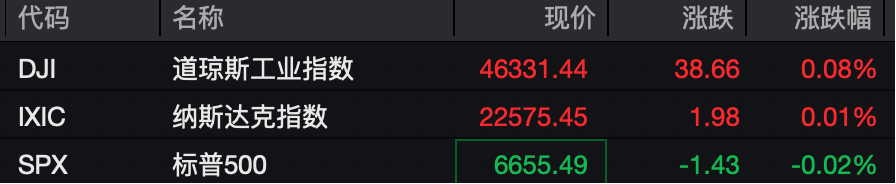
Market Overview - Chinese concept stocks showed strong performance, with the Nasdaq Golden Dragon China Index rising over 3% [2][4] - Major US stock indices opened higher but displayed mixed results, with the Dow Jones up 0.08%, Nasdaq up 0.01%, and S&P 500 down 0.02% [1][2] Emerging Market Sentiment - HSBC's latest "Emerging Market Investment Intentions Survey" indicates growing optimism among global institutional investors regarding emerging markets, particularly in Asia [4] - Over 61% of surveyed investors believe emerging market stocks will outperform developed markets, an increase from 49% in June [4] - More than half of the respondents expressed the most confidence in the mainland Chinese stock market, significantly up from about one-third in June [4] Chinese Stock Performance - On September 24, A-shares and Hong Kong stocks performed strongly, with the Shanghai Composite Index rising 0.83%, Shenzhen Component Index up 1.8%, and ChiNext Index up 2.28% [4] - The Hang Seng Index increased by 1.37%, while the Hang Seng Tech Index rose by 2.53% [4] Notable Chinese Stocks - Yipeng Energy surged over 15%, while Daqo New Energy, Niu Technologies, Alibaba, and GDS Holdings all rose over 9% [5][6] - Alibaba's Hong Kong shares also increased by over 9%, following a partnership announcement with NVIDIA in the Physical AI sector [6] US Tech Stocks - Among the "Big Seven" tech stocks, Tesla rose over 3% after UBS raised its Q3 delivery forecast from 431,000 to 475,000, a 10% increase [7] - Tesla's stock has seen a month-to-date increase of over 30% [7] - Lithium Americas experienced a significant surge of over 80%, with reports suggesting the US government is seeking to acquire up to 10% of the company [8]


银行熄火,科技风骚,半导体掀涨停潮!节前格局是否已成定数?
Sou Hu Cai Jing· 2025-09-24 14:21
Market Overview - A-shares experienced a "low open high walk" scenario, with all three major indices closing in the green, particularly the ChiNext and Sci-Tech 50 reaching new highs [2] - The rise in Shenzhen's stock market occurred despite the city implementing a "five-stop" mode due to an approaching typhoon, leading to speculation that people were more focused on trading while staying at home [2] Semiconductor Sector - The semiconductor sector saw significant gains, with over 20 stocks hitting the daily limit up, driven by strong performance from leading companies like Shengong Co. and Zhangjiang Hi-Tech [4] - Key signals for the semiconductor rally include: 1. 86% of global semiconductor companies expect revenue growth by 2025, with AI chips as a core driver 2. A recovery in global IC packaging and testing orders, indicating a shift from inventory destocking to restocking 3. Rumors of price increases for TSMC's 2nm process, highlighting the scarcity of advanced processes [4] Investment Strategy - Short-term prospects for the semiconductor sector appear positive, with a focus on advanced packaging and equipment materials, while caution is advised for purely speculative stocks [5] - Long-term trends indicate a push for domestic semiconductor production, but volatility is expected, suggesting a dollar-cost averaging approach for investments [5] Other Sectors - The tourism and banking sectors faced declines, with Yunnan Tourism hitting the daily limit down [6] - In the new energy vehicle sector, Q2 global sales increased by 26%, led by BYD and Geely, but intense domestic price competition has negatively impacted Tesla, which saw a 13% drop in sales [8] - The liquor sector is experiencing challenges, with Goldman Sachs predicting a 5%-27% year-on-year decline in third-quarter performance due to weak sales during the Mid-Autumn Festival [9] Market Sentiment - The overall market sentiment shows a preference for technology (semiconductors, AI applications) and high-end manufacturing (robotics), but caution is advised due to insufficient trading volume [10] - Investors are encouraged to maintain core positions in policy-supported technology and consumer leaders while cautiously exploring new opportunities [10]

多数板块机会显现筑底+科技主线回归!节前布局把握主线在哪里?
Sou Hu Cai Jing· 2025-09-24 13:30
Group 1 - The A-share market experienced a downward trend last week, with the Shanghai Composite Index facing significant resistance above 3600 points and heavy profit-taking after recent gains [1] - The upcoming expiration of the 90-day suspension of the 24% reciprocal tariffs between China and the U.S. adds uncertainty to market dynamics, despite ongoing negotiations [1] - The A-share market is expected to continue a "slow bull" trend into the second half of 2025, supported by the "National Nine Articles" policy and similar to the "4 trillion" investment strategy [1] Group 2 - Major sectors with net inflows include semiconductors, domestic software, new energy vehicles, lithium batteries, and military industry [1] - Key concepts with net inflows are artificial intelligence, Huawei supply chain, domestic chips, state-owned enterprise reform, and big data [1] - Top individual stocks with net inflows include Sunshine Power, iFlytek, Luxshare Precision, CATL, OmniVision Technologies, Shanghai Electric, Eastmoney, Changdian Technology, Nanda Optoelectronics, and SMIC [1] Group 3 - The three major telecom operators in China are accelerating their AI applications across various sectors, including mining, agriculture, healthcare, and urban governance, as they compete in the computing power market [3] - Both China Mobile and China Telecom reported AI revenues in the tens of billions, indicating a successful transformation driven by AI applications [4] - The implementation of "Artificial Intelligence + Energy" initiatives is expected to benefit the smart power industry, with a projected market size of approximately 180 billion yuan by 2030 [6] Group 4 - The battery and energy management industry is seeing positive revenue growth due to increased sales of new energy vehicles and global energy storage demand [7] - The capital expenditure in the industry is stabilizing, with some segments beginning to expand capacity [7] - The competitive advantages of leading companies in the lithium battery supply chain are expected to grow, driven by technological innovation and international expansion [7] Group 5 - The Shanghai Composite Index showed signs of recovery with a bullish candlestick, indicating potential support at the 3800-point level, but further upward movement is needed to confirm a trend change [11] - The upcoming expiration of the 90-day tariff suspension marks a critical phase, with potential for continued negotiations but significant uncertainty [11] - The market is anticipated to experience wide fluctuations in September, influenced by long-term capital inflows into sectors such as banking, insurance, technology (AI), and consumer goods with solid fundamentals [11]

鸿蒙智行周销量再登顶 10月底将冲击百万辆交付大关
Ge Long Hui· 2025-09-24 10:43
格隆汇9月24日|根据官方数据披露,2025年第38周,鸿蒙智行周销量13446台,位列新势力品牌 Top1;同时,在年度累计销量层面,同样位列新势力品牌榜首。在当前竞争白热化的国内新能源车 市,多数品牌深陷价格与份额的博弈困境。在此背景下,鸿蒙智行凭借销量与产品定价的双重领先,实 现"量价齐升"的良性发展态势,表现尤为突出。昨日,华为常务董事余承东在秋季新品发布会上宣 布:"截至2025年9月24日,鸿蒙智行累计交付突破93万辆,10月底将冲击百万辆大关!" ...
鸿蒙智行周销量再登顶,10月底将冲击百万辆交付大关
Di Yi Cai Jing· 2025-09-24 10:28
Core Insights - The article highlights that Hongmeng Zhixing achieved a weekly sales volume of 13,446 units in the 38th week of 2025, ranking first among new energy vehicle brands [1] - Cumulatively, Hongmeng Zhixing has delivered over 930,000 units as of September 24, 2025, with a target to reach one million units by the end of October [1] - The company has successfully navigated the competitive landscape of the domestic new energy vehicle market, characterized by intense price and market share battles, by achieving a dual advantage in sales and product pricing [1] Sales Performance - In the 38th week of 2025, Hongmeng Zhixing's sales volume was 13,446 units, making it the top brand among new energy vehicle manufacturers [1] - The cumulative delivery of Hongmeng Zhixing reached 930,000 units by September 24, 2025, with expectations to surpass one million units by the end of October [1] Market Position - Hongmeng Zhixing is positioned as a leader in the new energy vehicle sector, demonstrating strong performance amidst fierce competition [1] - The brand's strategy of achieving both volume and price growth has led to a favorable development trend, distinguishing it from competitors [1]