科技

Search documents
数字化加持,会展业如何成为全球资源链接新枢纽
Sou Hu Cai Jing· 2025-12-19 09:11
Core Insights - The exhibition industry is evolving from a traditional platform for product display to a crucial hub for optimizing resource allocation and enhancing supply chain resilience globally [1] - Digital technology is the core driving force behind this transformation, enabling a significant enhancement of the exhibition industry's hub value [1][4] Digital Transformation in Exhibitions - Traditional barriers of time and geography in exhibitions are being dismantled by digital technologies such as VR/AR and digital twins, allowing for immersive global participation [1] - The operational efficiency of exhibitions has improved by over 40% due to digital transformation, with average attendee time costs reduced by nearly 30% [3] Data-Driven Insights - Big data analytics allows the exhibition industry to shift from passive aggregation to proactive linking, enabling organizers to predict popular areas and match supply-demand resources effectively [3] - For instance, an international electronics exhibition identified a surge in demand for connections between new energy companies and chip manufacturers, leading to the creation of a dedicated area that facilitated over 30 potential collaborations [3] Cross-Industry Integration - The value of digital exhibitions extends beyond the industry itself, integrating with real estate, cultural tourism, and logistics to form a collaborative ecosystem [4][6] - In the cultural tourism sector, the Chongqing International Expo Center's platform increased hotel occupancy rates by 30% by directing exhibition traffic to nearby attractions [6] Challenges in Digital Transformation - Despite the promising digital landscape, the exhibition industry faces challenges such as high costs, talent shortages, and data security concerns [6] - Small and medium-sized enterprises struggle with the financial burden of full-scale digital upgrades, while there is a notable gap in professionals who understand both exhibition business and digital technology [6] Collaborative Solutions - Addressing these challenges requires coordinated efforts from various stakeholders, including government subsidies and tax reductions to lower transformation costs, and educational institutions developing digital exhibition programs [7] - Industry associations should establish data security standards and platforms for sharing experiences to facilitate a more orderly and efficient transformation process [7] Future Outlook - The transition from traditional exhibition setups to digital hubs represents not only a technological upgrade but also a value enhancement, positioning the exhibition industry as a vital force in driving high-quality economic development [7]


国海富兰克林基金狄星华:非农数据罕见连发,就业降温再燃降息前景
Jin Rong Jie· 2025-12-19 03:20
Group 1 - The U.S. labor market shows a mixed situation with November non-farm payrolls increasing by 64,000, slightly above the expected 50,000, while the unemployment rate unexpectedly rose to 4.6%, the highest since September 2021 [1] - October's employment figures saw a significant decline of 105,000, far exceeding the market expectation of a 25,000 drop, with the unemployment rate for that month not published due to data collection interruptions [1] - Market reactions indicate that the report is not viewed as disastrous, with the consensus remaining that a "soft landing" for the economy is still the baseline scenario, providing a buffer for risk assets [1] Group 2 - Following the release of the non-farm data, market expectations for the Federal Reserve to cut interest rates twice in 2026 have increased, with the probability of a 25 basis point cut in January rising from 22% to 26.6% [1] - Despite recent adjustments in the U.S. stock market, the volatility is not as severe as in November of last year, although market sentiment is influenced by concerns over the Fed's monetary policy, potential rate hikes in Japan, and exaggerated discussions about an AI bubble [1] - The analysis suggests that the U.S. economy and job market face downward pressure, making further rate cuts by the Fed in 2026 a likely scenario [2] Group 3 - The overall valuation of U.S. stocks is considered not cheap, but the price movements of major indices and the "Tech Seven" are primarily driven by earnings contributions, indicating no significant market bubble [2] - AI technology is expected to gradually penetrate all industries, with widespread applications anticipated in various B2B and B2C sectors within the next one to two years [2] - Companies that are temporarily affected by negative sentiment or information shocks are not necessarily in a bad position, as this reflects the necessary market discipline during rapid industry expansion [2]
中国股票策略:A 股情绪小幅回升,但或难持续-China Equity Strategy-A-Share Sentiment Marginally Up But May Not Sustain
2025-12-19 03:13
Summary of Key Points from the Conference Call Industry Overview - **Industry**: A-Shares Market in China - **Date**: December 18, 2025 Core Insights and Arguments - **Market Sentiment**: A-share sentiment has increased marginally, with the weighted MSASI rising by 4 percentage points to 51% compared to the previous cutoff date of December 10, while the weighted MSASI 1MMA decreased by 3 percentage points to 52% [2][4] - **Turnover Growth**: Average daily turnover (ADT) for A-shares increased by 3% to RMB 1,854 billion, and equity futures turnover surged by 29% to RMB 451 billion. ChiNext turnover remained stable at RMB 502 billion, and margin transaction outstanding turnover was unchanged at RMB 2,480 billion [2] - **Net Inflows**: Southbound trading saw net inflows of US$0.8 billion from December 11-17, with year-to-date net inflows reaching US$170 billion and month-to-date inflows at US$1.4 billion [3] - **External Risks**: Global market volatility, particularly in the US equity market, poses a risk to sentiment, as evidenced by a ~3% drop in the S&P 500 over the past five trading days [4] - **Domestic Economic Challenges**: November retail sales growth was disappointing, slowing to a post-COVID low of 1.3% year-over-year. The China Economics team has revised its 4Q real GDP tracking down to ~4.3% year-over-year from 4.5% [5] Additional Important Insights - **Fiscal Policy**: A more decisive fiscal shift, especially measures to accelerate housing inventory absorption, is seen as a potential driver for improved market sentiment [17] - **Technology Sector**: Breakthroughs in China's technology sector could expand addressable markets and support a meaningful re-rating of the market [17] - **Earnings Estimates**: The breadth of consensus earnings estimate revisions remains negative but has shown slight improvement compared to the previous week [2] - **Market Volatility**: The expectation is for sentiment to remain range-bound amid higher market volatility, influenced by external uncertainties and challenging domestic macroeconomic conditions [4] Conclusion - The A-share market is experiencing marginal improvements in sentiment and turnover, but faces significant external and domestic challenges that could impact future performance. Key drivers for a more bullish outlook include fiscal policy shifts and advancements in technology.
A股港股重回震荡修复!华夏基金:继续逢低配置两类资产
Mei Ri Jing Ji Xin Wen· 2025-12-19 03:01
Group 1 - The A-share and Hong Kong stock markets are experiencing a recovery with noticeable differences in leading sectors, with A-shares led by retail, real estate, and automotive sectors, while Hong Kong stocks are driven by biotechnology and new energy vehicles [1] - The market is characterized by a return to a volatile pattern, lacking sustainability across trends, styles, and sectors, primarily driven by a rebound sentiment [1] - Long-term supportive factors for A-share valuation, such as low interest rates, long-term capital inflows, policy support, and industrial development, remain unchanged, but short-term volatility is expected to persist [1] Group 2 - The resilience of the domestic capital market is highlighted, as the A-share technology sector shows recovery tendencies even amid declines in overseas tech stocks, indicating a supportive risk appetite [1] - In a volatile market, the strategy should focus on low-cost positioning, with attention on dividend assets that have recently adjusted and low-expectation Hong Kong tech stocks, while also identifying trading opportunities in sectors like brokerage and aerospace that have catalytic factors [1] - Individual investors may find it challenging to select stocks and are encouraged to consider relevant ETFs for investment, including the Hong Kong Stock Connect Technology ETF, Aerospace ETF, Brokerage ETF, and Hong Kong Dividend Low Volatility ETF [2]
南京博物院藏仇英名作现身拍卖市场,最新情况!
新华网财经· 2025-12-19 02:50
Core Viewpoint - The recent emergence of the Ming Dynasty painting "Jiangnan Spring" by Qiu Ying from the Nanjing Museum's collection has sparked discussions regarding the recognition and handling of donated artifacts by state-owned museums, as well as the protection of the rights of donors [2]. Group 1: Background and Donation Details - In 1959, Pang Zenghe and his family donated 137 pieces of ancient paintings from the collection of renowned collector Pang Laichen to the Nanjing Museum, including the "Jiangnan Spring" scroll [4]. - Pang Shuling, the granddaughter of Pang Laichen, asserts that the donated artifacts are genuine and that the museum's designation of five pieces as forgeries has severely damaged her family's reputation [4][11]. Group 2: Authentication and Dispute - The Nanjing Museum conducted two rounds of expert authentication in 1961 and 1964, both concluding that the "Jiangnan Spring" scroll was a forgery [6][8]. - In June 2025, Pang Shuling discovered that five artworks, including the "Jiangnan Spring," were missing from the museum's collection, which the museum claimed were removed due to being classified as forgeries [7]. Group 3: Legal Proceedings and Claims - On November 20, 2025, Pang Shuling filed a lawsuit against the Nanjing Museum, seeking clarification on the whereabouts of the missing artworks and their return [7]. - The museum's legal representatives argue that ownership of the donated items transferred to the state upon donation, and thus, there is no obligation to return the items to the donor or their heirs [11][12]. Group 4: Market Implications and Regulatory Attention - The incident has raised concerns in the art market regarding the provenance of auction items, emphasizing the need for museums to provide clear evidence of compliance and legality when artifacts are deaccessioned [12]. - Authorities have taken notice of the situation and are forming an investigation team to look into the matter [13].

一觉醒来和解了?马斯克直言“后悔”,怒砸重金讨好特朗普
Sou Hu Cai Jing· 2025-12-19 02:24
美国政治的激流中,始终不乏处于风口浪尖的关键人物,美国总统特朗普与科技巨头埃隆・马斯克的关系演变,正是这一生态的生动缩影。在资金与权力交 织的政治舞台上,个人恩怨往往随利益格局的变动而剧烈重构,两人从分歧对立到重新联手的戏剧性转折,深刻折射出美国政治的现实逻辑。 特朗普最近坦言,他在即将到来的中期选举中面临前所未有的挑战,经济议题成为其竞选路上的最大障碍。他此前多次宣称美国经济已实现 "全面复苏", 但 2025 年 11 月的地方选举失利给这份说辞蒙上阴影 —— 民主党候选人在弗吉尼亚州长选举、新泽西州议会多数席位争夺及纽约市长选举中全线告捷,连 续挫败让市场信心愈发脆弱。皮尤研究中心 2025 年 11 月民调显示,68% 的美国选民认为未来 12 个月经济可能恶化,这一数据给特朗普的选情带来沉重打 击。面对选民在通胀、就业等问题上的日益不满,特朗普政府缺乏有效应对举措,陷入明显的执政困境。 随着选举日益临近,特朗普能否借助马斯克的资金支持修复选民信任,关键在于能否有效回应经济焦虑,拿出实实在在的改善举措。目前美国通胀率仍维持 在 4.2% 的高位,远超美联储 2% 的目标,就业市场虽保持稳定,但实际工资 ...

最近的市场为何总在反复?
Sou Hu Cai Jing· 2025-12-19 01:54
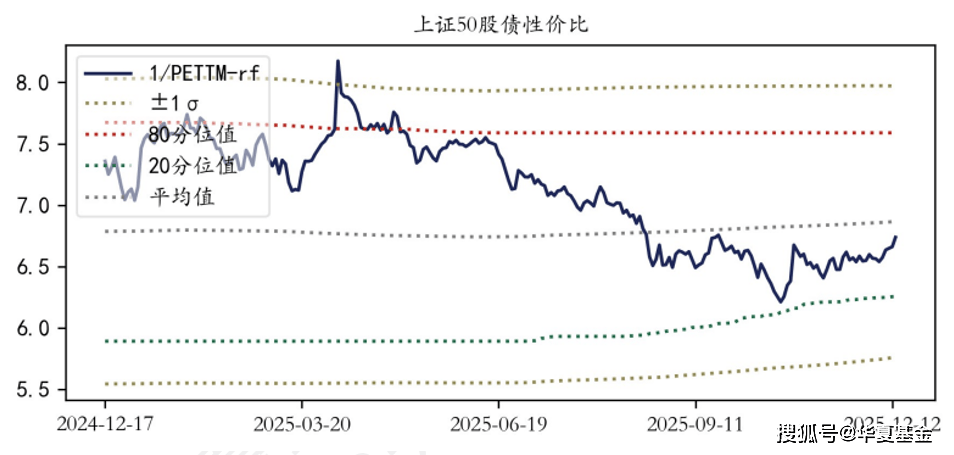
Group 1 - The market is experiencing fluctuations between adjustments and rebounds, with mixed sentiments among investors regarding whether to cut losses or buy more [1] - The external environment is not optimistic, with the Federal Reserve's recent interest rate cut highlighting internal divisions, particularly concerning stagnant inflation and a cooling job market [2] - The A-share market has shown a structural performance with seamless transitions between sectors, leading to the Shanghai Composite Index reaching new highs despite some volatility [2] Group 2 - As the year-end approaches, there is a decrease in risk appetite among investors, which explains the recent market adjustments [3] - The stock-bond valuation ratio indicates that major indices are in a middle state, neither particularly cheap nor overly expensive, based on the PE-TTM and ten-year government bond yield [3] - The number of new individual stock accounts is not at a high level, suggesting that the current market conditions do not reflect the typical signals of a market peak [6] Group 3 - The core driving force behind the recent market rally since April 7 is attributed to positive domestic signals, including policy support for the capital market, technological innovation, and new domestic capital inflows [8] - Despite external influences and geopolitical tensions, the fundamental logic of the current market rally remains intact, encouraging a cautious yet confident outlook for medium to long-term investments [8]
港股部分优质资产重新进入高性价比区间,港股科技30ETF(513160)涨超1%,本月以来累计吸金逾7亿元
Mei Ri Jing Ji Xin Wen· 2025-12-19 01:46
Core Viewpoint - The Hong Kong stock market opened higher today, with technology stocks leading the gains, indicating strong investor confidence in the sector [1] Group 1: Market Performance - The Hong Kong stock market saw a gap up opening, with notable increases in technology stocks such as AAC Technologies rising over 2%, and companies like SMIC, Meituan-W, Kingsoft Cloud, China Software International, and Huahong Semiconductor all rising over 1% [1] - The Hong Kong Technology 30 ETF (513160), which tracks the Hang Seng Hong Kong Stock Connect China Technology Index, opened strong and rose over 1% [1] Group 2: Fund Flows - Despite recent market fluctuations, there is significant optimism regarding the future of the Hong Kong stock market, with the Hong Kong Technology 30 ETF (513160) experiencing a continuous inflow of funds for 12 consecutive trading days, accumulating over 700 million yuan since December [1] - The latest scale of the Hong Kong Technology 30 ETF has surpassed 5.7 billion yuan [1] Group 3: Market Analysis - Analysts suggest that after a unilateral rise in September, the Hong Kong market has undergone adjustments influenced by fluctuating overseas macro expectations since October [1] - With both the A-share and H-share markets completing mid-term adjustments, some quality assets in the Hong Kong market have re-entered a high cost-performance range, suggesting a significant trading window for the year-end as profit expectations recover and macro expectations improve [1] Group 4: Investment Accessibility - For ordinary investors, directly investing in multiple Hong Kong technology stocks can be complex and have high entry barriers; however, the Hong Kong Technology 30 ETF (513160) allows for a one-time purchase of a basket of quality Hong Kong technology companies [1] - Retail investors can also access this through feeder funds (Class A: 024037; Class C: 024038) for easier investment [1]
央企98种违规经营投资责任追究情形明确
Zhong Guo Zheng Quan Bao· 2025-12-18 20:23
Core Viewpoint - The State-owned Assets Supervision and Administration Commission (SASAC) has released the "Implementation Measures for Accountability of Central Enterprises for Violating Business Investment Regulations," which expands the accountability framework for state-owned enterprises (SOEs) and emphasizes the leadership of the Party in managing these enterprises [1][2]. Group 1: Accountability Framework - The new measures increase the number of accountability scenarios from 72 to 98, covering 13 categories compared to the previous 11 [1]. - Specific scenarios for accountability include violations in group management, financing trade, and false trading practices [1][2]. Group 2: Risk Management and Financial Operations - The measures outline accountability for failing to adhere to state asset supervision regulations, leading to debt crises or malicious evasion of financial debts [2]. - Violations in financial operations, such as unauthorized trust, leasing, and illegal fundraising, will also incur accountability [2]. Group 3: Asset Loss and Consequences - The measures classify asset losses into three categories: general (below 5 million), significant (5 million to 50 million), and major (above 50 million) [2]. - Other adverse consequences are categorized similarly, affecting the enterprise, industry, or national level [2]. Group 4: Accountability Processing - The measures specify six types of accountability processing methods, including criticism, salary deductions, and legal referrals, which can be used individually or in combination [3]. - There is a provision for lifelong accountability for major decisions, including handling of retired or transferred individuals [3]. Group 5: Future Implementation - SASAC aims to enhance the accountability framework to ensure comprehensive coverage, clear responsibilities, and orderly processes, promoting high-quality development of SOEs within legal compliance [3].
见证历史!3.7万亿美元:反超谷歌,白银成全球第四大资产!我们普通人该跟风还是观望?
Sou Hu Cai Jing· 2025-12-18 14:51
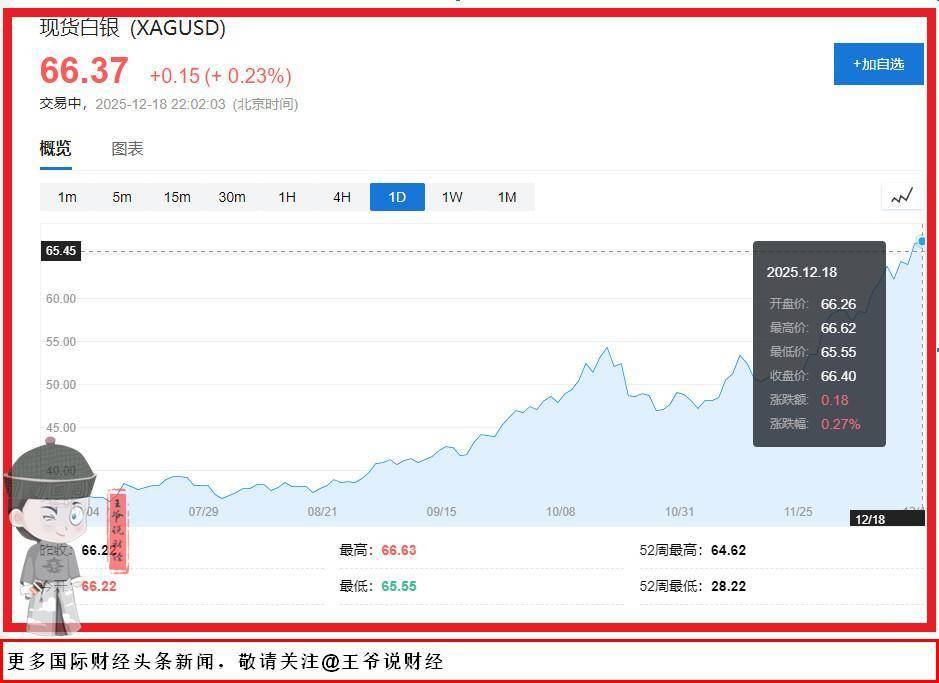
Core Insights - Silver has officially surpassed Google in market capitalization, becoming the fourth largest asset globally, with a market cap of $3.7 trillion as of December 18, 2025, and a year-to-date increase of over 130% [3][11]. Group 1: Market Performance - As of December 18, the spot silver price reached $66.5 per ounce, marking a significant milestone in its market performance [3]. - Silver's annual performance has set a record since 1982, significantly outperforming gold, which has seen a 65% increase this year [5]. Group 2: Factors Driving Silver's Surge - The ongoing supply shortage in the silver market has been a critical factor, with a deficit of 100-200 million ounces annually over the past five years, and mining production cannot meet this demand in the short term [7]. - Industrial demand for silver has surged, driven by sectors such as solar energy, electric vehicles, and AI data centers, with solar capacity expected to grow by 17% annually [7]. - Global capital is increasingly seeking safe-haven assets, with expectations of continued monetary easing by the Federal Reserve, leading to a significant inflow into silver [7]. Group 3: Future Outlook - The international silver bull market is expected to influence domestic financial products, with rising silver prices likely to boost returns on silver-related funds and bank products [9]. - Analysts suggest caution in the short term due to high implied volatility in silver options, but mid-term support for silver prices is anticipated from factors like geopolitical tensions and monetary policy [9][11]. - Predictions indicate that silver prices could reach $75 per ounce by the end of next year [9].