
新能源

Search documents
202602保险客户资产配置月报:A股关注中盘蓝筹,中债阶段性对冲配置
Orient Securities· 2026-02-10 07:20
Asset Allocation Insights - A-shares are focusing on mid-cap blue chips, with a neutral stance on bonds and US stocks, and a cautious outlook on gold in the short term[2] - The risk appetite in A-shares is shifting, with structural opportunities being the main focus amid overall market fluctuations[2] - Bond performance in February is expected to follow risk appetite trends, serving as a hedge against risk assets[2] Market Sentiment and Risk Assessment - Regulatory measures in January have led to a more balanced risk preference, with high-risk investors showing decreased appetite while low-risk investors gain confidence[9] - Trading sentiment across large, mid, and small-cap stocks has cooled, but medium-term uncertainty remains relatively stable[9] Industry and Sector Recommendations - Current price increases in cyclical goods are key indicators for asset allocation, with a positive outlook on sectors like chemicals, agriculture, and non-ferrous metals[30] - The report highlights two main drivers for price increases: industrialization in emerging economies and geopolitical tensions affecting import prices[30] Model and Strategy Suggestions - The recommendation includes increasing positions in mid-term bonds and focusing on sectors such as non-ferrous metals, chemicals, and military technology for February[5] - The multi-asset allocation strategy suggests a combination of passive and active enhancements, with a focus on risk parity models for stock and bond allocations[48] Performance Metrics - The low-volatility strategy has achieved an annualized return of 11.8%, while the high-volatility strategy has reached 18.1% since 2025[9] - The industry rotation strategy has outperformed benchmarks with an annualized return of 44.8% since 2025[9]
税收数据显示绿色转型提速
Zhong Guo Jing Ji Wang· 2026-02-10 06:39
Group 1: Industry Structure and Growth - The proportion of "dual high" industries is continuously decreasing, while green and low-carbon industries are developing well [1] - During the 14th Five-Year Plan period, the annual sales revenue growth rate of five high-energy-consuming industries is 1.8 percentage points lower than the average growth rate of industrial enterprises [1] - The share of high-energy-consuming industries in total industrial sales revenue decreased from 27% at the end of the 13th Five-Year Plan to 24.9% at the end of the 14th Five-Year Plan [1] Group 2: Green Technology and Services - The annual sales revenue growth rates for green technology services, including new energy, energy-saving, and environmental protection, are 51.1%, 28.5%, and 18.2% respectively [1] - The ecological protection and environmental governance industry has an annual sales revenue growth rate of 13.2%, providing technical support for green transformation [1] Group 3: Clean Energy Development - By 2025, the sales revenue from clean energy generation will account for 42.6% of total power generation sales revenue, an increase of 7.2 percentage points from the end of the 13th Five-Year Plan [1] - The annual sales revenue growth rate for wind and solar power generation during the 14th Five-Year Plan period is 25.4% [1] Group 4: New Energy Vehicles - The sales volume of new energy vehicles in China is expected to grow by 25.9% year-on-year in 2025 [2] - China has maintained its position as the world's largest producer and seller of new energy vehicles for ten consecutive years [2] Group 5: Environmental Tax Policies - Since the implementation of the environmental protection tax in 2018, a total of 111.06 billion yuan in tax reductions has been realized, promoting pollution control and clean production [2] - The number of urban and rural sewage and waste treatment plants benefiting from environmental tax incentives increased from 5,589 in 2021 to 6,415 in 2025, a growth of 14.78% [2] - The environmental tax revenue from major air pollutants, such as sulfur dioxide and nitrogen oxides, decreased by 33.8% and 34.03% respectively compared to 2020 [2] Group 6: Water Resource Tax Reform - The nationwide implementation of the water resource tax reform pilot is set for December 1, 2024, with positive results already observed [3] - In 2025, the amount of underground water extracted by taxpayers in new pilot areas decreased by 7.1% compared to 2024, with over 4,500 private wells shut down [3] - Special water usage for golf courses, ski resorts, car washes, and bathing facilities decreased by 34.3% compared to 2024 [3]
沪深北交易所同日“亮剑”:再融资新政对A股影响(附精选股票)
Sou Hu Cai Jing· 2026-02-10 06:14
Core Viewpoint - The simultaneous release of refinancing optimization measures by Shanghai, Shenzhen, and Beijing stock exchanges marks a significant transformation in China's capital market, aimed at enhancing capital allocation efficiency and reshaping the A-share market landscape [1]. Group 1: Policy Framework and Differences - The policy frameworks of the three exchanges are highly similar, focusing on "supporting the strong, limiting the weak, promoting innovation, and enhancing convenience and regulation" [2]. - Shanghai Stock Exchange emphasizes "main board" characteristics, tailoring financing rules for large, mature technology companies [2]. - Shenzhen Stock Exchange adopts a bolder stance on supporting technology innovation, easing fundraising restrictions for growth-oriented enterprises [2]. - Beijing Stock Exchange focuses on "innovative small and medium-sized enterprises," addressing their financing challenges with flexible policies [2]. Group 2: Strategic Insights on Separate Announcements - The decision to release policies on the same day rather than a joint announcement reflects the nuanced wisdom of tiered regulation in China's capital market [3]. - Different market positioning allows each exchange to cater to the unique characteristics and needs of the enterprises they serve, avoiding a one-size-fits-all approach [3]. - The simultaneous release creates a strong policy resonance, reinforcing market perception of deepening capital market reforms while maintaining the distinct identities of each exchange [3]. Group 3: Deep Impacts on Market Perception - The new measures aim to shift the long-standing fear of "blood-sucking" effects of refinancing, which was believed to drain market funds and destabilize the market [4]. - The principle of "supporting the strong, limiting the weak" will act as a catalyst for market differentiation, favoring quality companies, especially in hard technology, while raising barriers for poorly performing firms [4]. - The policy directs resources towards "new productive forces," providing strong support for leading companies in sectors like semiconductors, AI, biomedicine, and high-end manufacturing [5]. - Allowing companies that have experienced stock price declines to raise funds through methods like private placements and convertible bonds offers a lifeline to solid businesses facing temporary challenges [6]. - A complete regulatory loop is established, tightening post-fundraising supervision while relaxing initial approvals, transforming refinancing from a mere "money-raising tool" to an "engine" for corporate development [7]. Group 4: Implications for Investors - The coordinated actions of the three exchanges signify the entry of China's refinancing mechanism into a "precise drip irrigation" era, providing tailored financing support for different types of enterprises [8]. - Investors are advised to focus on genuinely innovative and well-governed companies while avoiding those that merely chase trends without substance [8]. - The transformation of refinancing from a "blood-sucking machine" to a "blood-producing pump" is expected to enhance the value discovery function of the A-share market, leading to a healthier and more vibrant capital market [8].








中部六省加快构建增长新引擎
Jing Ji Wang· 2026-02-10 06:04
Group 1: Economic Growth and Investment - The GDP of the central region is expected to approach 30 trillion yuan by 2025, with Henan leading at a growth rate of 5.6% [1] - The focus for 2026 among central provinces is on "stabilizing growth and expanding domestic demand," leveraging local resources and insights into new consumption trends [1] - Effective investment is crucial for stabilizing economic growth, with provinces exploring investment potential in water conservancy and other sectors [4] Group 2: New Consumption Trends - Central provinces are focusing on "emotional value" and "emotional economy" in their government work reports, indicating a shift in consumer trends [2] - Various provinces are cultivating new consumption growth points, such as the "first launch economy" and "night economy," to enhance consumer vitality [2][3] - Specific initiatives include promoting local business innovations and developing new consumption scenarios in provinces like Henan and Shanxi [2] Group 3: Modern Manufacturing and High-Tech Industries - The central region aims to build a modern industrial system with a focus on new energy, new materials, and optoelectronic information [6] - Provinces like Hubei and Hunan are advancing projects in high-tech sectors, including lithium batteries and new energy systems [6][7] - Jiangxi is enhancing its capabilities in aircraft manufacturing and electric vehicles, while Shanxi is focusing on high-end equipment manufacturing and new materials [7]
天津重磅发布:总投资1.82万亿元市级重点项目清单
Zhong Guo Fa Zhan Wang· 2026-02-10 05:48
Core Viewpoint - The Tianjin Municipal Development and Reform Commission has released a list of 1,112 key projects with a total investment of 1.82 trillion yuan to support high-quality development and achieve a good start for the 14th Five-Year Plan in 2026 [1] Group 1: Project Characteristics - The key projects for this year include 824 construction projects with a total investment of 1.4 trillion yuan and an annual planned investment of 202.19 billion yuan, along with 288 reserve projects totaling 422.47 billion yuan [2] - The projects exhibit five new characteristics, focusing on technology innovation, intelligent and green manufacturing, modern service industry enhancement, urban infrastructure improvement, and ensuring new guarantees for people's livelihoods [2][3][4] Group 2: Major Engineering Initiatives - Eight major engineering initiatives have been identified to drive quality and efficiency, including advanced manufacturing transformation, modern service industry expansion, and urban renewal [4][5] - The initiatives aim to deepen the integration of the Beijing-Tianjin-Hebei region and enhance infrastructure connectivity, with significant projects like the expansion of the airport and high-speed rail [4][5] Group 3: Innovation and Industry Development - Emphasis is placed on innovation as a core element for industrial transformation, with projects like the Tianjin University Synthetic Biology Research Institute and various national laboratories focusing on cutting-edge fields [5][6] - The manufacturing sector is prioritized for transformation and upgrading, with projects in new materials and intelligent manufacturing being accelerated to enhance competitiveness [7][8] Group 4: Modern Service Industry and Infrastructure - The modern service industry is being developed to support economic transformation, with financial services and logistics playing a crucial role in enhancing efficiency [8][9] - Infrastructure projects, including metro lines and urban drainage systems, are being expedited to improve urban resilience and service quality [9][10] Group 5: Social Welfare and Rural Development - Social welfare initiatives focus on education and healthcare improvements, with new schools and hospitals being constructed to enhance community services [13] - Rural revitalization efforts are being implemented to improve living conditions and promote sustainable agricultural practices [11][12] Group 6: Project Lifecycle and Support - The city is committed to providing comprehensive support throughout the project lifecycle, ensuring effective coordination among various stakeholders to facilitate project execution [14][15] - Key areas of focus include securing resources, expediting approvals, and aligning projects with national policy directions to maximize impact [14][15]
万象更“新” 无限可“能”——探访中国新能源项目建设运营一线
Zhong Guo Hua Gong Bao· 2026-02-10 05:29
Core Insights - The article highlights the rapid development of various green energy projects across China, emphasizing the country's commitment to transforming its energy landscape and promoting sustainable development during the Lunar New Year celebrations [1][2]. Group 1: Biomass Gasification Project - The "Donghua Furnace," a biomass gasification device developed by Donghua Engineering Technology Co., is successfully operational, utilizing agricultural waste to produce synthesis gas, which can significantly reduce carbon emissions by 70% to 90% compared to fossil fuels [4][5]. - The project aims to enhance the value of agricultural waste and contribute to local economic development while promoting ecological protection [6][7]. - The team is focused on continuous optimization of the gasification process, with confidence in the technology's applicability and replicability [7]. Group 2: Hydrogen Production Project - A hydrogen production project in Panzhihua, based on "concentrated solar water splitting" technology, is set to launch its commercial production line by December 2025, with an expected annual hydrogen output of approximately 200 tons [8][10]. - The innovative technology allows for a significant increase in hydrogen production efficiency, achieving a production rate that exceeds current laboratory benchmarks by over 100 times [9]. - The project has garnered interest from various government and corporate entities, indicating strong market potential for green hydrogen applications in industries such as metallurgy and chemicals [11]. Group 3: Geothermal Heating in Xiong'an - Xiong'an New Area has implemented geothermal heating across its urban areas, significantly reducing coal usage and CO2 emissions, with one heating season replacing 4,847 tons of standard coal and reducing CO2 emissions by 11,636 tons [14]. - The geothermal energy system utilizes a "direct extraction and reinjection" method, ensuring optimal energy utilization and minimal environmental impact [15]. - The area is developing into a comprehensive energy hub, integrating geothermal, solar, and smart energy systems to provide efficient energy services [16]. Group 4: Controlled Nuclear Fusion Research - New Hope Group is advancing in controlled nuclear fusion research, aiming to make fusion energy a viable and clean energy source within the next two decades [18][19]. - The group has achieved significant milestones with its "Xuanlong-50U" fusion device, positioning itself among the leading facilities globally [19][20]. - The long-term vision includes developing fusion energy as a key to future human civilization and addressing energy demands sustainably [20].

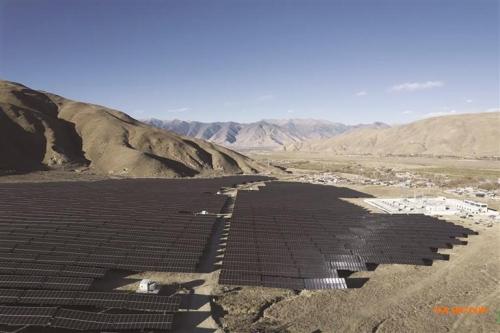
西藏山南市扎囊县罗堆村50兆瓦光伏治沙示范项目全容量并网发电
Ke Ji Ri Bao· 2026-02-10 04:56
Core Insights - The project is the first "photovoltaic + desertification control" demonstration project in Tibet, marking a significant step in the integration of clean energy development and ecological governance in high-altitude regions [1][3] - The project has a total installed capacity of 50 megawatts and is expected to generate approximately 100 million kilowatt-hours of electricity annually [3] - The innovative approach of "power generation on panels and desertification control beneath" allows for the cultivation of vegetation suitable for high-altitude growth, rehabilitating around 1,073 acres of desertified land [3] Company and Industry Developments - The project represents Guangdong Energy Group's first power generation initiative in Tibet, contributing to the establishment of a clean, low-carbon, safe, and efficient modern energy system in the region [1][3] - The investment in this project is expected to inject new momentum into local rural revitalization and ecological protection efforts [3] - Future plans include further exploration of "photovoltaic +" integration models to support ecological priority and green development in Tibet [3]
传媒股掀涨停潮,年内最牛新股盘中狂飙750%,白银基金复牌大跌4%
21世纪经济报道· 2026-02-10 03:56
Market Overview - A-shares experienced fluctuations on February 10, with the Shanghai Composite Index down 0.02%, the Shenzhen Component Index down 0.02%, and the ChiNext Index down 0.14% [1] - The North Star 50 Index saw a decline of over 1% during the session [1] Index Performance - The Shanghai Composite Index closed at 4122.34, with a slight decrease of 0.02% [2] - The Shenzhen Component Index closed at 14206.26, also down 0.02% [2] - The ChiNext Index closed at 1800.35, showing an increase of 0.19% [2] - The total trading volume reached 1.41 trillion [3] Sector Performance - AI application themes surged across the board, with sectors such as short drama games, cultural media, online games, virtual humans, and cybersecurity showing significant gains [4] - The photovoltaic industry chain experienced a pullback, particularly in the space photovoltaic sector, which led the decline [4] Media Sector Highlights - The media sector continued to rise, with companies like Jiechuan Co., Rongxin Culture, Shanghai Film, and others achieving consecutive gains [6] - ByteDance's launch of the AI video generation model Seedance 2.0 has sparked interest in AI-related stocks, capable of generating high-quality videos from text or images [6] - The pre-sale box office for the 2026 Spring Festival has already exceeded 860 million yuan, with notable films like "Flying Life 3" and "Silent Awakening" each surpassing 20 million yuan [6] New Stock Listings - ST Cuihua resumed trading on February 10, opening at a limit down of 10.77 yuan per share due to regulatory issues [8] - Three new stocks were listed, with N Electric Technology, N Linping, and N Aide achieving remarkable gains of 564.73%, 66.05%, and 195.96% respectively [8] - N Electric Technology, a subsidiary of China Electronics Technology Group, focuses on advanced electric energy solutions [8] Commodity Market - The National Investment Silver LOF saw a decline of over 6% upon resuming trading, attributed to a drop in precious metals prices [8] - As of the report, spot gold fell by 0.43% and spot silver by 1.7% [8]

近5日“吸金”12.51亿!A500ETF基金(512050)获资金积极布局,机构称风险释放春节红包可期
Xin Lang Cai Jing· 2026-02-10 03:34
Group 1 - The A500 Index (000510) has shown a slight increase of 0.04% as of February 10, 2026, with notable gains from stocks such as Light Media (up 17.79%) and Hangjin Technology (up 10.01%) [1] - The A500 ETF Fund (512050) has experienced active trading with a turnover rate of 15.51% and a transaction volume of 6.537 billion yuan, indicating a vibrant market [1] - Over the past week, the A500 ETF Fund has seen a scale increase of 1.246 billion yuan, with a total net inflow of 1.251 billion yuan over the last five trading days, averaging 250 million yuan per day [1] Group 2 - The A500 Index is designed to reflect the overall performance of the most representative listed companies across various industries, selecting 500 securities with larger market capitalization and better liquidity [2] - As of January 30, 2026, the top ten weighted stocks in the A500 Index include Ningde Times, Kweichow Moutai, and China Ping An, collectively accounting for 19.39% of the index [2] - The A500 ETF Fund is closely linked to the A500 Index and has several related funds, including the 华夏中证A500ETF联接 series and the 华夏中证A500指数增强 series [2]
万象更“新” 无限可“能” ——探访中国新能源项目建设运营一线
Zhong Guo Hua Gong Bao· 2026-02-10 03:22
Group 1: Biomass Gasification Project - The "Donghua Furnace" is a biomass gasification core device developed by Donghua Engineering Technology Co., which successfully produced synthesis gas from agricultural waste [4][5] - The gasification process can reduce carbon emissions by 70% to 90% compared to fossil fuels, producing high-value green chemicals and sustainable aviation fuel [4][5] - The project aims to enhance the value of agricultural waste and promote local economic development while reducing reliance on coal [6][7] Group 2: Hydrogen Production Project - The "Hydrogen Boat" project in Panzhihua is set to launch the world's first commercial production line based on "concentrated solar water electrolysis" technology, with an expected annual hydrogen output of 200 tons by December 2025 [8][9] - This innovative technology allows for a direct energy conversion from solar to hydrogen, significantly improving production efficiency [9][10] - The project has attracted interest from multiple government and corporate entities, indicating strong market potential for green hydrogen applications in industries such as metallurgy and chemicals [11][12] Group 3: Geothermal Heating in Xiong'an - Xiong'an New Area has implemented geothermal heating, replacing traditional coal heating and significantly reducing carbon emissions [15][16] - The geothermal energy system utilizes underground heat sources, achieving a heating area of 2.6 million square meters and reducing CO2 emissions by 14,140 tons annually [16][17] - The integration of geothermal heating with solar energy and smart grid technology aims to create a near-zero carbon energy microgrid [17][18] Group 4: Controlled Nuclear Fusion Research - New Hope Group is advancing controlled nuclear fusion technology, with the goal of making it a viable energy source within the next 20 years [19][20] - The team has achieved significant milestones, including the world's first megampere-level hydrogen-boron fusion discharge, positioning them at the forefront of global fusion research [20][21] - The initiative emphasizes the importance of talent development and collaboration with various research institutions to support the long-term goals of fusion energy commercialization [21]
