半导体制造

Search documents
安世半导体风波仍在持续,闻泰科技重要股东突然宣布减持
Mei Ri Jing Ji Xin Wen· 2025-11-05 22:21
Core Viewpoint - Wentech Technology (600745.SH) is facing significant challenges due to a major shareholder's plan to reduce its stake amid the ongoing turmoil surrounding Nexperia, a key subsidiary in the semiconductor industry [1][5]. Shareholder Actions - The second-largest shareholder, Wuxi Guolian Integrated Circuit Investment Center, plans to reduce its holdings by up to 37.34 million shares, representing 3% of the total share capital, valued at approximately 1.608 billion yuan based on the closing price of 43.08 yuan on November 5 [2][3]. - The reduction is attributed to the shareholder's operational needs, with the planned period for the sale set from November 27, 2025, to February 26, 2026 [3]. Financial Performance - In Q3 2025, Wentech reported a significant net profit increase of 279.29%, despite a 77.38% decline in total revenue to 4.427 billion yuan [6]. - The semiconductor business, primarily driven by Nexperia, generated 4.3 billion yuan in revenue, marking a 12.20% year-on-year increase, with a gross margin of 34.56% [6]. Nexperia's Situation - Nexperia is currently embroiled in a control dispute, leading to significant disruptions in the global automotive supply chain, with warnings from industry associations about potential production halts [5][6]. - Wentech has expressed uncertainty regarding the future performance of its semiconductor business, contingent on the resolution of Nexperia's control issues by the end of 2025 [6]. Customer Relations and Supply Chain - Nexperia China has assured customers of its ability to meet orders despite the supply chain disruptions caused by Nexperia's actions in the Netherlands [9]. - The Chinese Ministry of Commerce has criticized the Dutch government's interference in Nexperia's operations, emphasizing that the Dutch side bears full responsibility for the ensuing supply chain crisis [11].

美国关税施压,中国为何稳如泰山?英国专家点出四张关键底牌
Sou Hu Cai Jing· 2025-11-05 19:14
Core Viewpoint - The article discusses the escalating trade tensions between the United States and China, particularly focusing on the significant tariffs imposed by the U.S. on Chinese electric vehicles and China's retaliatory measures, highlighting China's resilience and strategic advantages in the face of U.S. pressure [1][3]. Group 1: Tariff Impositions - The U.S. has imposed a staggering 245% tariff on Chinese electric vehicles, which has prompted China to respond with a 125% counter-tariff, showcasing China's willingness to confront U.S. trade aggression [1][3]. - The U.S. initially implemented a 34% "reciprocal tariff," which quickly escalated to 145%, indicating a pattern of extreme pressure tactics that China is not yielding to [3]. Group 2: China's Strategic Advantages - China possesses four key advantages in trade: control over rare earth resources, a large domestic market, a diversified trade network, and effective policy management [4][6][9]. - China's rare earth resources are particularly critical, as it controls over 90% of global processing and has advanced separation and purification technologies, making it difficult for the U.S. to find alternatives [11][15]. - The domestic market, with a population of 1.4 billion and a growing middle class, provides China with a buffer against external shocks, allowing for a shift from "scale expansion" to "value competition" [6]. Group 3: Trade Network Diversification - China has diversified its trade network significantly, with imports and exports to Belt and Road Initiative countries growing by 6.2%, now accounting for 51.7% of its total trade, surpassing traditional markets like the U.S. and EU [7][9]. - In 2025, China's exports grew by 8.3% and imports by 7.4%, demonstrating resilience in a complex global economic environment [9]. Group 4: Impact on U.S. Industries - China's recent expansion of export restrictions on rare earth elements, now including 12 types, poses a significant threat to U.S. industries, particularly in automotive and defense sectors, which rely heavily on these materials [13][15]. - The U.S. military's reliance on Chinese rare earths is underscored by the fact that the F-35 fighter jet requires 417 kg of rare earth materials, with China supplying 82% of global rare earth permanent magnet materials [15]. Group 5: Overall Trade Resilience - China's foreign trade structure is evolving, with a 59.4% share of electromechanical product exports, including a 28.7% increase in high-value products like electric vehicles and solar panels [15]. - The diversification of markets, with significant growth in exports to ASEAN and Africa, enhances China's resilience against U.S. tariffs, making the impact of the U.S. trade war less significant than anticipated [17].

瑞达期货集运指数(欧线)期货日报-20251105
Rui Da Qi Huo· 2025-11-05 09:27
Report Summary 1. Investment Rating No investment rating for the industry is provided in the report. 2. Core View - On Wednesday, the freight index (European line) futures prices rose collectively, with the main contract EC2512 up 4.08% and the far - month contracts up 1 - 4%. The latest SCFIS European line settlement freight rate index decreased by 104 points from last week, a 7.9% MoM decline, weakening the freight rate support. Mainstream shipping companies issued price increase letters for November, and Maersk's successful price support in mid - to - late October boosted market confidence in the November price increase. The container handling business at Rotterdam Port has come to a complete standstill, increasing regional supply chain uncertainty. The positive results of the China - US economic and trade consultations in Kuala Lumpur improved market expectations for the trade war situation, driving up freight rates. The Middle East situation, especially the Israel - Palestine conflict, has postponed the expected resumption of Red Sea shipping. Germany's better - than - expected economic performance has boosted market confidence and stimulated the economic recovery in the eurozone. If Germany's proposed fiscal expansion policy has more detailed plans, it will enhance investors' confidence in the eurozone's medium - term growth. The freight rate market is currently affected by news, and the futures price is expected to fluctuate more violently. Investors are advised to be cautious, pay attention to the operation rhythm and risk control, and track geopolitical, shipping capacity, and cargo volume data in a timely manner [1]. 3. Summary by Directory 3.1 Futures Market Data - **Futures Prices**: The EC main contract closed at 1946.00, up 76.2; the EC secondary main contract closed at 1652, up 59.4. The EC2512 - EC2602 spread was 294.00, down 22.2; the EC2512 - EC2604 spread was 746.40, up 26.5. The EC contract basis was - 737.29, down 36.1 [1]. - **Futures Positions**: The EC main contract's open interest was 34072, up 3157 [1]. 3.2 Spot Market Data - **Freight Rate Indexes**: The SCFIS (European line) was 1208.71, down 104; the SCFIS (US West Coast line) was 1107.32, up 159.83. The SCFI (composite index) was 1550.70, up 147.24. The CCFI (composite index) was 1021.39, up 28.65; the CCFI (European line) was 1323.81, up 30.69 [1]. - **Other Indexes**: The Baltic Dry Index was 1958.00, down 13; the Panama - type freight index was 1788.00, up 13. The average charter price of Panama - type ships was 17564.00, unchanged; the average charter price of Cape - type ships was 23368.00, up 854 [1]. 3.3 Industry News - **Semiconductor Issue**: The Dutch side is responsible for the supply disruption of wafers to Anshi (China) by Anshi (Netherlands), causing turmoil in the global semiconductor supply chain. China will safeguard the legitimate rights and interests of enterprises and stabilize the global semiconductor supply chain [1]. - **China - Russia Cooperation**: China and Russia will expand mutual investment, strengthen cooperation in traditional fields such as energy, inter - connectivity, agriculture, and aerospace, and explore cooperation potential in new industries like artificial intelligence, digital economy, and green development [1]. - **US Government Shutdown**: The US federal government has been in a "shutdown" for 35 days as the Senate failed to pass the temporary appropriation bill, tying the longest "shutdown" record in US history [1]. 3.4 Key Data to Watch - November 6th: Germany's seasonally - adjusted industrial output monthly rate for September at 15:00; eurozone's retail sales monthly rate for September at 18:00; UK's central bank interest rate decision as of November 6th at 20:00; US initial jobless claims for the week ending November 1st (in ten thousand people) at 21:30 [1].
美国霸权遇挫!中国反制拿捏美命脉,特朗普急寻对华和解
Sou Hu Cai Jing· 2025-11-05 08:22
Group 1 - The core viewpoint of the article highlights a significant shift in the U.S.-China relationship, moving from extreme pressure to a more conciliatory approach, driven by economic realities and strategic necessities [1][12] - The U.S. agricultural sector, particularly soybean farmers, is under immense pressure due to a drastic decline in exports to China, which has historically been the largest buyer of U.S. soybeans [2][4] - The U.S. soybean export value was $24.58 billion in 2024, with China purchasing $12.64 billion, accounting for over half of total exports, but by 2025, China ceased all soybean purchases from the U.S. for the first time in 30 years [2][4] Group 2 - The U.S. Department of Agriculture reported a record high soybean inventory of 122 million tons, a 68% increase from the previous year, indicating a severe oversupply situation [4] - The price of soybean futures on the Chicago Mercantile Exchange dropped from $1,300 per ton in 2024 to below $600, leading to financial distress for over 40% of farmers unable to repay spring planting loans [4][11] - In response to the U.S. pressure, China implemented key countermeasures, including export controls on rare earth minerals and other critical technologies, effectively shifting the balance of power in the trade negotiations [6][11] Group 3 - China holds approximately 48% of the world's rare earth mineral reserves, with a dominant position in the supply of high-purity and high-value rare earth compounds, making it a critical player in high-end manufacturing [8][9] - The U.S. reliance on Chinese rare earths poses a significant challenge, as alternative suppliers lack the necessary refining capabilities to meet immediate demand [9][11] - The U.S. administration's acknowledgment of the need for cooperation on issues like fentanyl and the urgency expressed by the U.S. Soybean Association reflect a recognition of the shifting dynamics in the U.S.-China trade relationship [12][14]

荷兰还在“执迷不悟”,中方认定荷兰100%担责,再不知悔改一切后果自己承担!
Sou Hu Cai Jing· 2025-11-05 02:37
Core Viewpoint - The semiconductor industry is highly interconnected, and fluctuations can have widespread impacts on businesses and consumers globally. The Chinese Ministry of Commerce has issued a stern response to the Netherlands regarding its actions against ASML, highlighting the broader implications for international trade rules and geopolitical dynamics [1][3]. Group 1: Netherlands' Actions and Responses - The Dutch government's recent measures, including attempts to interfere with ASML's internal affairs and potentially strip Chinese companies of their equity, challenge fundamental international business principles [1]. - ASML's announcement on October 26 to suspend supplies to "ASML China" has severely threatened the stability of the global semiconductor supply chain, raising concerns among European and American automakers about inventory issues and ongoing supply chain crises [1][5]. Group 2: China's Position and Strategy - The Chinese government has shown a shift from initial tolerance and communication to a more assertive stance, emphasizing a "responsibility red line" in its dealings with the Netherlands [3]. - The Ministry of Commerce's statement reflects a pragmatic and firm approach, indicating that if the Netherlands continues to ignore its responsibilities, it will face consequences [3][5]. Group 3: Global Supply Chain Implications - ASML, while primarily a producer of basic components, plays a crucial role in the functionality of high-tech products like modern automobiles. The Dutch government's actions have triggered significant concerns across the global supply chain [5]. - China's Dongguan factory accounts for 70% of ASML's global packaging and testing capacity, and any supply disruptions will not only affect Chinese companies but also pose direct threats to European and American industries [5]. Group 4: Future Considerations - The ongoing dispute between the Netherlands and China highlights a stark contrast between the Netherlands' hardline stance and China's rational approach. The Netherlands faces a critical decision on whether to maintain its position or to respect and rebuild its relationship with China [5][7]. - The stability and development of global supply chains have become a consensus that countries must address in economic cooperation, with China asserting its capability to protect its legitimate rights and maintain international market order [7].

资讯早班车-2025-11-05-20251105
Bao Cheng Qi Huo· 2025-11-05 02:35
1. Macro Data Overview - GDP in Q3 2025 grew by 4.8% year-on-year, down from 5.2% in the previous quarter but up from 4.6% in the same period last year [1] - In October 2025, the Manufacturing PMI was 49.0%, down from 49.8% in the previous month and 50.1% in the same period last year [1] - The Non-manufacturing PMI: Business Activity in October 2025 was 50.1%, up from 50.0% in the previous month but down from 50.2% in the same period last year [1] - In September 2025, M1 and M2 increased by 7.2% and 8.4% year-on-year respectively, up from 6.0% and 8.8% in the previous month and -3.3% and 6.8% in the same period last year [1] - In September 2025, exports and imports increased by 8.3% and 7.4% year-on-year respectively, up from 4.3% and 1.2% in the previous month and 2.33% and 0.13% in the same period last year [1] 2. Commodity Investment Reference 2.1 Comprehensive - China hopes the Netherlands will stop interfering in corporate affairs and find a constructive solution to the Nexperia issue [2] - In October 2025, China's logistics industry prosperity index was 50.7%, down 0.5 percentage points month-on-month, but still in the expansion range [2] - The Shanghai Futures Exchange will adjust trading margins and price limits for alumina futures from November 7 [3] - The Dalian Commodity Exchange plans to adjust the coking coal delivery quality standards [3] - On November 4, 44 domestic commodity varieties had positive basis, and 25 had negative basis [4] 2.2 Metals - International precious metal futures generally closed lower due to increased market uncertainty [5] - After the implementation of the "Announcement", the price of pure gold jewelry per gram in multiple brands increased by 60 - 70 yuan [5] - As of November 4, the gold holdings of SPDR Gold Trust decreased by 0.30% from the previous trading day [5] - Codelco expects its copper production in 2025 to be 1.31 - 1.34 million tons, lower than the previous estimate [5] 2.3 Coking Coal, Steel, and Minerals - As of late October, the price of coking coal (main coking coal) increased by 3.95% month-on-month, reaching a new high since early December 2024 [7] - As of late October, the prices of all coal types in the national circulation field increased, with Shanxi Datun (Q5000) leading the increase [8] 2.4 Energy and Chemicals - The National Development and Reform Commission is paying close attention to the supply, demand, and price of natural gas during the heating season [9] - Canada may adjust its climate change policy, potentially abandoning the emission cap for the oil and gas industry [9] - Oman LNG and Spain's Naturgy signed a memorandum of understanding to explore a long-term LNG supply agreement [9] - Saudi Aramco expects global oil demand to reach 106 million barrels per day in 2025 and remain strong in 2026 [10] 2.5 Agricultural Products - As of late October, most agricultural product prices in the national circulation field increased, with live pigs (outside ternary) leading the increase [12] - As of November 2, the EU's soybean imports in the 2025/2026 period were 3.81 million tons, lower than the same period last year [12] - US soybean exports have decreased significantly, with exports to China in the first eight months of 2025 being only about 5.93 million tons [12] 3. Financial News Compilation 3.1 Open Market - The central bank resumed treasury bond trading in October, with a net investment of 20 billion yuan [13] - On November 5, the central bank conducted a 700-billion-yuan 3-month outright reverse repurchase operation, an equal-volume rollover [13] - On November 4, the central bank conducted a 117.5-billion-yuan 7-day reverse repurchase operation, with a net withdrawal of 357.8 billion yuan [14] 3.2 Important News - China will firmly safeguard the legitimate rights and interests of enterprises and stabilize the global semiconductor supply chain [15] - China and Russia will expand mutual investment and cooperation in various fields [15] - China welcomes Goldman Sachs to continue investing in China [15] - The central bank will adjust monetary policy according to the economic and financial situation [16] - The CSRC will introduce more opening-up measures to enhance the quality and efficiency of overseas listing filings [17] - In the first three quarters of 2025, China's service trade imports and exports totaled 5.93622 trillion yuan, a year-on-year increase of 7.6% [17] - The US federal government will continue to be shut down, and the current shutdown is about to set a new record [18] - The default rate of US office CMBS in October reached 11.8%, exceeding the peak during the 2008 financial crisis [19] 3.3 Bond Market Summary - China's bond market was weak and volatile, with most interest rate bond yields rising slightly [21] - The CSI Convertible Bond Index closed down 0.67% at 482.64 points, with a trading volume of 56.274 billion yuan [22] - The yields of European and US bonds generally declined [24][25] 3.4 Foreign Exchange Market - The onshore RMB closed at 7.1233 against the US dollar, down 8 points from the previous trading day [26] - The US dollar index rose 0.34% to 100.21 in late New York trading [26] 3.5 Research Report Highlights - The Fed will end its balance sheet reduction on December 1 [27] - Under the background of the "Southbound Connect" expansion, "Fixed Income +" products can allocate dim sum bonds and Chinese dollar bonds [27] - The "first-order inflection point" of the real estate market has appeared, and the absolute value may stabilize in 2026 at the earliest [28] 4. Stock Market News - The CSRC will introduce more opening-up measures to enhance the quality and efficiency of overseas listing filings [30] - The A-share market adjusted with reduced volume, with more than 3,600 stocks falling [30] - The Hong Kong Hang Seng Index closed down 0.79%, and the Southbound funds had a net purchase of HK$9.832 billion [31] - In October, the number of new A-share accounts opened was 2.31 million, a year-on-year decrease of 66% [31] - Since the beginning of this year, Southbound funds have had a cumulative net inflow of over HK$1.27 trillion, setting a new annual record [31] - Since October, well-known foreign institutions have surveyed 309 A-share listed companies [32] - Brokerage institutions expect the fundamentals of the Hong Kong stock market to improve in 2026 [32]
氮化镓GaN,要变天了?
3 6 Ke· 2025-11-05 02:05
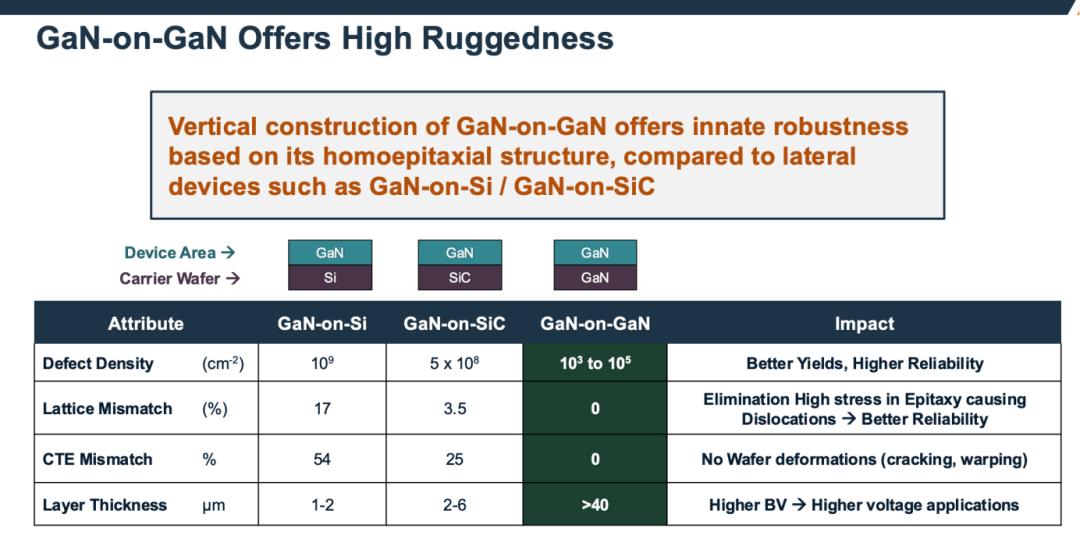
Core Insights - The article discusses the advancements in Vertical Gallium Nitride (vGaN) technology, particularly by ONsemi, which aims to overcome the limitations of traditional GaN in high-power applications [1][2]. Group 1: vGaN Technology Development - ONsemi has introduced a groundbreaking vGaN technology, providing samples of 700V and 1200V devices, targeting applications in AI data centers, electric vehicles, and energy storage [1][2]. - The acquisition of NexGen Power Systems by ONsemi for $20 million has revitalized vGaN development, which had previously faced challenges due to NexGen's bankruptcy [2][3]. Group 2: Manufacturing and Supply Chain - ONsemi emphasizes the importance of stable manufacturing and supply for vGaN, with over 15 years of research and more than 130 patents in this field [3]. - The company utilizes a GaN-on-GaN structure to enhance reliability and performance, addressing the high defect density issues associated with other substrates [3][4]. Group 3: Device Performance and Applications - vGaN devices are designed to achieve higher breakdown voltages, with ONsemi demonstrating capabilities of up to 3300V, while also reducing energy loss and heat generation [10][13]. - The unique properties of GaN allow it to meet the demands of high-frequency applications, making it suitable for electric vehicle inverters and other high-efficiency applications [13][14]. Group 4: Competitive Landscape - Other companies, such as Power Integrations and Shin-Etsu Chemical, are also advancing vGaN technology, with Power Integrations acquiring Odyssey and Shin-Etsu focusing on reducing material costs [23][25]. - Research collaborations, such as those between Shandong University and Huawei, have led to significant breakthroughs in vertical GaN devices, achieving impressive performance metrics [33][34]. Group 5: Future Trends - The industry is witnessing a trend towards integrating power transistors with system peripherals to enhance overall performance and reduce costs [40]. - The successful scaling of vGaN technology by ONsemi is expected to open new market opportunities and redefine the competitive landscape in power electronics [40].

安世半导体承认:不知道何时中方放行 约70%的产品均在中国完成封装
Guan Cha Zhe Wang· 2025-11-05 01:24
Core Viewpoint - The Chinese government has announced a potential easing of export controls in response to the Dutch government's seizure of a Chinese semiconductor company, which has raised concerns about chip supply disruptions in the global automotive industry [1][2]. Group 1: Government Actions - The Chinese Ministry of Commerce stated that it will consider the actual circumstances of companies and may grant exemptions for eligible exports, signaling a possible relaxation of export controls [1]. - This move is interpreted by foreign media as a sign that chip supply may be restored, alleviating concerns for global automakers facing production cuts or shutdowns [1]. Group 2: Company Responses - Ansem China announced on November 2 that it has sufficient finished and in-process inventory to meet customer demand until the end of the year and beyond, ensuring supply chain reliability [1]. - Ansem (Netherlands) informed affected customers in a letter dated November 3 that it cannot determine when chip supplies from its Dongguan factory in China will resume, indicating uncertainty in the supply chain [1]. Group 3: Industry Implications - Approximately 70% of Ansem's products are packaged in China, leading to potential urgent shortages in packaging capacity for the European market unless a diplomatic solution is reached [2].
中元股份易主鼎龙股份实控人 拟定增募资不超5亿巩固行业优势
Chang Jiang Shang Bao· 2025-11-05 01:12
Core Viewpoint - The control of Zhongyuan Co., Ltd. has changed hands again, with the new actual controllers being Zhu Shuangquan, Zhu Shunquan, and Zhu Mengqian, following a rapid process of only four days from announcement to completion of the transfer [1][2]. Group 1: Control Change Details - On October 30, 2023, a voting rights entrustment agreement was signed, allowing the new controllers to exercise the voting rights of 101 million shares, representing 25.63% of the total voting rights [2][3]. - The company plans to issue up to 61.35 million shares to the new controllers, raising a total of up to 500 million yuan, with the share price set at 8.15 yuan per share [3][4]. - After the issuance, the new controllers will collectively hold 26.68% of Zhongyuan's shares, solidifying their control over the company [3][4]. Group 2: Financial Performance - For the first three quarters of 2025, Zhongyuan reported revenue of 415 million yuan, an increase of 18.65% year-on-year, and a net profit attributable to shareholders of 113 million yuan, up 69.27% year-on-year [1][8]. - In the third quarter alone, the company achieved revenue of 178 million yuan, reflecting a year-on-year growth of 20.13%, and a net profit of 54 million yuan, which is a 60.21% increase compared to the same period last year [7][8]. Group 3: Strategic Intentions - The change in control is aimed at bringing in a new actual controller with strong financial capabilities to enhance the company's competitiveness and governance, promoting long-term sustainable development [8]. - The new controllers are expected to support the company's business development, ensuring a stable shareholding structure and reinforcing control over the company [3][4].


安世半导体承认:不知道何时中方放行
Guan Cha Zhe Wang· 2025-11-05 00:44
Core Viewpoint - The Chinese government has announced a potential exemption for exports to semiconductor companies affected by the Dutch government's seizure of a Chinese semiconductor firm, signaling a possible easing of export controls and alleviating supply concerns for global automakers [1][7]. Group 1: Impact on Semiconductor Supply Chain - The Dutch seizure of the semiconductor company has led to significant supply chain disruptions, with reports indicating that the affected company, Nexperia, is unable to guarantee chip supply from its Dongguan factory [1][4]. - Approximately 70% of Nexperia's products are packaged in China, raising concerns about a potential shortage in the European market unless a diplomatic resolution is reached [2]. - Nexperia (China) has stated that it is actively working on multiple contingency plans to ensure long-term supply stability and is confident in meeting customer demands starting next year [5]. Group 2: Responses from Industry and Government - The Chinese semiconductor industry association has pledged support for member companies like Nexperia to defend their legal rights and maintain a stable business environment [6]. - German automotive suppliers are seeking exemptions from Chinese export restrictions, with companies like ZF and Aumovio applying for waivers to mitigate the trade dispute [6]. - The Chinese Ministry of Commerce emphasized the need for the Dutch government to adopt a constructive approach to resolve the issue and maintain global supply chain stability [7].