潮玩

Search documents
二手价“大跳水”!LABUBU放量任买且48小时发货
Xin Lang Cai Jing· 2026-01-05 04:33
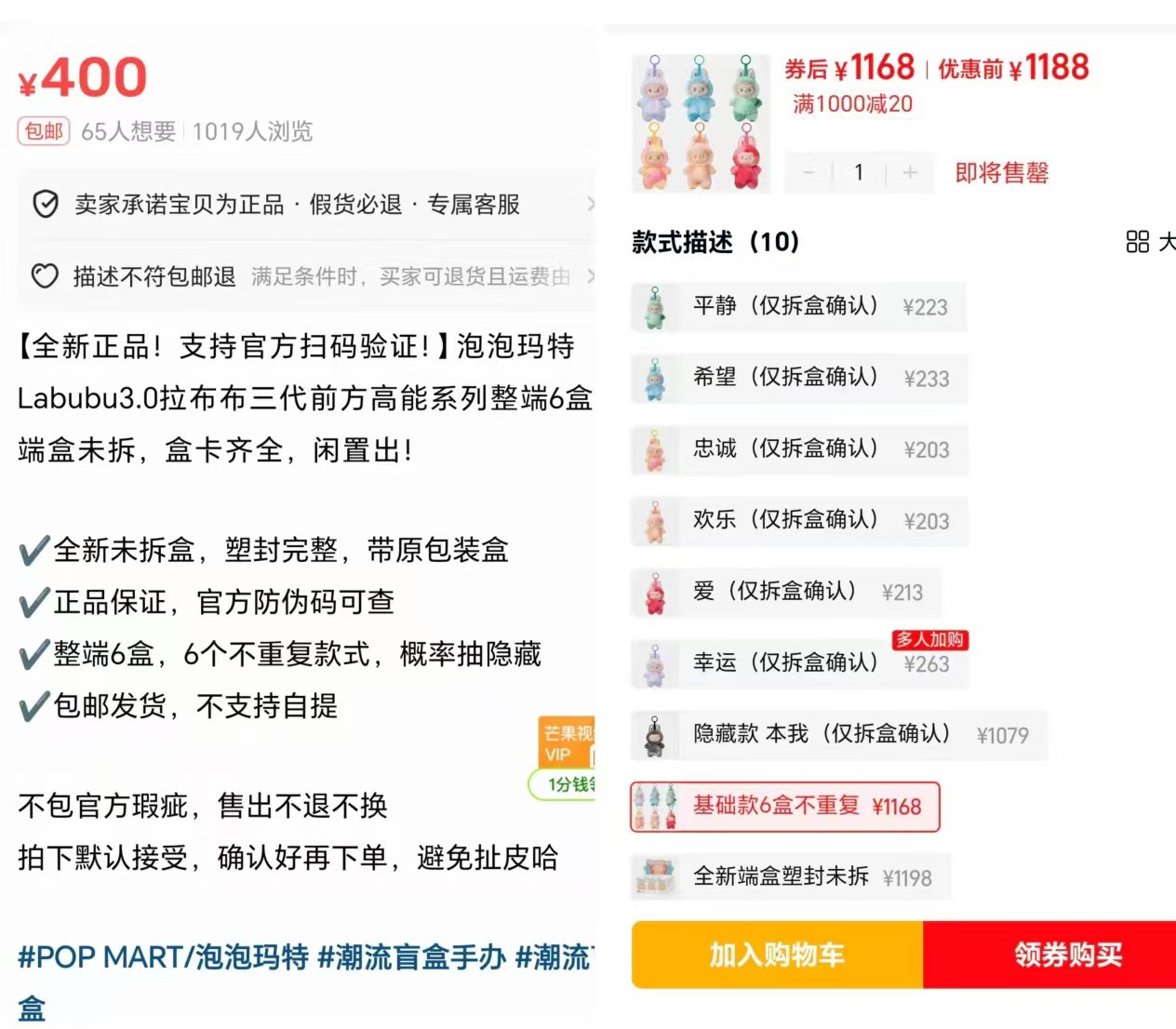
Group 1 - The resale prices of LABUBU products have started to return to rational levels, with some items selling below their original prices. For instance, the LABUBU 3.0 series is being resold for 400 yuan, significantly lower than the official price of 1168 yuan for the same product [1] - The average transaction price of the "Starry People Delicious Moment Blind Box" has also declined, with a current average of 143.7 yuan compared to a peak of 359 yuan [4] - The price drop of LABUBU products is primarily influenced by an increase in supply, as the company has conducted large-scale restocking following the global pre-sale launch [6] Group 2 - The official LABUBU store on Tmall now allows direct purchases of single or multiple boxes, with a promise of shipping within 48 hours, contrasting sharply with previous pre-sale situations where products sold out instantly [7] - Market expectations have shifted due to the increased supply, leading to a decline in speculative buying, which has contributed to the drop in second-hand prices. Some second-hand dealers have reported pausing their acquisitions of LABUBU products [8] - The stock price of Pop Mart has also decreased, falling over 30% from 339 HKD per share in August 2025 to current levels. Analysts suggest this is a strategic move to let LABUBU's value align with its intrinsic worth [8] Group 3 - Pop Mart's overall performance remains strong, with a 245% year-on-year revenue increase to 250 million yuan in Q3 2025. Revenue from China grew by 185% to 190%, while overseas revenue surged by 365% to 370% [8] - In the first half of 2025, Pop Mart reported revenues of 13.88 billion yuan, a 204.4% increase year-on-year, and an adjusted net profit of 4.71 billion yuan, up 362.8% [9] - The founder of Pop Mart has projected a full-year revenue of no less than 30 billion yuan for 2025, emphasizing the importance of healthy growth metrics [9]

泡泡玛特盘中涨超4% 公司海外版图再扩张 计划明年初完成加拿大东西两岸核心城市布局
Zhi Tong Cai Jing· 2026-01-05 03:57
Core Viewpoint - Pop Mart (09992) has successfully opened its first store in Canada, marking a significant step in its expansion into the North American market [1] Group 1: Store Opening and Market Response - The new store is located in Richmond, Vancouver, and features popular IP products such as THE MONSTERS, MOLLY, SKULLPANDA, and DIMOO, attracting considerable consumer attention [1] - The opening generated a buying frenzy, with queues extending to nearby stores within just two days [1] Group 2: Business Expansion Plans - Pop Mart's North American operations have seen significant growth, with over 60 physical stores established in the United States [1] - The company plans to open additional stores in Vancouver and make its debut in Toronto by early 2026, completing its strategic presence in key cities across Canada [1]

港股异动 | 泡泡玛特(09992)盘中涨超4% 公司海外版图再扩张 计划明年初完成加拿大东西两岸核心城市布局
智通财经网· 2026-01-05 03:55
Core Viewpoint - Pop Mart (09992) has successfully opened its first store in Canada, marking a significant step in its expansion into the North American market, with strong consumer interest and demand for its popular IP products [1] Group 1: Store Opening and Market Expansion - Pop Mart's first Canadian store opened in Richmond, Vancouver, attracting considerable consumer attention with popular products like THE MONSTERS, MOLLY, SKULLPANDA, and DIMOO [1] - The store experienced a buying frenzy within just two days of opening, with queues extending to nearby stores [1] - The company plans to open additional stores in Canada, including a new location in Vancouver and its first store in Toronto by early 2026, aiming to establish a presence in key cities across the country [1] Group 2: Financial Performance and Stock Movement - Following the news of the store opening, Pop Mart's stock price increased by over 4% during trading, with a current increase of 3.31%, reaching HKD 199.5, and a trading volume of HKD 1.294 billion [1]
新消费行业周报(2025.12.29-2026.1.2):元旦假期出行数据亮眼,抖音美妆GMV预计全年高增-20260105
Hua Yuan Zheng Quan· 2026-01-05 01:05
Investment Rating - The industry investment rating is "Positive" (maintained) [3] Core Insights - The New Year's holiday consumption data showed strong performance, likely due to the longer holiday period compared to the previous year. Anticipation for the upcoming 9-day Spring Festival holiday is high [4] - Emerging consumer goods are thriving, reflecting new consumption concepts among the younger generation. Understanding these new narratives is key to capturing growth opportunities in new consumer companies [17] Summary by Relevant Sections Travel Data - During the New Year's holiday, an estimated 590 million people traveled, with an average of 198 million daily, a year-on-year increase of 19.5%. Railway passenger volume is expected to reach 48.22 million, a 53.1% increase, while civil aviation passenger volume is expected to be 5.88 million, a 10.49% increase [4] Key Scenic Area Data - Ticket bookings for the "Xi'an City Wall and Beilin Historical Cultural Scenic Area" surged by 134% year-on-year. The growth rate for cultural tourism bookings in Xi'an reached 41%. Mountain scenic area ticket bookings increased by over 150%, with Huangshan orders up 544% year-on-year [4] Duty-Free Sales - During the New Year's holiday, 442,000 duty-free items were sold, a 52.4% increase year-on-year, with shopping amounts reaching 712 million yuan, up 128.9% [4] Restaurant and Hotel Performance - Data from Haidilao indicated over 400,000 table reservations for New Year's Eve and New Year's Day. Hotel occupancy rates increased by nearly 50% compared to the previous year [4] Cosmetics Market - Douyin's beauty segment GMV exceeded 210 billion yuan from January to November 2025, with an annual forecast of over 230 billion yuan. The growth rate for color cosmetics and beauty tools was 24.8%, slightly higher than skincare products [4] Investment Recommendations - In the beauty sector, focus on high-quality domestic brands with strong innovation, such as Maogeping and Shangmei. In the gold and jewelry sector, consider brands like Laopu Gold and Chaohongji that appeal to younger consumers. For trendy toys, companies with successful IP creation and operation experience, like Pop Mart, are recommended. In the ready-to-drink tea sector, strong brands with wide coverage like Mixue Group and Guming are suggested [5][17]
当“新式芭比”穿上千年壮锦
Xin Lang Cai Jing· 2026-01-04 21:06
(来源:经济参考报) 2025年来,以"拉布布"为代表的"娃"类潮玩持续走红。与"娃"一同走红的,还有"娃衣"。2025年5月, 某电商平台的"娃衣"单月销售额突破千万元。 "小时候喜欢给芭比娃娃换装的女孩们长大后,又在给'娃'定制衣服了。"85后"娃衣"手工艺人籍颖绮 说,现在流行的"娃"就像是"新式芭比",承载了成年人未泯的童心,还多了一份带着文化底蕴的审美。 有着独特文化底蕴的"民族风娃衣"成为不少玩家的心头好。在广西,"娃"们也穿上了壮锦做的衣裳。随 着传统文化元素与潮流玩具产业的融合呈现多元化态势,"娃衣经济"这一消费赛道正迎来快速发展期。 传统节庆催热壮锦"娃衣" 在"娃圈"里,"娃衣"并非普通的玩具配件,而是专为潮玩玩偶量身定制的服饰单品,涵盖上衣、裤子、 裙装、配饰等多个品类,以打造"娃"专属的个性化形象。 "我们是从壮锦'娃帽'做起的。"籍颖绮说,她经营的手工工坊主打民族风,位于广西壮族自治区博物馆 的文创商店内,之前最热门的产品是仿苗银壮锦系列冰箱贴和毛绒玩具,在此基础上,团队于2025年2 月开发出为娃娃制作的壮族女生造型头饰。 壮锦与云锦、蜀锦、宋锦并称"中国四大名锦",其历史可追溯至 ...
东莞这五年很“拼”!直面挑战“拼”发展
Nan Fang Du Shi Bao· 2026-01-04 15:22
1 回顾这五年,东莞有多"拼"! 南都N视频记者 曾奕静 实习生 包薇琦 2025年12月29日下午,广东省人民政府新闻办公室在广州举行"'十四五'广东成就"东莞专场新闻发布 会,介绍"十四五"期间东莞市经济社会发展总体情况和成效亮点。这场发布会,不仅是对国际制造业名 城东莞这五年奋斗历程的集中检阅,更是观察广东乃至中国制造业转型升级成效的重要窗口。 全域文明|东莞长安明确"三年三步走"路线图,推进九大行动 南都N视频记者 莫晓东 文明的传播,不仅在于线下的深耕,还在于线上的浸润。日前,长安在东莞各镇街当中率先采用线上形 式,集中发布展播47部优秀宣讲微视频,并在"欢乐长安"微信公众号专栏展播,以"小屏幕"承载"大文 明",用"微宣讲"传递"大能量",为全域文明建设注入鲜活动能,彰显长安"以文化人、以文润城"的生 动实践。 以全域文明建设为重要抓手,东莞更多的镇街(园区)也正在发力,合力打造一座有广度、有厚度、有温 度,和美宜居、崇德向善的现代化文明城市。 3 正如会上所言,"十四五"时期是东莞发展历程极不寻常、极不平凡的五年,也是一千多万东莞人民凝心 聚力、团结奋进,书写高质量发展精彩篇章的五年。 面对复杂 ...


社会服务行业周报:元旦海南旅游消费活力释放,美图拟内设千万风投转型AIAgent-20260104
KAIYUAN SECURITIES· 2026-01-04 14:14
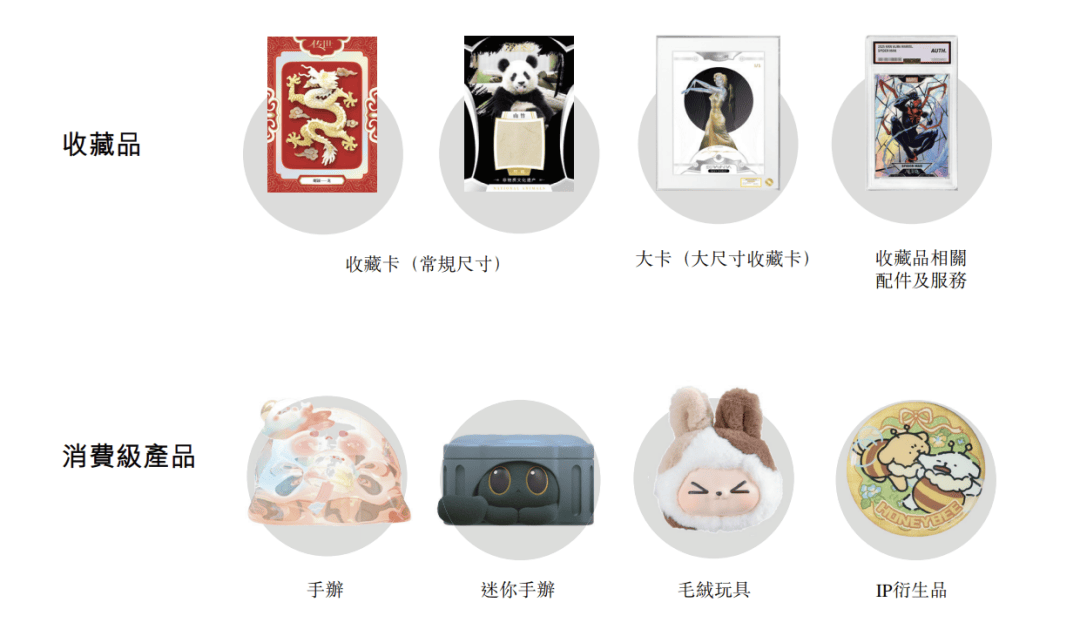
Investment Rating - The investment rating for the social services industry is "Positive" (maintained) [1] Core Insights - The report highlights the robust growth in domestic tourism during the New Year holiday, with 142 million domestic trips taken, representing a 5.2% increase compared to 2024. Total spending reached 84.789 billion yuan, up 6.3% year-on-year [14] - Suplay Inc. has submitted its listing application to the Hong Kong Stock Exchange, focusing on high-end collectible non-combat IP cards, with a significant revenue increase of 40% year-on-year [21][22] - Meitu is transitioning to an AI Agent model, with plans to establish a venture capital fund of 10 million yuan to encourage employee entrepreneurship, aiming to enhance product innovation efficiency [40][46] - The sports fashion sector is experiencing rapid growth in China, with Lululemon's revenue in the mainland increasing by 46% year-on-year, reflecting a shift in consumer attitudes towards health and lifestyle [47][50] - Retail giants Hema and Sam's Club are entering an accelerated expansion phase, with Hema's revenue expected to grow by over 40% in 2025, and Sam's Club projected to exceed 140 billion yuan in sales, also showing strong online performance [61][63] Summary by Sections Domestic Tourism - During the New Year holiday, domestic travel reached 142 million trips, a 5.2% increase from 2024, with total spending of 84.789 billion yuan, up 6.3% year-on-year. Hainan's tourism market is thriving post-border closure, with significant increases in airport passenger traffic [14][19] Collectible IP Cards - Suplay Inc. focuses on high-end collectible non-combat IP cards, with a revenue of 283 million yuan in the first three quarters of 2025, a 40% increase year-on-year. The company leads the domestic market in collectible cards [21][22][38] AI Transformation - Meitu is shifting towards an AI Agent model, planning to set up a venture fund to foster innovation. The company aims to enhance its product offerings and operational efficiency through this transformation [40][46] Sports Fashion - Lululemon's revenue in China surged by 46% year-on-year, indicating a growing trend where clothing reflects lifestyle choices. The brand has expanded its presence with 175 stores in the region [47][50] Retail Expansion - Hema is set to open nearly 100 new stores in 2026, with a revenue growth of over 40% expected. Sam's Club is also expanding, with sales projected to surpass 140 billion yuan, driven by strong same-store sales and online growth [61][63]
又有米哈游投资的公司拟上市:单品爆卖5000万,5年做到行业第一
Sou Hu Cai Jing· 2026-01-04 11:33
Core Viewpoint - Suplay, a collectible card company backed by miHoYo, has submitted its IPO application to the Hong Kong Stock Exchange, aiming to capitalize on its strong market position and growth potential in the collectible and consumer product sectors [1][13]. Company Overview - Suplay was established in 2019 and operates globally, focusing on IP collectibles and consumer products, with brands including Kakawoo, Heyfen, and Letao Valley [1]. - The company primarily engages in the sale of blind box toys through its mini-program on WeChat and direct sales via Tmall, as well as through retail and specialty card stores [2]. Business Model and Market Position - Suplay's CEO, Huang Wanjun, and CFO, Li Jing, have significant experience in operations and investment analysis, contributing to the company's strategic direction [5]. - As of September 30, 2025, Suplay's flagship brand Kakawoo ranks first in China's collectible non-combat card market, holding a market share greater than the combined total of its second and third competitors [5]. Consumer Demographics and Engagement - The company targets young consumers, with over 99% of its customers aged 18 and above, and maintains a high repurchase rate exceeding 75% for its collectible cards [8]. - Suplay's products are noted for their craftsmanship and collectible value, with approximately 80% of its cards receiving the highest PSA rating, compared to an industry average of 44.6% [8]. Financial Performance - Suplay's revenue has shown significant growth, with 2023 revenue at 146 million RMB, projected to increase by 92.5% to 281 million RMB in 2024, and 2025 revenue for the first nine months already surpassing the previous year's total [9]. - The company's gross profit margin has improved from 41.7% in 2023 to 54.5% in the first nine months of 2025, indicating a successful strategic shift towards higher-margin collectible card sales [10]. Revenue Composition - The revenue from collectibles has increased from 32.9% in 2023 to 70.0% in the first nine months of 2025, highlighting the growing importance of this segment to Suplay's overall business [10][11]. - Suplay also engages in the production of various IP-based consumer products, which complement its high-end collectibles [10]. Strategic Partnerships - MiHoYo is a significant strategic investor in Suplay, holding approximately 11.86% of the company after leading an $8 million investment in 2021 [13]. - The partnership has led to the development of various products based on MiHoYo's IPs, including popular franchises like Genshin Impact and Honkai Impact [15][17].
首发、首秀、首店齐上阵,沪上潮玩消费迎开年“嘉年华”
Sou Hu Cai Jing· 2026-01-04 10:23
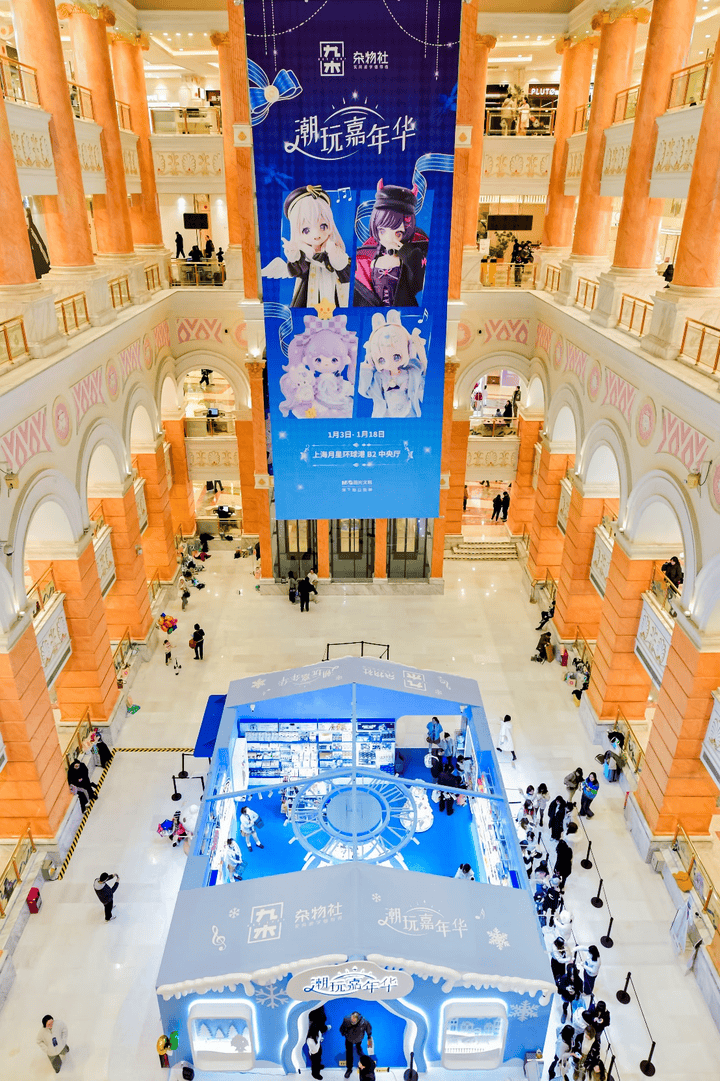
Group 1 - The core event is a high-end collaboration fashion show by M&G Stationery, marking the launch of a large-scale潮玩 festival in Shanghai, aimed at tapping into the emerging潮玩消费 market [1] - M&G Stationery is transitioning from a traditional stationery manufacturer to a proponent of trendy cultural lifestyle products, aligning with the growing demand from the Z generation [1] - The collaboration with Shanghai Global Harbor is based on a shared understanding of Z generation consumption trends, aiming to create a cultural experience for young consumers [1] Group 2 - The independent brand "Jiumu Zawuwu" under M&G has launched a newly upgraded store in Shanghai Global Harbor, inspired by the "Cosmic Cube" theme, providing an immersive and exploratory潮流 aesthetic space [3] - The store features numerous limited edition products, including a globally limited edition of 3,000 Hatsune Miku keychains and潮玩新品 from popular IPs like EVA, Detective Conan, and Harry Potter, attracting young consumers [3] - A pop-up潮玩 carnival themed "Future Snow House" has been created in the mall atrium, further enhancing the shopping experience [3]

「谷子经济」激活文化消费新引擎,卡游以「国潮+科技」领航千亿级新赛道
IPO早知道· 2026-01-04 09:33
Core Viewpoint - The article emphasizes the emergence of the "Guzi Economy" as a significant cultural and economic phenomenon in China, driven by policy support and market vitality, with companies like KAYOU leading the way in the cultural creative industry [3][24][29]. Group 1: Market Overview - By 2024, the market size of the "Guzi Economy" in China is projected to reach 168.9 billion yuan, a 40.63% increase from 2023, and is expected to exceed 300 billion yuan by 2029, showcasing resilience in a challenging consumption environment [9]. - The "Guzi Economy" is seen as a vibrant intersection of traditional culture and modern consumption, marking a shift from "traffic monetization" to "value cultivation" in the cultural industry [9][24]. Group 2: KAYOU's Business Model - KAYOU has successfully transformed into a leading domestic anime card brand by integrating national trend elements into its original IP cards, exemplifying the potential of the "Guzi Economy" as a representative case of industrial upgrading [4][12]. - The company reported a revenue of 10.057 billion yuan in 2024, a 278% year-on-year increase, attributed to its deep integration with national trend IPs and a dual-driven approach of "culture + intelligent manufacturing" [14][15]. Group 3: Cultural Integration and Product Innovation - KAYOU focuses on deeply exploring traditional Chinese culture and developing national trend culture, launching successful products like the "KAYOU Three Kingdoms" card series and collaborations with renowned artists [16][18]. - The company has established a comprehensive product matrix that includes collectible cards, creative stationery, and various derivative products, enhancing consumer experience and expanding market potential [20][21]. Group 4: Global Expansion Strategy - KAYOU is expanding its global footprint by establishing subsidiaries in Japan, the United States, and Hong Kong, aiming to connect with global consumers through high-quality products and cultural exports [21][22]. - The company has secured global licenses for popular international IPs, positioning itself to leverage local preferences while promoting Chinese traditional culture on the international stage [21][22]. Group 5: Policy Support and Future Outlook - The central government's policies, such as the "Consumption Promotion Special Action," provide a supportive framework for the development of cultural derivative products, encouraging the integration of traditional culture into product design [25][26]. - KAYOU's business model exemplifies the effective synergy between product experience, interactive operations, and advanced manufacturing capabilities, contributing to a robust cultural creative ecosystem [26][28].