
种植业

Search documents
稳中求进每月看 | 绘就笃行致远新图景——11月全国各地经济社会发展观察
Xin Hua She· 2025-11-30 13:51
Group 1: Agricultural Production - The focus is on enhancing winter wheat planting to ensure a strong foundation for summer grain production, with over 95% of winter wheat sown by November 20 [3] - Various regions are implementing advanced agricultural techniques and technologies to improve planting quality and efficiency, such as using high-performance precision seeders and organic fertilizers [2][3] - Local governments are actively supporting farmers with technical guidance and resources to mitigate the impact of adverse weather conditions on grain production [2][3] Group 2: Consumer Market Trends - The consumer market is evolving with innovative models such as drone delivery and automated transport, driven by a focus on creating dynamic and balanced ecosystems [4][5] - The government has initiated policies to enhance the adaptability of consumer goods supply and demand, with 19 key tasks outlined to promote new consumption scenarios and business models [4] - Platforms like Douyin and Taobao are leveraging technology to optimize supply chains and enhance consumer experiences, indicating a shift towards personalized and quality-driven consumption [4][5] Group 3: New Productive Forces - The integration of artificial intelligence in manufacturing is accelerating the development of new productive forces, exemplified by innovations in waterless dyeing technology [6][7] - Various regions are fostering the convergence of manufacturing and service industries, with significant advancements in digital economy initiatives [6][7] - The recent China International Import Expo showcased numerous new products and technologies, highlighting China's position as a rapidly innovating market [6][7] Group 4: Urban Renewal - Urban renewal initiatives are being implemented across the country, focusing on improving living conditions and upgrading infrastructure in old neighborhoods [8][9] - The government emphasizes a systematic approach to urban renewal, addressing planning, funding, and governance to ensure effective implementation [8][9] - Smart community management platforms are being introduced to enhance urban governance and improve residents' quality of life [9]
稳中求进每月看丨绘就笃行致远新图景——11月全国各地经济社会发展观察
Xin Hua Wang· 2025-11-30 09:45
Group 1: Agricultural Production - The autumn and winter planting season is crucial for agricultural production, with efforts focused on improving sowing technology to ensure a good harvest for summer grain next year [10][11]. - As of November 20, over 95% of the winter wheat has been sown nationwide, with significant advancements in technology such as high-performance precision sowing machines being utilized [11]. - Various regions are implementing measures to enhance sowing quality and efficiency, including the use of organic fertilizers and mechanized sowing techniques [10][11]. Group 2: Consumer Market Trends - The consumer market is evolving towards personalization, quality, and scenario-based consumption, driven by technology and innovative supply-demand matching [14][17]. - The government has initiated policies to enhance the adaptability of consumer goods supply and demand, focusing on new technologies and market scenarios [16][17]. - Platforms like Douyin and Taobao are leveraging AI and algorithm optimization to improve consumer experience and support local industries [16][17]. Group 3: New Productive Forces - New productive forces are recognized as a core engine for developing new advantages and seizing future opportunities, with a focus on integrating technological and industrial innovation [20][23]. - The World Internet Conference showcased advancements in AI and flexible production technologies, highlighting their role in transforming traditional industries [22]. - Various regions are actively promoting the development of new productive forces, with significant initiatives in manufacturing and digital economy [22][23]. Group 4: Urban Renewal - Urban renewal is a systematic project aimed at enhancing the quality of urban life, with a focus on human-centered approaches and meticulous execution [26][30]. - Significant progress has been made in renovating old urban areas, with over 240,000 old residential communities improved during the "14th Five-Year Plan" period [29][30]. - Local governments are implementing diverse urban renewal projects, addressing infrastructure and community management challenges through innovative solutions [29][30].

今年九十月份,我省遭遇连续阴雨天气,小麦播期推迟 晚播大考,小麦能“逆袭”丰收吗
Da Zhong Ri Bao· 2025-11-30 00:38
初冬时节,齐鲁大地的沃野田畴渐渐换上了"绿装",而这比往年晚了一些。 九十月份,我省遭遇连续阴雨天气,给玉米等秋粮收获造成困难的同时,也导致下一茬小麦播期推 迟。小麦的播种和管理,直接关系明年的夏粮收成。目前,全省小麦播种情况如何?晚播对粮食产量有 影响吗?怎么有针对性地做好管理?近日,记者深入田间地头和有关部门,采访种粮大户、业内专家 等,回应关切。 迟来的秋播 ——全省小麦大面积晚播,约80%是进入11月播种的,目前已基本完成 眼下,在东明县本立道生种植家庭农场的1200亩麦田里,大约有400亩已经长出了嫩绿的幼苗,其 余地块的麦种还在努力破土而出。 前期,面对连阴雨,农场经营者崔世涛没有着急忙慌地抢早收玉米,而是充分延长灌浆期,等作物 完全成熟后,10月下旬才收,这比正常年份晚收了将近一个月。也正是因为他"沉得住气",玉米产量不 低于往年,质量也不错。 收完玉米紧接着就该播种小麦,而崔世涛依然没有急,"此前地里一踩一个脚印,太湿了。"他深 知,土壤墒情没达到播种条件,盲目抢播会适得其反。直到土壤手握成团、落地即散时,他才开始播 种,这比往年晚种20天甚至一个月,11月17日才全部播完。 而在高青县,山东 ...
吉林省镇赉县探索“以茭治碱” 让盐碱地变成金银滩(深阅读)
Ren Min Ri Bao· 2025-11-29 22:18
Core Viewpoint - The successful cultivation of water bamboo in saline-alkali land in Jilin Province has transformed previously unproductive land into a profitable agricultural venture, improving soil conditions and providing economic benefits to local farmers [1][8]. Group 1: Agricultural Innovation - The introduction of water bamboo cultivation has significantly improved soil quality in previously barren saline-alkali areas, with reports of over one million pounds of water bamboo produced [1][2]. - Farmers have observed that planting water bamboo enhances soil conditions, allowing for better growth of subsequent crops, leading to increased yields and reduced fertilizer costs [3][4]. - The survival rate of water bamboo seedlings improved from 40% to over 90% through scientific methods and collaboration with research institutions [6][7]. Group 2: Economic Impact - The cultivation of water bamboo has created job opportunities for nearly 200 villagers, with an average income increase of over 10,000 yuan per person [7][8]. - The market demand for water bamboo has surged, with prices exceeding local varieties by over 30%, indicating a strong economic potential for farmers [4][8]. - The development of over ten processed products from water bamboo has increased its market value by more than 30%, further enhancing economic returns for local farmers [8]. Group 3: Environmental Benefits - The cultivation of water bamboo has contributed to soil remediation, with pH levels decreasing from an average of 9.32 to 9.0, and organic matter content increasing by 10% [7][8]. - The integration of aquaculture with water bamboo farming has shown promising results in maintaining soil health and preventing salinization [7]. - The initiative aligns with broader ecological restoration efforts, promoting sustainable agricultural practices and enhancing local ecosystems [8].
沙漠“盲盒”开出美味物产 解锁“死亡之海”背后的绿色密码
Yang Shi Wang· 2025-11-29 08:50
Core Viewpoint - The Taklamakan Desert, once considered a barren land, is transforming into a "food oasis" due to desertification control efforts, showcasing a variety of desert delicacies [1] Group 1: Agricultural Developments - The region has successfully cultivated large areas of red willow, which serve as both windbreaks and protectors of valuable resources [3] - The area planted with the desert treasure, Cistanche, has reached 22,900 acres, with each farmer potentially increasing their annual income by 30,000 to 50,000 yuan [5] - The introduction of advanced agricultural techniques, such as vertical soilless cultivation, has significantly reduced the growth cycle of rice by nearly half [9][10] Group 2: Aquaculture Innovations - Local aquaculture has enabled the harvesting of crabs and Australian blue lobsters, providing fresh seafood options for residents [7] - The unique saline-alkali water conditions contribute to the firmer texture and sweeter taste of the seafood, although they also pose challenges for growth [9] Group 3: Culinary Offerings - The region is now producing a variety of fruits and vegetables, with an annual output of 70,000 tons from 1,000 greenhouses, including strawberries, peppers, cucumbers, and cherry tomatoes [9] - Traditional dishes featuring Cistanche, such as Cistanche stewed with lamb and honey Cistanche, are becoming popular, highlighting the local culinary innovations [12] Group 4: Environmental Impact - The transformation of the desert into productive land symbolizes a harmonious coexistence between humans and nature, turning a once barren area into fertile fields and fish farms [15]
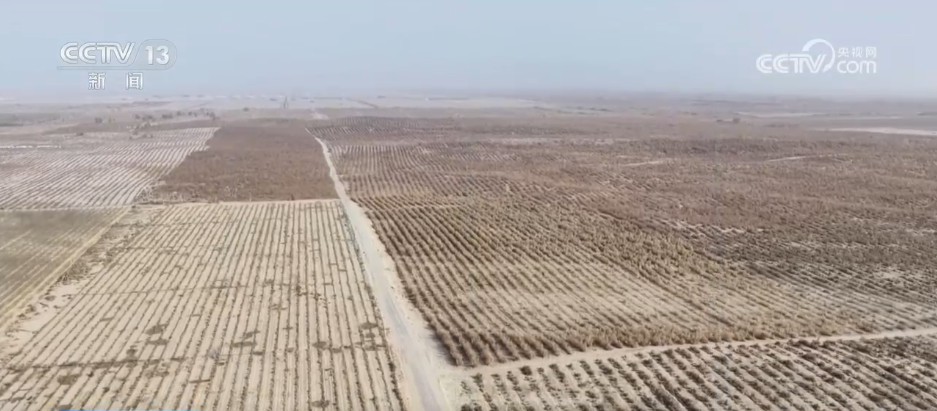
德庆县农技推广驿站多措并举助力乡村特色产业发展
Nan Fang Nong Cun Bao· 2025-11-28 15:00
Core Viewpoint - The article highlights the efforts of Deqing County's agricultural technology promotion station in supporting the development of local specialty industries through targeted training and guidance for farmers, particularly focusing on the cultivation of unique agricultural products like sweet potatoes and citrus fruits [2][10][19]. Group 1: Agricultural Training Initiatives - The agricultural technology promotion station has been actively conducting technical training and guidance services tailored to local specialty agricultural products [3][10]. - A recent training session was held in Dayi Village, focusing on scientific cultivation techniques for sweet potatoes, addressing key aspects such as characteristics, management, and safe storage [4][5][10]. - The training effectively promoted the application of scientific cultivation techniques for sweet potatoes, laying a solid foundation for the sustainable development of the sweet potato industry in the village [9][10]. Group 2: Technical Guidance for Citrus Fruits - Following the sweet potato training, experts provided on-site technical guidance for the early-stage harvesting of citrus fruits in Wanggang and Dayi villages [12][13]. - The guidance emphasized critical management practices such as pre-harvest water control, reasonable fertilization, pest and disease prevention, and scientific harvesting to enhance both quality and yield [14][15]. - Experts also offered professional market analysis to help farmers understand market trends and leverage the advantages of Deqing Gonggan, aiming to secure a favorable market share in the end-of-year fruit and vegetable market [16][18]. Group 3: Future Plans and Goals - The agricultural technology promotion station plans to continue collaborating with experts to conduct various agricultural technology outreach activities, enhancing farmers' professional skills and promoting scientific production management knowledge [17][18]. - These initiatives are aimed at injecting strong momentum into the development of local specialty industries and advancing rural revitalization efforts [19].

种植业板块11月28日涨2.76%,神农种业领涨,主力资金净流入6687.59万元
Zheng Xing Xing Ye Ri Bao· 2025-11-28 09:08
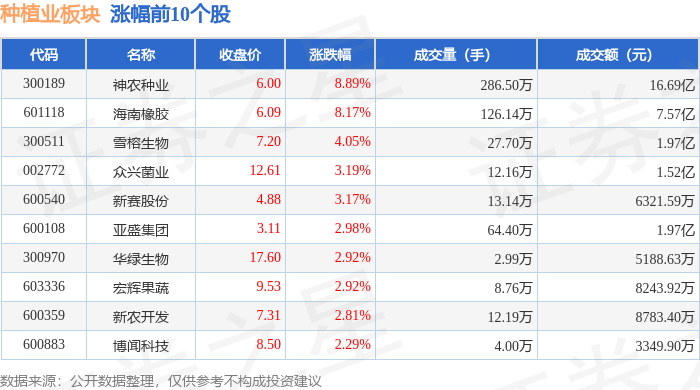
Core Insights - The agriculture sector saw a significant increase of 2.76% on November 28, with Shennong Seed Industry leading the gains [1] - The Shanghai Composite Index closed at 3888.6, up 0.34%, while the Shenzhen Component Index closed at 12984.08, up 0.85% [1] Sector Performance - Shennong Seed Industry's stock price rose by 8.89% to 6.00, with a trading volume of 2.865 million shares and a transaction value of 166.9 million yuan [1] - Hainan Rubber and Xuecheng Biotechnology also performed well, with increases of 8.17% and 4.05%, respectively [1] - The overall trading volume for the agriculture sector was notable, with a total net inflow of 66.88 million yuan from main funds, while retail investors contributed a net inflow of 76.78 million yuan [1][2] Fund Flow Analysis - Hainan Rubber experienced a net inflow of 89.63 million yuan from main funds, despite a net outflow of 27.91 million yuan from speculative funds [2] - Shennong Seed Industry had a mixed fund flow, with a net inflow of 3.27 million yuan from main funds but a significant outflow of 29.97 million yuan from speculative funds [2] - The overall trend indicates a strong interest from retail investors in the agriculture sector, as evidenced by the net inflows across various stocks [2]


【新思想引领新征程】构建高效运转的黑土地保护体系,把“耕地中的大熊猫”保护好、利用好
Yang Guang Wang· 2025-11-28 03:08
Core Viewpoint - The Chinese government emphasizes the importance of protecting and utilizing black soil, referred to as the "panda of arable land," to ensure long-term benefits for the people and national food security [1][2]. Group 1: Black Soil Protection Initiatives - Since 2015, China has implemented the "Northeast Black Soil Protection and Utilization Pilot Project," focusing on infrastructure construction, protective farming, and soil erosion prevention during the "14th Five-Year Plan" period [1]. - The total investment in Jilin Province for black soil protection from 2021 to 2024 is projected to reach 30.601 billion, with an increase in soil organic matter by 1.44 g/kg [2]. - The "Lishu Model" of protective farming, characterized by straw coverage and mechanized planting, has been widely adopted and upgraded to enhance soil quality and agricultural efficiency [2]. Group 2: Regional Efforts and Achievements - In Northeast China, particularly in Liaoning Province, protective farming practices have been implemented since 2020, with a focus on straw coverage to prevent soil erosion and maintain soil moisture [3]. - By 2025, the central government plans to strengthen the management of erosion gullies in the Northeast black soil region, with local initiatives in Heilongjiang Province demonstrating effective soil protection techniques [3]. - During the "14th Five-Year Plan" period, over 400 million acres of black soil have been protected, and 33,000 erosion gullies have been managed, supported by the introduction of a black soil protection law [3][4].
今冬不放松,来年“丰”可期
Ren Min Ri Bao Hai Wai Ban· 2025-11-27 21:57
Core Insights - The article highlights the urgency of winter wheat planting in China due to delayed autumn harvests caused by prolonged rainfall, with farmers across various regions accelerating their planting efforts to ensure a successful summer grain harvest next year [1][2][4]. Group 1: Current Agricultural Conditions - In Shaanxi province, the autumn harvest has been delayed by over 15 days, with farmers now transitioning from autumn to winter wheat planting [2]. - The planting of winter wheat is critical, with farmers like Liu Lululu increasing seed and fertilizer usage due to the delayed planting period, with seed usage rising to 47 pounds per acre and fertilizer to 140 pounds [2][5]. Group 2: Technological Advancements in Farming - The article emphasizes the integration of technology in winter wheat planting, with farmers utilizing advanced machinery for efficient sowing and fertilization processes [5]. - Agricultural experts are providing technical guidance to farmers, focusing on optimal planting conditions and crop varieties that are resilient to adverse weather [5][7]. Group 3: Farmers' Perspectives and Future Outlook - Farmers express optimism about future yields, citing government support and the adoption of scientific farming techniques as key factors for potential success [7]. - There is a collective effort among farmers to share best practices and improve overall grain production capacity, with some planning to expand their planting areas [7].
主产区冬小麦播期推迟,晚播麦苗如何“逆袭”?
2 1 Shi Ji Jing Ji Bao Dao· 2025-11-27 12:57
Core Viewpoint - The winter wheat sowing in China is significantly delayed this year due to continuous rainy weather in key production areas, but the overall sowing area remains stable and the growth conditions are favorable for many regions [1][2][3]. Group 1: Sowing Progress - As of November 21, over 90% of the national winter wheat sowing has been completed, with key provinces like Henan and Shandong showing significant progress [1][2]. - The sowing pace in major production areas has been notably slower compared to previous years, primarily due to wet soil conditions that hindered agricultural machinery [2][3]. - By November 18, Henan had sown 81.16 million acres of winter wheat, accounting for 95.5% of the expected area, while Shandong and Jiangsu also reported over 90% completion [2][3]. Group 2: Growth Conditions - Despite the late sowing, many farmers report that the wheat seedlings are growing well, with some areas seeing heights close to 10 centimeters and multiple tillers [3][4]. - The use of protective tillage techniques has helped reduce soil compaction and improve growth conditions, contributing to a positive outlook for spring growth [3][4]. Group 3: Management Strategies - The Ministry of Agriculture has issued guidelines emphasizing the importance of winter management practices to ensure the wheat's safe overwintering, focusing on soil moisture control, pest management, and fertilization [6][7]. - Local agricultural departments are actively providing technical guidance to farmers, promoting practices such as no-till planting and integrated pest management to enhance wheat resilience [6][7]. - Specific recommendations include applying fertilizers to weak seedlings and managing water levels to prevent frost damage, ensuring a strong foundation for the upcoming summer harvest [6][7].