
新能源车

Search documents
论坛直播丨王庆生:谨防固态电池技术夸大 科学技术必须严谨务实
Xin Lang Cai Jing· 2025-09-20 05:39
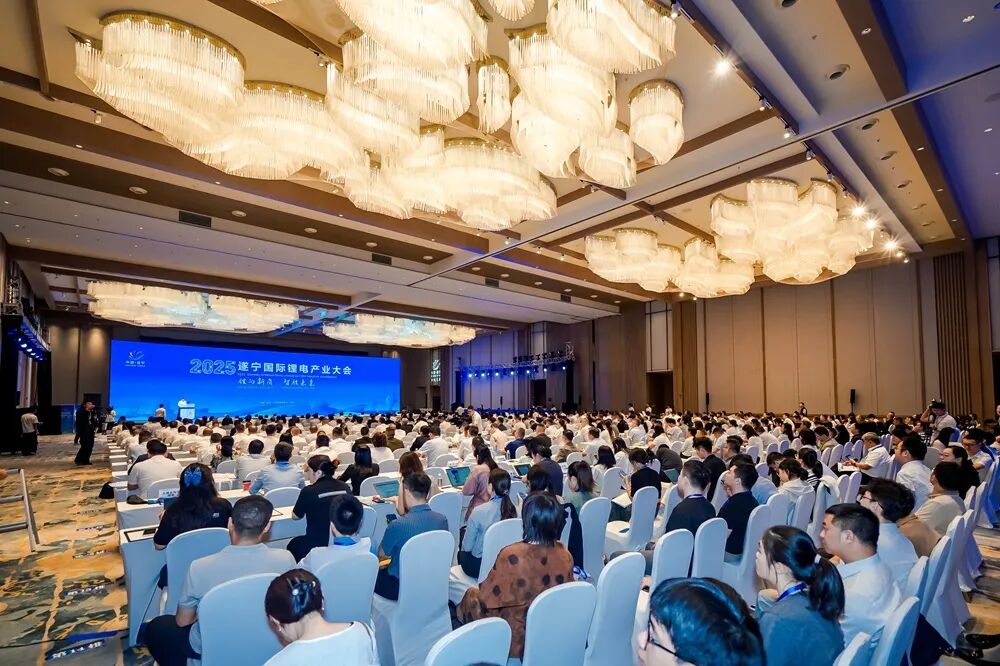
(来源:我的电池网) 导语丨mybattery 俄罗斯-圣理工大学教授/中俄新能源材料技术研究院院长王庆生提醒:谨防技术夸大,不负责任造势。"我们要反对脱离技术本质的过度炒 作,这不利于行业生态的健康发展。科学技术必须秉持严谨务实的态度,不应沦为资本运作的工具。" 电池百人会-电池网9月19日讯(林音 四川遂宁 图文直播)9月18日-20日,"2025遂宁国际锂电产业大会"在四川遂宁召开。本届大会以"锂向新 质 智胜未来"为主题,聚焦锂矿资源、液态锂电池、固态电池、钠电池、储能等热点赛道和话题,特邀中国、俄罗斯、印度、德国、澳大利 亚、加拿大等海内外大咖精彩分享,特设新品技术展示、供需资源对接、产业基金专题对接、园区参观等环节,汇聚行业知名院士、专家、产 业链上市公司、专精特新企业、国内外投资机构等400+各界人士,共同探索产业高质量发展之路,推动上下游供需共振,促进产业创新升 级。 俄罗斯-圣理工大学教授/中俄新能源材料技术研究院院长王庆生 19日下午,俄罗斯-圣理工大学教授/中俄新能源材料技术研究院院长王庆生在本次大会固态电池分论坛上作了题为《"准固态聚合物电池"新质 生产力技术-推动锂电产业发展》的主题 ...

中概互联、恒生科技和港股通科技有何异同
雪球· 2025-09-20 01:53
Core Viewpoint - The article discusses the recent performance of three major indices: the Hang Seng Tech Index, the Hong Kong Stock Connect Tech Index, and the China Internet 50 Index, highlighting their significant gains and the underlying factors driving these increases [4][5]. Group 1: Index Performance - On September 17, the Hang Seng Tech Index rose by 4.22%, the Hong Kong Stock Connect Tech Index by 3.27%, and the China Internet 50 Index by 3.40%, all reaching nearly four-year highs [4]. - The Hang Seng Tech Index has seen a year-to-date increase of 41.77%, while the Hong Kong Stock Connect Tech Index and China Internet 50 Index have increased by 58.54% and 47.51% respectively [5]. Group 2: Factors Driving Performance - External factors include rising expectations for a Federal Reserve interest rate cut and a more accommodative global liquidity environment, which benefit the overall liquidity of Hong Kong stocks [4]. - Internally, the ongoing AI wave and breakthroughs in core technologies like large models and cloud computing among domestic tech companies have significantly contributed to the strong performance of key tech stocks [4]. Group 3: Index Composition and Strategy - The China Internet 50 Index is characterized by a "head concentration + low-frequency adjustment" strategy, with over 50% of its weight concentrated in Tencent and Alibaba, and adjustments made semi-annually [7]. - The Hang Seng Tech Index employs a "diversified holding + high-frequency adjustment" strategy, with a maximum weight of 8% per stock and quarterly adjustments, allowing it to quickly capture emerging opportunities [7][8]. - The Hong Kong Stock Connect Tech Index has a middle-ground approach, with a maximum weight of 15% per stock and semi-annual adjustments, benefiting from liquidity premiums due to the inclusion of mainland investors [8]. Group 4: Industry Composition - The China Internet 50 Index focuses primarily on internet companies, with over 90% of its components in social media, e-commerce, and online entertainment, making it highly dependent on the internet industry cycle [9][10]. - The Hang Seng Tech Index has a balanced layout with approximately 55% in internet and over 40% in hard tech sectors like semiconductors and new energy vehicles [10]. - The Hong Kong Stock Connect Tech Index features a more diversified industry coverage, including hard tech, internet, and innovative pharmaceuticals, with a focus on growth [11]. Group 5: Valuation Analysis - As of September 16, the price-to-earnings (PE) ratio for the China Internet 50 Index is 21.11, placing it in the 18.01% historical percentile, indicating it is at a historical low [15]. - The Hang Seng Tech Index has a PE ratio of 24.24, in the 35.07% historical percentile, while the Hong Kong Stock Connect Tech Index has a PE ratio of 25.84, in the 53.31% historical percentile [15]. - All three indices are currently at relatively low or reasonably low valuation levels, suggesting potential for valuation recovery [16]. Group 6: Investment Suitability - The China Internet 50 Index is suitable for investors who believe in core assets, benefiting from the certainty of leading companies like Tencent and Alibaba [18]. - The Hang Seng Tech Index is recommended for balanced exposure to both soft and hard tech sectors, with a diversified holding strategy reducing single-industry risk [18]. - The Hong Kong Stock Connect Tech Index is ideal for investors looking to capture multidimensional growth opportunities in technology, with a focus on both growth and liquidity [18].



A股最新估值表(2025年9月18日)
天天基金网· 2025-09-20 01:29
Core Viewpoint - The article provides a comprehensive analysis of the valuation metrics of various A-share indices, highlighting the current market conditions and sector performance in terms of price-to-earnings (P/E) and price-to-book (P/B) ratios, as well as other financial indicators. Valuation Metrics Summary - The overall A-share market has a P/E ratio of 17.2 and a P/B ratio of 1.79, with P/E percentile at 35.6% and P/B percentile at 23.28% [3]. - The North Star 50 index shows a notably high P/E ratio of 53.03, with a percentile of 97.24%, indicating a potentially overvalued market segment [4]. - The ChiNext index has a P/E ratio of 38.52, with a percentile of 34.73%, suggesting a relatively lower valuation compared to other indices [4]. Sector Performance Summary - The semiconductor sector has a high P/E percentile of 93.93, indicating strong investor interest and potentially high growth expectations [4]. - The insurance sector, in contrast, has a very low P/E percentile of 0.99, suggesting it may be undervalued compared to other sectors [4]. - The real estate sector has a P/E ratio of 30.53 with a percentile of 58.75%, reflecting moderate valuation levels [4]. Style Index Analysis - The CTV 50 index has a P/E ratio of 9.51, with a percentile of 74.08%, indicating a relatively high valuation among style indices [6]. - The dividend low volatility index shows a P/E ratio of 7.88, with a percentile of 73.30%, suggesting it is also highly valued [7]. - The small-cap growth index has a P/E ratio of 28.98, with a percentile of 67.19%, indicating a strong growth outlook [7].

3万中国人涌入非洲:种菜、做电商,卖期房丨一线
吴晓波频道· 2025-09-20 00:29
Core Viewpoint - Africa is becoming increasingly significant to China's economy, with exports to Africa growing by 25.9% year-on-year, contrasting with a 13.5% decline in exports to the U.S. [3][4] Group 1: Economic Growth in Africa - East Africa is projected to have a real GDP growth rate of 5.3% in 2025 and 6.1% in 2026, leading other regions in Africa [6] - Ethiopia and Rwanda are expected to achieve GDP growth rates of around 7% in 2025, while Kenya, South Sudan, Uganda, and Tanzania are projected to exceed 5% [7] Group 2: Ethiopia's Economic Landscape - Ethiopia, known as the "Roof of Africa," has a population of approximately 120 million and a median age of 19, making it a labor-intensive market [13][19] - The country relies heavily on agriculture, which constitutes 60% of its GDP, leading to high consumer prices that are 3-10 times higher than in China [16] - Despite its rich labor resources, Ethiopia faces high unemployment and a weak industrial base, with most industrial goods imported [19][21] - The Ethiopian government has recently banned the import of fuel vehicles, promoting electric vehicles due to its abundant and cheap electricity [21] Group 3: Kenya's Economic Environment - Kenya, with a population of over 50 million, has a higher GDP per capita compared to Ethiopia and is expected to become East Africa's largest economy by 2025 [29] - The country has a more vibrant commercial atmosphere, with a significant presence of international organizations and a growing tourism sector [29][30] - The real estate market in Nairobi is thriving, with high rental yields and a growing number of Chinese expatriates [31][32] Group 4: Investment Opportunities and Challenges - Both Ethiopia and Kenya face challenges such as reliance on agriculture, weak industrial foundations, and political instability, which may hinder their ability to attract comprehensive supply chains [42][43] - However, Africa presents opportunities for Chinese companies, particularly in labor-intensive industries, as the local market is still developing [43] - The fragmented nature of the African market requires localized operations for successful business ventures [44][46] Group 5: Entrepreneurial Spirit in Africa - Many Chinese entrepreneurs are finding success in Africa by diversifying their business operations beyond their initial ventures [48] - The unique conditions in Africa foster a spirit of innovation and adaptability among entrepreneurs, leading to the establishment of local brands and services [32][39]


新能源车股多数走高 特斯拉(TSLA.US)涨超2.5%
Zhi Tong Cai Jing· 2025-09-19 14:28
Core Viewpoint - The majority of new energy vehicle stocks are rising, with Tesla's rating upgraded by Baird from "neutral" to "outperform," indicating a positive market sentiment despite potential short-term volatility in fundamentals [1] Group 1: Stock Performance - Tesla (TSLA.US) is up over 2.5% - NIO (NIO.US) is up 0.4% - Xpeng Motors (XPEV.US) is up over 1% - Li Auto (LI.US) is down 1% [1] Group 2: Analyst Insights - Baird's analyst team, led by Ben Kallo, suggests that the investment community increasingly views Tesla as a leader in the "physical AI" sector [1] - Key catalysts for Tesla's future include the release of the next-generation Optimus humanoid robot, expansion of robotaxi services in the U.S. market, introduction of more affordable models, and an upcoming shareholder vote on Elon Musk's compensation plan [1]

美股异动 | 新能源车股多数走高 特斯拉(TSLA.US)涨超2.5%
智通财经网· 2025-09-19 14:27
Core Viewpoint - The majority of new energy vehicle stocks are rising, with Tesla's rating upgraded from "neutral" to "outperform" by Baird, indicating a positive market sentiment despite potential short-term volatility in fundamentals [1] Company Performance - Tesla (TSLA.US) is up over 2.5% - NIO (NIO.US) is up 0.4% - Xpeng Motors (XPEV.US) is up over 1% - Li Auto (LI.US) is down 1% [1] Analyst Insights - Baird's analyst team, led by Ben Kallo, suggests that investors increasingly view Tesla as a leader in the "physical AI" sector - Key future catalysts for Tesla include the release of the next-generation Optimus humanoid robot, expansion of robotaxi services in the U.S., introduction of more affordable models, and an upcoming shareholder vote on Elon Musk's compensation plan [1]
港股科技ETF(513020)涨超1%,近10日净流入超3.2亿元,机构:关注美联储连续降息机会
Mei Ri Jing Ji Xin Wen· 2025-09-19 02:32
Group 1 - The Hong Kong stock technology ETF (513020) has seen a rise of over 1% in intraday trading, with a net inflow of over 320 million yuan in the past 10 days [1] - The Federal Reserve has lowered the federal funds rate by 25 basis points to a range of 4% to 4.25% during the September FOMC meeting, indicating a strong possibility of further rate cuts in October [1] - Historical data shows that non-recessionary rate cuts have led to a strengthening of the Hang Seng Index, while recessionary cuts have typically resulted in a decline followed by recovery [1] Group 2 - The Hong Kong stock technology sector is home to key Chinese technology assets, often referred to as the "Eastern Silicon Valley" [2] - The underlying index of the Hong Kong stock technology ETF (513020) includes a balanced distribution across various industries such as internet, new energy vehicles, chips, biomedicine, and innovative drugs [2] - Since 2018, the Hong Kong Stock Connect Technology Index has consistently outperformed the Hang Seng Technology Index and the Hong Kong Stock Connect Internet Index, suggesting ongoing investment opportunities in the Hong Kong stock technology ETF [2]
美联储或连续降息,持续关注港股科技ETF(513020)
Mei Ri Jing Ji Xin Wen· 2025-09-19 01:09
Core Viewpoint - The recent Federal Reserve meeting indicated a potential for further interest rate cuts, which could positively impact the Hong Kong stock market, particularly the technology sector, due to its strong correlation with U.S. monetary policy [2]. Group 1: Market Performance - On September 18, the Hong Kong Technology ETF (513020) opened with fluctuations and closed down by 1.57% [1]. - Historical data shows a strong correlation between the Hang Seng Index and the S&P 500, with a correlation coefficient close to 95% since 1964 [2]. Group 2: Interest Rate Impact - The Federal Reserve lowered the federal funds rate by 25 basis points to a range of 4-4.25% and signaled the likelihood of additional cuts in October, with three cuts expected this year [2]. - Non-recessionary rate cuts historically lead to a strengthening of the Hang Seng Index, while recessionary cuts typically result in a decline for about three months before recovery [2]. Group 3: Sector Analysis - The technology sector is expected to benefit significantly from the resumption of interest rate cuts, with an average increase of 88% in the sector over the 12 months following such cuts [2]. - The Hong Kong stock market is home to key Chinese technology assets, often referred to as the "Silicon Valley of the East," with a balanced representation across various tech industries including internet, new energy vehicles, chips, and biomedicine [4]. Group 4: Investment Recommendations - The Hong Kong Technology ETF (513020) tracks the CSI Hong Kong Stock Connect Technology Index, which has shown long-term outperformance compared to the Hang Seng Technology Index and the Hong Kong Stock Connect Internet Index since 2018 [4]. - The technology sector in Hong Kong is poised for substantial growth, supported by improved liquidity from interest rate cuts and a maturing business model among leading tech firms [4].

印尼混乱经济学:暴动、怒火与热钱
创业邦· 2025-09-18 10:08
Core Viewpoint - Indonesia, as the largest archipelagic country in Southeast Asia, faces significant social unrest driven by wealth disparity and political challenges, which presents both risks and opportunities for investment and business development [5][6][9]. Group 1: Economic Landscape - Indonesia's GDP per capita in 2023 is approximately $4,940.55, indicating a moderately high-income level, but the country struggles to achieve the desired 8% annual GDP growth rate, currently hovering around 5% [9]. - In 2023, Indonesia attracted $220.5 billion in foreign investment, with Singapore, China, and Hong Kong being the top three sources. Notably, a significant portion of Singapore's investments is attributed to Chinese enterprises [9][22]. - The government aims for Indonesia to become the fifth-largest economy globally by 2045, reflecting a long-term vision for economic growth [7]. Group 2: Social Issues and Wealth Disparity - The wealth gap in Indonesia is stark, with the richest 10% controlling 30-35% of the national income, while the poorest 40% hold only about 15% [11]. - The poverty rate in Indonesia is reported at 68.3% based on a typical poverty line, indicating a significant portion of the population remains economically marginalized [12]. - The political structure has historically contributed to this inequality, with a highly centralized government that has struggled to effectively distribute resources and power [13][14]. Group 3: Business Environment and Opportunities - The Indonesian government has implemented policies to enhance the business environment, such as the Omnibus Law, which simplifies investment regulations and offers tax incentives in free trade zones [25]. - Chinese enterprises have played a crucial role in Indonesia's economic development, particularly in sectors like nickel processing, infrastructure, and e-commerce, significantly impacting local job creation and economic stability [22][23][25]. - The rise of fintech and e-commerce, driven by investments from Chinese companies, has transformed the payment landscape in Indonesia, promoting cashless transactions and enhancing consumer engagement [25]. Group 4: Infrastructure Development - Infrastructure development is critical for Indonesia's economic growth, with ongoing projects like the Jakarta-Bandung high-speed railway symbolizing significant investment in connectivity [22]. - The need for improved communication networks has led to substantial investments from companies like Huawei and ZTE, which are establishing a robust telecommunications infrastructure [22]. Group 5: Future Outlook - The balance between social unrest and economic development will be pivotal for Indonesia's future, as the country navigates its path towards becoming a more integrated and prosperous economy [26][27]. - The presence of Chinese businesses in Indonesia is seen as both a risk and an opportunity, shaping the country's economic landscape amid ongoing social challenges [27].

欧盟发展新能源车却对华征收反补贴税 商务部:希望欧方不将关税武器化 消除市场壁垒
Di Yi Cai Jing· 2025-09-18 09:09
Group 1 - Volkswagen Group announced the launch of a €20,000 small electric vehicle, aligning with the trend of EU automakers like BMW, Mercedes, and Renault unveiling new energy strategies and concept cars at the 2025 Munich Auto Show [1] - The Chinese Ministry of Commerce expressed hope that the EU would not weaponize tariffs and instead promote fair competition, aiming to create a non-discriminatory market environment for the development of the electric vehicle industry [1][2] - The Chinese spokesperson congratulated EU automakers on their upcoming low-cost electric vehicles, emphasizing the need for diverse, advanced, and affordable products in the EU market [2] Group 2 - The spokesperson highlighted that technological innovation and full industry chain cooperation are fundamental to the high cost-performance ratio driving the electric vehicle sector, which is also a key reason for the popularity of Chinese electric vehicles [2] - The EU's protectionist measures, such as the anti-subsidy investigations against Chinese electric vehicles, were criticized as unjustified barriers to free competition, undermining the EU's commitment to addressing climate change [2][5] - The Ministry of Commerce initiated an anti-dumping investigation into EU pork products based on domestic industry applications, ensuring compliance with Chinese laws and WTO rules during the investigation process [3][4] Group 3 - The Ministry of Commerce reported that the preliminary evidence indicated dumping of EU pork products, with the dumping margin estimated between 15.6% and 62.4%, leading to the implementation of temporary anti-dumping measures [4] - The spokesperson noted that China has been cautious in using trade remedy measures, contrasting with the EU's seven investigations against Chinese products this year, which accounted for nearly 40% of its total external investigations [4][6] - Ongoing dialogues and cooperation between China and the EU are emphasized as essential for addressing mutual concerns and fostering an open and stable market environment for industrial development [6]