
机械

Search documents
【环球财经】东京股市两大股指双双创下收盘新高
Xin Hua Cai Jing· 2025-10-06 08:28
Core Viewpoint - The Tokyo stock market experienced significant gains on October 6, driven by expectations that the newly elected president of the Liberal Democratic Party, Sanae Takaichi, may implement more accommodative fiscal policies upon becoming Prime Minister [1][2]. Market Performance - The Nikkei 225 index closed up by 4.75%, reaching 47,944.76 points, while the Tokyo Stock Exchange Price Index rose by 3.10%, closing at 3,226.06 points [2]. - The market saw a strong opening, with the Nikkei index briefly surpassing the 48,000-point mark during the day [1]. Sector Performance - Most of the 33 industry sectors on the Tokyo Stock Exchange recorded gains, particularly in electrical products, machinery, and real estate, while only the banking and airline sectors experienced declines [2].
中国经济转型升级蕴含重大机遇(习近平经济思想指引下的中国经济专论)
Ren Min Ri Bao· 2025-10-02 22:13
Core Insights - China's economy continues to maintain stable and healthy development, providing certainty and positive energy for global economic growth. Despite some perceptions that investment opportunities are diminishing, China's economic transformation and upgrading present unprecedented opportunities for countries worldwide [1] Group 1: Industry Transformation and Upgrading - China's manufacturing sector remains the largest globally for 15 consecutive years, with 80% of it comprising traditional industries such as metallurgy, chemicals, machinery, light industry, and textiles. The acceleration of high-end, intelligent, and green development will release investment opportunities in these areas [1] - New industries such as artificial intelligence, robotics, and biomedicine are rapidly emerging, with China leading in several AI models and maintaining the largest industrial robot market for 12 years. The country is fostering the development of future industries and is open to sharing investment opportunities with global partners [1] Group 2: Technological Innovation and Talent Dividend - China is quickly rising in the global technology innovation landscape, with R&D expenditure exceeding 3.6 trillion yuan in 2024, approaching the OECD average. The country leads in high-level international journal publications and invention patents [2] - The integration of technological and industrial innovation is accelerating, with increasing patent conversion rates and the transformation of cutting-edge technological achievements into new productive forces. China produces over 5 million STEM graduates annually, enhancing the talent dividend, particularly in engineering [2] Group 3: Consumption Expansion and Upgrade - China's per capita GDP exceeds $13,000, with a steadily expanding market size. The retail sales of consumer goods are expected to surpass 50 trillion yuan by 2025, solidifying China's position as the world's second-largest consumer market [3] - Online retail sales have ranked first globally for 12 consecutive years, with significant sales in automobiles and air conditioners. Service consumption is becoming a new growth engine, with the proportion of per capita service consumption expected to reach 46.1% in 2024 [3] Group 4: Infrastructure Development - China's vast territory necessitates significant infrastructure development, particularly in the central and western regions where railway and road density is lower than in the eastern coastal areas. Traditional infrastructure construction and upgrades will yield long-term economic and social benefits [3] - Investment demand remains high for intercity railways and cross-river, cross-sea bridges, which improve transportation logistics and regional economic development. Rapid growth in new infrastructure areas such as computing networks, mobile communications, and smart cities will create vast market opportunities [3] Group 5: Urbanization and Social Welfare - China's urbanization is transitioning from rapid growth to stable development, focusing on improving quality and spatial layout, developing urban clusters, and modernizing cities. Urban renewal projects will create significant investment opportunities [4] - The demand for social welfare services, including childcare, education, elderly care, and healthcare, is increasing. By 2025, China aims to provide 4.5 childcare spots per 1,000 children under three, addressing gaps compared to developed countries [4]
中国贸促会:三方面助力中欧经贸合作走深走实
Xin Hua Wang· 2025-10-02 07:54
Core Points - This year marks the 50th anniversary of diplomatic relations between China and the European Union [1] - The China Council for the Promotion of International Trade (CCPIT) is focusing on enhancing high-level economic and trade interactions, supporting enterprises to participate in exhibitions in Europe, and creating high-level cooperation platforms [1] Summary by Categories Economic and Trade Interaction - The CCPIT has approved 373 exhibition projects for various national groups to participate in exhibitions in European countries, covering a total exhibition area of over 210,000 square meters [1] - As of now, 193 exhibition projects have been executed, with a net exhibition area of over 126,000 square meters and participation from over 6,900 enterprises across multiple sectors including machinery, transportation, information communication, and consumer goods [1] Future Cooperation - The CCPIT aims to continue close cooperation with the European business community, adhering to a mutually beneficial direction, and strengthening communication and exchanges to contribute further to China-EU economic and trade cooperation [1]
国元香港晨报-20250930
Guoyuan International· 2025-09-30 12:56
Core Insights - The report highlights the ongoing trends in the U.S. debt market, with a notable decrease in yields for various maturities, indicating a potential shift in investor sentiment [4][5][6] - The mechanical industry in China aims for an average annual revenue growth rate of approximately 3.5% from 2025 to 2026, reflecting a cautious optimism in the sector [4] - The report also notes significant fluctuations in commodity prices, including a decline in crude oil prices by 3.54% to $67.65 per barrel, which may impact related industries [5] Economic Data Summary - The Baltic Dry Index closed at 2259.00, down by 0.31%, while the Nasdaq Index increased by 0.48% to 22591.15 [5] - The CME Bitcoin futures rose by 4.91% to $115165.00, indicating a strong performance in the cryptocurrency market [5] - The Hang Seng Index rose by 1.89% to 26622.88, reflecting positive market sentiment in Hong Kong [5] Industry Insights - The report mentions the introduction of a new youth technology talent visa in China, which could enhance the country's innovation capabilities and attract skilled professionals [4] - The report discusses the implications of U.S. tariffs on foreign-produced goods, particularly in the furniture and film industries, which may affect international trade dynamics [4]
工信部等六部门:《机械行业稳增长工作方案(2025—2026年)》,发展智能农机、服务和特种机器人等智能民生装备
机器人圈· 2025-09-30 09:36
Core Viewpoint - The "Mechanical Industry Stabilization and Growth Work Plan (2025-2026)" aims to achieve an average annual revenue growth rate of approximately 3.5% for the mechanical industry, with total revenue exceeding 10 trillion yuan by 2026, while fostering competitive small and medium-sized enterprises and industry clusters with international competitiveness [1][5][26]. Group 1: Overall Requirements - The plan is guided by Xi Jinping's thoughts and aims to implement the spirit of the 20th National Congress of the Communist Party, focusing on stable progress and the integration of supply and demand [4][25]. - It emphasizes the need for coordinated efforts in technological and industrial innovation to stimulate effective demand and enhance the supply capacity of quality equipment [4][31]. Group 2: Main Goals - The mechanical industry is expected to maintain a stable and positive trend, with resilience and safety in key supply chains continuously improving, aiming for an average annual revenue growth rate of around 3.5% and total revenue surpassing 10 trillion yuan by 2026 [5][32]. - The plan also targets the enhancement of enterprise competitiveness and the cultivation of competitive industry clusters [5][32]. Group 3: Work Measures Expanding Effective Demand - The plan includes measures to tap into existing market potential, promote new demand, and stabilize foreign trade [6][26]. - It emphasizes the importance of updating old equipment and promoting advanced agricultural machinery through subsidies [6][36]. Enhancing Quality Equipment Supply Capacity - The plan calls for the integration of technological and industrial innovation, focusing on enhancing the resilience and safety of supply chains [11][27]. - It aims to support collaborative innovation between enterprises and research institutions to drive technological advancements [11][41]. Stimulating Industry Growth Vitality - The plan proposes nurturing high-quality enterprises and promoting regional coordinated development to enhance the internal dynamics of the mechanical industry [16][53]. - It encourages the establishment of a favorable business environment and the implementation of supportive policies for small and medium-sized enterprises [18][61]. Group 4: Guarantee Measures - The plan stresses the need for coordinated efforts among various departments to ensure the effective implementation of policies that support the mechanical industry's stability [19][26]. - It highlights the importance of monitoring economic operations and establishing a risk warning mechanism to address potential issues in the industry [20][26].


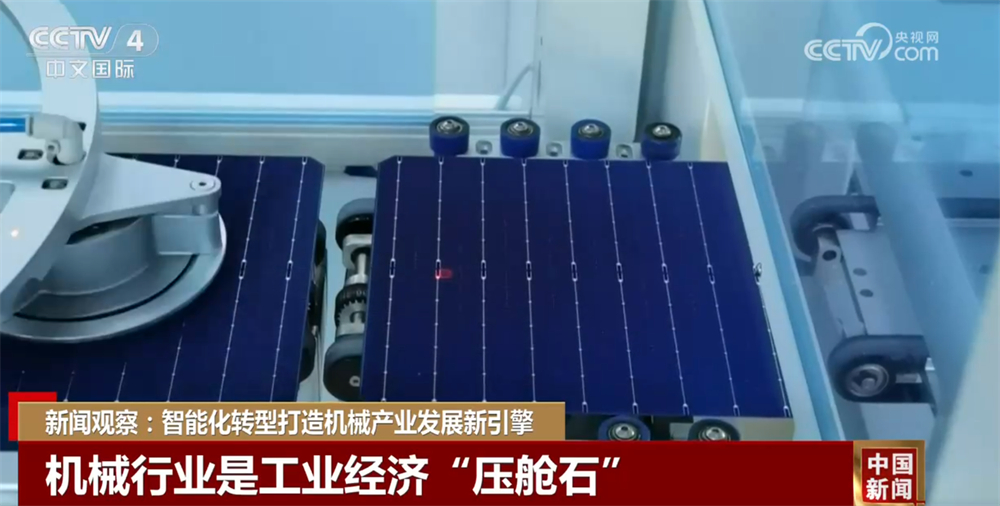
智能化转型打造工业经济“压舱石”发展新引擎 机械行业“向稳向好”有支撑
Yang Shi Wang· 2025-09-30 06:54
Core Viewpoint - The "Mechanical Industry Stabilization Growth Work Plan (2025-2026)" aims to expand effective demand, tap into existing market potential, foster new demand, and promote digital and intelligent transformation in the mechanical industry, which is crucial for the national economy and defense [1][11]. Group 1: Effective Demand Expansion - The plan emphasizes the need to comprehensively expand effective demand, focusing on tapping into existing market potential through significant technological upgrades and large-scale equipment renewal in the manufacturing sector [1][3]. - The implementation of major technological renovations and large-scale equipment updates is expected to inject vitality into the existing market while promoting high-end intelligent manufacturing and green energy-saving technologies [3]. Group 2: Intelligent Transformation - Intelligent transformation is identified as a key development strategy, with the plan outlining the implementation of innovative development projects for intelligent equipment, targeting three main areas: industrial mother machines, intelligent agricultural machinery, and high-end intelligent robots [5]. - The integration of technologies such as artificial intelligence and Beidou navigation is highlighted as a means to enhance the capabilities of mechanical equipment, effectively giving them a "smart brain" [5]. Group 3: Digital Transformation in Manufacturing - Regions are accelerating the deep integration of digital and physical industries, with examples such as the deployment of humanoid robots in new energy production lines and the creation of highly intelligent production workshops using 5G, big data, and AI technologies [7]. - A case study from a manufacturing company illustrates that the use of an intelligent warehouse significantly reduces the workforce needed for the same volume of parts storage, showcasing the efficiency gains from digital transformation [9]. Group 4: Future Growth Targets - The plan sets a target for the mechanical industry to maintain a stable and positive operational trend, aiming for revenue to exceed 10 trillion yuan with an average annual growth rate of approximately 3.5% during 2025-2026 [11]. - It also aims to cultivate new demand by developing new economic models such as the silver economy, smart tourism, and expanding applications for service and special robots, elderly rehabilitation equipment, and additive manufacturing equipment [11].
双节长假在即,做好节前风险管理
Hua Tai Qi Huo· 2025-09-30 05:57
Report Industry Investment Rating No information provided. Core Viewpoints - It is necessary to do a good job in pre - holiday risk management. During the National Day holiday, there are risks of pre - holiday adjustments in the stock index and pre - holiday depreciation of the RMB exchange rate, while there are opportunities in certain commodity sectors after the holiday. The domestic situation shows a greater gap between strong expectations and weak reality, and attention should be paid to post - holiday policy expectations and the correction of the current off - peak season expectation. The inflation outlook in the US is clearer, and the Fed has restarted the interest rate cut cycle. Different commodity sectors have different characteristics and investment opportunities [1]. - For commodities and stock index futures, it is recommended to allocate industrial products and precious metals on dips [2]. Summary by Related Catalogs Market Analysis - **Holiday Risk and Policy Expectations**: From October 1st to 8th is the National Day holiday in China, with 6 overseas trading days. Historically, the stock index may adjust before the holiday and rise after it, and the RMB exchange rate may depreciate before the holiday and recover after it. After the holiday, there may be opportunities in commodity sectors such as coking coal, steel ore, and non - metallic building materials. The domestic economic pressure increased marginally in August, with weak industrial, investment, and consumption data, and increased external tariff pressure. Recently, the government has frequently mentioned pro - growth policies. The central bank also proposed to strengthen monetary policy regulation. Six departments issued a steady - growth plan for the machinery industry, aiming for an average annual revenue growth rate of about 3.5% from 2025 - 2026. The scale of new policy - based financial instruments is 500 billion yuan [1]. - **US Economic Situation**: In August, the US ISM manufacturing index contracted for the sixth consecutive month, the new order improved, and the price index declined again. The CPI increased year - on - year, the PPI growth slowed down, and the new non - farm employment and unemployment rate were worse than expected, supporting the Fed's interest rate cut. The retail sales and new home sales increased. The Fed cut interest rates by 25 basis points, and the federal funds rate target range is now 4.00% - 4.25%. The risk of a US government shutdown has increased, and the US has imposed additional tariffs [1]. - **Commodity Analysis**: The black and new energy metal sectors are most sensitive to the domestic supply - side; precious metals and agricultural products can be concerned due to overseas inflation expectations. The black sector is still dragged down by downstream demand expectations, and the "anti - involution" situation should be focused on. The long - term supply limitation in the non - ferrous sector has not been alleviated, but the marginal supply has increased recently. The energy supply is expected to be relatively loose in the medium - term. In the chemical industry, the "anti - involution" space of some varieties is worthy of attention. Agricultural products are driven by tariffs and inflation expectations in the short - term. Precious metals, especially gold, are expected to continue to strengthen [1]. Strategy - Allocate industrial products and precious metals on dips for commodities and stock index futures [2]. To - do News - The six - department plan aims for the machinery industry to achieve an average annual revenue growth rate of about 3.5% from 2025 - 2026 and break through 10 trillion yuan in revenue. The NDRC will continue to implement macro - policies. The Fourth Plenary Session of the 20th Central Committee will be held from October 20th to 23rd. On September 29th, the A - share market rose, and the financial stocks such as securities firms exploded. The risk of a US government shutdown is high, and the EU will resume sanctions on Iran. Spot gold reached a new high, standing at $3,820 per ounce with a 1.6% intraday increase [4]. Macro - economy No detailed analysis provided, only some relevant charts are mentioned, including the Citi Economic Surprise Index, 30 - city commercial housing transaction area, etc. [5][7][10] Interest Rates No detailed analysis provided, only some relevant charts are mentioned, including the 10Y and 2Y China - US Treasury bond spreads, the US dollar exchange rate, etc. [5][14][16]
关注行业稳增长方案推进
Hua Tai Qi Huo· 2025-09-30 05:53
Industry Investment Rating No information provided regarding the industry investment rating. Core Viewpoints - The Ministry of Industry and Information Technology and five other departments issued the "Work Plan for Steady Growth of the Machinery Industry (2025 - 2026)", aiming for the machinery industry to maintain a stable and positive development trend from 2025 to 2026, with an average annual revenue growth rate of about 3.5% and revenue exceeding 10 trillion yuan [1]. - The National Development and Reform Commission will focus on the science - technology and AI industries, formulating development guidelines for smart terminals and agents, opening up industry scenarios, and providing computing power subsidies. A new policy - based financial instrument worth 500 billion yuan will be used to supplement project capital [1]. Summary by Directory 1. Industry Overview Upstream - Black: Glass prices have rebounded significantly [2]. - Energy: International oil prices have rebounded [2]. Midstream - Chemical: The polyester operating rate is at a medium level [3]. - Energy: Coal consumption by power plants has remained stable [3]. Downstream - Real Estate: The sales of commercial housing in second - tier cities have slightly rebounded [4]. - Services: The number of domestic flights has increased [4]. 2. Key Industry Price Indicators | Industry Name | Indicator Name | Price on 9/29 | YoY Change | | --- | --- | --- | --- | | Agriculture | Spot price of corn | 2288.6 yuan/ton | 0.00% | | | Spot price of eggs | 7.4 yuan/kg | - 4.77% | | | Spot price of palm oil | 9248.0 yuan/ton | 3.08% | | | Spot price of cotton | 14982.5 yuan/ton | - 1.17% | | | Average wholesale price of pork | 19.3 yuan/kg | - 1.28% | | Non - ferrous Metals | Spot price of copper | 82271.7 yuan/ton | 2.54% | | | Spot price of zinc | 21618.0 yuan/ton | - 1.48% | | | Spot price of aluminum | 20700.0 yuan/ton | - 0.61% | | | Spot price of nickel | 122050.0 yuan/ton | 0.04% | | | Spot price of aluminum | 16856.3 yuan/ton | - 1.14% | | Ferrous Metals | Spot price of rebar | 3176.0 yuan/ton | 0.27% | | | Spot price of iron ore | 806.7 yuan/ton | - 1.51% | | | Spot price of wire rod | 3357.5 yuan/ton | - 1.54% | | | Spot price of glass | 15.4 yuan/square meter | 7.90% | | Non - metals | Spot price of natural rubber | 14775.0 yuan/ton | - 0.73% | | | China Plastic City price index | 790.0 | - 0.17% | | | Spot price of WTI crude oil | 65.7 dollars/barrel | 5.32% | | Energy | Spot price of Brent crude oil | 69.2 dollars/barrel | 4.82% | | | Spot price of liquefied natural gas | 3828.0 yuan/ton | 0.90% | | | Coal price | 793.0 yuan/ton | 1.02% | | | Spot price of PTA | 4612.5 yuan/ton | - 0.30% | | Chemical | Spot price of polyethylene | 7345.0 yuan/ton | - 0.14% | | | Spot price of urea | 1621.3 yuan/ton | - 2.04% | | | Spot price of soda ash | 1262.5 yuan/ton | 0.00% | | Real Estate | National cement price index | 135.1 | 0.63% | | | Building materials composite index | 113.3 points | - 1.19% | | | National concrete price index | 91.7 points | - 0.01% | [36]
营收目标突破10万亿 机械行业稳增长工作方案落地
Di Yi Cai Jing· 2025-09-30 03:24
Core Viewpoint - The mechanical industry, accounting for approximately 10% of the industrial economy, is considered a "ballast" for industrial stability. The Ministry of Industry and Information Technology, along with five other departments, has released a "Work Plan for Stabilizing Growth in the Mechanical Industry (2025-2026)" to address current challenges and promote high-quality development [1][2]. Group 1: Key Objectives and Tasks - The main goal of the "Work Plan" is to maintain a stable and positive trend in the mechanical industry from 2025 to 2026, aiming for an average annual revenue growth rate of around 3.5%, with total revenue exceeding 10 trillion yuan [2]. - The plan outlines 14 key tasks across three areas, focusing on expanding effective demand, enhancing supply chain resilience, and improving quality and efficiency [2][3]. - Specific tasks include tapping into domestic market potential, fostering new demand, increasing effective investment, promoting digital transformation, and deepening international cooperation [2][3]. Group 2: Challenges and Market Conditions - The mechanical industry faces challenges such as external shocks, insufficient domestic demand, and intensified irrational competition, which threaten stable operations [1][2]. - Despite these challenges, the industry showed steady growth in the first half of the year, with stable production and sales, and resilient foreign trade [1][2]. - The impact of U.S. tariffs and trade protectionism has created uncertainty in global trade, affecting foreign orders and increasing operational pressures on companies [2][3]. Group 3: Innovation and Development Strategies - The "Work Plan" emphasizes the need for enhanced technological and industrial innovation, improved supply chain resilience, and the development of intelligent equipment [3][4]. - It aims to cultivate new productive forces and improve the quality of equipment supply, thereby leading and creating demand through high-quality offerings [3][4]. - The plan also addresses the need for a better industrial ecosystem, optimized spatial layout, and support for small and medium-sized enterprises to foster high-quality development [3][4].
营收目标突破10万亿,机械行业稳增长工作方案落地
Di Yi Cai Jing· 2025-09-30 03:19
Core Viewpoint - The "Machinery Industry Stabilization Growth Work Plan (2025-2026)" aims to enhance the resilience and safety of key industrial chains, targeting an average annual revenue growth of approximately 3.5%, with total revenue exceeding 10 trillion yuan by 2026 [2][3]. Group 1: Industry Challenges and Responses - The machinery industry accounts for about 10% of the industrial economy and is considered a "ballast" for industrial stability [2]. - Current challenges include external shocks, insufficient domestic demand, and intensified irrational competition, necessitating a new round of stabilization efforts [2][3]. - The industry has shown steady growth in the first half of the year, but faces pressures from inadequate effective demand, profit margin compression due to price competition, and difficulties in receivables collection [2][3]. Group 2: Key Tasks and Goals - The plan outlines 14 key tasks and 3 supporting measures to stimulate industry growth, focusing on expanding effective demand from both domestic and international markets [3][4]. - Key tasks include tapping into domestic market potential, fostering new demand, increasing effective investment, promoting digital transformation, and enhancing international cooperation [3][4]. - The machinery sector's demand is heavily reliant on infrastructure construction and equipment investment across various sectors, which are also critical for export stability [3]. Group 3: Innovation and Development - The plan emphasizes the need to enhance innovation capabilities, strengthen supply chain resilience, and develop intelligent equipment and systems [4][5]. - It aims to improve quality brand building and standard-setting to foster new productive forces and enhance the supply capacity of high-quality equipment [4][5]. - The industry is encouraged to leverage free trade agreements and international cooperation mechanisms to expand into global markets [4][6]. Group 4: Policy Support and Future Outlook - Continuous macro and industrial policy support is expected to drive the industry towards high-quality development, focusing on technological innovation and industrial upgrades [5][6]. - The plan aims to create a conducive environment for enterprise development, optimize spatial layout, and enhance service capabilities for businesses [4][6]. - Despite existing risks, the industry is positioned to respond to external uncertainties through high-quality development initiatives [6].