生物医药

Search documents
持续提升“五个中心”能级,上海拿出了施工图
第一财经· 2026-02-04 06:35
Core Viewpoint - Shanghai aims to achieve a GDP growth rate of around 5% for 2025, with a focus on enhancing its status as an international economic, financial, trade, shipping, and technological innovation center [3][5][12]. Group 1: Economic Goals and Projections - The main expected economic targets for Shanghai in 2025 include a GDP growth of approximately 5%, a 2% increase in local public budget revenue, and R&D expenditure reaching 4.6% of GDP [3][12]. - The "15th Five-Year Plan" outlines an average annual GDP growth target of around 5%, with potential growth levels estimated between 4.6% and 5.2% [3][12]. Group 2: Development of the "Five Centers" - The report emphasizes the continuous enhancement of the "Five Centers," which include international economic, financial, trade, shipping, and technological innovation centers [5][7]. - Specific initiatives include supporting industries such as smart connected vehicles, marine economy, low-altitude economy, aerospace, and satellite internet [5][11]. Group 3: New Quality Productivity - The focus is on integrating technological and industrial innovation to foster new quality productivity, including accelerating the application of major technological achievements and promoting intelligent, green, and integrated industrial development [9][10]. - Shanghai's R&D expenditure as a percentage of GDP reached approximately 4.5% in 2025, with significant growth in key industries like integrated circuits, biomedicine, and artificial intelligence [9][10]. Group 4: Modern Industrial System - The "2+3+6+6" modern industrial system aims to establish a world-class high-end industrial cluster, with a focus on traditional industry transformation and the development of three leading industries: integrated circuits, biomedicine, and artificial intelligence [10][13]. - By 2030, the plan targets that the total output value of strategic emerging industries will account for over 50% of the total industrial output value [12][13]. Group 5: Future Industry Layout - The report highlights the importance of forward-looking layouts in future industries, including quantum technology, brain-computer interfaces, and bio-manufacturing, to enhance Shanghai's competitive edge [14][12]. - The establishment of a reasonable investment mechanism for manufacturing and the promotion of collaboration between industry, academia, and research in emerging fields are emphasized [14][13].


我国科研团队找到“爆破”癌细胞方法,有望攻克“癌中之王”
Xin Lang Cai Jing· 2026-02-04 05:06
Core Insights - A research team from the Chinese Academy of Medical Sciences has confirmed that the combined use of three common cytokines can effectively disrupt the internal structure of pancreatic cancer cells, leading to their destruction, thus providing a new approach for pancreatic cancer treatment [1][2] Group 1: Research Findings - Pancreatic cancer, known as the "king of cancers," is highly malignant and difficult to treat due to a long-standing lack of effective treatment methods [1] - The research team discovered that pancreatic cancer cells form a protective mucous layer that allows them to evade immune cell attacks and resist the body's digestive enzymes, which is a significant reason for the treatment challenges [1] - The three cytokines work synergistically like a "demolition team," with interferon gamma guiding key pore-forming proteins to the cancer cells' lysosomes, interferon beta providing the activation tools, and transforming growth factor beta acting as a stabilizer to maintain the activation state of the pore-forming proteins [1] Group 2: Treatment Mechanism - The pore-forming proteins create holes in the lysosomal membrane, leading to the complete destruction of the cancer cells from within [1] - The study also suggests that lipid nanoparticle carriers can precisely deliver the messenger RNA of these three cytokines to the tumor site, enhancing treatment efficacy while minimizing damage to normal tissues [1] - This method selectively targets and kills more malignant pancreatic cancer stem cells, showcasing the advantages of precision therapy [1]
日均上千人在这家医院接受免陪照护
第一财经· 2026-02-04 04:13
Core Viewpoint - The article emphasizes the importance of developing a professional talent system for "unaccompanied care services" in response to the aging population in Shanghai, highlighting the need for skilled nursing personnel and comprehensive care capabilities [2][5]. Unaccompanied Care Services - The average daily provision of "unaccompanied care services" at Zhongshan Hospital is between 1,300 to 1,400 patients, indicating a significant demand for this service [2]. - There is a shortage of qualified nursing staff with appropriate education and skills, which needs urgent attention [2]. - Recommendations include professional training for caregivers and establishing comprehensive fee standards for various levels of care, from "level II nursing" to post-stabilization care [5][6]. AI in Clinical Applications - The application of AI in clinical settings is increasingly prevalent, but many aspects are still in a "wild growth" phase, necessitating organized development and training of AI models [7]. - There is a call for administrative guidance in developing specialized AI models for specific diseases to enhance their applicability and effectiveness [7]. Innovation in Biomedicine - The article discusses the need for improved collaboration between scientific and clinical experts to drive innovation in biomedicine, particularly through AI-driven scientific discovery [9]. - The establishment of a "data factory" model is proposed to overcome data barriers and enhance drug development processes [10]. Global Access to Innovative Drugs and Devices - Suggestions include creating a "zero time difference" access channel for innovative drugs and devices in Shanghai, allowing for expedited approval processes for urgently needed clinical products [11]. - The exploration of cross-border data flow in healthcare is recommended to support international collaboration and digital therapy products [11].

Vita:马丽佳/李颜团队开发新型AAV,打一针,在体内自动生成CAR-T细胞,治疗系统性红斑狼疮
生物世界· 2026-02-04 04:11
Core Viewpoint - CAR-T cell therapy is a revolutionary cancer treatment that utilizes genetically modified T cells to target and kill cancer cells, and it has shown promise in treating autoimmune diseases as well [2]. Group 1: Challenges of Traditional CAR-T Therapy - The preparation of CAR-T therapy is complex and expensive, involving blood extraction, genetic modification, and expansion, which can take several weeks and incur high costs [3]. - A pre-treatment with chemotherapy is required to clear the patient's existing lymphocytes before reinfusion, leading to significant side effects [3]. Group 2: Innovations in CAR-T Therapy - Researchers have proposed in vivo CAR-T cell therapy, which allows for the direct generation of CAR-T cells in the body through injection, potentially simplifying and broadening access to CAR-T therapy [4]. - A study published on February 3, 2026, introduced a novel adeno-associated virus variant, AAV6-M2, which can specifically target human T cells and generate CAR-T cells effectively in a mouse model of systemic lupus erythematosus (SLE) [4][5]. Group 3: Mechanism and Efficacy - The AAV6-M2 variant was developed using AI-assisted design and high-throughput screening, allowing it to efficiently target resting T cells without prior activation, which is crucial for in vivo CAR-T cell generation [8]. - In tests on humanized mouse models, a single injection of AAV6-M2-CD19CAR led to a 77.5% conversion rate of CD8+ T cells to CAR-T cells, effectively eliminating B cells and improving symptoms of lupus [10]. Group 4: Safety and Advantages - AAV6-M2 demonstrated significantly reduced liver tropism compared to wild-type AAV, lowering the risk of liver toxicity and enhancing the cost-effectiveness of the treatment [13]. - The study indicates that AAV-mediated CAR delivery can generate functional human CAR-T cells in vivo, marking a shift from personalized treatments to more universal, off-the-shelf products [5][14]. Group 5: Future Prospects - This research signifies a platform innovation, proving that a single systemic injection of an AAV vector can generate durable, functional human CAR-T cells, paving the way for rapid clinical translation [14]. - The application of AAV-mediated gene therapy is expanding from genetic diseases to cancer and autoimmune diseases, opening new avenues for accessible cell and gene therapies [15].

今年上海GDP增长5%左右,新支撑结构正形成
Di Yi Cai Jing Zi Xun· 2026-02-04 03:49
Group 1 - Shanghai's GDP is projected to reach 5.67 trillion yuan by 2025, with a growth rate of 5.4%, which is better than expected [1] - The new driving forces of Shanghai's economy include integrated circuits, biomedicine, and artificial intelligence, which have historically surpassed 2 trillion yuan in scale [1][2] - The information service industry has seen a significant increase, with a value-added growth of 15.3%, driven by the demand for artificial intelligence and computing power [1] Group 2 - The government report emphasizes the importance of nurturing new momentum and stabilizing market expectations rather than relying on short-term stimulus [2] - The rapid growth of computing power demand is reshaping the energy and infrastructure landscape, with AI applications leading to increased electricity consumption [3][5] - The electricity system is transitioning from a supportive role to a critical infrastructure role, directly impacting the feasibility of AI and digital industries [3] Group 3 - The 5% GDP growth target for 2026 is supported by traditional investments and consumption, but the structure of support is changing, with AI-driven computing demand becoming a significant growth variable [5] - There is a need for Shanghai to enhance its external trade resilience and support enterprises in international expansion while encouraging green transformation [7][8] - Recommendations include improving the industrial ecosystem for intelligent robotics and enhancing the talent pool for technology application and results transformation [8]
成渝经济圈发展能级实现整体跃升
Zhong Guo Fa Zhan Wang· 2026-02-04 03:45
Core Viewpoint - The development of the Chengdu-Chongqing economic circle is a national strategy aimed at creating a high-quality growth hub in the western region of China, with significant progress made in the past six years, particularly during the 14th Five-Year Plan period [1]. Economic Growth Projections - By 2025, Chongqing's GDP is projected to reach 33,757.93 billion yuan, reflecting a growth rate of 5.3% compared to the previous year [1]. - Sichuan's GDP is expected to reach 67,700 billion yuan by 2025, with a growth rate of 5.5%, ranking fifth in both total and growth rate nationally [1]. Infrastructure and Project Development - A total of 555 key projects are being implemented in the Chengdu-Chongqing area over five years, including significant infrastructure like the Jiangbei International Airport T3B terminal and the Yukun high-speed railway [2]. - The region has successfully integrated into national technology innovation centers and has hosted two "Belt and Road" technology exchange conferences [2]. Urban and Regional Planning - The Chengdu-Chongqing economic circle's land spatial planning has been approved, with efforts to optimize urban green space and key area planning [3]. Cross-Regional Cooperation - The economic output of the Chengdu-Chongqing economic circle accounts for approximately 6.5% of the national total, with significant improvements in regional economic coordination and infrastructure connectivity [4]. - The region has established 28 inter-provincial railways, highways, and waterways, with various industrial clusters reaching trillion-yuan scales [4]. Future Development Strategies - In 2023, Chongqing aims to enhance the development level of the Chengdu-Chongqing economic circle by implementing seven major special actions and accelerating key engineering projects [6]. - The focus will be on strengthening regional collaboration, enhancing transportation networks, and promoting advanced manufacturing [6]. Comprehensive Cooperation Initiatives - The region will deepen reforms in market access and tax management, and promote cross-border financial cooperation [7]. - There will be a push for cultural tourism promotion and the establishment of high-standard international events [7].
杉泽生物:红杉中国宣布完成对莫西沙星全球业务收购,原辉瑞高管金肖东出任CEO
Cai Jing Wang· 2026-02-04 03:40
Core Insights - Sequoia China has completed the global acquisition of the core product moxifloxacin (brand name: Avelox®) related to fluoroquinolone antibiotics on February 2, 2026, establishing Hangzhou Shanze Biological Pharmaceutical Co., Ltd. [1] - Shanze Biological and its parent company Ascenda Pte. Ltd. have acquired specific assets for Avelox® globally, including drug registration certificates, intellectual property, and business contracts, ensuring a solid foundation for the product's ongoing supply and future development [1] - Jin Xiaodong has recently been appointed as the CEO of Shanze Biological, bringing decades of experience in the pharmaceutical industry, previously serving as General Manager at Pfizer China [1]
用好高教资源 深挖“智力富矿” 钱塘建设融合创新新区
Hang Zhou Ri Bao· 2026-02-04 03:36
Group 1 - The core viewpoint of the article highlights the continuous innovation and development in the Qiantang New District, emphasizing its focus on artificial intelligence and the establishment of a collaborative innovation ecosystem around universities [3][6][9] - During the "14th Five-Year Plan" period, Qiantang's R&D investment intensity increased from 4.43% in 2020 to 4.91% in 2024, maintaining the second position in the province for five consecutive years [3] - The establishment of the Zhejiang Humanoid Robot Collaborative Innovation Center aims to foster cooperation among leading enterprises in humanoid robotics, with a focus on joint research and development [5][6] Group 2 - Qiantang aims to become the "first district" for artificial intelligence manufacturing and integrated innovation, targeting sectors such as embodied intelligence, AI pharmaceuticals, and high-end chips [6] - The district has gathered 64 enterprises in the embodied intelligence and smart terminal industries, with projected revenue of 28.81 billion by 2025, ranking second in the city [5][6] - The "opportunity list" and "capability list" released by Qiantang provide specific scenarios and capabilities for AI applications, facilitating collaboration between demand and supply sides [6][7] Group 3 - The Qiantang district is committed to becoming the best partner for university development, focusing on three integrations: education, research, and industry [9] - The establishment of the "Technology Supermarket" in the Qiantang Industrial Innovation Center showcases various research and technological resources, promoting collaboration between universities and industries [8][9] - Qiantang plans to enhance its innovation ecosystem by supporting the establishment of national-level platforms and increasing the number of high-tech enterprises [9]
“千亿县”断档,这个中部大省要发力了
3 6 Ke· 2026-02-04 02:34
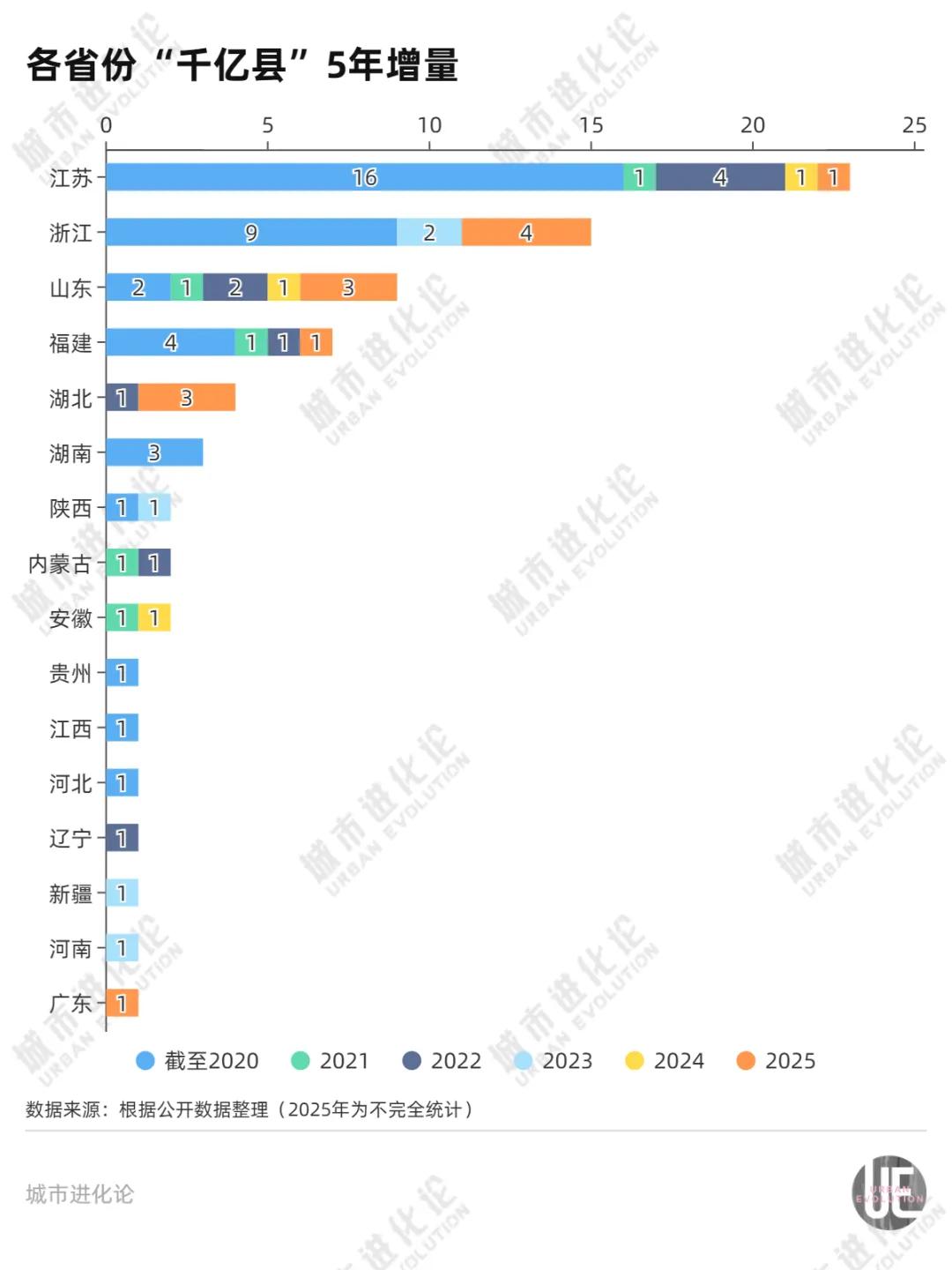
Core Viewpoint - The Hunan provincial government aims to enhance the economic contribution of county-level economies, targeting a GDP of 5.53 trillion yuan by 2025, with a growth rate of 4.8% [1] Economic Development - Hunan's county economies are crucial for its overall economic development, accounting for over 50% of the province's total economic output [2][3] - In 2024, 20 major economic counties contributed more than half of the county-level economic total, despite occupying only about a quarter of the province's land and population [3] Challenges - Hunan faces stagnation in its county economies, with a significant gap in the number of "billion-dollar counties" compared to other regions, particularly in the central and western parts of China [4][6] - The province's county economies exhibit imbalances and insufficient internal motivation, with many lacking strong industrial clusters and value chains [6][7] Policy Initiatives - Hunan has implemented a series of policies to promote high-quality county economic development, including the "Implementation Plan for Promoting High-Quality Development of County Economies (2022-2025)" [8] - Recent meetings have emphasized the need for a unique path to high-quality county economic development, with a focus on building a diverse industrial system tailored to local strengths [9][10] Future Directions - The provincial government plans to enhance the role of county economies in the overall economic structure, indicating a strong commitment to strengthening these areas [11]
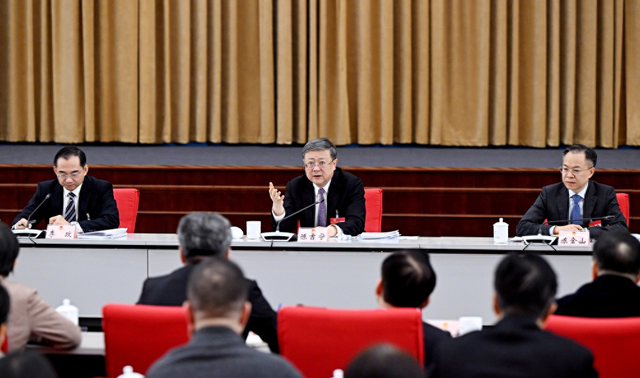
侧记|持续两个半小时,陈吉宁与浦东团代表共议哪些事?
Xin Lang Cai Jing· 2026-02-04 02:17
Economic Development - Shanghai's GDP increased from 4.16 trillion to 5.67 trillion yuan during the 14th Five-Year Plan, ranking among the top five global cities, with an economic increment of over 1.5 trillion yuan [3][4] - In 2025, Shanghai's GDP growth rate was 5.4%, contributing significantly to the national economy [3] - Pudong's GDP is projected to reach approximately 1.88 trillion yuan in 2025, with a growth rate of 5.7%, outperforming the overall city growth [4][5] Technological Innovation - Shanghai aims to enhance its global position in biomedicine and innovation, with a focus on improving the internationalization capabilities of its pharmaceutical companies [10] - The Shanghai University of Science and Technology is developing a world-class hard X-ray free electron laser facility, which is expected to lead in international photon science [7][8] - Pudong is set to strengthen its role in technological innovation and strategic scientific development, aligning with the city's broader goals [8] Social Welfare - Fire safety in high-rise buildings is a critical concern, with recommendations for enhanced inspections and community involvement in fire safety management [11] - The rapid influx of young families in Lingang highlights the need for improved public services, including education and healthcare [13][15] - Local initiatives in Lingang aim to establish comprehensive public service systems to meet the needs of the growing population [13][15]