
造船

Search documents
【厦门象屿(600057.SH)】经营货量基本持平,造船板块快速增长,激励计划彰显长期信心——2024年报点评(赵乃迪/周家诺)
光大证券研究· 2025-04-23 09:10
点击注册小程序 查看完整报告 特别申明: 本订阅号中所涉及的证券研究信息由光大证券研究所编写,仅面向光大证券专业投资者客户,用作新媒体形势下研究 信息和研究观点的沟通交流。非光大证券专业投资者客户,请勿订阅、接收或使用本订阅号中的任何信息。本订阅号 难以设置访问权限,若给您造成不便,敬请谅解。光大证券研究所不会因关注、收到或阅读本订阅号推送内容而视相 关人员为光大证券的客户。 报告摘要 公司发布2024年年报。2024年,公司实现营收3667亿元,同比减少20.12%;实现归母净利润14.19亿元, 同比减少9.86%;实现扣非后归母净利润4.07亿元,同比减少19.87%。2024Q4,公司单季度实现营收689.7 亿元,同比减少23.70%,环比减少26.80%;实现归母净利润5.29亿元,同比增长34.71%,环比增长 377.95%。 2025-2027年主营业务收入占营业收入比例的考核目标均为95%。此外,公司针对解除限售的业绩考核标准 进行了前提约束,各考核年度净利润增长率需大于0才可解除考核年度对应的限制性股票。 风险提示: 大宗商品价格波动,宏观经济下行风险,应收账款风险,终端需求不及预期,汇 ...

美船舶听证法案,通过利好集运,否决利好船舶,关注德祥海运
2025-04-15 14:30
请参会人员务必注意本次电话会议交流内容仅限参会人员内部参考任何机构或个人不得以任何形式对电话会议任何内容进行泄露或外发请勿以任何方式索要泄露散布转发电话会议纪要任何泄露电话会议纪要等信息的行为均为侵权行为申望洪源研究保留追究泄露转发者法律责任的权利 各位投资者大家好我是身份交易的首席分析师严海现在我来汇报一下我们最新的观点上一周其实大家关注的比较多的也是3月24号美国的传播法案已经临近了其实市场在这个法案落地之前已经充分反映了相对的悲观预期无论是集运还是 应该都会上修的如果这个事最终否决掉整体我们认为压制传播板块的固执的压制应该都会解除所以现在零件建议大家积极关注现在无论是集运还是传播其实都是在一个预期相对低的位置 另外就是刚入通的德强海运其实如果跟我们观点紧其实去年11月在港股刚上的时候因为IPO的估值很便宜我们就有个提示上周入通之后整体的市场的关注度其实也是在持续提升的这个位置集运板块的中小型船其实是我们现在最看好的也希望大家多多关注如果大家看我们年度策略 东南亚的几月无论是头部的海风还是这个新入通的德翔包括A股的宁波远洋还有这个景江航运其实在这个航运各个细分板块里这个小型集装箱船的这个供给我们认为是最紧 ...
出口链联合电话会议
2025-04-15 14:30
Summary of Conference Call Records Industry Overview - The conference call primarily discusses the export industry, focusing on hand tools, electric tools, and related manufacturing sectors, particularly in Southeast Asia and Mexico [1][2][3]. Key Points and Arguments Export Companies and Market Dynamics - Traditional export companies in hand tools and electric tools, such as Techtronic Industries, Qianfeng Holdings, and Juxing Technology, have seen significant stock price increases, with some reaching their daily limit [1]. - Many companies have shifted over 50% of their production capacity to Southeast Asia, including Vietnam, Thailand, and Cambodia, benefiting from tariff suspensions in these regions [1][2]. - The overall sentiment in the hand tools and electric tools sector is improving, with companies like Zhejiang Dingli and Hongyuan CNC recommended for investment [3]. Impact of Tariffs on the Automotive Industry - The U.S.-China automotive trade friction has evolved through three stages, with initial tariffs on traditional auto parts and a shift towards new energy components under the Biden administration [4]. - The export volume of passenger vehicles to the U.S. has decreased, with figures of 65,000, 66,000, and 105,000 units over the past three years, representing about 2% of total exports [5]. - Domestic automakers are focusing on regions like Eastern Europe, South America, and Southeast Asia, with limited impact from U.S. tariffs on their operations [6]. Components and Smart Technology - Companies with North American production capabilities are less affected by tariffs, as they can reduce direct export impacts [6]. - The influence of tariffs on profits is estimated to be around -2.4% for companies like Fuyao Glass if they bear 50% of the tariff burden [7]. - The smart components sector shows limited exposure to tariff risks, with a recommendation to focus on undervalued companies in this area [7][8]. Commercial Vehicle Sector - The commercial vehicle sector has minimal exposure to U.S. tariffs, with strong export resilience to regions like the CIS, Africa, and Southeast Asia [8]. Long-term Investment Outlook - The automotive market is expected to benefit from domestic demand growth and local replacements, with a focus on companies like BYD, Geely, and XPeng for smart vehicles [10]. - The electric equipment sector is also highlighted, with companies like Sany, Weisheng Information, and Hongfa Electric recommended for their global production capabilities [11][12]. Shipbuilding Industry Insights - The shipbuilding sector is projected to maintain a positive growth trend, with Chinese shipbuilders expected to secure orders for the next 30 years [18]. - The potential impact of U.S. sanctions on Chinese ships is deemed limited, as the shipping industry is resistant to high docking fees imposed by the U.S. [15][16]. Home Appliance Sector - The home appliance sector is adapting to changing U.S. tariff policies, with companies like Hisense expanding production in Mexico to mitigate impacts [20][21]. - The focus is on emerging markets for growth, with recommendations for companies that have a strong domestic market presence [22]. Additional Important Insights - The overall sentiment in the export chain is shifting towards companies with global layouts, which are better positioned to navigate tariff challenges [10][11]. - The potential for increased trade activity due to tariff differences among countries is noted, suggesting a restructuring of supply chains [23][24]. This summary encapsulates the key discussions and insights from the conference call, highlighting the dynamics within various sectors affected by tariffs and market conditions.
2025年3月造船订单总结:船舶重工PO接近历史极小值,关注301豁免可能
Shenwan Hongyuan Securities· 2025-04-14 11:26
Investment Rating - The report indicates a positive outlook for the shipbuilding sector, particularly in light of the potential exemptions from the U.S. 301 tariff measures, which could benefit the shipping companies and the shipbuilding industry overall [2][11]. Core Insights - The U.S. 301 tariff hearings concluded, with specific measures expected by April 17. There is a possibility of exemptions for certain types of vessels, which could lead to increased shipping rates if implemented strictly, benefiting container shipping [2][11]. - The report highlights that Hengli Heavy Industry's order book has increased, with a total order value of approximately $13.4 billion, which is significant compared to its competitors [2][12]. - The performance forecasts for major Chinese shipbuilding companies for Q1 2025 are generally in line with expectations, indicating a recovery in the sector [2][24]. Group 1: U.S. 301 Tariff Impact - The U.S. 301 tariff measures could impose significant fees on Chinese vessels docking at U.S. ports, with potential costs reaching up to $1 million per vessel depending on the circumstances [5][7]. - The report suggests that if the tariff measures are implemented, it could lead to increased shipping rates due to port congestion and adjustments in shipping routes [11][12]. Group 2: Company Updates - Hengli Heavy Industry has seen a significant increase in its order book, with a hand-held order value of approximately $13.4 billion, which is about 49% of China Shipbuilding's and 66% of China State Shipbuilding's order values [12][19]. - The company is expected to achieve a production capacity of 230,000 tons of steel annually and produce 180 engines, covering four types of dual-fuel engines [12][23]. Group 3: Market Trends - The new ship price index decreased by 0.49% month-on-month, while the second-hand ship price index increased by 1.15% [36][40]. - The global shipbuilding order book increased by 1% month-on-month, with container ships and oil tankers being the primary contributors to this growth [45][46].




首季度利润翻超10倍,中船防务(00317)2025年迎来估值“春天”?
智通财经网· 2025-04-13 01:14
Core Viewpoint - The company, China Shipbuilding Defense (中船防务), is experiencing significant profit growth due to a favorable shipbuilding cycle, with Q1 2025 net profit expected to increase tenfold year-on-year [1][2]. Financial Performance - For Q1 2025, the company anticipates a net profit attributable to shareholders of 170-200 million yuan, representing a year-on-year growth of 1000%-1200% [1]. - The 2024 annual report shows total revenue of 19.402 billion yuan, a year-on-year increase of 20.17%, and a net profit of 377 million yuan, up 685% year-on-year [1][2]. - The company plans to distribute a cash dividend of 0.70 yuan per 10 shares, with a payout ratio of 30.72% [1]. Order and Revenue Growth - In Q1 2025, the company secured new orders worth 12.502 billion yuan, achieving 71.64% of its annual target [1]. - The total order backlog at the end of 2024 was approximately 61.6 billion yuan, with shipbuilding contracts accounting for 95.3% of this total [2]. Industry Context - The global shipbuilding market is in a growth phase, with new orders increasing by 39.3% and 39.6% in deadweight tonnage and gross tonnage, respectively [1][5]. - The Clarkson ship price index reached 189 points in December 2024, marking a 6.5% year-on-year increase and the highest level since October 2008 [1]. Product Performance - The shipbuilding segment remains the primary revenue driver, contributing 86.2% of total revenue in 2024, with significant growth in bulk carriers (up 123.28%) and container ships (up 20.98%) [2][3]. - The offshore engineering segment also showed strong growth, with revenue increasing by 64.97% [2]. Profitability and Cost Management - The company's gross margin improved to 7.76% in 2024, with the shipbuilding segment's gross margin at 9.33%, reflecting a year-on-year increase of 3.86 percentage points [6][8]. - Administrative expenses decreased to 3.42% of revenue, while R&D expenses rose to 4.58% [8]. Market Position and Outlook - As a leading player in China's shipbuilding industry, the company benefits from a strong order book and favorable market conditions, with expectations for continued high growth in 2025 [9]. - The company has a low valuation with a price-to-book ratio of 0.7, which may attract conservative investors due to the certainty of profit growth and dividend distribution [9].


4月9日晚间公告 | 成都华微、国芯科技公布芯片产品进展;国泰君安拟10亿元-20亿元回购股份
Xuan Gu Bao· 2025-04-09 11:59
Group 1: Stock Suspension and Resumption - XJX plans to acquire 100% equity of JZH, leading to stock resumption. JZH primarily engages in the R&D, production, and sales of flexible printed circuit boards (FPC), with applications in display modules and new energy batteries [1] Group 2: Buybacks and Increases - Guotai Junan intends to repurchase shares worth between 1 billion to 2 billion yuan [5] - Shandong Gold's controlling shareholder and its concerted parties plan to increase their holdings by 500 million to 1 billion yuan [5] - Weichai Power's chairman proposes a share buyback of 500 million to 1 billion yuan for cancellation [5] - Zhongtai Securities' chairman suggests a buyback of 300 million to 500 million yuan of A-shares [5] - Sichuan Changhong's chairman proposes a buyback of 250 million to 500 million yuan [5] - Shandong Expressway's chairman proposes a buyback of 200 million to 300 million yuan [5] - Caitong Securities' chairman proposes a buyback of 150 million to 300 million yuan [5] - Dongshan Precision plans to use self-raised funds to repurchase shares worth 100 million to 200 million yuan [5] - Energy Wind Power's chairman proposes a buyback of 100 million to 200 million yuan [5] Group 3: Investment Cooperation and Operational Status - China Shipbuilding Defense received new orders worth 12.502 billion yuan in Q1, completing 71.64% of its annual plan, including contracts for various container ships and LNG refueling vessels [4] - Tianhe Solar reached an exclusive patent licensing agreement for perovskite batteries with Oxford PV [5] - Chengdu Huami launched a multi-channel fully integrated high-performance RF direct acquisition RFFPGA [5] - Guoxin Technology successfully tested a new high-performance cloud security chip based on RISC-V architecture [5] - Ganfeng Lithium made significant progress in solid-state battery R&D [5] - Yunda Co. plans to invest 7.29 billion yuan in multiple wind power projects [5] - Zhongtian Technology's subsidiary won multiple domestic and international marine energy projects, totaling 2.499 billion yuan [5] - Ligong Micro's business remains unaffected by the US "reciprocal tariffs" [5] - Guanghong Technology reports no impact from US tariffs on overall operations [5] - Jinbei Electric's subsidiary won a centralized procurement project for electromagnetic wire worth 2.754 billion yuan [5] - Nuotai Bio established a strategic partnership with Middle Eastern pharmaceutical company Julphar to supply semaglutide raw materials [5] - Northern Rare Earth adjusted the trading price of rare earth concentrates to 18,825 yuan/ton in Q2, a 1% increase [5][6] Group 4: Performance Changes - Huatai Securities expects Q1 net profit between 3.437 billion to 3.666 billion yuan, a year-on-year increase of 50% to 60%, driven by significant growth in wealth management, institutional services, and investment management [7] - Hua'an Securities anticipates Q1 net profit of 502 million to 558 million yuan, a year-on-year increase of 80% to 100%, due to substantial growth in securities investment, brokerage, and investment banking [7] - China Galaxy expects Q1 net profit between 2.773 billion to 3.1 billion yuan, a year-on-year increase of 70% to 90%, attributed to significant growth in wealth management, investment trading, and investment banking [7] - Juxin Technology projects Q1 net profit of 41.3 million yuan, a year-on-year increase of 383.91%, driven by AI product development and new market expansion [7] - Zhongji Xuchuang expects Q1 net profit between 1.4 billion to 1.7 billion yuan, a year-on-year increase of 38.71% to 68.44%, due to strong demand for high-end optical modules [7] - Quectel expects Q1 net profit around 200 million yuan, a year-on-year increase of approximately 265.19%, supported by robust growth in communication modules and intelligent solutions [8] - StarNet RuiJie anticipates Q1 net profit between 36 million to 46 million yuan, a year-on-year increase of 211.64% to 298.20%, driven by strong growth in the internet data center market [8] - Zhiwei Intelligent expects Q1 net profit between 39.7 million to 43.87 million yuan, a year-on-year increase of 208.13% to 240.49%, due to high demand for intelligent computing [8] - Guomai Technology expects Q1 net profit between 88 million to 98 million yuan, a year-on-year increase of 50.06% to 67.11%, with a historical high in net profit for Q1 [8]

造船周期红利全面释放 中国重工一季度业绩大增 生产排期至2028年底
Zheng Quan Shi Bao Wang· 2025-04-09 06:20
据了解,受益于全球造船行业景气上行,截至2025年一季度末,中国重工手持民船订单超过3000万载重 吨,金额超1400亿元,同比增长超过35%,手持订单中绿色船型占比近60%,中高端船型占比超过 75%。一方面,公司表示订单自2024年起加速交付,推动业绩大幅增长。另一方面,公司表示目前在手 订单额已创历史新高,生产排期已至2028年底,为未来业绩释放提供重要保障。 业内人士指出,产能是造船业当前的稀缺资源,中国重工深度受益于全球造船行业上行周期,在产能优 化、技术升级及政策红利背景下实现业绩爆发式增长。未来,随着公司资产整合的持续推进以及订单的 加速交付,有望为业绩增长持续提供动力。(燕云) 近年来,受船队更替节奏加快、航运行业脱碳进程加快等因素影响,全球造船行业供需持续紧张,推动 造船业订单"量价齐升"。在此过程中,我国造船企业凭借产能、技术、成本优势占据了全球市场的主导 地位,不仅技术实力全球领先,市场份额也在持续扩大。 2025年4月8日,中国重工(601989)披露了《2025年第一季度业绩预增公告》。公司预计2025年第一季 度实现归母净利润5亿—6亿元,同比增长267.85%至341.42%;预 ...
据韩联社:韩国代理总统强调在电话中与美国总统特朗普讨论了将就造船、液化天然气和贸易平衡进行合作。
news flash· 2025-04-08 14:40
据韩联社:韩国代理总统强调在电话中与美国总统特朗普讨论了将就造船、液化天然气和贸易平衡进行 合作。 ...
收购了巴拿马的港口,目光又转向造船业,美国要下狠手了!
Sou Hu Cai Jing· 2025-03-25 11:21
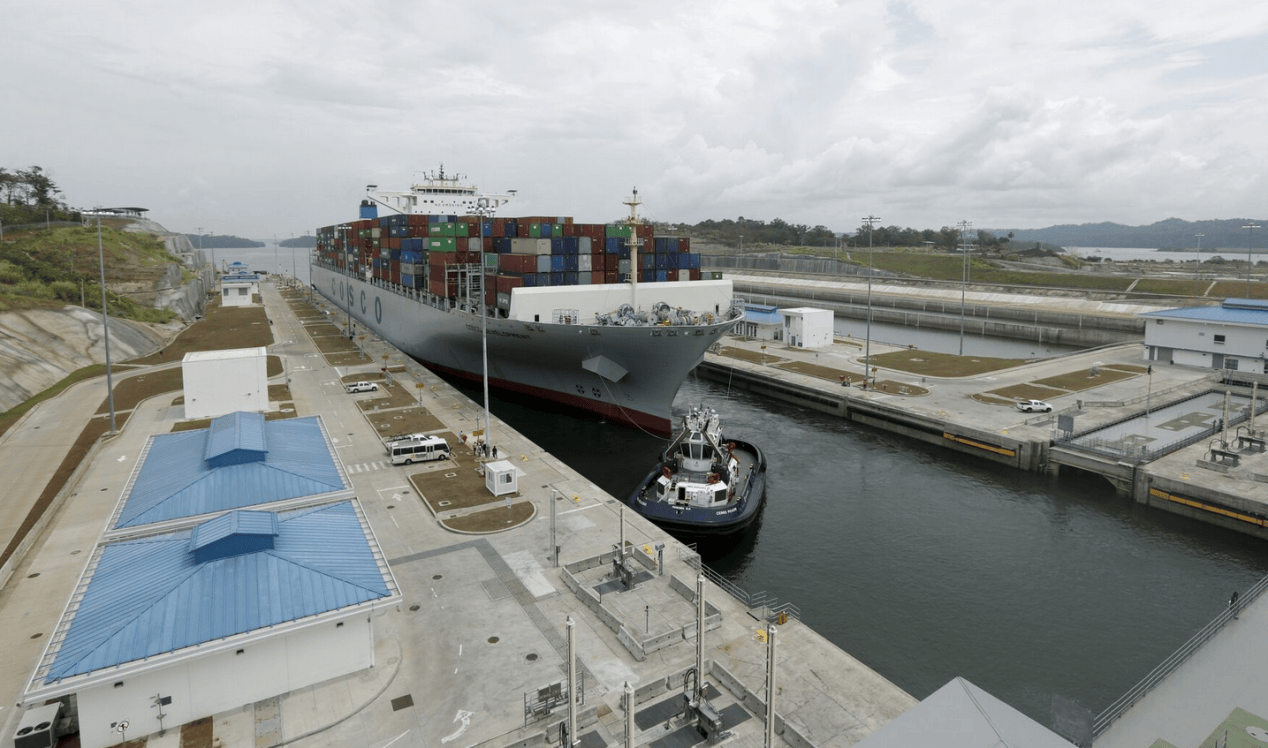
Group 1 - The U.S. has acquired control of a port in Panama, which is strategically significant for global shipping, particularly for exerting pressure on the Panamanian government and potentially disrupting competitors' shipping routes [1][3] - The Panama Canal is crucial as it connects the Pacific and Atlantic Oceans, with 6% of global trade passing through it, highlighting its strategic value [3] - The acquisition involved a significant premium, with the U.S. BlackRock Group purchasing the port assets from Li Ka-shing's company for $22.8 billion, indicating a strong U.S. interest in controlling this key maritime route [1][3] Group 2 - The Trump administration aims to challenge China's dominance in the shipbuilding industry, where China holds over 55% of global metrics such as completed ships, new orders, and backlog, while the U.S. only accounts for 0.1% [5] - The establishment of a "Shipbuilding Office" in the White House reflects the U.S. government's intent to revive its shipbuilding sector, alongside proposed legislation imposing a $1.5 million toll on ships manufactured or flagged in China [5] - The U.S. shipbuilding industry faces significant challenges, including an aging workforce with an average age of 52, reliance on imported key equipment, and labor costs that are 4.3 times higher than those in China [5] Group 3 - In response to U.S. pressure, China is exploring alternative shipping routes such as the Nicaragua Canal and Arctic passages, which may reduce reliance on the Panama Canal [7] - China's technological advancements in shipbuilding are expected to mitigate the effectiveness of U.S. restrictions, while deepening cooperation with Latin American and Southeast Asian countries could lead to the development of a "de-Americanized" shipping network [7]
美国经济、政策与市场怎么了?
2025-03-23 15:02
Summary of Key Points from the Conference Call Industry and Company Involvement - The conference call primarily discusses the **U.S. economy** and the impact of the **Trump administration's policies** on various sectors, including manufacturing, trade, and financial markets. Core Insights and Arguments 1. **Economic Downturn**: The U.S. GDP growth rate for the first quarter is reported at **-1.8%**, with the Federal Reserve lowering its annual GDP growth forecast to **1.7%** due to economic weakness [1][3][5]. 2. **Tariff Increases**: Average tariffs have increased from **9% to 24%**, aimed at reducing trade deficits. However, trade deficits rose in January, indicating short-term ineffectiveness of the tariff policy [1][6][3]. 3. **Federal Reserve's Stance**: The Federal Reserve has maintained interest rates but has adjusted its GDP growth forecast downwards, reflecting economic challenges. Structural reforms are underway, which may benefit long-term economic health [1][7][5]. 4. **Impact of Tariffs on Trade**: The increase in tariffs has not effectively reduced trade deficits, as evidenced by a rise in imports prior to the tariff implementation [6][3]. 5. **Government Efficiency Reforms**: The establishment of a Government Efficiency Department aims to reduce government size and spending, leading to significant layoffs and economic pressure [4][5][3]. 6. **Concerns Among Entrepreneurs**: Key concerns include rising tariffs, supply chain disruptions, labor shortages due to reduced illegal immigration, and inflation expectations [11][1]. 7. **Regulatory Relaxation**: The Trump administration has relaxed regulations, particularly concerning large tech companies and the automotive industry, which may lead to long-term benefits despite short-term job losses [10][1]. 8. **International Trade Relations**: Tariffs on Canada and Mexico have increased to counteract Chinese transshipment trade, affecting companies like BYD that planned to export vehicles to the U.S. [8][1]. 9. **Inflation Trends**: Consumer inflation expectations have risen, with the Michigan Consumer Sentiment Index increasing from **2.5% to 3%**. Inflation is driven by rising prices in food and services [16][17]. 10. **Market Reactions**: The stock market has experienced significant volatility, with major indices dropping over **10%** and specific stocks like Tesla falling by **50%** [23][24]. Other Important but Potentially Overlooked Content 1. **Labor Market Impact**: The layoffs resulting from government policies have led to a **20%-30%** drop in housing prices in Washington, D.C., and a significant decline in market confidence [15][2]. 2. **Long-term Economic Strategy**: The administration's focus on reducing government debt and spending is part of a broader strategy to achieve sustainable economic growth, despite short-term pain [5][7]. 3. **Shift in Financial Market Dynamics**: There is a notable shift from private equity to private credit, with private credit market size growing from **$500 billion to over $1.5 trillion** [27][28]. 4. **Global Economic Challenges**: The U.S. is facing increased competition from countries like Brazil and India, which are devaluing their currencies to enhance competitiveness [21][35]. 5. **Manufacturing Challenges**: The return of manufacturing to the U.S. faces obstacles, including a lack of skilled labor and the need for a robust supply chain [42][1]. This summary encapsulates the critical points discussed in the conference call, highlighting the current economic landscape, policy impacts, and market dynamics.

