潮玩

Search documents
2025:25个关键词里的中国与世界
第一财经· 2025-12-31 04:11
Core Insights - The article summarizes key developments in China and the world in 2025, focusing on economic policies, market trends, and significant events that shaped various industries. Group 1: Economic Policies and Reforms - The main theme of 2025's economic work is the comprehensive rectification of "involution" in competition, with government reports emphasizing the need to regulate low-price competition and improve product quality [4] - The year marks the conclusion of the deepening reform of state-owned enterprises, with significant progress in strategic restructuring and improved governance [6] - The implementation of the "Private Economy Promotion Law" aims to create a fair business environment and protect the rights of private enterprises [7] Group 2: Debt Management and Fiscal Policies - A plan to replace 10 trillion yuan of hidden local government debt over five years was launched, with nearly 6 trillion yuan replaced by the end of 2025, significantly reducing debt risks [8] - The issuance of ultra-long special government bonds reached 1.3 trillion yuan, supporting major projects and expanding policies to boost consumption [9] Group 3: Consumer and Market Trends - A special action plan to boost consumption was introduced, focusing on increasing residents' income and improving consumer confidence [10] - The A-share market saw the Shanghai Composite Index reach 4,000 points for the first time in ten years, with total trading volume exceeding 400 trillion yuan [13] Group 4: Industry Developments - The gold market experienced a historic surge, with prices rising from $2,625 to a peak of $4,550 per ounce, driven by macroeconomic factors and central bank purchases [14] - The introduction of the "Science and Technology Innovation Growth Layer" on the STAR Market accelerated the IPO process for unprofitable companies, marking a significant shift in capital market dynamics [19] Group 5: Corporate Events and Challenges - The external delivery market saw increased competition with new entrants like JD and Taobao, reshaping the landscape and enhancing consumer choices [22] - The controversy surrounding Wahaha highlighted family disputes and governance issues within the company, affecting its market position [23] - The restaurant industry faced challenges as the crisis at Xibei over pre-made dishes prompted a reevaluation of consumer trust and operational practices [29]




年终报道丨文创跨越国界,中国潮玩跻身全球顶流
Xin Hua Wang· 2025-12-31 03:09
Core Insights - Labubu, an original IP from China, has gained global popularity, becoming a cultural phenomenon and a symbol of China's creative industry [1][2] - The success of Labubu is attributed to continuous innovation in IP incubation, supply chain management, user engagement, and cultural dissemination [1] - The rise of Labubu reflects a significant shift in China's cultural and creative industry from "Made in China" to "Created in China" [2] IP Development and Market Response - Labubu's design, influenced by Nordic fairy tales, initially faced skepticism but gained traction after a partnership with Pop Mart in 2018 [4][5] - The product line's success is largely due to the development of soft vinyl plush toys, which resonated with the youth's desire for unique and expressive designs [5] - Pop Mart's patient and restrained approach to IP management has allowed Labubu to grow organically without succumbing to market pressures [5][6] Supply Chain Innovations - The supply chain has undergone a transformation to meet the surging demand for Labubu products, with production capacity increasing from 300,000 units per month to 3 million units by 2025 [9][10] - Pop Mart has implemented a dual expansion strategy, focusing on local and overseas production to enhance responsiveness to market demands [10][11] - The company has also adopted automation and precision techniques to maintain product quality while scaling production [10] Emotional Connection and Long-term Strategy - Labubu's appeal lies in its ability to resonate emotionally with consumers, transforming them from passive buyers to active co-creators of the IP [15][18] - The company emphasizes long-term value creation over short-term gains, ensuring that Labubu remains relevant and cherished by its audience [13][14] - Pop Mart's strategy includes creating immersive experiences and expanding into new markets, such as fashion, to enhance the IP's cultural significance [15][20] Global Expansion and Cultural Resonance - By 2025, Pop Mart plans to open flagship stores in major cities worldwide, including New York, and has already established a significant presence in North America and Europe [17][19] - Labubu's success is attributed to its ability to convey universal values that resonate with global youth, such as acceptance and self-expression [18][19] - The brand's growth reflects a broader trend of Chinese creative industries gaining recognition and influence on the global stage [19][21]


Labubu价格崩了,结局可能早已定下
3 6 Ke· 2025-12-31 02:31
Core Insights - The significant drop in Labubu's second-hand market prices and the decline in Pop Mart's stock prices have sparked widespread discussion on social media, often interpreted as a "bubble burst," but this view may be overly simplistic [1] - The initial success of Pop Mart was driven by a "controlled scarcity" model, transforming ordinary toys into collectible items through blind box mechanisms and limited releases [1][4] - The rapid introduction of new series and increased market supply diluted the perceived uniqueness of previously scarce items, leading to a decrease in their value [3][4] Market Dynamics - The premium prices for Labubu collectibles were contingent on a continuous willingness from buyers to pay high prices [2] - As new products were launched too quickly, the perceived scarcity diminished, creating a challenge for early speculators who relied on rising prices to sell their inventory [3][6] - The rise and fall of Labubu's prices mirrored the formation and collapse of speculative bubbles in financial markets, as described by economist Hyman Minsky [5] Consumer Behavior - Initially, buyers were attracted to the surprise and collection aspects of blind boxes, but as prices rose, an investment mentality took over [11][12] - The current price decline is prompting a psychological reset among consumers, shifting focus back to personal enjoyment of the product rather than potential financial returns [13][14] - Consumers are becoming more rational, calculating the expected value of collectibles, which is facilitated by increased price transparency on second-hand platforms [15][16] Industry Implications - The cooling of the Labubu market is indicative of a broader industry value reassessment, with other brands experiencing similar price adjustments [16] - The reliance on "scarcity narratives" and speculative value is deemed unsustainable, suggesting a need for a shift towards product quality, design innovation, and emotional connection [16] - Future trends may include clearer differentiation between high-end limited editions and mass-market products, a focus on storytelling in IP management, and evolving sales models that combine blind boxes with other purchasing options [16] Cultural Context - The social value of collectible toys is dynamic; as products become more common, their status as symbols of identity and taste diminishes [7][8] - The challenge for Pop Mart lies in balancing the need for new product launches to sustain revenue growth while avoiding the dilution of individual IP value [8][10] - Unlike established IPs like Disney, which have deep cultural narratives, Labubu lacks a robust story background, affecting its long-term sustainability [9][10] Conclusion - The fluctuations in Labubu's prices reflect normal market behavior and highlight the rapid dissemination of information in the social media era [20] - The case illustrates the limitations of artificially created scarcity and the eventual return to fundamental values when speculation dominates the market [20] - For the industry to mature, the focus should shift from investment potential to genuine enjoyment of products, fostering a healthier market environment [20]
2025年,“情绪”很有价值
Sou Hu Cai Jing· 2025-12-31 00:42
Group 1 - The core concept of emotional consumption is gaining traction in China, with a projected market size exceeding 2 trillion yuan by 2025, reflecting a compound annual growth rate of 12% since 2013 [3] - The phenomenon of "emotional consumption" is exemplified by the rise of figures like "Chicken Chop Brother," who has become a social media sensation, demonstrating how personal narratives can drive consumer engagement and traffic [4][5] - The emotional value associated with products, particularly in the trendy toy market, is significant, with the market expected to grow from 22.9 billion yuan in 2020 to 76.3 billion yuan by 2024, achieving a compound annual growth rate of 35.1% [5] Group 2 - Trust is identified as a core asset in the trendy toy economy, where consumers expect high-quality designs and emotional experiences that extend beyond the product itself [5][6] - The volatility of emotional consumption is highlighted, as trust can easily be broken, leading to significant repercussions for brands and individuals in the market [9] - The shift in societal attitudes towards self-care and emotional well-being is evident, with young people moving from a mindset of "proving themselves" to "treating themselves," indicating a deeper resilience in social sentiment [10]
2025年第51周:跨境出海周度市场观察
艾瑞咨询· 2025-12-31 00:04
Group 1 - Chinese commercial aerospace companies are actively expanding into overseas markets, utilizing "rideshare launch" models to reduce costs and attract international clients from countries like Egypt, Nepal, and the UAE. The domestic launch cost has decreased to 50,000-60,000 yuan per kilogram, but still lags behind SpaceX, which has a competitive edge due to its high-frequency launches and Starlink project [3][4]. - The home appliance and light manufacturing industries are expected to face pressure on both domestic and foreign sales in 2026, with a potential recovery in overseas sales in the latter half of the year. Emerging markets are anticipated to show stronger demand compared to developed markets, particularly in Latin America and Southeast Asia [5]. - China's automotive exports are projected to reach 5.859 million units in 2024, maintaining the top position globally, with a shift from vehicle exports to a more comprehensive output of technology, brand, and supply chain solutions. This transition reflects a move from "selling products" to "building brands" [6][7]. Group 2 - The development of autonomous driving technology in China is being propelled by high-quality growth initiatives and strategic policies, with companies like Baidu Apollo enhancing safety standards and promoting technology exports. The industry is evolving into a collaborative ecosystem that drives innovation and reliability [7][8]. - The Chinese潮玩 (trendy toy) industry is rapidly globalizing, with brands like Pop Mart and 52TOYS successfully entering overseas markets through localized strategies and partnerships. The market share of Chinese潮玩 in the overseas market is projected to grow from 3% in 2020 to 18% by 2025 [9]. - Chinese companies are increasingly investing in the European market, particularly in renewable energy and high-tech sectors, while facing challenges such as national security reviews and compliance issues. Differentiated strategies and localized investments are essential for success [10]. Group 3 - Amazon's global store initiative aims to cultivate 200 cross-border brands in Shandong over the next three years, focusing on AI-driven strategies and innovative measures to enhance logistics efficiency and support local sellers [11]. - The Chinese commercial vehicle sector is transitioning from product trade to a comprehensive service model, emphasizing lifecycle services and local adaptation. The export of Chinese commercial vehicles to the EU has seen a 42% year-on-year increase [18]. - The digital culture industry in China is experiencing rapid growth, with online games, films, and literature becoming key components of global cultural exchange. The industry is encouraged to enhance IP development and international collaboration to overcome cultural barriers [17].


2025,老外追的那些“中国爆款”
Ren Min Ri Bao Hai Wai Ban· 2025-12-30 22:54
Core Viewpoint - Chinese culture is gaining global popularity through various mediums such as films, music, and literature, showcasing its diverse appeal and ability to resonate with international audiences [1]. Group 1: Film Industry - The animated film "Ne Zha: The Devil Child Comes to the World" has topped the global box office for animated films, indicating a significant achievement for Chinese cinema [1]. - The film has sparked a wave of interest among foreign audiences, with many children and families engaging with its merchandise and storylines [3][4]. - The emotional themes of the film, such as family and friendship, resonate universally, allowing it to transcend cultural barriers [4]. Group 2: Music Industry - The songs "Da Zhan Hong Tu" and "Ba Fang Lai Cai" have gone viral globally, with "Da Zhan Hong Tu" receiving over 4.3 billion views on Douyin and "Ba Fang Lai Cai" over 6.6 billion views [19]. - These songs have become popular background music for travel vlogs and short videos, showcasing their widespread appeal [19][20]. - The integration of Chinese cultural elements in the lyrics has helped foreign audiences connect with the music, fostering a greater interest in Chinese culture [20]. Group 3: Literature Industry - The web novel "Lord of the Mysteries" has become a top favorite among English-speaking readers, ranking first on the translation works chart with 69.7 million clicks and a high rating of 4.89 out of 5 [13]. - The novel's unique blend of Western fantasy elements with Chinese cultural themes has captivated a global audience, leading to its adaptation into an animated series that has also received high ratings [14]. - The success of "Lord of the Mysteries" reflects the growing interest in Chinese web literature, with platforms like Yuanqi Reading fostering a community of French-speaking readers [15].

潮向:以沸腾生机,聚时代之力
Xin Lang Cai Jing· 2025-12-30 22:18
Group 1: Sports and Culture - The "Su Super" amateur football league in Jiangsu has become a nationwide phenomenon, attracting over 30,000 average spectators per match and generating over 10 billion online discussions since its launch in May 2025 [2] - The league has fostered a strong sense of local pride and community engagement, transforming football matches into celebrations of regional culture [2] Group 2: Consumer Trends - The "ticket root" has evolved into a digital key that connects various consumption experiences, enhancing the "ticket root economy" in cities like Nanjing, where it offers discounts across multiple sectors [3] - This transformation allows consumers to enjoy a more integrated experience, turning event tickets into comprehensive access points for tourism and local services [3] Group 3: Tourism and Technology - Nanjing has become a top tourist destination, leveraging its historical sites and modern technology, such as virtual reality, to enhance visitor experiences [4] - The city's innovative approaches have led to significant public engagement, with events like the naming of a gorilla attracting over 140,000 votes, showcasing a deep connection to local culture [4] Group 4: Artificial Intelligence - The launch of the domestic AI model DeepSeek has garnered global attention, demonstrating significant advancements in China's AI capabilities and its applications in various sectors [5][6] - The model's rapid adoption reflects a growing market for AI technologies, with a complete ecosystem developing around it, enhancing both technical and application aspects [6] Group 5: Cultural Products - The Chinese toy brand Labubu has gained international popularity, representing a shift from "Made in China" to "Created in China," showcasing unique artistic styles and emotional depth [7] - This brand's success highlights the potential for Chinese cultural products to resonate globally, serving as cultural ambassadors [7] Group 6: Animation Industry - The domestic animation industry has seen a significant rise, with films like "Nezha" achieving record box office numbers and capturing a wide audience beyond children [8] - This evolution indicates a successful transition to appealing to all age groups, with diverse narratives that resonate emotionally with viewers [8] Group 7: Investment Trends - The gold market has experienced a surge, with international gold prices surpassing $3,000 per ounce, attracting younger investors through accessible products like "small gold beans" [9] - This trend reflects a broader interest in gold as both an investment and a cultural artifact, merging practicality with aesthetic appeal [9] Group 8: Overall Economic Trends - The various trends emerging in 2025 illustrate a vibrant and dynamic Chinese society, characterized by industrial transformation and cultural confidence [9] - These developments are rooted in local contexts while resonating with global trends, indicating profound changes in the economic landscape [9]
2026年新年献词:不确定的年代,做确定的你
Bei Jing Shang Bao· 2025-12-30 15:57
Core Viewpoint - The year 2025 is positioned as a pivotal moment in history, marked by significant developments in technology, economy, and societal changes, particularly in the realms of hard technology and new consumption [1][4][9]. Group 1: Economic and Technological Landscape - The economic future is closely tied to advancements in technology, with a focus on hard technology and new consumption as key coordinates for development in 2025 [4][6]. - China is facing unprecedented challenges and opportunities as it attempts to integrate industrialization, information technology, intelligence, and urbanization [4]. - The capital market is witnessing a surge in hard technology investments, particularly in areas like chips and innovative pharmaceuticals, which are crucial for narrowing the technological gap [4][6]. Group 2: New Consumption Trends - New consumption is evolving beyond mere material goods to encompass cultural and service-oriented aspects, indicating a shift in consumer behavior and preferences [6]. - Emotional and trendy consumption is rapidly gaining traction, reflecting a societal shift where consumers are increasingly valuing experiences and emotional connections over traditional goods [4][6]. - The service industry is identified as a fertile ground for the emergence of new consumption giants, highlighting the need for innovation in service delivery [6]. Group 3: Societal Implications - The relationship between national developments and individual experiences is emphasized, suggesting that the fate of the country is intertwined with the actions and aspirations of its citizens [3][9]. - The narrative of personal agency is reinforced, indicating that individuals have the potential to shape their futures amidst the uncertainties of a rapidly changing world [10]. - The importance of continuous innovation in systems, technology, and business practices is underscored as essential for meeting new demands and creating new supply [6].

泡泡玛特股价暴跌背后:LABUBU二手价跳水 门店仍缺货
Nan Fang Du Shi Bao· 2025-12-30 15:44
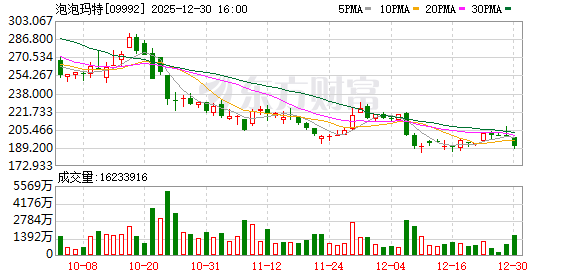
Core Viewpoint - The market sentiment towards Pop Mart is increasingly bearish, with a significant rise in short-selling activity and a notable decline in the resale prices of its core IP product, LABUBU [2][3][4]. Group 1: Market Sentiment and Short Selling - From December 2 to December 8, the number of shares sold short increased from 1.11 million to 5.39 million, and the short-selling amount rose from 241 million HKD to 1.09 billion HKD [2]. - On December 30, the short-selling amount for Pop Mart reached 458 million HKD, with 2.39 million shares sold short [2]. Group 2: LABUBU Product Performance - LABUBU, a core character of Pop Mart's THE MONSTERS family, generated revenue of 3.04 billion CNY in 2024, marking a year-on-year growth of 726.6% [3]. - The average transaction price for LABUBU products on second-hand platforms has decreased, with some styles selling below the official price [5]. - Recent data shows that the average transaction price for LABUBU on Xianyu platform was 83.5 CNY, with 68% of users expecting further price declines [5]. Group 3: Stock Performance and Market Capitalization - On December 30, Pop Mart's stock closed at 190.8 HKD per share, down 4.55%, with a total market capitalization of 256.23 billion HKD [4]. - Since reaching a peak in August, Pop Mart's stock has declined over 40%, resulting in a market value loss exceeding 200 billion HKD [4]. Group 4: Industry Analysis and Future Outlook - Analysts indicate that the decline in secondary market prices undermines the speculative value of collectible toys, leading to a shift from buying to selling among consumers and resellers [8]. - Deutsche Bank's report suggests that Pop Mart is gambling on short-term revenue growth at the expense of long-term brand value by increasing production capacity from 10 million units per month to 50 million units [8]. - The company is advised to diversify its IP strategy and create a content system rather than relying solely on LABUBU [10].
2025:25个关键词里的中国与世界
Di Yi Cai Jing· 2025-12-30 13:27
Group 1 - The core focus of China's economic work in 2025 is to comprehensively rectify "involution" and disorderly competition, with policies aimed at improving product quality and stabilizing market prices [2] - The reform of state-owned enterprises is nearing completion, with significant progress in strategic functions, governance, and regulatory efficiency [4] - The introduction of the Private Economy Promotion Law marks a significant legal framework for promoting fair competition and protecting the rights of private enterprises [5] Group 2 - The resolution of local government debt risks is progressing rapidly, with a plan to replace 10 trillion yuan of hidden debts, achieving over half of the target by the end of 2025 [6] - The issuance of ultra-long special government bonds reached 1.3 trillion yuan in 2025, with a focus on supporting major projects and expanding consumption [6][7] - A special action plan to boost consumption was launched, emphasizing income growth and improving consumer confidence [8] Group 3 - The A-share market saw the Shanghai Composite Index reach 4000 points for the first time in ten years, driven by a recovery in technology stocks and supportive government policies [10] - Gold prices experienced a historic surge, with spot prices rising from $2625 to a peak of $4550 per ounce, driven by macroeconomic factors and central bank purchases [11] - The introduction of the "Science and Technology Innovation Growth Layer" on the STAR Market accelerated the IPO process for unprofitable companies, marking a significant shift in capital market dynamics [12] Group 4 - The deposit interest rates in China underwent a comprehensive decline, with significant adjustments across various banks, impacting personal investment behaviors [12] - The external environment, including the U.S.-China trade tensions and geopolitical factors, influenced the Federal Reserve's monetary policy, leading to interest rate cuts [14] - The rise of DeepSeek as a key player in the AI sector reshaped global competition, emphasizing open-source strategies and high cost-performance [15] Group 5 - The external delivery market saw significant changes with the entry of new players like JD.com and the upgrade of Ele.me, leading to increased competition and consumer choice [18] - The family disputes within Wahaha highlighted the complexities of family governance in business, affecting brand perception and market dynamics [19] - The success of "Nezha 2" at the box office marked a significant milestone for Chinese animation, reflecting the industry's growth and potential for global recognition [21]