智能汽车

Search documents
18个月50万级销冠!问界M9如何重写豪华车市场规则
凤凰网财经· 2025-09-24 14:08
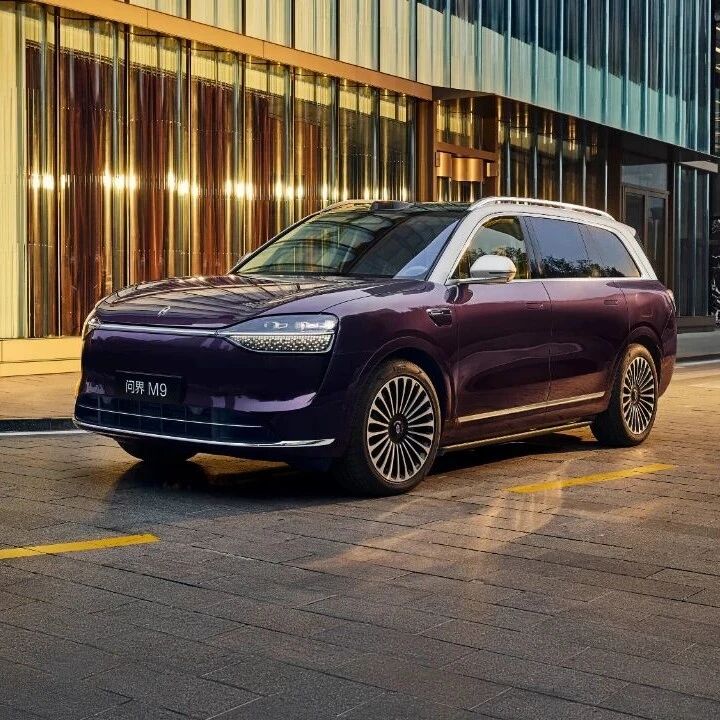
Core Insights - The AITO M9 has disrupted the luxury car market, achieving over 240,000 deliveries and capturing more than 70% of the market share in the 500,000+ yuan new energy segment within 18 months of its launch [1][4]. Group 1: Technology and Market Positioning - The AITO M9 leverages Huawei's full-stack intelligent technology to redefine "tech luxury," moving beyond traditional luxury metrics like engine displacement and leather quality [4][11]. - Traditional luxury car users are increasingly shifting their focus from brand prestige to technological experience and practicality, with features like advanced driver assistance and vehicle-to-phone integration becoming key decision factors [5][11]. - The AITO M9's advanced features, such as the HarmonyOS 4 voice assistant and the upgraded ADS 4 driving system, set a new standard for intelligent driving and user interaction [8][9][10]. Group 2: User Experience and Market Impact - The AITO M9 is positioned as a "full-scenario smart flagship SUV," catering to both high-end business and family travel needs, thus enhancing user experience from mere status symbol to a more meaningful engagement [12][24]. - The vehicle's design and features have made it a popular choice for business receptions, with companies reporting direct business benefits from using the M9 [15][16]. - The M9's family-oriented features, such as rear-seat entertainment and safety systems, address common pain points for family users, enhancing overall satisfaction [19][23]. Group 3: Color Strategy and Market Dynamics - The introduction of the "Silver Purple" color reflects the AITO M9's confidence and aims to attract younger, trend-conscious consumers [26][29]. - The success of the AITO M9 has prompted traditional luxury car manufacturers to make strategic adjustments, including layoffs and dealership closures, in response to the competitive pressure from Chinese brands [31][34]. - The shift from "material luxury" to "tech luxury" signifies a fundamental change in consumer value perception, with the AITO M9 exemplifying how technology can redefine luxury in the automotive sector [34][35].

新问界M7上市24小时大定超4万台
Zheng Quan Shi Bao Wang· 2025-09-24 12:55
Core Insights - The new Wenjie M7 has achieved over 40,000 pre-orders within 24 hours of its launch [1] Group 1: Product Launch - The Wenjie M7 was unveiled at the Huawei HarmonyOS Autumn New Product Launch event [1] - The high-end version of the M7 is equipped with an external 192-line LiDAR system [1] - Another version features an internal LiDAR for visual-assisted driving [1]
重磅深度:AI智能车时代产品为王
2025-09-24 09:35
Summary of Key Points from the Conference Call Industry Overview - The focus is on the **smart vehicle industry**, which is seen as a revolutionary terminal in the physical world, similar to how PCs and mobile devices transformed the digital landscape [2][35]. Core Insights and Arguments - **Investment Strategy**: Investment should encompass the entire smart vehicle industry chain, including upstream technology suppliers, midstream supply chains, and downstream brand merchants. This approach is expected to yield investment opportunities that surpass those seen in the PC and mobile internet eras [1][6]. - **Revenue Generation**: The revenue potential of smart vehicles is tied to their ability to replace human tasks, particularly in applications like Robot Taxi, which has a higher revenue ceiling compared to traditional models [5][8]. - **Valuation Methodology**: Traditional valuation methods based on hardware penetration rates or internet traffic do not apply to smart vehicles. Instead, a focus on software revenue models and the complexity of tasks completed by smart agents is necessary [3][4][24]. - **Profit Distribution**: The smart vehicle industry follows a "smile curve" in profit distribution, where core technology hardware and software platforms yield higher profit margins (15%-30%), while midstream manufacturing and downstream distribution have lower margins (around 5%) [3][24]. Key Companies and Investment Opportunities - **Software Companies**: Notable software companies include: - Vertical integration models like Tesla and Xpeng Motors - Core algorithm providers such as Horizon Robotics and Baidu - Traditional taxi and ride-hailing companies like Didi, which are transitioning to smart vehicle models [9][10]. - **Hardware Companies**: Investment should focus on: - Vehicle manufacturing (e.g., BAIC, GAC, SAIC) - Upstream components like chips, domain controllers, sensors, and control chassis [10][11]. Market Dynamics and Future Trends - **Consumer Adoption**: The C-end market for smart vehicles is expected to see explosive growth around 2027, driven by consumer education through B-end experiences [13][41]. - **Robot Taxi as a Key Application**: Robot Taxi is highlighted as the most significant application scenario due to its high revenue potential. Investment should prioritize software companies over hardware companies [8][37]. - **Impact on Traditional Markets**: Smart vehicles may replace a portion of private cars, expanding the market space for smart vehicles. The focus should shift from traditional user metrics to unit revenue capabilities and software development opportunities [42][43]. Additional Considerations - **Historical Context**: The lessons from the PC era's internet bubble highlight the importance of understanding user metrics and revenue models in evaluating smart vehicle companies [25][38]. - **Technological Evolution**: The transition from electric vehicles to smart vehicles requires a shift in investment focus, emphasizing the need for companies to adapt quickly to the evolving landscape [7][29]. This summary encapsulates the critical insights and strategic directions discussed in the conference call regarding the smart vehicle industry and its investment landscape.
问界M9,何以霸榜50万元车市?
36氪· 2025-09-24 09:11
Core Viewpoint - The AITO Wenjie M9 is reshaping the high-end automotive market in China, establishing itself as a benchmark for luxury vehicles and demonstrating the potential of domestic brands in the premium segment [2][19]. Sales Performance - Since its launch, the Wenjie M9 has become the best-selling model in the 500,000 yuan and above segment, capturing a significant market share [3][4]. - As of September 23, the cumulative deliveries of the Wenjie M9 have surpassed 240,000 units, maintaining the top position in sales for 18 consecutive months in the 500,000 yuan and above category [4]. Product Features and Upgrades - The Wenjie M9 has been recognized for its high resale value, user recommendation rates, and overall performance in various assessments, solidifying its status as a value benchmark in high-end smart vehicles [4]. - Recent upgrades include the introduction of the "Silver Purple" color, tailored for urban young elites, particularly appealing to female users [6][15]. - The latest upgrade features Huawei's advanced ADS 4 driving assistance system, enhancing user experience with continuous driving capabilities and proactive safety measures [12][8]. Market Impact - The success of the Wenjie M9 has validated the "tech luxury" approach, prompting traditional luxury brands to accelerate their transformation towards electric and intelligent vehicles [9][23]. - The competitive landscape in the 500,000 yuan market has shifted from a monopoly by traditional luxury brands to a more competitive environment where domestic brands are emerging as significant players [24]. - The Wenjie M9's rise is seen as a critical challenge to traditional luxury brands, which are now facing operational pressures and are forced to cut costs through layoffs and factory closures [20][21]. Strategic Shift - The Wenjie M9 is not only impacting product sales but also challenging the strategic foundations of traditional luxury brands, pushing the industry towards a new era driven by technology and user-centric demands [26][23]. - The vehicle's integration of top-tier technology and Chinese manufacturing positions it on the global high-end stage, competing directly with international giants [25].
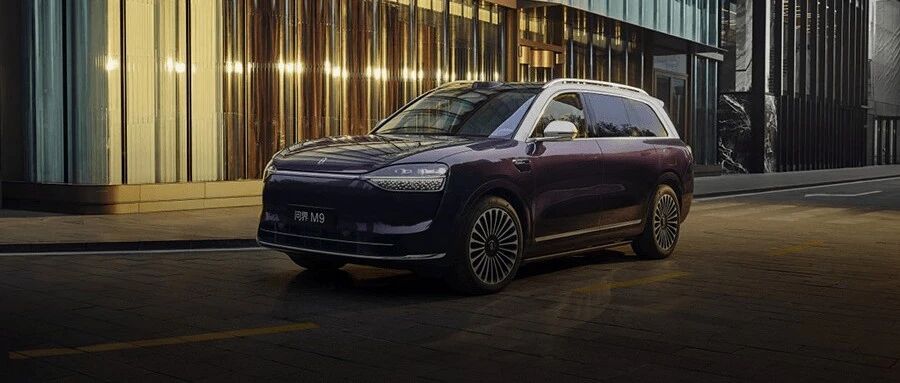
智能汽车ETF(159889)上涨1.5%,行业需求稳健与政策利好共振
Mei Ri Jing Ji Xin Wen· 2025-09-24 08:21
Group 1 - The core viewpoint indicates that the automotive industry is experiencing robust growth, with a projected sales volume of approximately 2.857 million vehicles in August 2025, reflecting a month-on-month increase of 10.1% and a year-on-year increase of 16.4% [1] - New energy vehicle sales are expected to reach around 1.395 million units, achieving a market share of 48.8%, driven by supportive policies and increasing demand for electric vehicles [1] - The trend towards smart vehicles is significant, with companies like Huawei collaborating with automakers such as BAIC and GAC to develop high-end smart car brands, enhancing technologies like intelligent driving and smart cockpits [1] Group 2 - The electric and intelligent components sector is gaining attention, particularly in the AIDC liquid cooling supply chain, with companies like Joyson Electronics receiving substantial fixed-point orders, highlighting opportunities for technological upgrades in the industry [1] - The Smart Car ETF (159889) tracks the CS Smart Car Index (930721), which selects listed companies involved in smart driving and vehicle networking from the A-share market, covering the entire industry chain from hardware to software [1]
七成浮盈、最高回报超10倍,机构溢价争抢港股IPO基石投资份额
Di Yi Cai Jing· 2025-09-24 07:48
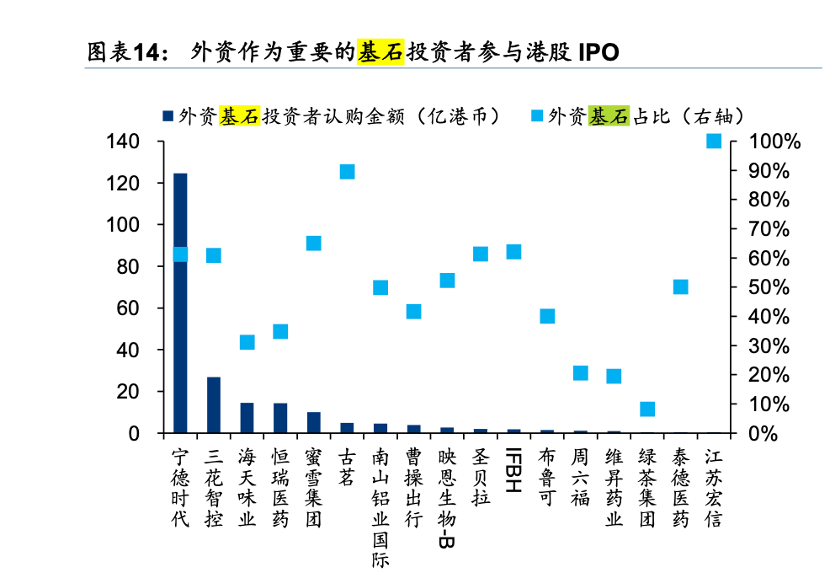
Core Viewpoint - The cornerstone investment in Hong Kong IPOs has shifted from being overlooked to a competitive and premium-seeking environment, with demand significantly exceeding supply [1][4]. Group 1: Investment Trends - The cornerstone investment participation in Hong Kong IPOs has surged, with an average of 5.35 cornerstone investors per company in 2025, a nearly 290% increase from 1.37 last year [1][2]. - The recent IPO of Botai Vehicle Networking Technology Co., Ltd. attracted cornerstone investments totaling 4.66 billion HKD, representing over 40% of the total fundraising [2]. - Large IPO projects are particularly favored, with notable examples like CATL attracting 23 cornerstone investors with a total subscription amount of 203.71 billion HKD, accounting for 66% of the total fundraising [3]. Group 2: Investor Composition - The number of cornerstone investors has increased to 289 this year, with significant contributions from professional investment institutions and listed companies [5]. - Market-oriented funds and listed companies have become major players, with 93 investment institutions contributing 302.06 billion HKD, making up approximately 66.82% of the total cornerstone investment [5][9]. - Foreign investors have played a crucial role, accounting for over 210 billion HKD in subscriptions, which is about half of the total cornerstone investment amount [9]. Group 3: Investment Returns - Over 77% of cornerstone investors are currently in profit, with some projects yielding returns exceeding tenfold [1][10]. - Notable high-return sectors include innovative pharmaceuticals, with companies like Yaojie Ankang-B seeing a price increase of over 1155% from the subscription price [12][13]. - The overall trend indicates that the majority of cornerstone investors are experiencing gains, with 42 out of 54 companies having current market prices above the average subscription price [11].

华为余承东:问界M9即将带来泊车车外语音功能 可远程对讲
Feng Huang Wang· 2025-09-24 06:54
Core Viewpoint - Huawei's Executive Director and Chairman of Terminal BG, Yu Chengdong, announced the upcoming introduction of the AITO Wenjie M9's external voice parking feature, enhancing the vehicle's parking capabilities [1] Group 1: Product Features - The Wenjie M9's external voice parking function can be used in conjunction with Huawei's QianKun Intelligent Driving ADS 4, which supports parking assistance from parking space to parking space [1] - The vehicle will provide voice reminders for parking out of the space, allowing for a more user-friendly parking experience [1] Group 2: Safety and Communication - In the event of a collision while parked, the Wenjie M9 will activate a sentinel mode notification, enabling the owner to remotely view the situation and communicate with involved parties [1] - Owners can initiate smart parking, which will also include voice reminders for parking out of the space [1]
华为系最便宜的车来了!记者评测→
Di Yi Cai Jing Zi Xun· 2025-09-24 03:44
Core Insights - The article discusses the unveiling of Huawei's latest ADS 4.0 autonomous driving system, integrated with the Hongmeng operating system, during the "Fifth Realm" event in Lushan [2]. Group 1 - Huawei's ADS 4.0 represents a significant advancement in autonomous driving technology [2]. - The integration of the Hongmeng operating system aims to enhance the overall performance and user experience of the autonomous driving system [2].
研究所日报-20250924
Yintai Securities· 2025-09-24 02:08
Group 1: US-China Relations - Wang Yi's meeting with the US congressional delegation is seen as a "ice-breaking" visit, marking the first such visit since 2019, which may help stabilize US-China relations[2] - Continued high-level exchanges between the two countries are encouraged to explore cooperation and address differences[2] Group 2: Market Trends - Tianhong's Yu'ebao money market fund has reduced its custody fee from 0.08% to 0.07%, marking the first fee reduction in over 10 years, amidst a broader trend of fee reductions in money market funds[2] - The overall market sentiment is expected to improve as capital market reforms continue to release benefits for investors[2] Group 3: Economic Indicators - The National Energy Administration reported that total electricity consumption reached 1,015.4 billion kWh in August, a year-on-year increase of 5.0%, indicating strong domestic electricity demand[4] - The 10-year government bond yield is currently at 1.877%, with a change of 1.44 basis points, while the DR007 rate is at 1.475%, down by 1.34 basis points[5] Group 4: Stock Market Performance - The A-share market's trading volume over the past six months is reported at 25,185 billion yuan, with a turnover rate of 4.75%[14] - The top three performing sectors are banking, coal, and electric equipment, indicating sector-specific investment opportunities[20]
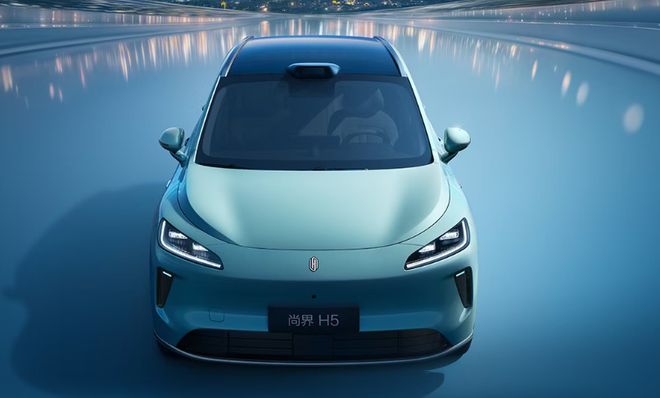
上汽总裁称余承东对尚界H5初始方案不满意,提了非常多要求;董明珠回应说话太满:是一种自信;李想直言苹果17 Pro Max太丑了
雷峰网· 2025-09-24 00:34
Key Points - Jinzi Ham (002515.SZ) is venturing into the semiconductor industry with a planned investment of up to 300 million yuan to acquire up to 20% equity in Zhongsheng Microelectronics, indicating a strategic shift towards high-growth sectors like AI and optical communication [3][5] - The company's stock surged to a daily limit of 7.85 yuan, resulting in a market capitalization increase of nearly 1 billion yuan on September 23 [3] - Jinzi Ham has previously attempted to diversify into healthcare and internet finance, but most of these ventures were unsuccessful [5] Group 1 - Jinzi Ham's investment in Zhongsheng Microelectronics reflects a broader trend of traditional companies diversifying into technology sectors [3][5] - The company aims to leverage the growth potential of the AI industry and optical communication markets [3] - The announcement of this investment comes after a change in the company's controlling shareholder and management team [5] Group 2 - The stock market reaction to Jinzi Ham's announcement demonstrates investor confidence in the company's new direction [3] - The investment strategy aligns with the increasing interest in semiconductor technology amid rising demand for AI applications [3][5] - Jinzi Ham's core business remains in meat products, but this move signifies a potential shift in focus towards technology-driven growth [3][5]