
美妆

Search documents
88VIP无门槛9折消费券再发一波 全年最优惠 天猫“双11”再加码
Zheng Quan Ri Bao Wang· 2025-10-31 08:49
Core Points - Tmall's "Double 11" event is offering significant discounts, including a base 15% off and additional no-threshold 10% coupons, industry-specific coupons, and shopping credits [1] - Multiple promotional rights will be released at midnight, creating an optimal shopping opportunity for consumers [1] Discounts and Promotions - 88VIP coupons are being issued with a no-threshold 10% discount, which can be combined with other platform discounts [18] - Consumers can receive up to 10,000 yuan in category coupons across over 15 popular categories, including beauty, apparel, and food [19] - A new "Beauty Brand Sale" is introduced, offering discounts as low as 20%, with specific products significantly reduced in price [20] - Over 180 outdoor sports brands are participating, offering store-wide coupons that can be combined with platform discounts for up to 50% off [21] - New smartphone models, such as the iPhone 17 Pro, come with surprise coupons worth 300 yuan, while Huawei offers discounts up to 1,500 yuan [22] - Home appliances and furnishings can be purchased at 50% off after applying multiple discounts, including a base 15% off, 10% coupons, and up to 20% in national and brand subsidies [23] - Pet brands are also offering discounts, with some products available for as low as 54% off after applying various coupons and shopping credits [24] Event Duration - The Tmall "Double 11" event will run until November 14 at midnight, encouraging consumers to take advantage of the best deals of the year [25]


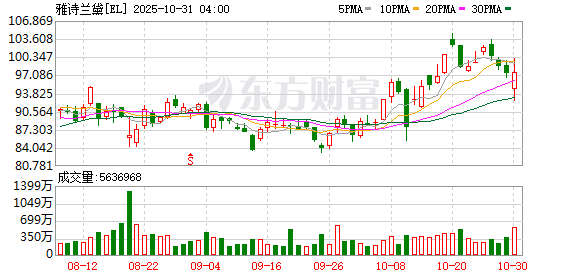
雅诗兰黛新财季净销售额增长4%,中国大陆市场回暖
2 1 Shi Ji Jing Ji Bao Dao· 2025-10-31 08:48
Core Insights - The company reported a 3% organic sales growth in Q1 FY26, a significant recovery compared to a 13% decline in the previous quarter, enhancing confidence in its fiscal outlook [2][5] - The net sales for Q1 FY26 reached $3.5 billion, with a 4% increase year-over-year, indicating a positive trend in overall performance [5][6] Group 1: Market Performance - The retail sales in the Chinese market experienced double-digit growth, significantly contributing to the global performance recovery [5] - Emerging markets, particularly Mexico and Turkey, showed high single-digit growth, while travel retail also saw improvements due to a low base from the previous year [5][6] Group 2: Financial Metrics - Gross margin increased by 100 basis points from 72.4% to 73.4%, while adjusted gross margin rose by 60 basis points from 72.7% to 73.3% [5] - Operating profit margin improved to 4.9%, a notable recovery from -3.6% in the same period last year, with adjusted operating profit margin expanding by 300 basis points to 7.3% [5] Group 3: Brand Performance - Seven brands under the company achieved double-digit growth, with Le Labo nearing triple-digit growth, outperforming the high-end beauty market [5] - The company has gained market share in the high-end beauty sector in five out of the last six quarters [5] Group 4: Online Sales Strategy - The company implemented various measures to enhance online consumer reach, resulting in double-digit organic sales growth globally, outperforming the overall high-end beauty industry [6] - The online sales growth was driven by platforms such as Tmall, JD.com, Douyin, and Notino, indicating a successful digital strategy [6] Group 5: Future Outlook - Despite challenges in the Eastern markets, the company remains optimistic about a robust start to the year and a return to growth, supported by consumer confidence improvements [6]

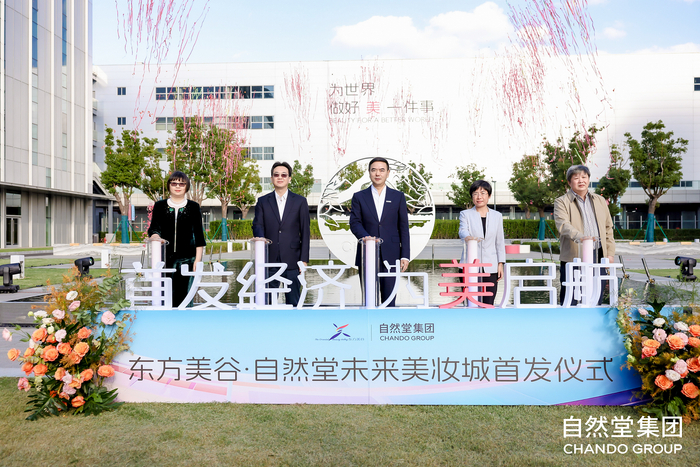
东方美谷·自然堂未来美妆城启幕,打造“首发经济+文旅商体展”工业旅游城新标杆
Xin Lang Cai Jing· 2025-10-31 06:25
Core Points - The "Oriental Beauty Valley · Chando Future Beauty City" was officially launched in Fengxian, Shanghai, marking a significant project under the "first launch economy" strategy of the local government [1][3] - The project integrates smart manufacturing, industrial tourism, and scientific experience, showcasing Chando Group's strengths in innovation and sustainable development [3][4] Group 1: Project Overview - The beauty city features four main launches: the future beauty city, a cosmetics science and art exhibition, a factory store, and new product releases, highlighting Chando Group's comprehensive capabilities [3] - The project occupies 161 acres with a total construction area of 127,000 square meters, housing 68 production lines with an annual capacity exceeding 400 million units [3][9] Group 2: Technological Integration - The project includes a smart sorting center and fully automated production lines, demonstrating advanced levels of intelligent manufacturing in China's beauty industry [9][11] - The smart sorting center utilizes IoT and 3D modeling for precise inventory management and real-time alerts, ensuring efficient logistics across over 60,000 retail stores nationwide [9][11] Group 3: Sustainability Initiatives - The beauty city incorporates ESG principles, featuring a green system with solar panels generating 3.5 million kWh annually, meeting 80% of the facility's electricity needs [13] - Measures such as 100% wastewater recycling and the use of reusable packaging aim for zero emissions and sustainable production practices [13] Group 4: Consumer Experience - The factory store serves as a unique direct sales platform for all Chando brands, allowing visitors to experience the production process while purchasing products [14] - Local residents can enjoy a 10% discount at the factory store, promoting regional consumption and fostering a sense of community pride [16] Group 5: Future Development - The project aims to create an open innovation ecosystem by integrating industry, academia, and research, enhancing educational experiences related to industrial tourism [16] - The successful launch of the beauty city is a practical step towards developing new productive forces and enhancing Shanghai's position in the beauty and health industry [16]
研报掘金丨开源证券:维持珀莱雅“买入”评级,双11表现亮眼,估值合理
Ge Long Hui A P P· 2025-10-31 06:25
Core Viewpoint - The report indicates that Proya achieved a net profit attributable to shareholders of 1.03 billion yuan in Q1-Q3 2025, reflecting a 2.7% increase, although Q3 saw a decline of 23.6% in net profit to 230 million yuan, indicating slight pressure on performance [1] Financial Performance - Proya's net profit for Q1-Q3 2025 was 1.03 billion yuan, up 2.7% year-on-year [1] - In Q3 2025, the net profit dropped to 230 million yuan, down 23.6% compared to the previous year [1] Strategic Initiatives - The company continues to strengthen its "big single product strategy" and is upgrading core products while focusing on the development of new strategic products [1] - New product launches include the dual anti-aging eye cream 3.0, energy series 2.0, ruby mask 3.0, and a new ruby single-use product [1] Brand Development - Proya is pursuing a multi-brand and multi-category collaborative development strategy, with the innovative category brand "Original Color Pot" rapidly capturing market share in its niche [1] - The brand "Caitang" is focusing on the philosophy of "Chinese makeup, original beauty" to solidify its differentiated brand positioning [1] - The brand "Off&Relax" is deepening its penetration in the core shampoo category, enhancing its fragrance characteristics and therapeutic effects [1] Market Performance - During the Double Eleven shopping festival, Proya topped the Tmall sales chart within four hours, with GMV exceeding 460 million yuan in the first four hours of Li Jiaqi's beauty livestream [1] - The company is positioned as a leading domestic beauty brand, with a strong performance during Double Eleven and a reasonable valuation, maintaining a "buy" rating [1]

肌肤抗老新突破!谷雨类人源外泌素HME带来细胞级年轻指令
Cai Fu Zai Xian· 2025-10-31 04:50
Core Insights - The article highlights the significant breakthrough of Gu Yu's latest anti-aging innovation, "Human-like Exosome HME," which demonstrates a reduction in wrinkles by 17.43% in 14 days and 26.61% in 28 days, marking a new era in cellular-level anti-aging skincare [1][4]. Group 1: Understanding Exosomes - Exosomes are described as natural nano-sized vesicles in the human body that facilitate communication between cells, playing a crucial role in skin metabolism, repair, and regeneration [2]. - The decline in high-quality exosome quantity with age leads to reduced skin repair capabilities, prompting the question of whether supplementing exosomes can slow the aging process [2]. Group 2: Innovation of Human-like Exosome HME - Gu Yu's Human-like Exosome HME is developed using proprietary artificial exosome technology, which has been patented, showcasing a significant advancement in anti-aging ingredients [3]. - This innovation addresses three core challenges in the industry: safety, efficiency, and industrialization of exosomes [3]. Group 3: Efficacy Data - Experimental results indicate that Human-like Exosome HME enhances cell migration ability by 1.17-1.5 times compared to human-derived exosomes and increases collagen type III production by 5-6.7 times [4]. - The product has shown substantial efficacy in reducing wrinkle count in human trials, with an average reduction of 17.43% after 14 days and 26.61% after 28 days [4]. Group 4: Mechanism of Action - The mechanism of Human-like Exosome HME differs fundamentally from traditional anti-aging ingredients by directly supplementing safe exosomes that release gene-level anti-aging instructions within cells [5]. - The technology achieves three breakthroughs: direct regulation of target genes, precise delivery to key skin cells, and stability at room temperature, addressing industrialization challenges [5]. Group 5: Research and Development Commitment - Gu Yu has established a comprehensive research and development system, including a 45,000 square meter cosmetics manufacturing facility and a total R&D investment exceeding 250 million yuan, with plans for an additional 2 billion yuan over the next decade [6]. - The commitment to R&D positions Gu Yu as a leader in innovation within the domestic beauty industry, transitioning from a follower to a technology pioneer [6].
美妆健康产业如何抓住市场机遇?上海静安这场对话探讨了升级路径
Xin Lang Cai Jing· 2025-10-31 02:00
Core Insights - The roundtable discussion at the "Beauty Empowerment: Business Environment Promotion in Jing'an" event highlighted the ambitions and anxieties of China's beauty industry at the intersection of consumer upgrades and technological revolutions [1] - The beauty health industry is experiencing a shift in investment logic, with a focus on innovation and long-term growth potential [2] - The Chinese beauty market is still in its early stages of globalization, with significant growth opportunities ahead for local brands [4] Group 1: Industry Trends - The beauty industry is transitioning from "traffic-driven" to "research-driven" and from "local competition" to "global collaboration" [1] - There are three emerging demands in the beauty sector: post-medical beauty applications, food-sourced products, and precise efficacy mechanism validation [1] - The industry is moving from "single-point breakthroughs" to "comprehensive capability competition," with over 150 innovative raw material companies in China [3] Group 2: Investment Strategies - Investment firms are becoming more cautious in the beauty sector, but some, like KKR, continue to invest in innovative and high-potential startups [2] - KKR's investment strategy emphasizes the importance of market insight, consumer understanding, and a product-centric approach [2] - AI and biotechnology are identified as critical variables in the industry, with potential for significant technological breakthroughs and product innovations [2] Group 3: Brand Development - Brands must focus on technological barriers and scenario innovation to stand out in the competitive landscape [3] - MISTINE, a Thai brand, emphasizes the importance of scientific research in product development, particularly in sunscreen technology [3] - Leading companies are expanding their product matrices across various categories and price segments to enhance competitiveness [3]
丸美生物:加速研发成果转化,前三季度实现营收24.5亿元
Zheng Quan Shi Bao Wang· 2025-10-31 01:21
Core Insights - The company reported a revenue of 2.45 billion yuan for the first three quarters of 2025, representing a year-on-year growth of 22.51% [1] - The net profit attributable to the parent company reached 244 million yuan, with R&D expenses amounting to 62.79 million yuan [1] - The net cash flow from operating activities significantly increased by 132.19% year-on-year, totaling 159 million yuan, indicating improved cash flow adequacy [1] Company Developments - In Q3 2025, the company submitted 32 patent applications and played a key role in formulating 4 standards, while also publishing 2 group standards, focusing on advanced technology areas such as collagen restructuring and active substance detection [1] - The company was awarded the qualification for the Guangdong Provincial Engineering Research Center for Recombinant Functional Proteins, marking a significant recognition following the establishment of the "National Recombinant Functional Protein Technology Research Center" in 2024 [1] - In September, the company received official recognition as a provincial-level postdoctoral innovation practice base, enhancing its capability in talent cultivation in the biotechnology field and promoting collaboration between industry and academia [1]

水羊股份(300740)2025年三季报点评:单季度收入增速环比向上 高奢美妆集团持续夯实
Xin Lang Cai Jing· 2025-10-31 00:41
Core Viewpoint - The company reported strong financial performance for the first three quarters of 2025, with significant growth in revenue and net profit, indicating a positive trend in its operations and market positioning [1][2]. Financial Performance - For the first three quarters of 2025, the company achieved a revenue of 3.41 billion yuan, representing a year-on-year increase of 12% [1]. - The net profit attributable to shareholders reached 140 million yuan, up 44% year-on-year, while the net profit excluding non-recurring items was 130 million yuan, reflecting a 21.6% increase [1]. - The basic earnings per share (EPS) stood at 0.35 yuan [1]. Quarterly Breakdown - The quarterly revenue for Q1 to Q3 of 2025 was 1.09 billion yuan, 1.41 billion yuan, and 0.91 billion yuan, with year-on-year growth rates of +5.2%, +12.2%, and +20.9% respectively [1]. - The net profit for the same quarters was 40 million yuan, 80 million yuan, and 10 million yuan, with year-on-year growth rates of +4.7%, +23.8%, and a turnaround from loss to profit [1]. Profitability Metrics - The gross margin for the first three quarters of 2025 increased by 2.9 percentage points to 66% [2]. - The quarterly gross margins for Q1 to Q3 were 63.8%, 65.3%, and 69.8%, showing a consistent upward trend [2]. - The operating expense ratio increased by 2.3 percentage points to 60%, with specific rates for sales, management, R&D, and financial expenses being 50.5%, 5.6%, 2.2%, and 1.7% respectively [2]. Inventory and Receivables - As of September 2025, inventory decreased by 4.2% year-on-year to 880 million yuan, with a 6.3% increase compared to the beginning of the year [3]. - Accounts receivable also saw a year-on-year decrease of 6.4% to 410 million yuan, with a 19.4% increase from the start of the year [3]. - The inventory turnover days were 199 days, a reduction of 7 days year-on-year, while accounts receivable turnover days were 30 days, also down by 7 days [3]. Cash Flow and Future Outlook - The operating net cash flow for the first three quarters was 190 million yuan, indicating a positive shift to net inflow [3]. - The company is positioned as a high-end beauty group, with strong brand contributions and a dual-channel strategy driving quality growth [3]. - The profit forecasts for 2025 to 2027 have been adjusted to 240 million yuan, 320 million yuan, and 410 million yuan respectively, with corresponding price-to-earnings ratios of 32 and 24 for 2025 and 2026 [3].

“平台+美妆产业”双向赋能
Mei Ri Shang Bao· 2025-10-31 00:22
Core Insights - The "beautiful economy" in Hangzhou is thriving, with a complete industrial chain supporting the beauty and cosmetics sector, which has surpassed a scale of 30 billion yuan [1] - Hangzhou is leveraging its digital economy advantages to enhance the beauty industry through digital transformation and ecosystem improvement [1] Industry Overview - The beauty industry in Hangzhou has reached a scale of over 30 billion yuan, positioning it as a leader in the national cosmetics sector [1] - The Qiantang District, where the intelligent factory of Huaxizi is located, has gathered over 100 beauty enterprises, generating total revenue in the hundreds of millions [3] Technological Advancements - Huaxizi's intelligent factory features 7 production lines with an annual output of 50 million products, utilizing advanced international equipment and achieving a 100% connectivity rate for monitoring devices [2] - The factory has implemented IoT technology for digital management, allowing for traceability and optimization of production processes [2] Infrastructure Development - The MoShang PARK international beauty fashion industry base is set to invest over 4 billion yuan, aiming to become a national hub for beauty and fashion enterprises [4] - The Hangzhou government has initiated reforms to facilitate the registration of domestic cosmetics, enhancing the ecosystem for the beauty industry [4] Future Prospects - The integration of digital workshops and a robust industrial ecosystem is driving the beauty industry in Hangzhou, with data and algorithms playing crucial roles in production efficiency [5] - The "platform + beauty industry" model is emerging as a significant engine for propelling Chinese beauty products onto the global stage [5]
天风证券晨会集萃-20251031
Tianfeng Securities· 2025-10-31 00:17
Group 1 - The Federal Open Market Committee (FOMC) meeting in October resulted in a 25 basis point rate cut, lowering the federal funds target rate to a range of 3.75%-4.00% [2][27] - The meeting statement maintained a dovish tone, indicating a slowdown in employment growth and rising risks to employment, while inflation remains slightly elevated [2][27] - The expectation is for another rate cut in December and potentially three more cuts next year, with non-farm payrolls showing weak performance recently [2][29] Group 2 - As of Q3 2025, the active pharmaceutical fund size reached 237.3 billion yuan, an increase of 45.7 billion yuan from Q2 2025, while passive pharmaceutical funds also saw a rise to 186.3 billion yuan [4] - The top three sectors for active pharmaceutical funds were innovative drugs (40%), traditional pharmaceuticals (34%), and CDMO (16%), with significant increases in holdings for companies like Innovent Biologics and Hengrui Medicine [4] - The pharmaceutical sector's heavy holdings in all funds decreased by 0.4 percentage points to 9.8%, indicating potential for increased allocation [4] Group 3 - Water Sheep Co., Ltd. reported a revenue of 3.409 billion yuan for the first three quarters of 2025, a year-on-year increase of 11.96%, with a net profit of 136 million yuan, up 44.01% [6] - The company is successfully transitioning to a high-end brand matrix and has increased R&D investment, applying for 18 patents in the first half of the year [6][8] - Future revenue projections for Water Sheep are set at 4.86 billion yuan for 2025, with net profits expected to be 200 million yuan [8] Group 4 - Beitaini's revenue for the first three quarters of 2025 was 3.464 billion yuan, a decrease of 13.78%, but Q3 saw a revenue of 1.092 billion yuan, a decline of 9.95% [9] - The company is focusing on core products and reducing promotional expenses while enhancing R&D efforts in collaboration with research institutes in Japan and France [9] - Revenue forecasts for Beitaini are adjusted to 5.679 billion yuan for 2025, with net profits expected to be 465 million yuan [9] Group 5 - Jin Hui Wine achieved a revenue of 546 million yuan in Q3 2025, a decline of 4.89%, with a net profit of 25 million yuan, down 33.02% [11] - The company is focusing on improving operational quality in its home province while adjusting its distribution strategy in other regions [11] - Future net profit projections for Jin Hui Wine are set at 379 million yuan for 2025, maintaining a "buy" rating [11] Group 6 - CIMC Anrui Co., Ltd. has seen rapid revenue growth, from 12.29 billion yuan in 2020 to an expected 24.76 billion yuan in 2024, with a CAGR of 19% [17] - The company is a leader in the clean energy equipment sector, benefiting from the energy transition and expanding into hydrogen and green methanol [17] - Profit forecasts for CIMC Anrui are set at 1.253 billion yuan for 2025, with an EPS of 0.62 yuan [17]