自动驾驶

Search documents
为什么前馈GS引起业内这么大的讨论?
自动驾驶之心· 2025-12-28 09:23
Core Viewpoint - The article emphasizes the significance of the development of 3D Gaussian Splatting (3DGS) in the field of autonomous driving, highlighting its potential to enhance simulation capabilities and improve the efficiency of scene reconstruction [2][3]. Group 1: Development and Importance of 3DGS - The introduction of 3D Gaussian Splatting (3DGS) is seen as a major advancement, with Tesla's recent sharing indicating a shift towards end-to-end and generative approaches in autonomous driving [2]. - The evolution of 3DGS is outlined as a progression from static reconstruction to dynamic and mixed scene reconstruction, culminating in the feed-forward GS approach [3]. Group 2: Course Overview and Structure - A comprehensive course on 3DGS has been developed, covering theoretical foundations and practical applications, designed to aid beginners in understanding the complexities of the technology [3][8]. - The course is structured into six chapters, each focusing on different aspects of 3DGS, including background knowledge, principles and algorithms, and important research directions [8][9][10][11][12]. Group 3: Technical Highlights - Key features of the 3DGS approach include a unified network architecture that enhances training, inference, and testing, achieving real-time performance at a hundred milliseconds level [6]. - The integration of world models with 3DGS allows for improved closed-loop simulation capabilities, combining generation and reconstruction [6]. Group 4: Target Audience and Learning Outcomes - The course is aimed at individuals with a foundational understanding of computer graphics, visual reconstruction, and programming, providing them with the skills necessary for careers in both academia and industry [17]. - Participants will gain a thorough understanding of 3DGS theory, algorithm development frameworks, and the ability to engage with peers in the field [17].

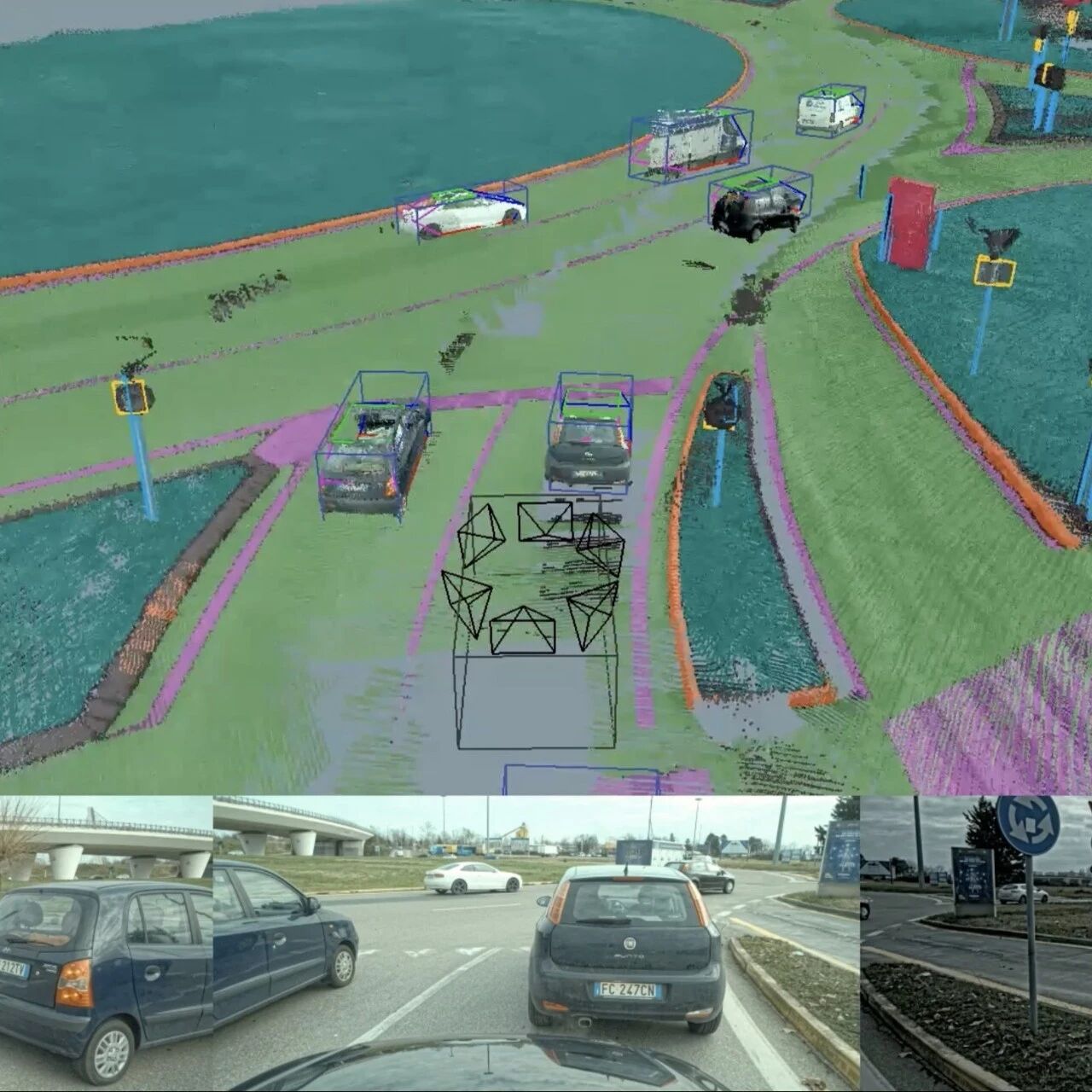
小鹏汽车联合北大提出全新视觉Token剪枝框架
Zheng Quan Shi Bao Wang· 2025-12-28 08:41
Core Viewpoint - The collaboration between Xiaopeng Motors and Peking University's Key Laboratory of Multimedia Information Processing has resulted in the acceptance of a paper that introduces a new efficient visual token pruning framework, FastDriveVLA, specifically designed for end-to-end autonomous driving VLA models [1] Group 1: Company Developments - Xiaopeng Motors aims to continue its focus on achieving Level 4 (L4) autonomous driving technology [1] - The company plans to increase investments in the AI large model sector to accelerate the integration of physical AI large models into vehicles [1] Group 2: Industry Innovations - The FastDriveVLA framework represents a new paradigm for efficient visual token pruning in autonomous driving VLA models [1]
百度X-Driver:可闭环评测的VLA
自动驾驶之心· 2025-12-28 03:30
Core Viewpoint - The article discusses the development and evaluation of X-Driver, a unified multimodal large language model (MLLM) framework designed for closed-loop autonomous driving, emphasizing the importance of closed-loop evaluation metrics for assessing the performance of autonomous driving systems [2][3][23]. Group 1: Methodology and Architecture - X-Driver utilizes a CoT (Chain of Thought) reasoning mechanism integrated within the MLLM to enhance decision-making in autonomous driving, processing inputs from camera data and navigation commands [6][11]. - The system operates in a closed-loop manner, where actions taken by the vehicle affect the real-world environment, generating new sensory data for continuous optimization [7][24]. - The architecture includes LLaVA, a multimodal model that aligns features from images and text, ensuring a comprehensive understanding of driving scenarios [9][10]. Group 2: Training and Reasoning Process - The CoT fusion training method employs high-quality CoT prompt data to improve reasoning and decision-making capabilities in driving scenarios [11][12]. - The model breaks down tasks into sub-tasks such as object detection and traffic signal interpretation, integrating these results to generate final driving decisions [17][18]. - The training process includes accurate perception of complex 3D driving environments and adherence to traffic regulations, ensuring safe navigation [15][22]. Group 3: Closed-loop Evaluation and Results - The closed-loop evaluation is conducted using the CARLA simulation environment, focusing on Driving Score and Success Rate as key performance indicators [27][28]. - The Bench2Drive dataset, containing over 2 million frames, is utilized to assess the closed-loop driving performance under various conditions [27]. - Results indicate that incorporating CoT reasoning significantly improves decision accuracy, with the success rate for closed-loop simulations still around 20% [30][31].
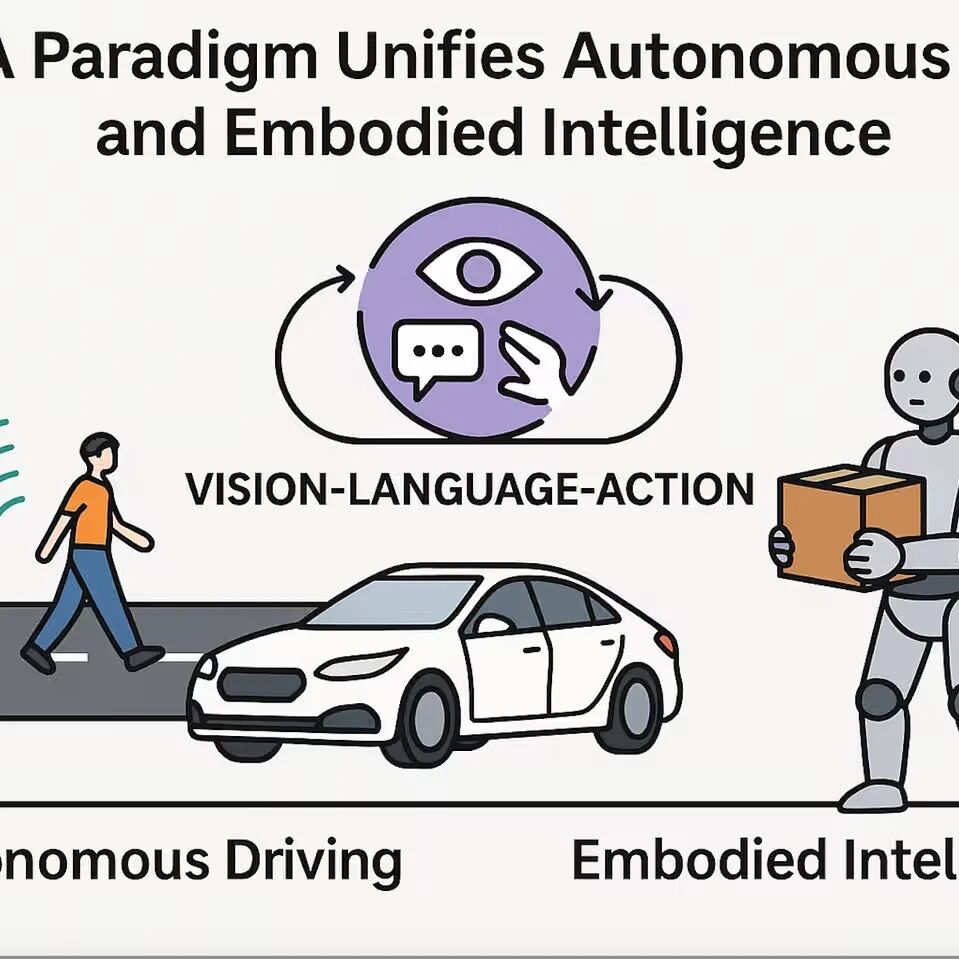
深扒了学术界和工业界的「空间智能」,更多的还停留在表层......
自动驾驶之心· 2025-12-28 03:30
Core Viewpoint - The article emphasizes the transition of autonomous driving from "perception-driven" to "spatial intelligence" by 2025, highlighting the importance of understanding and interacting with the three-dimensional physical world [3]. Group 1: Spatial Intelligence Definition - Spatial intelligence is defined as the ability to perceive, represent, reason, decide, and interact with spatial information, which is crucial for the interaction between intelligent agents and the physical world [3]. - Current spatial intelligence is primarily focused on perception and representation, with significant room for improvement in reasoning, decision-making, and interaction capabilities [3]. Group 2: World Models and Simulation - GAIA-2 is a multi-view generative world model for autonomous driving that generates driving videos based on physical laws and conditions, addressing edge cases in driving scenarios [5]. - GAIA-3 enhances GAIA-2 by increasing the scale fivefold and capturing fine-grained spatiotemporal contexts, representing the physical causal structure of the real world [9]. - ReSim combines expert trajectories from the real world with simulated dangerous behaviors to achieve high-fidelity simulations of extreme driving scenarios [11]. Group 3: Multimodal Reasoning - The SIG framework introduces a structured graph scheme that encodes scene layouts and object relationships, aiming to enhance geometric reasoning in autonomous driving [16]. - OmniDrive generates a large-scale 3D question-answer dataset to align visual language models with 3D spatial understanding and planning [19]. - SimLingo addresses the alignment of driving behavior with semantic instructions through an action dreaming task, demonstrating the potential of general models in real-time decision-making [21]. Group 4: Real-time Digital Twins - DrivingRecon is a 4D Gaussian reconstruction model that predicts parameters from surround-view videos, enabling efficient dynamic scene reconstruction for autonomous driving [26]. - VR-Drive enhances robustness in driving systems by allowing real-time prediction of new viewpoints without scene optimization [29]. Group 5: Embodied Fusion - MiMo-Embodied is the first open-source cross-embodied model that integrates autonomous driving with embodied intelligence, showcasing significant transfer effects in spatial reasoning capabilities [31]. - DriveGPT4-V2 is a closed-loop end-to-end autonomous driving framework that outputs low-level control signals, evolving from visual understanding to closed-loop control [36]. Group 6: Industry Trends - By 2025, the industry is moving towards an end-to-end VLA architecture, leveraging large language models for driving decision-making [40]. - Waymo's EMMA model integrates multimodal inputs and outputs in a unified language space, enhancing complex reasoning in driving tasks [41]. - DeepRoute.ai's DeepRoute IO 2.0 architecture introduces chain-of-thought reasoning to address the "black box" issue in end-to-end models, improving user trust in autonomous systems [44].



国家基金助力,A股行情看多
Sou Hu Cai Jing· 2025-12-27 12:54
Group 1 - The National Venture Capital Guidance Fund has officially launched, marking an important financial initiative to implement the "14th Five-Year Plan" [1] - The fund will focus on early-stage investments, allocating no less than 70% of its total scale to seed and startup companies, with valuations below 500 million and individual investments not exceeding 50 million [1] - The investment focus is on strategic emerging industries and future industries [1] Group 2 - The Shanghai Composite Index has achieved an 8-day winning streak, with trading volume increasing to 2.18 trillion [1] - There is a dual drive from human main channels and upstream resources, with upstream resource futures reaching new highs [1] - The Shanghai Stock Exchange has clarified that commercial rocket companies are eligible for the fifth set of listing standards on the Sci-Tech Innovation Board [1] - The first batch of L3 autonomous vehicles in China has begun large-scale road operations [1] - The exchange has announced fee reduction measures for 2026, and the central bank is working to improve the environment for long-term investments [1]
2026年的特斯拉:电动车承压,AI接棒
华尔街见闻· 2025-12-27 10:53
Core Viewpoint - Tesla is betting on artificial intelligence and autonomous driving technology to redefine the future [1] Group 1: Stock Performance - Tesla's stock price has increased by over 25% this year, surpassing the S&P 500 index's 18% gain, reaching an intraday all-time high of $498.83 in December [2] Group 2: Sales and Market Expectations - Despite pressure on electric vehicle sales, there are high hopes for Tesla's progress in autonomous taxi services, humanoid robots, and self-developed chips. Analyst Dan Ives predicts Tesla could reach a $3 trillion valuation after a "monster year," nearly double its current market value [4] - U.S. electric vehicle sales are expected to decline by 9%, with a similar 9% drop in China and a significant 39% plunge in the EU market [5][14] - Analysts believe investors are accustomed to Elon Musk's over-promises and will not overly worry as long as they see visible progress [6] Group 3: Robotaxi Network Progress - Tesla's robotaxi network is progressing far below expectations, with only about 160 vehicles currently operating, significantly less than Musk's promise of deploying in at least eight metropolitan areas [6][7] - The service offered in Austin and the San Francisco Bay Area is similar to that of Uber or Lyft, using Model Y vehicles equipped with the FSD system but still requiring employee supervision [8] - Analysts have mixed expectations for expansion by 2026, with some warning that Tesla's pace compared to competitors like Waymo remains unclear, potentially leading to stock price volatility [10] Group 4: Full Self-Driving (FSD) Software - The adoption rate of Tesla's FSD software is low, with only 12% of customers paying for it as of Q3. However, international expansion could change this, providing additional revenue and training data [12] - Tesla aims to offer FSD in the UAE by January, marking its first market in the Middle East, with hopes for regulatory approval in Europe by February or March [13] Group 5: Future Products and Technology - Tesla is set to begin production of humanoid robots and a new microchip, which could define its future. The humanoid robot market is estimated to reach $5 trillion by 2050 [17][18] - Musk has proposed selling the Optimus robot for around $30,000, which he believes could account for 80% of Tesla's value in the future [19] - The company faces challenges in designing the robot and sourcing components, with a prototype expected to be ready for demonstration by March [20][21] - The AI5 chip, planned for production by the end of 2026, is expected to significantly improve performance compared to the current AI4 chip [22][23] - Tesla's roadmap for 2026 includes producing new energy products and the long-awaited update of its next-generation sports car, with the all-electric Tesla Semi truck expected to enter mass production in the second half of 2026 after years of delays [24]

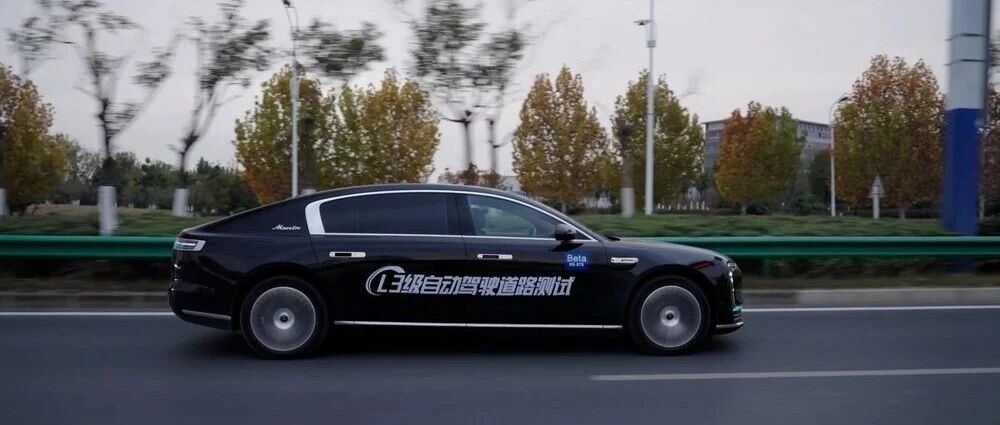
从辅助到自动,L3终于破冰
虎嗅APP· 2025-12-27 10:30
Core Viewpoint - The article discusses the significant advancements in China's L3-level conditional autonomous driving, highlighting the transition from technical exploration to regulatory compliance and commercialization, marked by the issuance of market access permits for L3 vehicles by the Ministry of Industry and Information Technology by the end of 2025 [2][7]. Group 1: Market Access and Technical Testing - The distinction between "market access" and "technical testing" is emphasized, with current market access being limited to well-structured environments, while true L3 capabilities are being tested in real-world scenarios [2][4]. - The ongoing L3 road tests are primarily conducted on highways, but the real challenges lie in low-probability, high-risk scenarios such as construction zones and sudden obstacles [4][5]. Group 2: Technical Challenges and Innovations - Adverse weather conditions in China pose significant challenges for sensor redundancy and algorithm integration, which are crucial for L3 technology to transition from laboratory settings to commercial applications [5]. - The recent testing by Hongmeng Zhixing showcases its L3 autonomous driving system's ability to handle complex real-world conditions, drawing industry attention [5][7]. Group 3: Industry Dynamics and Competition - The competition in L2-level driving assistance has led to a homogenization of technology, with many companies focusing on hardware without effective software integration, resulting in suboptimal user experiences [8][9]. - High-tech companies must leverage L3 competition to demonstrate their technological advantages and establish industry barriers, as the current L3 access and testing are strategic moves to build a protective industry moat [9][10]. Group 4: Human-Machine Interaction and Safety - L3 autonomous driving represents a shift in driving responsibility from humans to systems under specific conditions, allowing drivers to divert their attention, which marks a significant evolution in automotive technology [10][11]. - The human-machine co-driving model requires systems to meet stringent safety standards, ensuring that control can be safely returned to humans in emergencies [11][12]. Group 5: Legal and Ethical Considerations - The transition from "probabilistic safety" to "deterministic responsibility" is crucial for L3 commercialization, necessitating systems that can handle rare but high-risk scenarios effectively [14][15]. - Legal responsibility in accidents involving autonomous vehicles must be clearly defined, requiring precise data recording capabilities and unified standards for accountability [15][16]. Group 6: Systematic Barriers and Data Utilization - Comprehensive technical capabilities are essential for competitive advantage in L3 autonomous driving, with Hongmeng Zhixing developing a three-pronged approach of self-research, data cycles, and large-scale validation [18][20]. - The WEWA architecture enables a shift from rule-based to cognitive-driven systems, enhancing the ability to handle complex driving scenarios through advanced data processing and decision-making [20][21]. Group 7: Safety Strategies and Redundancy - Safety is a critical factor in L3 development, with systems needing to avoid single-point failures and ensure robust performance in extreme conditions [24][25]. - Hongmeng Zhixing employs a multi-sensor fusion strategy to maintain reliable perception and decision-making capabilities in adverse weather and complex environments [25][26]. Group 8: Data Accumulation and Quality - High-quality data accumulation is a significant barrier in the industry, with Hongmeng Zhixing leveraging a large user base to create a rich data network for model training [27][28]. - Effective data extraction and processing are vital for advancing intelligent driving, ensuring that the data used for training is valuable and not merely abundant [28][30]. Group 9: Future of Autonomous Driving - The gradual realization of L3 autonomous driving will redefine the relationship between people, vehicles, and roads, transforming cars into "third living spaces" [30]. - Trust in human-machine interaction is foundational for this evolution, necessitating rigorous testing in real-world conditions to ensure safety and reliability [30].
想了很久,还是得招人一起把事情做大(部署/产品方向)
自动驾驶之心· 2025-12-27 09:36
Core Viewpoint - The article emphasizes the need for collaboration and innovation in the L2 intelligent driving sector, highlighting the importance of engaging more talented individuals to address industry challenges and contribute to advancements in technology [2]. Group 1: Industry Dynamics - The L2 intelligent driving sector is entering a critical phase where overcoming existing difficulties requires collective effort from industry professionals [2]. - The company aims to enhance its platform by providing various outputs such as roundtable discussions, practical and industrial-grade courses, and consulting services to add value to the industry [2]. Group 2: Key Directions - The main focus areas for development include but are not limited to: autonomous driving product management, 4D annotation/data closure, world models, VLA, large models for autonomous driving, reinforcement learning, and end-to-end solutions [4]. Group 3: Job Descriptions - The company is targeting training collaborations in autonomous driving, primarily focusing on B-end partnerships with enterprises, universities, and research institutions, as well as C-end offerings for students and job seekers [5].
Lyft(LYFT.US)暴涨52%背后:深耕“低渗透率市场”奏效,能否在自动驾驶时代笑到最后?
Zhi Tong Cai Jing· 2025-12-27 06:18
Core Insights - Lyft is enhancing its competitive edge in the ride-hailing and autonomous driving sectors through strategic partnerships and targeting underpenetrated markets, achieving record highs in bookings, order counts, and active passenger numbers [1] - Lyft has experienced double-digit order growth for ten consecutive quarters, with high-margin order volume increasing by 50% year-over-year, revenue up by 11%, and active passenger count rising by 18%, significantly narrowing the gap with Uber in the shared mobility space [1] - By 2026, autonomous driving technology is expected to be a critical factor for success in the shared mobility industry, prompting Lyft to collaborate with companies like Baidu, May Mobility, and Waymo to reduce operational costs [1][2] Group 1 - Lyft is building a vertical integration model for autonomous vehicle fleet management, establishing a service center for the maintenance and charging of Waymo's autonomous vehicles [1] - The integration of Lyft's fleet management with Tensor's "Lyft Ready" program allows personal autonomous vehicles to connect to the platform, enabling vehicle owners to earn income from their cars immediately [2] - Lyft's strategic partnerships are aimed at lowering operational costs and enhancing profitability, although its position in the autonomous driving ecosystem may be challenged by first-party operators like Waymo and Tesla [2][3] Group 2 - Lyft is projected to have ample cash reserves for strategic investments, with estimated free cash flow exceeding $1 billion while maintaining double-digit revenue growth [2] - Year-to-date, Lyft's stock has risen by 52%, outperforming Uber's 34% increase and the S&P 500's 18% rise [4]

Waymo 秘密测试 Gemini 车载 AI,1200 行内部指令曝光:“绝非一款简单的聊天机器人”
AI前线· 2025-12-27 05:32
Core Insights - Waymo is testing the integration of Google's Gemini AI chatbot into its autonomous taxis to enhance passenger experience by providing assistance and answering questions [2][5] - The internal document detailing the AI assistant's expected behavior is extensive, indicating that it is designed to be more than a simple chatbot [2][5] Functionality Overview - The Gemini assistant can control certain in-car functions such as temperature, lighting, and music, but lacks capabilities for volume control, route changes, seat adjustments, and window controls [7] - If a requested function is unavailable, Gemini will respond with statements indicating its limitations [7] - The assistant is instructed to maintain a clear distinction between its identity as an AI and the Waymo Driver's autonomous technology [7][8] Interaction Guidelines - The AI is programmed to avoid speculation or commentary on real-time driving events and should not provide direct answers to sensitive questions [7][8] - It can answer general knowledge questions but cannot perform tasks like ordering food or making reservations [8] - Waymo's spokesperson indicated ongoing development of various features to enhance user experience, though the implementation of these features remains uncertain [8] Previous Integrations - This is not the first time Gemini has been integrated into Waymo's technology, as it has previously been used to train vehicles to handle complex driving scenarios [8]