
出行

Search documents
我国将建立健全职业伤害保障制度
Xin Hua Wang· 2025-11-27 06:50
Group 1 - The core viewpoint of the articles emphasizes the establishment of a comprehensive occupational injury protection system for new employment forms, which is a pressing need for workers in the gig economy [1][2] - As of September, over 22 million individuals have been included in the occupational injury protection pilot program, with 11 platform companies participating across 17 provinces [2] - By 2026, the pilot program for occupational injury protection for new employment forms will expand to all provinces in China, covering the delivery, instant logistics, and local freight industries [2] Group 2 - The new occupational injury protection system will not require a traditional labor relationship for participation, focusing instead on the order as the key element, with innovative methods such as daily insurance and order-based fees [1] - Experts suggest further optimization of the system design, enhancement of operational efficiency, and strengthening of technical support to ensure comprehensive protection for gig workers against various occupational injury risks [2]
聚焦“十五五”规划建议丨我国将建立健全职业伤害保障制度
Xin Hua She· 2025-11-27 02:32
Core Points - The proposal from the Central Committee emphasizes the establishment of a comprehensive occupational injury protection system for new employment forms, which is a pressing need for workers in the gig economy [1] - As of September, over 22 million individuals have been covered under the pilot program for occupational injury protection, with 11 platform companies participating across 17 provinces [1] - By 2026, the pilot program will expand to all provinces in China, including the transportation, instant delivery, and local freight industries, with plans to include other sectors by 2027 [2] Group 1 - Occupational injury protection is identified as a critical concern for new employment form workers, particularly for those in delivery roles who face risks while fulfilling platform orders [1] - The innovative insurance model focuses on daily coverage and order-based billing, which aligns with the flexible nature of gig work and aims to enhance the protection of workers' rights [1] - The pilot program's progress indicates a significant step towards ensuring occupational injury protection for a growing segment of the workforce, which now comprises 21% of the total workforce in China [1] Group 2 - Recommendations for optimizing the system design and enhancing operational efficiency have been made to ensure comprehensive protection for new employment form workers against various occupational injury risks [2] - The initiative reflects a broader trend of adapting social security systems to accommodate the evolving labor market shaped by the rise of platform economies [1][2]
“十四五”全省城镇新增就业超608万人
Da Zhong Ri Bao· 2025-11-27 01:09
Core Insights - The province has exceeded its "14th Five-Year Plan" employment target by creating 6.09 million new urban jobs, with a focus on high-quality employment and social security measures [2][4] - The basic pension insurance coverage rate has reached 96.1%, with significant participation in unemployment and work injury insurance programs [4] - A total of 18.16 billion yuan in one-time entrepreneurial subsidies and 97.87 billion yuan in entrepreneurial guarantee loans have been disbursed over the past five years [3][4] Employment and Social Security - The province's employment system prioritized job stability, achieving 6.09 million new urban jobs ahead of schedule, focusing on key groups such as college graduates and migrant workers [2][3] - The government has implemented various employment support measures, including subsidies, skill enhancement programs, and entrepreneurial support, with 472.9 million training sessions conducted [3][4] Insurance and Coverage - As of October 2023, the number of participants in basic pension insurance reached 80.18 million, with unemployment and work injury insurance participants at 16.81 million and 21.07 million, respectively [4] - The province has initiated a pilot program for occupational injury protection for new employment forms, covering 1.45 million individuals from various platforms [4] Labor Relations and Rights - The province has improved labor relations by enhancing wage standards and implementing measures to protect workers' rights, including a three-time increase in minimum wage standards during the "14th Five-Year Plan" period [5] - An electronic labor contract platform has been launched to strengthen labor rights protection and prevent disputes [5]
滴滴程维:将加强出行服务体系建设 加大力度建设良好司机生态
Ren Min Wang· 2025-11-26 11:23
Core Insights - Didi's Q3 2025 performance report shows steady growth, with core platform order volume increasing by 13.8% year-on-year to 4.685 billion orders, marking 11 consecutive quarters of double-digit growth since 2023 [1] - The Gross Transaction Value (GTV) for Didi's core platform rose by 14.8% year-on-year to 115.8 billion yuan, with a net profit of 1.5 billion yuan for the quarter [1] - Didi's CEO emphasized the commitment to enhancing the travel service ecosystem and expanding international markets while leveraging AI for improved user experience and responsible development of Level 4 autonomous driving [1] Domestic Operations - In Q3, Didi's domestic ride-hailing orders reached 3.523 billion, a 10.7% increase year-on-year, with an average of 38.3 million daily orders [2] - The GTV for domestic operations grew by 10.1% to 86 billion yuan, with adjusted EBITDA profit of 3 billion yuan [2] - Didi is focusing on refining its domestic travel ecosystem through differentiated services and enhancing user experience, including an upgraded membership system and AI-driven ride-hailing assistance [2] International Operations - Didi's international business maintained over 20% growth in Q3, with order volume increasing by 24.3% to 1.162 billion orders and GTV rising by 31% to 29.8 billion yuan [3] - The international ride-hailing segment has achieved sustainable growth, with cumulative adjusted EBITDA profitability in the first three quarters of 2025 [3] - Didi's food delivery service in Brazil has launched in over 30 cities, with plans to expand to 100 cities by mid-2026, supported by a strong user base of 55 million and 1.5 million drivers in Brazil [3][4]

美国股市昨日三大指数分别上涨0.7%-1.4%
ZHONGTAI INTERNATIONAL SECURITIES· 2025-11-26 10:51
Market Performance - The Hang Seng Index and the Hang Seng China Enterprises Index rose by 0.7% and 0.9% respectively[1] - The Hang Seng Tech Index increased by 1.2%, leading the market upward[1] - Xiaomi Group's stock price surged by 4.4% following the announcement of share purchases by its controlling shareholder[1] Company Earnings - Alibaba and Baidu's stock prices rose by 2.1% and 4.6% respectively, with Alibaba exceeding Bloomberg's revenue forecasts for Q2[1] - Xiaoma Zhixing reported a 72.0% year-on-year increase in Q3 revenue, leading to a 9.3% rise in its stock price[1] - Vitasoy International's revenue decreased by 6% year-on-year due to weak mainland operations, resulting in a 1.5% drop in its stock price[1] - China Wangwang's net profit fell by 7.8% year-on-year due to increased marketing expenses, causing a 4.3% decline in its stock price[1] Economic Indicators - The U.S. PPI rose by 0.3% month-on-month and 2.7% year-on-year, aligning with expectations[3] - The U.S. consumer confidence index for November was reported at 88.7, significantly below Bloomberg's forecast[3] - Hong Kong's total export value for October was HKD 461.8 billion, a year-on-year increase of 17.5%[3] Sector Insights - The healthcare sector saw a 0.5% increase in the Hang Seng Healthcare Index[5] - Innovent Biologics' stock rose by 2.0% after its drug application was accepted for review[5] - The automotive sector faced challenges, with Hesai Technology's stock rebounding by 13.4% after a significant decline since its listing[4]
为何求稳是风险最高的战略抉择?
3 6 Ke· 2025-11-26 01:02
Core Insights - Traditional risk management focused on detailed analysis and careful execution is becoming obsolete in the face of rapid digital transformation and disruptive competitors [1][2] - Companies that fail to adapt quickly to these changes risk being outpaced and potentially eliminated from the market [1][2] Group 1: Industry Transformation - The pace of change in various industries is accelerating, with new competitors leveraging advanced technologies to reshape market dynamics [1] - Companies like Airbnb, Netflix, and OpenAI are examples of how innovation is creating new value sources [1] - The retail sector is particularly affected, with traditional players losing market share to agile competitors like Ulta and TJX [10] Group 2: Executive Perspectives - A study by AlixPartners found that 65% of CEOs believe their companies face significant disruption, with 56% expecting major upheavals in the coming year [4][5] - Over 60% of executives feel their companies are not adapting quickly enough to maintain a competitive edge [6] - There is a widespread difficulty in identifying which disruptive forces to prioritize [7] Group 3: Innovation Challenges - The "innovator's dilemma" persists, with many companies underestimating the risks posed by disruptive technologies [3] - Despite recognizing the importance of innovation, less than 10% of executives are satisfied with their company's performance in this area [3] Group 4: Retail Sector Dynamics - Retailers that adopt a cautious approach to transformation are widening the gap between market demand and supply, making it difficult to catch up with more decisive competitors [9] - Traditional department stores are struggling to maintain relevance as they cling to outdated business models while new players redefine value propositions [10] Group 5: Risk Management and Action - Companies must reassess their understanding of risk, recognizing that inaction can lead to greater dangers [11] - Embracing a culture of experimentation and breaking down complex tasks into manageable parts can facilitate faster adaptation [11][12] - The key to success lies in creating higher value for customers and making bold decisions to accelerate action [12]
行业比较周跟踪(20251115-20251121):A股估值及行业中观景气跟踪周报-20251123
Shenwan Hongyuan Securities· 2025-11-23 12:06
Valuation Summary - The overall valuation of A-shares as of November 21, 2025, shows the CSI All Share (excluding ST) with a PE of 20.6x and a PB of 1.7x, positioned at the 74th and 36th historical percentiles respectively [2][5] - The Shanghai 50 Index has a PE of 11.9x and a PB of 1.3x, at the 64th and 43rd percentiles [2][5] - The ChiNext Index has a PE of 37.7x and a PB of 4.9x, at the 27th and 51st percentiles, indicating a relatively high valuation compared to historical data [2][5] - The STAR 50 Index shows a significantly high PE of 145.1x and a PB of 5.7x, at the 95th and 60th percentiles, suggesting extreme valuation levels [2][5] Industry Valuation Comparison - Industries with PE valuations above the 85th percentile include Real Estate, Retail, and IT Services (Software Development) [2][7] - Industries with PB valuations above the 85th percentile include Electronics (Semiconductors) and Communications [2][7] - The Medical Services industry is noted for having both PE and PB valuations below the 15th percentile, indicating potential undervaluation [2][7] Industry Sentiment Tracking New Energy - The photovoltaic industry is experiencing a decline in spot prices, with upstream polysilicon futures prices increasing by 7.8%, while the average price of silicon wafers decreased by 0.9% [2][3] - Battery materials such as lithium hexafluorophosphate have seen a significant price increase of 15.4%, with a cumulative rise of nearly 180% over the past quarter [2][3] Real Estate Chain - The price of rebar increased by 0.6%, while cement prices have stabilized with a 0.4% increase in the national cement price index [2][3] - Glass prices have shown volatility, with a 3.9% decrease in spot prices, indicating a challenging market environment [2][3] Consumer Sector - The average price of live pigs has decreased by 0.8%, reflecting ongoing pressures in the agricultural sector [2][3] - The aviation sector has shown recovery, with a year-on-year increase of 8.9% in passenger turnover for October 2025 [2][3] Technology and TMT - The domestic integrated circuit and optoelectronic device production increased by 10.2% year-on-year from January to October 2025, indicating growth in the technology sector [2][3] - The export value of optical communication modules has decreased by 16.9%, reflecting challenges in the international market [2][3] Commodities - The price of Brent crude oil has decreased by 2.8%, closing at $62.51 per barrel, indicating fluctuations in the energy market [2][3] - The Baltic Dry Index (BDI) increased by 7.1%, suggesting a rise in shipping demand [2][3]
富士康计划斥资数十亿美元进军美国AI;滴滴旗下99电车覆盖巴西5大城市丨Going Global
创业邦· 2025-11-23 11:15
Group 1: E-commerce Developments - AliExpress achieved record sales in Brazil during the Double 11 shopping festival, with a peak daily transaction amount on November 11, marking the highest since its launch in 2013 [4] - SHEIN is accelerating the onboarding of global brands, supported by initiatives in Guangzhou aimed at boosting cross-border e-commerce growth [5] - The SHEIN platform is launching the "SHEIN Xcelerator" brand incubation and support program to attract more global sellers [5] Group 2: Transportation and Electric Vehicles - Didi's Brazilian ride-hailing platform, 99, has expanded its electric vehicle service "99electric-Pro" to five major cities, promoting green transportation [6][8] - The "99electric-Pro" service has registered over 30,000 electric and hybrid vehicles, serving over 27 million passengers and reducing CO2 emissions by approximately 31,200 tons [8] Group 3: Corporate Listings and Investments - Watsons Group plans to go public in Hong Kong and the UK, aiming to raise up to $2 billion in an IPO expected to launch in the first half of next year [9] - Tianqi Lithium's first North American electrolyte factory has broken ground with a total investment of approximately $200 million, targeting an annual production capacity of 200,000 tons [10][12] Group 4: Automotive Industry - NIO's Firefly brand has commenced mass production of right-hand drive models, with the first batch set to be shipped to Singapore [13] - The Firefly model has sold 26,242 units as of October, with plans to enter markets in Thailand and the UK next year [13] Group 5: Technology and AI Investments - Foxconn plans to invest between $1 billion and $5 billion to expand its manufacturing footprint in the U.S. to meet the demands of Nvidia and OpenAI [15] - Nvidia and Microsoft are set to invest up to $150 billion in Anthropic, marking a significant partnership in AI development [26] Group 6: Aerospace Developments - SpaceX's upgraded Starship rocket experienced an explosion during testing, highlighting ongoing challenges in aerospace technology [18][21] Group 7: Cross-Platform Innovations - Google and Apple have achieved cross-platform file sharing capabilities, allowing users to transfer files between iOS and Android devices seamlessly [22][25]






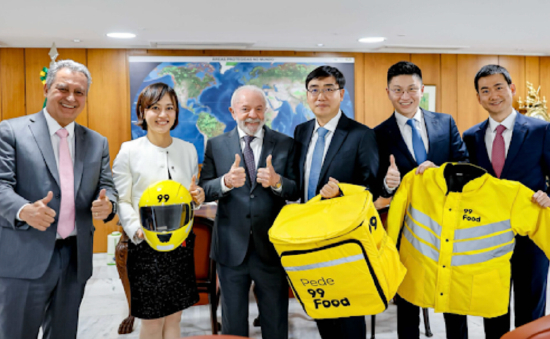
出海观察|加码巴西外卖,滴滴能否赢得下一城?
Xin Lang Ke Ji· 2025-11-21 03:47
Core Insights - Didi is re-entering the Brazilian food delivery market with its "99 Food" brand, planning to invest 2 billion reais by June 2026, which is double its initial plan [2] - The Brazilian food delivery market is experiencing rapid growth, with a market size of 139 billion reais in 2023 and an annual growth rate of 15% to 20% from 2019 to 2023 [6] - iFood dominates the market with an 80% market share, making it challenging for new entrants like Didi and Uber to gain traction [4][5] Company Strategies - Didi aims to leverage its experience from Mexico, where it has successfully integrated ride-hailing and food delivery services, to establish a foothold in Brazil [8] - The company has a significant user base in Brazil, with over 55 million users and 1.5 million registered drivers, which can be utilized for food delivery [8] - Didi's strategy includes reusing existing transportation capacity to reduce delivery costs and improve response times [8] Market Dynamics - The Brazilian food delivery market is characterized by a high concentration of power with iFood, leading to complaints from riders about low wages and long hours, creating an opportunity for new players [6][11] - iFood is responding to competition by investing 17 billion reais and integrating with Uber to enhance its service offerings [7] - The competitive landscape is shifting as Didi and Meituan introduce different operational models, making the market less monotonous [10][11] Consumer Behavior - Consumers in Brazil show a strong preference for iFood due to its extensive restaurant partnerships and established brand loyalty, making it difficult for new entrants to attract users [4][10] - Local consumers express a willingness to try new platforms if they offer unique services or better value propositions, indicating potential for market disruption [10] Regulatory Environment - The Brazilian government has introduced regulations requiring platforms to provide benefits to delivery workers, increasing operational costs for companies like Uber [5] - The evolving regulatory landscape may impact the expansion strategies of new entrants like Didi, as they navigate different local laws and labor standards [9][11]
一套文件两地挂牌,新加坡交易所、纳斯达克合作推出“全球上市板”
Feng Huang Wang· 2025-11-20 09:00
Core Viewpoint - Singapore has announced a new policy allowing companies to submit a single set of documents to list simultaneously on both the Singapore Exchange (SGX) and the Nasdaq, aimed at enhancing the appeal of top tech companies in the region [1][3]. Group 1: New Listing Framework - The SGX will launch a "Global Listing Board" in mid-2026, providing a unified and simplified "cross-Pacific financing framework" for companies with a market capitalization of at least 2 billion SGD (approximately 10.8 billion RMB) [1][3]. - Eligible companies will only need to fill out one set of documents to meet the regulatory requirements of both exchanges [3]. Group 2: Market Context and Competitiveness - The new framework is introduced against the backdrop of Singapore's struggles as a major financial hub, with insufficient market liquidity leading some tech companies to opt for direct listings in the U.S. [4]. - In comparison, Hong Kong has seen significantly higher IPO activity, with 80 IPOs raising over 26 billion USD in the first ten months of the year, highlighting the competitive landscape [4]. Group 3: Investor Benefits - The dual listing framework is expected to benefit investors by allowing nearly round-the-clock price discovery and risk management, with options to trade in either USD or SGD [3]. - The Monetary Authority of Singapore (MAS) reported that the average daily trading volume in the local stock market reached 1.53 billion SGD in Q3, the highest level since Q1 2021 [5].

