国防

Search documents
由被动转向主动!欧盟经济安全战略大转变 还有哪些挑战?
Di Yi Cai Jing· 2025-12-04 12:33
Core Viewpoint - The European Commission has announced a new policy framework aimed at enhancing the EU's economic security and resilience in response to increasing external economic threats, marking a shift from a passive to a more proactive approach in economic policy [1][3]. Group 1: Key Initiatives - The flagship proposal under this framework is the "RESourceEU" plan, which aims to reduce Europe's dependence on critical raw materials and semiconductors [1][4]. - The EU will focus on six priority areas, including reducing strategic dependencies on key goods and services, attracting safer investments, supporting critical industrial sectors, ensuring leadership in key technologies, protecting sensitive information, and maintaining the stability of critical infrastructure [3][6]. - Additional initiatives are in various stages of preparation and implementation, including the Security Act, Industrial Acceleration Act, Cloud and AI Development Act, Chips 2.0 Act, Net Zero Industry Act, Critical Raw Materials Act, and the Startup and Scale-Up Strategy [3][4]. Group 2: Economic Projections and Challenges - The EU's economy is projected to grow by 1.4% in 2025, an improvement from the previous forecast of 1.1%, although major economies like Germany, France, and Italy are expected to experience sluggish growth [6]. - The European Commission acknowledges the need for decisive action to unlock internal growth amidst a challenging external environment, emphasizing the importance of simplifying regulations and promoting innovation [6]. - There are internal challenges to the policy shift, including complex coordination mechanisms, industry barriers, and difficulties in fostering a mature venture capital environment [2][6].
由被动转向主动!欧盟经济安全战略大转变,还有哪些挑战?
Di Yi Cai Jing Zi Xun· 2025-12-04 10:10
Core Viewpoint - The European Commission has announced a new policy framework aimed at enhancing the EU's economic security and resilience in response to increasing external economic threats, marking a shift from a passive to a more proactive approach in economic policy [1][4]. Group 1: Key Initiatives - The flagship proposal under this new framework is the "RESourceEU" plan, which aims to reduce Europe's dependence on external sources for critical raw materials and semiconductors [1][5]. - The EU will focus on six priority areas, including reducing strategic dependence on key goods and services, attracting safer investments, supporting critical industrial sectors, ensuring leadership in key technologies, protecting sensitive information, and maintaining the stability of critical infrastructure [4][6]. - The EU plans to utilize existing policy tools more strategically and may introduce new policies, including the "Security Bill," "Industrial Acceleration Bill," and "Chip 2.0 Bill," among others [4][5]. Group 2: Economic Projections and Challenges - The EU's economic growth is projected to be 1.4% in 2025, an improvement from earlier estimates, but major economies like Germany, France, and Italy are expected to experience sluggish growth [6]. - The European Commission acknowledges the need for decisive action to stimulate internal growth, such as simplifying regulations and promoting innovation [6]. - There are internal challenges to the EU's policy shift, including complex coordination mechanisms and difficulties in fostering a mature venture capital environment [2][6].


【环球财经】受乌克兰危机拉动 欧洲航空航天与国防产业增长强劲
Xin Hua She· 2025-12-03 08:52
新华财经北京12月3日电(林芮竹)据欧洲航空航天与国防工业协会2日发布的年度报告,2024年欧洲航空航天与国防产业总营业额为3257亿欧元,增幅达 10.1%,相关行业直接就业人数达到创纪录的110.3万人。 据报告数据,欧洲航空航天与国防领域有超过4000家企业,提供近420万个就业岗位,创造经济活动价值7790亿欧元。报告指出,2024年相关产业研发支出 同比增长9.4%至252亿欧元,但在创新方面,欧洲"仍落后于全球竞争对手"。 报告数据显示,2024年的强势增长主要来自国防产业,其营业额增长13.8%至1834亿欧元。这一增长主要来自欧洲多国增加对乌克兰军援并整体扩大防务支 出。 2024年6月5日,在德国舍内费尔德,人们在2024柏林国际航空展上观看直升机表演。新华社记者任鹏飞摄 在航空航天领域,2024年欧洲航天产业营业额同比增长3.1%,达132亿欧元;民用航空领域则在航空运输复苏和市场对节能型飞机需求增长的带动下增长 6%,营业额达1291亿欧元,但供应链瓶颈、劳动力短缺和能源成本高企的问题依然存在。 协会主席米凯尔·约翰松呼吁欧盟制定民用航空产业战略,并保持国防投资力度。他警告说,欧洲在高科 ...

赵伟:日本宽财政,市场忽视了什么
Di Yi Cai Jing· 2025-12-03 03:16
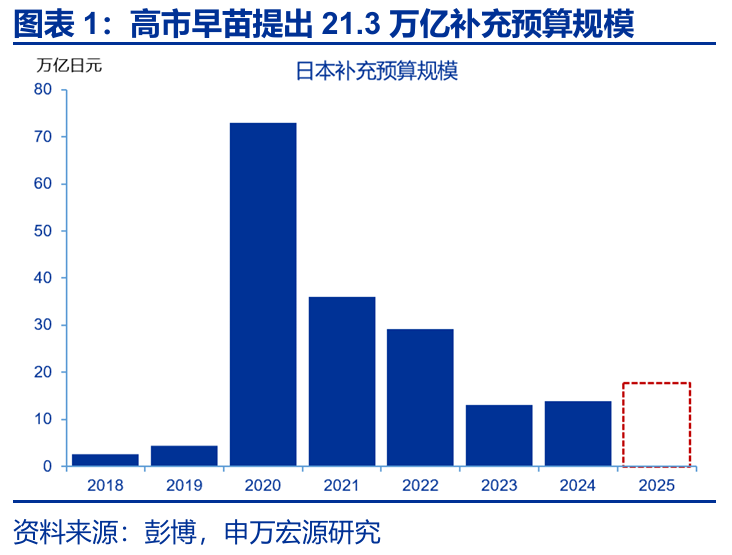
Core Viewpoint - Japan's combination of expansive fiscal policy and tight monetary policy may lead to risks of a reversal in carry trades, necessitating vigilance regarding the Bank of Japan's hawkish stance and the Federal Reserve's dovish periods [1] Group 1: Economic Stimulus Plan - The Japanese government has introduced an economic stimulus plan totaling 21.3 trillion yen (approximately 135 billion USD), slightly above market expectations but lower than 2022 levels [1] - The stimulus plan focuses on three main areas: 11.7 trillion yen (55%) for inflation subsidies and livelihood support, 7.2 trillion yen (34%) for strategic industry investments, and 1.7 trillion yen (8%) for defense and diplomacy [4] - The fiscal stimulus may increase Japan's deficit ratio to 3% by 2026, with Japan's deficit expected to expand by 1.77 percentage points, compared to 1 percentage point for the U.S. and 0.84 percentage points for Germany [4] Group 2: Impact on GDP and Inflation - The fiscal stimulus is projected to boost Japan's GDP growth rate by 0.5 percentage points in 2026, although the impact is expected to be lower than that of the U.S. and Germany [5] - Japan's fiscal multiplier is low at 0.27, compared to an average of 0.8 for developed economies, which contributes to the lower effectiveness of the stimulus [5] - The stimulus may temporarily lower overall inflation but could increase core inflation pressures due to rising demand [6][7] Group 3: Monetary Policy and Carry Trade Risks - The combination of fiscal expansion and cautious monetary tightening may increase the risk of a reversal in carry trades, as the narrowing U.S.-Japan interest rate differential diminishes the profitability of such trades [10][11] - The 2-year U.S.-Japan interest rate differential has decreased from 3.7% at the beginning of the year to 2.5%, heightening the risk of carry trade reversals [11] - The potential for increased volatility in the currency and bond markets may trigger risks of carry trade unwinding, particularly during periods of policy mismatch between the Bank of Japan and the Federal Reserve [11]
受乌克兰危机拉动 欧洲航空航天与国防产业增长强劲
Xin Hua She· 2025-12-02 14:51
在航空航天领域,2024年欧洲航天产业营业额同比增长3.1%,达132亿欧元;民用航空领域则在航空运 输复苏和市场对节能型飞机需求增长的带动下增长6%,营业额达1291亿欧元,但供应链瓶颈、劳动力 短缺和能源成本高企的问题依然存在。 (文章来源:新华社) 人民财讯12月2日电,据欧洲航空航天与国防工业协会2日发布的年度报告,2024年欧洲航空航天与国防 产业总营业额为3257亿欧元,增幅达10.1%,相关行业直接就业人数达到创纪录的110.3万人。 报告数据显示,2024年的强势增长主要来自国防产业,其营业额增长13.8%至1834亿欧元。这一增长主 要来自欧洲多国增加对乌克兰军援并整体扩大防务支出。 ...
下先手棋打主动仗 更好统筹发展和安全
Liao Ning Ri Bao· 2025-11-30 00:48
维护国家国防安全、粮食安全、生态安全、能源安全、产业安全,是党中央赋予东北的重要使命, 辽宁责无旁贷。从推进兴边富民、强边固防,夯实国家粮食稳产保供"压舱石",到加强生态保护和修 复,打造清洁能源强省,再到构建以先进制造业为骨干的现代化产业体系……我们始终锚定维护国 家"五大安全",坚定不移贯彻总体国家安全观,勇于争先、攻坚克难,努力形成对国家重大战略的坚强 支撑。面向"十五五",我们要持之以恒在提升维护国家"五大安全"能力上下功夫,继续牢牢牵住责任制 这个"牛鼻子",落实党委(党组)国家安全责任制,全面加强各领域安全能力建设,巩固基础领域、聚 焦重点领域、发力新兴领域,切实筑牢国家安全的辽宁屏障。 安全是发展的前提,发展是安全的保障。党的二十届四中全会把"坚持统筹发展和安全"列为"十五 五"时期经济社会发展必须遵循的一条重要原则。省委十三届十次全会着眼更好统筹发展和安全,就守 住安全发展底线,加快建设更高水平的平安辽宁提出明确要求、作出工作部署。这不仅是我们克难关、 战风险、迎挑战的现实需要,更是推动经济行稳致远、服务国家发展大局的重要保障。 社会治理是建设更高水平平安辽宁的关键一环。抓好安全生产,深入推进 ...
摩根大通:降息、减税若落地,印度股市有望在2026年底冲上30000点
Hua Er Jie Jian Wen· 2025-11-26 13:07
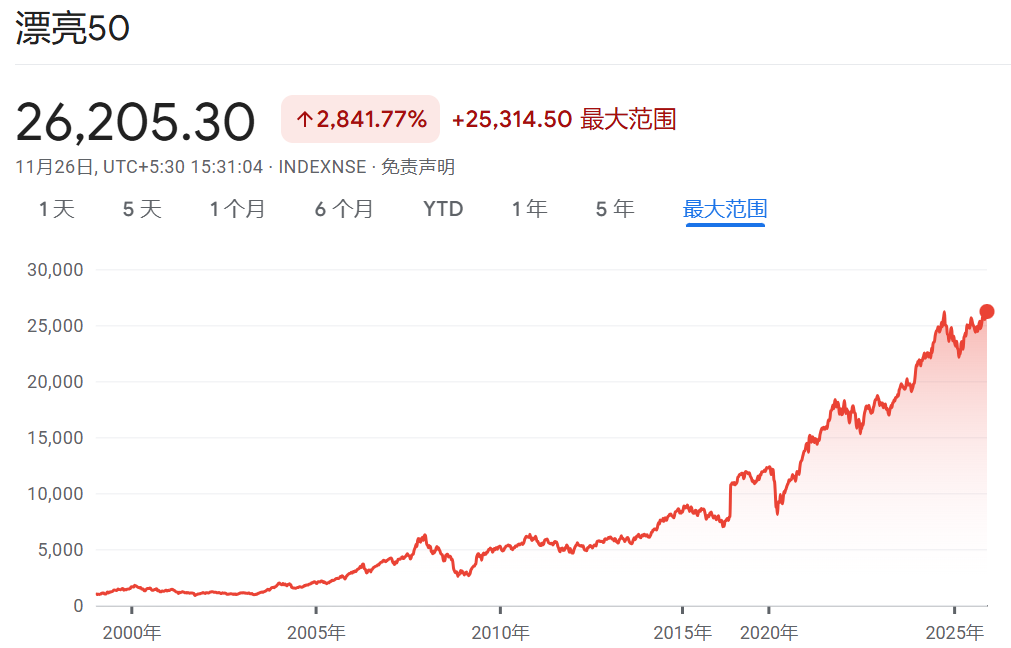
Core Viewpoint - Morgan Stanley predicts that the Indian benchmark Nifty 50 index is expected to rise to 30,000 points by the end of 2026, an increase of approximately 15% from current levels, driven by tax cuts and interest rate reductions [1] Market Performance - The Indian stock market experienced its strongest rebound in five months, with the Nifty 50 index surging 1.24% to 26,205.3 points, marking the highest closing level in 14 months [1] - The BSE Sensex index also rose 1.21% to 86,609.51 points, ending a three-day decline, with both indices recording their best single-day performance in five months [2] Economic Drivers - Morgan Stanley's report indicates that the Reserve Bank of India is expected to cut interest rates by 25 basis points in December, alongside recent tax cuts that have begun to boost consumption, corporate debt growth, and automobile sales, collectively driving domestic demand [3][4] - The report highlights that while the current valuation of the Indian stock market is at a premium compared to other emerging markets, it has fallen below long-term averages after 14 months of underperformance [4] Trade Relations - Analysts believe that the likelihood of a US-India trade agreement is high, which could lead to a short-term revaluation of the stock market. Increased oil imports from the US and reduced purchases from Russia may eliminate the possibility of punitive tariffs from the US [5] - The potential removal of the additional 25% tariff is expected to boost investor confidence, attract foreign capital, support the rupee, and benefit the IT and pharmaceutical sectors [5] Sector Preferences - Morgan Stanley maintains an "overweight" rating on sectors such as materials, financials, consumer goods, hospitals, real estate, defense, and power, while holding a "underweight" stance on IT and pharmaceutical sectors [7] - The analysis suggests that industries benefiting from domestic consumption growth and infrastructure development will perform better, with the financial sector poised to gain from the interest rate cycle and increased corporate debt demand [7]
因国防支出增加 德国等欧盟成员赤字超标
Yang Shi Xin Wen· 2025-11-26 06:04
Core Points - The European Commission announced that Germany's defense spending increase has led to an excessive deficit, but no procedures have been initiated against Germany for this issue [1] - The Commission highlighted several strategic vulnerabilities and structural challenges facing the EU, including low productivity, demographic pressures, and rising public spending demands related to defense, decarbonization, and digital economy transformation [1] - The Commission called for EU member states to maintain sound public finances and enhance competitiveness [1] Summary by Category Fiscal Outlook - The European Commission projected that the budget deficit in the Eurozone will slightly increase from 3.1% of GDP in 2024 to 3.2% in 2025, further rising to 3.3% in 2026 and 3.4% in 2027 [2] - Finland's budget deficit is expected to be 4.4% of GDP in 2024, rising to 4.5% in 2025 and decreasing to 4.0% in 2026, prompting the need for excessive deficit procedures against Finland [1] Member States' Performance - Germany's projected budget deficit is expected to reach 3.1% of GDP in 2025, 4.0% in 2026, and 3.8% in 2027 [1] - The European Commission emphasized that under the Stability and Growth Pact, member states' annual budget deficits should not exceed 3% of GDP, and public debt should not exceed 60% of GDP [1]

11月24日沪投资品(000102)指数涨0.15%,成份股阿特斯(688472)领涨
Sou Hu Cai Jing· 2025-11-24 10:19
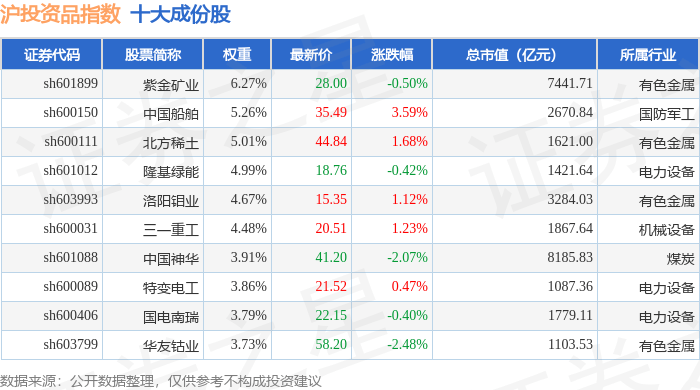
Core Points - The Shanghai Investment Products Index (000102) closed at 7055.9 points, up 0.15%, with a trading volume of 61.914 billion yuan and a turnover rate of 1.18% [1] - Among the index constituents, 23 stocks rose while 26 fell, with Arctech leading the gainers at 4.57% and Huayou Cobalt leading the decliners at 2.48% [1] Index Constituents Summary - The top ten constituents of the Shanghai Investment Products Index include: - Zijin Mining (6.27% weight, latest price 28.00, down 0.50%, market cap 744.171 billion yuan) in the non-ferrous metals sector [1] - China Shipbuilding (5.26% weight, latest price 35.49, up 3.59%, market cap 267.084 billion yuan) in the defense sector [1] - Northern Rare Earth (5.01% weight, latest price 44.84, up 1.68%, market cap 162.1 billion yuan) in the non-ferrous metals sector [1] - Longi Green Energy (4.99% weight, latest price 18.76, down 0.42%, market cap 142.164 billion yuan) in the power equipment sector [1] - Luoyang Glass (4.67% weight, latest price 15.35, up 1.12%, market cap 328.403 billion yuan) in the non-ferrous metals sector [1] - Sany Heavy Industry (4.48% weight, latest price 20.51, up 1.23%, market cap 186.764 billion yuan) in the machinery sector [1] - China Shenhua (3.91% weight, latest price 41.20, down 2.07%, market cap 818.583 billion yuan) in the coal sector [1] - TBEA (3.86% weight, latest price 21.52, up 0.47%, market cap 108.736 billion yuan) in the power equipment sector [1] - Guodian NARI (3.79% weight, latest price 22.15, down 0.40%, market cap 177.911 billion yuan) in the power equipment sector [1] - Huayou Cobalt (3.73% weight, latest price 58.20, down 2.48%, market cap 110.353 billion yuan) in the non-ferrous metals sector [1] Capital Flow Analysis - The net inflow of main funds into the index constituents totaled 216 million yuan, while retail funds saw a net outflow of 27.9793 million yuan [1] - Major stocks with significant net inflows include: - China Shipbuilding with a net inflow of 569 million yuan [2] - TBEA with a net inflow of 13.2 million yuan [2] - Shaanxi Coal and Chemical with a net inflow of 89.1999 million yuan [2] - Notable stocks with net outflows include: - Huayou Cobalt with a net outflow of 60.246 million yuan [2] - China National Railway with a net outflow of 45.0979 million yuan [2]






UK stocks set for sharp weekly losses as tech, Fed concerns hit markets
Reuters· 2025-11-21 12:50
Core Viewpoint - London's main stock indexes experienced a significant decline on Friday, driven by concerns over technology valuations and the Federal Reserve's hawkish stance, leading to anticipated weekly losses [1] Group 1: Market Performance - The decline in London's stock indexes indicates a broader market reaction to rising concerns regarding tech valuations [1] - The Federal Reserve's hawkish stance has contributed to the volatility in global markets, impacting investor sentiment [1] Group 2: Sector-Specific Insights - Defence shares saw a decrease amid indications of potential progress toward peace in Ukraine, suggesting a shift in investor focus [1]