基金业

Search documents
金融政策制度持续完善支持海南自贸港建设成型起势
Zhong Guo Zheng Quan Bao· 2025-12-17 20:17
Core Insights - Hainan Free Trade Port officially commenced full island closure operations on December 18, 2025, following the release of the overall plan for Hainan Free Trade Port construction in 2020, with the People's Bank of China continuously improving financial policies and institutional frameworks to support its development [1] Financial Preparations - All three financial preparations for the closure have been completed, including the enhancement of cross-border capital flow management systems and the launch of the multi-functional free trade account (EF account), which has seen a transaction volume exceeding 250 billion RMB by the end of October 2025 [1] - The EF account has been adopted by 11 banks in Hainan, facilitating fund transfers with 80 countries and regions [1] - A cross-border capital flow monitoring and early warning mechanism has been established, significantly improving the ability to prevent cross-border financial risks [1] Cross-Border Trade and Investment - High-level openness in cross-border trade and investment pilot programs has deepened, with Hainan recording a total of 43.05 billion USD in cross-border trade facilitation pilot business and 2.8 billion USD in cross-border investment and financing pilot business since the policy implementation [2] - The cross-border investment reform has shown significant results, with 144 qualified foreign limited partner (QFLP) equity investment funds established in Hainan, attracting a total of 2.275 billion USD in cross-border inflows [2] - The cross-border RMB settlement scale has expanded, with a total of 484.5 billion RMB in cross-border receipts and payments in Hainan from January to November 2025, reflecting a year-on-year growth of 7.8% [2] Asset Management Pilot Programs - As of the end of October 2025, the People's Bank of China in Hainan has received applications from four pilot issuing institutions for a total initial issuance scale of 5 billion RMB, with dynamic management of the trial scale in place [3] - Two private placement pilot products were successfully subscribed by overseas investors, completing the fund transfer process between investor accounts and bank sales accounts [3]
央行:支持海南自贸港建设成型起势
Shang Hai Zheng Quan Bao· 2025-12-17 19:19
Group 1 - The Hainan Free Trade Port officially launched its full island closure on December 18, with the People's Bank of China supporting the financial policies and institutional framework suitable for the port's development [1] - Three financial preparations for the closure have been completed, including the improvement of cross-border capital flow management, the launch of the multi-functional free trade account (EF account), and the enhancement of the cross-border capital flow monitoring and early warning mechanism [2] - As of October 2025, 11 banks, including the five major banks, have opened 658 EF accounts, with a total business volume of RMB 268.9 billion, facilitating capital transfers with 80 countries and regions [2] Group 2 - The cross-border payment and receipt scale in Hainan reached USD 101.61 billion in the first 11 months of 2025, with an average annual growth rate of 55% since 2020 [3] - The implementation of various financial policies, including the Qualified Foreign Limited Partner (QFLP) pilot program, has led to a cumulative cross-border inflow of USD 227.5 million and outflow of USD 134.6 million [3] - The People's Bank of China has issued guidelines for cross-border asset management pilot businesses, with four institutions applying for a total issuance scale of RMB 5 billion [4] Group 3 - The People's Bank of China is implementing a moderately loose monetary policy to support the construction of Hainan's modern industrial system, enhancing financing accessibility in key areas [5] - As of November 2025, the balance of various loans in Hainan reached RMB 1.41 trillion, with a year-on-year growth of 11.0%, surpassing the national average by 4.7 percentage points [6] - Specific loan growth rates include 157.4% for the elderly care industry and 25.4% for green loans, indicating a focus on strategic sectors [6]
投资者展望最新通胀数据 美债收益率周三小幅走高
Xin Hua Cai Jing· 2025-12-17 16:41

当天盘前,除2个月期短债外,美债整体下跌,截至新华财经发稿时,2年期美债收益率上升3.1BPs至3.51%,10年期美债收益率涨3.1BPs 至4.18%,30年期美债收益率涨2.7BPs至4.85%。自上周五以来,2年期美债收益率与10年期美债收益率利差连续3个交易日维持在67BPs 的水平。 美国劳工部周二公布的报告显示,11月非农就业岗位增加6.4万个,失业率升至4.6%,为四年多来最高水平。就业增长反弹幅度超出预 期,这表明,在特朗普激进贸易政策带来的经济不确定性下,劳动力市场并未出现实质性恶化。10月非农就业岗位减少10.5万个,为 2020年12月以来最大降幅,其中联邦政府就业减少16.2万个岗位,为2010年6月以来最大。美国商务部的另一份报告显示,10月零售销售 持平,9月增长了0.1%。 数据公布后,美国利率期货市场上调了美联储在1月下次政策会议上降息的概率。 新华财经北京12月17日电美债收益率周三(17日)走高,因投资者关注最新经济数据,并期待本周稍晚将公布的通胀数据。 欧洲市场参与者将密切关注欧洲央行的行动,欧洲央行将于周四召开今年最后一次政策会议。虽然市场预计欧洲央行将维持利率在2% ...

海南自贸港明日封关 金融准备工作已准备就绪
Bei Ke Cai Jing· 2025-12-17 11:09
Core Viewpoint - Hainan Free Trade Port is entering a new phase of full island closure operations, with all financial preparations completed by the People's Bank of China, aiming to enhance cross-border capital flow and financial innovation [4][5]. Financial Infrastructure - The multi-functional Free Trade Account (EF Account) has become a key player in cross-border capital flow, with a business volume reaching 268.9 billion RMB, marking it as a significant contributor in Hainan [6][7]. - As of October 2025, 11 banks in Hainan have launched EF Accounts, with a total of 658 accounts opened, facilitating capital transfers with 80 countries and regions [7][8]. Policy and Regulation - The People's Bank of China has established a unified account system for domestic and foreign currencies to support high-level free and convenient cross-border capital flow, enhancing services for both domestic and foreign clients [8]. - A management approach for the EF Account has been implemented to ensure regulatory support for cross-border capital flow, alongside a monitoring mechanism to improve financial risk prevention [9]. Trade and Investment Growth - Hainan's foreign exchange income and expenditure reached 108.63 billion USD by the end of 2024, which is 2.9 times higher than at the end of 2021, with nearly 10,000 enterprises listed for foreign exchange transactions by October 2025 [12]. - The expansion of high-level open pilot policies across Hainan aims to facilitate compliance in cross-border trade and investment, significantly boosting the local economy [11][13]. Innovative Financial Products - Recent pilot projects have seen the issuance of private fund products for overseas investors, indicating a growing trend in cross-border investment activities [14].

迈向封关:金融护航海南自贸港开放新征程
Jin Rong Shi Bao· 2025-12-17 10:55
Core Viewpoint - Hainan Free Trade Port will officially start its full island customs closure operation on December 18, marking a significant milestone in its development as a special customs supervision area, promoting higher levels of liberalization and facilitation in trade and investment [1] Financial Policies and Innovations - The People's Bank of China has continuously improved financial policies and institutional frameworks to support the construction of Hainan Free Trade Port since the release of the overall plan in 2020 [1] - The introduction of the multi-functional free trade account (EF account) aims to facilitate high-level cross-border capital flow, with the EF account officially launched in May 2024 [2][3] - The EF account allows for seamless cross-border transactions, enabling businesses to bypass traditional restrictions and streamline processes, significantly reducing transaction times from 1-2 days to 2-3 hours [3] Trade and Investment Facilitation - Hainan Free Trade Port has become a national leader in financial openness and innovation, with various trade and investment facilitation reforms being piloted [4] - As of October 2025, Hainan has seen a total of 430.5 billion USD in cross-border trade facilitation pilot businesses and 28 billion USD in cross-border investment and financing facilitation pilot businesses [6] Cross-Border Financing Developments - By October 2025, 144 QFLP (Qualified Foreign Limited Partner) equity investment funds have been established in Hainan, with a total of 2.275 billion USD in cross-border inflows, while 15 QDLP (Qualified Domestic Limited Partner) fund management companies have also been set up, facilitating 1.346 billion USD in cross-border outflows [8] - The cross-border RMB payment volume reached 484.5 billion RMB from January to November 2025, reflecting a year-on-year growth of 7.8% [8] Future Outlook - The full island customs closure operation is seen as the starting point for a higher level of openness, with financial services transitioning from backend support to frontline empowerment [9] - The ongoing financial innovations and policy implementations are expected to enhance Hainan's attractiveness for both domestic and international businesses, fostering a vibrant economic environment [9]
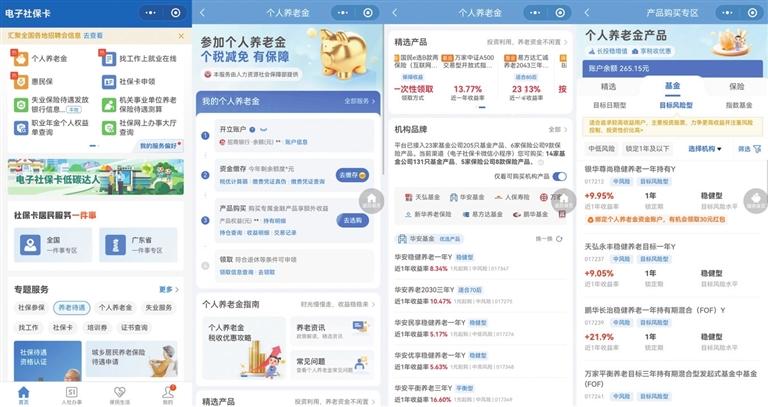
保障升级+税收优惠 个人养老金,为未来加一份“稳稳的幸福”
Shen Zhen Shang Bao· 2025-12-17 00:14
Core Insights - The personal pension system has gained significant attention and participation from citizens since its full implementation [1][17] - Recent policies have expanded the accessibility of personal pensions, allowing early withdrawals under specific circumstances such as major illness, long-term unemployment, or low-income situations [6][7] Group 1: Tax Benefits - The personal pension scheme offers substantial tax benefits, allowing individuals to deduct contributions up to 12,000 yuan annually from their taxable income, with potential tax savings of up to 5,400 yuan per year for higher earners [16][24] - The tax structure follows a deferred taxation model, where contributions and investment earnings are tax-exempt until withdrawal, which is taxed at a lower rate of 3% [16][23][24] Group 2: Product Variety - The personal pension account allows participants to choose from a variety of financial products, including savings deposits, bank wealth management, commercial pension insurance, and public funds, enabling customized investment strategies [8][9][10][11] - All products are vetted by financial regulatory authorities to ensure safety, stability, and long-term value preservation [11][19] Group 3: Accessibility and Convenience - Opening a personal pension account is straightforward, requiring only a bank card and facial recognition for online setup, with multiple banks available for account creation [12] - The system is designed to facilitate easy access and understanding for participants, with dedicated services to assist in account setup and tax benefit utilization [17] Group 4: Participant Demographics - The personal pension system is inclusive, allowing flexible employment individuals to participate, thus broadening the demographic reach [18] - Feedback from participants indicates a positive reception, with many appreciating the tax savings and the ability to secure their retirement funds [14][15][16]
中美关税大调整!美联储降息175基点,2026亚太货币要集体升值
Sou Hu Cai Jing· 2025-12-16 12:50
Core Viewpoint - The recent appreciation of the Renminbi (RMB) against the US dollar has sparked discussions about the possibility of the RMB breaking the 7.0 mark by 2026, driven by three main factors and two significant concerns [1]. Group 1: External Monetary Policy - The direct driver of the RMB's recent appreciation is the global shift in monetary policy, highlighted by the Federal Reserve's decision to cut interest rates by 25 basis points on December 11, bringing the federal funds rate to 3.50%-3.75%, with a total reduction of 175 basis points in this cycle [4]. - The Fed's indication of further rate cuts in early 2026 has led to a weakening of the US dollar, with the dollar index recently falling below 100, marking a year-to-date low [4]. - UBS's Chief Investment Officer for Greater China noted that the continued rate cuts by the Fed will result in the US dollar underperforming against G10 currencies, with an expected 2%-3% appreciation for Asia-Pacific currencies [6]. Group 2: Internal Policy Support - The core support for the RMB's appreciation comes from ongoing domestic policy efforts and improvements in economic fundamentals, with the Central Economic Work Conference emphasizing the need to maintain stability in the RMB exchange rate [10]. - The People's Bank of China (PBOC) has injected liquidity into the market through a 600 billion yuan reverse repurchase operation on December 15, marking the seventh consecutive month of such actions [12]. - Economic indicators show a recovery, with the manufacturing PMI returning to expansion at 50.7 and retail sales growing by 4.8% year-on-year, indicating a clear recovery in domestic demand [10]. Group 3: Market Dynamics and Predictions - The expectation of RMB appreciation has led to increased overseas investment in RMB assets, with northbound capital ETF transactions reaching 3.271 billion yuan on December 15, despite a slight decrease from the previous period [14]. - The concentration of corporate demand for currency exchange at year-end has further strengthened the RMB, with a 12% increase in foreign exchange transaction volume on December 8 [16]. - Market experts generally hold optimistic views on the RMB breaking the 7.0 mark by 2026, with predictions ranging from 6.9 to 6.5 by the end of 2026, although some analysts remain cautious about the pace of appreciation [17][20].
11月金融数据点评:财政发力仍待观察,实体需求仍弱
Shenwan Hongyuan Securities· 2025-12-15 08:09
Core Insights - The report indicates that the financial stimulus remains to be observed, with weak real demand persisting in the economy [2] - In November 2025, new RMB loans amounted to 0.39 trillion yuan, down from 0.58 trillion yuan in November 2024, while new social financing reached 2.49 trillion yuan, up from 2.33 trillion yuan in the same period last year [3] - The year-on-year growth rate of social financing was 8.5%, unchanged from October 2025, and M2 growth was 8%, slightly up from 8.2% in October 2025 [3] Financial Data Analysis - The year-on-year growth rate of social financing remained stable, primarily supported by government and corporate bonds, while the credit demand from the real sector was a drag [3] - Government bonds continued to support the social financing growth in November, but the net financing scale of government bonds (1.27 trillion yuan) was lower than that of November 2024 (1.83 trillion yuan) due to high base effects [3] - In November, corporate long-term loans decreased by 40 billion yuan year-on-year, indicating weak investment confidence among enterprises, although short-term loans and bill financing increased by 110 billion yuan and 211.9 billion yuan respectively compared to the previous year [3] Household Sector Insights - The demand for medium and long-term loans from households significantly shrank in November, with a year-on-year decrease of 290 billion yuan, continuing the trend of deleveraging among households [3] - The improvement in housing demand remains to be observed, constrained by real estate inventory and price factors [3] - Short-term loans for households also saw a year-on-year decrease of 178.8 billion yuan, likely due to the high base effect from last year's "old-for-new" policy [3] Deposit Trends - In November, both household and corporate deposits decreased year-on-year, with new household and corporate deposits reaching 670 billion yuan and 645.3 billion yuan respectively, both showing a year-on-year decline [3] - The new non-bank deposit scale fell to 80 billion yuan, returning to seasonal lows, reflecting that the attractiveness of deposits has diminished due to low deposit rates [3] Monetary Supply Dynamics - The growth rates of M1 and M2 both showed marginal declines, with M1 growth dropping significantly by 1.3 percentage points to 4.9%, while M2 growth decreased slightly by 0.2 percentage points to 8.0% [3] - The widening gap between M1 and M2 indicates a shift in the monetary supply dynamics, with M1 growth declining more sharply due to high base effects from strong fiscal injections at the end of 2024 [3] Market Sentiment and Bond Market Outlook - The report suggests that the current economic environment is characterized by a transition between old and new growth drivers, with recent adjustments in the bond market primarily driven by institutional behavior [3] - Despite a balanced and loose monetary environment supported by the central bank, the bond market faces constraints such as a cautious market sentiment and limited attractiveness compared to equities [3] - The report concludes that while there may be opportunities for bond market positioning at high yield points, the overall attractiveness remains weak [3]
个人养老金全面实施一周年 有哪些新成效?多种产品该如何选择?
Yang Shi Xin Wen· 2025-12-15 00:56
Core Insights - The personal pension system in China has been fully implemented for one year, marking significant progress in expanding participation and product offerings [1][5] - The system serves as a supplementary pension insurance, distinct from basic pension insurance, and is characterized by individual account management and voluntary participation [1][3] Group 1: Participation and Growth - As of October, over 994,000 individuals in Qinghai Province have participated in the personal pension scheme, a substantial increase from 295,000 at the end of 2023 [1][2] - The enthusiasm for participation is particularly high among individuals aged 40 and above, as well as some younger demographics, who recognize the importance of supplementary savings for retirement [2] Group 2: Product Offerings - The number of personal pension products has reached 1,256, an increase of 196 since the second quarter of the year, with the majority being savings products [2][3] - The market size for personal pension funds has surpassed 15 billion yuan, reflecting a 65% growth compared to the end of 2024 [2] Group 3: Investment Strategies - Individuals are advised to choose investment products based on their age, risk tolerance, and retirement goals, with younger individuals encouraged to invest more in funds for long-term growth [3] - Starting June next year, the range of investable products will expand to include five categories: funds, wealth management, savings, insurance, and government bonds, enhancing investment options for participants [3][4] Group 4: Future Developments - The personal pension system is evolving into a standard component of retirement planning for the public, with ongoing efforts to optimize product offerings and improve service levels [5] - Financial institutions are encouraged to develop more tailored pension products, including those that integrate health management and retirement services [5]
白银狂飙!年内涨超120%,碾压黄金成“黑马”,有人两月赚16万
Sou Hu Cai Jing· 2025-12-13 17:42
01 价格飙涨 截至2025年12月12日,COMEX白银期货报64.835美元/盎司,较年初的29.3美元/盎司上涨约120%。现货白银涨幅同样突破120%,而同期黄金约60%的涨幅 相形见绌。 白银在今年上半年表现相对平淡,但进入下半年后便火力全开,涨势陡然加快。 12月11日,现货白银价格一举突破62美元/盎司,再度刷新历史纪录。交易大厅里,投资者盯着屏幕上不断跳升的数字,这个曾被戏称为"穷人黄金"的金属 正在上演一场前所未有的价值重估。 2025年12月11日,现货白银价格突破62美元/盎司,盘中最高触及62.884美元/盎司。与此同时,COMEX白银盘中突破63美元/盎司,一度摸高63.25美元/盎 司。 这已是白银连续第三天刷新历史纪录。12月9日,白银价格首次突破每盎司60美元;12月10日站上61美元;12月11日则进一步冲高至62美元以上。 自年初以来,现货白银的累计涨幅已逼近120%,成为年内最牛的贵金属品种。 而同期黄金的涨幅约为60%,仅为白银的一半。在贵金属市场,白银正从黄金的"影子"中走出,迎来属于自己的超级周期。 9月1日现货白银突破40美元/盎司,仅一个多月后的10月9日便突破 ...