
智能穿戴

Search documents
华为六大健康管理解决方案亮相,破解医疗健康产业数智融合难题
Sou Hu Cai Jing· 2025-12-26 01:30
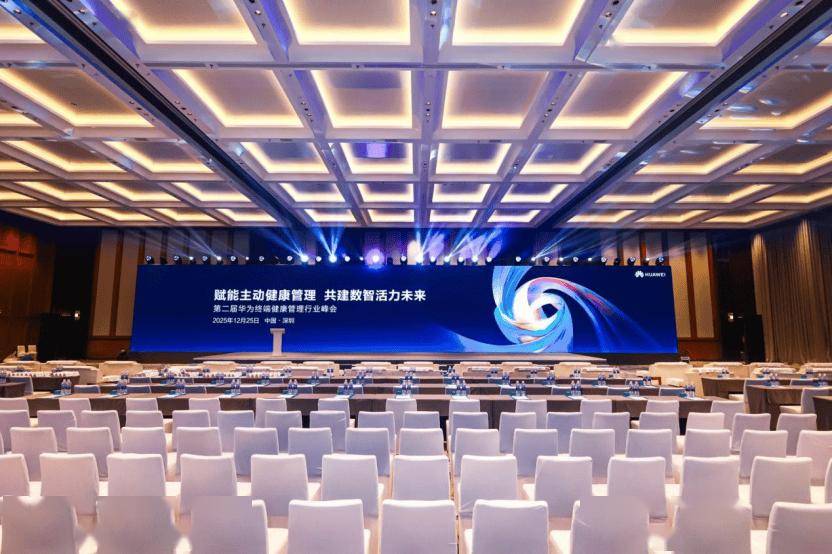
12 月 25 日,第二届华为终端健康管理行业峰会正式召开。在"健康中国"建设步入深水区、主动健康已成为时代必答 题的宏观背景下,此次峰会备受行业瞩目。 会上,华为擎云携手合作伙伴集中亮相了六大解决方案及标杆案例,展示了商用终端与数字化能力深度结合的最新成 果,更试图通过构建坚实的"数字底座",填补传统医疗体系在院外监测的空白,助力健康管理产业从人力密集型向"技 术 + 服务"双轮驱动型跃迁。 华为擎云 构建"可见、可防、可控"健康防线 随着"十五五"规划纲要提出加快建设健康中国,实施健康优先发展战略成为社会共识。然而,面对人口老龄化加剧与 慢性病年轻化的双重压力,传统医疗服务体系面临着严峻的供需失衡挑战。长期以来,院内治疗与院外管理之间存在 着巨大的数据鸿沟,导致患者依从性差、干预效果难以追踪,健康管理往往停留在观念倡导层面,缺乏实质性的落地 抓手。 此次峰会上,华为擎云给出的破局之道在于"数智融合"。通过将连续、精准地穿戴设备数据转化为可用的数字资产, 华为擎云致力于构建起一条"可见、可防、可控"的主动健康防线。 在峰会集中亮相的六大解决方案中,针对全域康养、基层社区以及一站式数字化管理场景的方案被重点解 ...

A股收评:指数齐涨!商业航天掀涨停潮,贵金属承压走低
Ge Long Hui· 2025-12-24 07:47
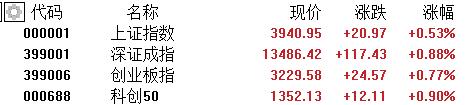
Market Overview - Major A-share indices collectively rose, with the Shanghai Composite Index up 0.53% to 3940 points, the Shenzhen Component Index up 0.88%, and the ChiNext Index up 0.77% [1] - The total trading volume in the Shanghai and Shenzhen markets was 1.88 trillion yuan, a decrease of 19.6 billion yuan from the previous trading day [1] Sector Performance - The commercial aerospace sector saw a significant surge, with multiple stocks hitting the daily limit, including New Jingang, Chaojie Co., and Xinle Energy [4][6] - The CPO sector also performed well, with Ying Tang Zhi Kong hitting the daily limit [7] - The AI glasses sector was active, with stocks like Huanxu Electronics and Runbei Aerospace reaching the daily limit [9] - The nuclear pollution prevention sector rose, with Puni Testing hitting the daily limit [11] - The autonomous driving concept gained traction, with stocks like Zhejiang Shibao and Hezhong Shizhuang hitting the daily limit [13] Notable Stocks - New Jingang rose by 20.02% to 22.66 yuan, Chaojie Co. increased by 20% to 112.44 yuan, and Xinle Energy also rose by 20% to 30.24 yuan [5] - Ying Tang Zhi Kong increased by 20% to 14.82 yuan, while Huanxu Electronics rose by 10.01% to 30.55 yuan [10] - Puni Testing rose by 19.95% to 9.32 yuan, and other stocks in the nuclear pollution sector also saw gains [11] Policy and Regulatory Developments - The completion of Blue Arrow Aerospace's IPO guidance work was announced, with the China International Capital Corporation as the advisory institution [6] - The establishment of a dedicated Commercial Aerospace Department by the National Space Administration indicates a push for high-quality development in China's commercial aerospace industry [6] - The recent issuance of L3-level autonomous driving vehicle license plates in Beijing marks a significant step in the development of smart connected vehicles [14]
长城基金曲少杰:Z世代撬动新消费市场 六大领域增长势头强劲
Zheng Quan Shi Bao Wang· 2025-12-23 08:12
Core Viewpoint - The Z generation is leading a new wave of consumption in China, shifting the market from mass consumption to personalized and rational consumption [1] Group 1: Market Trends - China's consumer market is transitioning towards individualistic and rational consumption patterns, driven by a large young population and a complete domestic industrial chain [1] - The emerging consumption sectors are showing strong growth momentum, particularly in six key areas: pet economy, trendy toys, ready-to-drink beverages, health consumption, smart wearables, and smart driving vehicles [1]
健康仪表盘一表掌控健康数据:华为WATCH十周年款的正式发布
Jing Ji Guan Cha Wang· 2025-12-22 10:19
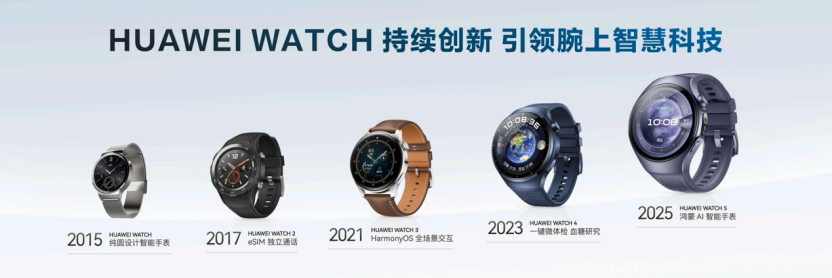
Core Insights - The evolution of smartwatches has positioned them as personal health management hubs, with Huawei's WATCH series leading the industry, particularly highlighted by the launch of the Huawei WATCH 10th Anniversary edition, which serves as both a summary of the past decade and a strategic move for the next ten years [1][14] Product Positioning - The Huawei WATCH 5 marks a significant turning point as the first HarmonyOS AI smartwatch, shifting from passive data recording to active understanding and suggestions, addressing a long-standing challenge in wearable technology [3] - The 10th Anniversary edition further enhances the emotional and technological value integration, emphasizing its significance as a commemorative product [3] Design and Materials - The design features a unique color scheme of Cosmic Blue and Polar White, with a "10YEARS" insignia on the crown, highlighting its commemorative nature [5] - Available in 46mm and 42mm sizes, the watch boasts a titanium alloy body, 904L stainless steel case, and sapphire glass, positioning it among the top tier in the smartwatch market [5] Health Interaction and Dashboard - The new "Health Dashboard" represents a revolutionary change in information organization, structuring complex health data into twelve core health indicators for easier understanding [7] - Users can access animated data explanations and trend analyses with a simple touch, making health metrics more intuitive and perceptible [8] AI Integration - The comprehensive integration of HarmonyOS 6.0 enhances the smartwatch's intelligence, evolving the voice assistant into a "wrist AI butler" capable of providing targeted assistance across various scenarios [10] - The new screen recognition capability allows users to ask natural language questions about displayed data, transforming health management from mere numerical displays to a conversational and understandable advisory system [10] Hardware Advancements - The upgraded X-TAP sensing system integrates PPG, ECG, and pressure sensors in a compact design, improving monitoring speed and accuracy while expanding health monitoring capabilities [12] - Features like ECG, vascular elasticity, fingertip blood oxygen, and hypertension risk assessment signify a shift from "health auxiliary tools" to "long-term health management partners" [12] Market Performance - Over the past decade, Huawei's WATCH series has focused on self-developed technology, continuously expanding the capabilities of smart wearables, leading to a cumulative global shipment of over 200 million devices [12] - According to IDC data, Huawei's wearable device shipments reached 28.6 million units in the first three quarters of 2025, securing the top position in both global and domestic markets, with six consecutive years of leading domestic shipments [12] Strategic Significance - The Huawei WATCH 10th Anniversary edition serves as a pivotal product that summarizes the company's decade-long achievements in health technology, system ecology, and hardware sensing, while also indicating future directions through AI and multi-sensing technology [14] - Priced from 2799 yuan, the watch is set to launch on December 25, attracting interest from potential consumers [14]
户外场景下的国产芯片 AI 眼镜,走出了一条可行路径
Feng Huang Wang Cai Jing· 2025-12-22 03:17
Core Insights - The AI glasses industry is transitioning from concept exploration to mass production, focusing on the feasibility of technology and commercial viability [1][7] - Companies like Rokid, Quark, and Ideal Auto are competing in the market, while DPVR has launched its first mass-produced AI glasses with domestic chips, receiving positive market feedback [1][2] Industry Trends - The AI glasses market is moving towards maturity, with various companies adopting different paths, and DPVR's approach validates a cost-effective, mass-producible solution using domestic chips [7] - The demand from younger consumers is shifting towards products that are not only functional but also stylish and practical for everyday use [7] Product Development - DPVR's AI glasses are designed with a focus on outdoor use and appeal to young consumers, achieving a balance between cost, durability, and fashion [2][4] - The product features a unique design that enhances user experience, including ergonomic adjustments and weather-resistant materials, making it suitable for outdoor activities [4][5] Technical Specifications - DPVR utilizes the Unisoc W517 chip, which offers a differentiated approach compared to competitors using Qualcomm Snapdragon AR1, focusing on supply chain stability and controlled adaptation cycles [3] - The glasses are equipped with a 12MP Sony IMX681 sensor and AI capabilities for voice recognition and translation, ensuring performance in noisy environments [5][6] Market Positioning - DPVR's pricing strategy positions its AI glasses between 1349 and 1500 yuan, making them accessible to a broader consumer base while maintaining a clear differentiation from mid-to-high-end competitors [5] - The product emphasizes a "light" design and user-friendly interface, reducing barriers for first-time users and enhancing overall appeal [5][6]
中国互联网惠老助残智能应用生态建设工作正式启动
Huan Qiu Wang Zi Xun· 2025-12-22 02:16
Core Insights - The launch of the "China Internet Elderly Assistance and Disability Support Intelligent Application Ecosystem" marks a new phase in leveraging technology for social responsibility, focusing on inclusivity and accessibility for elderly and disabled populations [1][8] - The initiative aims to create a comprehensive intelligent application ecosystem that integrates public welfare, providing free system support to government and disability organizations, while fostering the development of a "people's livelihood Internet of Things" [1][8] Group 1: Key Statements from Officials - Huang Chengqing, Vice Chairman of the China Internet Association, emphasized the importance of addressing the "digital divide" faced by elderly and disabled groups, urging the internet industry to take social responsibility seriously [2] - He highlighted the association's efforts in establishing guidelines for ESG disclosure and promoting cross-sector collaboration to lay a solid foundation for the ecosystem [2] - Lv Shiming, Chairman of the China Disability Volunteer Association, pointed out that the implementation of the "Barrier-Free Environment Construction Law" provides legal support for 85 million disabled individuals and 310 million elderly people [3] Group 2: Ecosystem Structure and Implementation - The ecosystem will be built on a "1+4+T" framework, featuring a national hub platform at its core, supported by a four-tier local response system [4] - The platform aims to reduce local construction costs by 90% and improve emergency response times from over 30 minutes to within 15 minutes through seamless integration with healthcare resources [5] - The initiative is expected to cover 90% of prefecture-level cities by 2030, benefiting 200 million people annually and driving a 60% annual growth in related industries [5] Group 3: Collaboration and Partnership Opportunities - The recruitment plan for partners in the ecosystem is open to government, enterprises, social organizations, and research institutions, focusing on collaborative efforts to enhance elderly care and disability support [6][7] - Partners will receive various benefits, including free access to deployment templates, open-source toolkits, and opportunities for brand exposure and professional training [7] - The initiative aims to create a national benchmark for digital elderly care, ensuring that elderly and disabled individuals can share in the benefits of the digital age [7][8]
卓翼科技依托核心优势深耕智能穿戴市场
Zheng Quan Shi Bao Wang· 2025-12-17 11:12
Group 1 - The wearable device market is projected to exceed $20 billion by 2025, with an expected shipment of 500 million units, driven by precise health monitoring, natural interaction methods, and seamless device integration [1] - Zhuoyue Technology (002369.SZ) is positioned to benefit significantly from the growth of the smart wearable industry due to its comprehensive industry chain layout, core technological breakthroughs, and innovative capabilities [1] - The company has developed strong R&D and manufacturing capabilities, providing integrated solutions from design to production for various wearable devices, including smartwatches and health monitoring equipment [1] Group 2 - Zhuoyue Technology is strategically focusing on core categories such as smartwatches and bands while exploring potential markets like smart rings, aligning with the needs of specialized consumer segments [2] - The company leverages its supply chain integration and local service advantages to empower domestic and international brand clients, sharing in the global wearable market's growth [2] - Continuous investment in R&D is a key strength for Zhuoyue Technology, focusing on sensor accuracy, low-power technology upgrades, and AI algorithm adaptation to enhance product functionality and maintain competitive advantage [2] - The recent appointment of Chen Yong as the controlling shareholder is expected to facilitate the company's entry into overseas markets through cross-border e-commerce, creating new growth opportunities [2]

机构:AI智能眼镜市场未来销量可期 相关产业链或将同步受益
Zheng Quan Shi Bao Wang· 2025-12-17 08:44
Group 1 - The Chongqing Municipal Government has issued an action plan to promote "Artificial Intelligence +" which includes fostering new intelligent consumer products and business models [1] - The plan encourages the development of AI technologies and products, including AI smartphones, computers, and smart home appliances like refrigerators and washing machines [1] - The focus is shifting from computational infrastructure to end-user devices, with AI smart glasses expected to be a key application for AI technology [1] Group 2 - Wanlian Securities highlights that AI smart glasses are a core direction for the smart wearable market, with various manufacturers, including traditional eyewear makers and AR companies, actively entering the field starting in 2024 [2] - AI smart glasses are seen as a breakthrough into the AI smart terminal market, aiming to provide comprehensive efficiency-driven services [2] - The market potential for AI smart glasses is expected to grow significantly, especially with the support of purchase subsidies, and companies with strong IP reserves or capabilities in vertical fields are recommended for attention [2]
服务消费稳固,智能经济消费展现高成长性
China Post Securities· 2025-12-16 08:54
Group 1 - The core viewpoint of the report indicates that China's economy continues to develop steadily, characterized by "demand decline and stable production" as of November [2] - Retail sales growth has shown a declining trend, with a year-on-year growth rate of 1.3% in November, down 1.6 percentage points from the previous value, marking six consecutive months of marginal slowdown [8] - Service consumption remains robust, while smart economy consumption, such as smart wearables and digital consumption, exhibits high growth potential [2][8] Group 2 - Fixed asset investment has seen a cumulative year-on-year decline of 2.6% from January to November, with the real estate market undergoing deep adjustments and construction investment growth in negative territory [15] - The average price of commercial housing in November was 9096.64 yuan per square meter, a year-on-year decrease of 9.94%, indicating a bottoming process in housing prices [16] - Industrial value-added growth remained relatively stable at 4.8% year-on-year in November, with mining and high-tech industries showing significant growth [28]
从新需求×新供给看中国消费新格局:每一代人都有自己的Labubu
工银国际· 2025-12-16 05:59
Group 1: Macro Economic Insights - The new consumption pattern in China is driven by generational shifts, with each generation having its own cultural symbols, referred to as "Labubu" [1] - The "Implementation Plan" aims to enhance the adaptability of supply and demand, identifying three trillion-level and ten hundred-billion-level consumption hotspots to boost resource allocation efficiency [1] - The Chinese潮玩 market is expected to grow at a compound annual growth rate of approximately 24% from 2022 to 2026, reflecting a structural change in demand [3] Group 2: New Consumption Trends - Future consumption is shifting from purchasing goods to subscribing to experiences, influenced by spatial, temporal, and relational dimensions [2] - Consumers are evolving from mere buyers to co-creators of content and emotional transmitters, emphasizing community relationships and cultural identity [2] - The demand for children's products is transitioning from safety features to cognitive development and emotional growth, with a focus on AI-enabled interactive toys [6] Group 3: Supply-Side Innovations - The supply side is undergoing a structural transformation, with flexible production and rapid iteration becoming industry standards, allowing for quick responses to new consumer trends [8] - The "Implementation Plan" emphasizes differentiated supply for various consumer groups, moving from traditional age-based products to lifestyle-based solutions [8] - The silver economy in China is projected to grow from approximately 7 trillion yuan in 2023 to 30 trillion yuan by 2035, indicating a shift towards comprehensive lifestyle solutions for the elderly [7] Group 4: Investment Opportunities - The investment focus is on three trillion-level sectors (elderly products, smart vehicles, consumer electronics) and ten hundred-billion-level sectors (潮玩, outdoor products, pet supplies, smart wearables, and national trend clothing) [9] - Identifying the next "Labubu" involves assessing emotional needs, sustainable supply systems, and alignment with national development strategies [10]