
货币金融服务

Search documents
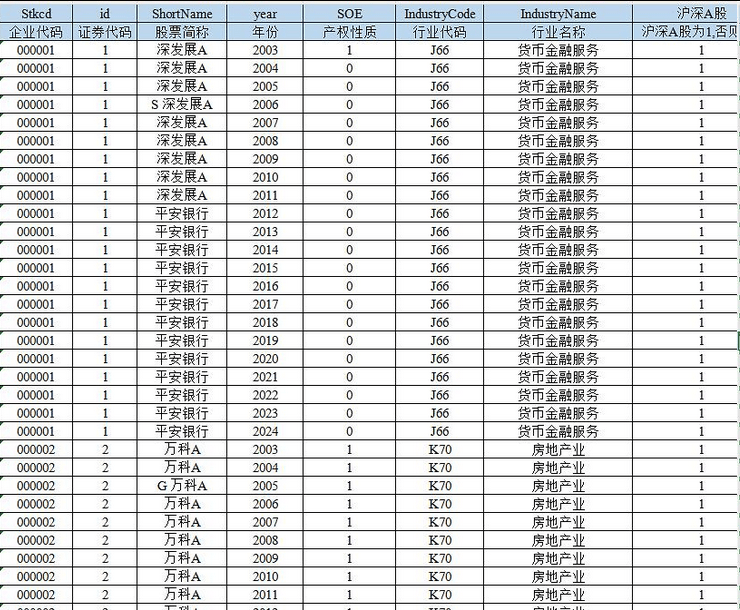
上市公司产权性质SOE,是否为国企2003-2024年
Sou Hu Cai Jing· 2025-12-17 05:21
参考文献:实质性创新还是策略性创新-宏观产业政策对微观企业创新的影响 黎文靖 郑曼妮 数据简介 国有企业,在上市公司语境下,指的是那些实际控制人为政府(包括中央政府或地方政府)或其下属机 构的上市公司。这些公司通过股权关系、协议安排或其他方式,由政府或其下属机构直接或间接控制其 经营决策。 SOE:企业产权性质,若是国企则取值为1,否则为0。根据企业最终控制人性质确定其产权性质。最终 控制人是国有单位的为国企,否则为非国企。 数据名称:上市公司-产权性质,是否为国企 数据年份:2003-2024年 参考文献:高管海外经历是否能提升企业投资效率 代昀昊 孔东民 【號】:Paper数据分析 【公】 【粽】 数据指标: 企业代码 证券代码 股票简称 年份 产权性质,是否为国企 行业代码 行业名称 沪深A股为1,否则为0 北京A 股为1,否则为0 金融业为1,否则为0 制造业为1,否则为0 ST或PT为1,否则为0 上市板块 数据截图 | Stkcd | id | ShortName | year | SOE | IndustryCode | IndustryName | 沪深A股 | | --- | --- | - ...

12月16日晚间重要公告一览
Xi Niu Cai Jing· 2025-12-16 10:31
Group 1 - Action Education plans to repurchase shares worth between 20 million to 25 million yuan at a price not exceeding 45 yuan per share for employee stock ownership plans or equity incentives [1] - Fulin Technology's shareholders plan to reduce their holdings by up to 2% of the company's total shares, amounting to a maximum of 24.44 million shares starting from December 22, 2025 [2] - Huashu shares' shareholders intend to reduce their holdings by up to 1% of the company's total shares, which is a maximum of 35.94 million shares [3] Group 2 - Silan Microelectronics has obtained a filing certificate for its 12-inch high-end analog integrated circuit chip manufacturing production line project, with an investment of 10 billion yuan and a monthly production capacity of 20,000 wafers [4] - Aerospace Information confirms that its main business does not involve commercial aerospace and that its operations are normal without significant changes [5] - Qinglong Pipe Industry signed a supply contract worth 294 million yuan for PCCP and pressure steel pipes, accounting for 10.43% of its 2024 revenue [6] Group 3 - Huaxin Precision plans to invest up to 1 billion yuan of idle funds in low-risk financial products [7] - Hainan Rubber received insurance compensation totaling approximately 26.65 million yuan for rubber income and tree insurance [8] - Lianmei Holdings announced the suspension of its subsidiary Fulin Thermal Power due to economic slowdown and reduced customer demand [9] Group 4 - Ruifeng Bank has been approved to issue up to 2.5 billion yuan in secondary capital bonds to enhance its capital and risk resistance [11] - China Pacific Insurance reported a 9.4% year-on-year increase in premium income for its life insurance subsidiary, totaling 250.32 billion yuan [12] - Sunshine Nuohuo signed an agreement with Peking University to establish a joint laboratory for innovative drug development [13] Group 5 - Century Huatong completed the cancellation of 56.12 million repurchased shares, reducing its total share capital from 7.428 billion to 7.372 billion shares [14] - Yaxin Security received a government subsidy of 3 million yuan [15] - Haili Biology's subsidiary received registration certification for a bone repair material in Indonesia [16] Group 6 - Yian Technology's subsidiary secured a major project for magnesium alloy components worth 430 million yuan, expected to start production by the end of March 2026 [17] - Jiangte Electric plans to contest the proposed cancellation of its lithium-containing mining rights [18] - COFCO Technology announced the resignation of its deputy general manager due to work changes [19] Group 7 - Fangsheng Pharmaceutical passed the GMP compliance inspection for its raw material production lines [21] - Bohai Ferry announced the resignation of two deputy general managers for personal and age-related reasons [22] - ST Fuhua appointed a new general manager [23] Group 8 - Huazhong CNC received project funding of 17.7 million yuan, accounting for 31.97% of its audited net profit for 2024 [24] - Oppein Home used 15 million yuan of idle funds to purchase a large time deposit with a 0.9% annual yield [25] - China General Nuclear Power's Ningde Unit 6 has begun full construction, utilizing Hualong One technology with a capacity of 1210 MW [26] Group 9 - Jiayuan Technology's chairman has had the investigation order lifted, and the company is operating normally [27] - Fulaixin Materials' application for a specific stock issuance has been approved by the Shanghai Stock Exchange [28] - Shuhua Sports plans to invest up to 500 million yuan in a health industry park project [29] Group 10 - Rhine Biology's stock will continue to be suspended due to ongoing control change and asset acquisition plans [30] - Haishi Science received approval for clinical trials for four innovative drugs targeting various diseases [31] - Hangcai Co. plans to repurchase shares worth between 50 million to 100 million yuan at a price not exceeding 80 yuan per share [32] Group 11 - Yinxin Technology received a cash dividend of 18 million yuan from its subsidiary [33] - Tianfulong plans to increase its wholly-owned subsidiary's capital by 580 million yuan [34] - Poly United's subsidiary won a bid for a stripping project worth 1.528 billion yuan [35] Group 12 - Minglida's deputy general manager resigned due to health reasons [36] - ST Guohua appointed a new deputy general manager [37] - China Xidian's subsidiaries won contracts totaling 1.005 billion yuan for Southern Power Grid projects [38]






铁路运输强势增长,11月服务业生产指数增4.2%|快讯
Hua Xia Shi Bao· 2025-12-15 03:15
Core Insights - The national service production index in China increased by 4.2% year-on-year in November, indicating a positive trend in the service sector [2] - The information transmission, software and IT services, leasing and business services, and financial sectors showed significant growth, with production indices rising by 12.9%, 8.4%, and 5.1% respectively, outpacing the overall service production index [2] - For the period from January to November, the national service production index grew by 5.6%, while the revenue of large-scale service enterprises increased by 7.6% year-on-year from January to October [2] Industry Performance - The service business activity index stood at 49.5% in November, while the business activity expectation index was at 55.9%, indicating a generally optimistic outlook for the service industry [2] - Specific sectors such as railway transportation, telecommunications, and financial services reported business activity indices above 55.0%, reflecting a high level of economic activity [2] - The railway sector experienced record-breaking performance, with a total of 3.95 billion passengers transported in the first ten months of the year, marking a historical high for the same period [2]

社科院程恩富:美元稳定币难解美债困局
Di Yi Cai Jing· 2025-12-14 09:27
Group 1 - The issuance of USD stablecoins may only result in "stock transfer" rather than "new liquidity" [1] - The issuance of stablecoins does not fundamentally address the issues surrounding US Treasury bonds [1] - The current long-term fiscal deficit and high government debt in the US have reached unsustainable levels, impacting the international monetary system dominated by the dollar [1] Group 2 - The development of central bank digital currencies (CBDCs) should leverage blockchain technology to enhance payment efficiency [2] - Digital RMB incorporates the convenience of stablecoins while ensuring security through controllable anonymity and real-time monitoring [2] - The promotion of digital RMB can significantly reduce cross-border settlement costs and further internationalize the RMB [2]
败局已定说日元
Sou Hu Cai Jing· 2025-12-13 14:24
Core Viewpoint - The article discusses the challenges and failures of the internationalization of the Japanese yen, highlighting the historical context, economic factors, and comparisons with the successful internationalization of the German mark. Group 1: Historical Context and Initial Success - After World War II, Japan's economy experienced rapid growth, becoming the world's second-largest economy by the late 1960s [1] - Japan began the process of yen internationalization in the 1960s, achieving free convertibility of the yen for current account transactions by 1964 and capital account transactions by 1980 [1] - By 1990, the yen's share in import trade settlements rose to 14.5% from 0.3% in 1970, and in export trade settlements, it increased to 37.5% from 0.9% in 1970 [1] Group 2: Challenges to Yen Internationalization - The yen's internationalization faced significant setbacks in the 21st century, with its share in global bank assets declining from $701.6 billion in 1995 to $325.1 billion in 2002 [2] - The yen's share in global foreign exchange reserves fell from 7% in 1995 to 3.4% in 2012, despite Japan's GDP being twice that of the UK [2] - No currency is pegged to the yen, contrasting with 43 currencies pegged to the dollar and 27 to the euro, indicating the yen's limited status as an international currency [2] Group 3: Factors Contributing to Yen's Weakness - Japanese asset prices, including real estate and stocks, have been in decline since 1990, leading to significant losses for asset holders [4] - Japan's long-term low-interest rate policy has made yen-denominated deposits and bonds unattractive compared to those in euros and dollars [4] - Japan's government debt has risen dramatically, with the debt-to-GDP ratio increasing from 85% in 1998 to over 220% in 2023, undermining confidence in the yen [5] Group 4: Currency Volatility and Market Dynamics - The yen has experienced significant exchange rate volatility, with fluctuations exceeding 10% occurring multiple times between 1973 and 1995 [6] - Over the past 30 years, the yen's real effective exchange rate has shown the weakest performance compared to other major currencies, indicating structural weaknesses in Japan's financial policies [7] - Japanese companies face "local currency barriers," limiting their ability to price goods in yen, particularly in trade with Southeast Asia where commodities are often priced in dollars [8] Group 5: Comparison with German Mark - The internationalization of the yen is compared to that of the German mark, which succeeded due to stable monetary policy and integration into European monetary cooperation [9][10] - The German mark maintained a stable value and was recognized internationally, while the yen's internationalization efforts were hindered by Japan's isolated approach and lack of regional economic integration [11][12]
上市公司“低空经济”概念数据2000-2024年
Sou Hu Cai Jing· 2025-12-13 08:17
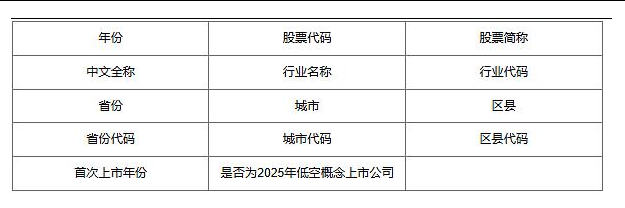
低空经济,是以各种有人驾驶和无人驾驶航空器的各类低空飞行活动为牵引,辐射带动相关领域融合发展的综合性经济形态。2021年2月,中共中央、 国务 院在 《国家综合立体交通网规划纲要》 中首次提出发展低空经济2023年12月,中央经济工作会议将低空经济明确为国家战略性新兴产业2024 年3月,《政 府工作报告》 首次写入低空经济2024年7月,党的二十届三中全会通过的决定中首次写入 "低空经济" 本文参考孙嘉俊等(2025)在《"赋能" 抑或 "负能":企业ESG表现与低空经济企业孵化》一文中关于低空经济概念上市企业名单的整理方法,筛选并整理 了截至2025年12月低空概念上市企业名单,匹配形成上市公司"低空经济"概念数据 数据名称:上市公司"低空经济"概念数据 数据范围:A股上市公司 时间范围:2000-2024年 样本数量:68852条 数据来源:东方财富网、同花顺网 数据说明:低空概念名单整理时间为2025年12月 二、数据指标 | 年份 | 股票代码 | 股票简称 | | --- | --- | --- | | 中文全称 | 行业名称 | 行业代码 | | 首份 | 城市 | 区首 | | 省份代码 | ...


社评:人民币受青睐是现实选择,不是对抗游戏
Sou Hu Cai Jing· 2025-12-01 16:51
Core Viewpoint - The issuance of sovereign bonds denominated in RMB by Russia marks a significant step in the internationalization of the Chinese currency, driven by market logic and global trade dynamics rather than geopolitical rivalry [1][2][3] Group 1: RMB Internationalization - Russia will issue its first sovereign bonds in RMB on December 8, with subscription starting on December 2, highlighting the growing acceptance of RMB in global markets [1] - The total amount of RMB assets in global foreign exchange reserves is approximately $247 billion, with over 80 countries incorporating RMB into their reserves [2] - The share of RMB in global trade financing reached 8.5% in October, making it the second most used currency in this sector [2] Group 2: Economic Considerations - The increasing preference for RMB is driven by economic factors, particularly the use of financial sanctions by the U.S., which has made RMB assets attractive due to their relative stability and lower volatility [3] - Investors are motivated to allocate RMB assets not out of ideological alignment but to optimize portfolios, diversify risks, and preserve value [3] Group 3: Global Monetary System - The global monetary system is undergoing structural changes, transitioning from a dollar-dominated framework to a multi-centered system, with RMB's rise supported by China's economic resilience and market appeal [3] - The international status of a currency is built on long-term economic strength, institutional trust, and market acceptance, rather than self-proclamation [3] Group 4: China's Approach - China maintains a cautious and steady approach to RMB internationalization, emphasizing market-driven and voluntary participation rather than seeking currency hegemony [4] - The preference for RMB is seen as a rational choice rather than a confrontational stance, indicating a need for more options in the global financial landscape [4]
【权威解读】11月份制造业采购经理指数小幅回升 非制造业商务活动指数有所回落
中汽协会数据· 2025-12-01 12:41
Group 1: Manufacturing Purchasing Managers Index (PMI) - In November, the manufacturing PMI rose to 49.2%, indicating a slight improvement in economic conditions [2] - Both production index and new orders index improved, reaching 50.0% and 49.2% respectively, with production index crossing the critical point [2] - Small enterprises showed significant recovery with PMI at 49.1%, marking a 2.0 percentage point increase, the highest in six months [2][3] Group 2: Non-Manufacturing Business Activity Index - The non-manufacturing business activity index decreased to 49.5%, down 0.6 percentage points from the previous month, indicating a decline in non-manufacturing economic conditions [4] - The service industry index fell to 49.5%, influenced by the end of holiday effects, while certain sectors like railway transport and financial services remained robust [5] - The construction industry index improved to 49.6%, with a business activity expectation index of 57.9%, reflecting increased confidence in the sector [5] Group 3: Comprehensive PMI Output Index - The comprehensive PMI output index fell to 49.7%, a decrease of 0.3 percentage points, with manufacturing production index at 50.0% and non-manufacturing business activity index at 49.5% [6]

11月份制造业PMI回升至49.2%
Chang Jiang Shang Bao· 2025-12-01 06:41
Core Viewpoint - The manufacturing sector shows signs of improvement with a slight increase in the Purchasing Managers' Index (PMI), while the non-manufacturing sector experiences a decline, indicating mixed economic conditions in China [1][2]. Manufacturing Sector - In November, the manufacturing PMI was reported at 49.2%, an increase of 0.2 percentage points from the previous month, indicating a stable upward trend in manufacturing [1][2]. - Among the 13 sub-indices, production index, new orders index, and new export orders index showed increases, with production index reaching the critical point at 50.0% [2]. - The new orders index rose to 49.2%, reflecting improved demand conditions [2]. Non-Manufacturing Sector - The non-manufacturing business activity index fell to 49.5%, a decrease of 0.6 percentage points from the previous month, suggesting a slowdown in non-manufacturing activities [1][2]. - Service industry activity index also declined to 49.5%, influenced by the end of holiday effects, with certain sectors like real estate and residential services showing weaker market activity [2]. Construction Sector - The construction business activity index improved to 49.6%, up by 0.5 percentage points, indicating a recovery in the construction sector [3]. - The business activity expectation index for the construction sector rose to 57.9%, reflecting increased confidence among construction enterprises regarding future industry developments [3]. Investment Outlook - The release of 500 billion yuan in new policy financial tools in October is expected to stimulate infrastructure and manufacturing investments, contributing to economic stability [3]. - Analysts predict that the acceleration of key projects towards the end of the year, combined with special bonds and policy financial tools, will support investment growth [3].
国家统计局:11月中小型企业PMI回升 高技术制造业保持扩张
Zhong Guo Zheng Quan Bao· 2025-11-30 22:29
Group 1: Manufacturing Sector - The manufacturing Purchasing Managers' Index (PMI) for November is reported at 49.2%, an increase of 0.2 percentage points from the previous month, indicating an improvement in the manufacturing sector's economic conditions [1][2] - The production index and new orders index for November are at 50.0% and 49.2%, respectively, with increases of 0.3 and 0.4 percentage points, suggesting a recovery in both production and demand [2] - Small enterprises show significant improvement with a PMI of 49.1%, up 2.0 percentage points, marking the highest level in six months [2] Group 2: Non-Manufacturing Sector - The non-manufacturing business activity index for November is at 49.5%, a decrease of 0.6 percentage points from the previous month, indicating a decline in the non-manufacturing sector's economic conditions [4] - The service industry is experiencing a seasonal decline due to the high base effect from the previous month’s holidays, contributing to the drop in the non-manufacturing index [4] - The construction industry shows signs of recovery with a business activity index of 49.6%, up 0.5 percentage points, and a business activity expectation index of 57.9%, indicating increased confidence among construction firms [4][5] Group 3: Market Expectations - The production and business activity expectation index for November is at 53.1%, reflecting increased confidence among manufacturing enterprises regarding market development [3] - Analysts predict that the manufacturing sector will continue to stabilize and recover, supported by year-end project accelerations and effective policy implementations [3][5] - The service sector maintains a positive outlook despite a slight decline in the business activity expectation index, which remains at a high level of 55.9% [4]