锂电

Search documents
全面出击,22家锂电企业“出海”动作大起底
高工锂电· 2026-03-20 11:08
Core Viewpoint - The article highlights the accelerated global expansion of 22 lithium battery companies, driven by the increasing demand for electric vehicles and energy storage, with a projected global lithium battery demand of 3065 GWh by 2026, representing a 34% year-on-year growth [3]. Group 1: Overview of Outbound Activities - Since January 2026, 22 lithium industry companies have updated their outbound progress, including 8 battery companies, 8 lithium material companies, and 6 equipment companies, showcasing diverse forms of international engagement from capacity establishment to technology export [3][7]. - The outbound activities of these companies reflect a unique pattern characterized by "chain leaders guiding, supporting follow-up, and diversified layouts" [7]. Group 2: Battery Companies - Leading battery companies like CATL, BYD, and others are actively driving outbound strategies, focusing on capacity establishment and technological cooperation, with a clear regional focus on Europe and Southeast Asia [8][9]. - CATL has adopted a "multi-regional layout and stepwise expansion" strategy, establishing a global capacity network with operational factories in Germany and ongoing projects in Indonesia and Hungary [9]. - BYD's approach involves technology output in collaboration with local partners in Vietnam, allowing for rapid market entry while avoiding direct factory establishment costs [9]. Group 3: Energy Storage Companies - Energy storage companies are primarily engaging in outbound activities through signing or winning large orders, indicating strong growth in the overseas energy storage market [10]. Group 4: Lithium Material Companies - Lithium material companies are closely following battery capacity expansions, focusing on regional collaboration to reduce transportation costs and enhance supply chain responsiveness [11]. - Companies like New Zebang and Tinci Materials are establishing bases in Malaysia and Morocco to meet local battery production demands, while also aiming for product differentiation and high-end market penetration [11][12]. Group 5: Lithium Equipment Companies - Lithium equipment companies are more cautious in their overseas expansions, primarily focusing on order-based activities rather than establishing production bases [13]. - Some companies, like Xian Dao Intelligent, are aggressively setting up manufacturing bases in multiple countries, while others are establishing subsidiaries and service networks to better serve local markets [13]. Group 6: Overall Trends - The outbound strategies of lithium industry companies are evolving from "product export" to "global layout" and from "single link" to "full-chain collaboration," driven by leading battery companies [14].



量价齐升+技术跃迁——鑫椤资讯2026锂电关键材料及应用市场高峰论坛圆满举办
鑫椤锂电· 2026-03-20 09:35
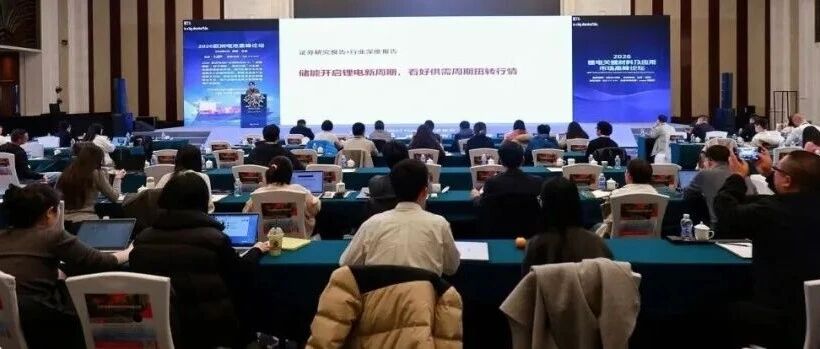
Core Viewpoint - The lithium battery industry is experiencing a "dual rise in quantity and price + technological leap" leading to a spiral growth pattern, with a predicted global lithium battery production growth rate of 34.6% by 2026, driven by both domestic and international demand [3]. Group 1: Forum Overview - The 2026 Lithium Battery Key Materials and Applications Market Summit was held in Changzhou, Jiangsu, focusing on new growth opportunities in the lithium battery industry [1]. - The forum gathered representatives from leading companies, industry experts, and practitioners to discuss cutting-edge technology iterations, market supply-demand dynamics, and collaborative development within the industry [1]. Group 2: Key Presentations - Twelve industry experts presented on various topics, including innovations in energy and computing collaboration, energy storage technology, and system innovations [5]. - Discussions included the large-scale application prospects of sodium-ion battery storage systems and breakthroughs in lithium battery key materials [5]. Group 3: Industry Trends and Investment Insights - The chairman of Beijing Jiyun Dingcheng Technology shared AI optimization strategies for energy storage projects based on spot price predictions, providing technical support for efficient operations [6]. - Analysis of the lithium battery industry's new cycle highlighted characteristics such as a seasonal rebound and accelerating demand, offering important references for corporate strategies [6]. Group 4: Industry Challenges and Opportunities - The forum effectively built a bridge for cutting-edge technology exchange and created a platform for upstream and downstream procurement connections, addressing industry pain points [17]. - The successful hosting of the forum is expected to further promote collaborative innovation in the lithium battery industry chain, helping companies seize new opportunities for high-quality development [17].
Lithium Carbonate Futures Daily Report:碳酸锂期货日报-20260320
Fang Zheng Zhong Qi Qi Huo· 2026-03-20 05:42
Report Summary 1. Report Industry Investment Rating No relevant information provided. 2. Core Viewpoints - The lithium carbonate market is expected to maintain a wide - range volatile pattern with an upper limit and a lower limit. In the short term, the lithium salt demand is facing a test, and there is a possibility that the demand data in March may be weaker than expected. In the medium term, the demand pattern is expected to continuously improve, and the increase in fossil energy prices is beneficial to the further increase in the global penetration rate of new energy vehicles, and the geopolitical factors will also drive up the global demand for electrochemical energy storage [3][4]. - The price of lithium hydroxide has been oscillating strongly around the Spring Festival and has weakened recently. The demand for ternary batteries may be weaker than that of lithium iron phosphate, which exerts pressure on the trend of lithium hydroxide [5]. 3. Summary by Directory 3.1 First Part: Lithium - Battery New Energy Recommended Strategies - **Futures and Options Unilateral Strategies** - For the lithium carbonate 05 futures contract, with acceptable spot transactions and upcoming demand tests, it is expected to run in an oscillatory manner. The support level is 120,000 - 125,000, and the pressure level is 180,000 - 185,000. Upstream enterprises should seize the opportunity to sell for hedging when the price surges [11]. - For the lithium carbonate 05 futures options, with acceptable spot transactions and upcoming demand tests, the option volatility increases, and the risk of buying options rises. Selling call options at or above the 180,000 price of the 05 contract is a worthy - of - attention opportunity [11]. - **Arbitrage Strategies** - Buying spot and selling the 05 contract is recommended. The active period of the 05 contract is in the off - season of demand, making it suitable as a short - position configuration for spot - futures arbitrage [11]. 3.2 Second Part: Changes in Spot and Futures Prices - **Changes in Lithium Carbonate Futures Prices** - The closing price of the lithium carbonate May contract is 142,600, with a decline of 5.01%. The trading volume is 288,571, the open interest is 282,745, the open interest decreases by 24,677 compared with the previous period, and the number of warehouse receipts is 34,740 [12]. - **Changes in Spot Prices of the Lithium - Battery Industry Chain** - The prices of most products in the lithium - battery industry chain have declined. For example, the price of lithium spodumene concentrate (6%, CIF China) has dropped by 2.64% to 2,100 US dollars per ton; the price of battery - grade lithium carbonate (99.5%) has decreased by 1.93% to 152,500 yuan per ton [13]. 3.3 Third Part: Fundamental Situation of the Lithium - Battery Industry Chain - **Lithium Carbonate Fundamental Data** - This week, the lithium carbonate output is 24,186 tons, an increase of 760 tons from the previous week, continuing the upward trend. The total inventory of the lithium carbonate sample is 98,873 tons, a decrease of 86 tons from the previous week, and the downstream inventory is in an active restocking state [4]. - **Data of Directly - Related Downstream Products** - No specific data analysis is provided in the content, but there are relevant figures such as the production capacity of lithium iron phosphate, the operating rate of lithium iron phosphate devices, the monthly operating rate of SMM ternary materials, and the monthly output of lithium hexafluorophosphate [22][24].
碳酸锂日报(2026年3月20日)-20260320
Guang Da Qi Huo· 2026-03-20 05:34
1. Report Industry Investment Rating - No relevant content provided 2. Core Viewpoints of the Report - Yesterday, the lithium carbonate futures contract 2605 dropped 6.73% to 14,600 yuan/ton. The average price of battery - grade lithium carbonate decreased by 3,000 yuan/ton to 152,500 yuan/ton, the average price of industrial - grade lithium carbonate dropped 3,000 yuan/ton to 149,500 yuan/ton, and the price of battery - grade lithium hydroxide (coarse particles) fell 2,500 yuan/ton to 145,500 yuan/ton. The warehouse receipt inventory decreased by 1,029 tons to 34,740 tons [3]. - On the supply side, the weekly production increased by 760 tons to 24,186 tons, and the lithium carbonate production in March is expected to increase by 28% month - on - month to 106,390 tons. On the demand side, the production of ternary materials in March is expected to increase by 19% month - on - month to 84,360 tons, and the production of lithium iron phosphate is expected to increase by 24% month - on - month to 430,000 tons. On the inventory side, the weekly social inventory of lithium carbonate decreased by 86 tons to 98,873 tons, with downstream inventory increasing by 458 tons to 46,105 tons, inventory in other links decreasing by 860 tons to 36,160 tons, and upstream inventory increasing by 316 tons to 16,608 tons [3]. - Recently, the market sentiment has been dragging down, with bearish news being hyped. The open interest of the main lithium carbonate contract decreased by about 25,000 lots yesterday. Fundamentally, the overall contradiction is not prominent, but the month - on - month situation is gradually weakening. The weekly de - stocking speed has slowed down, and the terminal data is also difficult to boost the market. In the short term, it may still operate weakly, and overseas geopolitics and market sentiment should also be noted. However, the decrease in the absolute inventory level and the increasing stocking coefficient of downstream after price drops may support the price, and long - term investors can consider bottom - fishing [3]. 3. Summary by Relevant Catalogs 3.1 Research Views - The price of lithium carbonate futures and spot decreased, and the warehouse receipt inventory decreased. The supply, demand, and inventory data of lithium carbonate in March were given, and the short - term and long - term market trends were analyzed [3]. 3.2 Daily Data Monitoring - The prices of various products in the lithium - battery industry chain on March 19 and March 18, 2026, were presented, including futures, lithium ore, lithium carbonate, lithium hydroxide, lithium hexafluorophosphate, precursors, cathode materials, cells, and batteries. The price changes were also provided [5]. 3.3 Chart Analysis 3.3.1 Ore Prices - Charts of the prices of lithium spodumene concentrate (6%, CIF), lithium mica (1.5% - 2.0%, 2.0% - 2.5%), and amblygonite (6% - 7%, 7% - 8%) were shown, with price trends from 2024 to 2026 [6][9]. 3.3.2 Lithium and Lithium Salt Prices - Charts of the prices of battery - grade metallic lithium, battery - grade lithium carbonate average price, industrial - grade lithium carbonate average price, battery - grade lithium hydroxide, industrial - grade lithium hydroxide, and lithium hexafluorophosphate were presented, showing price trends from 2024 to 2026 [12][14][18]. 3.3.3 Spreads - Charts of various spreads were provided, such as the spread between battery - grade lithium hydroxide and battery - grade lithium carbonate, the spread between battery - grade and industrial - grade lithium carbonate, the spread between CIF Japan - South Korea battery - grade lithium hydroxide and SMM battery - grade lithium hydroxide, and the basis [18][20][24]. 3.3.4 Precursors & Cathode Materials - Charts of the prices of ternary precursors, ternary materials, lithium iron phosphate, lithium manganate, and cobaltate were shown, with price trends from 2024 to 2026 [26][28][30]. 3.3.5 Lithium Battery Prices - Charts of the prices of 523 square ternary cells, square lithium iron phosphate cells, cobaltate cells, and square lithium iron phosphate batteries were presented, showing price trends from 2024 to 2026 [32][36]. 3.3.6 Inventory - Charts of downstream inventory, smelter inventory, and inventory in other links were provided, showing the inventory trends from July 2025 to March 2026 [38][39][42]. 3.3.7 Production Costs - A chart of the production costs of lithium carbonate from different raw materials was shown, including the cash production profit of purchasing ternary pole piece black powder, lithium iron phosphate pole piece black powder, lithium mica concentrate, and lithium spodumene concentrate from 2024 to 2026 [43][44]. 3.4 Team Introduction - The members of the non - ferrous research team were introduced, including Zhan Dapeng, Wang Heng, and Zhu Xi, along with their educational backgrounds, positions, research directions, and professional achievements [47][48]. 3.5 Contact Information - The company's address, phone number, fax, customer service hotline, and postal code were provided [51].
油价高波动下的周期策略
2026-03-20 02:27
Summary of Key Points from Conference Call Records Industry Overview - **Oil and Gas Industry**: High volatility in oil prices is suppressing downstream procurement, suggesting a wait-and-see approach until volatility decreases. Short-term focus on sectors with rigid demand such as chemical fibers (polyester filament, spandex) and refrigerants is recommended [1][2]. - **Chemical Industry**: The recent decline in the chemical sector is attributed to high oil price volatility rather than high prices themselves. This volatility has led to significant market uncertainty and reduced purchasing willingness in the downstream market [2]. - **New Energy Sector**: The strategic value of new energy is highlighted, with storage and lithium batteries expected to see the highest certainty in growth over the next three years. Companies like CATL are projected to increase their storage business share to 50% [1][4]. - **Real Estate Sector**: 2026 is anticipated to be a year of value reassessment for commercial real estate, driven by REITs policy and the need for asset management cycles [1][7]. - **Coal and Power Sectors**: The coal sector is expected to benefit from rising oil prices, while the power sector will gain from energy transition trends, with a focus on green electricity, nuclear power, and hydropower [1][9]. Core Insights and Arguments - **Chemical Sector Dynamics**: The high volatility in oil prices has led to a significant impact on market expectations and the real economy, causing a distortion in production and sales rates. The recommendation is to wait for stabilization in oil prices before making investment decisions [2][3]. - **Long-term Opportunities in Chemical Industry**: If geopolitical tensions ease, a strong replenishment demand is expected post-de-stocking, with a potential increase in China's market share in the global chemical supply chain as older facilities in other regions exit the market [3]. - **Investment Strategy in New Energy**: The focus should be on storage and lithium battery sectors, with companies like CATL and system integrators like Sungrow Power being highlighted for their competitive edge [4]. - **Valuation in Aluminum Sector**: The aluminum sector, particularly electrolytic aluminum, is viewed as undervalued with a current valuation of 7-8 times earnings, despite stable fundamentals and potential profit increases [5]. - **Copper and Precious Metals**: Despite recent adjustments in prices, the fundamental logic for copper and precious metals remains intact, with ongoing demand from new growth areas like AR technology [6]. Additional Important Insights - **Real Estate Market Outlook**: The real estate sector is under pressure from rising oil prices, which may lead to inflation concerns and cautious monetary policy. However, potential policy changes in mid-2026 could create opportunities [7]. - **Coal Sector Rotation**: The coal sector is expected to follow a rotation pattern, with coal chemical companies benefiting first, followed by leading thermal coal producers and then coking coal [11]. - **Power Sector Investment Opportunities**: The power sector is expected to benefit from the energy transition, with specific attention to companies in green electricity, nuclear, and hydropower [12]. This summary encapsulates the key points from the conference call records, providing a comprehensive overview of the current state and future outlook of various industries.
万联晨会-20260320
Wanlian Securities· 2026-03-20 01:49
Core Viewpoints - The A-share market experienced a collective decline on Thursday, with the Shanghai Composite Index falling by 1.39%, the Shenzhen Component Index by 2.02%, and the ChiNext Index by 1.11%. The total trading volume in the Shanghai and Shenzhen markets reached 21,107.59 billion yuan [2][9] - In terms of industry performance, coal, oil and petrochemicals, and public utilities led the gains, while non-ferrous metals, steel, and basic chemicals lagged behind. Concept sectors such as state-owned cloud, shale gas, and natural gas saw significant increases, while metals like lead, zinc, and copper faced declines [2][9] - The report highlights a positive outlook for the lithium battery industry, indicating a recovery in profitability and a new growth cycle driven by demand from both power storage and electric vehicles [12][14] Market Review - The A-share market indices collectively declined, with the Shanghai Composite Index closing at 4,006.55, down 1.39%, and the Shenzhen Component Index at 13,901.57, down 2.02%. The total trading volume was 21,107.59 billion yuan [2][6] - The Hong Kong market also saw declines, with the Hang Seng Index down 2.02% and the Hang Seng Tech Index down 2.19%. In the overseas markets, the Dow Jones fell by 0.44%, the S&P 500 by 0.27%, and the Nasdaq by 0.28% [2][6] Important News - The People's Bank of China emphasized the need to maintain stability in financial markets, including stocks, bonds, and foreign exchange, while managing financial risks in key areas. The central bank aims to support the smooth operation of financial markets and address risks in small financial institutions [3][10] - A new policy was released regarding the extension of rural land contracts for an additional 30 years, which is expected to benefit millions of farmers and ensure stability in rural areas [4][11] Industry Insights - The lithium battery industry is entering a new growth cycle, with demand driven by both power storage and electric vehicles. The report suggests focusing on the recovery of the industry cycle and breakthroughs in solid-state battery technology [12][14] - In 2025, the overall revenue of the lithium battery industry reached 636.19 billion yuan, a year-on-year increase of 16.12%, with net profit rising by 40.37% [14] - The global demand for lithium batteries is expected to grow significantly, with shipments projected to reach 2,280.5 GWh in 2025, marking a 47.6% year-on-year increase [15] Supply and Demand Dynamics - The supply-demand landscape is improving, with a focus on the materials segment benefiting from this trend. The report notes that the market share of leading battery manufacturers is increasing, and profitability is expected to remain stable [16] - The report highlights that the price of lithium hexafluorophosphate is experiencing significant fluctuations, indicating a tight supply-demand balance in the electrolyte materials segment [16] Technological Advancements - Solid-state battery technology is identified as a key area for industry upgrade, with manufacturers entering the technical verification phase and pilot lines being established [17][19] - The report emphasizes the importance of advancements in equipment, electrolyte materials, and key auxiliary materials in the solid-state battery sector, which are expected to drive further growth [17][19]
碳酸锂:锂市场风险对冲策略
Wu Kuang Qi Huo· 2026-03-20 01:06
Group 1: Report Industry Investment Rating - No relevant content provided Group 2: Core Views of the Report - The price of lithium carbonate fluctuates violently. Hedging is the core tool for enterprises to manage business risks and stabilize operating profits. Enterprises are advised to comprehensively use futures and options derivatives to build hedging strategies suitable for their own business needs, and adhere to the principle of risk neutrality [1] - Hedging can achieve full - dimensional risk hedging, effectively avoid five core risks faced by enterprises in operation, and provide multiple empowerments for enterprise operations [3] - Different links in the lithium industry chain can choose different hedging strategies according to their risk characteristics, and pay attention to relevant matters in the hedging process [7][8] - Options can make up for the core short - board of futures hedging, locking in risks while retaining the excess returns of favorable price changes [9] - There are four core problems in the hedging business of lithium industry chain enterprises, and corresponding improvement suggestions are put forward [18] Group 3: Summary by Directory Lithium Market Risk Management Necessity - From 2020 - 2022, the price of battery - grade lithium carbonate increased by more than 10 times, and from 2023 - 2025, it plummeted by nearly 90%. Extreme price fluctuations bring challenges to the entire industry chain [3] - Hedging can hedge risks in all dimensions, lock in production and operation costs and terminal benefits, and provide multiple empowerments for enterprise operations [3] Core Hedging Strategies Lithium - battery Enterprises' Core Exposures - Since 2023, the lithium price has been in a downward trend. Upstream and mid - stream enterprises can carry out sell - hedging through lithium carbonate futures. Since mid - 2025, the lithium price has risen, and downstream users can carry out buy - hedging [7] Linear Hedging - Futures hedging is the most mainstream, most liquid and lowest - credit - risk hedging tool. Enterprises in different industrial chain links can choose different hedging operations, and need to pay attention to issues such as basis and margin management [8] Non - linear Hedging - Futures hedging has limitations in giving up excess returns. Options can lock in the maximum loss when the price changes unfavorably and retain all the profit space when the price changes favorably [9] Hedging Strategies for Different Industrial Chain Links - Different links in the lithium industry chain, such as lithium resources, non - integrated salt factories, etc., have different core price risk exposures and corresponding suitable hedging strategies and expected effects [10] Operation Example - An integrated salt factory considered hedging 500 tons of lithium carbonate inventory in late October 2025. It added option protection to the hedging plan. Different profit situations occur under different lithium price trends [13][14] Risk Control and Suggestions - There are four core problems in lithium industry chain enterprises' hedging business, including lack of internal control system, deviation from the principle of risk neutrality, insufficient market understanding and lack of professional talents. Enterprises need to take corresponding improvement measures [18]
璞泰来正式递表港交所
起点锂电· 2026-03-19 11:45
Group 1 - The article announces the 2026 (Second) Starting Point Lithium Battery Cylindrical Battery Technology Forum and the release of the Top 20 Cylindrical Battery Rankings, focusing on the theme of "All-Ear Technology Leap and Leading the Large Cylindrical Market" [2][8] - The event is scheduled for April 10, 2026, at the Venus Hall of the Venus Royal Hotel in Shenzhen, organized by Starting Point Lithium Battery and Starting Point Research Institute SPIR [2] - The first batch of sponsors and speakers includes companies such as Penghui Energy, Duofluo New Energy, Chuangneng New Energy, and others, indicating strong industry participation [2][9] Group 2 - On March 17, 2026, Puxin Technology disclosed that it submitted an application for issuing H-shares and listing on the Hong Kong Stock Exchange, with the application materials published on the same day [3] - Puxin Technology is a comprehensive solution provider for key materials, automation equipment, and process technology in the new energy battery sector, focusing on R&D, production, and sales of battery materials and automation equipment [3] - In 2025, Puxin Technology achieved an operating income of approximately 15.711 billion yuan, a year-on-year increase of 16.83%, and a net profit attributable to shareholders of approximately 2.359 billion yuan, a year-on-year increase of 98.14% [4]


富临精工项目接连落地!
起点锂电· 2026-03-19 11:45
Group 1 - The core theme of the article revolves around the expansion of Fulin Precision Engineering in the lithium iron phosphate (LFP) sector, particularly focusing on high-end energy storage applications and the establishment of a new production facility in Inner Mongolia with an annual capacity of 500,000 tons [5][7][8] - Fulin Precision Engineering's subsidiary, Jiangxi Shenghua, has made significant technological advancements in LFP production, which has attracted the attention of major battery manufacturers like CATL [10][12] - The company is also involved in multiple projects, including a 100,000-ton ferrous oxalate project in Shihong, which is nearing completion, and a joint venture with Guizhou Dalong Huicheng to establish a new ferrous oxalate project with an investment of approximately 1.5 billion yuan [6][9] Group 2 - The strategic location of the new facility in Guangxi is advantageous due to its proximity to resource-rich provinces and established battery supply chains, facilitating efficient procurement and transportation [6] - Fulin Precision Engineering's partnership with CATL has strengthened its market position, with CATL committing to maintain an annual procurement volume of 80% from Jiangxi Shenghua [10][11] - The article highlights the competitive landscape in the high-density LFP market, indicating that while Fulin Precision Engineering is well-positioned, it faces competition from other manufacturers also supported by CATL [12]


入榜TOP10!磷酸铁锂“黑马”净利125亿!
起点锂电· 2026-03-19 11:45
Core Viewpoint - WanHua Chemical reported record revenue of 203.24 billion yuan in 2025, marking an 11.62% year-on-year increase, but net profit decreased by 3.88% to 12.53 billion yuan due to price declines in the chemical industry [4][5]. Group 1: Financial Performance - The company achieved a revenue of 203.24 billion yuan, surpassing the 200 billion yuan mark for the first time, setting a historical high [4]. - Net profit for the year was 12.53 billion yuan, a decline of 3.88% year-on-year, while the non-recurring net profit fell by 9.10% to 12.14 billion yuan, indicating pressure on core business profitability [4]. - The overall chemical industry is experiencing a cyclical downturn, with over 90% of tracked chemical products seeing year-on-year price declines, leading to squeezed profit margins across the sector [4][5]. Group 2: Strategic Initiatives - Despite challenges in traditional business, WanHua Chemical is expanding its revenue through various initiatives, particularly focusing on battery materials to cultivate a second growth curve [5][6]. - The company entered the lithium battery sector in 2020 by acquiring Zhoneng Lithium Battery and has set a target for its battery materials business to reach 100 billion yuan [6]. Group 3: Industry Positioning - WanHua Chemical leverages its chemical production experience and R&D capabilities to integrate "chemicals + new energy," creating a differentiated competitive advantage [7]. - The company aims to establish a closed-loop industrial chain from upstream resources to downstream applications and recycling, with plans to achieve 1 million tons of phosphate iron and phosphate lithium capacity by 2027 [7][8]. Group 4: Production Capacity and Projects - A new battery materials industrial park with an investment of 16.8 billion yuan is under construction in Yantai, with a planned capacity of 500,000 tons of phosphate lithium and 300,000 tons of graphite anode [8]. - The company has existing production capacity of 50,000 tons of phosphate lithium in Meishan, with an expansion project expected to be completed by the end of 2026, bringing total capacity to 220,000 tons [8]. Group 5: Technological Innovation - WanHua Chemical is increasing R&D investment, covering lithium battery anode and cathode materials, sodium battery materials, binders, solvents, and hydrometallurgy [9][10]. - The company has successfully launched its fourth-generation phosphate lithium product and is positioned as a "dark horse" in the industry, ranking tenth in China's lithium phosphate lithium cathode material shipments in 2025 [10]. Group 6: Market Outlook - The year 2026 is anticipated to be crucial for the new energy battery materials industry, with expectations of supply-demand optimization and profitability recovery [12]. - Companies are advised to accelerate high-end transformation, secure long-term orders, and enhance resource supply management to seize profit opportunities amid industry differentiation [12].