
自动驾驶

Search documents
每6个人就有1个老板,广东做对了什么
21世纪经济报道· 2025-12-27 03:06
Core Viewpoint - Guangdong has become a hub for entrepreneurs, with over 20 million registered business entities as of September 3, 2024, marking a 5% increase from the end of 2023, and maintaining the highest total in the country [1][4]. Group 1: Business Landscape - The diversity and inclusiveness of Guangdong's business ecosystem are highlighted, with 96.45% of economic organizations being private enterprises, showing a year-on-year growth of 6.47% [4]. - The province has completed the transformation of 11,300 individual businesses into enterprises this year, and has cultivated 42,000 "specialized, refined, distinctive, and innovative" individual businesses [4][9]. - Foreign investment enterprises have also seen growth, with 230,000 registered as of August 2024, an increase of 15,000 or 6.97% from the previous year [4]. Group 2: Emerging Industries - Nearly 40% of new businesses established in Guangdong this year are in the "four new economies" such as artificial intelligence and platform economy [5]. - In Guangzhou, new registrations in cutting-edge fields like low-altitude economy and quantum technology have surged, with some areas seeing growth rates exceeding 100% [5][6]. - The advanced manufacturing and high-tech manufacturing sectors have shown significant value-added growth of 5.4% and 6.4% respectively, supporting a GDP of over 10.5 trillion yuan, a year-on-year increase of 4.1% [6]. Group 3: Long-term Growth and Support - Guangdong's ecosystem supports businesses throughout their lifecycle, emphasizing early-stage innovation and long-term growth [8]. - The province has nurtured over 2,000 "specialized, refined, distinctive, and innovative" small giant enterprises and over 30,000 specialized small and medium-sized enterprises [9]. - Policies aimed at optimizing the business environment have been implemented, providing significant support for technology companies [9][10]. Group 4: Case Studies - The story of Xiaoma Zhixing, an autonomous driving company, illustrates the collaborative investment in future technologies, benefiting from Guangdong's supportive regulatory environment [10][12]. - Xiaoma Zhixing achieved a gross margin of 18.4% in Q3, significantly up from 9.2% year-on-year, showcasing the financial success stemming from the conducive business landscape [13].


拟变更部分募集资金用途 千方科技布局干线物流自动驾驶
Bei Ke Cai Jing· 2025-12-27 02:59
Core Viewpoint - The company has decided to change the use of part of the raised funds, terminating the previous project for the development of next-generation smart transportation systems and reallocating the remaining funds of 956 million yuan to a new project focused on key technologies for unmanned logistics [1][4]. Group 1: Company Strategy - The company aims to fully develop its trunk logistics autonomous driving business, providing scalable unmanned logistics solutions to address industry challenges such as driver shortages and high labor costs [2]. - The strategic shift towards trunk logistics autonomous driving is a key component of the company's overall strategic upgrade, reflecting a transition from large-scale construction to refined operations [3]. - The company plans to promote a shift from project integration to standardized technology products and from system construction to operational services starting in 2024 [3]. Group 2: Industry Context - The domestic road freight volume accounts for 74% of the total freight volume in China, with trunk logistics carrying 70% of this, highlighting its critical role in connecting production and consumption [2]. - The logistics industry faces significant challenges, including high costs, efficiency issues, and safety concerns, which the unmanned model aims to address [2]. - The autonomous driving logistics sector is expected to transition from pilot demonstrations to large-scale commercialization by 2025, with L3-level autonomous driving expected to expand trial operations [3].

哼哧哼哧搞了小半年,小结一下这段时间世界模型的学习成果
自动驾驶之心· 2025-12-27 02:07
本文只做学术分享,如有侵权,联系删文 哼哧哼哧搞了小半年,小结一下这段时间的学习成果。 什么是世界模型? 值得注意的是,世界模型不是一个具体的模型或者范式。实际上有好几个不同方向的都管自己叫世界模型。差不多是各说各的,因此大家在阅读文章时需要仔细辨 析。 World model 的流行要归功于Jurgen2018年的world .其对world model的定义是" a mental model of the world", 即世界在大脑中的映射。更具体一点是 作者 | cloud erow 编辑 | 自动驾驶之心 原文链接: https://zhuanlan.zhihu.com/p/1943329007706805619 点击下方 卡片 ,关注" 自动驾驶之心 "公众号 戳我-> 领取 自动驾驶近30个 方向 学习 路线 >>自动驾驶前沿信息获取 → 自动驾驶之心知识星球 The image of the world around us, which we carry in our head, is just a model. Nobody in his head imagines all the worl ...
鸿蒙智行开启的L3路测,通向一个怎样的未来?
36氪· 2025-12-26 13:08
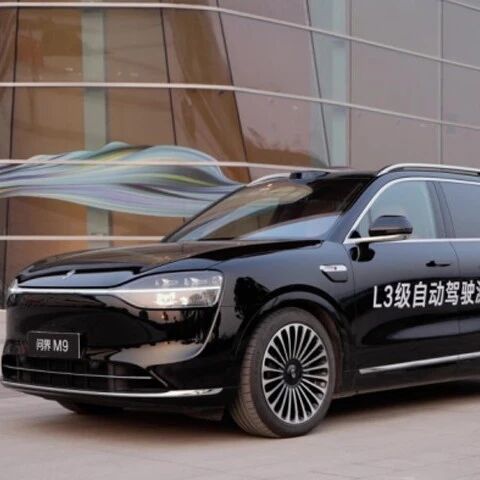
Core Viewpoint - The article discusses the recent approval of L3 conditional autonomous driving vehicles by the Ministry of Industry and Information Technology in China, highlighting the significance of real-world testing by companies like Hongmeng Zhixing to validate their systems and advance the industry [1][3][28]. Group 1: L3 Development and Testing - Hongmeng Zhixing has initiated real-world testing of L3 autonomous driving systems in cities like Chongqing and Hefei, utilizing its mass-produced models, the Zun Jie S800 and Wen Jie M9, to validate performance under actual traffic conditions [1][3]. - The testing videos demonstrate the vehicle's ability to autonomously navigate, change lanes, and overtake in traffic, showcasing the system's capability to execute dynamic driving tasks without the driver needing to hold the steering wheel [13][15]. - The company emphasizes the importance of extensive real-world testing to bridge the gap between functional demonstrations and user trust in L3 systems, addressing challenges such as human-machine interaction and responsibility delineation [8][10][24]. Group 2: Technical and Safety Considerations - The distinction between L2 and L3 lies in the shift of responsibility from the driver to the system, necessitating a robust safety engineering framework focused on system reliability and extensive validation standards [7][24]. - Hongmeng Zhixing's L3 system is built on the WEWA architecture, which allows for the creation of complex virtual driving scenarios, enabling the system to learn from extreme situations and improve decision-making capabilities [15][16]. - The company has developed a multi-source sensor array to enhance perception capabilities, ensuring reliable performance in challenging conditions such as heavy rain and fog [19][21]. Group 3: Market Outlook and Industry Impact - The market for L3 autonomous vehicles in China is projected to grow significantly, from 150 billion yuan in 2025 to 800 billion yuan by 2030, with a compound annual growth rate of 38.7% [25][30]. - Hongmeng Zhixing's proactive approach in L3 testing positions it as a leader in the industry, setting a high standard for engineering validation and potentially reshaping user trust in autonomous driving technology [26][30]. - The company aims to establish a competitive edge through data-driven improvements and a comprehensive safety framework, addressing the industry's need for reliable autonomous vehicles [16][30].
深拓AI+交通应用场景 千方科技进军干线物流自动驾驶
Zheng Quan Ri Bao· 2025-12-26 13:08
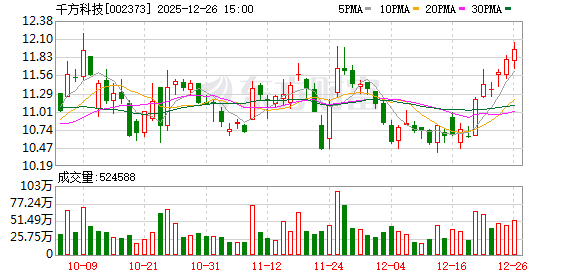
Core Viewpoint - The company is shifting its focus towards the development of autonomous logistics technology, reallocating approximately 9.56 billion yuan from its previous project to enhance its capabilities in this area, aiming to provide scalable unmanned logistics solutions [2] Group 1: Strategic Shift - The company has identified autonomous logistics as a key new strategic area, marking an important component of its overall strategic upgrade [2] - The transition reflects a broader industry shift from "large-scale construction" to "refined operations," aligning with trends of deep digitalization and comprehensive greening [2] - Starting in 2024, the company plans to upgrade its business model from project integration to standardized technology products and from system construction to operational services, while also deepening its global market presence [2] Group 2: Project Implementation - The project will be implemented by the company's subsidiary, Beijing Qianshu Technology Co., Ltd., focusing on autonomous transportation services and SaaS software subscription models [3] - The company has established a closed-loop advantage in the "technology + scenario + resources" model, which helps to address industry challenges such as having technology without application scenarios [3] Group 3: Technological Development - The subsidiary will concentrate on overcoming key technical bottlenecks for L4-level autonomous heavy trucks in complex highway environments, developing essential technologies such as multi-sensor perception models and cloud-based world models [4] - The company aims to provide solutions for unmanned heavy truck logistics, unmanned logistics management, and intelligent scheduling platforms, collaborating with various partners to build an open and collaborative unmanned logistics industry platform [4]
特斯拉无人驾驶出租车:华尔街热捧有加,落地进程却步履滞后
Xin Lang Cai Jing· 2025-12-26 09:59
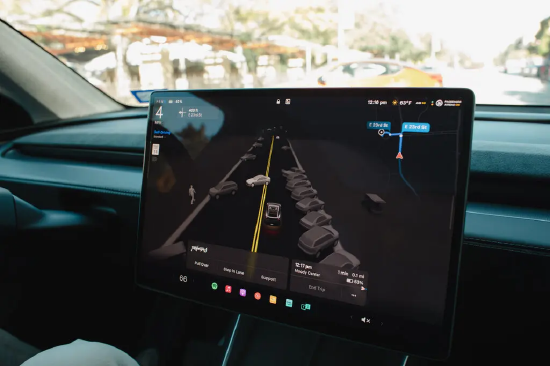
Core Viewpoint - Tesla's stock has reached an all-time high, driven by investor confidence in its potential to dominate the emerging trillion-dollar autonomous taxi market. However, the company faces intense competition and has a long way to go to catch up with rivals like Waymo [1][12]. Group 1: Competitive Landscape - Since launching its autonomous taxi service in Austin in June, Tesla has deployed approximately 30 vehicles, while Waymo has around 200 vehicles operating in the same city and over 2,500 across multiple cities [1][3]. - Waymo has completed 14 million paid rides this year and plans to expand its services to 20 more cities by 2026, including Dallas and Miami [3][14]. - Tesla's goal to expand its paid autonomous taxi service to 8-10 cities by January 1, 2026, now seems unlikely to be achieved [15]. Group 2: Technology and Development - Tesla's autonomous driving technology relies solely on cameras, which some experts believe limits its performance compared to competitors that use additional sensors like radar and lidar [19]. - Despite starting later than Waymo, Tesla has been developing its technology for years, with CEO Elon Musk previously predicting full autonomy within a few years [2][13]. - Analysts express skepticism about whether Tesla can deliver on its ambitious promises, particularly regarding the commercial viability of its autonomous taxi service [5][19]. Group 3: Operational Challenges - The autonomous taxi industry faces hidden operational costs, including the need for remote monitoring and vehicle maintenance, which could impact profitability [20]. - Regulatory changes in Texas require companies to obtain permits for autonomous vehicle testing, reflecting concerns about the rapid deployment of such technologies [24]. - Incidents involving both Tesla and Waymo vehicles have raised safety concerns, highlighting the challenges of integrating autonomous vehicles into existing traffic systems [21][22]. Group 4: Market Perception and Consumer Sentiment - Some consumers in Austin perceive autonomous taxis as safer than human-driven vehicles, indicating a potential market acceptance despite ongoing skepticism [25]. - Tesla's pricing strategy for its autonomous taxi service could theoretically be lower than competitors due to its reliance on camera technology, but this is contingent on overcoming technical limitations [17][19].

睿创微纳:在高阶自动驾驶层面,公司的红外产品已在全球首款前装量产L4级Robotaxi车型上搭载
Mei Ri Jing Ji Xin Wen· 2025-12-26 09:27
Core Viewpoint - The company has successfully integrated its infrared thermal imaging systems into the automotive sector, particularly in high-level autonomous driving applications, and is actively pursuing further collaborations for research and development [2] Group 1: Product Applications - The company's infrared products are currently utilized in both passenger and commercial vehicles [2] - The infrared systems have been deployed in the world's first mass-produced L4-level Robotaxi model, developed in collaboration with Didi and GAC Aion [2] Group 2: Research and Development - The company is engaged in ongoing collaborations with major manufacturers, Tier 1 suppliers, and autonomous driving firms to enhance the development and promotion of its products [2] - There is a suggestion from investors for the company to strengthen research and promotion of infrared systems in public transportation and accelerate development for L3 and L4 autonomous driving systems [2]


收到很多同学关于自驾方向选择的咨询......
自动驾驶之心· 2025-12-26 09:18
Core Insights - The article discusses various cutting-edge directions in autonomous driving research, emphasizing the importance of deep learning and traditional methods for students in related fields [2][3]. Group 1: Research Directions - Key areas of focus include VLA, end-to-end learning, reinforcement learning, 3D goal detection, and occupancy networks, which are recommended for students in computer science and automation [2][3]. - For mechanical and vehicle engineering students, traditional methods like PnC and 3DGS are suggested as they require lower computational power and are easier to start with [2]. Group 2: Guidance and Support - The article announces the launch of a paper guidance service that offers support in various research areas, including multi-sensor fusion, trajectory prediction, and semantic segmentation [3][6]. - Services provided include topic selection, full process guidance, and experimental support, aimed at enhancing the research capabilities of students [6][7]. Group 3: Publication Opportunities - The guidance service has a high acceptance rate for papers submitted to top conferences and journals, including CVPR, AAAI, and ICLR [7]. - The article highlights the availability of support for various publication levels, including CCF-A, CCF-B, and SCI indexed journals [10].
L4级自动驾驶卡车龙头来了!蔚来参投!估值猛涨25倍!
Guo Ji Jin Rong Bao· 2025-12-26 08:36
近日,主线科技(北京)股份有限公司(下称"主线科技")在港交所递交招股书,拟在主板上市,国泰海通是独家保荐人。 IPO日报注意到,自动驾驶卡车领头羊主线科技由张天雷创立(他毕业于清华大学,曾参与联合创立百度无人车团队),投资方有蔚来等知名企业和机 构,最新估值高达38.6亿元。 主线科技的解决方案包含三大核心产品:AiTruck(智能卡车)、AiBox(智能终端)、AiCloud(智能云服务)。作为所有解决方案的通用"人工智能虚拟司 机",AiTrucker建立了统一的算法基础,利用物流枢纽的复杂数据加速公司公路物流及城市交通解决方案的鲁棒性。公司的解决方案中使用的车辆主要是自 动驾驶卡车,并辅以其他类型的商用车。主线科技将这些产品战略性地部署在三大核心商业场景:Trunk Port(物流枢纽)、Trunk Pilot(公路物流)、Trunk City(城市交通),依托公司的通用化架构,实现从物流枢纽、公路物流到城市交通的技术复用与无缝连接。 目前,主线科技已累计交付830辆AiTruck及349套AiBox,并获得821套AiTruck及920套AiBox的意向订单。 根据咨询机构弗若斯特沙利文的资料,20 ...


国泰基金麻绎文:当前AI无整体泡沫,机器人、半导体设备步入兑现期
Sou Hu Cai Jing· 2025-12-26 08:32
Core Viewpoint - The A-share market is expected to reach a milestone in 2025, with a total market value exceeding 100 trillion yuan and the Shanghai Composite Index surpassing 4000 points, marking a new high in nearly a decade. The focus is on identifying investment opportunities in various sectors for 2026, particularly in technology [1] Market Performance and Drivers - The A-share market has seen increased activity since 2025, with significant drivers including macroeconomic policy support, advancements in AI and other industries, and confidence from long-term capital inflows such as from Central Huijin [3][4] - Key turning points in the market occurred in April and September 2025, influenced by tariff conflicts and major events [3] AI Sector Analysis - Concerns about an AI bubble are addressed, with the current risk level deemed lower than during the 2000 tech bubble, based on investment intensity and corporate financial health [4][5] - The AI infrastructure's contribution to GDP is approximately 1.5%, which is lower than the 2% seen during the previous tech bubble, indicating a more controlled risk environment [5] Investment Opportunities in Technology - Specific indicators to watch for investment opportunities in 2026 include the release of orders in the Tesla robot supply chain, expansion progress of domestic storage manufacturers, and policy breakthroughs for L3 autonomous driving [1][2] - The semiconductor equipment sector is highlighted as a promising area, with expectations for production expansions from major domestic manufacturers [6][7] Cautionary Notes on Investment - There are risks related to market congestion, particularly in sectors like optical modules, where significant price increases have led to profit-taking [1][11] - The cash flow and capital expenditure guidance of overseas cloud companies, especially smaller firms, should be monitored closely in the second half of 2026 [2][11] Future Market Trends - The market is expected to balance growth and value styles in 2026, with a continued focus on technology sectors that show new industrial trends and lower trading congestion [12][13] - Investment strategies should consider sectors with new industrial trends or directions, particularly in semiconductor equipment, communications, and robotics [13]
